Showing posts with label columbus. Show all posts

Saturday, August 31, 2024

Major League Distances from Big Ten Cities

These schools are listed from East to West. Distances are listed in miles.

* Rutgers University, New Brunswick, New Jersey. Yankees, Giants, Nets, Devils, Red Bulls.
MLB, 46 to New York Yankees, 50 to New York Mets, 68 to Philadelphia Phillies.
NFL, 35 to New York Giants and New York Jets, 68 to Philadelphia Eagles.
NBA, 37 to Brooklyn Nets, 38 to New York Rangers, 68 to Philadelphia 76ers.
NHL, 28 to New Jersey Devils, 38 to New York Rangers, 57 to New York Islanders, 68 to Philadelphia Flyers.
MLS, 31 to New York Red Bulls, 46 to New York City FC, 84 to Philadelphia Union. 

* University of Maryland, College Park, Maryland. Nationals, Commanders, Wizards, Capitals, United.
MLB, 11 to Washington Nationals, 30 to Baltimore Orioles.
NFL, 10 to Washington Commanders, 29 to Baltimore Ravens.
NBA, 9 to Washington Wizards.
NHL, 9 to Washington Capitals.
MLS, 11 to D.C. United.

* Pennsylvania State University, a.k.a. Penn State, State College, Pennsylvania. Pirates, Steelers, 76ers, Penguins, Union.
MLB, 138 to Pittsburgh Pirates, 197 to Philadelphia Phillies.
NFL, 138 to Pittsburgh Steelers, 197 to Philadelphia Eagles.
NBA, 197 to Philadelphia 76ers, 239 to Cleveland Cavaliers, 297 to Toronto Raptors.
NHL, 137 to Pittsburgh Penguins, 197 to Philadelphia Flyers.
MLS, 186 to Philadelphia Union, 226 to New York Red Bulls, 239 to New York City FC, 295 to Toronto FC, 326 to Columbus Crew.

* Ohio State University, Columbus, Ohio. Reds, Bengals, Cavaliers, Blue Jackets, Crew.
MLB, 110 to Cincinnati Reds, 142 to Cleveland Indians.
NFL, 110 to Cincinnati Bengals, 145 to Cleveland Browns.
NBA, 142 to Cleveland Cavaliers, 177 to Indiana Pacers, 197 to Detroit Pistons.
NHL, 4 to Columbus Blue Jackets.
MLS, 4 to Columbus Crew.

* University of Michigan, Ann Arbor, Michigan. Tigers, Lions, Pistons, Red Wings, Crew.
MLB, 45 to Detroit Tigers.
NFL, 45 to Detroit Lions.
NBA, 44 to Detroit Pistons.
NHL, 44 to Detroit Red Wings.
MLS, 189 to Columbus Crew, 242 to Chicago Fire, 272 to Toronto FC.

* Michigan State University, East Lansing, Michigan. Tigers, Lions, Pistons, Red Wings, Fire.
MLB, 89 to Detroit Tigers, 217 to Chicago White Sox, 228 to Chicago Cubs.
NFL, 89 to Detroit Lions, 220 to Chicago Bears.
NBA, 86 to Detroit Pistons, 223 to Chicago Bulls.
NHL, 86 to Detroit Red Wings, 223 to Chicago Blackhawks.
MLS, 220 to Chicago Fire, 250 to Columbus Crew, 295 to Toronto FC.

* Indiana University, Bloomington, Indiana. Reds, Bengals, Bulls, Blackhawks, Fire.
MLB, 130 to Cincinnati Reds, 217 to Chicago White Sox, 224 to St. Louis Cardinals, 228 to Chicago Cubs.
NFL, 130 to Cincinnati Bengals, 220 to Chicago Bears.
NBA, 222 to Chicago Bulls.
NHL, 222 to Chicago Blackhawks, 224 to St. Louis Blues, 224 to Columbus Blue Jackets.
MLS, 220 to Chicago Fire, 223 to Columbus Crew, 225 to St. Louis City.

* Purdue University, West Lafayette, Indiana. White Sox, Colts, Pacers, Blackhawks, Fire.
MLB, 116 to Chicago White Sox, 127 to Chicago Cubs, 182 to Cincinnati Reds, 270 to St. Louis Cardinals.
NFL, 69 to Indianapolis Colts, 119 to Chicago Bears.
NBA, 71 to Indiana Pacers, 122 to Chicago Bulls.
NHL, 122 to Chicago Bulls, 270 to St. Louis Blues.
MLS, 119 to Chicago Fire, 271 to St. Louis City.

* University of Illinois, Champaign, Illinois. White Sox, Colts, Pacers, Blackhawks, Fire.
MLB, 132 to Chicago White Sox, 143 to Chicago Cubs, 174 to St. Louis Cardinals.
NFL, 125 to Indianapolis Colts, 135 to Chicago Bears.
NBA, 126 to Indiana Pacers, 138 to Chicago Bulls.
NHL, 138 to Chicago Blackhawks, 174 to St. Louis Blues.
MLS, 135 to Chicago Fire, 175 to St. Louis City.

* Northwestern University, Evanston, Illinois. Cubs, Bears, Bulls, Blackhawks, Fire.
MLB, Chicago Cubs 9, Chicago White Sox 19.
NFL, Chicago Bears 15.
NBA, Chicago Bulls 17.
NHL, Chicago Blackhawks 17.
MLS, Chicago Fire 15.

* University of Wisconsin, Madison, Wisconsin. Brewers, Packers, Bucks, Blackhawks, Fire.
MLB, Milwaukee Brewers 76, Chicago Cubs 143, Chicago White Sox 150, Minnesota Twins 271.
NFL, Green Bay Packers 142, Chicago Bears 151, Minnesota Vikings 269.
NBA, Milwaukee Bucks 80, Chicago Bulls 149, Minnesota Timberwolves 271.
NHL, Chicago Blackhawks 149, Minnesota Wild 262.
MLS, Chicago Fire 151, Minnesota United 264.

* University of Minnesota, Minneapolis, Minnesota. Twins, Vikings, Timberwolves, Wild, United.
MLB, Minnesota Twins 3.
NFL, Minnesota Vikings 2.
NBA, Minnesota Timberwolves 3.
NHL, Minnesota Wild 7.
MLS, Minnesota United 3.

* University of Iowa, Iowa City, Iowa. White Sox, Bears, Bulls, Blackhawks, Fire.
MLB, Chicago White Sox 227, Chicago Cubs 230, St. Louis Cardinals 260, Milwaukee Brewers 261, Minnesota Twins 281, Kansas City Royals 308.
NFL, Chicago Bears 228, Minnesota Vikings 279, Kansas City Chiefs 308, Green Bay Packers 317.
NBA, Chicago Bulls 222, Milwaukee Bucks 258, Minnesota Timberwolves 281.
NHL, Chicago Blackhawks 222, St. Louis Blues 260, Minnesota Wild 270.
MLS, Chicago Fire 228, St. Louis City 259, Minnesota United 274, Sporting Kansas City 320.

* University of Nebraska, Lincoln, Nebraska. Royals, Chiefs, Thunder, Blues, Sporting.
MLB, Kansas City Royals 203, St. Louis Cardinals 444.
NFL, Kansas City Chiefs 204.
NBA, Oklahoma City Thunder 436, Denver Nuggets 485.
NHL, St. Louis Blues 443.
MLS, Sporting Kansas City 192, St. Louis City 442.

* University of Southern California, a.k.a. USC, Los Angeles, California. Dodgers, Rams, Lakers, Kings, LAFC.
MLB, Los Angeles Dodgers 6, Los Angeles Angels 34.
NFL, Los Angeles Rams 7, Los Angeles Chargers, 7.
NBA, Los Angeles Lakers 2, Los Angeles Clippers, 2.
NHL, Los Angeles Kings 2, Anaheim Ducks 36.
MLS, Los Angeles FC 6, Los Angeles Galaxy 11.

* University of California at Los Angeles, a.k.a. UCLA, Los Angeles, California. Dodgers, Rams, Lakers, Kings, LAFC.
MLB, Los Angeles Dodgers 12, Los Angeles Angels 43.
NFL, Los Angeles Rams 12, Los Angeles Chargers 12.
NBA, Los Angeles Lakers 11, Los Angeles Clippers 11.
NHL, Los Angeles Kings 11, Anaheim Ducks 43.
MLS, Los Angeles FC 11, Los Angeles Galaxy 21.

* University of Oregon, Eugene, Oregon. Mariners, Seahawks, Trail Blazers, Kraken, Sounders.
MLB, Seattle Mariners 282.
NFL, Seattle Seahawks 282.
NBA, Portland Trail Blazers 111.
NHL, Seattle Kraken 284.
MLS, Portland Timbers 110.

* University of Washington, Seattle, Washington. Mariners, Seahawks, Trail Blazers, Kraken, Sounders.
MLB, Seattle Mariners 5.
NFL, Seattle Seahawks 5.
NBA, Portland Trail Blazers 175.
NHL, Seattle Kraken 4.
MLS, Seattle Sounders 5.

*

So:

* New York Yankees: Rutgers.
* Baltimore Orioles: Maryland.
* Pittsburgh Pirates: Penn State.
* Cincinnati Reds: Ohio State, Indiana.
* Detroit Tigers: Michigan, Michigan State.
* Chicago White Sox: Purdue, Illinois, Iowa.
* Chicago Cubs: Northwestern.
* Milwaukee Brewers: Wisconsin.
* Minnesota Twins: Minnesota.
* Kansas City Royals: Nebraska.
* Los Angeles Dodgers; USC, UCLA.
* Seattle Mariners: Oregon, Washington.

Monday, September 26, 2022

How to Be a Red Bulls Fan In Columbus -- 2022 Edition

Next Sunday afternoon, the New York Red Bulls will go to Ohio to play the Columbus Crew. This was, for a time, not supposed to happen. The Crew's new ownership group wanted to move the team to Austin, Texas for the 2019 season.

But the #SaveTheCrew movement, well, #SavedTheCrew. On October 12, 2018, Cleveland Browns owner Jimmy Haslam announced that he was forming a group to buy the team, and MLS gave the Austin group an expansion team, Austin F.C. And the Crew won the 2020 MLS Cup.

This marks the 28th and last Trip Guide I needed for the 2022 MLS season. The circuit is complete.

Before You Go. Columbus can get really hot in the Summer, but this is late February, so, mid-Winter. The Columbus Dispatch website is predicting the low 70s for Saturday afternoon, dropping to the low 50s by nightfall. You won't need a jacket, but you might want to bring an umbrella: Rain is predicted for earlier in the day, but it should stop well before the 7:30 PM kickoff.

Columbus is in the Eastern Time Zone, so you won't have to set your clocks back.

Tickets. The Crew averaged only 14,162 fans per home game in 2019, the last pre-COVID season, which suggests that many fans still hadn't gotten over nearly losing the team. Which does beg the question: Why did Columbus get an MLS team? Why not Cleveland or Cincinnati, the more proven major league cities?

In the case of Cincinnati, it's probably because somebody thought that Cincinnati couldn't support a team by itself. As we have since seen with FC Cincinnati, that was a bad guess, for which MLS has now made up. As for Cleveland, native Drew Carey, a part-owner of MLS' Seattle Sounders, explained to me on Twitter (He is as nice as he seems to be on TV) that they didn't have a suitable stadium, and that they didn't want to have 50,000 empty seats in the Browns' new stadium.

Regardless of attendance, for the visiting fan, as at all MLS stadiums, a section is set aside for you. Fans of visiting teams are placed in Section 209, in the southwest corner of the upper deck. Tickets are $49.

Getting There. It's 536 miles from Times Square in New York to Capitol Square in Columbus, and 529 miles from Red Bull Arena to Lower.com Field. Flying may seem like a good option, but, this time, it's a bit expensive: To get a nonstop round-trip flight from Newark Liberty to John Glenn Columbus International Airport (formerly named Port Columbus International Airport) you'll have to shell out nearly $800. You could get it cheaper, but it wouldn't be nonstop.

Amtrak does not go to Columbus. Its main train station was demolished in 1979 to make way for the Columbus Convention Center (which is too bad, because it was just 2 blocks from where the Blue Jackets' Nationwide Arena ended up being built), and it is now the largest metropolitan area in America that doesn't have Amtrak access.

Greyhound's run between New York and Columbus is about 14 hours, with no change of buses necessary, costs $365, and dropping to as little as $212 with advanced-purchase. The station is at 111 E. Town Street, at 3rd Street, downtown, 2 blocks south of the State House.

If you decide to drive, it's far enough that it will help to get someone to go with you and split the duties, and to trade off driving and sleeping. You'll need to get on the New Jersey Turnpike. Take it to Exit 14, to Interstate 78. Follow I-78 west all the way through New Jersey, to Phillipsburg, and across the Delaware River into Easton, Pennsylvania. Continue west on I-78 until reaching Harrisburg. There, you will merge onto I-81. Take Exit 52 to U.S. Route 11, which will soon take you onto I-76. This is the Pennsylvania Turnpike, the nation's 1st superhighway, opening in 1940.

The Turnpike will eventually be a joint run between I-76 and Interstate 70. Once that happens, you'll stay on I-70, all the way past Pittsburgh, across the little northern pandhandle of West Virginia, and into Ohio all the way to Columbus.

If you do it right, you should spend about an hour and 15 minutes in New Jersey, 5 hours and 30 minutes in Pennsylvania, 15 minutes in West Virginia, and about 2 hours and 15 minutes in Ohio. That's about 9 hours and 15 minutes. Counting rest stops, preferably halfway through Pennsylvania and just after you enter Ohio, and accounting for traffic in both New York and Columbus, it should be no more than 11 hours, which would save you time on Greyhound, if not flying.

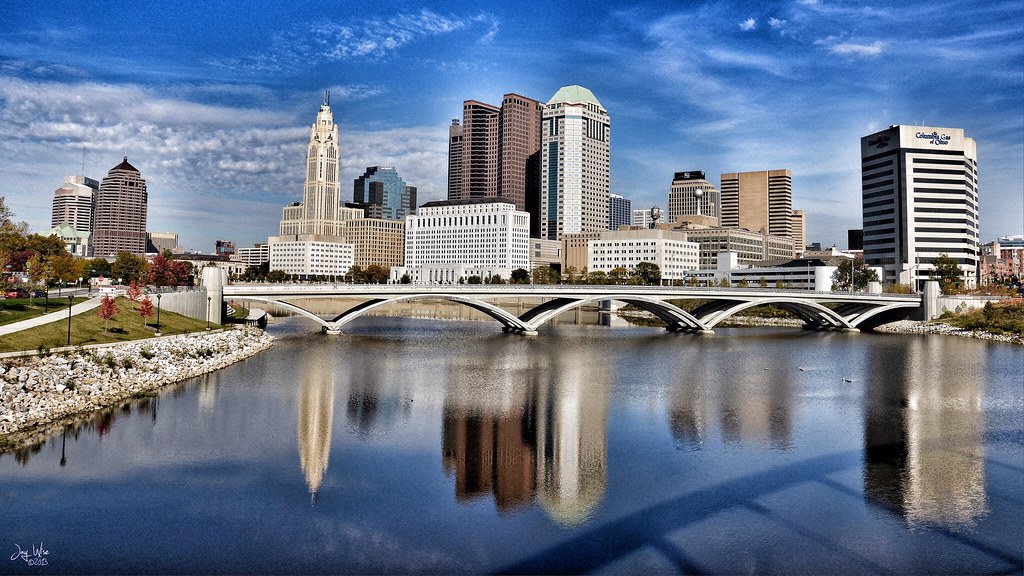
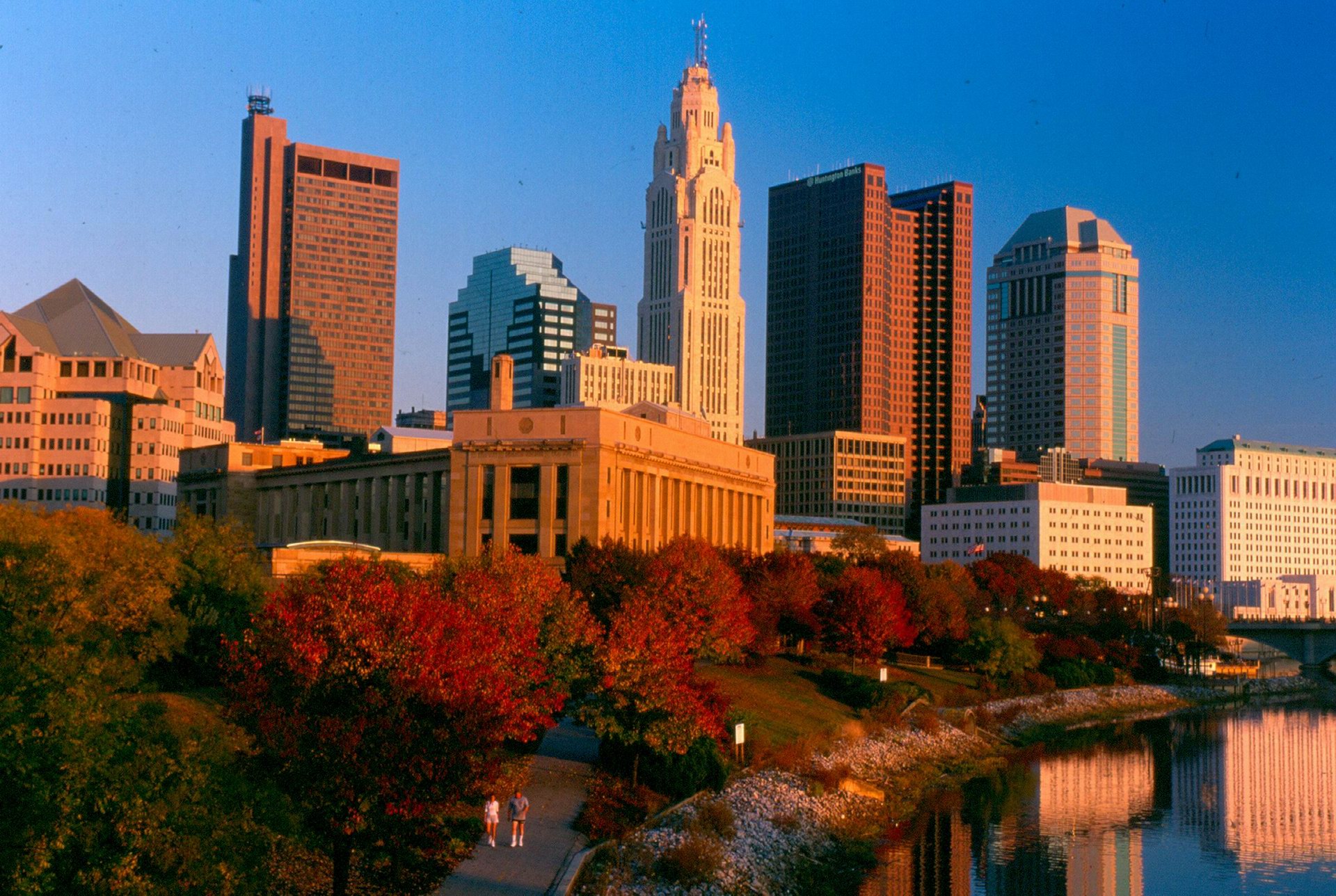
Once In the City. Founded in 1816, Columbus, named for Christopher Columbus, is easily the largest city in Ohio by population, with about 910,000 people, to a mere 381,000 for Cleveland and 309,000 for Cincinnati. But its metropolitan area has just 2.4 million people, still larger than Cincy's 3.0 million but considerably smaller than Cleveland's 3.6 million, because Cleveland has a much larger suburban area.

High Street is the street address divider between East and West, and Broad Street serving as the divider between North and South. The southeastern corner of High & Broad includes Capitol Square, with the State House. The sales tax in the State of Ohio is 5.75 percent, rising to 7.5 percent in Franklin County, including the City of Columbus.
The Ohio State House. No, I don't know why
they stopped building it before finishing the dome.

ZIP Codes in Columbus begin with the digits 432, and the Area Code is 614, with 380 overlaid. The Central Ohio Transit Authority (COTA) runs buses, with a $2.00 fare, but no rapid transit rail system: No subway, no elevated, no light rail, no commuter rail. Interstate 270 serves as a beltway, known as the Outerbelt or, for a local "sports" hero, the Jack Nicklaus Freeway.

The city government runs the electricity. The city is about 59 percent white, 28 percent black, 6 percent Hispanic and 4 percent Asian. Columbus has mostly been spared racial strife, although the nearby city of Springfield had race riots in 1904, 1906 and 1921.

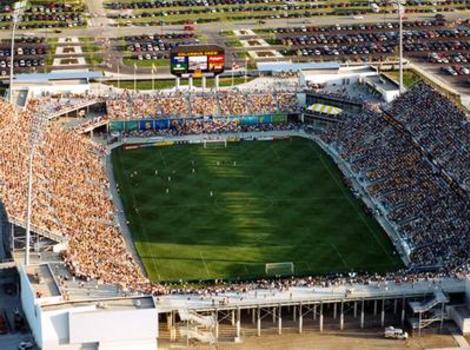
Going In. In 2021, Columbus Crew SC (Soccer Club) moved into the new Lower.com Field, named for a local real estate company. The address was 560 W. Nationwide Blvd., but has been relabeled 96 Columbus Crew Way, for the year of the team's founding. It's a mile and a half northwest of downtown, and is hard to reach by public transportation: Buses 1, 5 and 8 will get you to within half a mile of the stadium, but no closer. The stadium is 4 blocks west of the new minor-league baseball park, and 8 blocks west of the hockey arena. If you drive in, parking is $22.
Capacity is 20,371. As with Ohio Stadium and Historic Crew Stadium, the field is natural grass, and is aligned north-to-south. It's already hosted 2 matches of the U.S. men's national team, both wins in 2022 World Cup qualification matches: 2-1 over Costa Rica on October 13, 2021; and 1-0 over El Salvador on January 27, 2022. It's also hosted a match of the U.S. women's national team, a 9-1 win over Uzbekistan in a friendly on April 9, 2022.

Food. Being in Big Ten Country, where tailgate parties are practically a sacrament, you would expect the Columbus soccer stadium to have lots of good options. Unfortunately, the club website does not include a concessions map, so I can't tell you where these items are sold.

Levy Retail runs their concessions, as they do for all the athletic facilities at nearby Ohio State University. The stadium includes "Columbus staples": Schmidt's Sausage Haus, Jeni's Ice Cream, and Hot Chicken Takeover.

Team History Displays. The Crew won the MLS Cup in 2008 and 2020, and reached the Final in 2015. They won the Supporters' Shield in 2004, 2008 and 2009. They won the Lamar Hunt U.S. Open Cup in 2002, and reached the Final in 1998 and 2010. These achievements are shown in placards on the facing of the upper deck.
The Crew have no retired numbers, but for their 25th Anniversary, they chose an All-Time XI: Goalkeeper Will Hesmer; right back Robbie Rogers; centerbacks Chad Marshall and Mike Clark; left back Frankie Hejduk; midfielders Eddie Gaven, Brian Maisonneuve and Robert Warzycha; forwards Guillermo Barros Schelotto, Federico Higuain and Brian McBride; and coach Siegfried "Sigi" Schmid.

They have also featured several stalwarts of the U.S. national team, including McBride, Edson Buddle, Paul Caligiuri, John Harkes, Kyle Martino, and Brad Friedel, a goalkeeper from Ohio, who is also a member of the Greater Cleveland Sports Hall of Fame.

Lamar Hunt, one of the league's founders, and the Crew's founding owner (and, of course, better known as the founder of the American Football League and the Kansas City Chiefs), has a statue in his memory outside the stadium. As with the Chiefs, his son Clark Hunt now owns the Crew.
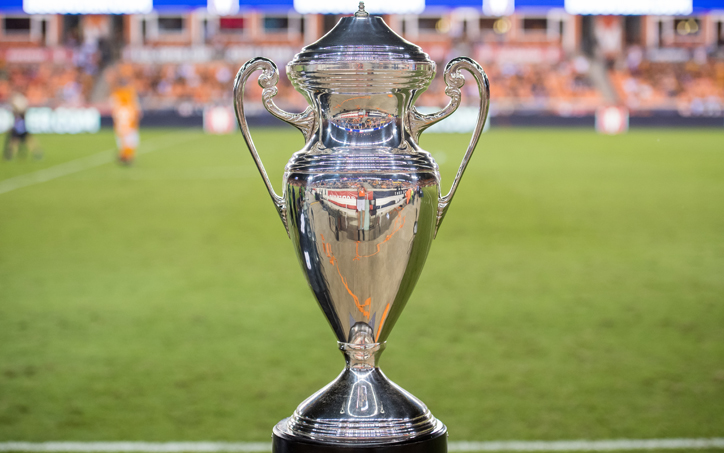
Because of Hunt's role in founding the league, the Crew, and FC Dallas, those 2 teams play each other for the Lamar Hunt Pioneer Cup. The Crew have won it 10 times to Dallas' 2.
The Lamar Hunt Pioneer Cup

Because the trillium is the State Flower of Ohio and the Provincial Flower of Ontario, the Crew and Toronto FC play each other for the Trillium Cup. The Crew have won it 8 times, TFC 7.
Columbus and Toronto players walk onto the field
past the Trillium Cup

With the entry of FC Cincinnati into MLS, there is now a cross-State rivalry, one which takes Southern Ohio out of the Crew's "market," which still includes Cleveland, and possibly, overcoming their States' usual antipathy toward Ohio, Pittsburgh and Detroit.

On June 13, 2017, FCC, then in the United Soccer League, played the Crew in a U.S. Open Cup match. Columbus fans heading down from the capital to the Queen City of the Midwest saw a sign at the side of the road on Interstate 71, reading, "HELL IS REAL."
The sign is real.

The Crew and their fans didn't go to Hell, but they did come home 1-0 losers in a game that meant far more to Cincinnati's fans. (Cincy got all the way to the Semifinals, losing to... the Red Bulls, who then lost the Final to Sporting Kansas City.)

Cincinnati won the 1st 2 regular-season MLS installments of the "Hell Is Real Derby," and the next was a tie. Cincinnati has not won since: The Crew now lead the rivalry, 5-2 with 4 ties.

Stuff. The Crew SC Shop is in the southeast corner of the stadium, in the Plaza, across from THE PUB. They sell the usual stuff you would find in an MLS team's gift shop, including jersey customization. Whether they sell yellow hard hats like the ones on their club badge, I don't know.

Unique among MLS teams -- unless you buy the San Jose Earthquakes' attempt to link themselves to previous teams that had that name, and even then, they're only the oldest in San Jose, not in the entire Bay Area -- the Crew are the oldest major league sports team in their metropolitan area. After more than a quarter of a century, they do have some history. 
Steve Sirk of The Columbus Dispatch has chronicled this in 2 books about the team: A Massive Season: Sirk's Notebook Chronicles the 2008 Columbus Crew; and Kirk Urso: Forever Massive: Memories from the 2012 Columbus Crew.

A DVD of the 2008 MLS Cup Final is also available -- but you don't want that, because the team they beat was the Red Bulls. (November 23, 2008, at what's now named the StubHub Center in Carson, California. It remains the furthest the Red Bulls have ever gone, though they have now matched that, and can beat it on Wednesday night.)

During the Game. The Cleveland-Cincinnati, the Cleveland-Pittsburgh, and the Ohio-Michigan rivalries do not come into play. (Indeed, the Pittsburgh Riverhounds are a Crew farm team.) In other words, a person living in Cleveland can have legitimate rivalries with Pittsburgh, and Cincinnati, and with Detroit/Ann Arbor, with no real inconsistency. But that's not that strange: A Yankee Fan can have Boston as a rival in baseball, Philadelphia in football -- and a Met fan can have it the other way around -- and another Tri-State Area team in hockey.

The Crew -- named in an attempt at both alliteration and the desire to appear "hard-working" -- do have regional rivalries with Cincinnati FC, the Chicago Fire and Toronto FC. But the Red Bulls aren't particularly rivals with the Crew. You should be safe in your club gear.

With their logo showing 3 men wearing hard hats, the Crew bill themselves as "America's Hardest Working Team." They are one of the few MLS teams to explain their badge on their club website. It's round, as are most German clubs' badges, due to Columbus' German heritage. It has an inner ring, making it look like an O for Ohio. It has diagonal stripes, to suggest upward movement. It has the number 96, to note their status as a charter MLS club in 1996. And it has a checkerboard pattern, as "a symbol of our passionate fans and their unwavering support."

(How a checkerboard pattern reflects that is a mystery to me. The University of Tennessee does that, but Columbus is pretty far from anywhere in Tennessee.)
Apparently, Crew Cat was a tomcat.

The Crew hold auditions for singing the National Anthem, as opposed to having a regular singer. For their 1st 19 seasons, their mascot was Crew Cat, but in 2015 he was replaced by S.C., who is billed as Crew Cat's son.
Previous mascot's son? Maybe. New? Definitely.
Improved? I don't know...

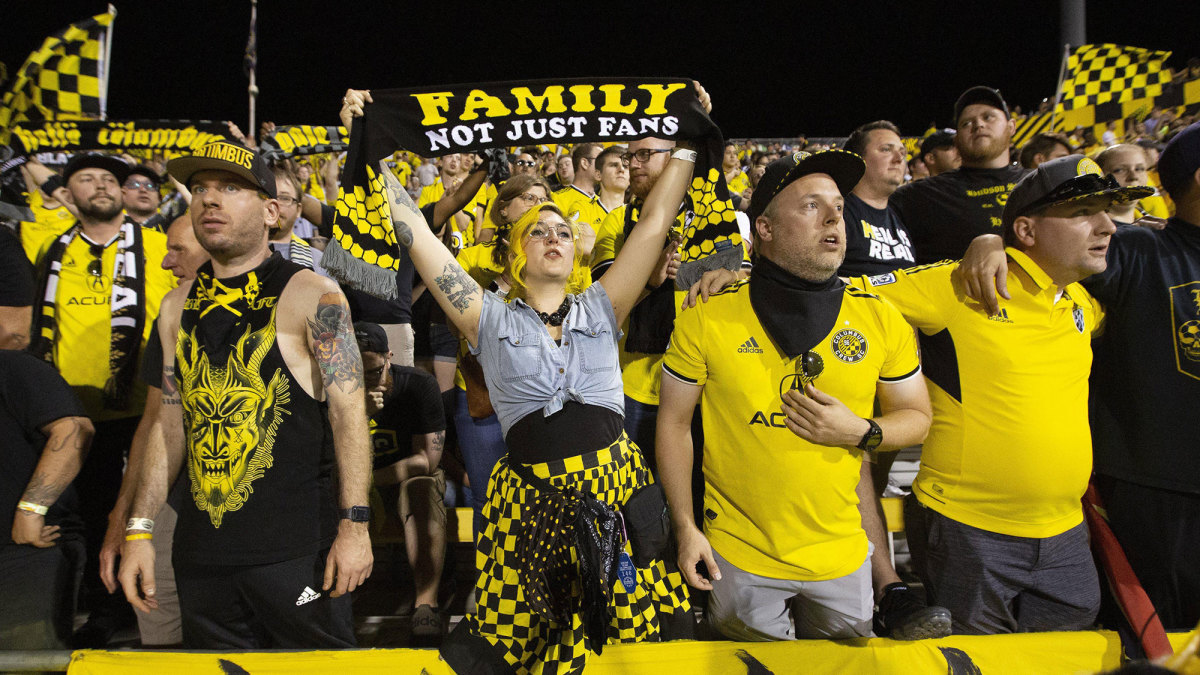
The north end of the stadium is home to the supporters' organizations, now collectively called the Nordecke -- German for "north corner." The groups include the Hudson Street Hooligans (HSH), the Crew Supporters Union (CSU), and La Turbina Amarilla (Spanish for "the Yellow Engine").

These groups tend to wave black and gold checkerboard flags, and also Ohio State Flags (not to be confused with Ohio State University flags) with the red, white and blue color scheme replaced with the Crew's black and gold.
HSH are not actually hooligans, but they are, to borrow the word that first gained usage in Italy, "ultras." Their motto, "Ne Cum Pedicabo," is Latin for "Don't fuck with us." They spell it out on their website: "It is definitely an adult section, for the most diehard -- be warned." Message received: Visiting fans trying to "take" the section, as in the style of English hooligans of old, are in for an unpleasant surprise.

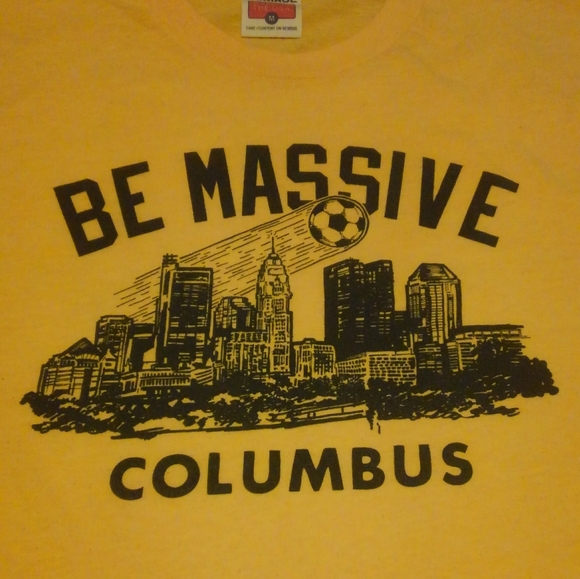
In 2003, at a time when Columbus was the smallest market in MLS, someone noted that Kevin Keegan, legendary as a Liverpool and Newcastle player but not so successful as a manager anywhere, had taken the Manchester City job and, in response to the hated Manchester United, called City "a massive club."

So Crew fans picked it up, and ran with the ironic word, until they won the 2008 MLS Cup and actually became, at least by North American standards, a massive club. Now, the word "Massive" goes on just about anything Crew-centric, and usually refers to the players' heart and the fans' passion.

Instead of the "O! H! I! O!" chant started at Ohio State, and picked up by funk band the Ohio Players and later by the Blue Jackets, the main chant is that of the city: "Co! lum! bus!" They do "When the Crew Go Marching In," "We love ya, we love ya, we love ya, and where you go we'll follow," "I Just Can't Get Enough," and a variation on a traditional English soccer chant: "I know I am, I swear I am, Columbus 'til I die!" And they roast their rivals, as many other teams do, to the tune of "My Darling Clementine":

Build a bonfire
build a bonfire
put Chicago on the top
put Toronto in the middle
and we'll burn the fucking lot!

They borrow from Elvis Presley with, "I can't help falling in love with Crew!" and the Beatles with, "We all cheer for the yellow soccer team!" and "Hey, Crew, don't make it bad... "

After the Game. The area is bounded by Interstate 670, a railroad, U.S. Route 33 and the Olentangy River. So it's not really in any neighborhood, much less a bad one. As long as you didn't instigate anything you (and, if you drove in, your car) should be safe.

As for where to go for a postgame meal or drink, you're better off walking a few blocks east, closer to the ballpark and the arena. If fast food isn't what you're looking for, you may have to get back to downtown Columbus.

The most famous bar, perhaps in the entire State of Ohio, is the Varsity Club, across from the OSU Ice Arena and 3 blocks north of Ohio Stadium. 278 W. Lane Avenue, at Tuttle Park Place. High Street, the eastern boundary of the OSU campus, has been described as "a zoo" on home football Saturdays, although that won't affect you as a visiting soccer fan.

I can find no references to places where New Yorkers gather in or around Columbus: The sites that usually list bars for football fans in exile don't seem to have references to where Yankees, Mets, Giants or Jets fans go when they live nearby.

Remember the York Steak House? There was one at the Brunswick Square Mall in East Brunswick, New Jersey, and I grew up a mile down the hill from it. There is only one left, and it is in Columbus. 4220 W. Broad Street, a.k.a. U.S. Route 40, at the interchange of I-270, across from the Westland Mall, 6 miles west of downtown. Bus 10.

If your Red Bulls visit to Columbus coincides with the European soccer season (this one doesn't), and you want to watch your favorite club while you're in town, you can try one of these:

* Manchester United, Chelsea and Bayern Munich: Fado, one of the few left in the chain. 4022 Townsfair Way. Number 16 bus. If you don't see your club listed (especially if it's not an English one), this is probably going to be your best shot.

* Arsenal: The Pointe Tavern, 1991 Riverside Drive, in Upper Arlington, 5 miles northwest of downtown. Bus 5 to 5th & Riverside, then a 10-minute walk.

* Liverpool: McClellan's Pub, 6694 Sawmill Road in Dublin, about 17 miles northwest of downtown. Bus 1, 2 or 11 to 5220 N. High Street, then Bus 33 to Dublin-Granville Road and Sawmill Road.

* Everton, Manchester City and Tottenham: Endeavor Brewing and Spirits (formerly named Zauber Brewing), 909 W. 5th Avenue at Delashmut Avenue. Number 5 bus.

Sidelights. Columbus may have only 1 major league team if you don't count MLS (and, by now, you should), but it's a decent sports town, and here's some of the highlights:

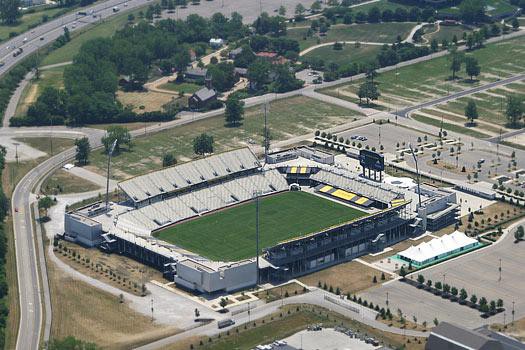
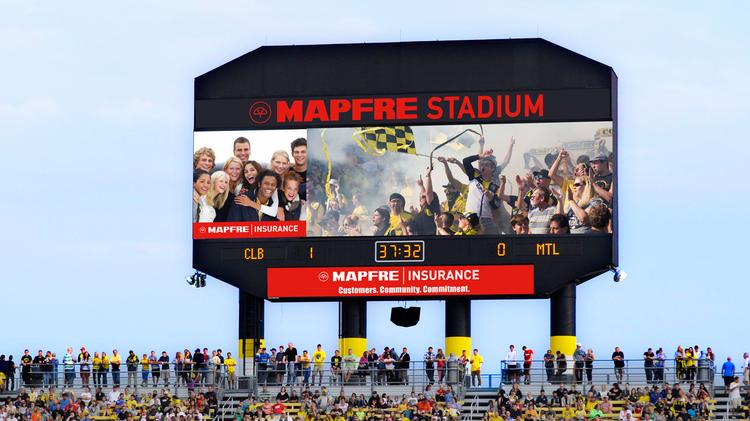
* Historic Crew Stadium. Formerly known as Columbus Crew Stadium and Mapfre Stadium, the 22,555-seat Columbus Crew Stadium when it opened in 1999. In 2014, naming rights were sold to a Spain-based insurance company. Mapfre the company (pronounced MAH-fray) doesn't spell its name in ALL CAPS, but the name of MAPFRE Stadium's name usually is. Capacity is now listed as 19,968. The Crew played their 1st 3 seasons (1996-98) before 90,000 empty seats at Ohio Stadium.
The official address is One Black and Gold Blvd., at 20th Avenue, about 3 1/2 miles north of downtown, near the Indianola Shopping Center. Number 4 bus, then a 15-minute walk: 2 blocks north on 4th Street, 2 blocks east on Hudson Street, then south on Silver Drive. 

America's 1st soccer-specific stadium, it was built at a cost of just $39.3 million -- and looks it. Ohio Stadium may have been vast, but it is an architectural marvel. MAPFRE Stadium is not: From the outside, and even a bit from the inside, it looks like an oversized high school football (gridiron) stadium. 

They won the MLS Cup in 2008, and reached the Final again in 2015, losing to the Portland Timbers despite playing at home. The Stadium also hosted the MLS Cup Final in 2001 (San Jose beating Los Angeles), 12 games of the U.S. National Team, and 6 games of the 2003 Women's World Cup (including a 3-0 U.S. win over North Korea). It's hosted the 2001 and 2003 NCAA men's soccer championships, high school football, and concerts.
Of those 12 USMNT games, 8 were wins, 3 were ties, and only 1 has been a loss. Of the 8 wins, 4 were against Mexico, all of them 2-0 or "Dos A Cero" wins. Unfortunately, the most recent USMNT game there was the 1 loss, to Mexico on November 11, 2016 in a World Cup Qualifying match that probably (and much too late) cost manager Jurgen Klinsmann his job. Previously, being 8-0-3 there, Columbus was a fortress for the Stars & Stripes, but arch-rival Mexico fears it no longer.
The U.S. women's team has played there 5 times, a draw against New Zealand and wins over North Korea, Japan, Thailand and, most recently, on March 1, 2018, Germany. It hosted 2 games of the 2009 CONCACAF Gold Cup. There have been 10 concerts at the stadium, 4 of them by country singer Kenny Chesney.

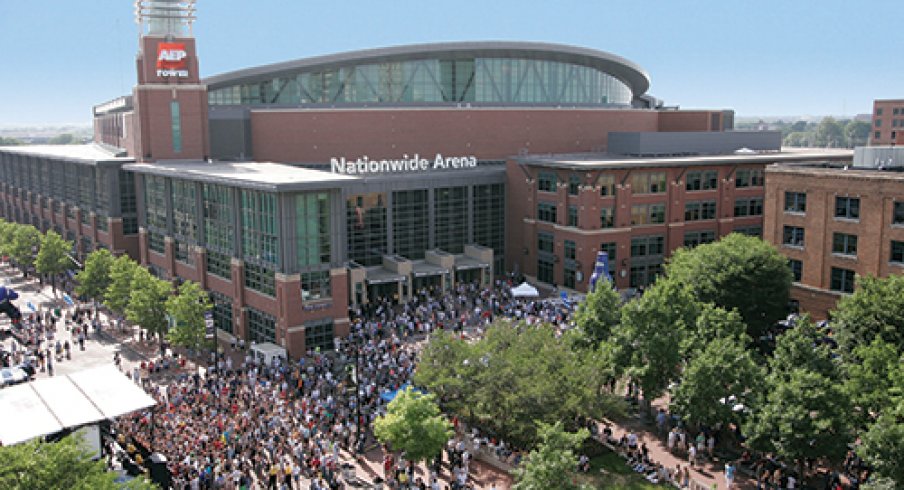
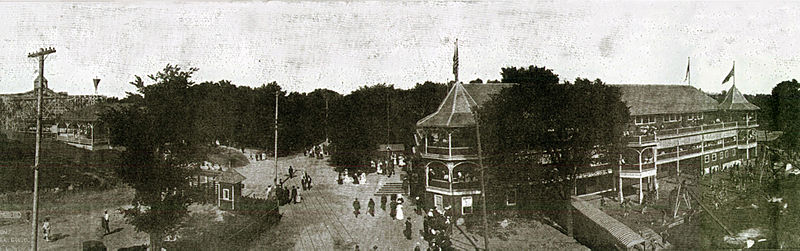
* Nationwide Arena. The Columbus Blue Jackets and their original home were inaugurated in 2000, about a mile northwest of the State House, in the Arena District, near the confluence of the Scioto and Olentangy Rivers, in an area that includes their minor-league ballpark and their Convention Center.
The Arena has hosted NCAA Tournament basketball, "professional wrestling" and concerts. Knowing of Ohio's pivotal role in national elections, President Barack Obama held one of his final 2012 campaign rallies, with Bruce Springsteen and Jay-Z performing.

Despite its youth, the Arena already has a tragic history. On March 16, 2002, 13-year-old Brittanie Cecil was struck in the head by a deflected puck during the Blue Jackets' game against the Calgary Flames, and died from her injuries 2 days later. As far as can be determined, she is the only fan in the NHL's nearly 100-year history to be killed in a game-related accident. As a result of her death, the NHL mandated safety netting around the goals in all its arenas.

The official address is 200 W. Nationwide Blvd. Several bus lines will get you there.

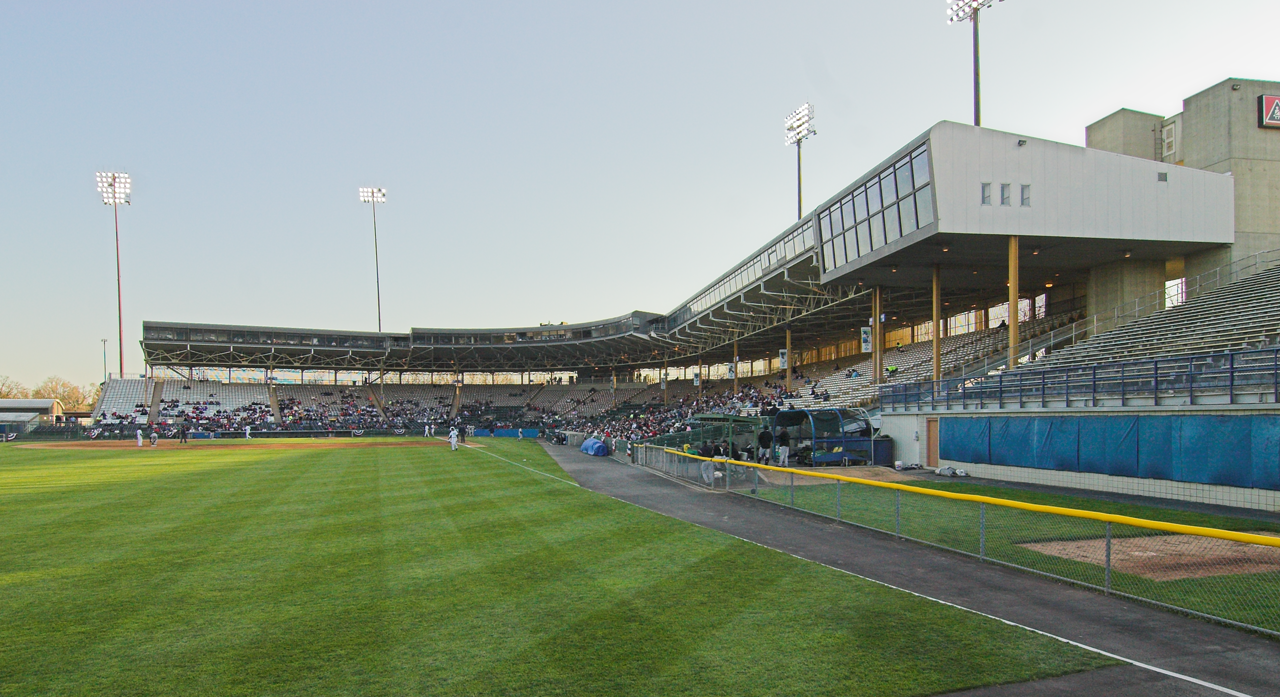
* Huntington Park. Just 2 blocks west of Nationwide Arena, at 330 Huntington Park Lane, this 10,100-seat stadium has been home to the International League's Columbus Clippers since 2009. Since moving in, they've won Pennants in 2010, 2011 and 2015, giving them a total of 10 Pennants.

* Cooper Stadium. Opened in 1932 as Red Bird Stadium, and renamed for Harold Cooper, the Franklin County Commissioner and team owner who kept professional baseball in the city in the 1950s, this stadium was one of the most successful ballparks in the minor leagues. It was also one of the largest, seating 17,500 people at its peak, and 15,000 in its last years.

Initially, it was home to the Columbus Red Birds, a farm team of the St. Louis Cardinals (also nicknamed the Redbirds), and to a Negro League team, the Columbus Blue Birds. The Red Birds won Pennants in 1933, 1934, 1937, 1941, 1942, 1943 and 1950.

The Cardinals moved them to Omaha in 1955, and a new team was brought in, the Columbus Jets, a farm club first of the Kansas City Athletics, then of the Pittsburgh Pirates. This led to the stadium being renamed Jets Stadium. They won the Pennant in 1961 and 1965, before being moved to Charleston, West Virginia after the 1970 season. The Pirates restored Columbus as their Triple-A team in 1977, the Yankees took over in 1979, the Washington Nationals in 2007, and the Cleveland Indians in 2009.

The Clippers were a Yankee farm team from 1979 to 2006, infamous as the bad end of "The Columbus Shuttle," George Steinbrenner's pipeline from Triple-A ball to the Yankees and back. As a Yankee farm team, they won IL Pennants in 1979, 1980, 1981, 1987, 1991, 1992 and 1996. All told, Columbus baseball teams have won 19 Pennants.

Cooper Stadium was closed after the 2008 season, but instead of being demolished, it has been converted into an auto racing facility. 1155 W. Mound Street, 3 miles west of downtown. Number 6 bus.

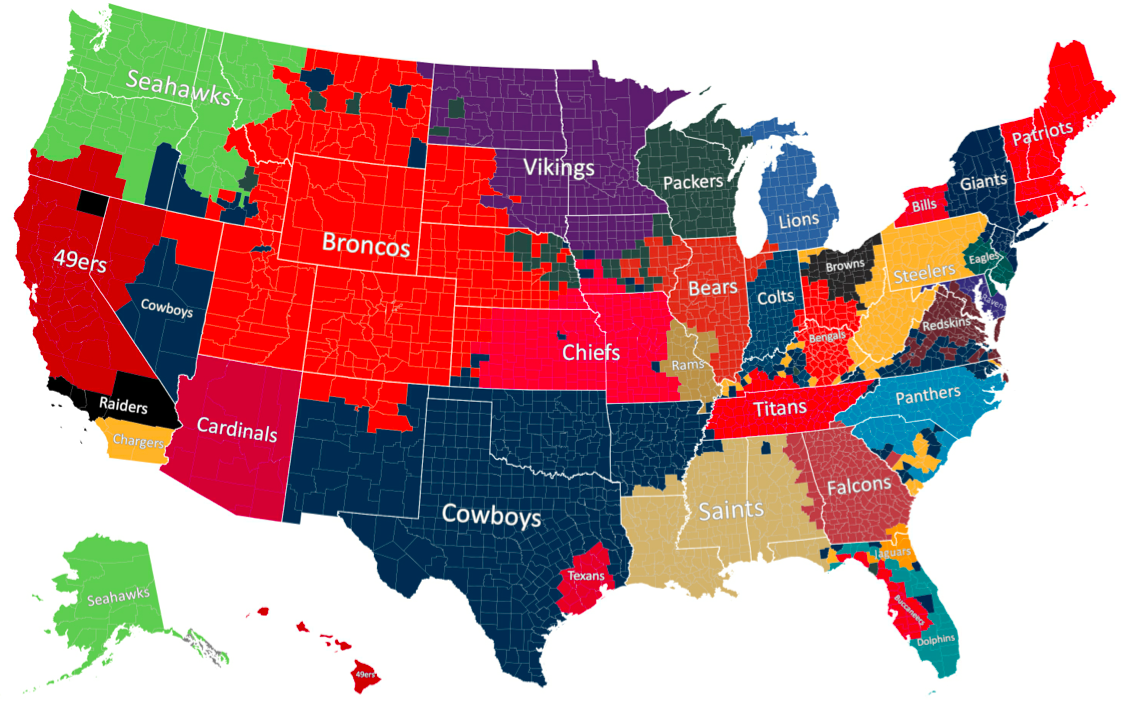
An April 24, 2014 article in The New York Times, showing baseball fandom by ZIP Code, shows that, despite being considerably closer to Cincinnati (107 miles) than to Cleveland (143 miles), the Indians still have a slight edge on baseball fandom in Columbus, on the average having 28 percent to the Reds' 22 percent. The September 2014 issue of The Atlantic Monthly had a similar map, showing that the Browns are more popular in Columbus than the Bengals.

Cincinnati is the nearest MLB and NFL city, while Cleveland is the nearest NBA city. If it had teams in those sports, Columbus would rank 29th in population in MLB, 26th in the NFL, and 25th in the NBA. So don't hold your breath.

* Ohio State. The most famous building in the State of Ohio is Ohio Stadium, or, as ABC Sports' legendary college football announcer Keith Jackson called it, The Big Horseshoe On the Olentangy -- home field of the school usually referred to as "THE... Ohio State University."

How big is it? The official seating capacity is currently listed as 104,944, making it the 4th-largest non-racing stadium in the world. 411 Woody Hayes Drive (formerly Woodruff Avenue), 3 1/2 miles north of downtown. Number 18 bus.
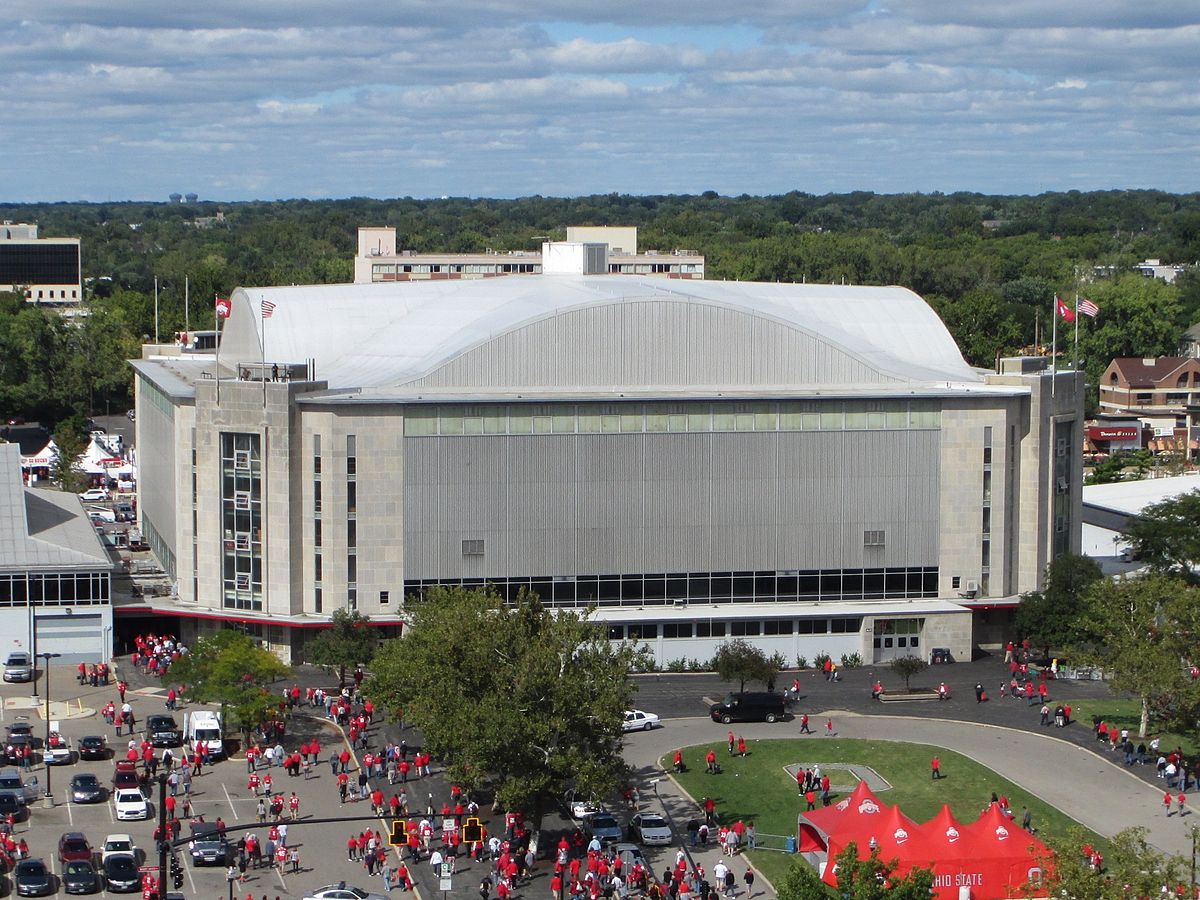
The Value City Arena at the Schottenstein Center opened in 1998, at 555 Borror Drive, across the Olentangy River from the Stadium. It hosted the NCAA's hockey Final Four, a.k.a. the Frozen Four, in 2005. On September 28, 2003, it hosted what turned out to be the last concert of The Three Tenors: Luciano Pavarotti, Placido Domingo and José Carreras. The Bill Davis Stadium (baseball) and the Jesse Owens Memorial Stadium (track & field) are part of this complex as well.

From 1956 to 1998, Ohio State played basketball at St. John Arena, across from the Stadium at 410 Woody Hayes Drive. It was at this arena that the Buckeyes played the 1959-60 season in which they won the National Championship. Coach Fred Taylor is in the Basketball Hall of Fame, along with 3 players on this team, although 1 is in as a coach: Jerry Lucas, John Havlicek, and "sixth man" Bob Knight.

It was also at St. John that Elvis Presley sang on June 25, 1974. Early in his carer, Elvis played 2 shows at the Franklin County Veterans Memorial Auditorium on May 26, 1956. Built in 1955, it was demolished in 2015, and the National Veterans Memorial and Museum has been built on the site. 300 W. Broad Street, on the Scioto River, at the foot of the Discovery Bridge, just across from downtown. (The Beatles played in Cleveland and Cincinnati, but not in Columbus.)

Columbus has never hosted an NCAA Final Four. Nor has any other Ohio city. The 13,435-seat University of Dayton Arena, built in 1969, 74 miles west of Columbus, has hosted more NCAA Tournament games than any other facility: 107.

* Indianola Park. Home ground of the Columbus Pandhandles, one of the 1st professional football teams, from 1901 to 1926, before the glut of early pro football doomed them. Along with the Canton Bulldogs, in the 1910s they dominated the Ohio League, one of the NFL's predecessors.

They are best remembered for the 7 Nesser brothers (sons of German immigrants, there were 8, but Pete, 1877-1954, the largest of them, didn't like football and didn't play; there were also 4 sisters): John (1875-1931), Phil (1880-1959), Ted (1883-1941), Fred (1887-1967), Frank (1889-1953), Al (1893-1967) and Ray (1898-1969).

Knute Rockne, who did play a little pro football before going back to Notre Dame to coach, said, "Getting hit by a Nesser is like falling off a moving train." In 1921, Ted's son Charlie (1903-1970) played with the Panhandles, marking the only time a father and son have played in the NFL at the same time, let alone for the same team.

The Indianola Shopping Center is now on the site, 3 miles north of downtown. 1900 N. 4th Street at 19th Avenue. Number 4 bus.

Currently without an NBA team, a May 12, 2014 article in The New York Times shows basketball allegiances in the Columbus area are mixed between the Cleveland Cavaliers and the Miami Heat. But once you get into the suburbs, it becomes more Cavs territory. My guess: Ohio State students from elsewhere, some of whom end up staying in Columbus, stick with their old home teams; while some stick with LeBron James (who's played for both the Cavs and the Heat), and some adopted the Cavs regardless of LeBron.

Ohio Village is a recreated 19th Century community, sort of an updated, Midwestern version of Colonial Williamsburg. 800 E. 17th Avenue, at Velma Avenue. Number 4 bus. The Columbus Museum of Art is at 480 E. Broad Street, at Washington Avenue. Number 10 bus. The Center of Science & Industry (COSI) is across from the Veterans Memorial Auditorium site, at 333 W. Broad Street, at Washington Blvd. Number 10 bus. The James Thurber House, home to the legendary author and humorist, is at 77 Jefferson Avenue, at N. 11th Street. Number 6 bus.

Farther afield -- with no public transportation available -- the Armstrong Air & Space Museum is in the hometown of Neil Armstrong, the late 1st man to walk on the Moon. 500 Apollo Drive in Wapakoneta, just off Interstate 75, 87 miles northwest of downtown Columbus.

No Presidents have come from Columbus, but Rutherford B. Hayes and William McKinley lived there while they were Governor of Ohio. Alas, there was no official Governor's Mansion during their times in that office. The Ohio Governor's Residence and Heritage Garden has only been the Governor's Mansion since 1957. 358 N. Parkview, in Bexley, about 4 miles northeast of downtown. Number 10 bus.

McKinley's historical sites are all in or near his hometown of Canton, and I'll discuss them in my Cleveland trip guides. Hayes' home, Spiegel Grove, and his grave and Presidential Library are in Fremont, 106 miles north of Columbus. Warren G. Harding's hometown of Marion is 51 miles north. Dying in office in 1923, he remains the last President to have lived in Ohio. As with both locations, there is no public transportation to there from any of Ohio's major cities.

Marion was also the official hometown of the Oorang Indians, a pro football team made up entirely of Native Americans, led by Hall-of-Famers Jim Thorpe and Joe Guyon. The problem wasn't that some of the players used their Native names, which included animal names like Ted Buffalo, Gray Horse, Big Bear, Eagle Feather and War Eagle. The problem is that they were party animals, not getting the rest they needed. As quarterback Leon Boutwell noted:

White people had this misconception about Indians. They thought they were all wild men, even though almost all of us had been to college and were generally more civilized than they were. Well, it was a dandy excuse to raise hell and get away with it when the mood struck us. Since we were Indians we could get away with things the whites couldn't. Don't think we didn't take advantage of it.

As a result of their wild ways, they went 3-6 in 1922, and 2-10 in 1923, and folded. I say Marion was their official hometown because they were a "traveling team," playing just 1 of their 21 games in Marion.

The Armstrong Air & Space Museum was built to honor Neil Armstrong, the 1st man to walk on the Moon, in his hometown of Wapakoneta, Ohio. The building is, naturally, shaped like a crescent moon. 500 Apollo Drive, 185 miles southwest of Cleveland, 93 miles southwest of Toledo, and 88 miles northwest of Columbus.

The tallest building in Columbus is the Rhodes State Office Tower, named for the longtime Governor who ordered the Ohio National Guard to fire on the protestors at Kent State University on May 4, 1970. Completed in 1974, it is 629 feet high, and every bit as ugly as the Administration it memorializes. 30 E. Broad Street, downtown, across from the State House.

While lots of movies have been shot and/or set in Ohio, Columbus hasn't been a popular location for them. There have been 3 TV shows set in Columbus: Family Ties, the 1982-89 NBC sitcom that introduced us to Michael J. Fox; Hope & Faith, a sitcom that ran on ABC, 2006-09; and Man Up!, an ABC sitcom set in nearby Gahanna that tanked and was canceled after 13 episodes in 2011.

Lima, the real town that was the setting for the Fox drama Glee, is 92 miles northwest of downtown Columbus. Further northwest, 152 miles from Columbus, is Sherwood, which was used as the setting for the film Heathers, with the oh-so-Middle American town's high school ironically named after Paul Westerburg, lead singer of the alternative rock band The Replacements. But both Glee and
Heathers were filmed completely in Southern California.

*

The Columbus Crew was the 1st franchise officially awarded by MLS, on May 10, 1994, beginning play in the league's 1st season, 1996. It has been saved for a 24th season, and beyond. They will continue to be a Red Bulls opponent for a long time to come.

As a Red Bulls fan, you can still go to Columbus, and have a Massive time.

Monday, January 3, 2022

How to Be a Devils Fan In Columbus -- 2022 Edition

This Thursday, January 6, the New Jersey Devils will go to Ohio to play the Columbus Blue Jackets.

Before You Go. Columbus can get really hot in the Summer, but this game will be played in the Winter. The Columbus Dispatch website is predicting the mid-20s for Thursday afternoon, and the mid-teens for the evening, with snow starting in the afternoon. This could be a problem. Given the weather prediction, and the COVID situation, if Columbus is an NHL city that you have to "cross off your list," you might be better off waiting until next season.

Columbus is in the Eastern Time Zone, so you won't have to set your clocks back.

Tickets. The Blue Jackets averaged 16,653 fans per home game in 2019-20, only about 91 percent of capacity, before COVID shut everything down.

Which does beg the question: Why did Columbus get an NHL team? Why not Cleveland or Cincinnati, the more proven major league cities? Probably because somebody (probably the actual Devil, a.k.a. Commissioner Gary Bettman) though that neither Cleveland nor Cincinnati could support a team by itself, but a team in Columbus, in Central Ohio, would be supported by the entire State. (Or maybe that theory makes no sense, since he let the Minnesota North Stars move to Dallas, when he could have suggested Austin as a way to get fans from Dallas and Houston, but didn't.)

At any rate, you should be able to walk up to the box office 5 minutes before puck-drop, and buy any seat you can afford. In the Lower Level, the 100 sections, seats are $145 between the goals and $110 behind them. In the Upper Level, the 200 sections, seats are $76 between the goals and $55 behind them.

Getting There. It's 536 miles from Times Square in New York to Capitol Square in Columbus, and 526 miles from the Prudential Center to Nationwide Arena. Flying may seem like a good option, and United Airlines can get you a nonstop flight from Newark Liberty to Port Columbus International Airport for a round-trip fare of as little as $498.

Amtrak does not go to Columbus. Its main train station was demolished in 1979 to make way for the Columbus Convention Center (which is too bad, because it was just 2 blocks from the Arena), and it is now the largest metropolitan area in America that doesn't have Amtrak access.

Greyhound's run between New York and Columbus is about 14 hours with no change of buses necessary, costing $356, and dropping to as little as $199 with advanced-purchase. The station is at 111 E. Town Street, at 3rd Street, downtown, 2 blocks south of the State House.

If you decide to drive, it's far enough that it will help to get someone to go with you and split the duties, and to trade off driving and sleeping. You'll need to get on the New Jersey Turnpike. Take it to Exit 14, to Interstate 78. Follow I-78 west all the way through New Jersey, to Phillipsburg, and across the Delaware River into Easton, Pennsylvania. Continue west on I-78 until reaching Harrisburg. There, you will merge onto I-81. Take Exit 52 to U.S. Route 11, which will soon take you onto I-76. This is the Pennsylvania Turnpike, the nation's first superhighway, opening in 1940.

The Turnpike will eventually be a joint run between I-76 and Interstate 70. Once that happens, you'll stay on I-70, all the way past Pittsburgh, across the little northern panhandle of West Virginia, and into Ohio all the way to Columbus.

If you do it right, you should spend about an hour and 15 minutes in New Jersey, 5 hours and 30 minutes in Pennsylvania, 15 minutes in West Virginia, and about 2 hours and 15 minutes in Ohio. That's about 9 hours and 15 minutes. Counting rest stops, preferably halfway through Pennsylvania and just after you enter Ohio, and accounting for traffic in both New York and Columbus, it should be no more than 11 hours, which would save you time on Greyhound, if not flying.

Once In the City. Founded in 1816, Columbus, named for Christopher Columbus, is easily the largest city in Ohio by population, with about 906,000 people, to a mere 381,000 for Cleveland and 309,000 for Cincinnati. But its metropolitan area has just 2.4 million people, noticeably smaller than Cleveland's 3.5 million and Cincy's 3.0 million, because those cities each have a much larger suburban area.

High Street is the street address divider between East and West, and Broad Street serving as the divider between North and South. The southeaster corner of High & Broad includes Capitol Square, with the State House. The sales tax in the State of Ohio is 5.75 percent, rising to 7.5 percent in Franklin County, including the City of Columbus.
The Ohio State House. No, I don't know why they stopped building it
before finishing the dome.

ZIP Codes in Columbus begin with the digits 432, and the Area Code is 614, with 380 overlaid. The Central Ohio Transit Authority (COTA) runs buses, with a $2.00 fare, but no rapid transit rail system: No subway, no elevated, no light rail, no commuter rail. Interstate 270 serves as a beltway, known as the Outerbelt or, for a local "sports" hero, the Jack Nicklaus Freeway.

The city government runs the electricity. The city is about 59 percent white, 28 percent black, 6 percent Hispanic and 4 percent Asian. Columbus has mostly been spared racial strife, although the nearby city of Springfield had race riots in 1904, 1906 and 1921.

Going In. The Nationwide Arena (naming rights bought by the insurance company) is about a mile northwest of the State House, in the Arena District, near the confluence of the Scioto and Olentangy Rivers, in an area that includes their minor-league ballpark and their Convention Center.
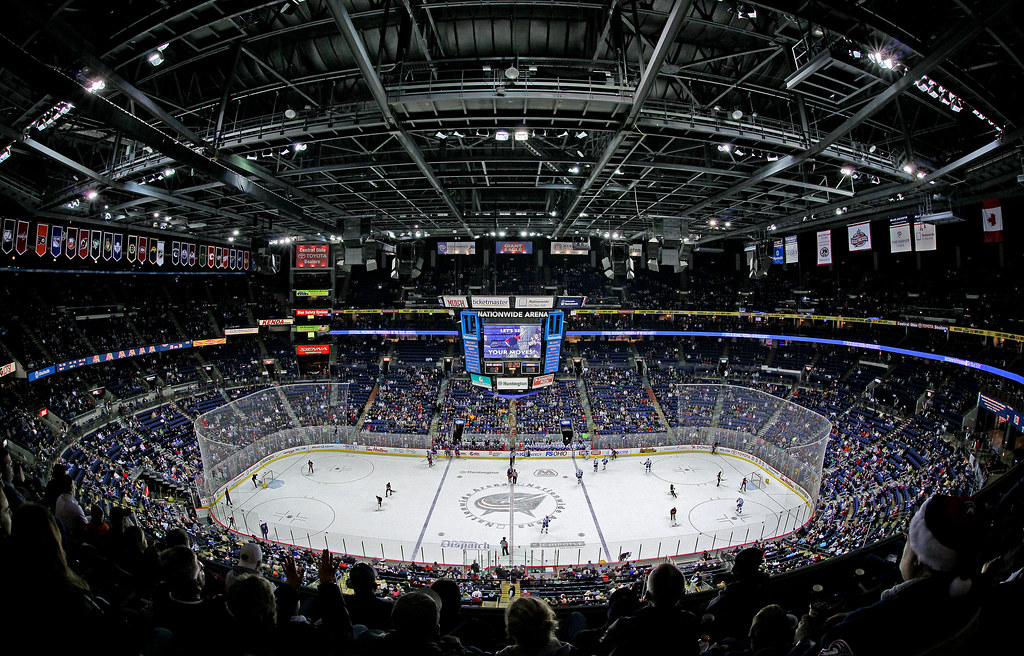
Several bus lines get you there. The official address is 200 W. Nationwide Blvd. Parking is cheap, starting at $3.00. The rink is laid out east-to-west, and the Jackets attack twice toward the east end.

The Arena includes an in-house practice facility, the OhioHealth IceHaus. It was the 1st NHL arena to have this since the old Madison Square Garden, and inspired the building of the AmeriHealth Pavilion (now the RWJ Barnabas Health Hockey House) as part of the Devils' Prudential Center project.
The Arena has hosted NCAA Tournament basketball, "professional wrestling" and concerts. The husband & wife team of country singers Tim McGraw & Faith Hill played the Arena's 1st event, and British rock legends Paul McCartney and (the surviving members of) The Who have played there within the past year. President Barack Obama held one of his final 2012 campaign rallies, with Bruce Springsteen and Jay-Z performing.

ESPN The Magazine declared it "the No. 2 stadium experience in professional sports." The Ultimate Sports Road Trip rated it the best arena in the NHL, saying, "This newer arena in downtown Columbus is the anchor for the emerging Arena District, already burgeoning with shops, restaurants and hotels. The venue is spectacular, from its nostalgic brick and stone veneer to its sweeping concourses with blue mood lighting and modern amenities. The arena bowl has state of the art scoreboards and surround LED graphics boards which look 21st century high tech. With a separate practice rink built right in the facility, theme restaurants and great food selection, not to mention a raucous hockey atmosphere, this NHL venue is a must see!"

But despite its youth, the Arena already has a tragic history. On March 16, 2002, 13-year-old Brittanie Cecil was struck in the head by a deflected puck during the Blue Jackets' game against the Calgary Flames, dying from her injuries 2 days later. As far as can be determine, she is the only fan in the NHL's nearly 100-year history ever to be killed in a game-related accident. As a result of her death, the NHL mandated safety netting in all its arenas.

Food. Being in Big Ten Country, where tailgate parties are practically a sacrament, you would expect the Columbus arena to have lots of good options. They do not disappoint. Their chain stands include ColdStone Creamery behind Sections 108, 121, 202, 203 and 218; Tim Hortons at 210; Kettle Chipper potato chips at 105; Papa John's Pizza 102 and 226; and that Cincinnati specialty, Skyline chili -- chili over spaghetti -- at 105, 119 and 206.

There are stands for that Midwestern staple, Bratwurst, at 108, 121, 202, 203 and 209; a Sausage Haus at 121; a Baked Potato stand at 105; Burgers at 105, 119, 206 and 222; Hot Dogs at 108, 111, 119, 202, 203, 206, 209, 218 and 222; Chicken Tenders at 101, 119, 206 and 222; French Fries at 105, 119, 206 and 222; Cheese Fries at 229; Popcorn at 108, 121, 202, 203, 209 and 218; Milkshakes at 105; and Mexican food at 217.

Team History Displays. As 1 of the 4 newest teams in the NHL, the Jackets don't have much history. They have no retired numbers. They have just 1 banner honoring anyone, founding owner John H. McConnell. "Mr. Mac" was also the founder of Worthington Industries, a steel company. Kilbourn Street, on the Arena's west side, has been renamed John H. McConnell Blvd. in his memory. The team's parking deck, across the Boulevard from the Arena, is named the McConnell Garage. His son, John P. McConnell, now owns both the team and Worthington Industries.
They have just 1 player from their history who has been elected to the Hockey Hall of Fame, Sergei Fedorov, who played for them from 2005 to 2008, but is better known as a Detroit Red Wing. (I don't know why they haven't retired his number: It's not like 91 is a popular one.) They have announced that they will retire a number for the 1st time on March 5, the 61 of their all-time leading scorer, Rick Nash.

They have never won their Division in 20 tries (not counting the current season and the never-played 2004-05). They've made the Playoffs only 6 times, and won a grand total of 2 Playoff rounds (in 2019 vs. Tampa Bay, and 2020 vs. Toronto).

Dave King, the team's 1st head coach, has been elected to the International Ice Hockey Federation (IIHF) Hall of Fame, for his contributions to the Canadian national team. As yet, no member of the Jackets' organization has received the Lester Patrick Trophy for contributions to hockey in America.

Instead of banners detailing the team's history (which wouldn't take many banners), they have banners of the NHL's other 30 teams. Yes, even the teams that Jacket fans don't particularly like, such as Pittsburgh, Detroit and Chicago.

Because of the nature of Ohio sports, both Cleveland and Cincinnati, the Browns-Steelers and Reds-Pirates rivalries have given the Jackets a rivalry with the Pittsburgh Penguins; and the Ohio State-Michigan and Cavaliers-Pistons rivalries have given them one with the Detroit Red Wings. The Jackets trail the Pens 36-17, and they trail the Wings 64-44-1.

Stuff. The Blue Line Team Store is on the north side of the Arena. The usual items that can be found at a souvenir store can be found there, including Union-style Army hats with the team logo on them.

As 1 of the 4 newest teams in the NHL, starting play in 2000 along with the Minnesota Wild, there aren't any official NHL videos about the Jackets. Don't count on finding many books about them either: The only one I could find on Amazon.com was Erin Butler's entry for them in the NHL's official Inside the NHL series.

During the Game. A November 19, 2014 article on The Hockey News' website ranked the NHL teams' fan bases, and listed the Blue Jackets' fans 28th, ahead of only Dallas and Arizona: "Jackets fans have a decent reputation, but THN metrics suggest it's exaggerated." I'm not sure what that means.
Does it mean that they have an exaggerated reputation for decency?

No, their reputation for decency is fine: You do not have to worry about wearing Devils gear in Nationwide Arena. Their rivals are the Pittsburgh Penguins, the Detroit Red Wings, and the Chicago Blackhawks (because everybody in the Midwest seems to hate the Hawks, now that they've replaced the Wings as the Midwest's most successful hockey team). They won't bother New Jersey fans, as long as you don't bother them first.

So you may be asking yourself, "I know what a Yellow Jacket is, it's a nasty stinging insect. I know what a Green Jacket is, it's the jacket you get for winning the Masters golf tournament. But what's a Blue Jacket?" The team's name was inspired by Ohio's connection to the American Civil War: Not only were legendary Generals Ulysses S. Grant, William Tecumseh Sherman and Philip Sheridan from Ohio, but the State lost a greater percentage of its population in battle than any other (on the non-traitor side, anyway).

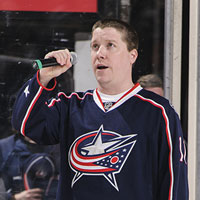
This Thursday's Devils-Jackets game will not feature a promotion. Leo Welsh of Opera Columbus is the Jackets' National Anthem singer. When he's introduced, the fans shout out, "Leo!" The 1st time he sang it, in 2003, he pumped his left fist after finishing. He says he doesn't know why he did it. Afterward, the team said it got such a great reaction that he should do it every time. So he does.
The fans, who call themselves the 5th Line (hockey teams usually have 4 forward lines) like to do the "O-H-I-O" chant made famous at Ohio State football games (and copied by the R&B group the Ohio Players on their song "Fire"), and also chant the team's initials, "C-B-J!"

Prior to the start of the 2007-08 season, the team bought a hand-made replica of an 1857 Napoleon cannon. It is "fired" at home games when the Jackets take the ice, score, or win. Their goal song is "The Whip" by Locksley.

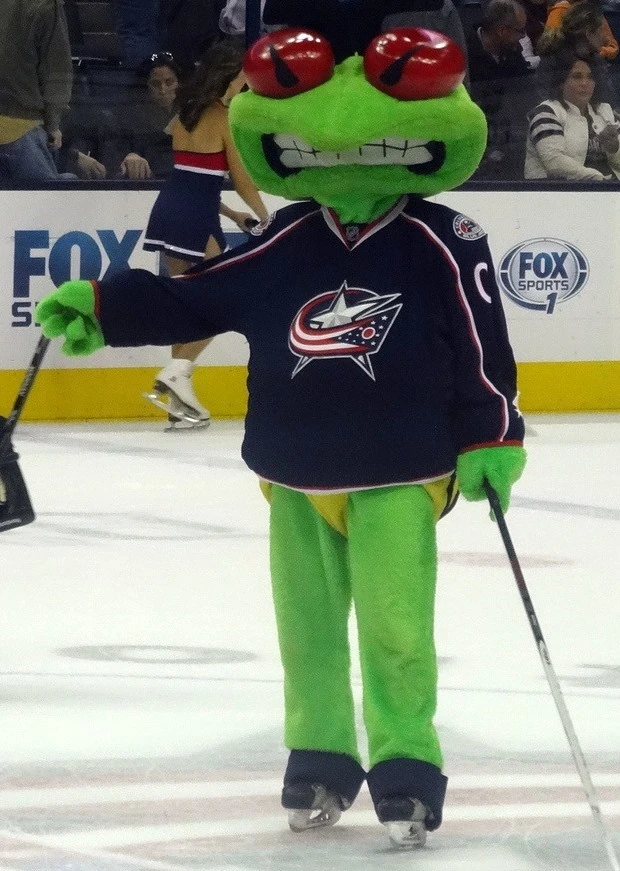
The mascot is Stinger the Yellow Jacket, although his costume was changed from yellow to green because it clashed less with the Blue Jackets' blue jerseys. He wears Number 00, in honor of the team's 2000 founding, and tends to bang on a snare drum.
That's right: Team officials say that this clashes less.

After the Game. The Arena district is well-policed, and downtown should be safe. Columbus doesn't have nearly the reputation for crime that Cleveland and Cincinnati do.

As for where to go for a postgame meal or drink, an Italian restaurant called Beppa di Bucco is across from the Arena to the east, a Mexican restaurant named Nada to the west, and bd's Mongolian Grill to the south.

The most famous bar, perhaps in the entire State of Ohio, is the Varsity Club, across from the OSU Ice Arena and 3 blocks north of Ohio Stadium. 278 W. Lane Avenue, at Tuttle Park Place. High Street, the eastern boundary of the OSU campus, has been described as "a zoo" on home football Saturdays, although that won't affect you as a visiting hockey fan.

Unfortunately, the most storied Ohio State fan bar of all, Papa Joe's, home of the Saturday morning Kegs and Eggs breakfast, burned down in 1996. The current pizza chain of the same name has no connection, aside from being an Ohio tradition. Retail space, including the current Ohio State bookstore (a Barnes & Noble, of course), is on the site. 1556 N. High Street at 11th Avenue.

I can find no references to places where New Yorkers gather in or around Columbus: The sites that usually list bars for football fans in exile don't seem to have references to where Yankees, Mets, Giants or Jets fans go when they live nearby.

Remember the York Steak House? There was one at the Brunswick Square Mall in East Brunswick, New Jersey, and I grew up a mile down the hill from it. There is only one left, and it is in Columbus. 4220 W. Broad Street, a.k.a. U.S. Route 40, at the interchange of I-270, across from the Westland Mall, 6 miles west of downtown. Bus 10.

If you visit Columbus during the European soccer season, the Fado Irish Pub chain has an outlet here, at 4022 Townsfair Way, about 9 miles northeast of downtown. Number 16 bus.

Sidelights. Columbus may have only the 1 major league team, unless you count the Crew, but it's a decent sports town, and here's some of the highlights:

* Huntington Park. Just 2 blocks west of Nationwide Arena, at 330 Huntington Park Lane, this 10,100-seat stadium has been home to the International League's Columbus Clippers since 2009. Since moving in, they've won Pennants in 2010, 2011 and 2015, giving them a total of 10 Pennants.
* Cooper Stadium. Opened in 1932 as Red Bird Stadium, and renamed for Harold Cooper, the Franklin County Commissioner and team owner who kept professional baseball in the city in the 1950s, this stadium was one of the most successful ballparks in the minor leagues. It was also one of the largest, seating 17,500 people at its peak, and 15,000 in its last years.

Initially, it was home to the Columbus Red Birds, a farm team of the St. Louis Cardinals (also nicknamed the Redbirds), and to a Negro League team, the Columbus Blue Birds. The Red Birds won Pennants in 1933, 1934, 1937, 1941, 1942, 1943 and 1950.

The Cardinals moved them to Omaha in 1955, and a new team was brought in, the Columbus Jets, a farm club first of the Kansas City Athletics, then of the Pittsburgh Pirates. This led to the stadium being renamed Jets Stadium. They won the Pennant in 1961 and 1965, before being moved to Charleston, West Virginia after the 1970 season. The Pirates restored Columbus as their Triple-A team in 1977, the Yankees took over in 1979, the Washington Nationals in 2007, and the Cleveland Indians in 2009.
The Clippers were a Yankee farm team from 1979 to 2006, infamous as the bad end of "The Columbus Shuttle," George Steinbrenner's pipeline from Triple-A ball to the Yankees and back. As a Yankee farm team, they won IL Pennants in 1979, 1980, 1981, 1987, 1991, 1992 and 1996. All told, Columbus baseball teams have won 19 Pennants.

Cooper Stadium was closed after the 2008 season, but instead of being demolished, it has been converted into an auto racing facility. 1155 W. Mound Street, 3 miles west of downtown. Number 6 bus.

An April 24, 2014 article in The New York Times, showing baseball fandom by ZIP Code, shows that, despite being considerably closer to Cincinnati (107 miles) than to Cleveland (143 miles), the Indians still have a slight edge on baseball fandom in Columbus, on the average having 28 percent to the Reds' 22 percent. The September 2014 issue of The Atlantic Monthly had a similar map, showing that the Browns are more popular in Columbus than the Bengals.

Cincinnati is the nearest MLB and NFL city, while Cleveland is the nearest NBA city. If it had teams in those sports, Columbus would rank 29th in population in MLB, 26th in the NFL, and 25th in the NBA. So don't hold your breath.

* Ohio State. The most famous building in the State of Ohio is Ohio Stadium, or, as ABC Sports' legendary college football announcer Keith Jackson called it, The Big Horseshoe On the Olentangy -- home field of the school usually referred to as "THE... Ohio State University." How big is it? The official seating capacity is currently listed as 104,944, making it the 4th-largest non-racing stadium in the world. 411 Woody Hayes Drive (formerly Woodruff Avenue), 3 1/2 miles north of downtown. Number 18 bus.
The Value City Arena at the Schottenstein Center opened in 1998, at 555 Borror Drive, across the Olentangy River from the Stadium. It hosted the NCAA's hockey Final Four, a.k.a. the Frozen Four, in 2005. On September 28, 2003, it hosted what turned out to be the last concert of The Three Tenors: Luciano Pavarotti, Placido Domingo and José Carreras. The Bill Davis Stadium (baseball) and the Jesse Owens Memorial Stadium (track & field) are part of this complex as well.
From 1956 to 1998, Ohio State played basketball at St. John Arena, across from the Stadium at 410 Woody Hayes Drive. It was at this arena that the Buckeyes played the 1959-60 season in which they won the National Championship. Coach Fred Taylor is in the Basketball Hall of Fame, along with 3 players on this team, although 1 is in as a coach: Jerry Lucas, John Havlicek, and "sixth man" Bob Knight.
It was also at St. John that Elvis Presley sang on June 25, 1974. Early in his carer, Elvis played 2 shows at the Franklin County Veterans Memorial Auditorium on May 26, 1956. Built in 1955, it was demolished in 2015, and an Ohio Veterans Museum is being built on the site. 300 W. Broad Street, on the Scioto River, just across from downtown. (The Beatles played in Cleveland and Cincinnati, but not in Columbus.)

Columbus has never hosted an NCAA Final Four. Nor has any other Ohio city. The 13,435-seat University of Dayton Arena, built in 1969, 74 miles west of Columbus, has hosted more NCAA Tournament games than any other facility: 107.

* Indianola Park. This was the home ground of the Columbus Pandhandles, one of the 1st professional football teams, from 1901 to 1926, before the glut of early pro football doomed them. Along with the Canton Bulldogs, in the 1910s they dominated the Ohio League, one of the NFL's predecessors.
They are best remembered for the 7 Nesser brothers (sons of German immigrants, there were 8, but Pete, 1877-1954, ironically the largest of them, didn't like football and didn't play; there were also 4 sisters): John (1875-1931), Phil (1880-1959), Ted (1883-1941), Fred (1887-1967), Frank (1889-1953), Al (1893-1967) and Ray (1898-1969, the youngest and the last survivor).

Knute Rockne, who did play a little pro football before going back to Notre Dame to coach, said, "Getting hit by a Nesser is like falling off a moving train." In 1921, Ted's son Charlie (1903-1970) played with the Panhandles, marking the only time a father and son have played in the NFL at the same time, let alone for the same team.

The Indianola Shopping Center is now on the site, 3 miles north of downtown. 1900 N. 4th Street at 19th Avenue. Number 4 bus.

* Columbus Crew Stadium. Opening in 1999, and known until from 2015 until 2019 as Columbus Crew Stadium when naming rights were sold to a Spain-based insurance company, the Crew moved into this 22,555-seat stadium after playing their 1st 3 seasons (1996-98) before 90,000 empty seats at Ohio Stadium. They won the MLS Cup in 2008, and reached the Final again in 2015, losing to the Portland Timbers despite playing at home.
The Stadium also hosted the MLS Cup Final in 2001 (San Jose beating Los Angeles), 10 games of the U.S. National Team (including 4 games against Mexico, all 2-0 or "Dos A Cero" wins), and 6 games of the 2003 Women's World Cup (including a 3-0 U.S. win over North Korea).

The Crew's long-term status is now settled, as Cleveland Browns owner Jimmy Halsam has bought them from their would-be new owners, who have now gotten an expansion franchise for Austin, Texas, instead of moving the Crew there for the 2019 season. But they've still left this facility, which is now named Historic Crew Stadium.

One Black and Gold Blvd., at 20th Avenue, about 3 1/2 miles north of downtown, near the Indianola Shopping Center. Number 4 bus.

* Lower.com Field. In 2021, the Crew moved into the new Lower.com Field, named for a local real estate company. The old address was 560 W. Nationwide Blvd. The new address is 96 Columbus Crew Way. It's 2 blocks west of Huntington Park, and 4 blocks west of Nationwide Arena.

Currently without an NBA team, a May 12, 2014 article in The New York Times shows basketball allegiances in the Columbus area are mixed between the Cleveland Cavaliers and the Miami Heat. But once you get into the suburbs, it becomes more Cavs territory. My guess: Ohio State students from elsewhere, some of whom end up staying in Columbus, stick with their old home teams; while some stick with LeBron James (who's played for both the Cavs and the Heat), and some adopted the Cavs regardless of LeBron.

The aforementioned Ohio Veterans Museum opened on October 27, 2018.

Ohio Village is a recreated 19th Century community, sort of an updated, Midwestern version of Colonial Williamsburg. 800 E. 17th Avenue, at Velma Avenue. Number 4 bus. The Columbus Museum of Art is at 480 E. Broad Street, at Washington Avenue. Number 10 bus. The Center of Science & Industry (COSI) is across from the Veterans Memorial Auditorium site, at 333 W. Broad Street, at Washington Blvd. Number 10 bus. The James Thurber House, home to the legendary author and humorist, is at 77 Jefferson Avenue,at N. 11th Street. Number 6 bus.

Farther afield -- with no public transportation available -- the Armstrong Air & Space Museum is in the hometown of Neil Armstrong, the late 1st man to walk on the Moon. 500 Apollo Drive in Wapakoneta, just off Interstate 75, 87 miles northwest of downtown Columbus.

No Presidents have come from Columbus, but Rutherford B. Hayes and William McKinley lived there while they were Governor of Ohio. Alas, there was no Governor's Mansion during their times in the office. The Ohio Governor's Residence and Heritage Garden has only been the Governor's Mansion since 1957, and current Governor John Kasich, who ran for President in 2016, already lived nearby (he'd been a Congressman for the area), and so he only uses it for official functions. 358 N. Parkview, in Bexley, about 4 miles northeast of downtown. Number 10 bus.

McKinley's historical sites are all in or near his hometown of Canton, and I discuss them in my Cleveland trip guides. Hayes' home, Spiegel Grove, and his grave and Presidential Library are in Fremont, 106 miles north of Columbus. Warren G. Harding's hometown of Marion is 51 miles north. Dying in office in 1923, he remains the last President to have lived in Ohio. As with both locations, there is no public transportation to there from any of Ohio's major cities.

Marion was also the official hometown of the Oorang Indians, a pro football team made up entirely of Native Americans, led by Hall-of-Famers Jim Thorpe and Joe Guyon. The problem wasn't that some of the players used their Native names, which included animal names like Ted Buffalo, Gray Horse, Big Bear, Eagle Feather and War Eagle. The problem is that they were party animals, not getting the rest they needed. As quarterback Leon Boutwell noted:

White people had this misconception about Indians. They thought they were all wild men, even though almost all of us had been to college and were generally more civilized than they were. Well, it was a dandy excuse to raise hell and get away with it when the mood struck us. Since we were Indians we could get away with things the whites couldn't. Don't think we didn't take advantage of it.

As a result of their wild ways, they went 3-6 in 1922, and 2-10 in 1923, and folded. I say Marion was their official hometown because they were a "traveling team," playing just 1 of their 21 games in Marion.

The Armstrong Air & Space Museum was built to honor Neil Armstrong, the 1st man to walk on the Moon, in his hometown of Wapakoneta, Ohio. The building is, naturally, shaped like a crescent moon. 500 Apollo Drive, 185 miles southwest of Cleveland, 93 miles southwest of Toledo, and 88 miles northwest of Columbus.

The tallest building in Columbus is the Rhodes State Office Tower, named for the longtime Governor who ordered the Ohio National Guard to fire on the protestors at Kent State University on May 4, 1970. Completed in 1974, it is 629 feet high, and every bit as ugly as the Administration it memorializes. 30 E. Broad Street, downtown, across from the State House.

While lots of movies have been shot and/or set in Ohio, Columbus hasn't been a popular location for them. There have been 3 TV shows set in Columbus: Family Ties, the 1982-89 NBC sitcom that introduced us to Michael J. Fox; Hope & Faith, a sitcom that ran on ABC, 2006-09; and Man Up!, an ABC sitcom set in nearby Gahanna that tanked and was canceled after 13 episodes in 2011.

Lima, the real town that was the setting for the Fox drama Glee, is 92 miles northwest of downtown Columbus. Further northwest, 152 miles from Columbus, is Sherwood, which was used as the setting for the film Heathers, with the oh-so-Middle American town's high school ironically named after Paul Westerburg, lead singer of the alternative rock band The Replacements. But both Glee and
Heathers were filmed completely in Southern California.

*

Columbus may be Ohio's largest city, but aside from being the State capital, it's known for 2 things: Ohio State football, and Ohio State anything else. But a Blue Jackets game could be fun, and it's close enough for a fairly easy New Jersey Devils roadtrip. 
Saturday, December 14, 2019

How to Be a Devils Fan In Columbus -- 2019-20 Edition

Next Saturday, the New Jersey Devils will go to Ohio to play the Columbus Blue Jackets.

Before You Go. Columbus can get really hot in the Summer, but this game will be played right before Christmas, and, besides, it will be indoors. The Columbus Dispatch website is predicting the high 30s for Saturday afternoon, and the mid-20s for the evening.

Columbus is in the Eastern Time Zone, so you won't have to set your clocks back.

Tickets. The Blue Jackets averaged 16,658 fans per home game this season, only about 92 percent of capacity.

Which does beg the question: Why did Columbus get an NHL team? Why not Cleveland or Cincinnati, the more proven major league cities? Probably because somebody (probably the actual Devil, a.k.a. Commissioner Gary Bettman) though that neither Cleveland nor Cincinnati could support a team by itself, but a team in Columbus, in Central Ohio, would be supported by the entire State. (Or maybe that theory makes no sense, since he let the Minnesota North Stars move to Dallas, when he could have suggested Austin as a way to get fans from Dallas and Houston, but didn't.)

At any rate, you should be able to walk up to the box office 5 minutes before puck-drop, and buy any seat you can afford. In the Lower Level, the 100 sections, seats are $140 between the goals and $108 behind them. In the Upper Level, the 200 sections, seats are $74 between the goals and $53 behind them.

Getting There. It's 536 miles from Times Square in New York to Capitol Square in Columbus, and 526 miles from the Prudential Center to Nationwide Arena. Flying may seem like a good option, and United Airlines can get you a nonstop flight from Newark Liberty to Port Columbus International Airport for a round-trip fare of as little as $518.

Amtrak does not go to Columbus. Its main train station was demolished in 1979 to make way for the Columbus Convention Center (which is too bad, because it was just 2 blocks from the Arena), and it is now the largest metropolitan area in America that doesn't have Amtrak access.

Greyhound's run between New York and Columbus is about 14 hours with no change of buses necessary, costing $310, and dropping to as little as $144 with advanced-purchase. The station is at 111 E. Town Street, at 3rd Street, downtown, 2 blocks south of the State House.

If you decide to drive, it's far enough that it will help to get someone to go with you and split the duties, and to trade off driving and sleeping. You'll need to get on the New Jersey Turnpike. Take it to Exit 14, to Interstate 78. Follow I-78 west all the way through New Jersey, to Phillipsburg, and across the Delaware River into Easton, Pennsylvania. Continue west on I-78 until reaching Harrisburg. There, you will merge onto I-81. Take Exit 52 to U.S. Route 11, which will soon take you onto I-76. This is the Pennsylvania Turnpike, the nation's first superhighway, opening in 1940.

The Turnpike will eventually be a joint run between I-76 and Interstate 70. Once that happens, you'll stay on I-70, all the way past Pittsburgh, across the little northern pandhandle of West Virginia, and into Ohio all the way to Columbus.

If you do it right, you should spend about an hour and 15 minutes in New Jersey, 5 hours and 30 minutes in Pennsylvania, 15 minutes in West Virginia, and about 2 hours and 15 minutes in Ohio. That's about 9 hours and 15 minutes. Counting rest stops, preferably halfway through Pennsylvania and just after you enter Ohio, and accounting for traffic in both New York and Columbus, it should be no more than 11 hours, which would save you time on Greyhound, if not flying.

Once In the City. Founded in 1816, Columbus, named for Christopher Columbus, is easily the largest city in Ohio by population, with about 823,000 people, to a mere 397,000 for Cleveland and 298,000 for Cincinnati. But its metropolitan area has just 2.4 million people, still larger than Cincy's 2.2 million but considerably smaller than Cleveland's 3.5 million, because Cleveland has a much larger suburban area.

High Street is the street address divider between East and West, and Broad Street serving as the divider between North and South. The southeaster corner of High & Broad includes Capitol Square, with the State House. The sales tax in the State of Ohio is 5.75 percent, rising to 7.5 percent in Franklin County, including the City of Columbus.
The Ohio State House. No, I don't know why they stopped building it
before finishing the dome.

ZIP Codes in Columbus begin with the digits 432, and the Area Code is 614, with 380 overlaid. The Central Ohio Transit Authority (COTA) runs buses, with a $2.00 fare, but no rapid transit rail system: No subway, no elevated, no light rail, no commuter rail. Interstate 270 serves as a beltway, known as the Outerbelt or, for a local "sports" hero, the Jack Nicklaus Freeway.

The city government runs the electricity. The city is about 59 percent white, 28 percent black, 6 percent Hispanic and 4 percent Asian. Columbus has mostly been spared racial strife, although the nearby city of Springfield had race riots in 1904, 1906 and 1921.

Going In. The Nationwide Arena (naming rights bought by the insurance company) is about a mile northwest of the State House, in the Arena District, near the confluence of the Scioto and Olentangy Rivers, in an area that includes their minor-league ballpark and their Convention Center.
Several bus lines get you there. The official address is 200 W. Nationwide Blvd. Parking is cheap, starting at $3.00. The rink is laid out east-to-west, and the Jackets attack twice toward the east end.

The Arena includes an in-house practice facility, the OhioHealth IceHaus. It was the 1st NHL arena to have this since the old Madison Square Garden, and inspired the building of the AmeriHealth Pavilion as part of the Devils' Prudential Center project.
The Arena has hosted NCAA Tournament basketball, "professional wrestling" and concerts. The husband & wife team of country singers Tim McGraw & Faith Hill played the Arena's 1st event, and British rock legends Paul McCartney and (the surviving members of) The Who have played there within the past year. President Barack Obama held one of his final 2012 campaign rallies, with Bruce Springsteen and Jay-Z performing.

ESPN The Magazine declared it "the No. 2 stadium experience in professional sports." The Ultimate Sports Road Trip rated it the best arena in the NHL, saying, "This newer arena in downtown Columbus is the anchor for the emerging Arena District, already burgeoning with shops, restaurants and hotels. The venue is spectacular, from its nostalgic brick and stone veneer to its sweeping concourses with blue mood lighting and modern amenities. The arena bowl has state of the art scoreboards and surround LED graphics boards which look 21st century high tech. With a separate practice rink built right in the facility, theme restaurants and great food selection, not to mention a raucous hockey atmosphere, this NHL venue is a must see!"

But despite its youth, the Arena already has a tragic history. On March 16, 2002, 13-year-old Brittanie Cecil was struck in the head by a deflected puck during the Blue Jackets' game against the Calgary Flames, dying from her injuries 2 days later. As far as can be determine, she is the only fan in the NHL's nearly 100-year history ever to be killed in a game-related accident. As a result of her death, the NHL mandated safety netting in all its arenas.

Food. Being in Big Ten Country, where tailgate parties are practically a sacrament, you would expect the Columbus arena to have lots of good options. They do not disappoint. Their chain stands include ColdStone Creamery behind Sections 108, 121, 202, 203 and 218; Tim Hortons at 210; Kettle Chipper potato chips at 105; Papa John's Pizza 102 and 226; and that Cincinnati specialty, Skyline chili -- chili over spaghetti -- at 105, 119 and 206.

There are stands for that Midwestern staple, Bratwurst, at 108, 121, 202, 203 and 209; a Sausage Haus at 121; a Baked Potato stand at 105; Burgers at 105, 119, 206 and 222; Hot Dogs at 108, 111, 119, 202, 203, 206, 209, 218 and 222; Chicken Tenders at 101, 119, 206 and 222; French Fries at 105, 119, 206 and 222; Cheese Fries at 229; Popcorn at 108, 121, 202, 203, 209 and 218; Milkshakes at 105; and Mexican food at 217.

Team History Displays. As 1 of the 3 newest teams in the NHL, the Jackets don't have much history. They have no retired numbers. They have just 1 banner honoring anyone, founding owner John H. McConnell. "Mr. Mac" was also the founder of Worthington Industries, a steel company. Kilbourn Street, on the Arena's west side, has been renamed John H. McConnell Blvd. in his memory. The team's parking deck, across the Boulevard from the Arena, is named the McConnell Garage. His son, John P. McConnell, now owns both the team and Worthington Industries.
They have just 1 player from their history who has been elected to the Hockey Hall of Fame, Sergei Fedorov, who played for them from 2005 to 2008, but is better known as a Detroit Red Wing. (I don't know why they haven't retired his number: It's not like 91 is a popular one.) They have never won their Division in 16 tries (not counting the current season and the never-played 2004-05). They've made the Playoffs only 3 times (in 2009, 2014 and 2017), and won a grand total of 3 Playoff games (2 in 2014 and 1 last year, all against Pittsburgh).

Dave King, the team's 1st head coach, has been elected to the International Ice Hockey Federation (IIHF) Hall of Fame, for his contributions to the Canadian national team. As yet, no member of the Jackets' organization has received the Lester Patrick Trophy for contributions to hockey in America.

Instead of banners detailing the team's history (which wouldn't take many banners), they have banners of the NHL's other 30 teams. Yes, even the teams that Jacket fans don't particularly like, such as Pittsburgh, Detroit and Chicago.

Because of the nature of Ohio sports, both Cleveland and Cincinnati, the Browns-Steelers and Reds-Pirates rivalries have given the Jackets a rivalry with the Pittsburgh Penguins; and the Ohio State-Michigan and Cavaliers-Pistons rivalries have given them one with the Detroit Red Wings. The Jackets trail the Pens 28-14, and they trail the Wings 55-37-1.

Stuff. The Blue Line Team Store is on the north side of the Arena. The usual items that can be found at a souvenir store can be found there, including Union-style Army hats with the team logo on them.

As 1 of the 2 newest teams in the NHL, starting play in 2000 along with the Minnesota Wild, there aren't any official NHL videos about the Jackets. Don't count on finding many books about them either: The only one I could find on Amazon.com was Erin Butler's entry for them in the NHL's official Inside the NHL series. Maybe if this strong season they're having turns out well.

During the Game. A November 19, 2014 article on The Hockey News' website ranked the NHL teams' fan bases, and listed the Blue Jackets' fans 28th, ahead of only Dallas and Arizona: "Jackets fans have decent reputation, but THN metrics suggest it's exaggerated." I'm not sure what that means.
Does it mean that they have an exaggerated reputation for decency?

No, their reputation for decency is fine: You do not have to worry about wearing Devils gear in Nationwide Arena. Their rivals are the Pittsburgh Penguins, the Detroit Red Wings, and the Chicago Blackhawks (because everybody in the Midwest seems to hate the Hawks, now that they've replaced the Wings as the Midwest's most successful hockey team). They won't bother New Jersey fans, as long as you don't bother them first.

So you may be asking yourself, "I know what a Yellow Jacket is, it's a nasty stinging insect. I know what a Green Jacket is, it's the jacket you get for winning the Masters golf tournament. But what's a Blue Jacket?" The team's name was inspired by Ohio's connection to the American Civil War: Not only were legendary Generals Ulysses S. Grant, William Tecumseh Sherman and Philip Sheridan from Ohio, but the State lost a greater percentage of its population in battle than any other (on the non-traitor side, anyway).

Next Saturday's Devils-Jackets game will not feature a promotion. Leo Welsh of Opera Columbus is the Jackets' National Anthem singer. When he's introduced, the fans shout out, "Leo!" The 1st time he sang it, in 2003, he pumped his left fist after finishing. He says he doesn't know why he did it. Afterward, the team said it got such a great reaction that he should do it every time. So he does.
The fans, who call themselves the 5th Line (hockey teams usually have 4 forward lines) like to do the "O-H-I-O" chant made famous at Ohio State football games (and copied by the R&B group the Ohio Players on their song "Fire"), and also chant the team's initials, "C-B-J!"

Prior to the start of the 2007-08 season, the team bought a hand-made replica of an 1857 Napoleon cannon. It is "fired" at home games when the Jackets take the ice, score, or win. Their goal song is "The Whip" by Locksley.

The mascot is Stinger the Yellow Jacket, although his costume was changed from yellow to green because it clashed less with the Blue Jackets' blue jerseys. He wears Number 00, in honor of the team's 2000 founding, and tends to bang on a snare drum.
That's right: They say that this clashes less.

After the Game. The Arena district is well-policed, and downtown should be safe. Columbus doesn't have nearly the reputation for crime that Cleveland and Cincinnati do.

As for where to go for a postgame meal or drink, an Italian restaurant called Beppa di Bucco is across from the Arena to the east, a Mexican restaurant named Nada to the west, and bd's Mongolian Grill to the south.

The most famous bar, perhaps in the entire State of Ohio, is the Varsity Club, across from the OSU Ice Arena and 3 blocks north of Ohio Stadium. 278 W. Lane Avenue, at Tuttle Park Place. High Street, the eastern boundary of the OSU campus, has been described as "a zoo" on home football Saturdays, although that won't affect you as a visiting hockey fan.

Unfortunately, the most storied Ohio State fan bar of all, Papa Joe's, home of the Saturday morning Kegs and Eggs breakfast, burned down in 1996. The current pizza chain of the same name has no connection, aside from being an Ohio tradition. Retail space, including the current Ohio State bookstore (a Barnes & Noble, of course), is on the site. 1556 N. High Street at 11th Avenue.

I can find no references to places where New Yorkers gather in or around Columbus: The sites that usually list bars for football fans in exile don't seem to have references to where Yankees, Mets, Giants or Jets fans go when they live nearby.

Remember the York Steak House? There was one at the Brunswick Square Mall in East Brunswick, New Jersey, and I grew up a mile down the hill from it. There is only one left, and it is in Columbus. 4220 W. Broad Street, a.k.a. U.S. Route 40, at the interchange of I-270, across from the Westland Mall, 6 miles west of downtown. Bus 10.

If you visit Columbus during the European soccer season, the Fado Irish Pub chain has an outlet here, at 4022 Townsfair Way, about 9 miles northeast of downtown. Number 16 bus.

Sidelights. Columbus may have only the 1 major league team, unless you count the Crew, but it's a decent sports town, and here's some of the highlights:

* Huntington Park. Just 2 blocks west of Nationwide Arena, at 330 Huntington Park Lane, this 10,100-seat stadium has been home to the International League's Columbus Clippers since 2009. Since moving in, they've won Pennants in 2010, 2011 and 2015, giving them a total of 10 Pennants.
* Cooper Stadium. Opened in 1932 as Red Bird Stadium, and renamed for Harold Cooper, the Franklin County Commissioner and team owner who kept professional baseball in the city in the 1950s, this stadium was one of the most successful ballparks in the minor leagues. It was also one of the largest, seating 17,500 people at its peak, and 15,000 in its last years.

Initially, it was home to the Columbus Red Birds, a farm team of the St. Louis Cardinals (also nicknamed the Redbirds), and to a Negro League team, the Columbus Blue Birds. The Red Birds won Pennants in 1933, 1934, 1937, 1941, 1942, 1943 and 1950.

The Cardinals moved them to Omaha in 1955, and a new team was brought in, the Columbus Jets, a farm club first of the Kansas City Athletics, then of the Pittsburgh Pirates. This led to the stadium being renamed Jets Stadium. They won the Pennant in 1961 and 1965, before being moved to Charleston, West Virginia after the 1970 season. The Pirates restored Columbus as their Triple-A team in 1977, the Yankees took over in 1979, the Washington Nationals in 2007, and the Cleveland Indians in 2009.
The Clippers were a Yankee farm team from 1979 to 2006, infamous as the bad end of "The Columbus Shuttle," George Steinbrenner's pipeline from Triple-A ball to the Yankees and back. As a Yankee farm team, they won IL Pennants in 1979, 1980, 1981, 1987, 1991, 1992 and 1996. All told, Columbus baseball teams have won 19 Pennants.

Cooper Stadium was closed after the 2008 season, but instead of being demolished, it has been converted into an auto racing facility. 1155 W. Mound Street, 3 miles west of downtown. Number 6 bus.

An April 24, 2014 article in The New York Times, showing baseball fandom by ZIP Code, shows that, despite being considerably closer to Cincinnati (107 miles) than to Cleveland (143 miles), the Indians still have a slight edge on baseball fandom in Columbus, on the average having 28 percent to the Reds' 22 percent. The September 2014 issue of The Atlantic Monthly had a similar map, showing that the Browns are more popular in Columbus than the Bengals.

Cincinnati is the nearest MLB and NFL city, while Cleveland is the nearest NBA city. If it had teams in those sports, Columbus would rank 29th in population in MLB, 26th in the NFL, and 25th in the NBA. So don't hold your breath.

* Ohio State. The most famous building in the State of Ohio is Ohio Stadium, or, as ABC Sports' legendary college football announcer Keith Jackson called it, The Big Horseshoe On the Olentangy -- home field of the school usually referred to as "THE... Ohio State University." How big is it? The official seating capacity is currently listed as 104,944, making it the 4th-largest non-racing stadium in the world. 411 Woody Hayes Drive (formerly Woodruff Avenue), 3 1/2 miles north of downtown. Number 18 bus.
The Value City Arena at the Schottenstein Center opened in 1998, at 555 Borror Drive, across the Olentangy River from the Stadium. It hosted the NCAA's hockey Final Four, a.k.a. the Frozen Four, in 2005. On September 28, 2003, it hosted what turned out to be the last concert of The Three Tenors: Luciano Pavarotti, Placido Domingo and José Carreras. The Bill Davis Stadium (baseball) and the Jesse Owens Memorial Stadium (track & field) are part of this complex as well.
From 1956 to 1998, Ohio State played basketball at St. John Arena, across from the Stadium at 410 Woody Hayes Drive. It was at this arena that the Buckeyes played the 1959-60 season in which they won the National Championship. Coach Fred Taylor is in the Basketball Hall of Fame, along with 3 players on this team, although 1 is in as a coach: Jerry Lucas, John Havlicek, and "sixth man" Bob Knight.
It was also at St. John that Elvis Presley sang on June 25, 1974. Early in his carer, Elvis played 2 shows at the Franklin County Veterans Memorial Auditorium on May 26, 1956. Built in 1955, it was demolished in 2015, and an Ohio Veterans Museum is being built on the site. 300 W. Broad Street, on the Scioto River, just across from downtown. (The Beatles played in Cleveland and Cincinnati, but not in Columbus.)

Columbus has never hosted an NCAA Final Four. Nor has any other Ohio city. The 13,435-seat University of Dayton Arena, built in 1969, 74 miles west of Columbus, has hosted more NCAA Tournament games than any other facility: 107.

* Indianola Park. This was the home ground of the Columbus Pandhandles, one of the 1st professional football teams, from 1901 to 1926, before the glut of early pro football doomed them. Along with the Canton Bulldogs, in the 1910s they dominated the Ohio League, one of the NFL's predecessors.
They are best remembered for the 7 Nesser brothers (sons of German immigrants, there were 8, but Pete, 1877-1954, ironically the largest of them, didn't like football and didn't play; there were also 4 sisters): John (1875-1931), Phil (1880-1959), Ted (1883-1941), Fred (1887-1967), Frank (1889-1953), Al (1893-1967) and Ray (1898-1969, the youngest and the last survivor).

Knute Rockne, who did play a little pro football before going back to Notre Dame to coach, said, "Getting hit by a Nesser is like falling off a moving train." In 1921, Ted's son Charlie (1903-1970) played with the Panhandles, marking the only time a father and son have played in the NFL at the same time, let alone for the same team.

The Indianola Shopping Center is now on the site, 3 miles north of downtown. 1900 N. 4th Street at 19th Avenue. Number 4 bus.

* Mapfre Stadium. Opening in 1999, and known until 2015 as Columbus Crew Stadium before naming rights were sold to a Spain-based insurance company, the Crew moved into this 22,555-seat stadium after playing their 1st 3 seasons (1996-98) before 90,000 empty seats at Ohio Stadium. They won the MLS Cup in 2008, and reached the Final again in 2015, losing to the Portland Timbers despite playing at home.
The Stadium also hosted the MLS Cup Final in 2001 (San Jose beating Los Angeles), 10 games of the U.S. National Team (including 4 games against Mexico, all 2-0 or "Dos A Cero" wins), and 6 games of the 2003 Women's World Cup (including a 3-0 U.S. win over North Korea).

The Crew's long-term status is now settled, as Cleveland Browns owner Jimmy Halsam has bought them from their would-be new owners, who have now gotten an expansion franchise for Austin, Texas, instead of moving the Crew there for the 2019 season.

One Black and Gold Blvd., at 20th Avenue, about 3 1/2 miles north of downtown, near the Indianola Shopping Center. Number 4 bus.

UPDATE: In 2021, the Crew moved into the new Lower.com Field, named for a local real estate company. 560 W. Nationwide Blvd.

Currently without an NBA team, a May 12, 2014 article in The New York Times shows basketball allegiances in the Columbus area are mixed between the Cleveland Cavaliers and the Miami Heat. But once you get into the suburbs, it becomes more Cavs territory. My guess: Ohio State students from elsewhere, some of whom end up staying in Columbus, stick with their old home teams; while some stick with LeBron James (who's played for both the Cavs and the Heat), and some adopted the Cavs regardless of LeBron.

The aforementioned Ohio Veterans Museum opened on October 27, 2018.

Ohio Village is a recreated 19th Century community, sort of an updated, Midwestern version of Colonial Williamsburg. 800 E. 17th Avenue, at Velma Avenue. Number 4 bus. The Columbus Museum of Art is at 480 E. Broad Street, at Washington Avenue. Number 10 bus. The Center of Science & Industry (COSI) is across from the Veterans Memorial Auditorium site, at 333 W. Broad Street, at Washington Blvd. Number 10 bus. The James Thurber House, home to the legendary author and humorist, is at 77 Jefferson Avenue,at N. 11th Street. Number 6 bus.

Farther afield -- with no public transportation available -- the Armstrong Air & Space Museum is in the hometown of Neil Armstrong, the late 1st man to walk on the Moon. 500 Apollo Drive in Wapakoneta, just off Interstate 75, 87 miles northwest of downtown Columbus.

No Presidents have come from Columbus, but Rutherford B. Hayes and William McKinley lived there while they were Governor of Ohio. Alas, there was no Governor's Mansion during their times in the office. The Ohio Governor's Residence and Heritage Garden has only been the Governor's Mansion since 1957, and current Governor John Kasich, who ran for President in 2016, already lived nearby (he'd been a Congressman for the area), and so he only uses it for official functions. 358 N. Parkview, in Bexley, about 4 miles northeast of downtown. Number 10 bus.

McKinley's historical sites are all in or near his hometown of Canton, and I discuss them in my Cleveland trip guides. Hayes' home, Spiegel Grove, and his grave and Presidential Library are in Fremont, 106 miles north of Columbus. Warren G. Harding's hometown of Marion is 51 miles north. Dying in office in 1923, he remains the last President to have lived in Ohio. As with both locations, there is no public transportation to there from any of Ohio's major cities.

Marion was also the official hometown of the Oorang Indians, a pro football team made up entirely of Native Americans, led by Hall-of-Famers Jim Thorpe and Joe Guyon. The problem wasn't that some of the players used their Native names, which included animal names like Ted Buffalo, Gray Horse, Big Bear, Eagle Feather and War Eagle. The problem is that they were party animals, not getting the rest they needed. As quarterback Leon Boutwell noted:

White people had this misconception about Indians. They thought they were all wild men, even though almost all of us had been to college and were generally more civilized than they were. Well, it was a dandy excuse to raise hell and get away with it when the mood struck us. Since we were Indians we could get away with things the whites couldn't. Don't think we didn't take advantage of it.

As a result of their wild ways, they went 3-6 in 1922, and 2-10 in 1923, and folded. I say Marion was their official hometown because they were a "traveling team," playing just 1 of their 21 games in Marion.

The Armstrong Air & Space Museum was built to honor Neil Armstrong, the 1st man to walk on the Moon, in his hometown of Wapakoneta, Ohio. The building is, naturally, shaped like a crescent moon. 500 Apollo Drive, 185 miles southwest of Cleveland, 93 miles southwest of Toledo, and 88 miles northwest of Columbus.

The tallest building in Columbus is the Rhodes State Office Tower, named for the longtime Governor who ordered the Ohio National Guard to fire on the protestors at Kent State University on May 4, 1970. Completed in 1974, it is 629 feet high, and every bit as ugly as the Administration it memorializes. 30 E. Broad Street, downtown, across from the State House.

While lots of movies have been shot and/or set in Ohio, Columbus hasn't been a popular location for them. There have been 3 TV shows set in Columbus: Family Ties, the 1982-89 NBC sitcom that introduced us to Michael J. Fox; Hope & Faith, a sitcom that ran on ABC, 2006-09; and Man Up!, an ABC sitcom set in nearby Gahanna that tanked and was canceled after 13 episodes in 2011.

Lima, the real town that was the setting for the Fox drama Glee, is 92 miles northwest of downtown Columbus. Further northwest, 152 miles from Columbus, is Sherwood, which was used as the setting for the film Heathers, with the oh-so-Middle American town's high school ironically named after Paul Westerburg, lead singer of the alternative rock band The Replacements. But both Glee and
Heathers were filmed completely in Southern California.

*

Columbus may be Ohio's largest city, but aside from being the State capital, it's known for 2 things: Ohio State football, and Ohio State anything else. But a Blue Jackets game could be fun, and it's close enough for a fairly easy New Jersey Devils roadtrip.