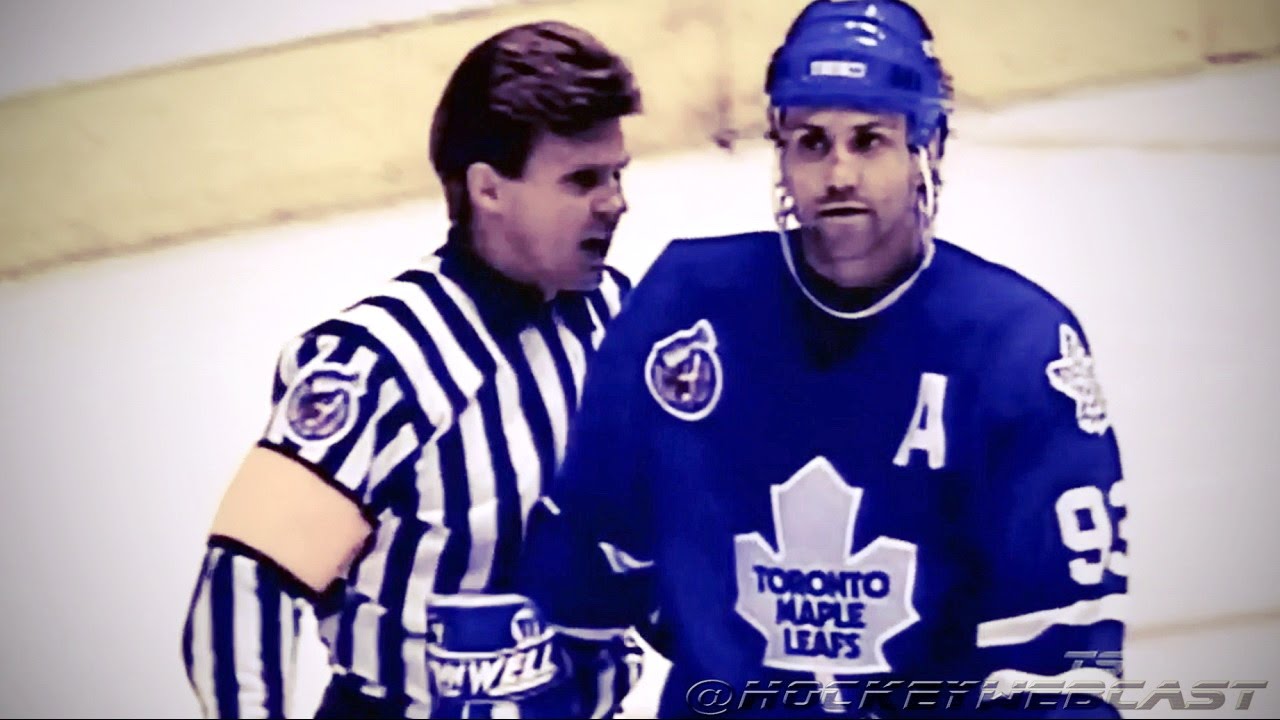
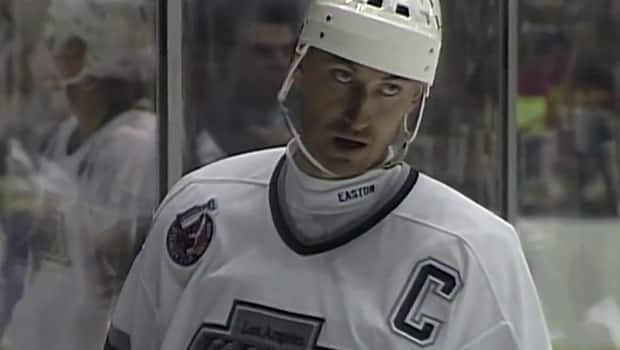
Showing posts with label barry melrose. Show all posts

Wednesday, June 3, 2020

Top 5 Reasons You Can't Blame Marty McSorley for the Los Angeles Kings Losing the 1993 Stanley Cup

June 3, 1993: The Los Angeles Kings lead the Montreal Canadiens 2-1, late in the 3rd period of Game 2 of the Stanley Cup Finals, at the Montreal Forum. The Kings, in the Finals for the 1st time in their 26-year history, are mere minutes away from taking a 2-games-to-0 lead back to Los Angeles (well, Inglewood, to their own Forum). And they are doing so on the home ice of the greatest franchise in hockey, playing in their 34th Stanley Cup Finals -- having already won a record 23.

But Jacques Demers, head coach of the Canadiens, notices something. During a break in the action, with 1:45 left in regulation, he asks to speak to the referee. He asks them to measure the curve of the stick used by Kings defenseman Marty McSorley.

In the 1960s, players such as Bobby Hull used what became known as the "banana blade," a stick whose blade curved by up to 3 inches. These curves made the puck faster and more erratic. Since most goaltenders didn't yet use facemasks, this scared them. By 1967, most were using masks, but shots off the banana blade were still dangerous. So the NHL made a rule, limiting stick blade curves to 3/4 of an inch.

McSorley was a part of the Edmonton Oilers' dynasty of the 1980s, led by Wayne Gretzky. At this point, Gretzky was leading the Kings. In addition to McSorley, he was joined by fellow ex-Oilers Jari Kurri and Paul Coffey.

McSorley's stick is measured, and is found to have too great a curve. He is given a 2-minut minor penalty for "unsportsmanlike conduct." The Canadiens will have a power play for the rest of regulation. So Demers pulls goalie Patrick Roy, to give the Habs a 6-on-4 advantage.

And defenseman Eric Desjardins, who had already scored, scores again, to force overtime. And just 51 seconds into overtime, Desjardins scores again, to give the Canadiens a 3-2 win. This made him the 1st defenseman ever to score a hat trick in a Stanley Cup Finals game. He remains the only one.

It was all Canadiens from that point on. They blew a 3-0 lead in Game 3, but won on an overtime goal by John LeClair. Game 4 was similar: Montreal blew a 2-0 lead, but LeClair won it with another overtime goal. Game 5 was back in Montreal, and this one did not go to overtime: The Canadiens won 4-1, and clinched their 24th Stanley Cup on home ice.

If McSorley had simply obeyed the rules, the Kings would have been up 2-0 and been in great position to win the Cup. He blew it for them. They didn't win the franchise's 1st Cup until 2012.

McSorley can't be blamed for the Kings' failure to win until 2012. But he can certainly be blamed for blowing their 1st Finals in 1993, right?

Top 5 Reasons You Can't Blame Marty McSorley for the Los Angeles Kings Losing the 1993 Stanley Cup

5. Bobby Hull. True, the Golden Jet had been retired since 1980, and had never been involved with the Kings franchise. But he's the one who made the curved blade popular.

Even in this picture, with his Chicago Blackhawks teammate Stan Mikita at the left, you can see that Hull's stick blade is curved much more than its modern counterparts. And when the World Hockey Association was founded in 1972, and Hull was its 1st big signing -- he even became a part-owner of the team, and it was kind of named for him, the Winnipeg Jets -- they didn't have a rule against the curve, and he restored it, and feasted off the WHA's lesser goalies.
The curved blade was so popular among players, especially on the U.S.-based teams then in existence -- the Blackhawks, the Detroit Red Wings, the New York Rangers and the Boston Bruins -- because Hull was the most popular hockey player America had ever known, until Bobby Orr came along.
Before Hull, the most popular U.S.-based player
was Gordie Howe of Detroit. Here, he contemplates the banana blade,
and you can really see the difference.

If Hull hadn't popularized the banana blade, and hadn't scored so many goals with it, it wouldn't have been banned. McSorley wouldn't have broken the rule. Not just because the rule wouldn't have existed, but because no one would have considered it. McSorley wouldn't have taken an advantage that he didn't know existed.

4. Barry Melrose. A head coach is supposed to keep his team disciplined. If he sees a player breaking a rule, he has to take him aside and tell him to stop, lest he get caught and it hurts the team.

Melrose, now a familiar NHL studio pundit, but then head coach of the Kings, either didn't notice that McSorley was in violation of the rule, or did, and didn't care. Either he was incompetent or, worse, complicit.
The man. The pose. The mullet.
The goatee would come later.

President Harry Truman had a sign on his desk reading, "The buck stops here." Meaning, "I'm the boss, therefore, I'm the one responsible, and I can't pass the buck. If something goes wrong, blame me." Melrose either passed the buck, or didn't see the buck.

3. Kelly Hrudey. The former New York Islander goalie had been decent in getting the Kings this far, but he had been kind of shaky in the Conference Finals against the Toronto Maple Leafs -- a series the Leafs probably should have won, and another for the "Top 5 Reasons You Can't Blame" file.
For most of the 1st 2 games in the Finals, Hrudey allowed only 2 goals. But from the last 2 minutes of Game 2 onward, he allowed 13 goals in a little over 3 games. That is not a clutch performance. Contrast that with Patrick Roy: Over the same stretch, he allowed just 6 goals.
Which leads us to...

2. The Kings choked. They led 2-1 in Montreal in Game 2, having already won Game 1 in Montreal. They had overtime and home-ice advantage in Game 3. They had overtime and home-ice advantage in Game 4. If they win any one of those games, the series at least goes back to Inglewood for a Game 6. They had their chances, even after McSorley got busted. But they blew it.

Or maybe, just maybe, this series wasn't blown. Maybe it was taken, by the better team:

1. The Canadiens were better. Yes, the Kings had Gretzky, Kurri and Coffey, as well as Dave Taylor, Luc Robitaille, Darryl Sydor, Rob Blake and Tony Granato.

But the Canadiens had lots of players with Playoff experience. Roy and Guy Carbonneau were holdovers from the Canadiens team that won the 1986 Stanley Cup. They, and also Desjardins, LeClair, Donald Dufresne, Benoit Brunet, Lyle Odelein, Mike Keane, Ed Ronan, Mathieu Schneider, Sean Hill and Stephan Lebeau were members of their 1989 team that reached the Finals before losing to the Calgary Flames.

Rob Ramage was a member of those '89 Flames that beat the Canadiens, and the '86 Flames that the Habs beat in the Finals. Denis Savard was a Playoff perennial with the Chicago Blackhawks. Kirk Muller was the Captain of the New Jersey Devils team that reached the 1988 Conference Finals. (And, yes, we called him "Captain Kirk.") Others, such as Vincent Damphousse, Mathieu Schneider, Patrice Brisebois and Jean-Jacques Daigneault would go on to prove themselves to be among the game's best players.

Maybe the Canadiens couldn't match the Kings for star power -- except for Roy, who might have been the greatest goalie in hockey history, and certainly outplayed Hrudey -- but, top-to-bottom, they were a better team.
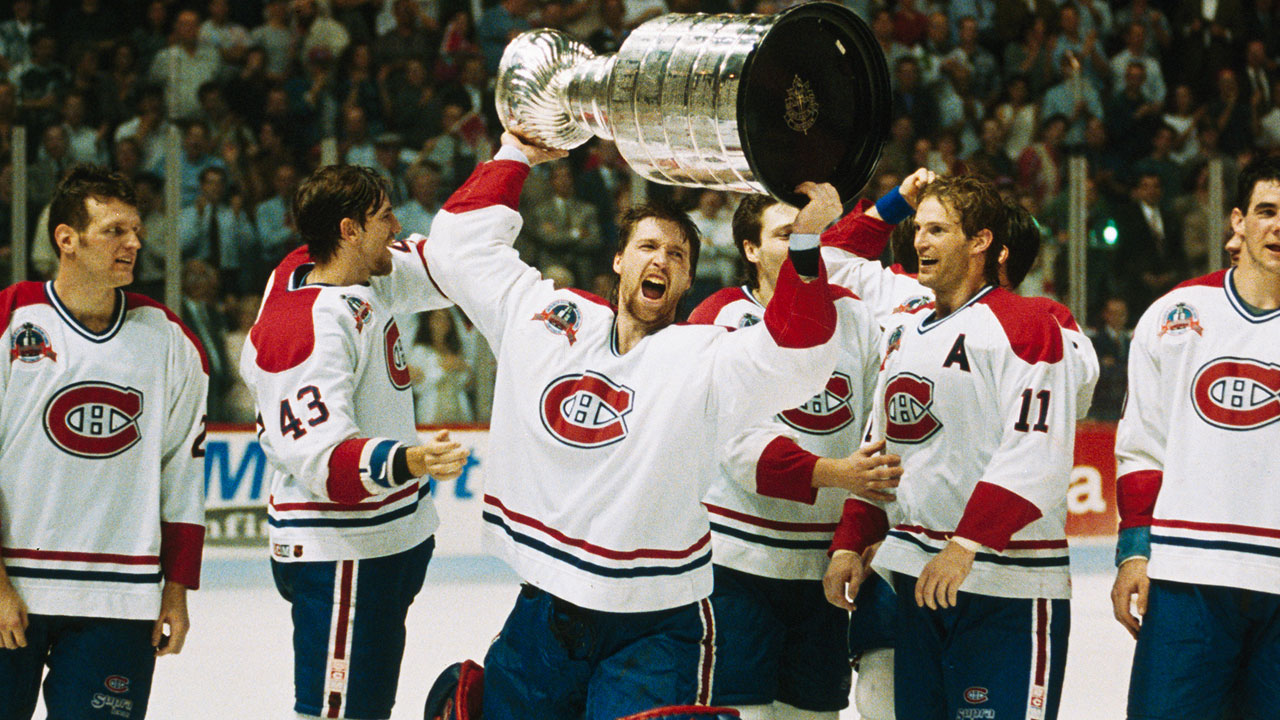
June 9, 1993, Montreal Forum: Patrick Roy lifts the Stanley Cup.

VERDICT: Not Guilty. McSorley was a thug, and, on this occasion, he was a fool. And, yes, the series was a lot closer than its 5-game result would suggest. But he was not the sole reason the Kings lost the Finals. He wasn't even the biggest reason.

Wednesday, May 27, 2020

Top 5 Reasons You Can't Blame Kerry Fraser for the Toronto Maple Leafs Losing the 1993 Stanley Cup

May 27, 1993: Game 6 of the NHL Western Conference Finals, at what was then named the Great Western Forum in the Los Angeles suburb of Inglewood, California. The Toronto Maple Leafs haven't won the Stanley Cup, or even been to the Finals, since 1967. The following season, the Los Angeles Kings began play, and have never been to the Finals. Something's got to give.

The Kings had some big names on their roster. They had Wayne Gretzky, Jari Kurri and Paul Coffey -- and, if you want to count him as a "legend," Marty McSorley -- from the 1980s Edmonton Oilers dynasty. They also had Dave Taylor, the last remaining player from their 1980s "Triple Crown Line" with Marcel Dionne and Charlie Simmer. They also had Luc Robitaille, Rob Blake, Tomas Sandstrom, Alexei Zhitnik and Darryl Sydor. And a decent goalie, Kelly Hrudey.

The Leafs were no slouches, either. They had their own 1980s Edmonton refugees, Grant Fuhr, Glenn Anderson and Mike Krushelnyski. They also had Doug Gilmour, from the 1989 Calgary Flames Champions. They had Dave Andreychuk, Wendel Clark, Peter Zezel, Mike Foligno, Sylvain Lefebvre, and a good goalie in Felix Potvin (to whom the more accomplished Fuhr was backup).

What's more, the Leafs went into Game 6 with a 3-games-to-2 lead. Win Game 6, and they were in the Finals, and against their ancient rivals, no less: The Montreal Canadiens. The Habs and the Leafs were (and are) the last 2 remaining founding franchises of the NHL from 1917. (The new Ottawa Senators, named for the founding franchise that went bust in 1935, had just played their 1st season.)

Leaf fans from St. John's Newfoundland to Kenora, Ontario were pumped. This was going to be The Year. And it was far from a delusion: Their team was talented enough to deserve to get as far as they already had, 5 wins from the Cup.

There was already bad blood between the Leafs and the Kings. On November 22, 1992, Gilmour had slashed at Sandstrom with his stick, breaking Sandstrom's arm. The injury kept him out for over a month. Gilmour was suspended for 8 days.

Game 6 went to overtime, 4-4. Then, in the 1st minute of overtime, Gretzky, so often hailed as the greatest player of all time (even then), and as a class guy, did something decidedly unclassy: He high-sticked Gilmour in the face, drawing blood from his chin.

According to the rules, this should have meant a game misconduct penalty, meaning Gretzky should have been thrown out of the game; and a 5-minute major penalty (with another player sent to the penalty box in Gretzky's place), meaning the Leafs should have had a 5-minute power play in overtime. Gretzky probably also should have been suspended for a potential Game 7.

But referee Kerry Fraser did not penalize Gretzky. Apparently, 2 "unwritten rules" came into play: Don't call penalties in overtime, and don't call penalties on The Great One.
The Hero

To make matters worse, within a minute of the unpenalized infraction, 1:41 into the overtime, Gretzky scored the winning goal. In Game 7 at Maple Leaf Gardens in Toronto, the Kings won 5-4, with Gretzky scoring 3 times and assisting on another goal.

He would call that the greatest game he'd ever played -- and it was a game which, due to what he'd done in the previous game, at the very least, he shouldn't even have been in; and, at the most, shouldn't have been played, because his absence and the 5-minute power play that should have resulted should have given the Leafs the win that would have made a Game 7 unnecessary.

It's been 27 years. Leaf fans are still outraged. This was probably their best team since the breakup of their 1960s dynasty (4 Cups in 7 years).

What's more, in a 2016 article for Canadian newspaper The National Post, Fraser admitted he blew the call:

I was uncertain but thought I had it right. I’m sorry. Most people probably know the story, but they know it from the perspective of a single camera in one corner of the Great Western Forum. All I can tell you is my perspective from the ice..

As the Kings set up on the power play, I was down by the far circle, away from the puck. In my brain, this is what I was processing: Gretzky gets the puck. He shoots it, and my eyes go to the net. But Jamie Macoun blocks it. The puck rebounds between Gretzky and Doug Gilmour. When my eyes go back to Gretzky, I see a motion. Gilmour goes down.

Did Gretzky’s stick follow through and catch him? Gilmour’s bent over now. He’s got blood on his chin. And I have no idea what happened. That’s a helpless, helpless feeling.

Under the 1993 rules, if Gretzky high-sticks Gilmour and it draws blood, it’s a five-minute major. He’s gone. It was a huge call to make — a worse one to miss.

Guys from both teams were skating up to me. It didn’t smell right. I should have known when I saw Gretzky skating away. Whenever there was a dispute, Gretz was always at the forefront arguing his side of it. But this time, he kind of slinked away. That was uncharacteristic. That should have tipped me off.

But to be honest, I was attempting to roll back the play in my mind, over and over, looking for some measure of recall that would provide the evidence I needed. 

Fraser consulted with his linesmen. They were unable to tell him that Gretzky had conclusively done anything wrong. As with the rule the NFL would later institute for instant replay, if it's not conclusive that the initial call was wrong, it has to stand. Fraser continued:
I had to make a decision. In referee school, they hammer it into you: Call what you see. Don’t guess. The honest to God truth is, I didn’t see it. I had to eat it. I said, “No penalty.”
The next faceoff, Gretzky stays in the game and scores to win it. He went on to have the game of his career in Game 7, and the Kings went to the Finals.
At the time, I had no idea the call would follow me for the rest of my life. There weren’t all the slow-motion cameras like they have today. It wasn’t until the next day that I saw another angle of the play on television. You could clearly see Gretzky high-sticking Gilmour. It was missed. Period.
It was agony for Leafs fans. I understand the passion, the emotion and the frustration that Leafs fans have endured. They felt it was their time. When people come up to me and ask about it now, I just try to have a conversation with them. If I had one opportunity to turn back the hands of time for a “do-over,” it would be to catch that high-stick. I’m sure I’m not alone in that department.
Would it make Leaf fans angrier if he still denied it? Maybe. But it makes them feel justified in their anger to hear Fraser admit it.

The Leafs would return to the Conference Finals the next year, and again in 1999, but lost both. They still haven't made the Finals since 1967.

The Kings took a 1-0 lead over the Canadiens in the finals, and were leading in Game 2. This time, they got caught cheating: McSorley was cited for having too big a curve on his stick, and the Canadiens tied the game, and then won it in overtime, and made it 4 straight wins for the Cup. They haven't won it since, either. The Kings would finally win their 1st Cup in 2012, and a 2nd in 2014. But the 1988 Cup with Edmonton remained Gretzky's last.

Barry Melrose was the Kings' coach then. He has since built a career as an ESPN hockey pundit. He points out that the Leafs' huge fan base, encompassing so much of Canada (including some places that have NHL teams, but didn't before the expansions of the 1970s):

Of course, it gets more attention because it's Toronto... The minute I get on a plane, someone will say, "Barry, high stick, what do you think?" And I'll go, "Toronto, right?" And he'll go, "Yeah, yeah, Toronto." It's funny to figure that out. I never hear an L.A. guy ask me that question...

I'm a big believer in the harder you work, the luckier you get. And I really feel like we were the hardest-working club in that series. We deserved everything we got.

Fraser admitted he blew the call. But was he really the sole, or the biggest, reason the Leafs lost that series?

Top 5 Reasons You Can't Blame Kerry Fraser for the Toronto Maple Leafs Losing the 1993 Stanley Cup

Let me start with a couple of reasons that didn't make the cut: The Best of the Rest.

The Linesmen. They missed the call, too. Had one of them said, "Absolutely, Gretzky cut Gilmour with a high stick. It might not have been intentionally malicious, but he did it," Fraser would have had the justification he needed to send Gretzky off. He never got it until he saw the replay the next day, when it was too late.

Which brings us to...

No Instant Replay. At the time, the NHL only used it to check whether a goal had been properly scored. It wouldn't be until the 2015-16 season that coaches could challenge other plays.

Had that rule been in place in 1993, it would have been obvious, Gretzky would have been sent off, and the Leafs would have had a golden opportunity to finish the Kings off, and the next game in Toronto would have been Game 3 of the Stanley Cup Finals. (Not Game 1: The Canadiens had the better record, and thus would have had home-ice advantage.)

Now, the Top 5:

5. Kerry Fraser. He was one of the NHL's most respected officials. He had been calling games since 1973, and as a full referee since 1980. He was so respected by the International Ice Hockey Federation (IIHF) that, after this incident, he was still hired to officiate at the 1996 World Cup and the 1998 Winter Olympics. In 2005, NHL players -- the players, mind you -- voted him the League's most consistent referee.

He retired in 2010, having officiated at the NHL Winter Classic, and still holds the NHL records for most regular-season and most Playoff games officiated.

Did he make a mistake in that 1993 game? Yes, and he admitted it. Was it indicative of a pattern of favoritism toward Gretzky, or toward the Kings? Far from it.

4. The Goaltenders. In the 7 games, Felix Potvin of the Leafs allowed 22 goals, or 3.14 per game. Kelly Hrudey of the Kings allowed 23, or 3.28 per game. Sounds like the Leafs had the better goalie, right?

Not so fast. Games 2, 5, 6 and 7 were all 1-goal games, and the Leafs only won 1 of the 4. And when the Leafs needed Potvin to help them win Game 6, and then Game 7, he allowed 5 goals each time.

3. No Guarantee. Remember that "golden opportunity" I mentioned? Sometimes, when opportunity knocks, the door isn't fully opened. Suppose Gretzky had been sent off, and the Leafs had gotten a 5-minute power play. Does that mean they would have gotten the goal they needed to win the game? Not necessarily. Paul Coffey was a Hall of Fame defenseman. So was Rob Blake. Darryl Sydor probably should be in the Hall.

And the Kings could have won the game anyway. After all, they had other good attacking players besides Gretzky. And they were at home.

Of course, home-ice advantage is no guarantee, either. Which brings us to...

2. There Was a Game 7. In Toronto. The Leafs had home-ice advantage, in front of their fans, who were out for blood. There was no way they should have lost that game. But they did. They fell behind 3-0, and tied it 3-3, before losing 5-4.

They became the hockey equivalent of the 1985 St. Louis Cardinals: Instead of saying, "The hell with what happened in Game 6, let's beat these guys in Game 7," they let the mistake stick in their heads, and fell totally flat. And unlike the '85 Cards, they had the home comforts and home crowd behind them. (The NHL and the NBA go 2-2-1-1-1, while MLB goes 2-3-2, so if a World Series or an LCS goes the full 7, the same team hosts Games 6 and 7.)

If you blow Game 7 on home ice, you're (Atrocious Pun Alert) on thin ice to claim you got screwed out of a deserved victory in that round.

1. The Kings Were Better. They won Games 2 and 7 in Toronto. And they were 1 minute and 14 seconds away from going to home ice up 2-0 in the Stanley Cup Finals, before McSorley got caught cheating. True, it's possible he was cheating the whole way, and maybe other Kings were as well. But we don't know that.

We do know that the Kings had more talent -- and still might have even without Gretzky. If they had won Game 6 without him, they might have won Game 7 without him, too.

VERDICT: Not Guilty. Fraser pleaded guilty to making a mistake. But he certainly didn't singlehandedly cost the Leafs the series.