Showing posts with label 1868. Show all posts

Wednesday, November 3, 2021

One Year Later

November 3, 2020, 1 year ago: I wrote, "This may turn out to be the most important day in American history. Vote like the whole world depends on it. Because it might."

Joe Biden was elected the 46th President of the United States, defeating Donald Trump. It wasn't called for 4 days, because several key States were close. It wasn't certified by Congress until January 6, 2021 -- which was supposed to happen, anyway, but this was one of the few times that it was ever in doubt. And there was an unprecedented attempt to prevent it. That attempt failed. It was finally made official on January 20, Inauguration Day, when Biden was sworn in as President.

Biden won 81,268,924 votes, to Trump's 74,216,154. Biden won 51.3 percent of the popular vote, to Trump's 46.9. Each candidate won 25 States, with Biden also winning the District of Columbia and 1 Electoral Vote in Nebraska; while Trump also won 1 Electoral Vote in Maine. (Maine and Nebraska allow their Congressional Districts to vote separately from the State as a whole.) Biden won 306 Electoral Votes, to Trump's 232.

Biden won nearly all the close States: Arizona by 10,457 votes, Georgia by 11,779, Wisconsin by 20,682, Nevada by 33,596,New Hampshire by 59,277, and Pennsylvania by 80,555. However, if Trump had won all of those States except Pennsylvania, with its 20 Electoral Votes, Biden still would have won.

Kamala Harris became the 1st female, the 1st African-American, and the 1st Asian-American Vice President of the United States. The Democrats kept control of the U.S. House of Representatives, and gained a 50-50 split in the U.S. Senate, which becomes a 51-50 majority in the Democrats' favor -- except 2 Democratic Senators, Joe Manchin of West Virginia and Kirsten Sinema of Arizona, have often stood in President Biden's way when it came to his agenda.

In the end, Biden didn't win because 250,000 Americans had died from COVID-19 -- a total since tripled, and it will increase further, though Biden's efforts will hold it down to less than it would have been if Trump had stayed in office. He won due to the get-out-the-vote effort in the key States, whose apparatus was already in place before COVID.

Biden won because he was the opposite of Trump. Because, while Trump appealed to bigotry and anger, Biden appealed to what Abraham Lincoln called "the better angels of our nature." Because he wanted to bring America healing, which is what America wanted. Because he spoke to "the soul of America." As he, a Catholic and a student of St. Francis of Assisi, is believed to have said:

Where there is hatred, let me sow love.
Where there is injury, pardon.
Where there is discord, union.
Where there is doubt, faith.
Where there is despair, hope.
Where there is darkness, light.
And where there is sadness, joy.

Conservatism, still led by Trump, is a darkness. Liberalism, currently led by Biden, is a light. And, for now, America wants light.

*

November 3, 1836: Vice President Martin Van Buren is elected the 8th President of the United States. He essentially rode the coattails of his friend and boss, President Andrew Jackson, to victory. It also helped that the Whig Party was regionally split: Van Buren won 170 Electoral Votes, William Henry Harrison 73, Hugh White 26, Daniel Webster 14, and Willie P. Mangum 11. So it was MVB 170, Whigs United 122.

Mangum won only South Carolina, Webster only his native Massachusetts, and White only Georgia and his native Tennessee -- which probably ticked fellow Tennesseean Jackson off.

In the popular vote, Van Buren won almost 51 percent, Harrison 36, White a little under 10, Webster less than 3, and Mangum wasn't actually on the ballot anywhere, but won South Carolina's Electoral Votes anyway.

November 3, 1868: Ulysses Simpson Grant, U.S. Secretary of War and the leading General of the Union during the American Civil War, is elected the 18th President of the United States. He defeats Horatio Seymour, a former Governor of New York. Grant won nearly 53 percent of the vote, Seymour 47. The Electoral Vote was not nearly as close, 214 to 80 in Grant's favor.

November 3, 1869: The Hamilton Football Club is founded in Hamilton, Ontario, Canada. This is the forerunner of the Hamilton Tigers, who in 1950 merged with the Hamilton Wildcats to become the Hamilton Tiger-Cats. This could, if you choose to define it this way, make the "Ticats" the oldest continuously operating professional sports team in North America.

Before the merger, the Tigers won 5 Grey Cups, the championship of Canadian football: 1913, 1915, 1928, 1929 and 1932. Since the merger, they've won 8: 1953, 1957, 1963, 1965, the Canadian Centennial Cup in 1967, 1972, 1986 and 1999. This is a total of 13. (The 1943 Grey Cup won by the Hamilton Flying Wildcats, as they were known during World War II since they were sponsored by the Royal Canadian Air Force, is generally not counted in the total.)

November 3, 1896, 125 years ago: Governor William McKinley of Ohio is elected the 25th President of the United States, defeating Congressman William Jennings Bryan of Nebraska. McKinley won 51 percent of the popular vote, and Bryan nearly 47. McKinley won 23 States to Bryan's 22. Those figures make the election sound close. But McKinley won bigger States than Bryan did, so he won the Electoral Vote 271-176.

The Panic of 1893, and the resulting depression, the nastiest the nation had yet suffered, doomed President Grover Cleveland's hopes of winning a 3rd term. But Bryan, at 36 the youngest major-party nominee ever, favored the free coinage of silver, as a means of ending the depression, rather than sticking to the gold standard.

At the Democratic Convention at the Chicago Coliseum, he said, "You shall not press down upon the brow of labor this crown of thorns. You shall not crucify mankind upon a cross of gold." Effectively, he was the Bernie Sanders of his time.

But that scared a lot of people, including a lot of Democrats. Cleveland refused to use whatever political capital he had left to endorse him, and a lot of "Gold Democrats" supported McKinley, who promised "a return to the full dinner pail." (The expression "a chicken in every pot" had been in existence for about 300 years.)

In addition, in the inner cities, and in smaller mill and mining towns, where lots of Catholics, many of them the sons of immigrants, worked in factories, many of them were told by their bosses, "If Bryan wins on Tuesday, don't come in on Wednesday" -- not that they would be fired, but that the factory would have to close.

*

November 3, 1901, 120 years ago: Frederick Lionel Hitchman is born in Toronto. After winning the 1923 Stanley Cup with the Ottawa Senators, Lionel Hitchman joined the Boston Bruins, and formed a great defensive pairing with Eddie Shore, captaining the team that won the 1929 Stanley Cup.

He served with the Royal Canadian Mounted Police in the off-season, and did so full-time after his 1934 retirement from hockey. Like a later Boston sports legend, Ted Williams, he became an accomplished fisherman, setting a record for largest salmon caught. He died in 1969. Although the Bruins retired his Number 3, and he was elected to the Ontario Sports hall of Fame, he has never been elected to the Hockey Hall of Fame.

November 3, 1908: William Howard Taft, Secretary of War, is elected the 27th President of the United States, defeating Bryan. Taft gets 51.6 percent of the popular vote, and wins the Electoral Vote 321 to 162.

Theodore Roosevelt chose not to run for what would have been a 3rd term, and chose Taft, who would really have preferred to have been named Chief Justice of the U.S. Supreme Court. TR warned Taft to not let the press take his picture on the golf course. Despite this warning, and his weight, which made him look ridiculous on the golf course, it happened, and TR called him onto the carpet.

Taft was a physical heavyweight, over 330 pounds, our heaviest President. He was no lightweight intellectually, either: A graduate of Yale, including of its law school. He stood up for himself, and said, "Mr. President, you play tennis. That's a more elitist sport than golf!" TR said, "Yes, but I don't let the press take my picture while I do it!"

Taft won anyway, mainly because Bryan was running for the 3rd time, and the issue that had first vaulted him to prominence, the free coinage of silver, was no longer as effective when there wasn't a depression on, as there was when he first ran in 1896. One of the Taft slogans was, "Vote for Taft this time. You can vote for Bryan anytime."

Taft would run his Presidency far from what TR had intended, and TR tried to regain it in 1912. But, as the incumbent, Taft controlled the party machinery. TR ran as a 3rd party candidate, and finished 2nd. They split the Republican vote, and Democrat Woodrow Wilson got elected as a plurality candidate. Wilson appointed Bryan his Secretary of State, but Bryan resigned in 1915, because he was a pacifist, Wilson seemed to be inching too closely to going to war.

Roosevelt and Taft patched things up, and Wilson's successor, Warren Harding, appointed Taft to be Chief Justice -- the only President to also have served on the Supreme Court. Today, "Teddy 26" and "Bill 27" are part of the Washington Nationals' "Racing Presidents."

Also on this day, Bronislau Nagurski is born in Rainy River, Ontario, and grows up in International Falls, Minnesota. "Bronko" wasn't big by today's standards, but, at 6-foot-3 and 230 pounds, he was enormous for his era. He could do it all: Block, run, catch, tackle, even throw every once in a while. He helped the Chicago Bears win the NFL Championship in 1932 and 1933, and, during the manpower shortage of World War II, came out of retirement to help them do it again in 1943.

He was a charter inductee into the Pro Football Hall of Fame in 1963. The University of Minnesota retired his Number 72, the Bears his Number 3. He was named to the NFL's 1930s All-Decade Team and its 75th Anniversary Team. As part of their 100th Season celebrations, the Bears named him to their 100 Greatest Players.

When John Madden named his "All-Madden All-Millennium Team" in 1999, the 1st 3 names he chose were Jim Thorpe, and the 1932 and '33 Chicago running tandem of Red Grange and Nagurski -- the prototypes, respectively, of the modern speedy halfback and the big, bruising fullback.

He was also heavyweight wrestling champion in the 1930s. Think of Dwayne "The Rock" Johnson sticking with football, and wrestling in the off-season. Although Bronko never became an actor, unless you count "professional wrestling" as acting, but Bronko was dead serious about it: He made more money at that than he did at football.

In a 1984 interview with Sports Illustrated writer Paul "Dr. Z" Zimmerman, when asked what position he would play if he were coming up in the present day, he said, "I would probably be a linebacker today. I wouldn't be carrying the ball 20 or 25 times a game."

The definitive Nagurski story tells of a touchdown he scored against the Washington Redskins at Wrigley Field. The Redskins didn't move to Washington until 1937, Nagurski's last season (not counting his war-induced 1943 comeback), and the teams didn't play at Wrigley in the regular season, only in the NFL Championship Game, and this story is not mentioned in connection with the title game, which leads me to think it's apocryphal: He brushed off 2 linebackers and practically ran through a cornerback and a safety, then bounced off a goalpost and, head still down, ran right through the end zone, headfirst into the brick wall of Wrigley's outfield. He got back to the huddle for the extra point, and said, "That last guy gave me a pretty good lick."

After his retirement from wrestling, he returned home to International Falls, and opened a service station. A local legend claims that Nagurski had the best repeat business in town because he would screw customers' gas caps down so tight after filling their tanks that no one else in town could unscrew them.

In spite of the roughness of his era, and how much he contributed to it (although he was never accused of playing dirty), he lived until 1990, age 81. His son, Bronko Nagurski Jr., played at Notre Dame, and won the 1963 and 1965 Grey Cups with the Hamilton Tiger-Cats.

Also on this day, soccer team Club Atlético Newell's Old Boys -- having an English name to attract some of the British sailors who had docked in Argentina, found the climate to their liking, and stayed there -- is founded in Rosario, in the province of Sante Fe. They have won 6 national league titles: In 1974, 1988, 1991, 1992, 2004 and 2003.

*

November 3, 1911, 110 years ago: John Joseph Keane is born in St. Louis. A shortstop, he was beaned in the minor leagues, and never reached the majors. Offered a chance to manage in the St. Louis Cardinals' farm system in 1938, he retired as a player. By 1959, he was a major league coach for them, and was named their manager in 1961. He led them to the World Championship in 1964.

But he feuded with management, and he came to believe that they were going to fire him after the season, no matter what. That is exactly what happened to the manager of the team he beat, Yogi Berra of the Yankees: Even if the Yankees had won, he was going to be fired. And they offered the job to Keane, who accepted and quit the Cardinals.

Keane was not well-suited to running the Yankees. The fall of the Dynasty was hardly his fault, as former general manager George Weiss had executed many trades sending multiple players to teams for a single player who could help the team win the Pennant that season. As a result, the farm system was nearly dry: Essentially, it was Bobby Murcer, Roy White, Mel Stottlemyre, and 100 guys named Steve Whitaker.

But Keane played his lousy hand badly, alienating veterans like Mickey Mantle, Whitey Ford and Roger Maris, but also upsetting younger players like Joe Pepitone and Jim Bouton. The Yankees finished 6th in 1965, and started the 1966 season just 4-16. He became the 1st Yankee manager fired in midseason in 56 years. He accepting a scouting post with the California Angels, but died at the start of 1967, before he could start the job. He was only 55, and the stress of his last 3 seasons as a manager, in St. Louis and New York, was what killed him.

Also on this day, the Chevrolet Motor Company is founded in Detroit. One founder, Louis Chevrolet, was a Swiss auto racing pioneer. The other, William C. Durant, had founded General Motors in 1908, but had been cast out of its management in 1910.

The two men had creative differences, and Chevrolet sold out to Durant in 1914, the year the company's familiar "bowtie" logo was introduced. Durant kept Chevrolet's name on the company, by 1917 had made so much money that he could also buy GM out and regain control. "Chevy" has been a GM brand ever since.

November 3, 1918: Robert William Andrew Feller is born in Van Meter, Iowa. "Rapid Robert" debuted with the Cleveland Indians in 1936, right after high school graduation. He soon struck out 17 batters in a game, tying the major league record. He struck out 17 at age 17. In 1938, just before turning 20, he struck out 18, which would remain a major league record for a 9-inning game until 1969.

He stayed through 1956, except for spending the entire 1942, '43 and '44 seasons, and most of '45, in the U.S. Navy during World War II. He was a "gun captain," and rose to the rank of Chief Petty Officer. Although he was in the Navy, the Army later named him an honorary Green Beret. As he put it, "Anybody who says sports is war has never been in a war."

Like Joe DiMaggio and Ted Williams, Bob Feller may have lost his best seasons in The War. These were the seasons when he was 23, 24, 25 and 26. In his last 3 seasons before, 1939 to '41, he went 76-33. In 9 games in his '45 return plus '46 and '47, he went 51-29. Even missing prime seasons, he won 266 games, losing just 162, and struck out 2,581 batters. He said he had no regrets about missing bigger numbers. The War was more important.

He pitched 3 no-hitters, in 1940, 1946 (against the Yankees) and 1951. In 1946, he struck out 348 batters, which was believed to be a major league record until someone discovered that Rube Waddell's 1904 count of 343 was wrong, and it was actually 349. He helped the Indians win the 1948 World Series, and another Pennant in 1954. The Indians also fell just short in 1940 and 1952 while he was there.

Williams, noted hater of pitchers (he liked to say, "All pitchers are dumb"), said Feller was "the fastest and best pitcher I saw during my career." Stan Musial said he was "probably the greatest pitcher of our era." He was elected to the Baseball Hall of Fame in 1962.

In 1999, The Sporting News ranked him 36th on their list of the 100 Greatest Baseball Players, 11th among pitchers, trailing Christy Mathewson, Grover Cleveland Alexander, Cy Young, Satchel Paige, Warren Spahn, Lefty Grove, Sandy Koufax, Steve Carlton, Bob Gibson and Tom Seaver. Only Spahn and Paige, the Negro League sensation who was his opponent on that 1945 tour and his teammate on the 1948 Indians, were in his generation. His Number 19 was the 1st one retired in all of Cleveland sports. A statue of him stands outside Progressive Field. He lived until 2010, 92 years old.

*

November 3, 1921, 100 years ago: Charles Dennis Buchinsky is born in Ehrenfeld, Pennsylvania, a tiny town east of Pittsburgh. We knew him as Charles Bronson. A Purple Heart recipient as a B-29 gunner in World War II, he had enough of being a tough guy, and spent the rest of his life only playing them. When his name came up in a question on the July 6, 1978 episode of Match Game, panelist Richard Dawson called him "one of the most gentle men I have ever met. And he plays such an animal. And he's a darling man."

"Animal"? He played the title 1930s gangster in Machine-Gun Kelly, Wild West gunman Bernardo O'Reilly in The Magnificent Seven, Lieutenant Danny Velinski in The Great Escape, Private Joseph Wladislaw in The Dirty Dozen, "Harmonica" in Once Upon a Time In the West, beans-spilling mobster Joseph Valachi in The Valachi Papers, Wild West gambler and gunman Wild Bill Hickok in The White Buffalo, and, most notably, urban vigilante Paul Kersey in the Death Wish films.

But he also played Francis Church, editor of the New York Sun, who in 1897 answered a child's letter with an editorial, in the 1991 film Yes, Virginia, There Is a Santa Claus. Maybe Dawson was right. Long married to actress Jill Ireland, and an activist against cancer during her illness and after her death, Bronson died in 2003.

*

November 3, 1933: Michael Stanley Dukakis is born in Brookline, Massachusetts. He played baseball, basketball and tennis, and ran cross-country, at Brookline High School. He was elected Governor of Massachusetts in 1974, lost his bid for re-election in 1978, regained the office in 1982, and won again in 1986.

In 1988, the Democratic Party nominated him for President. It looked like he was going to win. At their Convention at the Omni arena in Atlanta, he said, "This election is not about ideology. This election is about competence!"

And then he ran one of the most incompetent general election campaigns ever, and Vice President George H.W. Bush made it about ideology, and Dukakis got just 45.6 percent of the popular vote, and 111 Electoral Votes -- no Democratic nominee has done nearly so poorly since. (Four years later, Bill Clinton would get 43 percent of the vote in a 3-way race, but every Democratic nominee since has gotten at least 227 EVs.)

"The Duke" did not run for Governor again in 1990. Now 88 years old, he has since been a college professor and an advocate for improved public transportation. He was the 1st person I ever cast a vote for President for, and I remain proud of that vote.

November 3, 1945: Kenneth Dale Holtzman is born in St. Louis. Debuting with the Chicago Cubs in 1965, this Jewish lefthander was called "the new Sandy Koufax." In Koufax's 3rd-from-last regular-season appearance, on September 25, 1966, Ken Holtzman's Cubs beat Koufax's Dodgers, 2-1.

He didn't become the new Koufax, but he did go 174-150 in his career -- more wins than Koufax, although Koufax's career ended early due to elbow trouble. Included were 2 no-hitters (half as many as Koufax), in 1969 and 1971. He still holds the record for most games won by a Jewish pitcher.

He was a 2-time All-Star. With the Oakland Athletics, he won the World Series in 1972, '73 and '74. In the 1974 Series, he hit a home run, something only 1 pitcher has done in Series play since (Joe Blanton of the 2008 Phillies). He also won a Pennant with the Yankees in 1976 and another World Series with them in 1977. He later became an insurance salesman, and is still alive.

November 3, 1946, 75 years ago: Thomas Kenneth Heintzelman is born outside St. Louis in St. Charles, Missouri. The son of pitcher Ken Heintzelman, one of the oldest players on the 1950 Phillies "Whiz Kids," he was an infielder who layed for the Cardinals and the Giants from 1973 to 1978. His major league career had been delayed due to serving in the Vietnam War. He is still alive.

Also on this day, Garry Alton Hill is born in Rutherfordton, North Carolina, and grows up in nearby Charlotte. He itched in the minor leagues from 1967 to 1973, but  only appeared in 1 major league game. On June 12, 1969, he started for the Atlanta Braves gainst the Chicago Cubs, didn't get out of the 3rd inning, and left with a 15.43 earned run average. He died in 2017.

*

November 3, 1951, 70 years ago: Dwight Michael Evans is born in the Los Angeles suburb of Santa Monica, California. No, he's no relation to the preceding Michael Evans. The right fielder won 8 Gold Gloves for the Boston Red Sox, tied for the American League home run lead in the strike-shortened season of 1981, was a 3-time All-Star, and was a key member of the Sox' 1975 and 1986 Pennant winners.

Unfortunately for them, a beaning in 1978 left him with post-concussion syndrome, and he tried to come back too soon, and was practically useless down the stretch, to the point where the question of who would play left field, Carl Yastrzemski or Jim Rice, and who would play 1st base, Yaz or George Scott, was settled when Rice was moved over to right. In the Playoff game against the Yankees, "Dewey" only appeared as a pinch-hitter for Frank Duffy, flying to left for the 1st out in the 9th inning. (Jim Evans, no relation, was the 1st base umpire in that game.)

He hit 385 home runs in his career -- 3 more than Rice, who's in the Hall of Fame, and was not known as a good fielder. So why isn't Evans in the Hall of Fame?

You want to hear something even dumber than that? When I first visited Boston, I came out of South Station, and saw a sign for "Dewey Square." Not realizing it was named for George Dewey, the naval hero of the Spanish-American War, my first thought was, "Wow, this city is so crazy about its baseball team, they named a square after Dwight Evans."

November 3, 1953: Baseball's rules committee restores the pre-1939 rule which says that a sacrifice fly is not charged as a time at bat.

Also‚ the committee votes for the "no gloves on the field rule." Hank Greenberg‚ the Hall of Fame-to-be slugger who is now general manager of the Cleveland Indians, had proposed the change‚ saying, "Aside from the possibility of hindering the play‚ gloves on the field look sloppy." It also made it easy for opposing players to sneak creepy-crawly or otherwise disgusting things into the glove of an easily scared player, such as the Yankees' Phil Rizzuto.

The committee also makes a rule that any runner will be called out for deliberately running the bases backwards or even taking a lead off the base in the wrong direction.

A new balk rule is instituted which gives the batter an option: If he gets a hit after a balk is called‚ he has the option of accepting the outcome of the pitch‚ instead of being limited to the advance of the runner(s). This is the baseball equivalent of a football team that is the beneficiary of a penalty having the option to decline it, if the outcome of such is more advantageous to them than the outcome of the penalty.

Rule suggestions that are rejected include the re-legalization of the spitball‚ 2 bases for an intentional walk‚ and the option of declining ball 4.

November 3, 1954: The Yankees tour Japan, and draw a record crowd of 64‚000 when they play the 1st game against the All-Japan Stars at Nippon Life Stadium in Osaka. Andy Carey slugs 13 home runs‚ and catching prospect Elston Howard bats .468 on the 25-game tour. Each has thoroughly impressed the Yankee brass, and both get promoted to the Yankees for 1955 -- in Howard's case, making him the 1st black player for the Yankees in a regular-season game.

November 3, 1955: Phillip Martin Simms is born in Springfield, Kentucky, and grows up in nearby Louisville. His first few years as the Giants' quarterback were as rough -- with results and the fans' reactions -- as Terry Bradshaw's with the Pittsburgh Steelers. But, like that earlier "Blond Bomber," he led his team to a Super Bowl. In Super Bowl XXI, he threw 25 passes and completed 22 of them, an 88 percent completion percentage that remains a record for the NFL championship game under any name.

He got the Giants to the 1990 NFC Championship Game, but was injured in it, and it was Jeff Hostetler who led them to victory there and in Super Bowl XXV -- an injury that did not cost him a 2nd ring, but may well have cost him, thus far, election to the Pro Football Hall of Fame.

He is now a color commentator of CBS' NFL broadcasts. His son Chris Simms went into both family businesses, quarterbacking for the University of Texas and the Denver Broncos, and analyzing for CBS; and his son Matt Simms was a quarterback at the University of Tennessee and played last season for the Atlanta Falcons.

*

November 3, 1961, 60 years ago: The Blue Horizon opens, at 1314 North Broad Street, where Center City begins to turn into the North Philadelphia ghetto. The Ring magazine chose the 1,346-seat gym as the greatest boxing venue in the world. Philly boxers like Matthew Saad Muhammad, Tim Witherspoon and Bernard Hopkins trained there on the way to becoming champions. It was closed in 2010, but still stands.

Also on this day, The Twilight Zone airs the episode "It's a Good Life," adapted from a 1953 novel of the same title by Jerome Bixby. Charles William Mumy Jr., then billed as Billy Mumy, plays Anthony Fremont, a 6-year-old monster. Cloris Leachman, later a legend on The Mary Tyler Moore Show, plays his mother.

Bill Mumy, as he's been billed as an adult, is now best known for playing Will Robinson on Lost In Space. He also played Lennier, a Minbari Ambassador, on a later science fiction series, Babylon 5. In the 1983 film version of The Twilight Zone, "It's a Good Life" was 1 of the 4 segments produced, with Jeremy Licht as Anthony and Kathleen Quinlan as a teacher who helps to provide a considerably lighter, though not really "happy," ending.

In 2002, a revival of the show featured "It's Still a Good Life." Mumy and Leachman reprised their roles. Anthony is now middle-aged, having banished his father and his wife to the cornfield, and has a daughter named Audrey, played by Bill's daughter, Liliana Mumy, then 8. And not only has she inherited his powers, but she brings things he has banished back from the cornfield.

Jerome Bixby co-wrote the script for the 1966 science fiction film Fantastic Voyage, and 4 episodes of the original Star Trek series: "Mirror, Mirror," "By Any Other Name," "Day of the Dove" and "Requiem for Methuselah." He died in 1998, at age 74.

November 3, 1963: Ian Edward Wright is born in Woolwich, Southeast London. A son of Jamaican immigrants, he got off to a late start in his soccer career, not debuting in the Football League until 1985 with local club Crystal Palace. But he became one of the best strikers in England, and led them into the 1990 FA Cup Final, where they lost to Manchester United.

That got the attention of George Graham, the manager of Arsenal -- which also got their start in Woolwich, in 1886, before moving to Islington in North London in 1913. Wrighty helped Arsenal win the FA Cup and the League Cup in 1993 (England's 1st-ever "Cup Double"), the UEFA Cup Winners' Cup in 1994 (although he missed the Final due to yellow card accumulation), and the Double of the Premier League and the FA Cup in 1998 (again missing the Final, though he was in decline by this point).

He was one of the first English footballers to dance in celebration of his goals. He scored 185 of them for Arsenal, breaking the club record set by 1930s star Cliff Bastin, and has since been surpassed only by Thierry Henry.

He is now a pundit on BBC soccer broadcasts, but takes every opportunity to talk trash about the current Arsenal team. His sons Bradley Wright-Phillips and Shaun Wright-Phillips both played for the New York Red Bulls, and Bradley has become one of the biggest stars in Major League Soccer.

*

November 3, 1971, 50 years ago: Dwight Eversley Yorke is born in Canaan, Tobago. He helped Trinidad & Tobago win the 1989 Caribbean Cup at age 17, and played for his country in the 2006 World Cup at age 34. He won the League Cup with Birmingham-based Aston Villa in 1994 and 1996.

With Manchester United, he won the Premier League in 1999, 2000 and 2001, also winning the FA Cup and the UEFA Champions League in 1999, England's only "European Treble." With Sydney FC, he won the 2006 A-League title.

His brother Clint Yorke was a renowned cricket player in the West Indies. Dwight famously had a contentious relationship with model Katie Price, a.k.a. Jordan, and they have a son, Harvey, a special-needs child.

Also on this day, Unai Emery Extegoien is born in Hondarribia, in northeastern Spain's Basque Country, near the border with France. The son, nephew and grandson of pro soccer players, his own playing career didn't amount to much more than theirs. But as a manager, he won 3 straight UEFA Europa League titles with Sevilla.

This led to his being hired by Paris Saint-Germain, where he won the Coupe de France in 2017, and both the Coupe and Ligue 1 (the French league) for "The Double" in 2018. But PSG, desperate to win the UEFA Champions League, didn't get it, and when the manager's job at Arsenal opened up, they didn't lift a finger to try to keep him.

A small and stupid minority of Arsenal fans were glad to finally be rid of Arsène Wenger after 22 mostly successful years, and talked about the wonderful change at the club. In fact, things got worse: Emery alienated 2 of the key figures at Arsenal in recent years, centreback Laurent Koscielny and midfielder Aaron Ramsey, and both left after the 2019 season. He bought midfielders Lucas Torreira and Matteo Guendouzi, and proved he didn't have a clue as to how to use either one.

And he frequently refused to play Mesut Özil, Arsenal's best player, because "He doesn't fit the system." He never figured it out: If Mesut Özil doesn't fit your system, you need to change your system.

Emery had 5 chances to get Arsenal into the 2019-20 Champions League: The last 4 Premier League games of the 2019 season and the Europa League Final. Winning any one of those games would have done it. He won none of them. When Özil was substituted off in that Final, an embarrassing loss to Chelsea, he yelled at Emery, according to lip-readers, "Wallahi, you are no coach!" (A German-born Muslim of Turkish descent, Özil was using an Arabic word, essentially meaning, "I swear to God!")

Emery got Arsenal off to a horrendous start the next season. On November 29, 2019, following a run of 7 games without a win in all competitions, including a home loss to Eintracht Frankfurt in his beloved Europa League, he was fired.

Emery took Wenger's team, and built a side that finished 8th in 2020. Mikel Arteta, also Spanish but one of Wenger's players, took Emery's team, and won the 2020 FA Cup. Emery has gone back to Spain, hired as the manager of Villareal -- and, once again, won the Europa League.

*

November 3, 1981, 40 years ago: Jermaine Junior Jones is born in Frankfurt am Main, Hesse, Germany. The son of a German mother and a U.S. Army soldier stationed in Frankfurt, he grew up in his father's hometown of Chicago, before his parents divorced, and his mother took him back to Frankfurt.

A midfielder, he played in Germany for hometown club Eintracht Frankfurt, Bayer Leverkusen and Schalke; in England for Blackburn Rovers; and in America for the New England Revolution and the Colorado Rapids. He retired this year.

In 2009, having not yet chosen to play for Germany or America, he was eligible to play for either. He chose the U.S., and FIFA cleared him, opening the door for him to play for us in the 2010 World Cup. But an injury ruled him out, and he didn't make his senior U.S. debut until October 2010. He eventually played for the U.S. in the 2011 CONCACAF Gold Cup, the 2014 World Cup and the 2016 Copa América.

November 3, 1989: The NBA's expansion Minnesota Timberwolves play their 1st game. They lose 104-96 to the Seattle SuperSonics at Seattle Center Coliseum. Tyrone Corbin leads the T-Wolves with 20 points, while Dale Ellis of the Sonics leads all scorers with 33.
Also on this day, the Portland Trail Blazers retire the Number 32 of 1974-79 center Bill Walton. They beat the Sacramento Kings, 114-96 at the Portland Memorial Coliseum.

*

November 3, 1991, 30 years ago: The Vancouver Canucks retire the Number 12 of Stan Smyl, a.k.a. the Stanley Steamer. They beat the Edmonton Oilers 7-2 at the Pacific Coliseum.

November 3, 1992: The Yankees trade center fielder Roberto Kelly and 1st baseman Joe DeBerry to the Cincinnati Reds, in exchange for right fielder Paul O'Neill.

At the time, I thought this was a great trade for both teams. O'Neill was a good hitter and a good fielder, who had done well in Cincinnati, playing for an equally fiery right fielder, his manager, Yankee Legend Lou Piniella. (Sweet Lou doesn't have his Number 14 retired or a Plaque in Monument Park, but he helped the Yankees win 4 Pennants and the YES Network gave him a Yankeeography, so I'm calling him a Yankee Legend -- capital Y, capital L.) Playing in Yankee Stadium, with the short porch in right field, I figured O'Neill would hit more home runs than in the more neutral confines of Riverfront Stadium, and that Yankee Fans would love his intense personality.

I was right on both counts, as Paulie was our right fielder for the next 9 years, effectively taking the spot that many fans thought that Jay Buhner should have still had. In those 9 years, the Yankees made the Playoffs 7 times, winning 5 Pennants and 4 World Series. (He also won the Series with the Reds in 1990.) Although his Number 21 hasn't been officially retired, it's hardly been given out since. Last season, he got his Monument Park Plaque.

Jay Buhner for Ken Phelps has been mocked as a lousy trade. Think of it, instead, as Jay Buhner for Paul O'Neill: 5 Pennants for New York, none for Seattle.

I also figured that Kelly, a native of Panama and an All-Star in 1992, would find the Reds a better fit. He'd been held back by being a righthanded hitter in Yankee Stadium, where left-center and center fields, while not as pronounced as in the pre-renovation era, was known as Death Valley. Riverfront was not only friendlier to righthanders, but had artificial turf, accommodating his speed. I thought the Reds were getting a great player.

As it turned out, I was wrong on this count. Although he made another All-Star Team with the Reds in 1993, injuries plagued him, and while he was on postseason teams with the 1995 Los Angeles Dodgers, the 1997 Seattle Mariners, and the 1998 and 1999 Texas Rangers, he never played on a Pennant winner. In 2000, the Yankees brought him back, but released him in April, and he never played in the majors again.

A sad story? Not so fast. He managed in the minor leagues, and from 2008 to 2016 he was the 1st base coach and hitting instructor for the San Francisco Giants. With them, he won 3 World Series rings, only 2 fewer than O'Neill. Also on manager Bruce Bochy's staff were former Yankees Dave Righetti Hensley "Bam Bam" Meulens and Joe Lefebvre. How about that? Kelly now manages in the Mexican League.

Not that this gives the Reds any comfort: They still haven't won a Pennant, or even a National League Championship Series game, since 1990. "Curse of Paul O'Neill," Ohio Valley?

November 3, 1995: The NBA's expansion Toronto Raptors play their 1st game. Unlike the Timberwolves, their debut is at home, at the SkyDome (now named the Rogers Centre), and a win. They beat the New Jersey Nets, 94-79. Alvin Robertson scores 30 for the Raps, the only major league sports team ever named for a dinosaur.

Also on this day, after 48 seasons at the Boston Garden -- and a few games, early in their history, at what's now named the Matthews Arena -- the Boston Celtics play their 1st game at the FleetCenter, now named the TD Garden. They lose to the Milwaukee Bucks 101-100.

Also on this day, Kendall Nicole Jenner is born in Los Angeles, the daughter of former Olympic decathlon champion Bruce (now Caitlyn) Jenner and his wife Kris, and sister of Kourtney, Kim and Khloé Kardashian. She will be joined by sister Kylie Jenner 2 years later.

She is currently the world's highest-paid model. She is also the only one of the 5 Kardashian-Jenner sisters who has not yet had a child. She is also the only one who tends to keep her lovelife out of the spotlight. It would be unfair to say that the last 2 of these facts are connected, but it is interesting.

November 3, 1996, 25 years ago: Kobe Bryant makes his NBA debut at The Forum in Inglewood, California. He is just 18 years old, and the 2nd-youngest player in NBA history to that point. The son of former Philadelphia 76er Joe "Jellybean" Bryant plays just 6 minutes and does not score, nor does he record any assists, and grabs just 1 rebound.

He does, however, play on the winning side: Shaquille O'Neal, the former Orlando Magic star also playing his 1st game for the Lakers, drops 35 points on the Timberwolves, and the Lakers win 91-85.

*

November 3, 2001, 20 years ago: The Arizona Diamondbacks even the World Series at 3 games apiece with a 15-2 win over the Yankees in Game 6. Randy Johnson gets the win for Arizona, while Danny Bautista drives in 5 runs. Arizona knocks out a Series-record 22 hits‚ and scores 8 runs in the 3rd inning, knocking Andy Pettitte out of the box.
November 3, 2007: Having coached 1,499 NHL games, including 4 straight Stanley Cups with the New York Islanders from 1980 to 1983, Al Arbour returns to coach his 1,500th game, at the request of Islanders coach Ted Nolan, At age 75, he became the oldest man ever to coach an NHL game. The Islanders beat the Pittsburgh Penguins 3–2, giving Arbour his 740th win.

The 739-win banner honoring him was brought down from the Nassau Coliseum rafters, and was replaced with one with the number 1500.

Also on this day, a thriller of a football game is played in South Bend, Indiana. Navy beats host Notre Dame 46-44. It is the Midshipmen's 1st win over the Fighting Irish in 44 years. In the ensuing 43 games, only 7 times did Navy come within 8 points of winning.

November 3, 2009: Chris Christie, former U.S. Attorney for New Jersey, is elected Governor of New Jersey as a Republican, defeating the Democratic incumbent, Jon Corzine. I had hoped that he would be defeated in 2013, rendering my nickname for him, "The Four-Year Blimp," accurate. He wasn't.

Also on this day, having changed the law to allow him to run for one, Michael Bloomberg is elected to a 3rd term as Mayor of New York. I don't remember the troubled tenures of John Lindsay and Abe Beame, but I remember the Administrations of Ed Koch, David Dinkins and Rudy Giuliani, and now observe that of Bill de Blasio. I can say with full confidence that Mike Bloomberg is the worst Mayor of New York that I can remember.

Indeed, Bloomberg stands as the Republican proof that businessmen don't know anything about governing. Unfortunately for New Jersey, Corzine, a former Goldman Sachs executive who was a decent Senator before becoming a surprisingly weak Governor, stands as the Democratic proof.

November 3, 2012: The Nets make their Brooklyn debut, a little delayed due to Hurricane Sandy. The opponents are the Toronto Raptors, who played their 1st game at home to the Nets, 17 years to the day before.

This time, the Nets announce their freakin' presence with authority. Despite 28 points from the Raps' Kyle Lowry, the Nets win 107-100, led by 27 points from Brook Lopez. Attendance at the Barclays Center: 17,732.

Tuesday, October 26, 2021

October 26, 1921: The 1st NBA Star Is Born

October 26, 1921, 100 years ago: Joseph Franklin Fulks is born in Birmingham, Kentucky. Jumpin' Joe starred at Murray State University in his home State, and they retired his Number 26. He served in the U.S. Marine Corps in World War II.

When the NBA was founded as the Basketball Association of America in 1946, he played for the Philadelphia Warriors, and averaged 23.2 points per game to become the league's 1st scoring champion. He led the Warriors to the 1st Championship of the league, beating the Chicago Stags 4 games to 2 in the Finals, clinching on April 22, 1947, at home at the Philadelphia Arena.

From the dawn of the league until Elgin Baylor's 64 points in a 1959 game, Fulks held the NBA single-game point-scoring record, topping out at 63 on February 10, 1949, against the Indianapolis Jets. He played in the 1st 2 NBA All-Star Games, in 1951 and 1952, and retired after the 1954 season.

He worked as the recreation director of the Kentucky State Penitentiary until March 21, 1976. Ironically, it was a crime outside the prison walls that killed him: His girlfriend, Roberta Bannister, had a son named Gregg, and they argued over a gun, and Gregg shot Joe with it. Joe was only 54 years old.

On a 1996 ESPN Classic broadcast, sports columnist and basketball historian Bob Ryan tried to put the pre-24-second-shot-clock era (1946-54) into perspective, and said, "I'm not gonna kid you: I don't think Jumpin' Joe Fulks makes it in today's NBA, except maybe as a 12th man."

Nevertheless, Fulks was named to the NBA's 25th Anniversary Team in 1971, and was posthumously elected to the Basketball Hall of Fame in 1978. He is also a member of the Kentucky Sports Hall of Fame and the Philadelphia Sports Hall of Fame. But the Warriors have not retired the Number 10 he wore for them.

They moved to the Bay Area in 1962, and the Syracuse Nationals became the Philadelphia 76ers the next season. The Sixers have retired 10, but for Maurice Cheeks, and they don't acknowledge the Dubs' achievements in their city.

*

October 26, 1863: The Football Association is formed at the Freemasons Tavern in Holborn, Central London. Although there were football clubs (soccer teams) in England already (and a few of these are still in operation, though most on an amateur level), the rules of the game across the country were not uniform. So the founding of the FA is considered the "birthday" of English football.

The meeting was held after Ebenezer Cobb Morley, chairman of Barnes Football Club in South London, and possessor of a name the still-living Charles Dickens could have thought up had Morley not been born in 1831, before Dickens was ever published, wrote a letter to Bell's Life, a London newspaper, suggesting that football should have a unified set of rules.

Morley drafted the first "Laws of the Game," was hired as the FA's 1st secretary, and its 2nd president, serving from 1867 to 1874. And he was still a player, though 35 years old: He played for Barnes against Richmond in the 1st game played under his rules. (As opposed to Alexander Cartwright, who, in 1846, was the umpire in the 1st non-intrasquad baseball game played under the rules he has been widely credited with writing.)

Morley was a lawyer, was also active in rowing, and later served as a member of the Surrey County council and a Justice of the Peace. He died in 1924.

October 26, 1868: A crowd of 10‚000 is at the Union Grounds in Brooklyn to see the Mutual Club of New York capture the national amateur baseball championship of the year by defeating the Atlantics of Brooklyn for the 2nd time‚ 28-17.

This is the 1st time that a New York City club has won a postseason series designed to crown the national champions of baseball – or, if you prefer, the “World Champions.” However, when the Cincinnati Red Stockings declare themselves openly professional next year, it makes this the last "world championship" won by an amateur baseball team.

October 26, 1870: In a rematch of the game that finally ended their unbeaten streak at the Capitoline Grounds in Brooklyn the previous June, the Cincinnati Red Stockings take on the Atlantics of Brooklyn‚ on neutral ground in Philadelphia. Led by 1st baseman Joe Start, the Atlantics score 5 runs in the bottom of the 9th to beat the mighty Reds‚ 11-7.

This was, effectively, the end of the 1st era of organized baseball, the all-amateur era. The next season, the National Association, the 1st professional league, began play. The Boston Red Stockings were formed, taking about half of the Cincinnati players, and they continued to dominate baseball in the 1870s. The National League came along in 1876. The Boston club won NA Pennants in 1872, '73, '74 and '75, and NL Pennants in 1877 and '78, before poachings from other teams finally forced them off their perch. They won just 1 Pennant between 1878 and 1891, before starting a new dynasty.

The Atlantics weren't so lucky, as they refused to join the NA, and lost most of their good players to that league. They continued to play an independent schedule until folding in 1882, baseball's first great team (founded in 1855) going out not with a bang, but with a whimper.

It would be the late 1880s before Brooklyn had another championship-quality team, the one that would eventually become the Dodgers. While Brooklyn outpaced Manhattan in the 1860s and the early 1870s, it would be the other way around until the late 1890s. The Dodgers (then the Superbas) won Pennants in 1899 and 1900.

But in 1902, John McGraw became Giants manager, and Manhattan ruled the City (with the brief exception of the 1916 and 1920 Brooklyn Pennants) until the original Yankee Stadium opened in The Bronx in 1923, and the northernmost Borough ruled until the 1969 Met Miracle. So Queens ruled NYC baseball in the first half of the 1970s and the latter half of the 1980s. Other than that, it's been all Bronx since the end of the Harding Administration. The Mets' 2015 Pennant and 2016 Wild Card berth hasn't changed that.

October 26, 1877: What we would later call "Major League Baseball" suffers its 1st scandal. Charles Chase, vice president of the club known as the Louisville Eclipse, confronts George Hall‚ the National League home run leader in 1876 with 5‚ and pitcher Jim Devlin with charges that they threw road games in August and September of this past season.

Both admit to throwing non-league games -- an exhibition game in Lowell‚ Massachusetts on August 30, and another in Pittsburgh on September 3 -- and implicate teammates Al Nichols and Bill Craver. Hall implicates Devlin, saying that the 2 helped in losses to the NL's Cincinnati Reds (no connection to the current team of that name) on September 6, and to the minor league Indianapolis Blues on September 24‚ but he argues, that since the Reds were about to be suspended and the games nullified‚ it amounted to an exhibition game. The accused players will end up being permanently banned from baseball.

Also on this day, Eustace James Newton is born in Indianapolis. A pitcher, "Doc" Newton pitched in the major leagues from 1900 to 1909, including 1905 to 1990 with the New York Highlanders, the team that became the Yankees in 1913. His career record was 54-72, and he died in 1931.

*

October 26, 1881, 140 years ago: The Gunfight at the O.K. Corral (the initials stood for "Old Kindersley") is fought in Tombstone, Arizona Territory -- actually on Fremont Street, a couple of blocks from where the Corral was.

While the Earp brothers and Dr. John Holliday were no angels -- by the standards of the time, the Earps were a lot like a Mob family (just as Henry McCarty, a.k.a. William H. Bonney, a.k.a. Billy the Kid, killed in the New Mexico Territory earlier that year, was essentially a hitman) -- the Clanton Gang, a.k.a. "The Cowboys," was worse. So if there were any "good guys" in this fight, it was the Earps, and they won.

For the record: Wyatt Earp was not hit, Morgan Earp was hit in the shoulder but recovered quickly, Virgil Earp was shot through the calf and also recovered quickly, and Doc Holliday (a dentist, so it wasn't just a nickname) was saved when a bullet hit his holster, allowing him to escape with only a bruise; Cowboys leader Ike Clanton and Billy Claiborne were both unarmed, and ran away from the scene without being hit, while the other 3 -- Tom's brother Billy Clanton and the brothers Frank and Tom McLaury -- were killed. (Frank was 33, Tom was 28, Billy Clanton just 19.)

As was the case in the major cities of the East in those days, there was a partisan divide reflected in competing newspapers. The Tombstone Nugget took the Cowboys' side, saying, "Blood flowed as water, and human life was held as a shuttle cock." The Tombstone Epitaph (one of the best newspaper names ever) took the Earps' side, saying, "The feeling among the best class of our citizens is that the Marshal was entirely justified in his efforts to disarm these men, and that being fired upon they had to defend themselves which they did most bravely."

Since the Epitaph had gotten the sanction of the Associated Press, that's the version that the public outside Arizona would come to accept as the truth. The coroner's report backed it up, essentially proving that Billy Clanton did not have his hands raised, thus making Ike Clanton a liar when he said Billy was trying to surrender, thus vindicating the Earps from the charge that it was murder instead of self-defense.

It didn't help the Cowboys' case that none of them lived past 1887 (Ike was shot while resisting arrest for stealing a horse, age 40; Billy Claiborne was killed by Frank Leslie a year after the Corral shootout, just 22), while both Wyatt and Virgil Earp lived into the 20th Century, with Wyatt spreading tall tales about his deeds all the way up to his death in 1929, 48 years after the shootout. (He was 80. Virgil died in 1905, age 62.)

And while there would be setbacks -- in the next year, Morgan would be killed (30) and Virgil badly wounded -- today, the Clantons would be forgotten if things had been settled peacefully. Then again, so might the Earps and Doc Holliday. (The Doc was already suffering from tuberculosis, and died in 1887, age 36. His last words were a comment on the fact that he was dying in bed, with bare feet, rather than in a gunfight with his boots on: "This is funny.")

The incident inspired the films My Darling Clementine in 1946, Gunfight at the O.K. Corral in 1957, and both Wyatt Earp and Tombstone in 1994. It also inspired, ironically, TV science fiction, first with an episode of Doctor Who in 1966; and, more recently, with Wynonna Earp, with a supernaturally-immortal Holliday helping Wyatt's great-great-granddaughters fight monsters (and having a baby with the titular Wynonna, a choice forced on the scriptwriters by star Melanie Scrofano's real-life pregnancy).

In the 1983-84 TV season, NBC aired a series titled The Rousters, starring Chad Everett as Wyatt Earp III, who ran both a carnival and a bounty-hunting business. In spite of that show and the later Wynonna Earp, in real life, Wyatt is not known to have had any children.

DeForest Kelley played Ike Clanton in a TV version of Gunfight at the O.K. Corral on a 1955 episode of You Are There, played Morgan Earp in the 1957 film adaptation, and in the Star Trek episode "Spectre of the Gun," his Dr. Leonard "Bones" McCoy was forced by an alien to stand in for Tom McLaury.

That episode nearly aired on the anniversary: October 25, 1968. Captain James T. Kirk (William Shatner) was forced to stand in for Ike Clanton, Chief Engineer Montgomery Scott (James Doohan) as the considerably younger Billy Clanton, Science Officer Spock (Leonard Nimoy) as Frank McLaury, and Ensign Pavel Chekov (Walter Koenig) as Billy Claiborne.

Tombstone, founded in 1879, was a frontier boomtown of 5,300 people, due to nearby silver mines, with a population of about 14,000 by the time of the gunfight -- a huge amount for a town in the West in that era. An 1886 fire ended the boomtown status, but its status as a County Seat saved it from being completely abandoned by the time Arizona gained Statehood in 1912.

In 1964, Detroit-based investors bought the Corral and several other historic buildings, and turned Tombstone into a "living history museum," a Wild West counterpart to Colonial Williamsburg. They also bought The Tombstone Epitaph. In 1975, the daily paper was converted into a weekly. It is the oldest continuously published newspaper in Arizona.

Today, the population of "The Town Too Tough to Die" is listed as 1,380 -- and they may get that population doubled in tourists. It is 184 miles southeast of Phoenix, 70 miles southeast of Tucson, and 35 miles north of the Mexican border.

*

October 26, 1910: The Washington Post headlines a rumored trade that, had it gone through, would have been the biggest in baseball history in terms of the one-for-one names involved, with Walter Johnson of the Washington Senators going to the Detroit Tigers for Ty Cobb.

Tigers president Frank Navin scoffs at the story‚ saying he would never trade Cobb‚ but praising Johnson "as the best pitcher in the country." Cobb was about to turn 24 and had just finished his 5th full season of baseball; Johnson was 23 and had just finished his 4th season. This would have been like trading Juan Soto for Julio Urías now.

Also on this day, John Joseph Krol is born in Cleveland. Cardinal Krol was Archbishop of Philadelphia from 1961 to 1988, a period that included the construction of Veterans Stadium and The Spectrum, the 76ers' NBA Championships of 1967 and 1983, the Flyers' Stanley Cups of 1974 and 1975, the Phillies' World Series win in 1980, and Villanova's 1985 National Championship. He died in 1996.

October 26, 1911, 110 years ago: The Philadelphia Athletics win their 2nd straight World Series. Chippewa pitcher Albert "Chief" Bender cruises to his second victory‚ a 4-hit 13-2 breeze. The A's cap the win with a 7-run 7th‚ battering three tired Giant hurlers‚ Red Ames‚ Hooks Wiltse‚ and Rube Marquard.

Overall‚ the Giants manage just 13 runs and a .175 batting average off Bender‚ Jack Coombs and Eddie Plank, gaining revenge for the Christy Mathewson-dominated Series of 1905 when the Giants embarrassed the A's.

Because of the NL's extended playing season‚ and a record 6-day rain delay, this is the latest ending ever for a World Series‚ and would remain so until the strike-delayed 1981 Series.

The last survivor of the 1911 A's was center fielder Amos Strunk, who lived until 1979.

Also on this day, Sidney Gillman (no middle name) is born in Minneapolis. With the Los Angeles Rams, Sid Gillman used the passing game of Norm Van Brocklin to Elroy "Crazy Legs" Hirsch and Tom Fears to win an NFL Championship as an assistant coach in 1951 and a Western Division title as head coach in 1955.

He became the 1st head coach of the San Diego Chargers in 1960 (they played their 1st season in Los Angeles before moving down the Coast), coaching quarterbacks like Jack Kemp, Tobin Rote and John Hadl, and receiver Lance Alworth, and reached 5 of the 1st 6 AFL Championship Games, in 1960, '61, '63, '64 and '65, winning in 1963 – still the only time in major league sports that a San Diego team has gone as far as their league allowed them to go. (They did not play the NFL Champion Chicago Bears, and if they had, it might have been the AFL's best chance to make a statement until Joe Namath and the Jets beat the Colts 5 years later.)

It was Gillman's wide-open passing game that helped to give the AFL its first positive reviews and its reputation as a League where anything could happen at any time, contrasting with the NFL, then comparatively very conservative despite having such quarterbacks as Johnny Unitas, Sonny Jurgensen and Bart Starr.  

Gillman later served as an assistant with the Philadelphia Eagles, helping head coach Dick Vermeil develop Ron Jaworski, and with the Los Angeles Express of the USFL, where he helped to develop Steve Young.

NFL coaches who played or coached under him include Vermeil, George Allen, Al Davis, Chuck Noll and Chuck Knox. Coaches who played or coached under those men include: With Davis' Oakland Raiders, John Madden, Tom Flores, Art Shell, Bill Walsh and Jon Gruden; with Allen’s Redskins, Jack Pardee, Richie Petitbon and Joe Bugel; with Noll's Steelers, Bud Carson and Tony Dungy; with Vermeil's Eagles, Herman Edwards. Walsh's "coaching children," and thus Gillman's "grandchildren," include Mike Holmgren, Jim Fassel, Sam Wyche, George Seifert and Dennis Green; through them, Gillman's "great-grandchildren" include Andy Reid, John Fox, Mike Shanahan, Jeff Fisher, Brian Billick, Lovie Smith and Mike Tomlin.

Gillman was elected to the Pro Football Hall of Fame in 1983, one of the 1st primarily-AFL figures to be so honored. He is also a member of the Minnesota Sports Hall of Fame and the San Diego Hall of Champions.

Also on this day, Mahalia Jackson (no middle name) is born in New Orleans. She is often regarded as the greatest singer of gospel music ever, of any race, of any gender, of any era. As far as I know, she had nothing to do with sports, but I want to mention her anyway.

She sang at the March On Washington in 1963, and, supposedly, saw Dr. Martin Luther King Jr. was wrapping up his speech, and she remembered a previous speech of his, and said to him, "Martin, tell them about the dream." He did so, and a strong call for social justice became something larger than even all the people on that stage, which also included A. Philip Randolph, Bayard Rustin, Roy Wilkins, Whitney Young, John Lewis, Daisy Bates, Rosa Parks, Walter Reuther, Josephine Baker, Marian Anderson, Lena Horne, Jackie Robinson, Ruby Dee, Sammy Davis Jr., James Baldwin, Harry Belafonte, Diahann Carroll, Burt Lancaster, Marlon Brando, Paul Newman, Joanne Woodward, James Garner, Charlton Heston, Peter Yarrow, Paul Stookey, Mary Travers, Bob Dylan and Joan Baez.

If that story is true, then Mahalia performed a greater service to the human race than most people ever do to the God who created it, and to whom she sang so superbly.

October 26, 1921, 100 years ago: Roland Joseph McLenahan is born in Fredericton, New Brunswick, Canada. A defenseman, he was one of the players more or less frozen out by the NHL's 1942-67 6-team structure. He played 8 games for the Detroit Red Wings in 1946, but that was it. On the other hand, he played for minor-league teams in Washington, Indianapolis, Cleveland, Buffalo and Cincinnati from 1935 to 1957, and was a 4-time All-Star at that level.

In 1957-58, his 1st season after retiring as a player, he coached the Rochester Americans to the Calder Cup, the championship of the American Hockey League. He served as a scout with the Montreal Canadiens, and served his country and his Province in youth sports until his death in 1984. He was elected to the New Brunswick Sports Hall of Fame in 1982, and that Hall gives out an annual Roly McLenahan Award to an outstanding amateur athlete from the Province.

Also on this day, Frances Scott Fitzgerald is born in St. Paul, Minnesota. She would be the only child born to either F. Scott Fitzgerald or his wife Zelda Sayre. "Scottie" became a journalist, writing for The Washington Post and The New Yorker magazine. She married twice, and had 4 children, all with her 1st husband, and died of cancer in 1986.

Also on this day, the Chicago Theatre opens, inside the Loop at 175 North State Street. The 3,880-seat theater was a big movie palace, straddling the silent and talking eras, and also featured live jazz, making it not at all a surprise when its famed marquee became the logo for the 2003 film version of the musical Chicago, which was set in 1927. Since 2007, it has been owned by the Madison Square Garden Corporation.

*

October 26, 1930: Fair Park Stadium opens in Fair Park on the east side of Dallas. In 1937, with the establishment of the city's New Year's Day "bowl game," it was renamed the Cotton Bowl.

Seating 92,000, it hosted the Cotton Bowl Classic from 1937 to 2009. It was home to Southern Methodist University football from 1932 to 1978, and SMU used it for home games again from 1995 to 1999. Two short-lived teams called the Dallas Texans used it, the NFL team of 1952 that became the Baltimore Colts the next year, and the AFL team of 1960 to 1962 that became the Kansas City Chiefs. Those Texans won the 1962 AFL Championship there.

It was the 1st home of the Dallas Cowboys, from 1960 to 1971, when Texas Stadium opened. The North American Soccer League's Dallas Tornado used it in 1967 and 1968, and the Major League Soccer team formerly known as the Dallas Burn, now just "FC Dallas," used it from 1996 to 2005.

Today, with both the Cowboys and the Cotton Bowl Classic playing at AT&T Stadium in Arlington, the Cotton Bowl is mainly the host of 2 games: The annual Red River Rivalry between the Universities of Texas and Oklahoma every 2nd Saturday in October, during the Texas State Fair; and the Heart of Dallas Bowl.

October 26, 1931, 90 years ago: Charles Comiskey dies of heart disease at age 72. One of the great players of the 1880s with the St. Louis Browns (forerunners of the Cardinals), he practically invented the way 1st base was played, and he was a major figure in the Players' League revolt of 1890.

But when offered the chance to start, own and run a team in the new American League in 1901, which became the Chicago White Sox, he betrayed the players who followed him by pinching pennies, much as later hockey greats Art Ross, Conn Smythe, Wayne Gretzky and Mario Lemieux would do.

Known as "the Old Roman" despite being of Irish descent, he built the ballpark that would bear his name, Comiskey Park, and built a franchise that would win 4 Pennants and 2 World Series in his lifetime. But he also indirectly caused, and made much worse, the greatest scandal in sports history, the Black Sox Scandal of 1919-21. His reputation as a great player and a smart, canny executive has been wiped out, replaced by one as a cheap, nasty old bastard.

On this same day, the Frankford Yellow Jackets defeat the Chicago Bears, 13–12 at Wrigley Field. Due to the Great Depression, this turned out to be the last game the Jackets ever played. The next day, the team's owner, the Frankford Athletic Association of Northeast Philadelphia, returned the franchise to the NFL, and the Frankford Yellow Jackets were out of business.

On July 9, 1933, former University of Pennsylvania football teammates Bert Bell and James Ludlow "Lud" Wray bought the territorial rights to a Philadelphia team from the NFL. And their new team, named the Eagles after the Blue Eagle symbol of President Franklin D. Roosevelt's New Deal, at first wore the Jackets' colors, powder blue and gold, switching to green and white in 1954.

But they did not purchase the Yellow Jackets team itself, only the local rights to a team. As a result, the NFL does not consider the Eagles to be a continuation of the Jackets, and the Eagles do not claim the Jackets' 1926 NFL Championship as one of their titles, along with those they won in 1948, 1949, 1960 and 2017.

This 1931 game also marked the last time a Philadelphia-based NFL team would win an away game over the Bears until October 17, 1999, when the Eagles defeated the Bears 20–16 at Soldier Field.

October 26, 1938: The Arsenal Stadium, a.k.a. Highbury after its North London neighborhood, hosts a match between the England national team and a team representing "The Rest of Europe." The game commemorates, on the actual anniversary day, the 75th Anniversary of the founding of the Football Association. A crowd of 40,185, including King George VI, sees England win 3-0. It was the 2nd full England match to be shown live on British television.

The England team consisted of Arsenal's left back Eddie Hapgood (Captain) and left half Wilf Copping, Chelsea's goalkeeper Vic Woodley, Tottenham's right back Bert Sproston and inside right Willie Hall, Huddersfield's right half Ken Willingham, Wolverhampton Wanderers' centre half (and future title-winning manager) Stan Cullis, Stoke City's outside right Stanley Matthews, Everton's centre forward Tommy Lawton and outside left Walter Boyes, and West Ham United's inside left Len Goulden. Hall, Lawton and Goulden scored.

The Rest of Europe team included 5 players from recent World Cup winners Italy, 2 Germans, a Frenchman, a Belgian, a Hungarian, and a Norwegian. Only 1 of the 5 Italians was on the forward line, so even then, Italy was a defense-first footballing nation. It was Silvio Piola, considered too young for their 1934 World Cup winners, but starred on the 1938 version while playing his club soccer for Lazio in Rome. The Belgian, Ray Braine, was his country's 1st professional footballer, when he signed for Sparta Prague in 1930.

The last survivor of each team was Cullis, who lived until 2001; and Pietro Rava of Italy and Juventus, who lived until 2006.

Also on this day, for the 1st time, an ice hockey match is televised. Oddly, this does not occur in Canada, or in America, or in any of the European nations that we now associate with the game, such as Russia or Sweden. It is in England, on the BBC, between Harringay Racers of North London and Streatham Redskins of South London. The broadcaster, at least, was a Canadian: Winnipeg-born Stuart MacPherson.

I don't have a record of the result, although Harringay finished ahead of Streatham in the English National League in the 1938-39 season. Harringay won it the preceding season, 1937-38, and Streatham had won it in 1934-35. Harringay folded in 1957, and have since been replaced by a new team using the name. Streatham are still in business.

In 1940, New York station W2XBS (forerunner of WNBC-Channel 4) would become the 1st TV station to broadcast an NHL game, a 6-2 New York Rangers win over the Montreal Canadiens at the old Madison Square Garden. Just 3 days after that, they would broadcast the 1st televised basketball game, also at the old Garden. That station had already done, all in New York City in 1939, the 1st TV broadcasts of baseball, at Ebbets Field; college football, at Columbia University's Baker Field; and the NFL, at the Polo Grounds.

In 1952, CBC would bring Hockey Night In Canada from radio to TV, and it quickly became, and remains, Canada's favourite (that's how it's "spelt" up there) TV show. But the U.S. -- ABC/ESPN, NBC and Fox have all tried -- has never really gotten hockey broadcasts right. "Glow puck," anyone?


*

October 26, 1941, 80 years ago: The 1st Superman movie premieres -- sort of. For Paramount Pictures, Max Fleischer produces, and his brother Dave Fleischer directs, Superman, a.k.a. The Mad Scientist. It runs 10 minutes, and is the 1st of 17 cartoon serials produced by Fleischer Studios and its successor, Famous Studios. They are still known as "the Fleischer Superman Cartoons."

This 1st one begins by detailing Superman's origin: Born on Krypton, sent to Earth by his scientist father to escape the planet's explosion, he is found and adopted by the Kents, discovers his powers growing up as Clark Kent, gets a job as a reporter for the Daily Planet newspaper in Metropolis, and fights crime and stops disasters as Superman.

This intro borrows a few Superman clichés that had debuted on radio the year before: "Faster than a speeding bullet! More powerful than a locomotive! Able to leap tall buildings in a single bound!" "Look! Up in the sky! It's a bird! It's a plane! It's Superman!" And Clark's role as a "mild-mannered reporter for a great metropolitan newspaper." And "a never-ending battle for truth and justice!" The 1952-58 TV series The Adventures of Superman would use all of these, expanding the last to "...for truth, justice and the American Way!" This serial also debuts the nickname "the Man of Steel," and the idea of Clark changing clothes in a Planet storeroom. (The phone booth idea would come later.)

The voice of Superman is Bud Collyer, who had already played him on radio, and would later host the TV game show To Tell the Truth. Lois Lane is voiced by Joan Alexander, and Perry White by Julian Noa, also reprising their radio roles, but the character of Jimmy Olsen does not appear.

Another fictional strongman whose cartoons were produced by Fleischer, Popeye, was voiced by Jack Mercer, who plays the mad scientist here -- but he is not named, and it is never suggested that he is the man who is already Superman's nemesis, Lex Luthor. The narrator is Jackson Beck, who voiced Popeye's nemesis, Bluto (listed as "Brutus" on occasion).

October 26, 1946, 75 years ago: Columnist Westbrook Pegler, writing for the Hearst Corporation's papers, including the New York Journal American, writes a critical piece about the off-field relationship between Brooklyn Dodger manager Leo Durocher‚ actor George Raft and well-known gamblers. This is the first of a few articles that will lead up to the suspension of Durocher for the entire 1947 season.

Pegler was an alcoholic and a lunatic, who had already called for the assassination of President Franklin D. Roosevelt, which nearly happened in 1933. In the 1950s, due to her civil rights activism, he would call for the assassination of FDR's widow, Eleanor Roosevelt. And one of his last public acts would be to do the same in 1968, for Robert Kennedy, which did happen. After that, he couldn't be hired by anyone except the John Birch Society -- the Tea Party/MAGAts of their day -- and, finally, even they fired him for being too extreme. But, in the case of Durocher, and in a few others, Pegler turned out to be right.

The recent movie 42, about Jackie Robinson and his introduction to the white major leagues, suggested that Durocher was actually suspended by Commissioner A.B. "Happy" Chandler because the local Catholic Youth Organization (CYO) was threatening to boycott the Dodgers due to Durocher's affair with actress Laraine Day (whom he married as soon as his divorce from his current wife became final).

Another factor is that, while Durocher was associating with known gamblers (big mistake), and didn't think it should be considered a big deal (bigger mistake, at least as far as his baseball career was concerned), he suggested that Yankee co-owner Larry MacPhail was doing the same, and accused Chandler of a double standard: Durocher was being targeted for it, while MacPhail was getting away with it. The fact that MacPhail had previously been the Dodgers' president, and thus Durocher's boss, and that their relationship was always stormy, didn't help.

Another of the Yankee ownership triumverate, Del Webb, definitely had Mob ties, through his construction empire. The 3rd member, Dan Topping, was no angel, but he was almost certainly not mobbed up. With MacPhail, it was possible, but less likely than with Webb. Yet Durocher accused MacPhail, not Webb. Whatever the truth may have been, Durocher was suspended for what Chandler called "conduct detrimental to the game." 

He would return for the 1948 season, then, when Mel Ott was fired as manager of the Dodgers' arch-rivals, the New York Giants, the Giants called Dodger president Branch Rickey, and asked him if they could offer Durocher the job. Rickey, one of the great moralizers of the era, who had kept Durocher as long as he could stand him, was happy to offer permission, and Leo took the job.

Durocher was fully authorized, and completely within his rights, to jump ship. But Dodger fans didn't understand this, which made him the most-hated figure in the history of Dodger fandom, a traitor, a turncoat. Sort of like Sol Campbell going from Tottenham captain to Arsenal star -- if, that is, the Dodgers had been actively pushing Durocher out, which they hadn't. So it's more like Roger Clemens going from the Red Sox to the Yankees -- if Clemens hadn't spent 2 years in Toronto in between.

Also on this day, Gran Estadio de La Habana opens in the Cuban capital of Havana. A full house of 31,000 sees a game between Havana teams Almendares (named for a Havana neighborhood and popularly known as the Scorpions) and Cienfuegos (named for a team from that city, but playing home games in Havana and known as the Oilers). Almendares win, 9-1.

The aforementioned Branch Rickey used it as the Dodgers' Spring Training headquarters in 1947, to ease the pressure on Jackie Robinson. He would use it again in Spring Training 1953, when he was president of the Pittsburgh Pirates. From 1954 to 1960, it was the home of the Havana Sugar Kings of the Class AAA International League. But in 1961, Fidel Castro banned professional sports in Cuba. There are those who believe that, if Cuba had never gone Communist, eventually, Major League Baseball would have expanded to Havana.

Later known as Estadio Cerro, and now as Estadio Latinoamericano, the ballpark, with its short fences (poles 325 feet away, power alleys just 345) is home to the Cuban national team, and to one of the state-sponsored (and thus not really "amateur") teams, Industriales, which has won so much and has gained so many fans all over the country, they are considered "the Yankees of Cuba."

Estadio Latinoamericano and the national team also hosted exhibition games against the Baltimore Orioles in 1999 (preceded by a visit of the Cuba team to Baltimore's Camden Yards) and the Tampa Bay Rays in 2016, the latter attended by the respective Presidents, Barack Obama and Fidel's brother Raul Castro.


Also on this day, Patrick Leonard Sadjak is born in Chicago. We know him as Pat Sajak, a simplification of the pronunciation of his birth name. Since 1981, he has been the host of the syndicated TV game show Wheel of Fortune. If he continues to host through 2026, he will surpass Bob Barker, formerly of The Price Is Right, as the longest-running host of any single game show.

I used to say that he bore a resemblance to Vice President Dan Quayle, who was born a few months later. As it turns out, they share crazy right-wing politics, too.

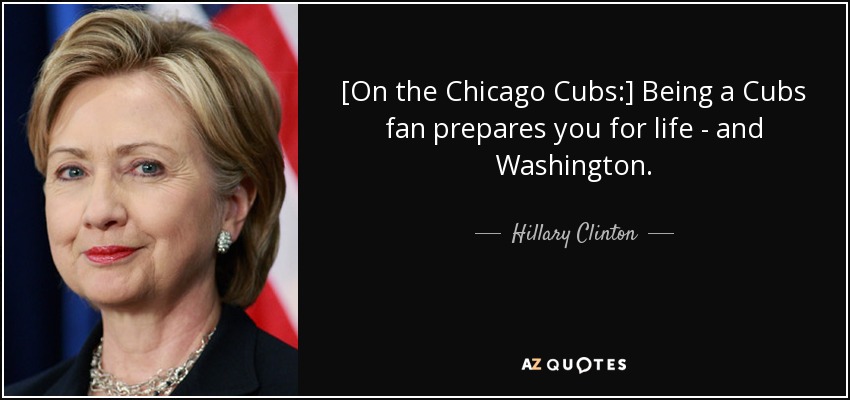
October 26, 1947 Hillary Diane Rodham is born in Chicago, and grows up in the nearby suburb of Park Ridge. And, yes, growing up, she was a Cub fan. In 1994, then First Lady, Hillary Clinton was invited to throw out the ceremonial first ball on Opening Day at Wrigley Field.

I knew she was never really a Yankee Fan. But then, Michael Bloomberg was honest about having been a Red Sox fan, and I'd sooner trust Hillary to be Mayor of New York, let alone President.

Donald Trump claims to be a Yankee Fan. Can't we trade him? To a team on Mars, or further away?

*

October 26, 1951
, 70 years ago: Desperate for money to pay a mounting tax bill, Joe Louis, who stood as Heavyweight Champion of the World longer than anyone (12 years, 1937-49) and defended the title more than anyone (25 times), climbs into the ring at the old Madison Square Garden for a purse of $300,000 – about $3.16 million in today's money. He fights Rocky Marciano, then a rising contender who idolized Louis. Rocky had told the press, "This is the last guy I want to fight." It had nothing to do with his own ability, or whatever Louis had left.

It is a mismatch: Marciano is 28, is in superb shape, and has a sledgehammer for a right hand; Louis is 37, struggles with his weight, and his arms and legs, once the fastest in the fight game despite his being a heavyweight, have terribly slowed. Marciano actually knocks Louis out of the ring in the 8th round.

Marciano goes back to his dressing room and cries over what he has done to his greatest hero, and even goes over to see him and says, "I'm sorry, Joe." Sugar Ray Robinson, then Middleweight Champion, was in Louis' dressing room to console him, and was also crying.

Eleven months later, Marciano knocked Jersey Joe Walcott out to become the Heavyweight Champion. Louis, still needing money, humiliated himself as a professional wrestler, and not a very good one. Both men's lives ended badly: Marciano's in a plane crash in 1969, just before his 46th birthday; Louis' in a wheelchair, unable to pay his medical bills, with Frank Sinatra hosting a benefit concert for him in Las Vegas in 1978, which kept Louis afloat until he finally passed away in 1981, at 67.

As a Sergeant in the U.S. Army in World War II, he was laid to rest at Arlington National Cemetery, on the order of President Ronald Reagan, and with Sinatra delivering the eulogy.

October 26, 1955: The Stadio Olimpico del Ghiaccio -- Olympic Ice Stadium -- opens in Cortina d'Ampezzo, Veneto, in the Italian Alps, near the border with Austria. It was the main stadium for the 1956 Winter Olympics, then seating 65,000.

With just 5,842 people according to Italy's most recent census, Cortina is one of the smallest municipalities ever to host an Olympic Games. Nevertheless, it has been selected again, as the site of the 2026 Winter Olympics. The Stadio Olimpico del Ghiaccio still stands, and will host the curling events at the '26 Games. But, having been converted to an all-seater facility, its capacity is down to 27,958, and so a larger stadium will be built for the Opening and Closing Ceremonies.

October 26, 1957: The Cincinnati Royals play their 1st regular-season game after moving from Rochester. They beat the Syracuse Nationals 110-100 at the Cincinnati Gardens.

Despite having future Hall-of-Famers in Oscar Robertson, Jerry Lucas and Jack Twyman, they never won a title, only getting as far as the 1963 and 1964 NBA Eastern Conference Finals.

In 1972, they moved again, to Kansas City. Since that city already had a baseball team named the Royals, they didn't want to make the same mistake that the NFL's Chicago Cardinals made when they moved to St. Louis, so they changed the name but kept the royalty theme, and became the Kansas City Kings. In 1985, they moved again, and became the Sacramento Kings.

Being small markets, neither Rochester, nor Cincinnati, nor Kansas City has ever regained an NBA team.

Speaking of small: Also on this day, Harry Perry Chappas is born in the Washington suburb of Mount Rainier, Maryland, and, well, grows up in the Miami suburb of Davie, Florida. In 1978, 27 years after sending the 3-foot-7 inch Eddie Gaedel to bat for the St. Louis Browns, Bill Veeck, now the owner of the Chicago White Sox, signed the shortest "real player" in MLB history, measured at 5-foot-3. Chappas insisted that he was really 5-foot-5, and that Veeck exaggerated so as to make him seem shorter than the shortest player in the majors then, Kansas City Royals shortstop Freddie Patek, 5-foot-4.

Also a shortstop, Chappas hit .267 in 20 games as a September callup. In 1979, Veeck named former Chicago Cubs shortstop Don Kessinger his manager, making Kessinger, to this day, the last player-manager in the American League. Kessinger respected Chappas' effort enough to name him, rather than himself, as the Opening Day starter. But just 2 weeks into the season, Chappas missed a sign, and Kessinger could not forgive that, sending him down to the minors.

Kessinger didn't last much longer himself, as the team was losing, and he resigned on August 2, 1979, and also retired as a player. That game was a White Sox win over the Yankees, and Kessinger's last game was also Thurman Munson's last game. From 1991 to 1996, he was a successful head coach at his alma mater, the University of Mississippi. He is still alive, but has never been involved in professional baseball again.

Chappas was called back up, but only played 26 games in 1979 and 26 more in 1980. He continued to play in the minor leagues until 1983. He is still alive.

*

October 26, 1961, 60 years ago: Keith B. Griffin is born in Columbus, Ohio. (I can find no record of what the B stands for.) Despite being born in the hometown of Ohio State University, and being the younger brother of O-State's Heisman Trophy winner Archie Griffin, the running back instead attended the University of Miami. He was the player shown on the cover of Sports Illustrated after Miami's shocking win over Nebraska in the 1984 Orange Bowl gave them the National Championship.

He wasn't done winning. He played 5 seasons for the Washington Redskins, and was a member of their Super Bowl XXII winners. Archie's pro career was an injury-induced bust. He did reach Super Bowl XVI with his home-State Cincinnati Bengals, but they lost. He lost a fumble during the game, but that ended up not mattering.

Also on this day, Mark Anthony McDermott is born in the New York suburb of Waterbury, Connecticut. We know him as Dylan McDermott. He played Bobby Donnell on The Practice. He also starred in each of the 1st 2 seasons of American Horror Story, although as different characters, as each season of that show tells a different story.

Also on this day, Uhuru Muigai Kenyatta is born in Nairobi, Kenya. The son of Jomo Kenyatta, the country's founding father and 1st President, he was elected its 4th President in in 2013, and re-elected in 2017.

The Swahili word "uhuru" means "freedom." It is for this reason that the black African character on the original Star Trek series was named Uhura. There was also a Jamaican reggae band named Black Uhuru.


*

October 26, 1971, 50 years ago: 
Anthony Deane Rapp is born in Chicago. He played Mark Cohen in the original 1996 Broadway production of the musical Rent, and again in the 2005 film version. He now plays Lieutenant Commander Paul Stamets, Chief Engineer aboard the eponymous starship, on the TV series Star Trek: Discovery. This is the 1st openly gay character in a Star Trek series.

October 26, 1974: The Richfield Coliseum opens in Richfield, Ohio. The location was chosen because it was about halfway between the downtowns of Cleveland and Akron. This was a very stupid thing to do.

It was home to the NBA's Cleveland Cavaliers from 1974 to 1994, the World Hockey Association's Cleveland Crusaders from 1974 to 1976, the NHL's Cleveland Barons from 1976 to 1978, the Major Indoor Soccer League's Cleveland Force from 1978 to 1988, their successors the Cleveland Crunch from 1989 to 1992, and the International Hockey League's Cleveland Lumberjacks from 1992 to 1994.

In 1975, Muhammad Ali had his 1st defense of his regained Heavyweight Championship of the World there, surprisingly getting knocked down by Chuck Wepner before flooring the otherwise overmatched "Bayonne Bleeder" in the 15th and final round. This fight inspired Sylvester Stallone to write Rocky.

The location was terrible, and the Cavs could never fill its 20,000 seats, so the Gateway Arena (now the Rocket Mortgage FieldHouse) Arena was built downtown. The Coliseum was demolished in 1999, and the site is now part of a National Forest.

October 26, 1984: Michael Jordan makes his NBA debut. He scores 16 points and has 11 assists, and is outscored by 3 Chicago Bulls teammates: Orlando Woolridge with 28, Quintin Dailey with 25 and Steve Johnson with 18. The Bulls beat the Washington Bullets, 109-93 at Chicago Stadium.

*

October 26, 1985: Time travel is first demonstrated at the Twin Pines Mall (or is that the Lone Pine Mall?) in Hill Valley, California -- or, rather, is dramatized in the film Back to the Future. But even more dramatic events are unfolding at 
Game 6 of the 1985 World Series, starting at Royals Stadium (now Kauffman Stadium) in Kansas City, about 19 hours after Marty McFly (played by Michael J. Fox) made his trip back into time.

The St. Louis Cardinals lead the cross-State Kansas City 
Royals 1-0, and need just 3 more outs to win the World Series. Jorge Orta hits a ground ball to 1st baseman Jack Clark. Clark flips to reliever Todd Worrell, who is covering the base. Orta is unquestionably out. The instant replay cameras and the photograph above confirm this. Except 1st base umpire Don Denkinger blows the call, and calls Orta safe.

The next batter, Steve Balboni, pops up, and Clark can’t handle it, and Balboni singles on his next swing. A passed ball by Darrell Porter, a Royal postseason hero from 1980 but now the Cardinal catcher (having been their postseason hero in 1982), makes it men on 2nd and 3rd, and Hal McRae is intentionally walked. Dane Iorg steps up, and singles home Orta and Balboni, and the Royals have a 2-1 walkoff win to force a Game 7 at home.

The Cardinals are furious. So are their fans. Understandably so. They all think Denkinger stole the World Series from them. They still think so, 36 years later.

There's just one problem with this theory: There was still 1 game to go. If the Cardinals had won Game 7, Denkinger's blown call would have been just a footnote.


So Cardinal manager Whitey Herzog should have taken his team into the clubhouse and said, "Men, we got screwed tonight, but there's nothing we can do about it now. So let's win this thing tomorrow, and what happened tonight won't matter." Instead, the White Rat whined about the call to the media, and let it get into his head, and into his team's heads.

The shock isn't that the Cards lost Game 7 by a whopping 11-0. The shock is that the Royals won it by only 11 runs. It is the biggest blowout in Game 7 history, previously reached only by, oddly enough, the Cardinals, when they beat the Detroit Tigers in 1934 (the Joe Medwick Game).


In 2015, someone did a "Win Expectation" study of that game. Before the swing, the Cardinals had an 81 percent chance of winning the game -- meaning a 1 in 5 chance of losing. That's hardly ridiculous. If the right call had been made, giving the Cardinals an out, they would have had an 89 percent chance -- a 1 in 11 chance of losing, unlikely but still not outrageous for the Royals to have come from behind to win. Even with the call blown, the Cards had a 67 percent chance -- a 2/3rds chance. They still should have won it.

Don Denkinger was still respected enough by the baseball establishment to be put behind the plate for the 1987 All-Star Game, and named crew chief for the 1988 American League Championship Series, the 1991 World Series, and the 1992 ALCS, before retiring in 1998 after 30 season in the majors, 22 as a crew chief. He is now 85 years old, and still lives in his hometown of Cedar Falls, Iowa.

The Cardinals have since won 3 World Series. For those among their fans who have not yet done so, it's time to move on.

*

October 26, 1991, 30 years ago: Game 6 of the World Series. The Minnesota Twins are hosting the Atlanta Braves at the Metrodome in Minneapolis, broadcast live on CBS. While the game is still going on, NBC airs Saturday Night Live.

This episode would be the debut of Ellen Cleghorne's character Queen Shenequa, but it opens with their version of NBC's political talk show The McLaughlin Group, with Dana Carvey playing host John McLaughlin. He and all the panelists are wearing Halloween costumes. Then, Carvey keels over with a knife in his back, and the real McLaughlin takes over -- but stays in character, exaggerating his tagline, "Wrong!" the way Carvey does.

When host Christian Slater comes out, he sees the entire audience doing the Braves' Tomahawk Chop and War Chant. He turns and sees McLaughlin and executive producer Lorne Michaels watching the game, rather than watching hthe show they're actually working on, doing the Chop with the big red foam Tomahawks, and wearing Indian headdresses. With the game in extra innings, Michaels says, "Braves in 6." McLaughlin says, "Wrong! Braves in 7!" 

They're both wrong: Kirby Puckett makes a great catch and hits a dramatic home run in the bottom half of the 11th inning, to give the Twins a 4-3 win, and tie the Series. What has been shaping up as one of the best World Series ever will go to a Game 7 that will be worthy of it.

October 26, 1994: Had the baseball season been permitted to reach a conclusion, Game 4 of the World Series would have been played on this day, at the home park of the American League Champions.

October 26, 1995
: The KeyArena opens at the Seattle Center complex, taking the place of the Seattle Center Coliseum. The Seattle SuperSonics make the NBA Finals in their 1st season there, but are moved to Oklahoma City in 2008. 

It was also home to the WNBA's Seattle Storm and the basketball teams of Seattle University. It has now been replaced by the 3rd arena on the site, the Climate Pledge Arena, for the Seattle Kraken, an expansion team that just debuted in the NHL. Seattle also hopes it will become the home of a moved or expansion NBA team that will become the new Sonics. In the interim, the Storm played at Hec Edmondson Pavilion on the campus of the University of Washington.


*

October 26, 1997: Game 7 of the World Series at whatever the combined Marlins-Dolphins stadium in the Miami suburbs was called at the time. The Cleveland Indians jump out to a 2-0 lead over Florida‚ and are just 2 outs away from winning their 1st World Series in 49 years.

But Jose Mesa, not for the first time nor for the last, blows the save, and the Marlins claw their way back and tie the score in the bottom of the 9th on a sacrifice fly by Craig Counsell. In the last half of the 11th‚ Edgar Renteria gets his 3rd hit of the game‚ driving home Counsell with the winning run‚ as Florida wins Game 7 by a score of 3-2.

This was, after 1962, only the 2nd World Series where neither team won back-to-back games: The Marlins won Games 1, 3, 5 and 7; the Indians won Games 2, 4 and 6. This was also the Series with the greatest extremes of weather: The 4 games in South Florida were the 4 warmest on record for Series games, while the 3 in Cleveland were 3 of the 4 coldest (the previous coldest, in New York in 1976, remains 3rd), and Game 4 is the only Series game to be played in a snowfall except for one in Chicago in 1906.

The Marlins, in just their 4th season of existence (as opposed to the Indians, in their 97th), thus become the fastest team in baseball history to win a World Series title‚ 3 years quicker than the 1969 Mets. Livan Hernandez, the pitcher who fled Cuba (and would soon be followed by his brother Orlando "El Duque" Hernandez) is named Most Valuable Player of the Series.

This Series is sweet vindication for manager Jim Leyland, who lost 3 straight NLCS while managing the Pittsburgh Pirates; for Bobby Bonilla, who played for Leyland on those Pirates, bad-attituded his way out of his native New York with the Mets, and flopped the year before with the Baltimore Orioles; for Alex Fernandez, who pitched for the talented Chicago White Sox team that fell just short in 1990, lost the ALCS in ’93 and was screwed over by the strike in ’94, and was injured and unable to pitch in the postseason, so his teammates put his Number 32 on their caps; and for Gary Sheffield, who was already gaining a reputation as a bad apple that nobody wanted to keep around for very long, despite his obvious talent for power hitting, and this remained his only World Series win.

For the Indians, who hadn't won a Series since 1948, went from 1954 to 1995 without winning a Pennant, went from 1959 to 1994 without even being in a Pennant race, stood to be the AL's Wild Card if the standings at the time of the Strike of '94 had held to the end of the season, lost the '95 Series despite winning 100 of 144 games in the regular season, lost the '96 ALDS to an inferior Oriole team, and won just 86 games in this regular season but had defeated the favored Yankees and the Seattle Mariners before this crushing defeat, it is not just a crushing defeat, where they came closer to winning the World Series without doing so than any team ever had except the '86 Red Sox (and now the 2011 Texas Rangers).

No, this loss meant that, like the Red Sox, the Indians now have a reputation of being a choking team. They have never shaken it, despite return trips to the postseason in 1998, '99, 2001 and '07 – blowing a 2-1 lead in the '98 ALCS, 3-1 leads in the '07 ALCS and the '16 World Series, and a 2-0 lead in the '17 ALDS.

Also on this day, D.C. United wins its 2nd MLS Cup, in the league's 2nd season, beating the Denver-based Colorado Rapids, 2-1 on home soil at Robert F. Kennedy Stadium in Washington. Jaime Moreno and Tony Sanneh score the goals.

October 26, 1999: Game 3 of the World Series. Andy Pettitte did not have his good stuff, but Tino Martinez, Chad Curtis and Chuck Knoblauch helped the Yankees come from 5-1 down to send the game to extra innings. Curtis led off the bottom of the 10th, and knocked one out for a 6-5 win.

The following night, the Yanks wrapped up the sweep, the 25th World Championship, the title of Team of the Decade (it ain't about Division Titles, Braves fans), and the title, as NBC's Bob Costas said that next night, of "Most Successful Franchise of the Century."


Like fellow late 1990s Yankee Dynasty players Roger Clemens and John Wetteland, Curtis was among the most faith-vocal players of his era. Also like Clemens and Wetteland, he would later be accused of what would once have been quaintly called "morals charges," relating to his time as a high school athletic trainer in Michigan. He was sentenced to 7 to 15 years in prison, and served 7.

*

October 26, 2000: The Euro, the currency of the European Union, which had started, on January 1, 1999, at $1.10 in comparison to the American dollar, drops to 83 cents. This remains its all-time low. Its all-time high is $1.60, achieved on July 15, 2008.

More importantly for me, on this day, Game 5 of the World Series is played at Shea Stadium. Jeter and Bernie Williams homer off Al Leiter. Pettitte and Leiter give it their all. The game is tied 2-2 in the top of the 9th. Two outs. Posada on 2nd, Scott Brosius on 1st. Not great speed on the basepaths. 

Luis Sojo, playing 2nd base because Knoblauch's fielding difficulties limited him to DH status, is coming up to bat. Leiter had thrown 141 pitches. A number that would not have caused Catfish Hunter and Tom Seaver to flinch, but by the standards of the 1990s and 2000s, a lot.

Met Manager Bobby Valentine's choices are not good:

* A: Stick with an exhausted Leiter. He would be pitching on brains, courage and fumes, and pray that he gets the out that sends it to the bottom of the 9th still tied.

* B: Put in Armando Benítez. He led the National League in saves that year and saved Game 3, but also blew Game 1 for Leiter, and also blew a Division Series game against the Giants (which the Mets ended up winning anyway), and had previously messed up 2 ALCS games against the Yankees for the Orioles (including the Jeffrey Maier Game). Or...

* C: Put in John Franco. He was the winning pitcher in Game 3, and also pitched well in Game 4, but would be pitching for the 3rd day in a row. And he was 39: There was a reason Valentine had taken the closer's job from Franco and given it to Benítez.

Valentine decided a tired Leiter was better than an aging, potentially tired Franco and an inconsistent, unreliable Benítez. Although I frequently accused Valentine of overmanaging, and sometimes outright stupidity, I can't fault him for this choice. If he had put in the very popular New York native Franco and lost anyway, he might have gotten away with it. But if he had put in the already suspicious Benítez and he blew yet another, Valentine would have been run out of Flushing on the Long Island Railroad.


Leiter throws his 142nd pitch to Sojo. He knocks it up the middle. A Met fan once told me that Rey
Ordóñez would have stopped this grounder. This Met fan was a fool: Ordóñez would not have gotten it. Mike Bordick was the shortstop that night, and he was a good shortstop, and he couldn't quite get it.

Base hit for Sojo. Posada comes around 3rd. Center fielder Jay Payton's throw... never makes it to Mike Piazza at the plate, instead hitting Posada in the back and getting away, toward the backstop. This enables not only Posada to score the tiebreaking run, but also Brosius to score an insurance run as well. Yankees 4, Mets 2.

Bottom of the 9th. Two out. The Mets get a man on. Piazza comes up to the plate. If you're a Met fan, this is the man you want up: The best offensive player the Mets have ever had (cough-steroids-cough), one of the best fastball hitters of his time, power hitter against power pitcher, Mariano Rivera.

But if you're a Yankee Fan, there’s no one you'd rather have on the mound, and there's no one you’d rather get as the final out. It was similar to the final matchup of the 1978 Boston Tie Party, with Carl Yastrzemski, one of the greatest fastball hitters ever, and the most beloved player in his franchise's history (remember, Sox fans didn't always love Ted Williams), coming up to try to save his club against one of the fastest and most fearsome pitchers ever, Rich "Goose" Gossage.

Yaz popped up to end that game in victory for the Yankees; 22 years later, Piazza gets considerably better wood on his pitch, and hits one deep to straightaway center field.

For a moment, many of us, myself included, think, "Uh-oh, no!" Translation: "Tie game, Mets will go on to win it, and take the next 2 in The Bronx, and the Yanks will have choked it away."

Because we had grown up with the Mets as the team that won and the Yanks as the team that fell short. We had the arrogance of Yankee Fans of old, but deep down, in places we don't like to talk about at parties, we had the fears that came so easily to fans of the Indians, the pre-2004 Red Sox, the pre-2007 Phillies, the pre-2016 Cubs -- and the post-2006 Mets.

But Piazza had juuuust gotten under it. The ball has too much height and not enough distance. As the clock strikes 12:00 midnight, Bernie stands on the warning track, it's an easy catch, and it's over.

Jeter becomes the 1st player ever to be named Most Valuable Player of the All-Star Game and the World Series in the same season. Still, he would never be named MVP of a regular season. At the site of his 1st game as a manager, 23 years earlier, Torre is picked up by his grateful players, and carried off the field.

There were 25,000 people at Shea chanting "Let's Go Yankees!" and "We're Number 1!" Eventually, the owner came out to talk to the press, and he and the announcers couldn't talk, because the Yankee Fans were so loud, chanting "Thank you, George!" Imagine that, thousands of people saluting George Steinbrenner at Shea Stadium.

I loved it. October 26, 2000 – actually, the final out came just before midnight, so it was really October 27 that we celebrated – remains my favorite moment as a sports fan.

For the 1st time, the Mets had the chance -- their first, their best, maybe their last -- to beat the Yankees in a Subway Series, and to irrevocably "take over New York." And while they had their chances and fought hard, in the end, the better team won.

The Yankees have beaten the Mets in a World Series. The other way around has never happened. And it never will. Never, never, never. Or, in the words of Flushing's own Fran Drescher, "It begins with an N and ends with an A: Nev-a." As a Yankee Fan said then, "The Yankees have scoreboard over the Mets for all time."


This was the 26th World Championship. And for those of us who grew up as Yankee Fans during the Mets' "glory" years of 1984 to 1990, the Dynasty That Never Was, and had to deal with the unearned arrogance of the Flushing Heathen, the filthy bastards, delusional that their 2 titles outweighed our 22 (until 1996; now 27), damn fools to believe that the 1986 Mets could have beaten the Yankees of 1927, 1938, 1941, 1953, 1961 and 1978, and eventually even the 1998 juggernaut... for us, this was the greatest, sweetest moment of them all.


We beat the Mets. And it wasn't close. All 5 games were close, but winning in 5 games is domination. And we clinched at their place, on their field, at the William A. Shea International Airport, at the Flushing Toilet.


This was the 13th World Series game played at Shea. An unlucky 13th. It was also the last, which no one (not even a wiseass Yankee Fan like me) could have predicted at the time.

No matter how bad the 2004 ALCS was, losing the 2000 World Series to the Mets would have been 10 times worse. As we saw in 2015, we don't have to live around very many Red Sox fans with their cheated-for arrogance, but we do have to live around Met fans with their unearned arrogance.

How arrogant are Met fans? Some insist that 2000 and the other World Series the Yankees have won since 1978 don't count, because they used steroids; therefore, the count since 1986 is 1 to 0, and the count since 1962 is 2-2. These fans are idiots: We have more evidence against the 2000 Mets (Piazza) than we do against the 1996-2009 Yankees. So if 1996, 1998, 1999, 2000 and 2009 don't count for the Yankees, then 2000 doesn't count for the Mets, either.

For the moment, the count remains 27 to 2, and 5 to 0 since 1986.

I once saw a Met fan with a cap that had the 2000 World Series logo on the side, but razored off, with some of the stitching still visible. That's how much it bothers them. It should bother them: It basically erased their team's reason to exist.

As we've seen, the Yankees are (depending on your point of view: again, or still) the better team now. And let us not pretend that any Met World Series win -- be it 1969, 1986, or any future win -- is better than all of the Yankees' World Series wins.

Most of all, winning the 2000 World Series means that, as Paul Louis, an online friend who was the same age I am, put it, "The Yankees have scoreboard over the Mets for all time."

Sadly, early in 2021, Paul died from COVID. He was born right after his beloved New York Jets won the Super Bowl, and never lived to see them win another.

Also on this day, The Euro, the currency of the European Union, which had started on January 1, 1999 at $1.10 in comparison to the American dollar, drops to 83 cents. This remains its all-time low. Its all-time high is $1.60, achieved on July 15, 2008.

*

October 26, 2002: Game 6 of the World Series, at what was then known as Edison International Field of Anaheim – the former "Big A" briefly nicknamed "the Big Ed." The San Francisco Giants lead the Series 3 games to 2, and lead 5-0 after 6½ innings, thanks to home runs by Shawon Dunston and Barry Bonds.


The Anaheim Angels score 3 runs in the 7th to make it 5-3, but the Giants are still just 9 outs away from their 1st World Championship since moving to San Francisco 45 years earlier, their 1st in any city since they were in New York 48 years earlier.

But they choke. The Angels, having already scored the 3 runs in the 7th, score 3 more in the 8th on a home run by Scott Spiezio, and win, 6-5. The Series will go to a Game 7 in Anaheim tomorrow night.

October 26, 2004: The Red Sox win Game 3 of the World Series with a 4-1 win over the St. Louis Cardinals at Busch Memorial Stadium. Finally making his 1st World Series start, Pedro Martinez hurls 7 shutout innings to put the Sox up 3-games-to-0. Manny Ramirez homers and drives in a pair of runs for the Sox‚ while Larry Walker hits one out for the Cards. The Sox can achieve their 86-year-old dream tomorrow night.

October 26, 2005: The Chicago White Sox shut out the Astros‚ 1-0 at Minute Maid Park in Houston‚ to sweep the World Series and win their 1st World Championship since 1917, the 1st for either Chicago team in that time. Freddy Garcia gets credit for the win‚ as Jermaine Dye drives home the game's only run. Dye is named the Series MVP.

Ozzie Guillen, a native of Venezuela, becomes the 1st foreign-born manager to win a World Series. The Astros, in the Series for the 1st time in their 44-season history, are still, through 2016, winless in World Series games. Their all-time record in postseason games is 24-38.

He was the starting goaltender for North London club Arsenal, winning the League title in 1948 and 1953 and the FA Cup in 1950. He later managed the club from 1958 to 1962, but not well. He also managed Peterborough United, Norwich City, Kettering Town, Cardiff City and Corby Town.

October 26, 2008: In a 10-2 rout of the Tampa Bay Rays in Game 4 of the World Series at Citizens Bank Park, Philadelphia Phillies right-hander Joe Blanton hits a home run, the 1st pitcher to do so in a Series game in 34 years. Ken Holtzman of the A's was the last hurler to accomplish the feat when he went deep off Andy Messersmith of the Dodgers in 1974 -- also in Game 4.

October 26, 2009: Castle airs the Halloween-themed episode "Vampire Weekend." When 2 college kids -- one an artist who dressed as a vampire, the other a writer who dressed as a werewolf -- who were writing a graphic novel about a present-day vampire in New York are killed, mystery writer Richard Castle (Nathan Fillion) and the detectives at the NYPD's 12th Precinct connect the murders to one committed 18 years earlier.

*

October 26, 2013: Game 3 of the World Series is played at Busch Stadium in St. Louis, and it has the weirdest ending of any Series game ever. (Even weirder than Game 4 of 2020.)

In the bottom of the 9th inning, with the score tied 4-4, Red Sox pitcher Brandon Workman gives up a 1-out single to Yadier Molina. Boston closer Koji Uehara is brought in to face pinch-hitter Allen Craig, who doubles on the 1st pitch. Jon Jay hits a grounder to 2nd baseman Dustin Pedroia, who makes a sensational diving stab, and throws home to catcher Jarrod Saltalamacchia, who tags out the sliding Molina for the 2nd out.

But then Saltalamacchia throws to 3rd, trying to get Craig, who was running on the play, and decided to slide towards Will Middlebrooks, knocking him down. However, the ball glanced off Middlebrooks' glove and Craig's body, caroming into foul territory down the left field line. When Craig starts toward home, he runs over Middlebrooks, who winds up slowing Craig down as he tries to take off for home.

The 3rd base umpire, Jim Joyce, calls obstruction on the play. Home plate umpire Dana DeMuth
determines that Craig would have scored without the obstruction, and awards the Cardinals the run, giving them a 5-4 win, and a 2–1 lead in the World Series. As far as I know, this is the only game in baseball history where a game-winning run was awarded without the runner having touched the plate.

This was 28 years to the day after an umpire's incorrect call set in motion a series of events that cost the Cardinals a World Championship. Had the Cardinals gone on to win the Series, it would have become an epic moment, and Red Sox fans would fume about getting screwed for the rest of their lives -- even though, unlike the Denkinger call in 1985, this call was correct. We know they would have forever fumed, because Sox fans old enough to remember the 1975 World Series are still fuming about the alleged "interference" of Ed Armbrister of Cincinnati in the 10th inning of another Game 3.

But, of course, the Sox won the Series (by cheating), so this play is a footnote. A bizarre footnote, but a footnote nonetheless.

October 26, 2015: Supergirl premieres on CBS. After its 1st season, it moves to The CW, becoming part of its "Arrowverse" franchise of superhero dramas. Melissa Benoist plays Kara Zor-El, a native of Krypton who, in a manner of speaking, has 2 secret identities: Kara Danvers, a media figure; and the titular superheroine.

The original version of the character debuted in May 1959, in Action Comics #252, as a cousin to Superman, a.k.a. Clark Kent, a.k.a. Kal-El. Superan's father, Jor-El, and Supergirl's father, Zor-El, were brothers and scientists. The character had previously been show in the 1984 film Supergirl, starring Helen Slater, as part of the franchise started by the Christopher Reeve Superman films.

Nods were given to previous superhero franchises, including Dean Cain, Superman in the 1990s series Lois & Clark, as Jeremiah Danvers, Kara's adoptive father; and Lynda Carter, the title character on the 1970s Wonder Woman series, as Olivia Marsden, President of the United States, who has to resign when it is revealed that she is, herself, an alien. The show will conclude in a few weeks after 6 seasons.

October 26, 2016: Game 2 of the World Series. Behind the pitching of Jake Arrieta, The Chicago Cubs beat the Cleveland Indians 5-1 at Progressive Field, and even the Series. 

After winning all 8 games he managed with the Boston Red Sox, and winning game one with the Indians, this was the 1st time Terry Francona lost a World Series game as a manager. He was 9-0. It was the 1st World Series game the Cubs had won since Game 6 in 1945.

October 26, 2018: Game 3 turns out to be the longest game in World Series history. Joc Pederson gives the Dodgers the lead with a home run in the 3rd inning, and Jackie Bradley Jr. ties it for the Red Sox with a home run in the 8th, to make it 2-2.

The Red Sox scored in the top of the 13th on a walk, a wild pitch and a single-and-error. But the Dodgers tied it on a walk, a fly out, and a single-and-error of their own. As the game went on and on, Twitter users began making jokes about its length: This game had started at Ebbets Field in Brooklyn and was moved to Dodger Stadium in Los Angeles; Sandy Koufax had started the game for the Dodgers, Cy Young for the Red Sox; Ted Williams and Jackie Robinson had traded home runs in the 14th, and so on.

Max Muncy nearly hit a walkoff home run in the bottom of the 15th, but his drive hooked just foul. He finally hit one in the bottom of the 18th, giving the Dodgers a 3-2 win. Nathan Eovaldi, normally a starting pitcher, had thrown 7 innings in relief before taking the loss. His effort helped save the Boston bullpen, keeping their relievers fresh. This would be the only game the Dodgers would win in the Series.

The 18 innings broke the Series record of 14, set by the same teams in 1916, and tied by the Chicago White Sox and Houston Astros in Game 3 in 2005. The first pitch was at 5:10 PM Pacific Time (8:10 Eastern), and it ended at 12:30 AM (3:30 Eastern). At 7 hours and 20 minutes, it broke the record of that 2005 Game 3, 5 hours and 41 minutes, and tied the record for longest postseason game ever, set in Game 4 of the 2005 National League Division Series, won by the Astros on Chris Burke's home run against the Cardinals. This game was longer than the entire 1939 World Series, a 4-game sweep by the Yankees over the Reds, which took a combined 7 hours and 5 minutes to play.