Showing posts with label super bowl xxiii. Show all posts

Friday, January 3, 2020

Sam Wyche, 1945-2020

Say a nice word for Sam Wyche, even if you live in Cleveland.

Samuel David Wyche was born on January 5, 1945 in Atlanta. He played quarterback at Furman University in Greenville, South Carolina, getting a Bachelor of Arts degree there and a Masters of Business Administration from the University of South Carolina.

He wasn't considered good enough to make the NFL. Fortunately for him and for many others, the 1960s were the time of, among other innovative and rebellious things, the American Football League. After playing the 1966 and 1967 seasons in West Virginia, with the Wheeling Ironmen of the Continental Football League, an AFL expansion team, the Cincinnati Bengals, signed him for the 1968 season.

That 1st year, he started 3 out of 14 games. In 1969, he again started just 3. In 1970, the Bengals and the other AFL teams were admitted into the NFL as part of the merger agreement between the leagues. Again, he played in all 14 games, but started just 3.
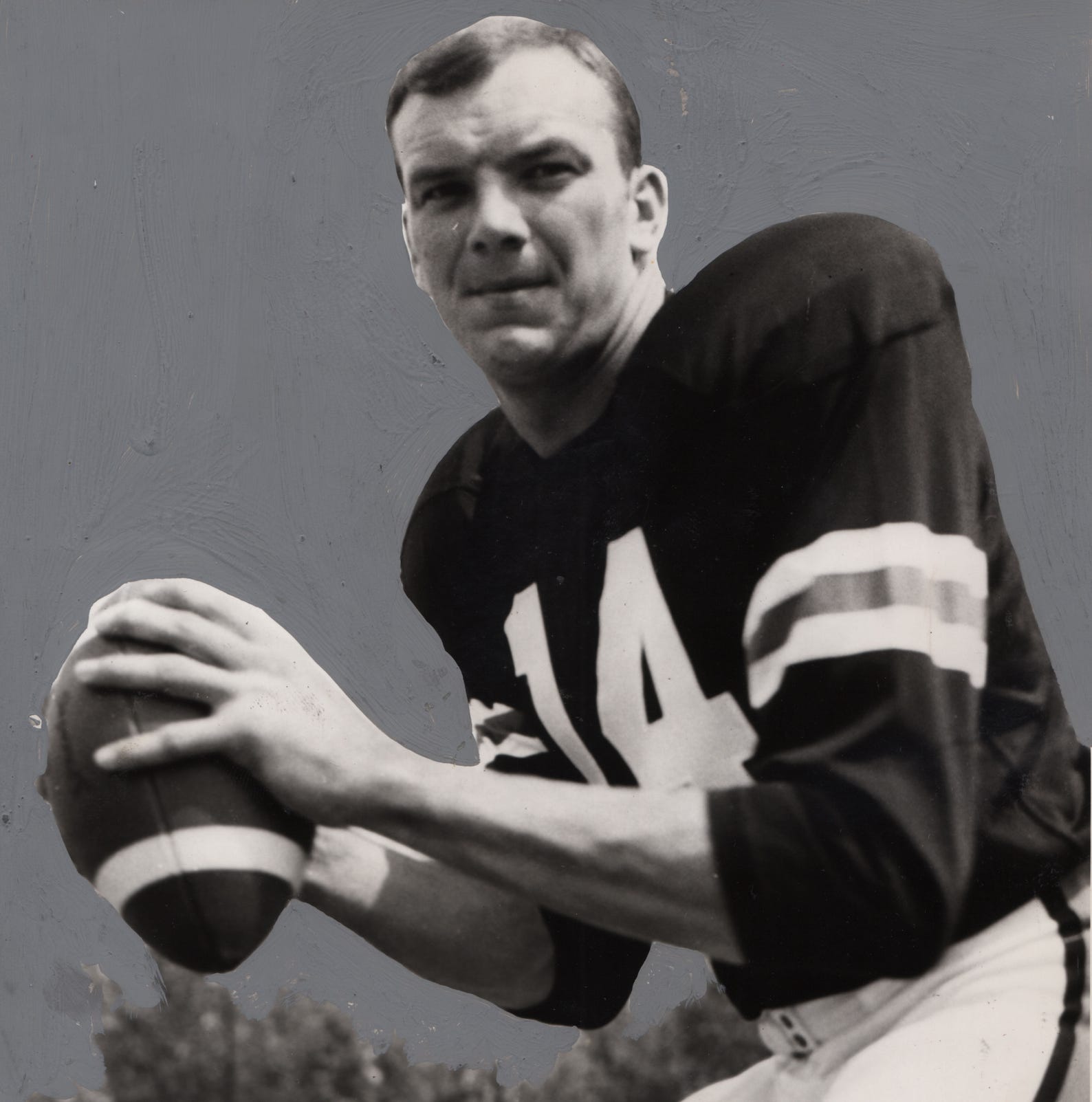
Why would he play in just about every game, when he wasn't the starting quarterback? Because the owner, general manager and head coach of the Bengals was Paul Brown. An offensive genius at Massillon High School in Northern Ohio, at Ohio State University, and with the Cleveland Browns, he had led the Browns to the Championship in all 4 seasons of the All-America Football Conference, 1946 to 1949; and then to the Eastern Division title in the NFL 6 straight seasons, 1950 to 1955, winning the Championship in 1950, '54 and '55.

He ran an offense the likes of which the NFL had never seen before, even with George Halas' Chicago Bears "Monsters of the Midway" with their flashy variation on the old T formation in the 1940s.

He had been fired as Browns coach by new owner Art Modell in 1962. His contract was guaranteed, so he had money. The joke was that the only men making more money to play golf were Arnold Palmer and Jack Nicklaus. He had time to spend with his family. But he missed football terribly.

So when the AFL gave him a chance to get back into the pro game, he did it with gusto, and tried to rebuild the Browns, a Browns without Modell, a Browns over which the other owners gave him full operational control. He was in the same State. He used the same base color, orange. He even gave his team the same initials, CB.

But he didn't have the talent: No Otto Graham at quarterback, no Marion Motley or Jim Brown to run the ball, no Dante Lavelli or Mac Speedie to catch it, no Frank Gatski or Bill Willis or Lou Groza to block for them.

What he did have was an assistant coach named Bill Walsh, who would later use what he learned from Brown to build a San Francisco 49ers team that would win 5 Super Bowls -- 3 while he was their head coach, 2 after. And he had Sam Wyche, one of those mediocre athletes who learned everything he could about the sport, so that when he turned to coaching, he was ready.

In 1971, Wyche was traded to the Washington Redskins. The team won the 1972 NFC Championship, and so they appeared in Super Bowl VII -- but Wyche himself did not, stuck behind Sonny Jurgensen and Billy Kilmer. In 1974, he was traded to the Detroit Lions. In 1976, he was traded to the St. Louis Cardinals (football version). But his playing career was a disappointment.

*

Fortunately, his connection to Brown paid off. He already had a year as an assistant coach under his belt, in 1967, with South Carolina while he was getting his MBA there. When Walsh became head coach of the 49ers in 1979, he hired Wyche, who helped him build the team that won Super Bowl XVI in 1982.

In 1983, Sam got his 1st head coaching job, at Indiana University. He only went 3-8. But in 1984, needing a new head coach when Forrest Gregg, who'd gotten the Bengals to the AFC title but lost that very same Super Bowl XVI to the 49ers, took the head job with his former team, the Green Bay Packers, Paul Brown, still owner and GM of the Bengals, hired Sam.

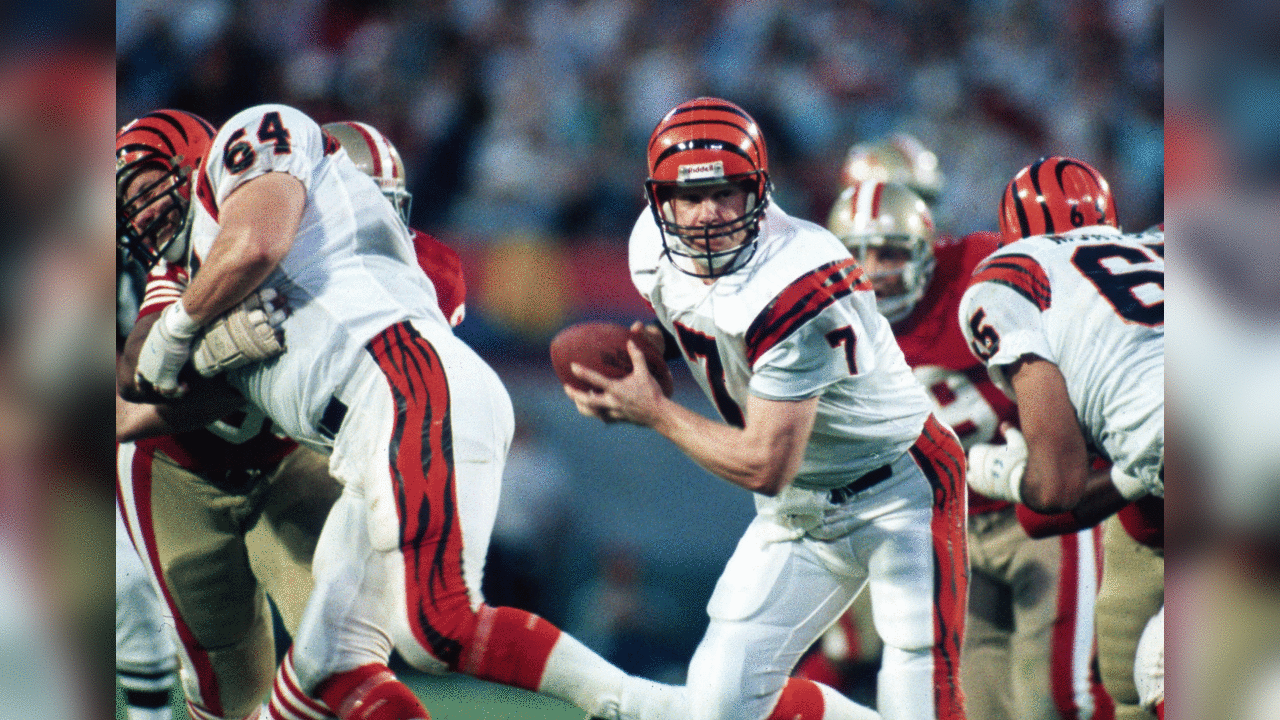
It didn't seem to work out. In his 1st 4 seasons, he finished 8-8, 7-9, 10-6 and 4-11, not making the Playoffs in any of them. But in 1988, with lefthanded quarterback Norman "Boomer" Esiason leading the Paul Brown offense that Wyche had adapted, they went 12-4, winning the AFC Central Division, and earning him the nickname bestowed upon him by Norman Chad of ESPN: "Always Innovative Sam Wyche." In the Playoffs, they beat the Seattle Seahawks, and then the Buffalo Bills. The Bengals were AFC Champions again, and off to Super Bowl XXIII.
Wyche and Esiason

Again, the opposition was Walsh and his 49ers. The game was tight: It was 3-3 at the half, and 6-6 after 3 quarters. In the 4th quarter, despite losing All-Pro linebacker Tim Krumrie to a broken leg, the Bengals had leads of 13-6 and 16-13. It looked like they might bring Cincinnati its 1st NFL title. But Joe Montana, using plays Walsh had adapted from Brown's playbook as far back as the 1940s, led the Niners down the field, and they took a 20-16 lead with 34 seconds to go.
Wyche and Walsh after Super Bowl XXIII

As Gregg had 7 years earlier, Wyche had gotten the Bengals close to a title -- indeed, he'd gotten them as close as any team had ever gotten to winning the Super Bowl without actually winning it. But it wasn't quite enough.

He went 8-8 in 1989, a season whose "highlight" came on December 10 at Riverfront Stadium, against Seattle. An apparently bad call by the officials led the Cincinnati fans to throw snowballs on the field, and the Seahawks, used to playing in the climate-controlled Kingdome, were getting hit by them. They walked over to the referee and said they would refuse to continue as long as the snowballs kept falling.

And instead of ruling that the Seahawks were forfeiting, the referees followed the letter of the law, and told Wyche that, as the home team, the Bengals would forfeit if the field of play remained unplayable.

Wyche asked for the referee's microphone, and told the fans to stop, citing the frequent misbehavior by their arch-rivals across the State: "Will the next person that sees anybody throw anything onto this field, point 'em out, and get 'em out of here! You don't live in Cleveland! You live in Cincinnati!"

That got a huge cheer from the crowd -- and, no doubt, a smile from Paul Brown. The throwing stopped. The Bengals lost the game anyway, 24-17.

The Bengals won the AFC Central again in 1990 with a 9-7 record, then beat the Houston Oilers in the 1st round of the Playoffs, but lost the next round to the Los Angeles Raiders. In 1991, Paul Brown died, and his son Mike Brown fired Wyche after a 3-13 season. Cincinnati fans still loved him, though.

And he wasn't out of work long. He was quickly hired by the Tampa Bay Buccaneers, but it got no batter: In 4 seasons, he went 5-11, 5-11, 6-10 and 7-9, and was fired after the 1995 season. However, as de facto GM, Wyche had drafted 3 of the defensive players who would turn the Bucs around under their next 2 coaches, Tony Dungy and Jon Gruden: Warren Sapp, Derrick Brooks and John Lynch. Wyche's record as an NFL head coach was 84-107: 61-66 in Cincinnati, and 23-41 in Tampa Bay.

In 1996 and 1997, he was an NBC studio analyst. Fro 1998 to 2001, he was a color commentator for CBS. In 2002, he went back to South Carolina, and became a substitute teacher and an assistant coach at Pickens High School. In 2004, he got back into the NFL, as the quarterbacks coach for the Buffalo Bills, whose head coach, Mike Mularkey, had coached under him in Tampa Bay. After 2 seasons there, he went back to Pickens High, and was there for another 2 seasons.

Two of his assistants became NFL coaches, thus also becoming part of the "coaching trees" of Brown and Walsh: Bruce Coslet (1990-93 New York Jets, 1994-2000 Bengals) and Mike Mularkey (2004-05 Bills, 2012 Jacksonville Jaguars, 2015-17 Tennessee Titans.)
At the Bengals' 50th season celebration in 2017

He and his wife Jane had a son named Zak and a daughter named Kerry, who gave them 6 grandchildren. But years of hard living caught up with him. In 2016, he got a heart transplant. In 2019, he was diagnosed with liver cancer. Sam Wyche died yesterday, January 2, 2020, and his home in Pickens, 3 days short of his 75th birthday.

Perhaps even more than Paul Brown, Sam Wyche was Mr. Cincinnati Bengal.

Tuesday, January 8, 2019

How Long It's Been: The Cincinnati Bengals Reached a Super Bowl

The Cincinnati Bengals finished this season 6-10. It was their 3rd straight time missing the Playoffs, and the 28th straight in which they did not win a Playoff game. (They've lost their last 8 Playoff games.)

Now, this was hardly the worst season in their history. They've had a 2-14 (2002), 4 3-13s (1991, 1993, 1994 and 1998), a 3-11 (1968, their 1st season), 5 4-12s (1978, 1979, 1999, 2000 and 2010), a 4-11 (the strike-shortened 1987), and a 4-11-1 (2008).

But they haven't always been a joke franchise. Founding owner Paul Brown, previously a great coach with the Cleveland Browns, got them to the AFC Central Division title in only their 3rd season, 1970. They've been to the Playoffs 14 times, including 5 in a row as recently as 2015. They've won 9 Division titles, 5 in the old AFC Central and 4 in the new AFC North. They've won 2 AFC Championships, in the seasons of 1981 and 1988.

They haven't won a Super Bowl, but they came close both times, both times against the San Francisco 49ers, coached by Browns' protege and a former Bengals assistant coach, Bill Walsh: They lost Super Bowl XVI 26-21, and Super Bowl XXIII 20-16. Had Tim Krumrie not broken his leg in the latter, their defense might have held the Niners on that epic last-minute drive by Joe Montana. Alas...

The Bengals got to that Super Bowl by winning the AFC Championship Game, at home at Riverfront Stadium in Cincinnati, beating the Buffalo Bills 21-10, on January 8, 1989. That was 30 years ago today. How long has that been?

*

The Bengals were coached by Sam Wyche, an assistant coach under Paul Brown in Cincinnati, and under Bill Walsh in San Francisco. He was the Bengals' 1st starting quarterback. His quarterback was a lefthander from Long Island named Norman Julius Esiason, nicknamed Boomer. (He really, really hates being called "Norman."

Other big players on that team included running backs James Brooks and Elbert "Ickey" Woods (known for his touchdown dance, "The Ickey Shuffle"), receiver Cris Collinsworth (a holdover from the Super Bowl XVI team, and, of course, now a color commentator), Hall of Fame offensive tackle Anthony Munoz, the aforementioned nose tackle Tim Krumrie, and linebacker Reggie Williams, who, the year before, had been elected to Cincinnati's City Council, serving 3 years.

The NFL had 2 teams in Los Angeles, and 1 was the Rams, but the other was the Raiders, not the Chargers. It had a team in Houston, but it was the Oilers, not the Texans. There was no team in Baltimore, or in Tennessee, or in Jacksonville. This was the Cardinals' 1st season in Arizona.

There were 6 stadiums in use in the 1988-89 NFL season that will be in 2018-19: The Los Angeles Coliseum (by the Raiders, and the Rams will leave it after 2019), Lambeau Field in Green Bay, Arrowhead Stadium in Kansas City, Rich Stadium (now New Era Field) outside Buffalo, the Superdome in New Orleans and Joe Robbie (now Hard Rock) Stadium outside Miami.

There were 6 teams then playing under full domes: Houston, New Orleans, Detroit, Seattle, Minnesota and Indianapolis -- 7, if you count the Hole Bowl outside Dallas. None of those roofs were retractable.

The Denver Broncos, the New England Patriots, the Tampa Bay Buccaneers, the New Orleans Saints and the Seattle Seahawks had not yet won an NFL Championship. The Los Angeles Rams (not yet having begun their sojourn in St. Louis), the original Cleveland Browns franchise (which became the Baltimore Ravens), and the Philadelphia Eagles had, but not, as yet since it became known as the Super Bowl. The Colts had, but not since moving from Baltimore to Indianapolis.

The Browns/Ravens franchise, the Buccaneers, the Seahawks, the Saints, the Buffalo Bills, the San Diego Chargers, the Atlanta Falcons, the Houston Oilers franchise (which became the Tennessee Titans), the Arizona Cardinals, had not yet reached a Super Bowl. And the Carolina Panthers, the Jacksonville Jaguars, the new Cleveland Browns and the Houston Texans did not yet exist.

All of those facts have since been reversed.

Football pioneers Red Grange, Bronko Nagurski, Don Hutson and Jay Berwanger were still alive. All of the defining players of my childhood had retired, the last of them being Walter Payton, a year earlier.

Ray Lewis was 13 years old. Peyton Manning was 12. Tom Brady was 11. Drew Brees was about to turn 9. Eli Manning was 8. Troy Polamalu was 7. Ben Roethlisberger was 6. Aaron Rodgers was 5. Clay Matthews was 2. Colin Kaepernick was 1. Richard Sherman and Russell Wilson were less than 1 year old. And Cam Newton, Rob Gronkowski, Andrew Luck, Odell Beckham Jr., Johnny Manziel, Baker Mayfield, Sam Darnold and Kyler Murray weren't born yet.

Current Bengals coach Zac Taylor was 5 years old. Pat Shurmur of the Giants was an assistant coach at Michigan State. Barry Trotz of the Islanders was a scout for the team he would one day coach to their 1st Stanley Cup, the Washington Capitals.

David Quinn of the Rangers was out of hockey, battling a long-term illness that he would eventually overcome. Domenec Torrent of New York City FC was playing for Guixols in his native Spain. Kenny Atkinson of the Nets was at the University of Richmond. Aaron Boone of the Yankees, David Fizdale of the Knicks, Katie Smith of the Liberty and Chris Armas of the Red Bulls were in high school. Mickey Callaway of the Mets and John Hynes of the Devils was in junior high school. Adam Gase of the Jets was 10.

The 49ers replaced the Washington Redskins as World Champions. The Champions in the other sports were the Los Angeles Dodgers in baseball, the Los Angeles Lakers in basketball, and the Edmonton Oilers in hockey. The Heavyweight Champion of the World was Mike Tyson.

The Olympic Games have since been held in America twice, Canada, France, Spain, Norway, Japan, Australia, Greece, Italy, China, Britain, Russia, Brazil and Korea. The World Cup has since been held in America, Italy, France, Japan, Korea, Germany, South Africa, Brazil and Russia.

The idea that people of the same gender could get married, and have all the legal benefits of marriage, was ridiculous. But then, so was the idea that corporations were "people," and entitled to the rights thereof. No Justice then on the Supreme Court is still on it now.

The President of the United States was Ronald Reagan, for 12 more days. George H.W. Bush was the President-elect. Jimmy Carter, Gerald Ford, Richard Nixon, their wives, and the widows of Lyndon Johnson and John F. Kennedy were still alive. Bill Clinton was the Governor of Arkansas, and Hillary Clinton that State's First Lady. George W. Bush was helping put his father's Administration together. Barack Obama was at Harvard Law School. Donald Trump was cheating on his 1st wife and his business associates.

The Governor of the State in question, Ohio, was Richard Celeste. (He is still alive, at age 81.) The current Governor, Mike DeWine, was in the U.S. House of Representatives. The Mayor of Cincinnati was Charlie Luken. (He served in that office twice: 1984-1991, and 1999-2005. He is still alive, at age 67.) The current Mayor, John Cranley, was in high school.

The Governor of the State of New York was Mario Cuomo, whose son, Andrew, the current Governor, was running a foundation designed to help poor people obtain low-cost housing. The Mayor of the City of New York was Ed Koch. Manhattan Borough President David Dinkins was running to defeat him, and the current Mayor, Bill de Blasio, was one of his aides. (Dinkins won.) The Governor of the State of New Jersey was Tom Kean. The current Governor, Phil Murphy, was working at Goldman Sachs.

The Prime Minister of Canada was Brian Mulroney, and of Britain Margaret Thatcher. The head of state of both nations was Queen Elizabeth II -- that hasn't changed. Liverpool FC was the holder of the Football League title, but had lost the FA Cup to South London team Wimbledon FC. In the season in progress, they would overcome the Hillsborough Stadium Disaster to win the Cup, but lose the League title in the last minute of the season, to North London team Arsenal.

There were still living veterans of the Spanish-American, Boer and Russo-Japanese Wars. There were still living survivors of the Johnstown Flood, the Galveston Hurricane, the Iroquois Theatre Fire, the General Slocum fire, the Triangle Shirtwaist Company fire, and the sinking of the Titanic. For a few more days, there would be 1 survivor of the Scottsboro Boys.

The United Nations Peace-Keeping Forces had just been awarded the Nobel Peace Prize. The Pope was John Paul II. The current Pope, Francis, was in graduate school at Sankt Georgen Graduate School of Philosophy and Theology in Frankfurt, Germany. There have since been 6 Presidents of the United States, 6 Prime Ministers of Britain, and 3 Popes.

Bob Wood, the Cincinnati-based teacher who had published Dodger Dogs to Fenway Franks, his record of his 1985 visit to all 26 ballparks then used in the major leagues, was working on Big Ten Country, about his visit in the season just ended to all 10 schools then in the Big Ten Conference, including his alma mater, Michigan State.

Major novels of 1989 included Total Recall by Piers Anthony, Clear and Present Danger by Tom Clancy, Billy Bathgate by E.L. Doctorow, Like Water for Chocolate by Laura Esquivel, A Time to Kill by John Grisham, The Remains of the Day by Kazuo Ishiguro, The Joy Luck Club by Amy Tan, A River Runs Through It by Norman Maclean, While My Pretty One Sleeps by Mary Higgins Clark and Daddy by Danielle Steel.

All were made into major motion pictures, except the last two: Clark's and Steele's novels tend to get adapted for television, and these were, as well. Daddy starred Patrick Duffy and Lynda Carter. The site of Bobby Ewing and Wonder Woman making out was shocking, even when I remembered that, when Lynda was playing Wonder Woman, Patrick was playing another superhuman, starring in the Aquaman ripoff The Man From Atlantis.

Also published that year was Foucault's Pendulum by Umberto Eco. As yet, it has not been filmed. Ken Follett's The Pillars of the Earth became a TV miniseries. John Irving's 1989 novel A Prayer for Owen Meany, itself an American rewrite of Gunter Grass' The Tin Drum, was seriously reworked for the film Simon Birch.

Stephen King published The Dark Half. George R.R. Martin published The Skin Trade. J.K. Rowling was working as a researcher for Amnesty International.

Major films released in early 1989 included Bill & Ted's Excellent Adventure, Her Alibi, Tap, The 'Burbs, and Gleaming the Cube. Gene Roddenberry was putting Star Trek V: The Final Frontier together. George Lucas and Steve Spielberg were putting the finishing touches on Indiana Jones and the Last Crusade -- which, of course, turned out not to be Indy's last "crusade." Christopher Reeve was the most recent live-action Superman. Michael Keaton was about to begin playing Batman. The original run Doctor Who was about to be canceled, with Sylvester McCoy as The Doctor. Timothy Dalton was playing James Bond for the 2nd and last time, in Licence to Kill.

The Arsenio Hall Show had just premiered. Soon to premiere were Inside Edition, The Father Dowling Mysteries, Shining Time Station, Coach, Anything but Love, COPS, and Quantum Leap. Ryan's Hope, Simon & Simon and Webster were about to be canceled.

No one had yet heard of Dale Cooper, Deadpool, The Seinfeld Four, Buffy Summers, Alex Cross, Fox Mulder & Dana Scully, Andy Sipowicz, Jay & Silent Bob, Ross Geller & Rachel Greene, Doug Ross, Bridget Jones, Xena, Ash Ketchum, Austin Powers, Carrie Bradshaw, Tony Soprano, Jed Bartlet, Robert Langdon, Master Chief, Jack Bauer, Omar Little, Rick Grimes, Wynonna Earp, Leroy Jethro Gibbs, Michael Bluth, Lisbeth Salander, Bella Swan, Michael Scott, Don Draper, Katniss Everdeen, Walter White, Jax Teller, Richard Castle, Leslie Knope, Sarah Manning, Jane "Eleven" Hopper and Maggie Bell.

The Number 1 song in America, the 1st song by a heavy-metal act to achieve this, was "Every Rose Has Its Thorn," a power ballad by the band Poison. Paul McCartney reversed the usual procedure: He made a live album in the Soviet Union, titled Back in the USSR, and released it exclusively there, while bootleg copies sold for a huge markup in America. Michael Jackson was wrapping up his Bad World Tour. Bob Dylan was finishing up Oh Mercy, which is generally considered to be his best album since the mid-1970s. Madonna filed for divorce from Sean Penn.

Inflation was such that what $1.00 bought then, $2.08 would buy now. A U.S. postage stamp cost 25 cents, and a New York Subway ride $1.00. The average price of a gallon of gas was $1.06, a cup of coffee $1.41, a McDonald's meal (Big Mac, fries, shake) $5.28, a movie ticket $3.96, a new car $14,372, and a new house $144,300. The Dow Jones Industrial Average closed the preceding Friday at 2,194.29.

The tallest building in the world was the Sears Tower in Chicago. The Atari 5200 SuperSystem was the leading home video game system. Mobile telephones were still big and bulky, too much so to fit in your pocket. Personal computers were now in a majority of homes, but the Internet as we know it had not yet been developed. There was no World Wide Web, no Netscape, no Facebook, no Twitter, no Instagram, no Pinterest, no Skype. But on November 2, less than 6 weeks after Rutgers beat Penn State, the Morris Worm, the world's 1st computer virus, was launched from the Massachusetts Institute of Technology. There were birth control pills, but no Viagra.

Early in 1989, the revolutions that would transform Eastern Europe began with police attacking a pro-democracy demonstration in Prague, Czechoslovakia. The Soviet Union withdrew troops from Afghanistan after 9 years. Cuba withdrew troops from Angola after 14 years. Fascist dictator Alfredo Stroessner was overthrown in Paraguay. The Ayatollah Khomeini, dictator of Iran, called for the death of Indian-British author Salman Rushdie for his book The Satanic Verses. The 1st Global Positioning System satellite was put into Earth orbit. And Rupert Murdoch launched Sky Television in Britain.

In America, Toyota introduced its Lexus brand, and Nissan introduced its Infiniti, with those annoying commercials with Jonathan Pryce. There was a school shooting that killed 5 children and wounded 30 people in Stockton, California. Serial killer Ted Bundy was executed. Barbara Harris became the 1st American woman to be consecrated as a bishop of the Episcopal Church.

Emperor Hirohito of Japan, and Salvador Dali, and Baseball Hall-of-Famer Bill Terry died. Nina Dobrev, and Kelly Marie Tran, and Henrikh Mkhitaryan were born.

January 8, 1989. The Cincinnati Bengals won the AFC Championship Game, and advanced to Super Bowl XVI.

They have not reached a Super Bowl in the 30 years since. It doesn't look like they'll reach another anytime soon.

Sunday, December 10, 2017

Top 10 Athletes From Mississippi

December 10, 1817, 200 years ago today: Mississippi is admitted to the Union as the 20th State.

Top 10 Athletes From Mississippi

Choosing the top 2 was easy. Separating them was very tough.

Honorable Mention to Jake Gibbs of Grenada. Like the man at Number 8 on this list, he was a quarterback at the University of Mississippi, a.k.a. "Ole Miss," who had to choose between baseball and football. Indeed, he led the school to Southeastern Conference Championships in both sports, and a National Championship in football in 1960. Unlike the other man, he chose baseball.

He was a September call-up to the majors by the Yankees late in the 1962, '63 and '64 seasons, but played a grand total of 9 games, and never appeared on a World Series roster. He was the team's starting catcher from 1966 to 1969, taking over from Elston Howard, before losing his job to Thurman Munson.

He retired after the 1971 season, due to injuries. He was about to turn 33. It was his misfortune to arrive just as the old Dynasty was crumbling, and to leave before George Steinbrenner and Gabe Paul could arrive and rebuild the team.

He went back to Ole Miss, and coached their baseball team to the 1972 SEC Championship. He was named national Coach of the Year in 1972 and 1977. He was elected to the College Football Hall of Fame. There is a College Baseball Hall of Fame, near the Texas Tech campus in Lubbock, but he has not yet been elected, as either a player or a coach.

Honorable Mention to Charlie Hayes of Hattiesburg. A 3rd baseman, he had some rotten luck. He came up with the San Francisco Giants, but they traded him to the Philadelphia Phillies right before winning the Pennant in 1989. The Phillies traded him to the Yankees before they could win the 1993 Pennant. The Yankees left him unprotected in the 1993 expansion draft, so it looked like he would miss out on their renaissance.

He was an original 1993 Colorado Rockie, and could have made the Playoffs with them in 1994, as they were in the hunt for the National League Western Division title and Wild Card, when the Strike hit. He returned to the Phillies, but they had already fallen apart. He went back to the Giants, but lost the NL Wild Card Game with them in 1998. He closed his career with the Houston Astros, losing the 2001 NL Division Series. He finished with a .262 batting average and 144 home runs. Not bad, but hardly legendary.

But he did have one break. He was traded to the Yankees in 1996, and was placed on the postseason roster. When Wade Boggs had an uncharacteristic slump, Hayes was made the starting 3rd baseman. The result was that he caught the final out of the 1996 World Series, making him a Yankee hero (if not a Yankee Legend). Thank you, Charlie.

Honorable Mention to Frank "Bruiser" Kinard of Jackson. As his nickname suggests, he was tough and mean. He also had the odd distinction of playing for the football teams named the Brooklyn Dodgers and the New York Yankees. He was a 6-time All-Pro, and was elected to the College and Pro Football Halls of Fame. He later returned to his alma mater, Ole Miss, and became an assistant coach and the school's athletic director.

Honorable Mention to Hugh Green of Natchez. A defensive end, playing at the University of Pittsburgh, for "the Pitt Panthers," at the same time that Mean Joe Greene was leading the Steel Curtain, it was inevitable that he would be called "Mean Hugh Green." Sports Illustrated put him and an actual panther on the cover of their 1980 College Football Preview issue, calling him the "BADDEST CAT IN THE GAME."

He won some Player of the Year awards, and finished 2nd in the Heisman Trophy balloting to George Rogers, the closest any defensive lineman has ever come to winning the award. He was elected to the College Football Hall of Fame. In 2008, ESPN named ranked him 14th on their list of the Top 25 College Football Players of All Time.

He played 11 seasons as an NFL linebacker, for the Tampa Bay Buccaneers and Miami Dolphins, making 2 Pro Bowls, but injuries prevented him from reaching the same heights that he did in college.

Honorable Mention to Ralph Boston of Laurel. He won the Gold Medal in the long jump at the 1960 Olympics in Rome, breaking the world record set by Jesse Owens 25 years earlier. He also won the Silver Medal in Tokyo in 1964 and the Bronze Medal in Mexico City in 1968. He is a member of the USA Track and Field Hall of Fame.

Honorable Mention to Spencer Haywood of Silver City. This was a tough call, not for his achievements, but for his location. He moved to Detroit at age 15, and I thought that was too late to make him qualify for Michigan, despite being a star in both high school and college basketball there. So he qualifies for Mississippi.

He was a 5-time All-Star, once in the ABA, winning their Most Valuable Player award with the 1970 Denver Rockets (forerunners of the Nuggets), and 4 times in the NBA, with the Seattle SuperSonics. After becoming perhaps the 1st of the many "false saviors" for the Knicks, he went to the Los Angeles Lakers, and won the 1980 NBA Championship with them.

The University of Detroit Mercy retired his Number 45, and the Sonics retired his Number 24. He was named to the ABA All-Time Team, and he is the only Mississippi-trained man elected to the Basketball Hall of Fame.

The only man. There is a woman who thus qualifies:

Honorable Mention to Lusia Harris of Greenwood. A center, she led Delta State University of Cleveland, Mississippi to the AIAW (Association for Intercollegiate Athletics from Women) title, the closest thing women's basketball then had to a collegiate National Championship, in 1975, 1976 and 1977. She was awarded the 1976-77 Honda-Broderick Cup as the outstanding women's collegiate athlete of the schoolyear.

In 1977, the New Orleans Jazz made her the 1st woman ever selected in the NBA Draft. She was 6-foot-3, and a good shooter. Could she have made it? We'll never know, as she refused her tryout -- because she was pregnant. She was married at the time, and eventually had 4 children. She briefly played in a women's minor league, and went back to her high school as a teacher and coach. In 1992, Lusia Harris-Stewart and 1950s and '60s star Nera White were the 1st 2 women elected to the Basketball Hall of Fame.

Now, the Top 10:

10. Felix "Doc" Blanchard of Bay St. Louis. He was "Mr. Inside" to Glenn Davis' "Mr. Outside" on the National Champion Army football teams of 1944, 1945 and 1946. In those 3 seasons, Army went 28-0-1, the only blemish being the 0-0 tie with Notre Dame at Yankee Stadium, perhaps the 1st college football game to be called "The Game of the Century."

In 1945, Doc (so nicknamed because his father was a doctor) won the Heisman Trophy, the 1st underclassman ever to do so (Davis won it in 1946); and also the James E. Sullivan Memorial Award as the outstanding amateur athlete in the country.

Shortly after his 1947 graduation from West Point, the U.S. Air Force was separated from the Army, and when he was denied a furlough to accept the other kind of draft, by the Pittsburgh Steelers, he became a fighter pilot, serving in the Korean and Vietnam Wars, and retiring in 1971 with the rank of Colonel. He was elected to the College Football Hall of Fame, and West Point retired his Number 35.

9. Archie Manning of Drew. Okay, so he's now only the 3rd-best quarterback in his own family. But Elisha Archibald Manning III is still his family's best all-around athlete. He was also a star basketball player in high school, and was good enough in baseball to be drafted 4 times: By the Atlanta Braves in 1967, the Chicago White Sox in 1969 and 1970, and the Kansas City Royals in 1971.

He starred at Ole Miss, and finished in the top 4 in the Heisman Trophy voting twice, but couldn't get them to a Southeastern Conference Championship. He did get them to bowl games all 3 seasons, winning the 1968 Liberty Bowl and the 1970 Sugar Bowl, before losing the 1971 Gator Bowl. He didn't have much luck with the New Orleans Saints, either, only once getting the strapped team to a .500 record.

He was elected to the College Football Hall of Fame. He has a statue at Ole Miss' Vaught-Hemingway Stadium. The school not only retired his number, but set their speed limit for on-campus vehicles at his number: 18.

Of course, since he raised his sons Peyton and Eli in New Orleans, they qualify for Louisiana, even though Eli also went to Ole Miss.

8. Charlie Conerly of Clarksdale. The 1st great quarterback at Ole Miss, he led them to their 1st SEC Championship, in 1947. He also played baseball for them. He was drafted by the New York Giants, and was named All-Pro 3 times, leading them to the 1956 NFL Championship. He also got them into the NFL Championship Game in 1958 and 1959, winning the NFL's Most Valuable Player award in 1959.

He seemed to get old in a hurry, and the Giants replaced him with Y.A. Tittle in 1961. Nevertheless, they retired his Number 42 (which he lived to see), and named him to their Ring of Honor (which he didn't live to see). He has been elected to the College Football Hall of Fame, but not yet the Pro version.

7. Jackie Slater of Jackson. A 7-time Pro Bowler, he played offensive tackle in the NFL for 20 straight seasons. He helped the Los Angeles Rams reach the NFC Championship Game 5 times, and reach Super Bowl XIV in 1980. He was elected to the Pro Football Hall of Fame. The Rams retired his Number 78, and even though he only played 1 season, the last of his career, in St. Louis as the Rams moved there, he was named to the St. Louis Football Ring of Fame.

6. Lem Barney of Gulfport. In 1999, CBS aired a special for The Sporting News' 100 Greatest Football Players poll. Barney was ranked 97th. Jerry Glanville was then a correspondent for CBS' The NFL Today. Among the players he coached were Barney and Wayne Walker with the 1974-76 Detroit Lions, William Andrews and Clay Matthews Jr. with the 1977-82 Atlanta Falcons, Earl Campbell with the 1984 Houston Oilers, Clay's brother Bruce Matthews with the 1984-89 Oilers (as head coach), and Deion Sanders with the 1990-93 Falcons (as head coach). He said, of all the players he ever coached, "Best athlete: Deion Sanders. Best football player, Lem Barney!"

A cornerback, Barney led the NFL in interceptions as a rookie in 1967, and made 7 Pro Bowls. He had 56 career interceptions, 7 of them returned for touchdowns. He is a member of the Pro Football, Detroit Lions, Jackson State Sports, Mississippi Sports and Michigan Sports Halls of Fame. In 2004, the Lions retired Number 20 for 3 legends who wore it: Barney, Billy Sims and Barry Sanders.

5. Willie Brown of Yazoo City. He was an All-Star 9 times, 5 in the AFL and 4 in the NFL. He starred for the Denver Broncos, and then for the Oakland Raiders, getting them into Super Bowl II, and winning Super Bowl XI, returning an interception for a touchdown in that game. (As he did so, NBC broadcaster Curt Gowdy called him "Old Man Willie." He was 35.)

He was named to the Pro Football Hall of Fame, the AFL All-Time Team and the NFL 1970s All-Decade Team. He later served as an assistant coach with the Raiders, winning 2 more Super Bowls, before coaching elsewhere, and has returned to them in a front office capacity.

In 1999, The Sporting News named him 50th on their list of the 100 Greatest Football Players, making him the highest-ranking player identified with the Raiders. In 2010, on their list of the 100 Greatest Players, the NFL Network ranked him 66th.

4. Brett Favre of Kiln. His character has come under rough scrutiny, so much so that his 2007 recipt of Sports Illustrated's Sportsperson of the Year award now seems unworthy. But the guy broke most of the career passing records, although many of since been broken again by Peyton Manning and/or Tom Brady.

An 11-time Pro Bowler, he became the 1st man ever to win 3 straight NFL Most Valuable Player awards, 1995-97. With all his individual achievements, it seems odd that he only got the Green Bay Packers into 4 NFC Championship Games, winning Super Bowl XXXI and losing Super Bowl XXXII.

The University of Southern Mississippi and the Packers retired his Number 4. He was named to the Pro (but not yet College) Football and Green Bay Packers Halls of Fame, and the NFL 1990s All-Decade Team.

3. Lance Alworth of Brookhaven. A 7-time All-Star, he was named American Football League Player of the Year in 1963, leading the San Diego Chargers to the AFL Championship -- the only time a San Diego team has ever gone as far as it could go at the major league level.

Some people have suggested that trading "Bambi" (nicknamed because he "ran like a deer" to the Dallas Cowboys after the 1970 season led to The Curse of Bambi, dooming all San Diego teams. Here's what's happened since: Alworth won Super Bowl VI with the Cowboys his 1st season in Dallas, the Chargers only reached the Super Bowl once in the ensuing 46 seasons and finally moved, the Padres have won only 2 Pennants and exactly 1 World Series game, while the NBA's Clippers, the ABA's Conquistadors/Sails, and the WHA's Mariners all moved, with the city not getting another major league basketball or hockey team since. Only the Padres are left, and they nearly moved to Washington in 1974, and probably would've moved if voters hadn't approved a bond issue for Petco Park following the team's 1998 Pennant.

Alworth caught 542 passes for 10,266 yards. The Chargers made his Number 19 the 1st they retired, and he was elected to their team Hall of Fame. The University of Arkansas graduate was elected to the College Football Hall of Fame, and was the 1st player whose career was mainly in the AFL to be elected to the Pro Football Hall of Fame. He was also named to the NFL 75th Anniversary Team and the AFL All-Time Team. He was 31st on The Sporting News' 100 Greatest Football Players and 38th on the NFL Network's 100 Greatest Players.

2. Walter Payton of Columbia. "Sweetness" was a 9-time Pro Bowler. He was named NFL Most Valuable Player in 1977 and 1985. He once held the records for rushing yards in a game (275) and in a career (16,725). He also caught 492 passes. He had 110 touchdowns rushing, 15 more receiving... and 8 passing. He even had a punt go 39 yards. He was as close to being an all-around threat as existed in his era.

He had already surpassed Jim Brown in 1984 to become the NFL's all-time rushing leader (since himself surpassed by Emmitt Smith), when the Chicago Bears roared through the 1985 season toward Super Bowl XX, wanting to win it for him as much as for themselves and their city. They did.

The Bears retired his Number 34. He was elected to the College and Pro Football Halls of Fame, and to the NFL's 1970s and 1980s All-Decade Teams and its 75th Anniversary Team. In 1999, The Sporting News listed him 8th on their 100 Greatest Football Players. He died of liver disease later that year, and his reputation grew: In 2010, when the NFL Network did the 100 Greatest Players, he came in 5th. Both times, he was 2nd among running backs to Jim Brown.

There are 2 Walter Payton Awards: The NCAA's "Heisman Trophy" for Football Championship Subdivision (FCS, formerly known as Division I-AA) players, in honor of Payton having played at Mississippi's Jackson State University; and the NFL's Man of the Year award, for humanitarian contributions off the field.

How do you top that? This is what it takes:

1. Jerry Rice of Crawford. The Sporting News named him Number 2 among all players, behind Brown. And he still had several good years left. When the NFL Network did its 100 Greatest Players 11 years later, they listed Rice as Number 1.

In 1989, the year Rice was named MVP of Super Bowl XXIII, Don Hutson, then on the short list for the title of greatest receiver ever, said Rice was better than he was -- and this was after Rice had just 4 full seasons in the NFL.

Herewith the evidence, and the numbers are staggering. He made 13 Pro Bowls, the 1st at age 23, and the last at age 39. A receiver making the Pro Bowl at thirty-nine years old! He was named NFL Offensive Player of the Year in 1987 and 1993. He won Super Bowls XXIII, XXIV and XXIX with the San Francisco 49ers, being named MVP in XXIII.

Career receptions: 1,549 -- he was the 1st man with 1,000, and the next-best is Tony Gonzalez with 1,325. Receiving yards: 22,895 -- next-best is Terrell Owens with 15,934, nearly 6,000 less! All-purpose yards: 23,546 -- slightly ahead of Brian Mitchell with 23,330. Receiving touchdowns: 197 -- next-best is Randy Moss with 156. Overall touchdowns: 208 -- next-best is Emmitt Smith with 175. In other words, he was not only great, but the numbers suggest he was insanely great.

The 49ers retired his Number 80. He was elected to the College and Pro Football Halls of Fame, and to the NFL's 1980s and 1990s All-Decade Teams and its 75th Anniversary Team.