Showing posts with label star trek: voyager. Show all posts

Friday, April 3, 2020

Ranking the Star Trek Series

We recently saw the conclusion of Season 1 of Star Trek: Picard on CBS' streaming service.

There have now been 8 Star Trek TV series. Here they are in chronological order, from our perspective:

1. 1966-69: Star Trek, a.k.a. Star Trek: The Original Series or TOS
2. 1973-74: Star Trek, a.k.a. Star Trek: The Animated Series or TAS
--. 1979-94: Movies based on The Original Series
3. 1987-94: Star Trek: The Next Generation, a.k.a. TNG
4. 1993-98: Star Trek: Deep Space Nine, a.k.a. DS9
--. 1994-2002: Movies based on The Next Generation
5. 1995-2001: Star Trek: Voyager, sometimes abbreviated to VOY
6. 2001-05: Enterprise, renamed Star Trek: Enterprise in 2003, sometimes abbreviated to ENT
7. 2017-current: Star Trek: Discovery, sometimes cheekily abbreviated to STD or Disco
8. 2020-current: Star Trek: Picard, a.k.a. STP

And here they are in chronological order, from their characters' perspective:

2151-61: Enterprise
2256-57: Discovery
2265-69: The Original Series
2269-70: The Animated Series
2272-93: Movies based on The Original Series
2364-70: The Next Generation
2369-75: DS9
2371-78: Voyager
2372-79: Movies based on The Next Generation
2399: Picard

I'll rank the movies another time. How should these TV series be ranked? I personally assigned a ranking of 0 to 10 for each season of each series, totaled them, and divided these figures by the shows' number of seasons, so that the longer series don't have the unfair advantage of having more good -- or the unfair disadvantage of having more bad -- episodes.

Here's what I came up with:

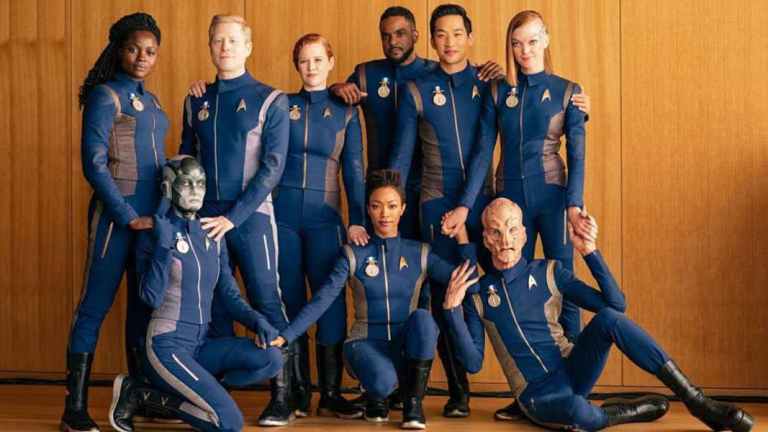
8. Discovery: 5.00. Horrible 1st season, the worst in Trek history, including the stupid "spore drive," the pointless profanity, and the overall darkness that made people think of J.J. Abrams' Trek that dare not speak its name. Speaking of which, Disco's redesign of the Klingons was nearly as stupid as those of the movies in question.
Unlike most Trek series, though, it was able to save itself before Season 3. The introduction of the Constitution-class USS Enterprise, complete with Captain Christopher Pike, Number One and young Spock helped a lot.
Is saying that the logical thing to do?
Perhaps not. But it is the human thing to do.

Sending the USS Discovery to the 32nd Century, with the implication that the United Federation of Planets has disintegrated, is troubling, especially for those of us who prefer a more optimistic Star Trek.

7. The Animated Series: 4.50. The least-seen series, mainly because it only aired once, on Saturday mornings in the days of Watergate, before being picked up by nostalgia-themed cable-TV networks. I didn't see it in full until 2018.
Saying it ran for 2 seasons isn't really fair: In total, it ran 22 episodes. Being animated, they could do things TOS simply couldn't, including much more fantastical species to be allies and opponents. And some of the stories were good, including giving Nichelle Nichols more to do as Nyota Uhura, and filling in some of Spock's background.

But the animation style now seems crude. It's comparable to another Filmation series of the period: Super Friends. If you can watch it for free, go ahead. But unless you're an absolutist who has to see everything Star Trek, and haven't yet seen it, don't spend money to do so.

6. Voyager: 5.86. Not only did this show fall victim to the 1st 2 seasons trap, but its 1st 2 seasons were the worst 1st 2 seasons of any Trek show. But Season 3 saw the transition from Kes to Seven of Nine, and switching the enemies from the Vidiians and the Kazon to the Hirogen and the Borg.
The show got considerably better, mixing in light episodes with dark ones, and, like DS9, having a fine 7th season and a very satisfying finale.

5. Picard: 6.00. Only 1 season to judge so far, and the dark tone of its 1st half was truly depressing. Nearly all of us wanted to see Jean-Luc Picard again -- and also ex-Borgs Seven of Nine, Hugh and Icheb -- but not like this. We certainly didn't want to see a 9/11 -- or, as the more proper metaphor turned out to be, a Reichstag Fire -- on Mars. And, yes, about half of the profanity would have been fine.
The series was saved by the reintroduction of Will Riker and Deanna Troi. The season finale polarized people, but I thought it was very appropriate, given the character (as in the personality and judgment) not just of Picard, but of Data. And the season did end on a very hopeful note. If they do make a 2nd and a 3rd season, and they're as good as the 1st, this show will gain on this list.

4. Enterprise: 6.25. The idea of a prequel series reminded us all that the original show was about the exploration of space, and of Gene Roddenberry's idea: A combination of "Hornblower in space" and "Wagon Train to the stars."

(Created by British author C.S. Forester, in novels published between 1937 and 1967, Horatio Hornblower was a sailor in Britain's Royal Navy between 1793 and 1848. Wagon Train was a Western airing from 1957 to 1965, switching from NBC to ABC in 1962.)

The novelty, and the fact that it was now the only Trek series on the air, helped. The 9/11 attacks coming just 15 days before its preselected premiere date didn't, and a lot of people who would have had great enthusiasm for the show lost it.
The 1st season was decent, if a bit frustrating, as we needed time to get to know these characters. The 2nd dragged a bit. The "Xindi arc" made the 3rd season compelling TV, even though it was even darker than the Dominion War arc on DS9. The 4th season, including the aftermath of the Xindi War, the look at pre-Spock Vulcan, and the start of the conflict with the Romulans, was interesting. The series finale was polarizing, but I admit that I liked it.

3. The Original Series: 6.33. The 1st season was unlike anything anyone had seen in science fiction before. In spite of some silliness, and some limitations due to the available technology (overuse of stock footage, papier-mache boulders), and the occasional overdoing-it of William Shatner, it holds up pretty well, and the 21st Century "remastering" helps. The 2nd season was even better.
True, the 3rd season, with the budget cuts and the production of Fred Freiberger, left a lot to be desired. If it had been allowed to be as good as the 1st 2, it would still top the list.

2. Deep Space Nine: 6.71. This one began in the shadow of The Next Generation, and fell victim to the pattern established by that show that it takes a Trek series 2 full seasons to really get going. But the 3rd season, with the introduction of the Dominion as a threat, and of the USS Defiant as a small but badass starship, helped.
"Why so serious?"

Yes, the later seasons of this 1st Trek series developed without the input of Roddenberry were dark. (And the writers pissed me off by saying that baseball had died on Earth after the 2042 World Series -- now just 22 years away.) But not entirely. And it had better character development than any other Trek series. (Heck, TOS and TAS had no character development, as nearly every episode was self-contained.)

DS9, a better show overall than TOS? I don't agree, but the math suggests otherwise. I think I can live with it.

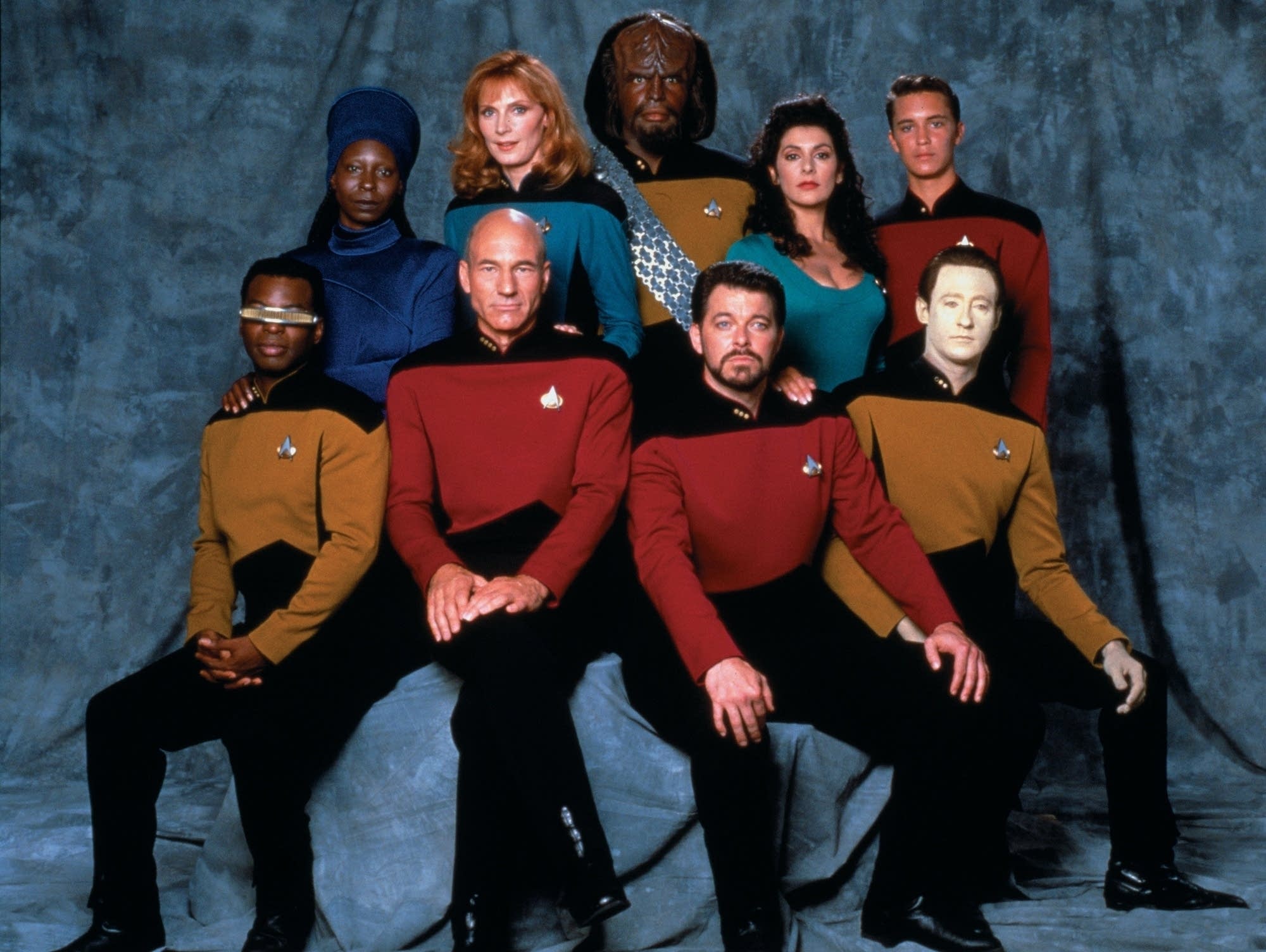
1. The Next Generation: 6.86. Going into this show, my father, an original Trekkie from 1966, and I had hope, but not really expectations. Could they really copy what TOS had gotten right, and fix what went wrong? There were signs in the 1st 2 seasons that they would, but they made a lot of their own mistakes.

Season 3 changed everything, symbolized by a switch from the jumpsuits to more suitable uniforms. The mistakes got fewer. The cultural sensitivity was increased. The scripts got better. The character development got better. And then came "The Best of Both Worlds, Part I," Star Trek's 1st season-ending cliffhanger, and arguably the greatest cliffhanger in the history of television.

Season 4 was the best overall season of Trek ever, to that point, and it may still be. Season 5 nearly matched it. Berman and Piller at Burbank. The last 2 seasons were a slip, but, if Q was right, and all good things must come to an end, it ended very well. (Or so we thought it was the end, until Picard.)

By a slim margin, TNG remains the best Star Trek series to date. But Discovery and Picard are currently ongoing, and may yet reach new heights of quality, boldly going where no Trek series has gone before.

Monday, July 23, 2012

Resistance Is Futile

Back in the 1980s and the early 1990s, the Yankees would routinely go on road trips to the Pacific Coast in July and August. If they were in good shape for the American League Eastern Division race at that point, they would get knocked out of it by this trip. If they were struggling, that would be intensified by it.

Years later, after Star Trek: Voyager debuted and developed a character by the name, I began to retroactively call such roadtrips "Borg roadtrips" --  because the Yankees tended to lose Seven of Nine.

These were the days when Bobby Meacham, Wayne Tolleson, Alvaro Espinoza, Dan Pasqua, Don Slaught, Charles Hudson, Greg Cadaret and Wade Taylor were considered acceptable in Pinstripes. Resistance was futile.

*

This weekend, the Yankees were swept in 4 straight by the Oakland Athletics. Despite the epic failure of their Moneyball philosophy -- such that, instead of winning Pennants like they did in 1972, '73, '74, '88, '89 and '90, the A's have won none, and are in danger of being moved out of the San Francisco Bay Area entirely -- this weekend, the A's took the Yankees and partied like it's 1989.

I've already detailed the Thursday and Friday games. On Saturday, Phil Hughes and Boone Logan combined to pitch 9 innings, allowing 2 runs on 4 hits and 2 walks. That should have been enough to win.

Except that Jarrod Parker (no, I'd never heard of him before this, either) allowed just 1 run on 5 hits, all singles: 2 by Alex Rodriguez, 1 each by Derek Jeter, Mark Teixeira and Raul Ibanez.

A's 2, Yanks 1. WP: Parker (7-4). SV: Sean Doolittle (1 -- no, I'd never heard of him before, either). LP: Hughes (a hard-luck 9-8).

Hard game. At least the Red Bulls beat the Philadelphia Union 2-0 earlier in the day, with me in the house. Kenny Cooper scored both goals off Thierry Henry assists.

*

And then yesterday, I thought the Yankees had it.  They scored 3 in the 3rd and another in the 4th, the latter on Curtis Granderson's 26th home run of the season. Plus, CC Sabathia, who grew up in nearby Vallejo, California as an A's fan, was on the mound for New York, in what was once his home park. What could go wrong?

Joe Girardi could go wrong. The A's closed to 4-3 by the 7th, so maybe replacing CC with David Robertson for the 8th wasn't a bad idea. Then Girardi went to Rafael Soriano for the 9th.

It was Robertson's injury that made Girardi stick with Soriano for 9th innings when Robertson came back. This may have been a terrible mistake.

Soriano gave up a home run to Seth Smith to send the game to extra innings. (Yet another A's player I'd never heard of.)

As they say in soccer, "Four nil, and we fucked it up."

David Phelps pitched the 10th and most of the 11th. Clay Rapada got the last out in the 11th and the first in the 12th. Then, as he usually does when there's a lefty who must be gotten out, Girardi replaced Rapada with Cody Eppley, ignoring the first rule of pitching: When you've got a pitcher who is pitching well, you leave him the hell in!

Eppley allowed a single to left by Derek Norris. Not Chuck Norris. Not even Mike Norris, the A's pitcher that Billy Martin burned out in the early 1980s. Derek Norris. (No, I'd never heard of him, either.) Jemile Weeks bunted Norris over to 2nd. And Coco Crisp (finally, a name I recognize) singled to right to score the winning run.

A's 5, Yankees 4. WP: Jerry Blevins (3-0). No save. LP: Eppley (0-2).

Jerry Blevins? Isn't that the old-time Philadelphia disc jockey? "The Geator with the Heater"? No, wait, that's Jerry Blavat. Besides, the A's moved out of Philly after the 1954 season, at the dawn of the rock and roll era.

*

I looked at the A's roster, to see how many names I recognized. There was the aforementioned Coco Crisp. (No, I'm not confusing him with a breakfast cereal.) Fellow outfielders Jonny Gomes, Josh Reddick and the Cuban defector Yoenis Cespedes. Infielders Brandon Inge (the former Detroit Tiger star) and Chris Carter (although this is a common name that I recognized; the player in question with the name, no). Catcher Kurt Suzuki (who homered off CC). And pitchers Bartolo Colon (last year's Yankee who started this game for the A's) and Grant Balfour.

That's nine.  Eight if you don't count that Chris Carter.

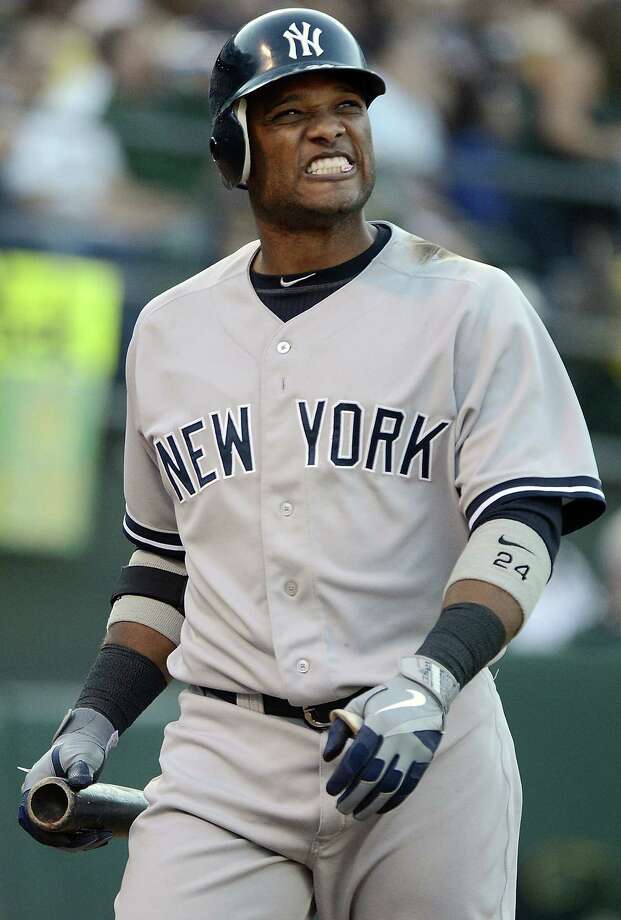
The Yankees lost to these guys? Making it look like one of those old Borg roadtrips?
Captain Kathryn Janeway is looking at this series on his tricorder, and she can't believe it. She demands an explanation for this bullshit!

Well, the character is from Bloomington, Indiana. The closest major league city is Cincinnati (unless Indianapolis one day gets a big-league team), so she probably wouldn't be a Yankee Fan. I doubt that she actually requires such an explanation.

And besides, Rick Berman, Gene Roddenberry's anointed successor, went out of his way to tell us that, in the Star Trek Universe, baseball died in 2042.

And World War III happened just 11 years later.  Post hoc, ergo propter hoc... or karma?