Unlike most positions, the Yankees' long-term record at shortstop is thin, especially after (or should that be "before"?) the top 2. If you're looking for 1980s or early '90s shortstops like Bobby Meacham, Andre Robertson, Wayne Tolleson, Alvaro Espinoza or Spike Owen, forget it.
But what a top 2. As one of them would have said, "Holy cow."
Honorable Mention: Phil Linz, 1962-65. Yes, he's best known for "The Harmonica Incident" on the team bus late in the 1964 season. But there's a reason he was called Supersub. When Tony Kubek got hurt late in that season, Phil became the starting shortstop, and was a big help down the stretch. It was his only season as a major league regular, but it should be remembered.
Honorable Mention: Fred Stanley, 1973-80. "Chicken" was a "good-field, no-hit" middle infielder, who batted .216 lifetime. He was, however, the starting shortstop on the 1976 Pennant winners, and a backup on the '77 and '78 World Champions, even finishing the 1978 Playoff with the Boston Red Sox at 2nd base.
10. John Knight, 1909-13. Not much information is available about this Philadelphia native, but he did help the New York Highlanders (the name "Yankees" was already being used, but didn't become official until 1913) finish 2nd in 1910 with a .312 average.
Like later Yankee pitcher Waite Hoyt, he was known as "Schoolboy," possibly due to his Ivy League education, attending the University of Pennsylvania in his hometown of Philadelphia. He played every infield position, plus one game in right field.
9. Gene Michael, 1968-74. Like Thurman Munson, he was born in Akron, Ohio, although he grew up there, unlike Thurman whose family moved to nearby Canton when he was young. Also like Thurman, he played baseball at nearby Kent State University, before the massacre in an antiwar protest on its campus on May 4, 1970.
"Stick" was another "good field, no-hit" middle infielder. He was a good enough fielder to be the Yankees' starting shortstop from 1969 to 1973, the last years of the pre-renovation Yankee Stadium. His specialty was the hidden-ball trick, doing it successfully 5 times as a Yankee.
But, despite having the advantage of being a switch-hitter, his OPS+ was 67, which means, even in that pitching-friendly era, he was 1/3rd worse than the average hitter. Only in 1969 was his OPS+ over 100 (barely: 101), his peak in home runs was 3, and in RBIs 47 (both in 1973, also hitting 3 homers in '71).
He redeemed himself by doing just about everything in the organization. Minor league manager. Major league coach (1st base coach on the 1978 World Champs). Major league manager (managed most of the '81 Pennant-winning season, but was fired before it ended). General manager (rebuilt the farm system and rearranged the acquisition priorities after the George Steinbrenner-induced wreckage of the 1980s). And, since 1996, the team's "superscout," overseeing the whole operation.
The Number 17 that he wore as a player will never be retired for him (he wore several other numbers as coach and manager), but he may be deserving of a Monument Park Plaque.
8. Norman "Kid" Elberfeld, 1903-09. The man the Highlanders/Yankees brought in with the 1st trade the franchise ever made, he was from Pomeroy, Ohio, and known as the Tabasco Kid for his hot temper, and later as just "Kid." He had 2 .300 seasons, and while he wasn't a great hitter he was not terrible by the standards of the Dead Ball Era. There's not much I can say about his fielding: The gloves used back then were not conducive to shortstops making fewer than 40 errors a season.
He did help the Yankees finish 2nd in both 1904 and 1906 (his best season), although by the time the team finished that high again (1910), he was gone.
7. Everett Scott, 1922-25. The native of Bluffton, Indiana wasn't a Yankee for very long, but he was a member of the '22 Pennant winners and the '23 World Champs. He was yet another member of the 1910s Red Sox sort-of dynasty that became a part of the 1920s Yankee dynasty. He didn't hit much, but was dependable in the field.
And he set a major league record of 1,307 consecutive games played. Oddly enough, that streak ended on May 5, 1925, when "the Deacon" was pinch-hit for by Paul "Pee-Wee" Wanninger. Just 27 days later, on June 1, Wanninger was taken out for a pinch-hitter named Lou Gehrig. You know the rest of that story, and you should also know Scott's, because he held the record before Gehrig, and long before Cal Ripken was even born.
6. Russell "Bucky" Dent, 1977-82. He came from South Florida, and with the Chicago White Sox, he nearly won Rookie of the Year in 1974, and made the All-Star Team the next season. The Yanks picked him up just before the '77 season started, and he made 2 more All-Star Games and won 3 Pennants and 2 World Series.
He was not a great hitter, but he got some great hits. For 2 weeks in October 1978, he was touched by God: That home run at Fenway on the 2nd (only his 5th homer of the season), through the ALCS, to the World Series that ended on the 17th with him being named Series MVP with a .417 average and 7 RBIs. And he and Willie Randolph turned some of the best double plays you'll ever see.
He has returned to Florida, and runs a baseball school, whose field is designed to look like Fenway Park. He calls it Little Fenway. He has coached for several big-league teams, and even briefly managed the Yankees. Whenever he returns for Old-Timers' Day, he gets a huge hand. It's not
all about October 2, 1978, but it's still one of Yankee Fans' favorite moments, even for those who are not old enough to remember it. For those of us who are, like myself, Bucky Blessed Dent is a treasure. Red Sox fans wish he was a buried treasure.
5. Mark Koenig, 1925-30. Even before Tony Lazzeri (see Top 10 Yankee Second Basemen), he was a San Franciscan who moved east to play for the Yankees. He batted .285 in a Yankee uniform, including .319 in 1928. He won Pennants in 1926, '27 and '28, and the World Series in the latter 2 years.
He turned out to be the last survivor of the 1927 Yankee team that became known as "Murderer's Row" and "the Greatest Team Ever," and the last survivor of the 1928 World Champions as well, living until 1993. In an interview with
Sports Illustrated near the end, he joked, "I've got Heinz disease: 57 varieties." But he was always happy to share his memories of that time, and Major League Baseball Productions got his recollections down on video.
4. Frank Crosetti, 1932-48. A 2-time All-Star, "the Crow" was another part of the Yankees' Golden Gate connection. He didn't hit many homers, although he had a memorable round-tripper off Dizzy Dean that provided the runs that won Game 2 of the 1938 World Series. (Dean, best known for the St. Louis Cardinals, had hurt his arm and was mounting a comeback with the Chicago Cubs.) He hit 260 doubles, an extraordinary number for a shortstop in the 1930s. He helped the Yankees win 8 Pennants (1932, '36, '37, '38, '39, '41, '42 and '43) and 7 World Series (all but '42).
However, he went into a noticeable decline in '39, just 28 years old. In 1940, it made a difference, as, for the first time in 5 years, the Yankees did not win the Pennant. This led to Phil Rizzuto,
The Sporting News' 1940 Minor League Player of the Year, being called up. Crosetti hung on, and when Rizzuto was drafted, became a starter again. While his hitting was still weak, his fielding was a key component of the war-stripped 1943 World Champions.
He Later he became the Yankees' 3rd base coach. In 1969, he became the 3rd base coach for the ill-fated Seattle Pilots. That team failed, and after 1 season was moved to become the Milwaukee Brewers. They'd be totally forgotten today had they not been immortalized in former Yankee pitcher Jim Bouton's book
Ball Four. He doesn't come off well in that book: Bouton describes him, and manager Joe Schultz and the rest of the coaching staff, such as pitching coach Sal Maglie, as being too set in their ways, and unwilling to try to relate to the modern player.
Bouton also joked that, due to his being the 3rd base coach for the teams of DiMaggio, Berra, Mantle and Maris, Crosetti must have dealt out more pats on the ass to home-run hitters than anyone in history. Due to his association with the Yankees from the end of the Ruth-Gehrig era to the end of the Mantle era, he earned 17 World Series rings (the 1st in 1932, the last in 1962), which is probably a record for a man in uniform (not counting guys who may have moved into the front office).
Crosetti closed his career as a coach with the Minnesota Twins in 1970 and '71. He then retired to Stockton, California, and never came east. He never attended Old-Timers' Day. He refused most interview requests. And he was the one member of the 1932 Yankees who deviated from the party line and said that Babe Ruth did
not "call his shot" in the World Series that year. My guess is, he had a grudge against the Yankees that he never dropped, holding it through his death in 2002.
3. Tony Kubek, 1957-65. The Milwaukee native ended his 1st 2 big-league seasons playing his hometown's new team, the Braves in the World Series, losing in 1957 despite his own 2 homers and 4 RBIs in that Series, and winning in 1958.
In 1960, he took a ground ball to the throat in Game 7 that gave the Pittsburgh Pirates the lift they needed to win. The American League and the Cincinnati Reds got no such help in 1961, though, as Kubek's slick defense helped the Yanks win 109 games and the World Series. He wrote about that team in his book
Sixty-One: The Team, the Record, the Men.
He was AL Rookie of the Year in 1957, and an All-Star in '58, '59 and '61. He won 7 Pennants (1957, '58, '60, '61, '62, '63 and '64) and 3 World Series (1958, '61 and '62). A back injury forced him to retire in 1965, not even 30 years old.
He went into broadcasting and was one of NBC's main baseball voices, paired with Joe Garagiola in the 1970s and Bob Costas in the '80s. He did Yankee games on MSG Network, but after the Strike of '94 hit, he quit, saying he was sick of what the game had become.
He has been awarded the Hall of Fame's Ford Frick Award, their equivalent to Hall election for broadcasters, but has never gone back to broadcasting, and except for 1986, in connection with the 25th Anniversary of the 61 in '61 season, does not do interviews and does not attend Old-Timers Day ceremonies. Indeed, he says he has not even been to a major league game since the Strike.
2. Phil Rizzuto, 1941-56. His Monument Park Plaque calls him "the all-time greatest Yankee shortstop." At the time it was dedicated on August 4, 1985 -- along with the retirement of his Number 10, and I was there at The Stadium that day -- it was a pretty solid opinion.
Had there been a Rookie of the Year award in 1941, the Richmond Hill, Queens native almost certainly would have won it, batting .307. He missed 3 years serving in the U.S. Navy during World War II -- getting seasick all the time, admitting, "I was the worst sailor ever" -- but came back strong, and in his 13 seasons the Yankees won 10 Pennants and 8 World Series. He was released late in the 1956 season, so that one doesn't really count, but he did earn 7 World Series rings.
He was a 5-time All-Star, and AL MVP in the 1950 season, collecting 200 hits and batting .324. Contrary to popular belief (and his Plaque), he was not the MVP of the 1951 World Series. Perhaps he would have been had there been such an award, but it was not first awarded until 1955. He was unceremoniously and cruelly -- if statistically justifiably -- released in mid-1956. (Gil McDougald was moved over from 3rd base to shortstop, and was the starter until Kubek was ready in the middle of the next season.)
On Phil Rizzuto Day in 1985, the Scooter said, "This means more to me than getting into the Hall of Fame ever could." I was also at the old Stadium on Old-Timers' Day 1991, which celebrated the 50th Anniversary of Joe DiMaggio's hitting streak, and most of Joe's surviving teammates, including Phil, were on hand. Joe, a man of few words and not one to praise just anyone, told the crowd, "Nobody had a better view than I did of watching him play shortstop... and, Phil, I just want to say that you're my Hall-of-Famer. And I mean that." Huge ovation. In 1994, Phil was finally elected to the Hall, and found out how wonderful it was.
Holy cow, that huckleberry, he was unbelievable. Because of his longevity, he may be the most beloved Yankee ever, having entertained 4 generations of fans. However, Phil's last year in the broadcast booth, 1996, was the 1st full season for the man he would live long enough to call "my favorite player," one he would admit had surpassed him as the greatest Yankee shortstop:
1. Derek Jeter, 1995-2014. What can you say about him? He's won 7 Pennants and 5 World Series, the last of them as Captain of the Yankees. He's an 14-time All-Star and a 5-time Gold Glove (and should have more, but people actually though A-Rod and Nomar were better shortstops, ha ha). He's the Yankees' all-time leader in hits, with 3,465: No living person under age 74 (Pete Rose is about to turn 75) has more. He has played more games in a Yankee uniform than anyone: 2,747, surpassing the 2,401 of Mickey Mantle.
He reached the postseason in 17 of his 20 seasons (including his brief callup in 1995 although he wans't on the roster). His postseason record looks like All-Star stats for a single regular season: .308, .838 OPS, 61 RBIs, and 20 homers.
Some of those postseason homers will live forever: The 1996 ALCS Game 1 homer that was, uh, helped by Jeffrey Maier; the one to lead off Game 4 of the 2000 World Series and kill off the Mets' momentum, and another homer in Game 5 to set up the clinch; the walkoff in Game 4 of the 2001 Series.
Sports Illustrated named him its 2009 Sportsman of the Year. He was the face of the Yankees for 20 years, the franchise's most popular player since Mantle, nearly 50 years ago.
Born in Pequannock, New Jersey, the family lived in North Arlington, New Jersey before moving to Kalamazoo, Michigan. In spite of living halfway between Detroit and Chicago and being surrounded by Tiger fans, he remained a Yankee Fan.
He used to kid people about wanting to get a single-digit uniform number before they were all retired; he got Number 2, and, barring unusual circumstances (such as the Tigers did, letting the starters in the last game at Tiger Stadium in 19999 wear the numbers of the greatest players their team ever had at their respective positions), he will forever be the last to wear a single digit in Pinstripes.
To put Jeter in a historical perspective:
Baseball-Reference.com's Hall of Fame Monitor has him at 337 out of 100 (meaning he's an easy choice to get in), and their HOF Standards has him at 67 out of 50 (ditto). Their 10 Most Similar Batters are Craig Biggio (in), Paul Molitor (in), Robin Yount (in), Roberto Alomar (in), Charlie Gehringer (in), Ripken (in), Joe Morgan (in), Ivan Rodrgiuez, Johnny Damon and Eddie Collins. All are in the Hall except I-Rod, who may never get in due to steroid accusations; and Damon, who may not quite have the career numbers to make it.
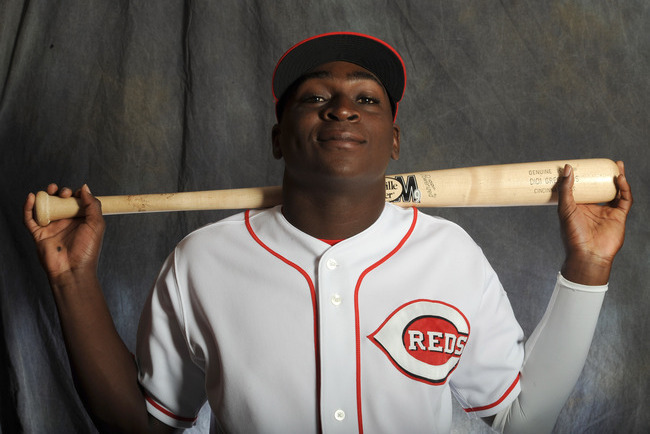
We have no way of knowing if Didi Gregorius will one day join this list. But cracking the top 2 will be nearly impossible. The Scooter and Captain Clutch worked long and hard to help define the phrase "Yankee Legend."

_(cropped).jpg/220px-Bud_Harrelson_(3767849656)_(cropped).jpg)