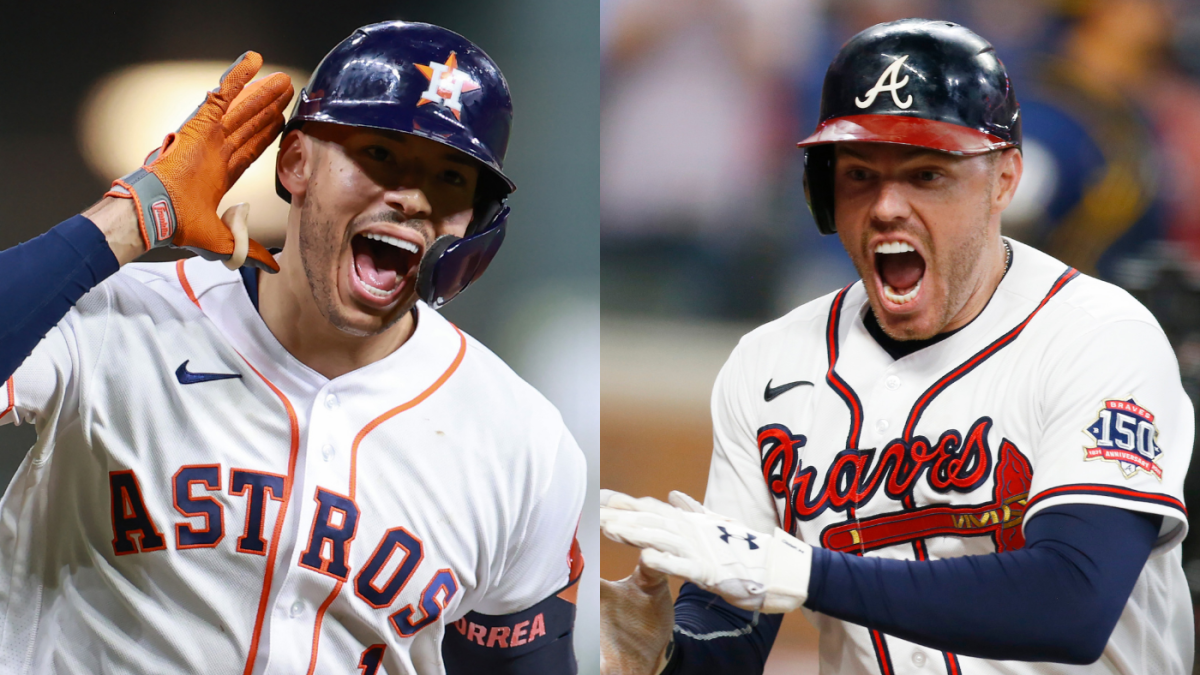
The 2021 World Series will be between the Atlanta Braves and the Houston Astros.
Take me out to the y'all game.
Take me out with the crowd.
Buy me some grits and some chicken-fried steak.
I don't know how much more I can take.
I don't know how much more I can take.
This will be the 1st World Series between 2 teams from former Confederate States.
This has happened before in the Finals of other sports, but not in baseball:
* NFL: 1972, Dallas Cowboys over Miami Dolphins. (If you want to count the AFL, then add 1962, Dallas Texans over Houston Oilers.)
* NBA: 1995, Houston Rockets over Orlando Magic; 2006 and 2011, Miami Heat vs. Dallas Mavericks (Heat in '06, Mavs in '11); 2014, San Antonio Spurs over Miami Heat. (2012 doesn't count: Oklahoma is a Southern State, but it wasn't a State until 1907, and thus was never a member of the Confederate States of America. And it never happened in the ABA. Nor has it ever happened in the WNBA.)
* NHL: 2020, Tampa Bay Lightning over Dallas Stars. (It never happened in the WHA.)
* NASL/MLS: 1971, Dallas Tornado over Atlanta Chiefs. (Maybe if there hadn't been a gap between the last NASL season in 1984 and the 1st MLS season in 1996, they would have been more.)
So, who to root for?
* Reasons for the Astros: They showed a lot of character in coming back from their punishment. Dusty Baker deserves a title. Houston hates Dallas as much as you do. Plus, the Braves are the team of John Rocker.
* Reasons for the Braves: The Astros are known and unrepentant cheats, and should be presumed guilty until proven innocent. Dusty Baker has a title, as player with the 1981 Los Angeles Dodgers. Houston is still Texas. Plus, the Braves are the team of Hank Aaron. And the team of Stacey Abrams. And the team of Jimmy Carter. And, while they shared a hometown for only 2 years, the team of Martin Luther King.
So I would accept a Braves win as the lesser of two nauseators. But, as Clint Eastwood would say, "Deserve's got nothin' to do with it." The Astros are the more talented team, they are the more experienced team, and they have the home-field advantage.
I won't like it, but I think it will be the Astros in 7.
*
October 25, 1415: The Battle of Agincourt is fought in what is now Azincourt, Pas-de-Calais, France, about 140 miles north of Paris. Outnumbered 2-1, King Henry V of England -- personally leading his troops -- leads English and Welsh longbowmen to a stunning victory over the French army on French soil.
The English lost 112 men, including the sitting Duke of York and the sitting Earl of Suffolk; the French, possibly 10,000, including the Dukes of Alençon, Brabant and Lorraine and the Counts of Dreux and Nevers. Say what you want about those noblemen, but they were noble enough to fight and risk death alongside the men they commanded.
This battle turns the tide for England, as King Charles VI of France, in order to mollify the Lancastrian invader, allows him to marry his daughter, Catherine of Valois. Together, they have a son. But when Henry V dies of illness in 1522, his son is just 9 months old, and King Henry VI -- first under his greedy, incompetent regents, then by his mentally ill self -- ends up losing all the gains of his father and his ancestors during the Hundred Years War.
What does this battle have to do with sports? Well, archery is a sport, and it made an archer the greatest thing to which most Englishmen and Welshmen could aspire. Legend has it that King Henry VIII, 100 or so years later, banned tennis from English and Welsh soil because it was distracting men from practicing archery.
It also led to a ridiculous urban legend. Supposedly, the French would cut the index fingers off English prisoners before releasing them. But when they got back to their own side, they could still use their middle fingers to pull back their bowstrings. And the bows were made from yew trees, so, when they captured French prisoners, they would show them their middle fingers, and say, "See? We can still pluck yew! Pluck yew!" Thus was born both the middle-finger gesture and the profane expression, "Fuck you."
Well, none of it is true: The middle-finger gesture has been traced as far back as ancient Greece, about 2,000 years before Agincourt, and it was rather popular in Roman times, where it was known as "El Dedo Medio": The Middle Digit. As for the other expression, that's probably as old as language itself.
October 25, 1854: The Battle of Balaclava is fought in the Crimean War, in what is now part of the city of Sevastopol, currently disputed by Russia and Ukraine. At the time, it was part of the Russian Empire, which was opposed by Britain, France and the Ottoman Empire (present-day Turkey and its Middle Eastern holdings). Both sides lost about 600 men, so the battle was inconclusive.
But that's not how it's remembered. Major General James Thomas Brudenell, 7th Earl of Cardigan, commanded the 4th and 13th Light Dragoons, the 17th Lancers, and the 8th and 11th Hussars. These units were "light cavalry," lightly armed and lightly armored troops on horseback, designed for speed, and thus for brief skirmishes and raids, but more for reconnaissance and communications -- not for major battles. Lord Cardigan sent this "light brigade" to recover guns left behind by the dead Turkish troops, a task for which they would have been well-suited.
The English lost 112 men, including the sitting Duke of York and the sitting Earl of Suffolk; the French, possibly 10,000, including the Dukes of Alençon, Brabant and Lorraine and the Counts of Dreux and Nevers. Say what you want about those noblemen, but they were noble enough to fight and risk death alongside the men they commanded.
This battle turns the tide for England, as King Charles VI of France, in order to mollify the Lancastrian invader, allows him to marry his daughter, Catherine of Valois. Together, they have a son. But when Henry V dies of illness in 1522, his son is just 9 months old, and King Henry VI -- first under his greedy, incompetent regents, then by his mentally ill self -- ends up losing all the gains of his father and his ancestors during the Hundred Years War.
What does this battle have to do with sports? Well, archery is a sport, and it made an archer the greatest thing to which most Englishmen and Welshmen could aspire. Legend has it that King Henry VIII, 100 or so years later, banned tennis from English and Welsh soil because it was distracting men from practicing archery.
It also led to a ridiculous urban legend. Supposedly, the French would cut the index fingers off English prisoners before releasing them. But when they got back to their own side, they could still use their middle fingers to pull back their bowstrings. And the bows were made from yew trees, so, when they captured French prisoners, they would show them their middle fingers, and say, "See? We can still pluck yew! Pluck yew!" Thus was born both the middle-finger gesture and the profane expression, "Fuck you."
Well, none of it is true: The middle-finger gesture has been traced as far back as ancient Greece, about 2,000 years before Agincourt, and it was rather popular in Roman times, where it was known as "El Dedo Medio": The Middle Digit. As for the other expression, that's probably as old as language itself.
October 25, 1854: The Battle of Balaclava is fought in the Crimean War, in what is now part of the city of Sevastopol, currently disputed by Russia and Ukraine. At the time, it was part of the Russian Empire, which was opposed by Britain, France and the Ottoman Empire (present-day Turkey and its Middle Eastern holdings). Both sides lost about 600 men, so the battle was inconclusive.
But that's not how it's remembered. Major General James Thomas Brudenell, 7th Earl of Cardigan, commanded the 4th and 13th Light Dragoons, the 17th Lancers, and the 8th and 11th Hussars. These units were "light cavalry," lightly armed and lightly armored troops on horseback, designed for speed, and thus for brief skirmishes and raids, but more for reconnaissance and communications -- not for major battles. Lord Cardigan sent this "light brigade" to recover guns left behind by the dead Turkish troops, a task for which they would have been well-suited.
But (ironically, given the nature of their work) a miscommunication by Captain Louis Nolan sent them on a frontal assault against Russian artillery, and they got clobbered. Nolan himself was one of the first to die -- meaning no one was willing to blame him, so the public blamed Lord Cardigan.
In response, Alfred Tennyson, then Britain's Poet Laureate, published a poem, "The Charge of the Light Brigade," designed to show that the men who fought, not the men who ordered them "but to do and die," should be the ones remembered. It worked: Not only did the British public rally around their Army, but it went on to win the war a year and a half later.
And today? No one remembers Nolan. If we remember Cardigan, it's as the namesake of a sweater. (Yes, it was named for him.) But while we may not remember any individuals in the Light Brigade, we remember the "noble six hundred."
October 25, 1871, 150 years ago: Martin Bergen (no middle name) is born in North Brookfield, Massachusetts. This town, outside Worcester, was also home to his brother Bill, catcher turned longtime manager Connie Mack, and legendary entertainer George M. Cohan.
In response, Alfred Tennyson, then Britain's Poet Laureate, published a poem, "The Charge of the Light Brigade," designed to show that the men who fought, not the men who ordered them "but to do and die," should be the ones remembered. It worked: Not only did the British public rally around their Army, but it went on to win the war a year and a half later.
And today? No one remembers Nolan. If we remember Cardigan, it's as the namesake of a sweater. (Yes, it was named for him.) But while we may not remember any individuals in the Light Brigade, we remember the "noble six hundred."
October 25, 1871, 150 years ago: Martin Bergen (no middle name) is born in North Brookfield, Massachusetts. This town, outside Worcester, was also home to his brother Bill, catcher turned longtime manager Connie Mack, and legendary entertainer George M. Cohan.
A catcher, Marty Bergen played for the Boston Beaneaters, forerunners of the Atlanta Braves, helping them win the National League Pennant in 1897 and 1898. Unlike Bill, statistically the worst hitter in Major League Baseball history, Marty batted .265, but was much better known for his fielding, as he was regarded as having a great arm and good footwork.
But he was mentally ill. By 1899, only his 4th season in the major leagues, he was experiencing hallucinations, and had to be removed from a game due to his odd behavior. On a train trip, he slapped Hall of Fame pitcher Vic Willis. One of his sons died, and that worsened his condition. He began to see his pitchers' deliveries as knives coming toward him, and he would jump out of the way.
On January 19, 1900, at his home in North Brookfield, he took an axe, and killed his wife Hattie and their 2 remaining children. Then he took a straight razor, and cut his throat, killing himself. He was only 28 years old. This shocking crime, by a person already considerably more famous, was less than 8 years after the axe murders in nearby Fall River, Massachusetts, attributed to Lizzie Borden (who was acquitted).
Following the murder-suicide, Jesse Burkett, in the middle of a Hall of Fame career as an outfielder, said, "As a catcher, Martin Bergen was the best the world ever produced. No man acted with more natural grace as a ballplayer." He said this at a time when Buck Ewing had only been retired for 3 years and Mike "King" Kelly for 6. Alas, Kelly's career ended in 1894 with his death due to the effects of alcoholism, just short of turning 37; and Ewing died in 1906 from diabetes, at 47.
October 25, 1881, 140 years ago: Pablo Picasso is born in Málaga, Andalusia, southern Spain. Or, as "Epic Lloyd" Ahlquist said, playing him opposite "Nice Peter" Shukoff as Bob Ross in a 2013 episode of Epic Rap Battles of History, "My name is Pablo Diego José Francisco de Paula Juan Nepomuceno María de los Remedios Cipriano de la Santísima Trinidad Ruiz y Picasso! Back to you, Bob!"
Bob Ross might not have believed in mistakes, but just try getting all that right in icing on a birthday cake!
Picasso lived to be 91, until 1973. In between, as Lloyd-as-Picasso said, "I am the greatest: The modern art Muhammad Ali!"
October 25, 1884: Charley "Old Hoss" Radbourn of the National League Champion Providence Grays wins his 3rd straight game over the American Association Champion New York Metropolitans – the 1st team to be known as the New York Mets, predating the Amazin's by 80 years – concluding the 3-game series and making the Grays the World Champions of baseball, which they had also become in 1879 by winning the NL Pennant.
Only 500 diehard fans show up in the cold‚ since Providence had already clinched by winning the 1st 2 games.
October 25? Cold weather? And they were still playing baseball at that time of year in the 1880s? Hey, Bud Selig's moronic scheduling was just trying to get baseball back to its roots!
On this same day, Lafayette College defeats Lehigh University in football, 56-0. The Lehigh Valley rivals, separated by 17 miles along U.S. Route 22 (the Lafayette Leopards in Easton, the Lehigh Engineers in Bethlehem), will go on to produce the most-played rivalry in college football.
In 2014, their meeting was their 150th, due to having played twice and even, during World War II with travel restrictions, 3 times in some seasons. That 150th "Double L Game" was the 1st one played outside Northeastern Pennsylania, at Yankee Stadium. Lafayette won it, 27-7. Lafayette won last year, but Lafayette leads the rivalry, 79-71-5. This year's game will be played at Lafayette's Fisher Stadium on November 21.
October 25, 1888: The Giants clinch New York's 1st true World Championship in any professional sport, 6 games to 2, by trouncing the St. Louis Browns (forerunners of the Cardinals), 11-3. Tim Keefe gets his 4th win of the series.
Of course, this doesn't count amateur championships won from 1845 to 1870 by teams like the Knickerbockers, the New York Club, the Mutuals, and Brooklyn teams like the Atlantics, the Excelsiors and the Eckfords.
The last survivor of the 1888 Giants was Ledell "Cannonball" Titcomb, a pitcher from Maine, who pitched a no-hitter in 1890, and lived until 1950.
October 25, 1891, 130 years ago: Charles Edward Coughlin is born in Hamilton, Ontario, became a priest in Toronto, and settled in Detroit. In 1926, he began his career as "The Radio Priest" on WJR in Detroit, the station that would later become famous for broadcasting the Tigers' games.
At first, he seemed like a liberal. At the time, the Ku Klux Klan, at least in the North, was more interested in discriminating against Catholics than against black people. Father Coughlin took a stand against them. While denouncing Communism, as any good Catholic of the time would, he also denounced the predatory capitalists who had made Communism so attractive.
In 1932, he supported the Presidential campaign of Franklin D. Roosevelt. In 1933, as FDR put his New Deal into place, he made a short film of one of his radio broadcasts, saying, "The New Deal is Christ's deal," and, "It is either Roosevelt or ruin." In January 1934, he testified before Congress saying, "If Congress fails to back up the President in his monetary program, I predict a revolution in this country which will make the French Revolution look silly!"
But he began to turn. Because they were opposed to Communism, he supported the Fascist governments of Adolf Hitler in Germany and Benito Mussolini in Italy. At the time, Communism was widely seen to be a Jewish movement, and his broadcasts became more anti-Semitic in nature. But he also believed that unregulated capitalism was a Jewish plot. And he came to believe that FDR's policies didn't regulate capitalism enough -- which would seem to fly in the face of his attacks on Communism. He began to call the President "Franklin Double-Crossing Roosevelt."
He was unable to help defeat Roosevelt in 1936. By 1938, he was frequently denying that he was anti-Semitic, because he was frequently being called that. By 1939, and the dawn of World War II in Europe, Coughlin was no longer being taken seriously. In 1942, the Archbishop of Detroit ordered Coughlin to stop making political statements. By the time he retired from active preaching in 1966, he was a relic. He died in 1979, at age 88.
*
October 25, 1902: Alfred Eastlack Driscoll is born in Pittsburgh, and grows up in the Philadelphia suburb of Haddonfield, Camden County, New Jersey. In 1946, the Republican was elected Governor of New Jersey, and presided over the Constitutional Convention that wrote the current State Constitution in 1947, at the College Avenue Gym at Rutgers University in New Brunswick, home of Rutgers' basketball team from 1931 to 1977, and adjacent to the site of the 1st college football game in 1869.
Elected to the 1st 4-year term for Governor of the State in 1949, he had already gotten the New Jersey Turnpike approved, and would do the game for the Garden State Parkway in his 2nd term. He was, if not the greatest, then certainly the most consequential Governor in New Jersey's history, at least as far as the State is concerned. (Woodrow Wilson was a Governor of New Jersey who became President, but he only served 2 years in Trenton, and didn't exactly remake the State.)
The Parkway's bridge over the Raritan River, connecting Woodbridge and Sayreville in Middlesex County, was named for Driscoll in 1974, a year before his death. It opened in 1954, with a 2nd span opening in 1972, and the original span was replaced in 2006.
October 25, 1911, 110 years ago: Game 5 of the World Series at the Polo Grounds. Giants 2nd baseman Larry Doyle scores on a sacrifice fly to give the New York Giants a 4-3 victory over the Philadelphia Athletics. According to home plate umpire Bill Klem, commenting after the game, Doyle, in his jubilation about scoring the winning run, really never touched home plate. But the A's failed to notice the gaffe, and did not appeal.
Nobody seemed to remember this, even though it evoked the mistake Doyle's teammate, 1st baseman Fred Merkle, made 3 years earlier in a game that effectively cost the Giants the Pennant. But then, it wasn't caught on film or television, and it ended up not mattering, because the A's ended up winning the World Series the next day anyway.
*
October 25, 1921, 100 years ago: William Barclay Masterson dies of a heart attack at his desk, where he had just written a column for the New York Morning Telegraph. "Bat" Masterson was 67.
He was born Bartholomew Masterson in the Eastern Townships of Quebec, and "Bat" was short for "Bartholomew." (So why not "Bart"?) It had nothing to do with swinging a baseball bat. But he was a more effective crimefighter than Batman: He was said to be so quick on the draw, eventually men stopped being willing to face him.
He left the gunslinging life to become one of the 1st sportswriters, covering boxing and horse racing. He covered the April 5, 1915, heavyweight championship fight in Havana, Cuba, where Jack Johnson finally lost the title to Jess Willard.
Also on this day, Robert James Steuber is born in Wenonah, Gloucester County, New Jersey, and grows up in St. Louis. A running back, Bob Steuber starred at the University of Missouri, who retired his Number 37 and elected him to its Athletics Hall of Fame. He won Championships in the NFL with the 1943 Chicago Bears and the AAFC with the 1946 Cleveland Browns.
An injury cut his career short, so he went into sportscasting. He was elected to the College Football and Missouri Sorts Halls of Fame, and died in 1996.
Also on this day, the future King Michael I of Romania is born at Peleș Castle in Sinaia, Romania. With his father renouncing his claim as heir to the throne to flee the country with his mistress, Michael became King upon the death of his grandfather, King Ferdinand I, in 1927, not even 6 years old.
In 1940, the government of Romania allied with Nazi Germany. Michael did not support this, and in 1944, he led a coup that overthrew the pro-Nazi government. But the new pro-Soviet government was no better, and forced him to abdicate on December 30, 1947.
To the end of his life, in 2017, spent mostly in Switzerland, he insisted that his abdication had been forced and therefore illegal. But he lived long enough to see the Communist government fall in 1989. His daughter Margareta and his sons Karl and Paul have disputed being head of the family and therefore monarch-in-exile.
October 25, 1923: Robert Brown Thomson is born in Glasgow, Scotland, and grows up in Staten Island, New York. If you don't know what Bobby Thomson is famous for, you either have a lot to learn, or you've never seen ESPN Classic.
He batted .270 lifetime, and hit 264 home runs, including the one on October 3, 1951 that meant, "The Giants win the Pennant!" So even if his home run was a fluke, he was still a pretty good player. He played in the majors from 1946 to 1960, and lived until 2010.
Also on this day, Russell Charles Meyer is born outside Chicago in Peru, Illinois. No relation to the Russ Meyer who made exploitation films in the 1960s and '70s, this Russ Meyer was a pitcher known as "The Mad Monk." He was with the Philadelphia Phillies when Thomson hit the home run, but was traded to the Dodgers in 1953, helping them win the Pennant that year (losing to the Yankees in the World Series) and 1955 (beating the Yankees in the Series).
He remained in the major leagues until 1959, finishing with a record of 94-73. He later became a pitching coach, including with the Yankees in 1992. He died in 1997.
*
October 25, 1931, 90 years ago: James McIlroy (no middle name) is born in Lambeg, Northern Ireland. A forward, he starred for Lancashire soccer team Burnley, leading them to the 1960 Football League title (finishing just 1 point ahead of Stan Cullis' Wolves, denying them a 3rd straight title) and the 1962 FA Cup Final.
He also played for Northern Ireland in the 1958 World Cup. The East Stand at Burnley's stadium, Turf Moor, is named the Jimmy McIlroy Stand. He later managed Oldham Athletic and Bolton Wanderers, and died in 2018.
October 25, 1933: Thurmon Lavelle Collins Jr. is born in Laurel, Mississippi. Bobby Collins was a quarterback at Mississippi State, but never played in the pros. He is the worst coach in the history of college football.
I don't mean he lost the most games, or had the worst winning percentage. In that respect, his record was pretty good. From 1975 to 1981, he coached Southern Mississippi to a 48-30-2 record, including winning the 1980 Independence Bowl. From 1982 to 1986, he coached Southern Methodist University in Dallas. His 1st 3 seasons were 11-0-1, winning the Southwest Conference and the Cotton Bowl, and finishing Number 2 in the final polls (and arguably cheated out of the National Championship, as Number 1-finishing Penn State was 11-1); 10-2, finishing 2nd in the SWC; and 10-2, finishing in a tie for the SWC title and winning the Aloha Bowl.
But SMU was cheating like hell. How much of it was his doing remains a mystery. But they got caught, and got put on probation, and were told that if they got caught again during their probation, the program's next season would be canceled. They went 6-5 in 1985 and again in 1986, and then they got caught cheating again. The NCAA kept their word. SMU is the only school ever to get "the death penalty": Their 1987 season was canceled, and they decided not to play the 1988 season either, to make it easier to rebuild.
It's been 35 seasons, more than a third of a century. Collins is still alive, but has never coached again, in any capacity, at any level. When you're the only head coach who allowed his team to get the death penalty, you never get rehired. No professional team has hired him in any capacity, either: Not the NFL, not the CFL, not the Arena Football League, not the WLAF, not NFL Europe, not either version of the XFL, not the AAF.
October 25, 1939: Shirley Marlin Nozinsky is born in Wilmington, Delaware. After her 1st marriage, she became known as Sara Lownds. In 1964, Bob Dylan began cheating on his girlfriend and fellow folksinger, Joan Baez, with her. On November 22, 1965, Bob and Sara got married. It would be 3 months before the public found out: New York Post columnist Nora Ephron revealed it.
They lived in Woodstock, New York -- which was probably the reason the 1969 festival organizers originally wanted to hold their big concert there, so Bob would show up. (Eventually, it had to be moved to Bethel, and Bob did not show up.) Bob and Sara had 4 children together: Sons Jesse, Samuel and Jakob (later to be the lead singer of the rock band The Wallflowers), and daughter Anna. Bob adopted Sara's daughter from her 1st marriage, Maria.
Being with Sarah inspired Bob's songs "Sad Eyed Lady of the Lowlands," "She Belongs to Me," "Love Minus Zero/No Limit" and, uh, "Sara." But their breakup inspired Bob's 1975 album Blood On the Tracks, including "Tangled Up in Blue," "You're a Big Girl Now" and "Idiot Wind," among his nastiest works.
Their divorce was finalized in 1977, and their relationship, including their parenting, got better. Sara is still alive, has never remarried, still uses the name Sara Dylan, and has accepted her terms of the divorce agreement, including to never discuss Bob in public.
*
October 25, 1940: Robert Montgomery Knight is born in Massillon, Ohio. He always seemed to be listed as "Bobby Knight" until well into his Indiana tenure, but he seems to always be listed as "Bob Knight" now.
He was the 6th man on the Ohio State basketball team that won the 1960 National Championship, led by Jerry Lucas and John Havlicek. Like Vince Lombardi and Bill Parcells, he was an assistant coach at the U.S. Military Academy at West Point, New York. Unlike them, Bob Knight became head coach at "Army."
He moved on to Indiana University, and led them to 11 Big Ten Conference Championships, 5 NCAA Final Fours, and 3 National Championships, in 1976 (still the last undefeated season in men's college basketball history), 1981 and 1987. Among his players were Kent Benson, Scott May, Quinn Buckner, Isiah Thomas and Steve Alford, who has been the head coach at Manchester University, Southwest Missouri State, Iowa, New Mexico, UCLA and now the University of Nevada.
He also coached the U.S. team to the Gold Medal at the 1984 Olympics in Los Angeles. This may have been the best basketball team ever assembled to that point, including Alford, Patrick Ewing, Chris Mullin, and North Carolina stars Michael Jordan and Sam Perkins. (As I said: The best ever assembled to that point.)
But controversy followed him (including his current support of Donald Trump), ranging from assaulting a police officer at a preseason tournament in Puerto Rico, to sexist comments, to profanity-laden press conferences, to the infamous chair toss to protest the officiating in a 1985 loss to in-State arch-rival Purdue, to assaulting his own players, including his own son, Pat Knight. IU finally had no choice but to fire him in 2000, but he resurfaced at Texas Tech, and brought them more NCAA Tournament success than they'd ever had before.
With 902 wins, he became the winningest coach in men's college basketball history, although he has been surpassed by his former assistant at West Point, Duke University coach Mike Krzyzewski. And not once in 41 seasons of head coaching (1965-71 with Army, 1971-2000 with Indiana, 2001-08 with Texas Tech) was he ever accused of breaking NCAA or conference rules.
And his players graduated. And, like Joe Paterno, who left under a more horrible controversy than anything that's been thrown at Knight, Knight has been a heavy donor to his schools' libraries. Top that, Rick Pitino and John Calipari.
As the man in the red sweater himself -- adopting those after ditching his former plaid jackets -- said, "When my time on Earth is gone, and my activities here are passed, I want they bury me upside-down, so my critics can kiss my ass." As he's shown as a college basketball pundit on ESPN, he's not done yet.
But controversy followed him (including his current support of Donald Trump), ranging from assaulting a police officer at a preseason tournament in Puerto Rico, to sexist comments, to profanity-laden press conferences, to the infamous chair toss to protest the officiating in a 1985 loss to in-State arch-rival Purdue, to assaulting his own players, including his own son, Pat Knight. IU finally had no choice but to fire him in 2000, but he resurfaced at Texas Tech, and brought them more NCAA Tournament success than they'd ever had before.
With 902 wins, he became the winningest coach in men's college basketball history, although he has been surpassed by his former assistant at West Point, Duke University coach Mike Krzyzewski. And not once in 41 seasons of head coaching (1965-71 with Army, 1971-2000 with Indiana, 2001-08 with Texas Tech) was he ever accused of breaking NCAA or conference rules.
And his players graduated. And, like Joe Paterno, who left under a more horrible controversy than anything that's been thrown at Knight, Knight has been a heavy donor to his schools' libraries. Top that, Rick Pitino and John Calipari.
As the man in the red sweater himself -- adopting those after ditching his former plaid jackets -- said, "When my time on Earth is gone, and my activities here are passed, I want they bury me upside-down, so my critics can kiss my ass." As he's shown as a college basketball pundit on ESPN, he's not done yet.
October 25, 1941, 80 years ago: Helen Maxine Reddy is born in Melbourne, Victoria, Australia. She was one of the top singers in the world in the early 1970s, with her 1972 Number 1 hit "I Am Woman" standing as a feminist anthem. She died last year.
October 25, 1944: Chester James Carville Jr. is born in... Carville, Louisiana. The town was named for his grandfather, who'd been a postmaster nearby. A Marine veteran of the Vietnam War (he likes to call himself "Corporal Cueball" in reference to his baldness) and a political campaign genius, James Carville (never "Jim" or "Jimmy," and definitely not "Chester" or "Chet") played football at Louisiana State University, and remains a big fan of LSU and the New Orleans Saints.
Carville and Paul Begala managed Bill Clinton's 1992 Presidential campaign. Ironically, he married Mary Matalin, who worked on the other side, having been on the senior staff of the George H.W. Bush campaigns of 1988 and 1992. They have 2 daughters, and now live in New Orleans, where James teaches political science at Tulane University.
In one of his books, correctly titled We're Right, They're Wrong, Carville said, "There's only one thing a conservative hates more than fair taxation, and that's a fair fight."
October 25, 1946, 75 years ago: Donald Eugene Eddy is born in Mason City, Iowa. Mason City has 2 musical connections: It was the hometown of Meredith Willson, composer of the musical The Music Man, and known as "The River City," which Willson worked into the song "Ya Got Trouble"; and it was the location of the airport where Buddy Holly, Ritchie Valens and the Big Bopper took off from following their concert at nearby Clear Lake, and subsequently crashed in 1959.
Don Eddy was not a musician, as far as I can tell. (Nor was he related to a legendary rock musician, guitarist Duane Eddy.) He pitched in 22 games for the Chicago White Sox in 1970 and 1971. On the last day of the 1971 season, he hit a double off Bill Parsons of the Milwaukee Brewers. It was his only major league at-bat. His career totals: 0-2, but with a 2.36 ERA, and a batting average of 1.000. He died in 2018.
Also on this day, Kōji Yamamoto is born in Hiroshima, Japan, just 14 months after the atomic bomb was dropped on the city. A center fielder, he played for his hometown Hiroshima Toyo Carp from 1969 to 1986, and managed them from 1989 to 1993, and again from 2001 to 2005.
Known as Mr. Red Helmet (for the Carp's distinctive headgear, equivalent to Ernie Banks being known as Mr. Cub), in 1975, he was Central League batting champion and Most Valuable Player. He was named MVP again in 1980.
He won 4 home run titles, 3 RBI titles, and 10 Gold Gloves. He led the Carp to Pennants in 1975, 1979, 1980, 1984 and 1986 as a player, and in 1991 as manager. (They also won the Central League Pennant this year, although he was not directly involved.) His 536 home runs are the 4th-most in Japanese history. They've retired his Number 8, and he is a member of the Japanese Baseball Hall of Fame.
Also on this day, Elías Ricardo Figueroa Brander is born in Valparaíso, Chile. Known as Elías Figueroa, the centreback is often called Chile's greatest footballer ever. (Alexis Sanchez, you blew it.)
With Peñarol of Montevideo, he won Uruguay's league in 1967 and 1968. With Internacional of Porto Alegre, he won Brazil's league in 1975 and 1976. With Palestino of Santiago, he won Chile's national cup in 1977 and its league in 1978. He was later named "best foreign player of the century" in both Uruguay and Brazil.
He played for Chile in the 1966, 1974 and 1982 World Cups -- in World Cups 16 years apart, despite the team not qualifying in 1970 and 1978. He later managed Palestino, and is now a TV studio pundit in the sport.
October 25, 1947: Columbia University upsets the U.S. Military Academy, a.k.a. "Army," 21-20. It is Army's 1st defeat in 4 years, after winning the National Championship in 1944 and '45, and being denied another due to a tie with Notre Dame at Yankee Stadium in '46.
Although Columbia's home ground, Baker Field (since rebuilt, and now Robert Kraft Field at Lawrence A. Wien Stadium), is at 218th Street and Broadway, at the northern tip of Manhattan, in a neighborhood called Inwood, the game is nicknamed for Columbia's location, 100 blocks south: The Miracle of Morningside Heights. No Ivy League team, not even the undefeated Dartmouth squad of 1970, has had such a memorable victory since. ("Harvard Beats Yale 29-29" in 1968 doesn't count.)
*
October 25, 1951, 70 years ago: Alfred Edward Cowens Jr. is born in Los Angeles. No relation to Dave Cowens -- Al Cowens was black, and Dave is white -- Al was the right fielder on the Kansas City Royals teams that won the American League Western Division in 1976, '77 and '78, but lost the AL Championship Series to the Yankees each time.
Known as Mr. Red Helmet (for the Carp's distinctive headgear, equivalent to Ernie Banks being known as Mr. Cub), in 1975, he was Central League batting champion and Most Valuable Player. He was named MVP again in 1980.
He won 4 home run titles, 3 RBI titles, and 10 Gold Gloves. He led the Carp to Pennants in 1975, 1979, 1980, 1984 and 1986 as a player, and in 1991 as manager. (They also won the Central League Pennant this year, although he was not directly involved.) His 536 home runs are the 4th-most in Japanese history. They've retired his Number 8, and he is a member of the Japanese Baseball Hall of Fame.
Also on this day, Elías Ricardo Figueroa Brander is born in Valparaíso, Chile. Known as Elías Figueroa, the centreback is often called Chile's greatest footballer ever. (Alexis Sanchez, you blew it.)
With Peñarol of Montevideo, he won Uruguay's league in 1967 and 1968. With Internacional of Porto Alegre, he won Brazil's league in 1975 and 1976. With Palestino of Santiago, he won Chile's national cup in 1977 and its league in 1978. He was later named "best foreign player of the century" in both Uruguay and Brazil.
He played for Chile in the 1966, 1974 and 1982 World Cups -- in World Cups 16 years apart, despite the team not qualifying in 1970 and 1978. He later managed Palestino, and is now a TV studio pundit in the sport.
October 25, 1947: Columbia University upsets the U.S. Military Academy, a.k.a. "Army," 21-20. It is Army's 1st defeat in 4 years, after winning the National Championship in 1944 and '45, and being denied another due to a tie with Notre Dame at Yankee Stadium in '46.
Although Columbia's home ground, Baker Field (since rebuilt, and now Robert Kraft Field at Lawrence A. Wien Stadium), is at 218th Street and Broadway, at the northern tip of Manhattan, in a neighborhood called Inwood, the game is nicknamed for Columbia's location, 100 blocks south: The Miracle of Morningside Heights. No Ivy League team, not even the undefeated Dartmouth squad of 1970, has had such a memorable victory since. ("Harvard Beats Yale 29-29" in 1968 doesn't count.)
*
October 25, 1951, 70 years ago: Alfred Edward Cowens Jr. is born in Los Angeles. No relation to Dave Cowens -- Al Cowens was black, and Dave is white -- Al was the right fielder on the Kansas City Royals teams that won the American League Western Division in 1976, '77 and '78, but lost the AL Championship Series to the Yankees each time.
By the time the Royals finally beat the Yankees for the Pennant in 1980, he was with the Detroit Tigers. By the time they won the World Series in 1985, he was playing out the string with the Seattle Mariners. He won a Gold Glove in 1977, and finished his career with a .270 batting average. He became a scout for the Royals, but died of a heart attack in 2002. He was only 50.
October 25, 1954: Michael Eruzione (no middle name) is born in Winthrop, Massachusetts, just outside Boston. He starred for the storied hockey team at Boston University, and was named Captain of the U.S. team at the 1980 Winter Olympics. It was his goal that gave the U.S. the 4-3 lead and ultimately the victory over the Soviet Union. Two days later, they beat Finland for the Gold Medal.
As the Captain, it was Mike Eruzione who stood on the medal stand to receive the flag-raising and the National Anthem. Afterward, he invited all his teammates onto the stand with him, and they all raised their fingers in the "We're Number 1 salute.
Despite offers, Eruzione decided not to play pro hockey, becoming a broadcaster. He now works for Boston University, and tours the nation as a motivational speaker. Wouldn't you be motivated by the guy who captained the team that beat the Russians?
At the 2002 Winter Olympics, Eruzione and his 1980 teammates were invited to be the torchbearers for the lighting of the Olympic Flame. Wearing their 1980 jerseys (or perhaps replicas of them), they recreated the We're Number 1 pose, 22 years later.
In the 1981 made-for-TV movie Miracle on Ice, Eruzione was portrayed by Andrew Stevens. In the 2004 Disney film Miracle, he was portrayed by Patrick O'Brien Demsey, who had also played collegiate hockey in Massachusetts, at Fitchburg State College. No "P" in "Demsey," and he is not to be confused with Patrick "Dr. McDreamy" Dempsey.
October 25, 1957: Albert Anastasia, the founder of what became New York's Gambino crime family, is whacked. He entered the barbershop of the Park Sheraton Hotel (in whose ballroom Jackie Gleason staged and filmed The Honeymooners, and it's now the Park Central Hotel), on 56th Street & 7th Avenue in New York. His bodyguard parked the car in an underground garage and then, most conveniently, perhaps with a little financial incentive from one of Anastasia's enemies, decided to take a little stroll.
As Anastasia relaxed in the barber chair, 2 men – scarves covering their faces – rushed in, shoved the barber out of the way, and fired at Anastasia. After the 1st volley of bullets, Anastasia allegedly attempted to lunge at his killers. However, the stunned Anastasia had actually attacked the gunmen's reflections in the wall mirror of the barber shop. The gunmen resumed firing, and Anastasia finally fell to the floor, dead. He was 55 years old.
His murder remains officially unsolved, although it's easy to imagine that the NYPD wasn't exactly exerting itself to find the killers. It is widely believed that the contract was given to Joe Profaci, who passed it on to "Crazy Joe" Gallo from Brooklyn, who then performed the hit with one of his brothers. Gallo, himself later the victim of an infamously unsolved rubout, was the subject of Bob Dylan's song "Joey."
Anastasia was one of the most powerful mob bosses ever, known as Il Capo di Tutti Capi -- The Boss of All Bosses. But, today, he is best known for the way he died, which was fictionally portrayed near the end of the film The Godfather.
October 25, 1958: Estadio Cibao opens in Santiago, the Dominican Republic. Seating 18,077, making it the largest stadium in the country, it is home to Águilas Cibaeñas, the Cibao Eagles, of the Dominican Winter Baseball League. They have won 20 Pennants and 5 Caribbean Series, all but the 1st Pennant since Estadio Cibao opened.
*
October 25, 1961, 60 years ago: Brian Keith Kelly is born in the Boston suburb of Everett, Massachusetts, and grows up in nearby Chelsea. After playing football as a linebacker at NCAA Division II school Assumption College in Worcester, he served as one of their assistant coaches, before moving on to another Division II school, Grand Valley State in Michigan.
He became their head coach in 1991, and won Division II National Championships in 2002 and 2003. That got him hired at Central Michigan in 2004, winning the Mid-American Conference in 2006. That got him hired at the University of Cincinnati in 2007, winning the Big East Conference in 2008 and 2009.
That got him hired at Notre Dame in 2010. In 2012, it looked like he would follow the pattern set by Knute Rockne (1924), Frank Leahy (1943), Ara Parseghian (1966), Dan Devine (1977) and Lou Holtz (1988): Winning the National Championship in his 3rd season in South Bend. They beat Number 10 Michigan State, Number 18 Michigan, Number 17 Stanford and Number 8 Oklahoma, and finished the regular season 12-0. Then they went to the National Chamionship Game ranked Number 1, and got clobbered by Alabama.
They went 9-4 in 2013. Then they had to forfeit all their 2012 and 2013 wins due to academic violations. They sandwiched a 4-8 2016 season with 10-3 seasons in 2015 and 2017. They went 12-0 in the 2018 regular season, and played the Playoff Semifinal in the Cotton Bowl (game, not stadium), but got embarrassed by eventual National Champion Clemson. They went 11-2 in 2019, losing away to Georgia and Michigan, then ranked Numbers 3 and 19, respectively. They won their 1st 10 games in 2020, before losing to Clemson in the ACC Championships Game, and then to Alabama in the Playoff Semifinal.
Notre Dame has started the 2021 season 6-1, having beaten Wisconsin at Soldier Field in Chicago, but losing at home to Number 7 Cincinnati. and are ranked Number 12 following Saturday's 31-16 win over USC. Kelly's record is 87-40 at Notre Dame, and 258-97-2 overall.
October 25, 1970: Joshua Ade Adande is born in Los Angeles. The ESPN commentator, whose former work writing sports columns for the Los Angeles Times got him a Pulitzer Prize, is a mainstay on ESPN's Around the Horn.
When he wins, and he's won 320 times in the show's 19 years, he takes viewers to "The J.A. Adande Lounge," where some celebrities, sports and otherwise, are present, and delivers his "30 seconds of face time." He's just as good funny as he is serious.
His favorite movie is Drumline, which aired on BET today. I wonder if they knew it was his birthday.
October 25, 1971, 50 years ago: Pedro Martinez emerges from Emperor Palpatine's laboratory, deep within the Dominican Republic, ready to do the Emperor's bidding and cause great mayhem throughout the galaxy's baseball parks.
October 25, 1971, 50 years ago: Pedro Martinez emerges from Emperor Palpatine's laboratory, deep within the Dominican Republic, ready to do the Emperor's bidding and cause great mayhem throughout the galaxy's baseball parks.
Given how many acts of assault, and perhaps even attempted murder, he committed during his baseball career, the New York State institution in which he belongs is not Cooperstown, it's Sing Sing.
Also on this day, The Electric Company premieres on PBS. Included in the original cast of this kids' show are 2 performers who were already legends, Rita Moreno and Bill Cosby. It will make a star out of Morgan Freeman.
By 1974, it will have debuted Danny Seagren as the 1st live-action version of the superhero Spider-Man. The show makes new episodes until 1977, and remains on the air in reruns until 1985. In 2009, PBS began airing a new show with the title, but, aside from the title and the use of Moreno's catchphrase, "Hey you guyyyyyyyys!" it bears no resemblance to the original. It lasted only 2 years.
Also on this day, Midori Goto is born in Hirakata, Osaka Prefecture, Japan. A violinist like her mother, she gave her 1st public performance at age 6, and debuted with the New York Philharmonic at 11. With pop and rock being the dominant forms of music in the late 20th Century, classical music needed all the stars it could get, and embraced Midori, who goes by only her first name.
After that 1982 debut at Carnegie Hall, she moved to New York. Since 2004, she has lived in Los Angeles, and has taught at the University of Southern California.
October 25, 1981, 40 years ago: The Los Angeles Dodgers win Game 5 of the World Series, as back-to-back homers by Pedro Guerrero and Steve Yeager off Yankee ace Ron Guidry give the Dodgers their 3rd consecutive win, 2-1.
This turns out to be Reggie Jackson's last game as a Yankee. Reggie went 1-for-4 with a 2nd-inning double. But he had been battling an injury, and manager Bob Lemon -- acting on Yankee owner George Steinbrenner's orders, it has been alleged -- kept "Mr. October" out of Game 6, and the Dodgers won it to clinch the Series. George did not try to re-sign Reggie, which he later said was the biggest mistake he made as Yankee owner. Reggie signed with the Angels.
After this game, George says he'd scuffled with 2 Dodger fans in a hotel elevator, and emerges with a fat lip and a broken hand.
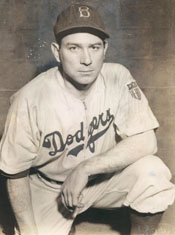
Also on this day, Pete Reiser (pronounced REEZ-er, not RIZE-er like actor Paul, no relation) dies at the age of 62. His relatively early death may have been hastened by the various injuries, including head injuries, he sustained as an outfielder for the Brooklyn Dodgers. Like Lenny Dykstra in the 1980s and '90s, he was a center fielder who frequently crashed into the outfield wall trying to make catches. Unlike Dykstra, he played in the 1940s, when outfield walls had no padding.
Branch Rickey, the general manager of the Cardinals, claimed he began scouting Reiser when he was just 12 years old, and while Reiser signed with the Dodgers instead, they were brought together when Rickey was hired as Dodger president in 1942. As a rookie in 1941, he won the NL batting title while the Dodgers took home the Pennant.
There was no Rookie of the Year award in those days; if there was, that year's awards would surely have gone to Reiser in the NL and Phil Rizzuto of the Yankees in the American League.
The following year, he was hitting .380 until he ran into a concrete outfield wall while running at full speed. That incident robbed him of any more effective play that year, and led to Brooklyn's painful drop in the NL standings. He led the NL in stolen bases in 1942 and '46, but a broken ankle in '47 robbed him of his great speed and hastened the end of his career. The Dodgers traded him after the '48 season, and he was done after '52, just 33 years old.
My Grandma used to tell the story of listening to the Dodgers on the radio in the Forties, and hearing that a player had crashed into the wall. She could never remember which player it was, but, considering his tendencies, it has to have been Reiser.
As Reiser was being carried off the field on a stretcher, the public-address announcer at Ebbets Field, Tex Rickards (nicknamed after Tex Rickard, the boxing promoter who built the old Madison Square Garden and the old Boston Garden), asked why Reiser was being taken out of the game. Some less-than-fully-educated Brooklyn guy must've told him, "He don't feel good."
And Grandma could hear the announcement over the radio: "Ladies and gentlemen, Reiser has to leave the game, because he don't feel good!" Grandma said she knew that Dodger broadcaster Red Barber, a Southerner but a cultured gentleman, would have a fit over this poor grammar from the PA announcer. Sure enough, he did.
Reiser's first big-league manager, Leo Durocher, always said that Willie Mays was the greatest player he ever saw, let alone managed, but thought nearly as highly of Reiser: "Willie Mays had everything. Pete Reiser had everything but luck." (An ironic statement, since he was born on March 17, 1919, St. Patrick’s Day – although he was of German descent, not Irish.)
Durocher later hired Reiser as one of his coaches, and he was named Minor League Manager of the Year by The Sporting News in 1959. But in 1965, while managing the Spokane Indians of the Pacific Coast League, he suffered a heart attack and resigned. His replacement there was the same man who had replaced him as center fielder in Brooklyn in 1947, Duke Snider, a considerably luckier man who made the Hall of Fame and lived until 2011.
Also on this day, Shaun Wright-Phillips is born in the Greenwich section of London. The midfielder is the adopted son of Arsenal legend and TV soccer pundit Ian Wright (and has often worn his father’s Number 8), and the half-brother of Bradley Wright-Phillips. They were teammates at Manchester City, and for a while, they were teammates with the New York Red Bulls.
Together, they won the 2015 MLS Supporters' Shield, for finishing 1st overall in the league's regular season. Previously, Shaun won 2 Premier League titles with West London club Chelsea. He last played in 2017, for Phoenix Rising FC in the United Soccer League.
And Grandma could hear the announcement over the radio: "Ladies and gentlemen, Reiser has to leave the game, because he don't feel good!" Grandma said she knew that Dodger broadcaster Red Barber, a Southerner but a cultured gentleman, would have a fit over this poor grammar from the PA announcer. Sure enough, he did.
Reiser's first big-league manager, Leo Durocher, always said that Willie Mays was the greatest player he ever saw, let alone managed, but thought nearly as highly of Reiser: "Willie Mays had everything. Pete Reiser had everything but luck." (An ironic statement, since he was born on March 17, 1919, St. Patrick’s Day – although he was of German descent, not Irish.)
Durocher later hired Reiser as one of his coaches, and he was named Minor League Manager of the Year by The Sporting News in 1959. But in 1965, while managing the Spokane Indians of the Pacific Coast League, he suffered a heart attack and resigned. His replacement there was the same man who had replaced him as center fielder in Brooklyn in 1947, Duke Snider, a considerably luckier man who made the Hall of Fame and lived until 2011.
Also on this day, Shaun Wright-Phillips is born in the Greenwich section of London. The midfielder is the adopted son of Arsenal legend and TV soccer pundit Ian Wright (and has often worn his father’s Number 8), and the half-brother of Bradley Wright-Phillips. They were teammates at Manchester City, and for a while, they were teammates with the New York Red Bulls.
Together, they won the 2015 MLS Supporters' Shield, for finishing 1st overall in the league's regular season. Previously, Shaun won 2 Premier League titles with West London club Chelsea. He last played in 2017, for Phoenix Rising FC in the United Soccer League.
October 25, 1987: The Minnesota Twins defeat the St. Louis Cardinals, 4-2 at the Metrodome in Minneapolis, in Game 7, and win the World Series. It is the 1st-ever World Championship for a Minnesota baseball team, the 1st for the franchise since they were the Washington Senators in 1924 (63 years), the 1st for any Minnesota sports team since the Lakers won the 1954 NBA Championship (33 years), and the 1st title for either an MLB team or an NFL team that plays its home games in a dome.
The Twins' Game 7 starter, Frank Viola, is named Series MVP. The Cards' starter, Danny Cox, was thrown out of the game by umpire Dave Phillips for arguing with him after manager Whitey Herzog had relieved him. He remains the last player thrown out of a World Series game.
The Twins won Games 1, 2, 6 and 7 at the Metrodome. The Cards won Games 3, 4 and 5 at Busch Memorial Stadium in St. Louis. This is the 1st time every game of a World Series has been won by the home team. It has happened since in 1991 (again the Twins, over the Braves) and 2001 (Diamondbacks over Yankees).
Also on this day, in the 1st game back after the NFL strike was settled, Philadelphia Eagles head coach Buddy Ryan calls for a fake spike in the final seconds of a game with the Dallas Cowboys at Veterans Stadium, as payback for Cowboy coach Tom Landry using strikebreaking starting players at Texas Stadium 2 weeks earlier. Already up by 10 points, the Eagles score a touchdown to win 37-20.
Games like this, the later "Bounty Bowls" vs. the Cowboys, and the "Body Bag Game" against the Washington Redskins are why Eagles fans still love Buddy Ryan. Maybe they'd love him a lot more if he remembered that he had Randall Cunningham, the quarterback known as "The Ultimate Weapon." But, like his son Rex Ryan, Buddy was a defensive genius but clueless when it came to offense.
*
Also on this day, in the 1st game back after the NFL strike was settled, Philadelphia Eagles head coach Buddy Ryan calls for a fake spike in the final seconds of a game with the Dallas Cowboys at Veterans Stadium, as payback for Cowboy coach Tom Landry using strikebreaking starting players at Texas Stadium 2 weeks earlier. Already up by 10 points, the Eagles score a touchdown to win 37-20.
Games like this, the later "Bounty Bowls" vs. the Cowboys, and the "Body Bag Game" against the Washington Redskins are why Eagles fans still love Buddy Ryan. Maybe they'd love him a lot more if he remembered that he had Randall Cunningham, the quarterback known as "The Ultimate Weapon." But, like his son Rex Ryan, Buddy was a defensive genius but clueless when it came to offense.
*
October 25, 1990: Evander Holyfield knocks out James "Buster" Douglas in the 3rd round, and wins the Heavyweight Championship of the World, at the Mirage casino-hotel in Paradise, Nevada, outside Las Vegas. It was Douglas' 1st defense, after his shocking February knockout of Mike Tyson.
This fight was supposed to be Tyson-Holyfield, or at least Tyson-Holyfield I. But Tyson had committed a shocking crime, and would serve time in prison. Eventually, he and Holyfield would fight. Twice. But we remember those fights not as "Tyson-Holyfield," but as "Holyfield-Tyson."
October 25, 1991, 30 years ago: George Brunet dies of a heart attack in Poza Rica, Mexico. The native of Calumet, in Michigan's Upper Peninsula, was only 56 years old. He pitched in the major leagues from 1956 to 1971, for 9 different teams, 6 of which are no longer using the names they were using them: The Kansas City Athletics (Oakland), the Milwaukee Braves (Atlanta), the Houston Colt .45's (Astros), the Los Angeles Angels who became the California Angels while he was there (and are now the Los Angeles Angels of Anaheim), the Seattle Pilots (Milwaukee Brewers) and Washington Senators (Texas Rangers).
October 25, 1991, 30 years ago: George Brunet dies of a heart attack in Poza Rica, Mexico. The native of Calumet, in Michigan's Upper Peninsula, was only 56 years old. He pitched in the major leagues from 1956 to 1971, for 9 different teams, 6 of which are no longer using the names they were using them: The Kansas City Athletics (Oakland), the Milwaukee Braves (Atlanta), the Houston Colt .45's (Astros), the Los Angeles Angels who became the California Angels while he was there (and are now the Los Angeles Angels of Anaheim), the Seattle Pilots (Milwaukee Brewers) and Washington Senators (Texas Rangers).
He also played for the Baltimore Orioles, the Pittsburgh Pirates (with whom he made his only postseason appearance, in the 1970 National League Championship Series) and the St. Louis Cardinals.
In his diary of the 1969 season with the Pilots, Ball Four, former Yankee pitcher Jim Bouton mentions the team's acquisition of Brunet from the Angels, and said, "He'll fit right in on this ballclub. He's crazy." (He was a lefthanded pitcher, and crazy was their stereotype even then.)
One time, after a game, Bouton -- prefacing his observation with his admission that he is the last guy who should be referencing anyone else's strange behavior -- asked Brunet, "Did you forget to put on your undershorts?" Brunet said, "No, I never wear them. This way, I don't have to worry about losing them. The only time you ever need them is when you're in an accident."
He was 69-93 in the major leagues. He went to the Mexican League, and kept on pitching. And pitching. And pitching. They called him El Viejo: The Old One. In 1978, at age 42, he pitched a no-hitter. He kept going until 1989, at age 54, giving him 36 seasons of playing in professional baseball, which is believed to be a record.
October 25, 1994: Had the 1994 baseball season been allowed to reach a conclusion, this was the day that Game 3 of the World Series would have been played, at the home park of the American League Champion.
October 25, 1996, 25 years ago: On a travel day for the World Series between the Yankees and the Atlanta Braves, Frank Torre, former Milwaukee Braves 1st baseman and brother of Joe Torre, now the Yankee manager after having been a Braves player and manager, receives a heart transplant. The surgery takes place at Columbia-Presbyterian Medical Center, which was built on the Upper Manhattan site of the Yankees' 1st ballpark, Hilltop Park.
Frank, who had helped the Braves beat the Yankees in the 1957 World Series, recovered quickly, and lived 18 years on his new heart.
October 25, 1998: The Chicago Fire defeat 2-time defending Champion D.C. United 2-0 at the Rose Bowl in Pasadena, to win the MLS Cup. It is only the Fire's 1st season.
Despite DC having such talents as John Harkes, Jeff Agoos, Eddie Pope, Roy Lassiter, Marco Etcheverry and Jamie Moreno, it is the Fire who emerge victorious. Polish striker Jerzy Podbrożny
Despite DC having such talents as John Harkes, Jeff Agoos, Eddie Pope, Roy Lassiter, Marco Etcheverry and Jamie Moreno, it is the Fire who emerge victorious. Polish striker Jerzy Podbrożny
scores in the 29th minute, Colombian midfielder Diego Gutiérrez adds another just before the half, and another Pole, Chicago's Captain Piotr Nowak, is named Man of the Match, much to the delight of the large Polish rooting section among the Fire's ultra support, known as Section 8.
Zach Thornton keeps a clean sheet in goal. Manager Bob Bradley can also count among his starting lineup Jesse Marsch, later to manage the New York Red Bulls to 2 Supporters' Shields.
Also on this day, Juan José Soto Pacheco is born in Santo Domingo, Dominican Republic. The outfielder for the Washington Nationals was the youngest player in the major leagues in the 2018 season. Despite not being called up until May 20, he batted .292 with 22 home runs and 70 RBIs.
On June 18, 2018, he hit a home run against the Yankees. This was a game that had begun on May 15, and been suspended due to rain with a tie score in the 5th inning. Technically, he hit a home run before his major league debut.
In 2019, he got the game-winning hit in the Nationals' victory over the Milwaukee Brewers in the NL Wild Card Game, and continued to be a key in the Nationals' march to their 1st Pennant and World Series win.
*
October 25, 2000: Game 4 of the World Series at Shea Stadium. The Mets won Game 3 last night, to close within 2 games to 1.
Zach Thornton keeps a clean sheet in goal. Manager Bob Bradley can also count among his starting lineup Jesse Marsch, later to manage the New York Red Bulls to 2 Supporters' Shields.
Also on this day, Juan José Soto Pacheco is born in Santo Domingo, Dominican Republic. The outfielder for the Washington Nationals was the youngest player in the major leagues in the 2018 season. Despite not being called up until May 20, he batted .292 with 22 home runs and 70 RBIs.
On June 18, 2018, he hit a home run against the Yankees. This was a game that had begun on May 15, and been suspended due to rain with a tie score in the 5th inning. Technically, he hit a home run before his major league debut.
In 2019, he got the game-winning hit in the Nationals' victory over the Milwaukee Brewers in the NL Wild Card Game, and continued to be a key in the Nationals' march to their 1st Pennant and World Series win.
*
October 25, 2000: Game 4 of the World Series at Shea Stadium. The Mets won Game 3 last night, to close within 2 games to 1.
Now, Bobby Jones is the Game 4 starter, and he's not especially good. However, the Yankees will have to choose between an aging and struggling David Cone, a struggling Denny Neagle, and Andy Pettitte on 3 days rest. This bodes well for the Mets, and if they win this one, then the Series is tied, and they've really got momentum. In Game 5, also at Shea, Al Leiter can outpitch Pettitte as he did in Game 1, and maybe this time the bullpen won't blow it; after all, after blowing the save in Game 1, Armando Benitez got it in Game 3.
Then the Mets only have to win 1 of 2 at Yankee Stadium to win the Subway Series, and reclaim New York from the Yankees. The Yanks will start Roger Clemens in Game 6, and after the bat-throwing incident in Game 2, the Mets will be loaded for bear, and Mike Hampton can't possibly have as bad a start in Game 6 as he had in Game 2, right? And if it still goes to Game 7, it'll be Rick Reed against Orlando Hernandez again, and Reed showed in Game 3 he could outpitch "El Duque."
So, at this point, if you're a Met fan, you don't have a lot of reason to be confident of ultimate victory; but your position is quite defensible, your team is hardly in deep trouble following the Game 3 win, and, as the one man who has ever managed both these teams to Pennants, Yogi Berra, has said, "It ain't over 'til it's over." This World Series is far from over, and if you're a Met fan, at this point, you do have some reason to be optimistic.
Game 4 begins, and that reason lasts all of one pitch. The 1st pitch of the game is from Jones to Derek Jeter, who knocks it over the left-field fence for a home run.
Neagle struggles in the 5th, and manager Joe Torre plays a huge hunch, bringing Cone, once a superb Met starter, out of the bullpen to face the dangerous Mike Piazza with the bases loaded. I have to admit, I was sure he was going to either walk home a run, or serve up a gopher ball for a grand slam. Instead, Cone gets Piazza to pop up, ending the threat. Cone never throws another postseason pitch, and he never throws another pitch for the Yankees. But he got the job done.
The Yankees hang on to win the game, 3-2, and take a 3 games to 1 lead in the Series. They can wrap it up tomorrow night. Met fans, who began the day feeling like it was still possible, are no longer using Tug McGraw’s old rallying cry of "Ya Gotta Believe!" Now, they'e using another familiar rallying cry, that of "Yankees Suck!"
But all is not good news in Yankeeland. Darryl Strawberry, who was introduced to stardom and drug as a Met, and has been one of George Steinbrenner's reclamation projects, is arrested and jailed, after leaving a treatment center following a weekend drug binge.
October 25, 2003: The Florida Marlins win their 2nd World Championship, as World Series MVP Josh Beckett hurls a 5-hit shutout in defeating the Yankees‚ 2-0‚ in Game 6. Luis Castillo's 5th-inning single brings home Florida's 1st run‚ the only one Beckett needs as he outduels Andy Pettitte. Thus the Marlins conclude their 2nd winning season in the past 11 years in the same manner they concluded their 1st winning season.
This was a particularly frustrating loss for this Yankee Fan, as we were just 1 run away from being up 3 games to 1, until Jeff Fucking Weaver gave up a walkoff home run to "the other Alex Gonzalez." And we go out meekly on our field, to this crummy squad that still looks like an expansion team (and now appears to be a fraud, as catcher Ivan Rodriguez is a suspected steroid user). And the last play of the game was a pathetic one, Jorge Posada hitting a meek grounder back to Beckett.
At this point, I didn't like Beckett, solely for what he did to the Yankees in this Series. After 2 more seasons in the Miami suburbs, he would be traded to the Red Sox, and I would dislike him just for belonging to that team. But after observing him a few times in a Boston uniform, I realized there was a perfectly legitimate reason to hate his guts: His personality.
This turns out to be the 99th and last World Series game played at the original Yankee Stadium. The
Yankees went 63-36 in these games. Thankfully, we later got the ABC TV series Castle, with a much better Beckett, a Detective loyal to New York, and played by the magnificent Stana Katic. Her character, while not explicitly a Yankee Fan, did get a thrill in the 2010 episode "The Suicide Squeeze," from meeting, as she called him, "Joe Freakin' Torre," who played himself.
October 25, 2005: Game 3 of the World Series at Minute Maid Park in Houston. This is the 1st World Series game ever played in the State of Texas. Geoff Blum's 14th inning homer off Ezequiel Astacio leads the Chicago White Sox to a 7-5 victory over the Astros.
Houston led‚ 4-0‚ before Chicago scored 5 runs in the 5th inning off Roy Oswalt to take the lead. Joe Crede also homers for the Sox‚ while Jason Lane connects for the Astros. Damaso Marte gets the win in relief.
At 5 hours, 41 minutes‚ the contest is the longest in Series history in terms of time. It also ties the mark for longest game in terms of innings played.
October 25, 2009: With a 5-2 victory over the Los Angeles Angels at the new Yankee Stadium, the Yankees win their 40th American League Pennant. The Bronx Bombers, after a 6-year absence from the Fall Classic and 2 previous Playoff defeats against the Anaheim club, will play the Philadelphia Phillies in quest of their 27th World Championship.
Has it really been 12 years since the Yankees won a Pennant? Here is every player on the Yankees' 2009 postseason roster who is, officially, still on the 40-man roster going into the 2021-22 off-season: Brett Gardner. That's it. One guy.
Explain to me why Brian Cashman still has a job. I'll wait.
Hell, I've been waiting.
*
October 25, 2016: Game 1 of the World Series is played at Progressive Field in Cleveland. It was the 1st World Series game played by the Chicago Cubs since October 10, 1945 -- 71 years and 15 days. Since that was before Major League Baseball was reintegrated, leadoff hitter Dexter Fowler becomes the 1st black player to appear for the Cubs in a World Series game.
It doesn't go so well for them: Corey Kluber pitches a shutout, Roberto Perez hits 2 home runs, and the Cleveland Indians win 6-0. Cub fans around the world must have been thinking, "Oh well, it was nice to finally be in a World Series, but I guess it was just too much to ask to be allowed to win one." Little do they know...
October 25, 2017: For the 1st time in their history, the Houston Astros win a World Series game. It takes 11 innings, but, when you've waited 56 seasons, what's 2 extra innings?
The Astros trailed the Los Angeles Dodgers 3-1 going into the top of the 8th inning, but scored in the 8th and the 9th, including a home run by Marwin Gonzalez, to send it to bonus cantos. The Astros scored 2 runs in the top of the 10th, on home runs by Jose Altuve and Carols Correa, but the Dodgers answered with 2 runs of their own.
In the top of the 11th, George Springer hit a home run off Brandon McCarthy to give the Astros a 7-5 lead. But the Dodgers still weren't done, as Charlie Culberson hit a solo homer off Chris Devenski. But Devenski struck out Yasiel Puig, who had homered earlier, to end the game 7-6 in the Astros' favor.
In winning a World Series game for the 1st time, the Astros became the 1st team in the Series' 114-year history to hit home runs in the 9th, 10th and 11th innings of the same game. The Series leaves Dodger Stadium tied 1-1, and heads to Houston.
October 25, 2016: Game 1 of the World Series is played at Progressive Field in Cleveland. It was the 1st World Series game played by the Chicago Cubs since October 10, 1945 -- 71 years and 15 days. Since that was before Major League Baseball was reintegrated, leadoff hitter Dexter Fowler becomes the 1st black player to appear for the Cubs in a World Series game.
It doesn't go so well for them: Corey Kluber pitches a shutout, Roberto Perez hits 2 home runs, and the Cleveland Indians win 6-0. Cub fans around the world must have been thinking, "Oh well, it was nice to finally be in a World Series, but I guess it was just too much to ask to be allowed to win one." Little do they know...
October 25, 2017: For the 1st time in their history, the Houston Astros win a World Series game. It takes 11 innings, but, when you've waited 56 seasons, what's 2 extra innings?
The Astros trailed the Los Angeles Dodgers 3-1 going into the top of the 8th inning, but scored in the 8th and the 9th, including a home run by Marwin Gonzalez, to send it to bonus cantos. The Astros scored 2 runs in the top of the 10th, on home runs by Jose Altuve and Carols Correa, but the Dodgers answered with 2 runs of their own.
In the top of the 11th, George Springer hit a home run off Brandon McCarthy to give the Astros a 7-5 lead. But the Dodgers still weren't done, as Charlie Culberson hit a solo homer off Chris Devenski. But Devenski struck out Yasiel Puig, who had homered earlier, to end the game 7-6 in the Astros' favor.
In winning a World Series game for the 1st time, the Astros became the 1st team in the Series' 114-year history to hit home runs in the 9th, 10th and 11th innings of the same game. The Series leaves Dodger Stadium tied 1-1, and heads to Houston.