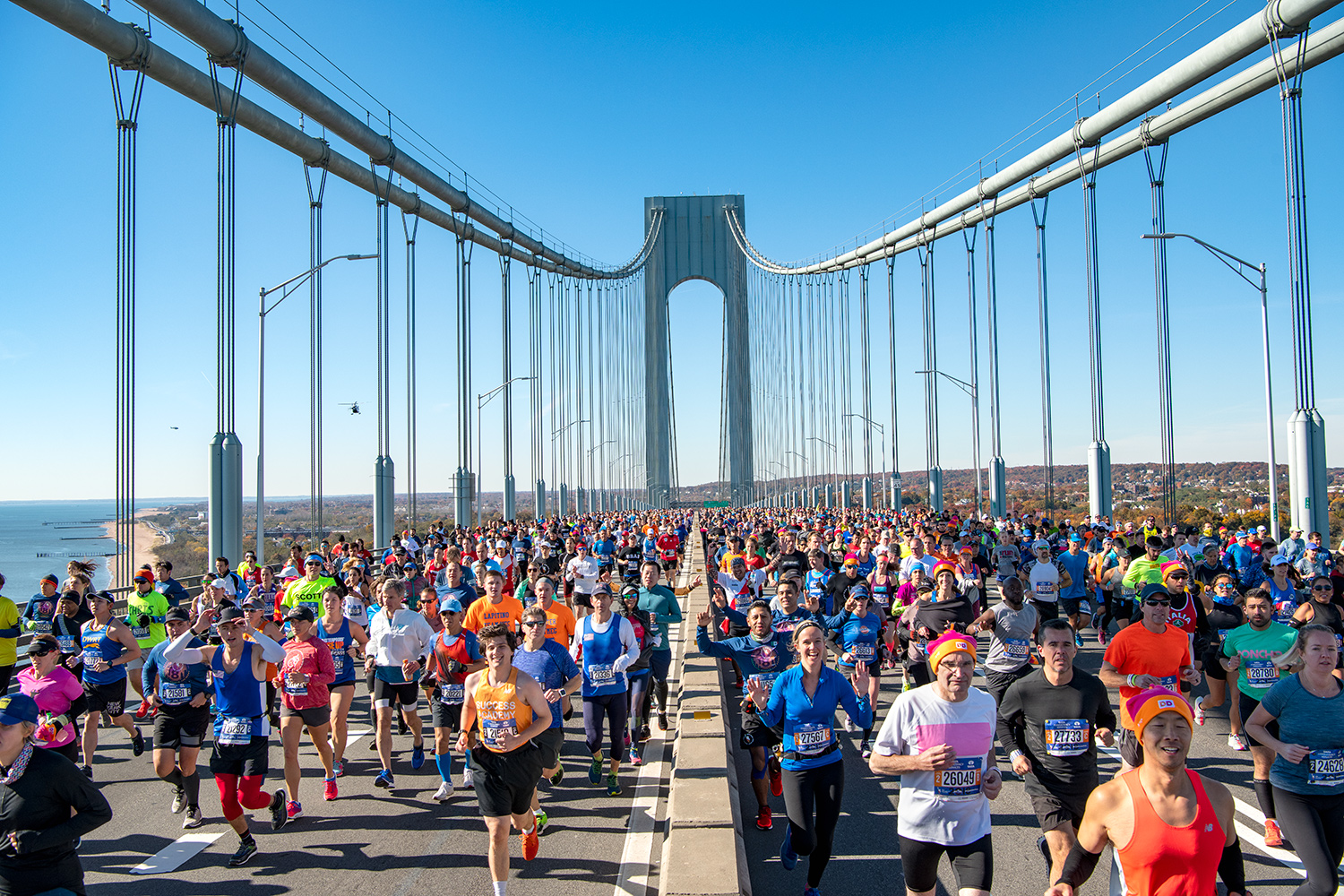
The New York City Marathon was held today, after being canceled last season due to COVID.
I hadn't noticed, and wouldn't have cared if I had.
At any rate, the winners were Albert Korir and, among the women, Peres Jepchirchi, both of Kenya.
*
November 7, 1837: Elijah P. Lovejoy is assassinated. He was not a politician, but a newspaper publisher and a Presbyterian minister. He had founded a newspaper, the St. Louis Observer, that printed anti-slavery stories and editorials. This angered people in the city, and they destroyed his printing press. He got a new one, and they destroyed that one, too. He got another new one, and they destroyed that one, too.
He got the message: He wasn't welcome in St. Louis, and, in 1836, crossed the Mississippi River from the slave State of Missouri to the free State of Illinois, to nearby Alton, starting a new abolitionist newspaper, the Alton Observer.
Gun-wielding advocates of slavery caught up with him, and attacked the warehouse where he had his 4th printing press. He and his supporters thought they were ready, with their own guns, and a shootout commenced. Lovejoy was shot, and both he and his printing press were thrown into the river.
He was just short of his 35th birthday, and became the 1st white martyr in the cause against slavery. A 110-foot monument crowns his gravesite in Alton.
Hearing of his murder, John Brown dedicated his life to the abolition of slavery, but his cause would also end with gunfire. Not his life, though: That was by hanging, through due process -- if not justice.
November 7, 1848: Zachary Taylor is elected the 12th President of the United States. The leading General of the recently-concluded Mexican-American War, nicknamed Old Rough and Ready by the men who served under him and revered him, had never previously run for office, and later admitted that he'd never voted in his life, not even for himself.
However, as the nominee of the Whig Party, he beat the Democratic nominee, Senator Lewis Cass of Michigan, and former President Martin Van Buren, who was running to regain the office as the nominee of the Free Soil Party, opposed to slavery.
Because of the 3-way race, Taylor was a plurality President, getting 47 percent of the popular vote, to Cass' 42 and Van Buren's 10. And Taylor and Cass split the States between them, 15 apiece. But Taylor got a majority of the Electoral Vote, 163 to 127, while Van Buren took no States and got no EVs.
Taylor was inaugurated on March 5, 1849 -- he refused to take office on the traditional day, March 4, because it was a Sunday, and so, in a way, for 24 hours, the nation was without a President -- and died on July 9, 1850, from food poisoning.
(It was accidental. In 1991, in response to historians' suggestions that he was poisoned on purpose, and thus assassinated, his body was exhumed from the veterans' cemetery that bears his name in Louisville, Kentucky, and tested. No traces of artificial poison were found.)
Vice President Millard Fillmore became the 13th President. No Whig was ever again elected, as the party was broken over the slavery issue. Therefore, the Whigs have the odd status as having as many Presidents rise to the office without election as with it: 2. (John Tyler had become President when William Henry Harrison died in 1841.) Here's the count:
Republican Party, 20: Abraham Lincoln (formerly a Whig), Andrew Johnson (formerly a Democrat), Ulysses S. Grant, Rutherford B. Hayes, James A. Garfield, Chester A. Arthur, Benjamin Harrison, William McKinley, Theodore Roosevelt, William Howard Taft, Warren G. Harding, Calvin Coolidge, Herbert C. Hoover, Dwight D. Eisenhower, Richard M. Nixon, Gerald R. Ford, Ronald Reagan, George H.W. Bush, George W. Bush and Donald Trump.
Democratic Party, 18: Thomas Jefferson, James Madison, James Monroe, Andrew Jackson, Martin Van Buren, James K. Polk, Franklin Pierce, James Buchanan, Grover Cleveland (his nonconsecutive terms sometimes get him counted twice, which would make 18 "Democratic Presidents"), Woodrow Wilson, Franklin D. Roosevelt, Harry S Truman, John F. Kennedy, Lyndon B. Johnson, Jimmy Carter, Bill Clinton, Barack Obama and Joe Biden.
Whig Party, 4: William Henry Harrison, John Tyler (formerly a Democrat), Zachary Taylor and Millard Fillmore.
Federalist Party, 1: John Adams.
National Republican Party, 1: John Quincy Adams (formerly a Federalist, later a Whig).
No party, 1: George Washington (sometimes incorrectly called a Federalist).
Total years in office: Democrats, 112; Republicans, 96; Whigs, 8; No party, 8; Federalists, 4; National Republicans, 4.
November 7, 1851, 170 years ago: Christian Friedrich Wilhelm von der Ahe is born in Hille, Prussia -- now in the German state of North Rhine-Westphalia. He immigrated to St. Louis, then with a large German community, and bought a saloon near Sportsman's Park, the baseball park in town.
He bought the team that played there, the St. Louis Browns of the American Association, in 1882, proclaiming, in his accent, "I am der boss president of der Prowns!" There's some dispute as to whether his saloon, or Michael T. "Nuf Ced" McGreevy's Third Base Saloon across from Boston's South End Grounds was the first "sports bar," but von der Ahe did something Nuf Ced didn't: Built a championship team, as the Browns won 4 straight AA Pennants from 1885 to 1888.
In 1892, the AA folded, and he was able to move the Browns into the National League. But a dispute with his 1st baseman and manager, Charlie Comiskey -- later the infamous owner of the Chicago White Sox -- led him to sell the star, and the Browns' glory days were over, as they wouldn't win an NL Pennant until 1926.
His glory days were over, too: By 1898, he was bankrupt, and had to sell the team. In 1908, the team, now called the Cardinals, and the new Browns, in the American League, played a benefit game for him. He died of cirrhosis in 1913.
Chris von der Ahe was baseball's 1st celebrity team owner. He was one of the most famous men in America in the 1880s and '90s. But he has been virtually forgotten, and has never been elected to the Baseball Hall of Fame.
November 7, 1867: Maria Salomea Skłodowska is born in Warsaw, in what was then "Congress Poland," in the Russian Empire. In 1891, she and her sister, eventually known as Bronisława Dłuska, fled to Paris, and became renowned scientists.
Maria married French scientist Pierre Curie, and became known in France as Marie Curie or, more popularly, "Madame Curie." Together, the Curies conducted pioneering research into radioactivity. She was the 1st woman to win a Nobel Prize, the 1st person and the only woman to win 2 Nobels, and remains the only person to win in 2 different scientific fields: Chemistry and Physics.
She discovered the elements polonium (atomic number 84, named after her homeland) and radium (atomic number 86). Once synthesized, curium (atomic number 96) was named for her. She died in 1934, probably from the effects of long-term exposure to radioactivity.
Pierre had died in 1906. Their daughter Irène Joliot-Curie (1897-1956) and her husband Frédéric Joliot-Curie (1900-1958) shared a Nobel Prize in 1935, but they also died young due to exposure to radioactivity. In contrast, their daughter Hélène Langevin-Joliot became a scientist and still teaches at the University of Paris at the age of 92, and their son Pierre Joliot is still working at 87. Between them, the Joliot-Curie grandchildren have 3 children of their own, all scientists.
Marie Curie has been played by Greer Garson in the 1943 film Madame Curie, Isabelle Huppert in the 1997 film The Palms of Madame Schutz, fellow Pole Karolina Gruszka in the 2016 film Marie Curie: The Courage of Knowledge, and Rosamund Pike in the 2019 film Radioactive.
November 7, 1876: Samuel Jones Tilden, former Governor of New York, wins the popular vote and the Electoral Vote in the Presidential election, defeating the Governor of Ohio, Rutherford B. Hayes. Tilden got 51 percent of the popular vote, to Hayes' 48; and 204 Electoral Votes, to Hayes' 165.
What's that? You've never heard of Tilden? Unless you're a history buff, or are from Brooklyn where there's a high school named for him, that's not surprising. He didn't get to become President, because the Republicans stole the Electoral Votes of Louisiana (8), South Carolina (7) and Florida (4), plus 1 in Oregon.
So the final count, not made official until the Electoral Commission made its ruling on a pure party-line vote of 8-7 on March 2, 1877 -- 2 days before the Inauguration -- was Hayes 185, Tilden 184.
Hayes, nicknamed "His Fraudulency" and "Old 8 to 7," announced he would serve only 1 term, and kept his promise. Tilden was convinced he was robbed, but did not run again in 1880 or 1884, due to ill health, and died in 1886.
But was he robbed? The Democrats, then the nation's conservative party, may have engaged in serious intimidation of newly-enfranchised black voters in Southern States. It's possible they tried every bit as hard to steal those States on Election Day as the Republicans did afterward. We may never know who truly deserved to win. Regardless, there is absolutely no known evidence that either Hayes or Tilden participated in any election fraud on their own behalfs. (Behalves?)
He got the message: He wasn't welcome in St. Louis, and, in 1836, crossed the Mississippi River from the slave State of Missouri to the free State of Illinois, to nearby Alton, starting a new abolitionist newspaper, the Alton Observer.
Gun-wielding advocates of slavery caught up with him, and attacked the warehouse where he had his 4th printing press. He and his supporters thought they were ready, with their own guns, and a shootout commenced. Lovejoy was shot, and both he and his printing press were thrown into the river.
He was just short of his 35th birthday, and became the 1st white martyr in the cause against slavery. A 110-foot monument crowns his gravesite in Alton.
Hearing of his murder, John Brown dedicated his life to the abolition of slavery, but his cause would also end with gunfire. Not his life, though: That was by hanging, through due process -- if not justice.
November 7, 1848: Zachary Taylor is elected the 12th President of the United States. The leading General of the recently-concluded Mexican-American War, nicknamed Old Rough and Ready by the men who served under him and revered him, had never previously run for office, and later admitted that he'd never voted in his life, not even for himself.
However, as the nominee of the Whig Party, he beat the Democratic nominee, Senator Lewis Cass of Michigan, and former President Martin Van Buren, who was running to regain the office as the nominee of the Free Soil Party, opposed to slavery.
Because of the 3-way race, Taylor was a plurality President, getting 47 percent of the popular vote, to Cass' 42 and Van Buren's 10. And Taylor and Cass split the States between them, 15 apiece. But Taylor got a majority of the Electoral Vote, 163 to 127, while Van Buren took no States and got no EVs.
Taylor was inaugurated on March 5, 1849 -- he refused to take office on the traditional day, March 4, because it was a Sunday, and so, in a way, for 24 hours, the nation was without a President -- and died on July 9, 1850, from food poisoning.
(It was accidental. In 1991, in response to historians' suggestions that he was poisoned on purpose, and thus assassinated, his body was exhumed from the veterans' cemetery that bears his name in Louisville, Kentucky, and tested. No traces of artificial poison were found.)
Vice President Millard Fillmore became the 13th President. No Whig was ever again elected, as the party was broken over the slavery issue. Therefore, the Whigs have the odd status as having as many Presidents rise to the office without election as with it: 2. (John Tyler had become President when William Henry Harrison died in 1841.) Here's the count:
Republican Party, 20: Abraham Lincoln (formerly a Whig), Andrew Johnson (formerly a Democrat), Ulysses S. Grant, Rutherford B. Hayes, James A. Garfield, Chester A. Arthur, Benjamin Harrison, William McKinley, Theodore Roosevelt, William Howard Taft, Warren G. Harding, Calvin Coolidge, Herbert C. Hoover, Dwight D. Eisenhower, Richard M. Nixon, Gerald R. Ford, Ronald Reagan, George H.W. Bush, George W. Bush and Donald Trump.
Democratic Party, 18: Thomas Jefferson, James Madison, James Monroe, Andrew Jackson, Martin Van Buren, James K. Polk, Franklin Pierce, James Buchanan, Grover Cleveland (his nonconsecutive terms sometimes get him counted twice, which would make 18 "Democratic Presidents"), Woodrow Wilson, Franklin D. Roosevelt, Harry S Truman, John F. Kennedy, Lyndon B. Johnson, Jimmy Carter, Bill Clinton, Barack Obama and Joe Biden.
Whig Party, 4: William Henry Harrison, John Tyler (formerly a Democrat), Zachary Taylor and Millard Fillmore.
Federalist Party, 1: John Adams.
National Republican Party, 1: John Quincy Adams (formerly a Federalist, later a Whig).
No party, 1: George Washington (sometimes incorrectly called a Federalist).
Total years in office: Democrats, 112; Republicans, 96; Whigs, 8; No party, 8; Federalists, 4; National Republicans, 4.
November 7, 1851, 170 years ago: Christian Friedrich Wilhelm von der Ahe is born in Hille, Prussia -- now in the German state of North Rhine-Westphalia. He immigrated to St. Louis, then with a large German community, and bought a saloon near Sportsman's Park, the baseball park in town.
He bought the team that played there, the St. Louis Browns of the American Association, in 1882, proclaiming, in his accent, "I am der boss president of der Prowns!" There's some dispute as to whether his saloon, or Michael T. "Nuf Ced" McGreevy's Third Base Saloon across from Boston's South End Grounds was the first "sports bar," but von der Ahe did something Nuf Ced didn't: Built a championship team, as the Browns won 4 straight AA Pennants from 1885 to 1888.
In 1892, the AA folded, and he was able to move the Browns into the National League. But a dispute with his 1st baseman and manager, Charlie Comiskey -- later the infamous owner of the Chicago White Sox -- led him to sell the star, and the Browns' glory days were over, as they wouldn't win an NL Pennant until 1926.
His glory days were over, too: By 1898, he was bankrupt, and had to sell the team. In 1908, the team, now called the Cardinals, and the new Browns, in the American League, played a benefit game for him. He died of cirrhosis in 1913.
Chris von der Ahe was baseball's 1st celebrity team owner. He was one of the most famous men in America in the 1880s and '90s. But he has been virtually forgotten, and has never been elected to the Baseball Hall of Fame.
November 7, 1867: Maria Salomea Skłodowska is born in Warsaw, in what was then "Congress Poland," in the Russian Empire. In 1891, she and her sister, eventually known as Bronisława Dłuska, fled to Paris, and became renowned scientists.
Maria married French scientist Pierre Curie, and became known in France as Marie Curie or, more popularly, "Madame Curie." Together, the Curies conducted pioneering research into radioactivity. She was the 1st woman to win a Nobel Prize, the 1st person and the only woman to win 2 Nobels, and remains the only person to win in 2 different scientific fields: Chemistry and Physics.
She discovered the elements polonium (atomic number 84, named after her homeland) and radium (atomic number 86). Once synthesized, curium (atomic number 96) was named for her. She died in 1934, probably from the effects of long-term exposure to radioactivity.
Pierre had died in 1906. Their daughter Irène Joliot-Curie (1897-1956) and her husband Frédéric Joliot-Curie (1900-1958) shared a Nobel Prize in 1935, but they also died young due to exposure to radioactivity. In contrast, their daughter Hélène Langevin-Joliot became a scientist and still teaches at the University of Paris at the age of 92, and their son Pierre Joliot is still working at 87. Between them, the Joliot-Curie grandchildren have 3 children of their own, all scientists.
Marie Curie has been played by Greer Garson in the 1943 film Madame Curie, Isabelle Huppert in the 1997 film The Palms of Madame Schutz, fellow Pole Karolina Gruszka in the 2016 film Marie Curie: The Courage of Knowledge, and Rosamund Pike in the 2019 film Radioactive.
November 7, 1876: Samuel Jones Tilden, former Governor of New York, wins the popular vote and the Electoral Vote in the Presidential election, defeating the Governor of Ohio, Rutherford B. Hayes. Tilden got 51 percent of the popular vote, to Hayes' 48; and 204 Electoral Votes, to Hayes' 165.
What's that? You've never heard of Tilden? Unless you're a history buff, or are from Brooklyn where there's a high school named for him, that's not surprising. He didn't get to become President, because the Republicans stole the Electoral Votes of Louisiana (8), South Carolina (7) and Florida (4), plus 1 in Oregon.
So the final count, not made official until the Electoral Commission made its ruling on a pure party-line vote of 8-7 on March 2, 1877 -- 2 days before the Inauguration -- was Hayes 185, Tilden 184.
Hayes, nicknamed "His Fraudulency" and "Old 8 to 7," announced he would serve only 1 term, and kept his promise. Tilden was convinced he was robbed, but did not run again in 1880 or 1884, due to ill health, and died in 1886.
But was he robbed? The Democrats, then the nation's conservative party, may have engaged in serious intimidation of newly-enfranchised black voters in Southern States. It's possible they tried every bit as hard to steal those States on Election Day as the Republicans did afterward. We may never know who truly deserved to win. Regardless, there is absolutely no known evidence that either Hayes or Tilden participated in any election fraud on their own behalfs. (Behalves?)
November 7, 1896, 125 years ago: The St. Nicholas Rink opens at 69 West 66th Street, on the corner of Columbus Avenue (9th Avenue), on the Upper West Side of Manhattan. In 1900, it was the site of the 1st hockey game between Harvard and Yale, and Yale won 5-4. In 1917, it hosted the 1st women's hockey game in America. It was New York vs. New England, and the hosts won: St. Nicholas 1, Boston 0.
In 1911, professional boxing was legalized in the State of New York, and a wooden floor was put over the ice so prizefights could be staged. By 1920, boxing was making the place so much money, the rink was eliminated, and it was known as the St. Nicholas Arena from then on. Jack Johnson, Jess Willard, Kid Chocolate, Rocky Graziano, Floyd Patterson (including his 1st professional fight) and Muhammad Ali (then still using his birth name of Cassius Clay) fought there.
The ABC Network used it as a production center, and early rock and roll concerts were held there. In 1983, ABC bought the building and its land, tore the Arena down, and built their headquarters, a.k.a. Lincoln Square, on the site, now carrying the address of 77 West 66th Street. WABC-Channel 7 Eyewitness News, ABC World News Tonight, Live! (formerly with Regis Philbin & Kathie Lee Gifford) and The Rachael Ray Show all tape and broadcast from there.
*
November 7, 1904: Little Johnny Jones opens at the Liberty Theatre at 236 West 42nd Street in New York. It is the 1st play staged there. George M. Cohan is the writer, director and star, playing a jockey who goes to London to race in the Epsom Derby, loses, is accused of throwing the race, and must clear his name.
The show contains 2 of Cohan's legendary songs: "Yankee Doodle Dandy" and "Give My Regards to Broadway." The former not only becomes the title of the 1942 film biography of Cohan, starring James Cagney, but also helps to popularize "Yankees" as an alternative name for the New York Highlanders of baseball's American League.
Ironically, because New York Giants manager John McGraw cultivated Broadway performers as friends, Cohan became a Giants fan. Cagney, however, was a Yankee Fan, and even threw out the ceremonial first ball at a 1981 World Series game. It was one of his last public appearances.
The Liberty Theatre still stands, but has been converted into retail space, including a Ripley's Believe It Or Not Museum and a Famous Dave's restaurant. With some appropriateness, a Yankees Clubhouse Store is almost right across the street, at 236 West 42nd.
November 7, 1908: Allegedly, this was the day that American outlaws Robert Leroy Parker and Harry Alonzo Longabaugh -- a.k.a. Butch Cassidy and the Sundance Kid, respectively -- were killed in a shootout with the Bolivian Army at San Vicente.
Attempts to determine whether this was true have thus far failed. It has been alleged, including by Cassidy's sister, that Butch left Bolivia and was still alive as late as 1937. (He would have been 72.) A suggestion that Sundance was still alive as late as 1936 has been proven by DNA testing to be false, but, so far, that's as close as DNA testing has come to proving anything. For all we know, the old Utah and Wyoming bank and train robbers of the 1890s may well have had a good laugh about it all for a long time thereafter.
November 7, 1916: America elects a President. The Democratic nominee is the incumbent, President Woodrow Wilson, campaigning against American entry into World War I. His slogan was, "He kept us out of war." The Republican nominee is Charles Evans Hughes, who had been Governor of New York and a Justice of the Supreme Court, who believes America should enter the war. It should be noted that each man's party is roughly evenly divided on the subject, for various reasons.
When the night is over, Hughes appears to be the winner. But, as with President Samuel J. Tilden, there's a reason most of you have never heard of President Charles E. Hughes: He, too, went to bed as the President-elect, and woke up as not that.
The problem turns out to be the communication systems of the time, with the results in rural areas not getting to the State capitals quickly, and thus not being sent on to the national capital quickly. For example, New Hampshire: Wilson ended up winning it by 56 votes. Not 56,000, not 5,600, but fifty-six. That's the smallest margin ever recorded in a State in a Presidential vote.
The key State is California, then having 13 Electoral Votes (about 1/4 of what it has now). At first, Hughes is winning it, and he goes to bed believing he has won it. Wilson, too, had gone to bed, thinking he had lost the State, and thus the country.
The story, perhaps apocryphal, tells of a reporter learning early the next morning that Wilson has taken the lead in California, and thus won the election, and calling Hughes' home. Hughes' son, or his butler, or someone else (depending on who's telling the story), tells the reporter, "The President-elect is asleep." The reporter says, "When he wakes up, tell him he's not the President-elect anymore."
With 266 Electoral Votes then needed for victory, Wilson wins 277-254. If Hughes had won California, he would have won 267-264. Wilson won 49.2 percent of the popular vote, Hughes 46.1 percent. For both of his terms, Wilson would be a plurality President -- which had already happened to Grover Cleveland, and would later happen to Bill Clinton.
By the time he is Inaugurated again on March 5, 1917 (the usual date until 1933, March 4, was a Sunday that year), it is clear that Wilson will have to take America into the war. The war will make him beloved around the world. The peace process will make him despised at home.
A stroke in October 1919 paralyzed him, and when he left office in March 1921, he was, physically and emotionally, a broken man. He died in 1924. Hughes was appointed Secretary of State by Wilson's successor, Warren Harding, in 1921, and Chief Justice of the Supreme Court by Herbert Hoover in 1930. He served until retiring in 1941, and lived until 1948.
Soviet dictators Lenin and Josef Stalin did not. Lenin was too busy trying to keep his country from flying apart to care. Stalin is only known to have attended 1 sporting event in his life, a soccer demonstration on Moscow's Red Square itself.
But Nikita Khrushchev certainly used the Olympics to spread Red propaganda, and Leonid Brezhnev used the 1980 Olympics in Moscow to do so. Vladimir Putin is a former judo champion, although he's not nearly as good at hockey as he's been allowed to think he is -- much like Fidel Castro and his pitching. Putin used the 2014 Winter Olympics in Sochi to spread the Russian image, and did so again with the 2018 World Cup.
One thing is for sure: If the Bolsheviks had failed, the 1972 Summer Olympic basketball tournament, the 1972 "Summit Series" between Canada and the Soviets, and the 1980 Winter Olympic hockey tournament, while still exciting, would have had far less controversy. Also, movies such as WarGames, Red Dawn and Rocky IV might still have been made, but would have had very different enemies -- possibly more than one.
Also on this day, the Tulsa Outrage occurs. Judge T.D. Evans convicts 12 members of the Industrial Workers of the World of the crime of not owning a war bond. This was during World War I. The IWW were opposed to WWI, and not because of the reverse of their initials. Evans also convicts 5 men who were witnesses for the defense, even though they were not IWW members.
These men are delivered into the custody of not the police, or the Oklahoma penal system, but a group calling itself the Knights of Liberty. They are driven to the outskirts of town, bound to a tree, whipped, and tarred and feathered.
This was done under the leadership of W. Tate Brady, one of the city's founders, and a member of the Ku Klux Klan. Four years later, he became one of the men responsible for the Tulsa Race Riot of 1921. Four years after that, Brady shot and killed himself. It wasn't due to a guilty conscience: Rather, he was despondent over the recent death of his son John in a car crash.
But he never played a down in the NFL, probably because he thought he could make more money playing baseball. He was a Yankee from 1962 to 1971, a backup catcher to Yogi Berra and Elston Howard on the 1962 World Champions, of which he is 1 of 9 surviving players. He was the starter in the 1967, '68 and '69 seasons, but lost his job to Thurman Munson.
He returned to Ole Miss, coached their baseball team to the 1972 Southeastern Conference Championship and into the College World Series, and was named Coach of the Year, winning that award again in 1977. He later coached in the Yankees' system.
Also on this day, James Lee Kaat is born in Zeeland, Michigan. Jim Kaat debuted for the Washington Senators in 1959, and was the last active player who had played for the original version of that franchise. The lefthanded pitcher moved with them, and as the Minnesota Twins he helped them win the 1965 American League Pennant and the 1969 and '70 AL Western Division titles. He won 25 games in 1966, and probably would have been named the AL's Cy Young Award winner, except that this was the last season in which it was given only to the most valuable pitcher in both Leagues.
He won National League Eastern Division titles with the Philadelphia Phillies in 1976, '77 and '78, and the AL East with the Yankees in 1980. Finally, in 1982, his 24th season in the majors, a record wait, he won the World Series, with the 1982 St. Louis Cardinals.
He closed his career with the Cards in 1983, making him the last player who had played in the 1950s. He retired with a record of 283-237, 3 All-Star berths, and 16 Gold Gloves. (Admittedly, the Gold Glove is not a big deal for a pitcher, but 16!) And yet, he is not in the Hall of Fame. The only eligible-but-not-in pitcher in the post-1920 Lively Ball Era with more wins is his 1979-80 Yankee teammate, Tommy John.
Like TJ, "Kitty" became a broadcaster, for the Yankees, the Twins and CBS, and was one of the most astute in the business, winning 7 Emmy Awards. Maybe he can get into the Hall of Fame that way.
*
They moved to Detroit, and while the city was bubbling with Motown and proto-punk, she kept playing folk-rock. By 1967, she had recorded her 1st album, but her 1st hit as a writer was not a hit record for herself: It was Judy Collins who had the hit version of "Both Sides Now."
And not only did she not have the hit version of the song "Woodstock," she wasn't even there. Crosby, Stills & Nash, who were, had the hit version, whose citation of the phrase, "We were half a million strong," embedded the number 500,000 as the attendance figure in American minds, although it may not have quite been that many. (Rolling Stone magazine, right after the festival, said 450,000.)
By the early 1970s, she was having hits under her own name. She kept writing and performing until a brain aneurysm in 2015. She has recovered enough to appear in public, but hasn't played any concerts since.
November 7, 1944: President Franklin D. Roosevelt is elected to an unprecedented 4th term, defeating Thomas E. Dewey, who held FDR's former post of Governor of New York. FDR won 432 Electoral Votes to Dewey's 99, and 53 percent of the popular vote to Dewey's 46.
FDR was not well, struggling with heart disease and high blood pressure, brought on by the pressure of fighting, essentially, 2 major wars at once, against the Nazis in Europe and the Japanese Empire in the Pacific. His smoking and drinking didn't help. He was 62 years old, and looked at least 72. The Republicans began a "whispering campaign," saying that the Democratic titan was too old and tired to handle the Presidency, and possibly dying.
To counter this, FDR held a parade down Broadway in Lower Manhattan. In the rain. Not good for his health. The parade went over the Manhattan Bridge into Brooklyn, and he held a rally at Ebbets Field. "I've got a confession to make," he said. "I come from the State of New York, and I've practiced law in New York City. But I have never been in Ebbets Field before." He was not booed.
He did say, "I've rooted for the Dodgers" -- even though he had, on numerous occasions, been to Yankee Stadium to cheer on the Yankees and the Polo Grounds to cheer on the Giants, and saw them both at the Polo Grounds in Game 2 of the 1936 World Series. "And I hope to come back someday and watch 'em play." That got a huge roar.
FDR would be unable to go back. He had not been to a major league game since before Pearl Harbor, thinking it inappropriate for the President to do so. (There was Presidential precedent: Woodrow Wilson loved baseball, and threw out the first ball at every Opening Day of his first term, but not in 1917 and '18 due to World War I, not in '19 due to his trip to the postwar peace conference, and not in '20 due to his health.) FDR died at the dawn of the next season, of a stroke brought on by working himself to death to save civilization from fascism.
In 2016, there was no "whispering campaign": The Republicans came right out and said that the year's Democratic nominee, also (officially) from the State of New York, Hillary Clinton, was "dying" and "doesn't have the stamina to be President." She did 3 90-minute debates and kicked Donald Trump's ass in each of them. In 2020, when it became clear that Trump was becoming more and more unhealthy and unhinged, they said it was Joe Biden who had "dementia." Biden did 2 debates that, because of Trump's constant and insane interruptions, lasted more than 90 minutes, and mopped the floor with him both times. And, in 2021, Hillary is still alive and well. So, you tell me.
Joe led the National League in wins in 1979, and reached the postseason with the 1972 Detroit Tigers, the 1980 and '81 Houston Astros, and the 1987 Minnesota Twins, finally winning a World Series in his 21st season, just before turning 42. He died of a brain aneurysm in 2006. His son Lance Niekro also played in the major leagues.
Also on this day, Luigi Riva is born in Leggiuno, in Lombardy in the Italian Alps. "Gigi" Riva was a forward for his hometown soccer team Legnano when, in 1963, he was sold to Cagliari, on the island of Sardinia. Based on what he had heard of this island backwater, he thought he was going to Africa. (Sicily is closer to the African continent.)
He became the greatest player Cagliari have ever had, nicknamed Rombo di Tuono (Roar of Thunder). Three times, he was the leading scorer in Serie A (Italy's national league). In 1969, he was voted 2nd in the Ballon d'Or (Golden Ball) for World Player of the Year, behind fellow Italian Gianni Rivera of AC Milan.
In 1970, he led Cagliari to their one and only Serie A title, bringing them enough revenue that they could build a new stadium, and finishing 3rd in the Ballon d'Or voting behind Gerd Muller of Germany and Bobby Moore of England. He also helped Italy win Euro 1968 and reach the Final of the 1970 World Cup.
He later became an executive with Cagliari, which has retired his Number 11, and is now a consultant to the Italian national team.
November 7, 1951, 70 years ago: John Felix Tamargo is born in Tampa. The Yankees drafted him in 1969, but he chose to go to college instead. He played in the major leagues as a backup catcher from 1976 to 1980, mostly with the St. Louis Cardinals. He is now the Latin American coordinator for the Seattle Mariners' organization.
Also on this day, Chris Mortensen (I don't have a full name for him) is born in the Los Angles suburb of Torrance, California. He covered the NFL for the Atlanta Journal-Constitution, and has been at ESPN in 1991.
Also on this day, James M. O'Brien (I can find no reference as to what the M stands for) is born outside Washington, D.C. in Falls Church, Virginia. At this point, unless your college basketball team was an independent, only Conference Champions qualified for the NCAA Tournament. Jim O'Brien and Len Elmore led the University of Maryland to the Final of the 1973 Atlantic Coast Conference Tournament, but lost a triple-overtime thriller to North Carolina State.
A forward, Jim never played in the NBA, but was a member of the 1974 ABA Champion New York Nets. He is still alive.
The midfielder helped Hertfordshire club Watford rise to 2nd place in the Football League in 1983, and to the FA Cup Final in 1984, where they lost to Merseyside club Everton. He was soon snatched up by the bigger Merseyside club, Liverpool F.C. He helped them win the League in 1988 and 1990, the FA Cup in 1989 and 1992, and the League Cup in 1995. He also played for England in the 1986 and 1990 World Cups, and later managed the Jamaica national team to the 2008 Caribbean Cup.
He is famous for 2 things. At a point when Liverpool were embracing the rise of black players in the British Isles, Everton were not, and their fans were proud of the club's all-white status. That is no longer the case: Everton would have been relegated long ago if not for many fine black players, including New Jersey native goalkeeper Tim Howard.
On February 21, 1988, in an FA Cup 5th Round match that was also a Merseyside Derby, at Everton's Goodison Park, an Everton fan threw a banana onto the field, an overt suggestion that black people are apes. Noble in the face of darkness, Barnes backheeled it off the pitch, and a picture of it became one of the iconic photos of English football. (Liverpool won the game, 1-0, and advanced to the Final, losing to Wimbledon in one of the all-time FA Cup shocks.)
That's the sublime. The ridiculous is his music career, including the songs that Liverpool recorded as the FA Cup Final songs for 1988, "Anfield Rap (Red Machine In Full Effect)"; and 1996, "Pass & Move (It's the Liverpool Groove)." To be fair, he was hardly the only offender, and the other players in the videos, all white, looked even more ridiculous.
In the show's 1st season, 1976-77, the setting was World War II, which was fitting, as the character debuted in 1941 and fought Nazis on behalf of the Allies. But ABC canceled the show after the 1st season, due to the cost of the period costumes and cars. CBS picked it up for the 1977-78 TV season, and, to save money, moved it up to the present day, putting her to work as a secret agent alongside Steve Trevor Jr., like his father played by Lyle Waggoner. The show ran until 1979.
Also on this day, Castle airs the episode "Heartbreak Hotel." A murder in New York leads to a casino in Atlantic City, leading to Richard Castle (Nathan Fillion) and Detectives Kevin Ryan (Seamus Dever) and Javier Esposito (Jon Huertas) disguising themselves as Elvis impersonators.
With 266 Electoral Votes then needed for victory, Wilson wins 277-254. If Hughes had won California, he would have won 267-264. Wilson won 49.2 percent of the popular vote, Hughes 46.1 percent. For both of his terms, Wilson would be a plurality President -- which had already happened to Grover Cleveland, and would later happen to Bill Clinton.
By the time he is Inaugurated again on March 5, 1917 (the usual date until 1933, March 4, was a Sunday that year), it is clear that Wilson will have to take America into the war. The war will make him beloved around the world. The peace process will make him despised at home.
A stroke in October 1919 paralyzed him, and when he left office in March 1921, he was, physically and emotionally, a broken man. He died in 1924. Hughes was appointed Secretary of State by Wilson's successor, Warren Harding, in 1921, and Chief Justice of the Supreme Court by Herbert Hoover in 1930. He served until retiring in 1941, and lived until 1948.
In the same election, Jeannette Rankin becomes the 1st woman elected to Congress. At the time, her home State of Montana was 1 of 10 States which then had full voting rights for women – all of them West of the Missouri River.
November 7, 1917: The Winter Palace in Petrograd is stormed by Bolshevik troops, and the Bolshevik Revolution is complete. It is also known as the October Revolution, since Russia was still using the Julian Calendar, and they thought it was October 25. The new national leader, Vladimir Lenin, switches the vast country to the Gregorian Calendar.
Lenin also moved the capital to Moscow, and after his death in 1924, Petrograd was renamed Leningrad. After the end of the Soviet Union in 1991, that city's name was restored to what it was before the failed Russian Revolution of 1905: St. Petersburg. As was said at the time, "Better to name it for a saint than for a monster."
November 7, 1917: The Winter Palace in Petrograd is stormed by Bolshevik troops, and the Bolshevik Revolution is complete. It is also known as the October Revolution, since Russia was still using the Julian Calendar, and they thought it was October 25. The new national leader, Vladimir Lenin, switches the vast country to the Gregorian Calendar.
Lenin also moved the capital to Moscow, and after his death in 1924, Petrograd was renamed Leningrad. After the end of the Soviet Union in 1991, that city's name was restored to what it was before the failed Russian Revolution of 1905: St. Petersburg. As was said at the time, "Better to name it for a saint than for a monster."
We may never know how sports in Russia would have developed had either the Czars, or the provisional government under Alexander Kerensky that replaced them in the February Revolution earlier in 1917, lasted. Some dictators understand how sports can be used to spread propaganda for their government at home and for their country abroad. The fascist dictators of the 1930s did: Adolf Hitler of Germany, Benito Mussolini of Italy, and Francisco Franco of Spain.
Soviet dictators Lenin and Josef Stalin did not. Lenin was too busy trying to keep his country from flying apart to care. Stalin is only known to have attended 1 sporting event in his life, a soccer demonstration on Moscow's Red Square itself.
But Nikita Khrushchev certainly used the Olympics to spread Red propaganda, and Leonid Brezhnev used the 1980 Olympics in Moscow to do so. Vladimir Putin is a former judo champion, although he's not nearly as good at hockey as he's been allowed to think he is -- much like Fidel Castro and his pitching. Putin used the 2014 Winter Olympics in Sochi to spread the Russian image, and did so again with the 2018 World Cup.
One thing is for sure: If the Bolsheviks had failed, the 1972 Summer Olympic basketball tournament, the 1972 "Summit Series" between Canada and the Soviets, and the 1980 Winter Olympic hockey tournament, while still exciting, would have had far less controversy. Also, movies such as WarGames, Red Dawn and Rocky IV might still have been made, but would have had very different enemies -- possibly more than one.
Also on this day, the Tulsa Outrage occurs. Judge T.D. Evans convicts 12 members of the Industrial Workers of the World of the crime of not owning a war bond. This was during World War I. The IWW were opposed to WWI, and not because of the reverse of their initials. Evans also convicts 5 men who were witnesses for the defense, even though they were not IWW members.
These men are delivered into the custody of not the police, or the Oklahoma penal system, but a group calling itself the Knights of Liberty. They are driven to the outskirts of town, bound to a tree, whipped, and tarred and feathered.
This was done under the leadership of W. Tate Brady, one of the city's founders, and a member of the Ku Klux Klan. Four years later, he became one of the men responsible for the Tulsa Race Riot of 1921. Four years after that, Brady shot and killed himself. It wasn't due to a guilty conscience: Rather, he was despondent over the recent death of his son John in a car crash.
*
November 7, 1938: Jerry Dean Gibbs is born in Grenada, Mississippi. Jake Gibbs was the 1st great quarterback at the University of Mississippi, before either Archie Manning or his son Eli. He led them to a 10-0-1 record in 1960, with only a tie against Louisiana State spoiling their record. They won the 1961 Sugar Bowl. He is a member of the College Football Hall of Fame and the Mississippi Sports Hall of Fame.
But he never played a down in the NFL, probably because he thought he could make more money playing baseball. He was a Yankee from 1962 to 1971, a backup catcher to Yogi Berra and Elston Howard on the 1962 World Champions, of which he is 1 of 9 surviving players. He was the starter in the 1967, '68 and '69 seasons, but lost his job to Thurman Munson.
He returned to Ole Miss, coached their baseball team to the 1972 Southeastern Conference Championship and into the College World Series, and was named Coach of the Year, winning that award again in 1977. He later coached in the Yankees' system.
Also on this day, James Lee Kaat is born in Zeeland, Michigan. Jim Kaat debuted for the Washington Senators in 1959, and was the last active player who had played for the original version of that franchise. The lefthanded pitcher moved with them, and as the Minnesota Twins he helped them win the 1965 American League Pennant and the 1969 and '70 AL Western Division titles. He won 25 games in 1966, and probably would have been named the AL's Cy Young Award winner, except that this was the last season in which it was given only to the most valuable pitcher in both Leagues.
He won National League Eastern Division titles with the Philadelphia Phillies in 1976, '77 and '78, and the AL East with the Yankees in 1980. Finally, in 1982, his 24th season in the majors, a record wait, he won the World Series, with the 1982 St. Louis Cardinals.
He closed his career with the Cards in 1983, making him the last player who had played in the 1950s. He retired with a record of 283-237, 3 All-Star berths, and 16 Gold Gloves. (Admittedly, the Gold Glove is not a big deal for a pitcher, but 16!) And yet, he is not in the Hall of Fame. The only eligible-but-not-in pitcher in the post-1920 Lively Ball Era with more wins is his 1979-80 Yankee teammate, Tommy John.
Like TJ, "Kitty" became a broadcaster, for the Yankees, the Twins and CBS, and was one of the most astute in the business, winning 7 Emmy Awards. Maybe he can get into the Hall of Fame that way.
*
November 7, 1942: Tony B. Jackson -- he was born "Tony," not "Anthony," and I can find no record of what the B stood for -- is born in Brooklyn. A forward, he played at Thomas Jefferson High School Brooklyn and St. John's University in Queens, and was drafted by the Knicks, but never played in the NBA.
It wasn't that he wasn't good enough: St. John's retired his Number 24. But he and fellow Brooklyn natives Connie Hawkins, Roger Brown and Doug Moe were all indicted in a point-shaving scandal in 1962. Although none was ever convicted of any crime, all were banned for life by Commissioner Walter Kennedy.
All would make their mark in the ABA, though. Jackson played for the New Jersey Americans in that league's 1st season, 1967-68, making him an original member of the team now known as the Brooklyn Nets. That season, he set the ABA record for free throws in a game with 24, and made the All-Star Game.
He only played 1 more season of pro ball, so it wouldn't have mattered if he had been reinstated. He lived until 2005. Brown helped the Indiana Pacers win 3 ABA titles, but also retired before the leagues merged in 1976. Hawkins was reinstated in 1969, and made 4 NBA All-Star Games. He and Brown went on to be elected to the Basketball Hall of Fame. Moe also retired before the leagues merged, went into coaching, and was reinstated as part of the merger agreement, eventually winning 628 games as a head coach over both leagues.
It wasn't that he wasn't good enough: St. John's retired his Number 24. But he and fellow Brooklyn natives Connie Hawkins, Roger Brown and Doug Moe were all indicted in a point-shaving scandal in 1962. Although none was ever convicted of any crime, all were banned for life by Commissioner Walter Kennedy.
All would make their mark in the ABA, though. Jackson played for the New Jersey Americans in that league's 1st season, 1967-68, making him an original member of the team now known as the Brooklyn Nets. That season, he set the ABA record for free throws in a game with 24, and made the All-Star Game.
He only played 1 more season of pro ball, so it wouldn't have mattered if he had been reinstated. He lived until 2005. Brown helped the Indiana Pacers win 3 ABA titles, but also retired before the leagues merged in 1976. Hawkins was reinstated in 1969, and made 4 NBA All-Star Games. He and Brown went on to be elected to the Basketball Hall of Fame. Moe also retired before the leagues merged, went into coaching, and was reinstated as part of the merger agreement, eventually winning 628 games as a head coach over both leagues.
Also on this day, Norman James Johnson is born in Winnipeg. A center, Jim Johnson played 8 games for the New York Rangers, before being lost in the 1967 expansion draft and becoming an original Philadelphia Flyer. He also played for the Los Angeles Kings, and the World Hockey Association's Minnesota Fighting Saints and Indianapolis Racers. He is still alive, and a member of the Manitoba Hockey Hall of Fame.
November 7, 1943: Roberta Joan Anderson is born in Fort MacLeod, Alberta. At age 9, in 1952, she survived North America's last big polio outbreak, and, missing a lot of school, she focused on music and art. She settled on music, hit it big in Toronto's folk music scene, got married, and started using a variation on her married name: Joni Mitchell.
They moved to Detroit, and while the city was bubbling with Motown and proto-punk, she kept playing folk-rock. By 1967, she had recorded her 1st album, but her 1st hit as a writer was not a hit record for herself: It was Judy Collins who had the hit version of "Both Sides Now."
And not only did she not have the hit version of the song "Woodstock," she wasn't even there. Crosby, Stills & Nash, who were, had the hit version, whose citation of the phrase, "We were half a million strong," embedded the number 500,000 as the attendance figure in American minds, although it may not have quite been that many. (Rolling Stone magazine, right after the festival, said 450,000.)
By the early 1970s, she was having hits under her own name. She kept writing and performing until a brain aneurysm in 2015. She has recovered enough to appear in public, but hasn't played any concerts since.
November 7, 1944: President Franklin D. Roosevelt is elected to an unprecedented 4th term, defeating Thomas E. Dewey, who held FDR's former post of Governor of New York. FDR won 432 Electoral Votes to Dewey's 99, and 53 percent of the popular vote to Dewey's 46.
FDR was not well, struggling with heart disease and high blood pressure, brought on by the pressure of fighting, essentially, 2 major wars at once, against the Nazis in Europe and the Japanese Empire in the Pacific. His smoking and drinking didn't help. He was 62 years old, and looked at least 72. The Republicans began a "whispering campaign," saying that the Democratic titan was too old and tired to handle the Presidency, and possibly dying.
To counter this, FDR held a parade down Broadway in Lower Manhattan. In the rain. Not good for his health. The parade went over the Manhattan Bridge into Brooklyn, and he held a rally at Ebbets Field. "I've got a confession to make," he said. "I come from the State of New York, and I've practiced law in New York City. But I have never been in Ebbets Field before." He was not booed.
He did say, "I've rooted for the Dodgers" -- even though he had, on numerous occasions, been to Yankee Stadium to cheer on the Yankees and the Polo Grounds to cheer on the Giants, and saw them both at the Polo Grounds in Game 2 of the 1936 World Series. "And I hope to come back someday and watch 'em play." That got a huge roar.
FDR would be unable to go back. He had not been to a major league game since before Pearl Harbor, thinking it inappropriate for the President to do so. (There was Presidential precedent: Woodrow Wilson loved baseball, and threw out the first ball at every Opening Day of his first term, but not in 1917 and '18 due to World War I, not in '19 due to his trip to the postwar peace conference, and not in '20 due to his health.) FDR died at the dawn of the next season, of a stroke brought on by working himself to death to save civilization from fascism.
In 2016, there was no "whispering campaign": The Republicans came right out and said that the year's Democratic nominee, also (officially) from the State of New York, Hillary Clinton, was "dying" and "doesn't have the stamina to be President." She did 3 90-minute debates and kicked Donald Trump's ass in each of them. In 2020, when it became clear that Trump was becoming more and more unhealthy and unhinged, they said it was Joe Biden who had "dementia." Biden did 2 debates that, because of Trump's constant and insane interruptions, lasted more than 90 minutes, and mopped the floor with him both times. And, in 2021, Hillary is still alive and well. So, you tell me.
Also on this day, Joseph Franklin Niekro is born in Martins Ferry, Ohio. He pitched in the major leagues from 1967 to 1988, and won 221 games. He combined with his brother Phil (who was only his teammate on the 1973 and '74 Atlanta Braves and the 1985 Yankees) for 539 wins, a record for a pair of brothers. Both had the knuckleball as their main pitch. In 1976, he hit his only major league home run, off Phil.
Joe led the National League in wins in 1979, and reached the postseason with the 1972 Detroit Tigers, the 1980 and '81 Houston Astros, and the 1987 Minnesota Twins, finally winning a World Series in his 21st season, just before turning 42. He died of a brain aneurysm in 2006. His son Lance Niekro also played in the major leagues.
Also on this day, Luigi Riva is born in Leggiuno, in Lombardy in the Italian Alps. "Gigi" Riva was a forward for his hometown soccer team Legnano when, in 1963, he was sold to Cagliari, on the island of Sardinia. Based on what he had heard of this island backwater, he thought he was going to Africa. (Sicily is closer to the African continent.)
He became the greatest player Cagliari have ever had, nicknamed Rombo di Tuono (Roar of Thunder). Three times, he was the leading scorer in Serie A (Italy's national league). In 1969, he was voted 2nd in the Ballon d'Or (Golden Ball) for World Player of the Year, behind fellow Italian Gianni Rivera of AC Milan.
In 1970, he led Cagliari to their one and only Serie A title, bringing them enough revenue that they could build a new stadium, and finishing 3rd in the Ballon d'Or voting behind Gerd Muller of Germany and Bobby Moore of England. He also helped Italy win Euro 1968 and reach the Final of the 1970 World Cup.
He later became an executive with Cagliari, which has retired his Number 11, and is now a consultant to the Italian national team.
Also on this day, Tommy Lee Hart is born in Macon, Georgia. A defensive end, he made the 1976 Pro Bowl with the San Francisco 49ers. He later joined their coaching staff, helping them win 3 Super Bowls (XIX, XXIII and XXIV). As a scout, he helped build another Super Bowl winner (XXIX). He is still alive, and a member of the Georgia Sports Hall of Fame.
November 7, 1946, 75 years ago: The Philadelphia Warriors, descended from the legendary South Philadelphia Hebrew Association basketball team (a.k.a. the Philadelphia Sphas), play their 1st game, at the Philadelphia Arena at 46th and Market Streets. They beat the Pittsburgh Ironmen, 81-75. Led by Jumpin' Joe Fulks, the NBA's 1st scoring champion, they went on to win the NBA's 1st title, beating the Chicago Stags.
*
November 7, 1951, 70 years ago: John Felix Tamargo is born in Tampa. The Yankees drafted him in 1969, but he chose to go to college instead. He played in the major leagues as a backup catcher from 1976 to 1980, mostly with the St. Louis Cardinals. He is now the Latin American coordinator for the Seattle Mariners' organization.
Also on this day, Chris Mortensen (I don't have a full name for him) is born in the Los Angles suburb of Torrance, California. He covered the NFL for the Atlanta Journal-Constitution, and has been at ESPN in 1991.
Also on this day, James M. O'Brien (I can find no reference as to what the M stands for) is born outside Washington, D.C. in Falls Church, Virginia. At this point, unless your college basketball team was an independent, only Conference Champions qualified for the NCAA Tournament. Jim O'Brien and Len Elmore led the University of Maryland to the Final of the 1973 Atlantic Coast Conference Tournament, but lost a triple-overtime thriller to North Carolina State.
A forward, Jim never played in the NBA, but was a member of the 1974 ABA Champion New York Nets. He is still alive.
Also on this day, Lawrence Francis O'Donnell Jr. is born in Boston. He was the Captain of the baseball team, and a receiver on the undefeated football team, at St. Sebastian's School in nearby Needham, Massachusetts. But it would not be through sports that the nation at large would come to know him.
He graduated from Harvard with an economics degree, and wrote for their humor magazine, The Harvard Lampoon. He wrote A Case of Deadly Force, a book about his father serving as the lawyer for the plaintiff in a wrongful death and police brutality case.
It became a movie in 1986, with Richard Crenna playing Lawrence Sr. and Tate Donovan as Lawrence Jr., who also served as an associate producer on the project. He then worked as an aide to one of his former Harvard professors, Senator Pat Moynihan of New York.
These last 2 jobs got him hired as part of the writing and production staff for the NBC drama The West Wing. He co-wrote 16 episodes, including "Five Votes Down," "Lord John Marbury," "Take This Sabbath Day" and "Celestial Navigation" in Season 1; "18th and Potomac" in Season 2; "In the Room" in Season 6; and "The Debate" in Season 7. In the unforgettable Season 2 finale, "Two Cathedrals," he played John Bartlet, the President's father, in a flashback set in 1960.
Since 2009, he has been a regular contributor to MSNBC. Since September 27, 2010, he has hosted The Last Word with Lawrence O'Donnell on the network.
*
November 7, 1961, 60 years ago: Orlando Mercado Rodríguez is born in Arecibo, Puerto Rico. A weak-hitting catcher for several teams, Orlando Mercado was Terry Steinbach's backup on the 1988 Pennant-winning Oakland Athletics. He is now a catching instructor in the Los Angeles Angels' organization.
November 7, 1963: John Charles Bryan Barnes is born in Kingston, Jamaica. His father was an officer in the newly-formed Jamaican Army (independence had been gained the year before John was born), and in 1976, the British Commonwealth called Colonel Ken Barnes to London, where John finished his education and turned professional in soccer, which his father had played at the semi-pro level.
The midfielder helped Hertfordshire club Watford rise to 2nd place in the Football League in 1983, and to the FA Cup Final in 1984, where they lost to Merseyside club Everton. He was soon snatched up by the bigger Merseyside club, Liverpool F.C. He helped them win the League in 1988 and 1990, the FA Cup in 1989 and 1992, and the League Cup in 1995. He also played for England in the 1986 and 1990 World Cups, and later managed the Jamaica national team to the 2008 Caribbean Cup.
He is famous for 2 things. At a point when Liverpool were embracing the rise of black players in the British Isles, Everton were not, and their fans were proud of the club's all-white status. That is no longer the case: Everton would have been relegated long ago if not for many fine black players, including New Jersey native goalkeeper Tim Howard.
On February 21, 1988, in an FA Cup 5th Round match that was also a Merseyside Derby, at Everton's Goodison Park, an Everton fan threw a banana onto the field, an overt suggestion that black people are apes. Noble in the face of darkness, Barnes backheeled it off the pitch, and a picture of it became one of the iconic photos of English football. (Liverpool won the game, 1-0, and advanced to the Final, losing to Wimbledon in one of the all-time FA Cup shocks.)
That's the sublime. The ridiculous is his music career, including the songs that Liverpool recorded as the FA Cup Final songs for 1988, "Anfield Rap (Red Machine In Full Effect)"; and 1996, "Pass & Move (It's the Liverpool Groove)." To be fair, he was hardly the only offender, and the other players in the videos, all white, looked even more ridiculous.
*
November 7, 1975: The New Original Wonder Woman premieres on ABC, an hour-and-a-half "backdoor pilot" for a series that began a year later. After a failed pilot the year before, starring Cathy Lee Crosby as a blonde version of the "secret agent" Wonder Woman seen in DC Comics from 1968 to 1973, Lynda Carter, winner of the Miss World America pageant in 1972, is cast in the traditional star-spangled outfit.
In the show's 1st season, 1976-77, the setting was World War II, which was fitting, as the character debuted in 1941 and fought Nazis on behalf of the Allies. But ABC canceled the show after the 1st season, due to the cost of the period costumes and cars. CBS picked it up for the 1977-78 TV season, and, to save money, moved it up to the present day, putting her to work as a secret agent alongside Steve Trevor Jr., like his father played by Lyle Waggoner. The show ran until 1979.
November 7, 1996, 25 years ago: Ella Marija Lani Yelich-O'Connor is born in Auckland, New Zealand. Known professionally as Lorde (the E is silent), her 2013 debut hit "Royals" is about a life of luxury, but the title came from seeing a picture of Kansas City Royals star George Brett. Baseball is not especially popular in New Zealand, although it has become so in neighboring Australia. As far as I know, she is not related to Milwaukee Brewers star Christian Yelich.
November 7, 2011, 10 years ago: Joe Frazier dies of liver cancer in his adopted hometown of Philadelphia. The 1964 Olympic Gold Medalist boxer, Heavyweight Champion of the World from 1968 to 1973, was 67. It appears that he and his arch-rival, Muhammad Ali, had patched things up by the time he died.