Showing posts with label josh gibson. Show all posts

Tuesday, April 14, 2020

Old-Time Hitters: 5 Who Would Be Great In the Modern Era (And 5 Who Would Have Trouble)

April 14, 1920, 100 years ago today: Babe Ruth makes his debut for the New York Yankees. It doesn't go so well for them: They lose 3-1 to the Philadelphia Athletics, at Shibe Park in Philadelphia.

In the 1st inning, Wally Pipp hit a home run, followed immediately by Ruth's 1st Yankee at-bat, a single to right field. He then struck out in the 4th, beat out a grounder to 2nd base in the 6th, and popped up to 3rd base in the 8th. So he went 2-for-4.

But, for the A's, Cy Perkins hit a game-tying home run in the 5th, and the Yankees' center fielder misplayed a fly ball in the 8th, leading to the winning runs, as Philadelphia's Scott Perry outpitched Yankee ace Bob Shawkey. The Yankees' center fielder that day? Babe Ruth. Yes, "the GOAT" (Greatest Of All Time) was "the goat" (scapegoat).

The 1920 season was a watershed for baseball. It wasn't just that Ruth hit home runs farther and more frequently than anyone had before. Pitching changed as well. Doctoring the baseball -- scuffing it, and putting various substances on it, including human saliva, all of which got put under the category of "spitball" -- was banned. Also, new balls were put into play as soon as possible, to keep them whiter and easier to see, thus less dangerous.

As a result, a new era of big hitting began, the Lively Ball Era. And pitching feats like winning 30 games in a season fell by the wayside.

There have been other major changes since. After "The Year of the Pitcher" in 1968, the pitcher's mound was lowered from 15 inches high at its crest to 10 inches. The strike zone, allegedly, has also been changed. We still saw lots of "high strikes" in the 1970s, but in the 1980s, they became fewer and farther between.

I wonder: Which old-time players would have excelled in today's game? And which would have had trouble? These men are listed in chronological order.

10. Would Be Great: Ty Cobb
I can tell what you're thinking: With his prejudices, his braggodocio, and the media coverage of today, "the Georgia Peach" would never be permitted to last. His big mouth would constantly get him into trouble. Well, you never know. He was pretty savvy by the standards of his time. He might have adjusted to the social media era.

But as for playing: He would have understood that the fences would be a lot closer than the faraway ones he faced from 1905 to 1928. He would have been smart enough to use the ballparks he was in. Oddly, the new home of the Detroit Tigers, Comerica Park, would have been far better suited to his contact-hitting, double-and-triple-seeking ways than was the 1938 to 1999 version of Tiger Stadium, with its overhanging upper deck in right field. He would have liked Comerica.

In the Divisional Play Era, 1969 to the present, Cobb might have been a player like George Brett. Brett's 3,154 hits included 665 doubles, 137 triples and 317 home runs. Granted, those 3,154 hits were over 1,000 fewer than Cobb had, but Cobb might have had more than that. He wouldn't have batted .366, but he would have batted higher than Brett's career .305, and he certainly would have stolen more bases than Brett's 201, if not quite as many as his own 892.

9. Would Have Had Trouble: Honus Wagner
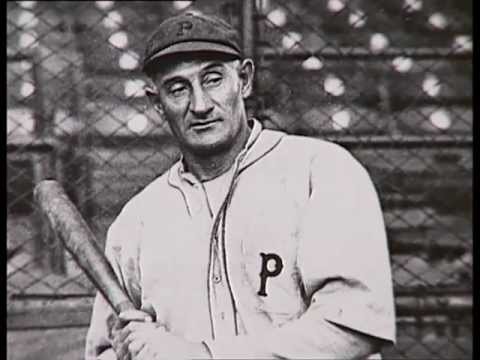
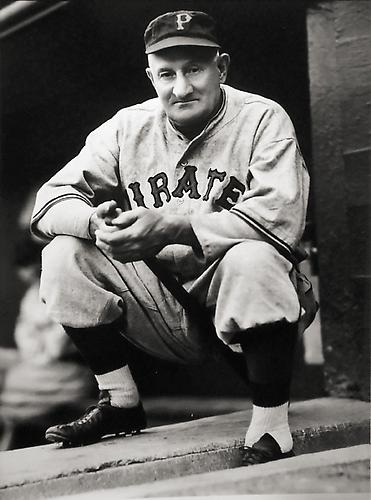
"The Flying Dutchman" was considered the game's greatest player, possibly its greatest ever, until Cobb took that crown while Wagner was still playing. His lifetime batting average was .329, his OPS+ 151, his career RBIs 1,732 (a record at the time), and he collected 3,430 hits (also a record until surpassed by Cobb). It's now been over 100 years after his last game, and he is still regarded as the greatest shortstop who ever lived.

He was a great defensive player, too, appearing in 1,887 games at shortstop, 374 in the outfield, 248 at 1st base, 210 at 3rd base, 57 at 2nd base, and even twice on the mound, pitching 8 1/3rd innings, all scoreless.

But would any scout even look at him today? With that nose, those ears, that physique, and those bowed legs, he probably looked less like a great athlete than any MLB player in recent times, even Yogi Berra.

I can't imagine any team today putting him at shortstop. And on the properly manicured fields of today, instead of the pebble-strewn dirt patches of the early 20th Century, he would have really had to adjust. And can you imagine Honus adjusting to things like the split-fingered fastball and cut fastballs? Cobb, maybe; Wagner, I doubt it.

8. Would Have Been Great: Babe Ruth

As I alluded to in the entry about Cobb, most of today's ballparks don't have 450-foot expanses in center field and the power alleys. Today, the longest distances in any big-league park are Fenway Park in Boston, the only surviving AL park from that era, and Comerica Park in Detroit, each of which has a 420-foot marker.

In the Great Bambino's day, while there were several parks with very short right-field fences, including the then-new original Yankee Stadium, there were also a lot whose fences went way out, including said Yankee Stadium, whose center field was 490 feet when the Babe arrived and 461 feet when he retired. "The House That Ruth Built" wasn't entirely built for Ruth.

This is why baseball historian Bill Jenkinson titled his 2007 book The Year Babe Ruth Hit 104 Home Runs: He took the 8 ballparks the American League teams played in during the Babe's seasons, and compared their dimensions with the parks those same franchises play in today (including adjusting for Fenway's dimensions, which have been shortened), found records of the Babe's homers (which direction, and at what point they seemed to have landed), and decided that the Babe's 59 home runs in 1921, in those same 8 teams' parks of today, would have been 104 home runs.

If you don't believe me, or Jenkinson, think of the current Yankee Stadium, Comerica Park, Cleveland's Jacobs Field, Chicago's U.S. Cellular Field, Baltimore's Camden Yards, the Oakland Coliseum, and Minnesota's Target Field; and compare those to the old Yankee Stadium, the Polo Grounds where the Yanks played until The Stadium opened in 1923 (short poles but faraway alleys and center), Tiger Stadium (then known as Navin Field), Cleveland Municipal Stadium (the fence would later be brought in from 470 to center to 410), Chicago's Comiskey Park, the Orioles then playing as the St. Louis Browns in Sportsman's Park (a short right field but 426 to center), the A's then playing in Philadelphia's Shibe Park which was 447 to center, and the Twins, then the Washington Senators, playing at Griffith Stadium were every fence except the right-field corner was ridiculously far away. Even Fenway brought center field in quite a bit, 505 to 420.

Those are the parks in which the Sultan of Swat hit 708 home runs (with the last 6 coming in the NL in '35). How many would he have hit in today's parks? If we use the same ratio, 104/59 = 1.763, we're talking about 1,253 home runs. Ain't no way Bryce Harper and Mike Trout gonna match that. They're not even going to approach 714, to say nothing of Hank Aaron's 755 and Barry Bonds' 762.

7. Would Have Had Trouble: Hack Wilson
Lewis Robert Wilson certainly took some "hacks": He was one of the scariest hitters of the early Lively Ball Era. In 1929, he helped the Chicago Cubs win the National League Pennant with 39 home runs and a whopping 159 RBIs. He was just getting warmed up: In 1930, he hit 56 homers, an NL record that stood until 1998; and had 191 RBIs, a major league record that still stands.

But he played his last major league game just 4 years later, at age 34. Why? Two reasons. His heavy drinking affected his health, and not just by jacking his weight up. At 5-foot-6 and 190 pounds, someone said, "He was shaped like a beer barrel, and not unfamiliar with its contents."

Maybe his drinking could have been properly treated today. And maybe he would have been a designated hitter, instead of being perhaps the most ill-suited center fielder ever. And maybe he would have been put in the gym, to get himself into shape.

But maybe that wouldn't have worked. Because the other reason he was out of MLB just 4 years after his amazing season was that he couldn't get along with his managers. That's plural: It wasn't just a personality conflict with one guy. Managers, and their superiors in the front office, wouldn't have put up with a Hack Wilson. A Ruth, or a Cobb, because they produced and didn't embarrass the ballclub, sure; a Wilson, no.

6. Would Have Been Great: Josh Gibson
Gibson, perhaps more than any other player in baseball history, is a figure of legend. The fact that he was called "the Black Babe Ruth," when Ruth is such a figure of legend, shows that. So does the fact that Negro League fans preferred to call Ruth "the White Josh Gibson."

A brain tumor killed Gibson at age 35, just 3 months before Jackie Robinson reintegrated the major leagues. He never got to play at the highest level. Negro League record-keeping was woefully inadequate, so stories of him hitting over 800 career home runs, including an alleged 84 of them in a season, are mere speculation, and have to take the quality of the pitchers he faced into account -- and, perhaps, barnstorming tours that meant that he played more than 162 games in a season.

We don't even have film of him, so we can't look at his swing and "break down his mechanics," to see what kind of hitter he really was. We can look at Barry Bonds' forearms, say that Hank Aaron was a great hitter because he had quick wrists, marvel at the biceps on Mickey Mantle, or marvel at how Ted Williams shifted his hips, and say, "That's the big reason he was such a great hitter." With Josh Gibson, we can't be sure.

But we do know some things about him. At his peak, he was 6-foot-1 and 210 pounds. He never fell out of shape until his fatal illness overtook him. He could hit the ball anywhere. Well, almost anywhere: Someone looked in the black newspapers of the 1930s and '40s, and found accounts of every game he ever played at Yankee Stadium. While it was recorded that he hit some long home runs there, the papers didn't say that he hit a fair ball all the way out, something no player did in a major league game. If he had done it, those papers would have been the likeliest to say so at the time.

But Gibson would have feasted on the ballparks built in the 1990s and 2000s. Most likely, about midway through his career, he would have been moved from catcher to another position, as happened to Yogi Berra (left field) and Johnny Bench (1st base, then 3rd base), or been made a designated hitter (if he were in the American League), and that probably would have extended his career. With the major leagues open to him, and racial prejudice severely reduced (though not entirely eliminated), he could have concentrated on baseball, and that would have been bad news for pitchers in my lifetime.

It's worth asking: What kind of player would Jackie Robinson have been today? I think he would have been one of the top running backs. You see, baseball was not his best sport. He was all-conference at UCLA in 1939 and '40. If baseball had already been integrated -- if it didn't need a "Jackie Robinson" -- he might not have been interested.

Likewise, Willie Mays has said that he was a great high school quarterback. Roger Maris also excelled at football. And Bob Gibson's best sport was basketball. Sandy Koufax has said that basketball was his best sport as well. It's possible that neither Jackie, nor Willie, nor Roger, nor Gibby nor Sandy would even have played professional baseball, given today's choices.

5. Would Have Had Trouble: Mel Ott
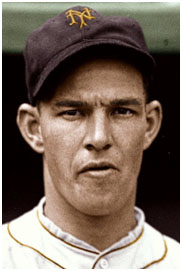
From 1926 to 1947, this guy hit 511 home runs, the 1st National League player to break the 500 barrier. But he hit 323 of them at home. That's 63 percent. It was mostly because he was a lefthanded hitter pulling the ball down the right field line at the Polo Grounds, where the foul pole was just 257 feet from home plate.

Who's kidding who? He would have hit 300 home runs in the modern era, maybe 400. But 500? Not a chance. He would have been less a Jim Thome, more an Adam Dunn.

Chuck Klein, who benefited from the short right field fence at Baker Bowl in Philadelphia, falls into the same category.

4. Would Have Been Great: Joe DiMaggio
When people asked "the Yankee Clipper" what the highlight of his career was, he usually said, "Just putting on the Yankee uniform." When they asked him if there was anything he didn't like about playing for the Yankees, he cited being a righthanded hitter having to hit into the "Death Valley" of left and center field of the pre-renovation original Yankee Stadium.

Instead of center field being 461 feet away, as it was until 1973, it became 417 in 1976, and 410 in 1988, and it remains that with the opening of the current Stadium in 2009. Left-center was 457 until 1973, became 430 in 1976, and has been 399 since 1988. Straightaway left went from 402 to 387 to 379.

And that's not the only change. Pretty much every American League team that was in existence from 1936 to 1951, except for Detroit, now has a ballpark that is easier to hit in. And he wouldn't have had to serve in World War II. And his heel injury would have been better-treated as well, so he wouldn't have missed half a season at age 33, and wouldn't have had to retire at 37.

With the closer fences, and having maybe 6 more years to play, Joltin' Joe's 361 career home runs would probably have had at least 100 more had he played the bulk of his career in the 2010s instead of the 1940s. It's not hard to imagine him reaching the 500 Home Run Club.

3. Would Have Had Trouble: Ted Williams
So, if Joe D would have had shorter fences, no war to fight in, better attention to his injury, and 6 more years to play in, surely, all that would also have benefited "the Splendid Splinter" as well, right?

He played until he was 42, so he wasn't shortchanged by injuries. Certainly, he wouldn't have missed 3 years due to World War II, and, for all intents and purposes, 2 years due to the Korean War. Having 5 more years, and the shorter fences, would have turned his 521 home runs into, if not quite a threat to have more home runs than Ruth's 714, Aaron's 755 or even Bonds' 762, then maybe around Willie Mays' 660.

But there's something else to consider. Nobody knew more about hitting than Ted Williams. But he didn't know about pitching. His stint as manager of the Washington Senators/Texas Rangers franchise from 1969 to 1972 showed that he didn't help the pitchers under his employ nearly as much as the hitters.

In addition, he would have faced pitches he never saw before, and also specialized relief pitching. Granted, that would have hurt most of these guys, possibly taking the shorter-fence advantage away. But the very scientific approach he had to hitting, and his oft-stated (publicly, mind you) hatred of pitchers would have made them more motivated.

Think about this: Suppose Ted Williams had played in the 1990s and 2000s, but not on the same team as Pedro Martinez. Ted is not known to have been targeted by a headhunting pitcher, ever. Nor is Ted known to have ever threatened a pitcher who brushed him back. But the dueling egos of Ted and Pedro the Punk could have produced a confrontation. Given Ted's size -- he was a skinny kid when he batted .406 in 1941, but his wartime service filled him out and made him a solid mass of muscle -- he could easily have kicked Pedro's scrawny ass.

But Ted's temper might have gotten the better of him, perhaps more than any of these guys except maybe for Cobb. Can you imagine Ted on social media? No, he's one great player who was far better off in his own era than in ours. Maybe he could have adjusted, and still won batting titles. But .406? No.

2. Would Have Been Great: Mickey Mantle
Mantle benefited from being the 1st superstar of the television era. No, Willie Mays wasn't. He appeared in just 2 World Series from 1951 to 1961, while Mantle was in it almost every year. But if any 1950s and/or '60s player would have benefited from being out of that era of toxic masculinity, and into the era of the Betty Ford Center and modern sports medicine, it's "the Mick."

Most likely, his father and the other men in his family wouldn't have been working in the mines until all that ore dust wrecked their lungs and killed them early, so he wouldn't have had that fear of early death hanging over his head.

So he could have just let 'er rip on the field. And that drain wouldn't have been left open, leading to his first and worst knee injury. And, with the doctors being able to take better care of his legs, and the modern mindset of baserunning, Mickey would have been a more dynamic player, and that's before you consider the shorter fences.

Sure, Mays might still have been a better player. The thought of "the Say Hey Kid" on the artificial basepaths of the 1970s and '80s NL is scary. But Mickey, in the modern game? Actually, he might have been even better in the run-happy 1980s than in the homer-happy 2010s: He still would have hit a lot of home runs, but he would have stolen more bases, too, and thus helped his team (whether it was the Yankees or someone else) win more games.

And what about Hank Aaron? He might have had even more than 755 home runs in modern ballparks. Dick Allen, with racial tensions reduced, ballparks more suited to his swing, and greater sensitivity among fans, might have cracked the 500-homer barrier, instead of finishing with 351.

1. Would Have Had Trouble: Tony Conigliaro
I'm going to catch hell if this post reaches the eyes of New Englanders, probably more for this entry than the one I did on Ted Williams. At first glance, it doesn't make sense to suggest that Tony C would have been a lesser player in the modern game. Had he been wearing a modern batting helmet in 1967, the pitch that nearly destroyed his eye would have hit an earflap instead. He would still have been hurt, but he would have come back sooner, with, perhaps, no permanent damage.

But there were things the public didn't know about about Tony in 1967, when he became a martyr to the Red Sox cause. He was more of a carouser than was known, and seemed to care about being a star as much as he did about being a ballplayer. He had a daughter that no one knew about until after his death. Indeed, he was closer to being Boston's Joe Pepitone than its Mantle.

In her book Confessions of a She-Fan, Yankee Fan Jane Heller told of how she and a friend of hers met Conigliaro after hours, and said friend suggested that she was the only fan who ever dated both Conigliaro and the pitcher who beaned him, Jack Hamilton.

In his book Tales from the Impossible Dream Red Sox, shortstop Rico Petrocelli, said, "While he dated actresses and Playboy bunnies, he wasn't a playboy like Bo Belinsky." (Belinsky was a Los Angeles Angels pitcher of the early 1960s who was wild in more ways than one. He pitched a no-hitter in 1962, and the increased attention that brought him was the worst thing that could have happened to him.) But Petro also cites the recording contract Tony had, which could have become a distraction for him as much as it was for his contemporary, Tiger pitcher and Las Vegas lounge organist Denny McLain.

With his good looks, his local-boy-makes-good story, and his hitting power, Tony C would have been irresistible to baseball's marketing boys. Had he come along 30 years later, in 1994, he, rather than Nomar Garciaparra, would have been the Red Sox public-eye counterweight to the Yankees' Derek Jeter. The distractions might have been too much, and reduced his effectiveness, the way it sometimes did for Alex Rodriguez.

In addition, he had already had the 1964 season cut short by injury. Maybe he would have remained injury-free after 1967, but maybe not. As Petrocelli said in his book, "Tony was not only a chick magnet, he was a magnet for stray pitches. Five times he had bones broken by pitches, including the one that broke his shoulder blade five months earlier in spring training." That does not bode well for a long, stat-heavy career.

Monday, June 12, 2017

Judge Rules

So far, this season, the Yankees have scored at least 14 runs in a game 3 times. All 3 were against the Baltimore Orioles, including the last 2 games.

8-2. 16-3. 14-3. Those are the scores from the Yanks-O's series at Yankee Stadium this weekend. These are almost football scores.

(If you're thinking "football," as in soccer, this is about how those scores would apply in that sport: 3-0, 8-1, 7-1.)

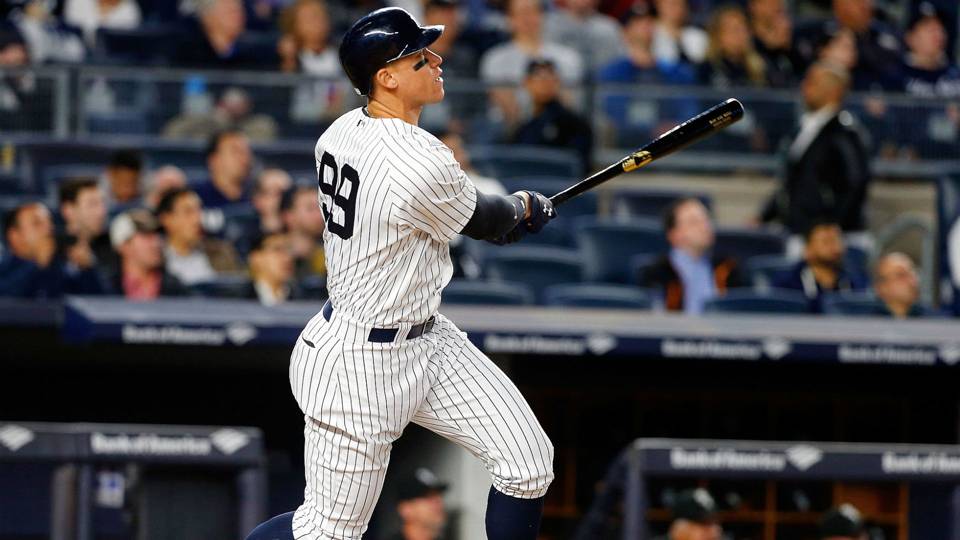
In yesterday's finale, the Yankees scored 5 runs in the 1st inning, including Gary Sanchez' 10 home run of the season, and never looked back. Starlin Castro homered in the 6th inning, his 12th, and his 3rd straight game with a homer. Aaron Judge also homered in that inning, and again in the 7th.

Not wanting to start Masahiro Tanaka in this game -- to give him an extra day of rest? to stop the home crowd from booing him if he had another bad game? -- Joe Girardi played musical chairs with the pitching. When you're hitting the tar out of the ball against an opponent, you can do that, and get away with it.

Chad Green pitched the 1st 2 innings, Chasen Shreve the 3rd, Jonathan Holder the 4th and most of the 5th, Adam Warren the rest and then into the 7th, and rookie Domingo German the last 2 2/3rds innings. Neither Green nor Shreve pitched great, but the others did well. Since the starting pitcher didn't go 5 innings, it was up to the official scorer to decide which reliever would be credited with the win, and he chose Warren.

None of that is what people are talking about today, though. They're talking about the home run that Judge hit in the 6th, off Logan Verett. It went 496 feet (originally reported as 495, but now officially entered as 496) to left-center, off the retired-numbered wall.

It broke the record for the longest home run at the new Yankee Stadium, 477 feet, set by Raúl Ibañez, not yet a Yankee but then with the Philadelphia Phillies, on May 22, 2009, off Chien-Ming Wang. The longest by a Yankee had been 460 feet, by Alex Rodriguez on June 10, 2011, off Fausto Carmona (who now uses the name Roberto Hernandez) of the Cleveland Indians.

Dave Kingman supposedly hit a 515-footer at Shea Stadium on August 14, 1981. If that's true, then Judge hit the longest home run in New York City in 36 years. And it was the longest home run at any Yankee Stadium since August 12, 1964, when Mickey Mantle cranked one 502 feet off Ray Herbert of the Chicago White Sox.

That's the longest ever measured at the old Stadium, although it's possible that Babe Ruth may have hit one longer, before measurements tended to be taken. Josh Gibson hit some blasts there in Negro League games, although the myth of him hitting one all the way out appears to be just that, a myth, as the black newspapers never mentioned him doing it at the time. The balls Mantle hit off the facade in 1956 and 1963 did not actually go out of the Stadium, and we'll never know how far they would have gone.

Anyway, Yankees 14, Orioles 3. WP: Warren (2-1). No save. LP: Kevin Gausman (3-5).

Judge is batting .344. He has 21 home runs and 47 RBIs. At this pace, he will win the Triple Crown, the American League Rookie of the Year, and the AL Most Valuable Player. He is also leading the AL in runs scored, walks and total bases. His OPS+ is 202. By definition, the average player has an OPS+ of 100. Therefore, Judge is producing runs at a rate 102 percent better than the average player. To put that in perspective: Babe Ruth is the career leader for OPS+. His was 206.

Aaron Judge is, for the moment, actually comparable to Babe Ruth, with no exaggeration, and no irony.

As an old friend would say, "Holy cow, that's unbelievable."

*

So here we are, 10 weeks into the 26-week Major League Baseball regular season, and what do we have?

* The Yankees are 37-23. That's a winning percentage of .617, a pace to finish 100-62.

* They lead the AL Eastern Division by 4 games over the Boston Red Sox, 6 over the Tampa Bay Rays, 6 1/2 over the downsliding Orioles, and 7 1/2 over the Toronto Blue Jays.

* In the all-important loss column, they lead the Sox by 5, the O's by 7, and the Rays and Jays by 9 each. (Again, this is due to the schedule not having had all the teams play the same amount of games: The Yankees have a game in hand on the O's, 2 on the Sox, 3 on the Jays, and a whopping 6, an entire week's worth, on the Rays.)

* The Yankees' Magic Number to eliminate the Rays is down to 91, 93 for the Jays, 96 for the O's, and 97 for the Sox: Any number of Yankee wins and Sox losses the rest of the way, adding up to 97, and the Yankees win the AL East.

* Despite all of this, the Yankees do not have the best record in the AL. The Houston Astros are on fire, leading the AL Western Division by 12 games, and we're not even halfway through June yet. The Yankees trail them for the 1st seed in the AL Playoffs by 5 1/2 games. However, they lead the AL Central-leading Twins by 4 1/2 for the 2nd seed. The Wild Card teams would be the Sox and the Cleveland Indians.

* In the National League, the seeds would be, in this order: The Colorado Rockies, the Washington Nationals, the Milwaukee Brewers, the Los Angeles Dodgers and the Arizona Diamondbacks.

* The Mets? They're 28-33, 9 1/2 games out of 1st place in the NL East, 9 games behind the D-backs for the 2nd NL Wild Card. You know, about where most "experts" thought the Yankees would be this season. Also, while the Yankees are getting an average of 38,536 fans per game, the Mets are getting 30,334. Allegedly. Officially.

That whole "We're gonna take back New York" thing didn't exactly work out for them, did it?

*

The homestand done, the Yankees have flown out to the Pacific Coast. Tonight, they begin a 3-game series against the Los Angeles Angels of Anaheim. Yeah, they're still using that stupid name. Tonight, Tanaka starts against Alex Meyer. On Tuesday night, an all-initials, no-periods affair, as CC Sabathia starts against JC Ramirez. On Wednesday night, Michael Pineda against Matt Shoemaker.

Tuesday, April 1, 2014

Pittsburgh's All-Time Baseball Team

Like the little girl with the curl in the middle of her forehead, when the Pittsburgh Pirates have been good, they've been very, very good; but when they've been bad, they've been horrid.

Finally, last year, after 21 years without a winning season, never mind a Playoff berth, they saw the far side of Game 162 again. Whether this is the beginning of another very, very good era of Bucco Baseball remains to be seen, but it's a good sign, as Pittsburgh is a great sports city, and Western Pennsylvania a great sports region.

5. Pittsburgh's All-Time Baseball Team

All of these players are from Pennsylvania, west of the Susquehanna River. Players from northern West Virginia were eligible, but I decided only one would make the team, and then only as an Honorable Mention -- although Bill Mazeroski, the legendary Pirates 2nd baseman, was born in Wheeling but grew up in southeastern Ohio, and I put him on the Cleveland Indians' regional all-time team.

1B James "Ripper" Collins of Altoona. A rookie with the St. Louis Cardinals when they won the 1931 World Series, he led the National League in games, home runs, total bases and slugging in their 1934 World Championship "Gashouse Gang" season. He appeared in 3 All-Star Games and 3 World Series, also going to the 1938 edition with the Chicago Cubs. He only played 8 full seasons (debuting at 27 and only playing one after 34), but was a .296 lifetime hitter, OPS+ 126.

2B Jacob Nelson "Nellie" Fox of St. Thomas. After the 1949 season, when he'd played a grand total of 98 games, the Philadelphia Athletics traded him to the Chicago White Sox for Joe Tipton. (Who?) A backup catcher and a .236 lifetime hitter, that's who. We'll never know if Nellie could have helped the A's enough to keep them in Philly. We do know he gave the South Siders 14 good seasons, 12 of them All-Star seasons, before wrapping it up with the Houston Astros.

He led the American League in hits 4 times. Had 6 .300 seasons and just missed 2 others. He struck out just 216 times in 19 big-league seasons. He won 3 of the 1st 4 Gold Gloves awarded to AL 2nd basemen. With Chico Carrasquel, he formed a very good double-play combination; then, with Luis Aparicio, he formed one of the best ever, now immortalized in a pair of statues at U.S. Cellular Field.
In 1959, he hit only 2 home runs, but batted .306, drove in 70, collected 191 hits including 34 doubles, and fielded brilliantly, helping the White Sox win their only Pennant between 1919 and 2005, and winning the AL's Most Valuable Player award.

He died in 1975 of skin cancer, when he was just short of his 48th birthday, and did not reach the Hall of Fame until well after his death, but is now there. The White Sox have retired his Number 2. Writer, radio host and humorist Jean Shepherd, best known for writing the book that became the film A Christmas Story, which he narrated, was a die-hard White Sox fan, and narrated the team's official history videotape in 1987, saying that Fox was his favorite ballplayer of all time.

SS Honus Wagner of Carnegie. He debuted in the opening months of the William McKinley Administation (July 17, 1897), played his last game during World War I (September 17, 1917), and died in the infancy of rock and roll (December 6, 1955), but he is still the greatest shortstop who ever lived (ahead of Derek Jeter), and for decades he was a legitimate contender for the title of Greatest Ballplayer Who Ever Lived.

John Peter Wagner was called Hans, the German version of John, and this became "Honus." Despite being bowlegged, he had enough speed that he was called the Flying Dutchman. ("Dutch" meaning "Deutsch," meaning German -- not as in "from the Netherlands." The word "Dutch" originally meant all peoples speaking a Germanic language, as Dutch is.) He debuted with the Louisville Colonels, but they were among the teams contracted by the National League in the 1899-1900 off-season, and their players went to the Pirates -- fortunately for Wagner, his hometown team.

And he was off to the races. He won 8 batting titles, 1st among NLers and 2nd overall to Ty Cobb, peaking at .381 in 1900. Twice, he led the NL in hits. This was the Dead Ball Era, and the most home runs he ever hit in a season was 10, but 7 times he led in doubles, twice reaching 45; 3 times he led in triples, topping out at 22. He had 9 100+ RBI seasons, topping out at 126, and 5 times led the NL. And 5 times he led the NL in stolen bases, topping out at 61. He was also regarded, by the standards of the time, as a great fielder, and appeared at every position except catcher -- even making 2 pitching appearances, tossing 8 1/3 innings without allowing a run.

His lifetime batting average was .328, his OPS+ 151. He collected 3,420 hits, a record until surpassed by Cobb (still 7th all-time, and 2nd to Hank Aaron among righthanders), 643 of them doubles (9th all-time), 252 of them triples (3rd all-time to Sam Crawford and Cobb), 101 of them home runs.  He helped the Pirates win Pennants in 1901, '02 and '03, and in 1909 led them to their 1st World Series win, beating Cobb and the Tigers in 7 games, the first Series to go the distance.

He was a charter inductee into the Hall of Fame in 1936. In 1999, 82 years after he played his last game, he was voted onto the All-Century Team, and The Sporting News named him Number 13 on their list of the 100 Greatest Baseball Players. A coach with the Pirates after he retired, he stayed long enough for uniform numbers to be worn, and they retired his Number 33.

He lived long enough to see the Pirates dedicate a statue of him outside Forbes Field in 1954; it was moved to Three Rivers Stadium in 1970 and PNC Park in 2001. His brother Albert "Butts" Wagner also played in the majors, but only for 74 games in 1898.

If there's one thing most fans know about Honus Wagner, it's that he appeared on the most valuable baseball card ever printed. Before chewing gum companies produced cards, tobacco companies did, and in 1909, the American Tobacco Company produced what became known as the T206 series. Wagner asked them to stop production of the card, because he didn't want children buying cigarettes in order to get it. According to The Book of Lists, published in 1977, only 96 copies of the card were ever made, and 30 were then known to exist. Even then, the Wagner T206 was the most valuable card ever produced, and in 2011, one sold at auction for $2.8 million.

Honorable Mention to Bobby Wallace of Pittsburgh. He reached the majors in 1894 (in the 2nd Grover Cleveland Administration) and played until 1918. How long ago was that? So long ago that he played for a Cleveland team in the National League (the Spiders) and a St. Louis team in the American League (the Browns).

He was a great fielder by the standards of his time, and hit .300 and drove in 100 runs twice each. He collected 2,309, hits including 391 doubles and 143 triples. He wasn't a bad pitcher, either. In fact, of all players in the Hall of Fame who played at least half their careers in the 20th Century, he made more mound appearances than anybody not usually thought of as a pitcher except Babe Ruth, 57.

He went 12-14 for the 1895 Spiders (with Cy Young also in the rotation, and they beat the original Baltimore Orioles in a postseason series for the Temple Cup – more an equivalent to English soccer's FA Cup than any "world championship") and 10-7 for the 1896 edition (which played the Orioles in the Temple Cup again, but lost). He's in the Hall of Fame.

Honorable Mention to Dick Groat of Swissvale. Perhaps the 1st great basketball player at Duke University, he chose baseball instead, and was 4 times an All-Star for his hometown Pirates. In 1960, he led the NL in batting with a .325 average, won the MVP, and took the Pirates to the World Championship. Traded to the Cardinals in 1963, he nearly won another MVP, finishing 2nd to Sandy Koufax as he led the NL with 43 doubles, before helping them win the World Series in 1964 – both his rings coming against the Yankees.

He had 2,138 hits in just 14 seasons, missing some time due to Korean War service, and retired at 36. Had he not had to serve in the Army, he might have put up another good season or two, and we’d be thinking about him for the Hall of Fame.

3B Dick Allen of Wampum. Don't call him "Richie," although most references to the 1964 Phillies still list him as such. He was named NL Rookie of the Year that season, leading the League in runs, triples and total bases, batting .318 with 29 homers and 91 RBIs. A 7-time All-Star, he was as good a hitter as the game has ever seen from the time he was 22 until he was 32, 1964 to 1974.

Chased out of Philadelphia in 1969, he got to the Chicago White Sox in 1972 (and playing mostly 1st base from 1969 onward), and that year won the AL MVP, leading in home runs with 37, RBI with 113, OBP with .420, slugging with .603 and OPS with 1.023, batting .308. Lots of people in Chicago, noting that the ChiSox had been struggling financially and had come closing to moving once already, say that the crowds coming to see Allen's drives (he also led the AL in homers in 1974) saved the franchise from being moved.

He had a lifetime batting average .292, on-base percentage .378, slugging percentage a hefty .534, OPS .912, OPS+ 156. This guy should have gone to the Hall of Fame.

So what happened? The Phils went on a 10-game losing streak and just missed the Pennant in 1964, although Allen hit like hell that month, so you can't blame him. The next year, he got into a fight with teammate Frank Thomas (not to be confused with the later White Sox slugger), which was apparently racially motivated. Management took the side of the better-hitting Allen, and traded Thomas.

But Philly's white fans didn't forgive him for that, and booed him terribly until he finally got his wish to be traded. He began to be paranoid about racial matters, drank heavily, gambled a lot on horse racing, and frequently showed up late for games. He ended up quitting on the White Sox in 1974, and managed to get back with the Phillies, whose fans, no longer in the black neighborhood that Connie Mack Stadium was in, cheered him vociferously at Veterans Stadium.

But despite reaching the postseason in '76, his demons remained, and a year later he was out of baseball. He hit "only" 351 home runs, despite playing his entire career in pitchers' parks (Connie Mack Stadium, a year at Busch Stadium in St. Louis, a year at Dodger Stadium in Los Angeles, Comiskey Park, the Vet, and his last year at the Oakland Coliseum) and having his last productive season at age 34.

Allen took his passion for racehorses in a positive direction, training them, and returned to the Phillies in a front-office capacity, and remains with them today. Some people believe he should be in the Hall. Many have squelched the notion that he was underachieving and divisive, including Hall-of-Fame teammates Goose Gossage and Mike Schmidt, and former managers Red Schoendienst, Chuck Tanner and, shortly before his death, Gene Mauch.

Both the Philadelphia Baseball Wall of Fame (at Citizens Bank Park) and the Chicagoland Sports Hall of Fame (at Hawthorne Race Course -- appropriate, at least in his case) have inducted him.

Honorable Mention to Eddie Miller of Pittsburgh. It's hard to tell why this Boston Brave and Cincinnati Red appeared in 6 All-Star Games. Either he must have been a good fielder, or in the years between Pie Traynor and Eddie Matthews, the NL must’ve been hard-up for good 3rd basemen, so they took this guy with an 80 career OPS+ and a peak batting average of .276. Still, he led the NL with 38 doubles in 1947.

LF Stan Musial of Donora. Once, at a Hall of Fame induction weekend, Stan, the greatest National League hitter of his generation, was talking with his American League counterpart, Ted Williams. Afterwards, Ted’s son, John Henry Williams, asked his father, who was known for wanting people to call him the greatest hitter who ever lived, "Dad, do you think Musial was as good a hitter as you were?" Ted said, "Yes, I do." If Ted said it, then, indeed, Stan was The Man.

In his 1st 4 full seasons with the St. Louis Cardinals – minus 1941, when he had a late-season callup and the Cards just missed, and 1945 when he was in the Navy for World War II – they won the World Series in 1942, the Pennant in 1943, the World Series in 1944, and the World Series in 1946. They never won another Pennant with him, but that didn't stop him. He was the NL MVP in 1943, 1946 and 1948, and finished 2nd in the voting in '49, '50, '51 and '57 – winning Sports Illustrated's Sportsman of the Year award that year.

His lifetime batting average was .331, and when someone asked him after he retired why he was so happy all the time, he said, "If you had a .331 lifetime batting average, you'd be happy, too!" His OPS+ was a whopping 159. He led the league in batting 6 times (topping out at .376 in 1948), hits 6 times, runs 5 times, doubles 8 times, triples 5 times, and RBIs twice with 10 100-RBI seasons.

He hit 725 doubles (2nd all-time to Tris Speaker) 177 triples, and 475 home runs, not counting what we would now call a walkoff homer in the 1955 All-Star Game. Speaking of which, because of the 2 ASGs played per season from 1958 to 1962, he played in 24, a record that would be tied by Willie Mays and Hank Aaron, but not broken. At the 1962 ASG in Washington, when he was 41, the 45-year-old President John F. Kennedy told him, "They said I was too young to be President and you were too old to play baseball. I guess we showed them."

He was once the NL's all-time hits leader with 3,630 – 1,815 at home, 1,815 on the road. You cannot make this stuff up. He was once the all-time leader in both extra-base hits and total bases, until surpassed by Aaron. He is a member of the Hall of Fame and the All-Century Team. The TSN100 ranked him Number 10.

His Number 6 was the 1st uniform number retired in St. Louis sports, and a statue of him dedicated outside Busch Stadium, inscribed with a quote attributed to former Commissioner Ford Frick: "Here stands baseball's perfect warrior. Here stands baseball's perfect knight." It has been moved to the new Busch Stadium.

Honorable Mention to Jesse Burkett of Wheeling, West Virginia. Only 5-foot-8 and 155 pounds, he nonetheless had a lifetime batting average of .338, an OPS+ of 140, and 2,850 hits. He won 3 batting titles, in 1895 (.405) and 1896 (.410) with the NL's Cleveland Spiders, and in 1901 (.376) with the Cardinals, before moving on to the St. Louis Browns of the AL. (Cleveland in the NL? St. Louis in the AL? As I said earlier, it was a long time ago.) He's the only West Virginia product in the Hall of Fame. (Bill Mazeroski and George Brett were born there, but grew up elsewhere.)

Honorable Mention to Hank Sauer of Pittsburgh. In 1952, he won the NL's MVP despite playing for a Cub team that finished 5th, as he led the League in homers with 37 and RBIs with 121. He was so popular with Cub fans that he became known as the Mayor of Wrigley Field, before Ernie Banks arrived and well before Harry Caray did. He had a career OPS+ of 123, and hit 288 home runs.

Honorable Mention to John Preston "Pete" Hill of Pittsburgh. Born in Culpeper County, Virginia, he grew up in the Steel City, and played for several all-black teams from 1899 to 1925, playing the longest with the Chicago American Giants, whose owner, manager and ace pitcher Rube Foster called him "my field general" and "my second manager."

He played against what could hardly be called entirely big-league caliber competition, and with records woefully incomplete, but Cumberland "Cum" Posey, owner of the Homestead Grays, said that Hill was "the most consistent hitter of his time." When in 2006 the Hall of Fame had a special committee consider Negro League players that they might have missed, Hill was one of those elected.

CF Lewis "Hack" Wilson of Ellwood City. He might be the most defensively lacking center fielder on any of these teams, but what can you do when Ken Griffey Jr. doesn't qualify? (Explanation for that below.) Besides, as his nickname might suggest, Hack might have been a more powerful hitter than Griffey. He was just 5-foot-6, and at 190 pounds it was suggested that he was "shaped like a beer barrel, and not unfamiliar with its contents." Despite playing all but his last season in the Prohibition era, few athletes were ever more identified with drunkenness.

And, due to his size, he wasn't the most mobile of outfielders. Legend has it that he was standing in the outfield at Baker Bowl in Philadelphia during batting practice before a Cubs-Phillies game, and he had his head down so he didn't have to aim his heavy, bloodshot eyes at the hot sun. But a teammate hit a ball off the park's close, tall right field wall. The sound of horsehide on tin shook him out of his stupor, and he grabbed the ball and threw a perfect strike back to the infield, and got a standing ovation – shades of the Dick Stuart hot-dog wrapper story.

But, when sober, boy, could he hit. In just 12 seasons, he hit 244 homers, with a batting average of .307 and an OPS+ of 144. He led the NL in homers 4 times, including 56 in 1930, a record that stood until 1998 (or 2006, if you think Ryan Howard is clean, as he so far appears to be). That same year, a year after driving in 159 runs, Hack had 191 RBIs, an all-time single-season record.

But the drinking took its toll, and he had just 1 season of more than 61 RBIs after that. He did help the New York Giants win the Pennant in 1924 and the Cubs do it in 1929. But, frustrated by his drinking, the Cubs traded him in 1932, and he did not play for that Pennant winner.

Drinking killed him in 1948, age 48. A sad story. But he is in the Hall of Fame, and is honored in the Cubs' Walk of Fame outside Wrigley Field, although he did not wear a number that could be retired for him until after he left the Cubs (Number 4).

RF Ken Griffey of Donora. While his son, George Kenneth Griffey Jr., was also born in Donora, he grew up in Cincinnati, and attended the prestigious Archbishop Moeller High School, as did MLB players Buddy Bell (son of former Reds star Gus Bell), Buddy's son David Bell, and Barry Larkin; and former Chicago Bear turned ESPN 1000 host Tom Waddle. Therefore, Junior qualifies for the Reds' regional team, not the Pirates'.

Ken Sr. was a pretty good player, too. In 19 seasons, he batted .296, with an OPS+ of 118, 2,143 hits including 364 doubles. He wasn't a big slugger, as he only topped 14 homers and 74 RBIs once each. But he was a 3-time All-Star, and helped the Reds win the 1975 and '76 World Series and the '79 NL West title, nearly helped get the Yankees to the 1985 AL East title, and finished his career in 1990 and '91 with his son on the Seattle Mariners.

UT John Montgomery Ward of Bellefonte. This pioneer of the game could play just about anywhere, including pitching. "Monte" had 3 .300+ seasons, and while stolen-base records were not kept from his 1878 debut (at age 18!) until 1886, he is credited with 540, including 111 in 1887. (The rules for what constituted a "stolen base," like a lot of rules, were a little different then.) He won NL Pennants with the Providence Grays in 1879, and the New York Giants in 1888 and 1889.

A practicing attorney in the off-season, he led the Players' League revolt of 1890, and almost freed the players' from the yoke of the owners' reserve clause. If he had just held out a little longer... But he did play long enough to get into the Hall of Fame.

C Josh Gibson of Pittsburgh. He never played in white "organized ball," so we don't have anything close to accurate numbers on him. If there's even any film of him playing that survives, I'm not aware of it. So all we have to go on are anecdotes. Indeed, no player in the history of the game may be more shrouded in legend, simply because, unlike Satchel Paige, whom we at least got to see in his later years, the evidence of Gibson's performance is sketchy at best.

I don't care: They call this man "the Black Babe Ruth," and that's good enough for me. Indeed, some Negro Leaguers called Ruth "the White Josh Gibson," which shows what kind of power Josh must have had.

He was born in Georgia, but grew up in Pittsburgh. He played most of his career for the Pittsburgh Crawfords and the Homestead Grays, who divided their home games between Pittsburgh -- Homestead is nearby -- and Washington.

Two legends about him usually come to mind. Once, in Pittsburgh, he hit a ball so far that no one saw it come down; the next day, after riding the bus to Philadelphia, with the same umpire, a ball came out of the sky as they were warming up, and a player from the other team caught it, and the umpire turned to Gibson, and said, "You're out -- yesterday, in Pittsburgh!"

The other legend is that he was the only man who ever hit a fair ball all the way out of the old Yankee Stadium. Negro League pitcher Jack Marshall said Josh did it in 1934. Buck O'Neil said he heard the story from Buck Leonard, "And Buck don't lie." Well, Buck O'Neil must have lied, because Buck Leonard said he wasn't at the game where it supposedly happened. And Josh himself never claimed to have done it, a not-telling that is very telling: If you had done it, why wouldn't you talk about it?

A few years back, a sportswriter decided to look at the sources most likely to have said at the time that it happened: The major black newspapers, such as New York's Amsterdam News, the Baltimore Afro-American, the Pittsburgh Courier, the Chicago Defender and the Kansas City Call. While he found several references to Josh hitting home runs at Yankee Stadium, including some very long ones, at the level of Ruth and Mickey Mantle, he found no contemporary references to him hitting one all the way out. If those papers didn't say at the time that he did it, then that's as close as we're ever likely to come to settling it.

Josh Gibson died of a brain tumor in 1947, just 35 years old, only 3 months before Jackie Robinson broke the color barrier. He was elected to the Hall of Fame, and when The Sporting News announced its 100 Greatest Baseball Players in 1999, he came in at Number 18, the highest-ranking of the 5 players they chose from Negro League legend. In recognition of his performances in D.C. for the Grays, a statue of him stands at the center field gate of Nationals Park, alongside statues of Walter Johnson and Frank Howard.

SP George "Rube" Waddell of Bradford. In 1904, he struck out 349 batters, a single-season record in the majors until 1965 (Sandy Koufax) and in the AL until 1973 (Nolan Ryan) – although it was miscounted as 343 for many years, and Bob Feller was thought to have broken it with 346 in 1946. In 1905, he went 27-10 with a 1.48 ERA. He helped the Philadelphia Athletics win Pennants in 1902 and 1905, and nearly another in 1907.

But... I don't know if he was retarded, or had the worst case of attention-deficit disorder in baseball history, but he could never focus on anything, a situation he didn't make any easier by becoming an alcoholic. A's manager Connie Mack finally had enough, and in 1908 sold him to the Browns. By 1910, age 33, he was done. In 1914, age 37, he died of tuberculosis.

But he's in the Hall of Fame. His career record was 193-143, a 2.16 ERA, a 135 ERA+, and 2,316 strikeouts despite only 11 full seasons. If he'd played today, a team psychologist would probably have figured out what was wrong, and they might've known what to do. Instead, he pitched his last big-league game over 100 years ago, and nobody understood.

SP Eddie Plank of Gettysburg. Another stretch, although Gettysburg is further to the west than York. In fact, like York, it's closer to Baltimore and Washington than it is to Philadelphia – and now you know why Robert E. Lee wanted it so badly in 1863, and why the Union defended it fiercely enough to beat the Confederates back across the Mason-Dixon Line.

Plank was Waddell's teammate from 1902 to 1907, and, fortunately, Connie Mack had a much easier time with this great lefthander. He helped the A's win Pennants in 1902, 1905, 1910, 1911, 1912, 1913 and 1914, winning the World Series in 1910, 1911 and 1913. His record was 326-194, winning 26 twice, 24 on 2 other occasions and 23 on 2 others. Career ERA 2.35, ERA+ of 122.

A's teammate Eddie Collins said, "Plank was not the fastest, not the trickiest and not the possessor of the most stuff, but he was just the greatest." He's in the Hall of Fame. When The Sporting News announced its 100 Greatest Baseball Players in 1999, he came in at Number 68.

SP Bob Purkey of Pittsburgh. The graduate of South Hills H.S. both began (1954-57) and ended (1966) his career with his hometown Pirates, but he's best-remembered with the Cincinnati Reds, helping them to win the Pennant in 1961 with a 16-12 record. He was even better in 1962, going 23-5. He won 129 games in his career, and is a member of the Reds' Hall of Fame.

SP Gary Peters of Mercer. He pitched only 2 games as a rookie for the Pennant-winning "Go-Go White Sox" of 1959, and didn't stick in the majors until 1963, when he was already 26. But what a way to stick that season: He went 19-8, had a League-leading 2.33 ERA, and was named AL Rookie of the Year. In 1964, he was even better, 20-8, as the Sox finished just 1 game behind the Yankees.

He led the AL in ERA again in 1966 with 1.98, and in 1967 went 16-11 with 2.28 as the Sox came close again, finishing 3 games behind Boston. He probably would have won more had he pitched for, say, the White Sox of 1917-19, or the 1977 "South Side Hit Men," or the Frank Thomas teams of the 1990s, but he still won 124 games.

SP Sam McDowell of Pittsburgh. Probably the best left arm ever to come out of the city's Central Catholic H.S. – with Dan Marino having the school's best right arm. In 1965, "Sudden Sam" went 17-11 for a weak Indians team, and led the AL in ERA with 2.18 and strikeouts with 325 – and he was only 22 years old. He led the AL in strikeouts 5 times, and went 20-12 for an even weaker Tribe in 1970.

But he was wild, on and off the field. He led the AL in walks 5 times and wild pitches 3, and his drinking got out of control. In 1972, the Indians traded him to the San Francisco Giants for Gaylord Perry. This was a rare great trade by the Indians, as Perry won the AL Cy Young Award; while, at 29, McDowell was basically through, going just 19-25 away from Cleveland after going 122-109 with them.

Still, he did pitch in 6 All-Star Games, win 141 games, struck out a substantial 2,453 batters despite having only 10 full seasons, and his ERA+ was 112. The Indians have honored him in Heritage Park at Progressive Field. Having gone through treatment, he is now a substance abuse counselor and a sports psychologist. In that latter role, he worked with the Toronto Blue Jays, and was awarded a World Series ring in 1993.

An urban legend has it that the Cheers character Sam Malone, played by Ted Danson was based on McDowell, although "Mayday" was righthanded, and actually assisted other people's drinking by running a bar. (The photograph of a Red Sox pitcher hanging at the bar is actually of 1967 hero Jim Lonborg, hence, anytime Sam had to be shown wearing a uniform, it was Lonborg's Number 16.)

RP Albert "Sparky" Lyle of DuBois. He was a rookie on the Pennant-winning "Impossible Dream" Red Sox of 1967, but the team's management didn't understand him. He was the stereotypical flaky lefthander – or, if you prefer, the stereotypical flaky reliever. So, after the 1971 season, they traded him to the Yankees for Danny Cater and Mario Guerrero. Cater was the key: He always hit well in Fenway Park, so why not play him at Fenway 81 times a year? Big mistake: Cater and Guerrero did nothing for Boston.

Sparky in The Bronx? He set an AL record (which lasted all of one year) with 35 saves in 1972. He was a major force in the Yanks' return to glory, winning the Pennant in 1976 and the World Series in 1977, a season in which he became the 1st reliever to win the AL Cy Young Award. The Yanks had had good relievers before (see below), but Sparky kicked it up to a new level, which would one day be reached and surpassed by Dave Righetti and Mariano Rivera.

Unfortunately for Sparky, that level would first be reached by Rich "Goose" Gossage, and, in just 1 year, according to teammate Graig Nettles, "Sparky went from Cy Young to Sayanora." His tell-all book, The Bronx Zoo, became a best-seller, and he ended up getting another ring with the 1980 Philadelphia Phillies. In fact, as far as I can tell, he's the only man ever to win Pennants with the Yankees, Phillies and Red Sox.

He saved 238 games in his career, 141 for the Yankees. His ERA+ is 128. He hasn't yet received a plaque in Yankee Stadium's Monument Park, and his Number 28 has been kept in circulation (currently worn by manager Joe Girardi, to signify the goal of a 28th World Championship). But he has been the subject of a YES Network Yankeeography.

From 1998 to 2012, Sparky was the manager of the Bridgewater, New Jersey-based Somerset Patriots, whose 5 Pennants have made them the most successful team in Atlantic League history. Sparky's trademark bushy mustache led to the design of the Pats' mascot, a large schnauzer named Sparkee.

Honorable Mention to Joe Page of Cherry Valley. He really only had 2 effective seasons, but those were 1947 (14-8 with 17 saves) and 1949 (13-8 with 27 saves, a record at the time), and both times the Yankees won the World Series. In the latter year, when the Yanks and Red Sox went down to the wire, the key was that the Yankees had Page in their bullpen, and the Red Sox didn’t.

He was the 1st reliever to be known as a "Fireman," because he "put out fires." He mopped up for Allie Reynolds so much that a joke circulated among New York baseball fans. Q: Who’s pitching for the Yankees today? A: Reynolds and Page. And when Joe DiMaggio was asked about whether he was excited about his upcoming marriage to Marilyn Monroe, he supposedly said, "It's got to be better than rooming with Joe Page."

MGR Bill McKechnie of Wilkinsburg. The manager of the only New Jersey-based MLB team ever, the 1915 Newark Peppers of the Federal League (they finished 5th), "the Deacon" managed the Pirates to the 1925 World Championship, the Cardinals to the 1928 NL Pennant, and the Reds to the 1939 NL Pennant and the 1940 World Championship. He is in the Hall of Fame.