Showing posts with label don hutson. Show all posts

Sunday, November 4, 2018

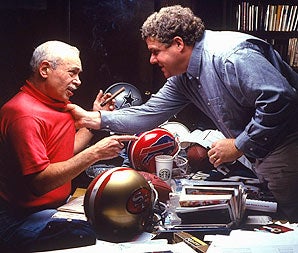
Paul Zimmerman, 1932-2018

The Doctor is in.

If you wanted to watch the National Football League from the 1970s to the 2000s, you had 2 choices: Read Paul Zimmerman, or know less about the sport than someone who did.

Paul Lionel Zimmerman was born on October 23, 1932, in Philadelphia, and grew up in The Bronx, where he went to Horace Mann School, one of New York City's elite prep schools. He went to Columbia University, where he played offensive line for the Lions' football team, and wrote for the school paper, the Columbia Daily Spectator. He said he had 2 literary idols: British journalist and novelist George Orwell (who famously described sport as "war minus the shooting") and sportswriter Jimmy Cannon.

He served in the U.S. Army in Germany during the Korean War, and played on a service team. As late as 1963, he was still playing minor-league pro football, for the Westchester Crusaders of the Atlantic Coast Football League. That league lasted from 1962 to 1973. The 1st 2 champions were based in New Jersey: The Paterson Miners and the Newark Bears.

He got a job writing for the New York Journal-American, and moved on to The World-Telegram & Sun. Both of those papers, the New York Herald-Tribune, and the New York Mirror were all mortally wounded by the 1962-63 New York newspaper strike. The Mirror published a farewell edition the day the strike ended, while the others hung on until 1966. Zimmerman was then hired by the New York Post, which, along with the Times and the Daily News, survives today (though it hasn't been easy for any of them).

He married Dr. Kate Hart, and had a daughter named Sarah and a son named Michael. He later married Linda Bailey, a woman he called "the Flaming Redhead" in his writings.

In 1970, he published The Thinking Man's Guide to Pro Football. Its opinions, based on his voluminous research, included one that a certain retired running back for the Cleveland Browns was the greatest player in the history of the sport. Not Jim Brown, as has often been said, but Marion Motley.

"Dr. Z" covered football for 3 newspapers in New York: The Journal-American, the World-Telegram & Sun, and the Post. In 1972, the Post sent him to Munich, Germany to cover the Olympics. He covered the Black September terrorism at the Games, watching as a journalist, an American and a Jew as the Palestinians murdered 11 members of the Israeli Olympic team. In 1979, he moved on to Sports Illustrated, and was their main pro football guy until felled by a stroke in 2008.

Dr. Z's writing on pro football, combining strong opinions with all kinds of facts to back them up, made him, along with Frank Deford, the magazine's most popular writer. This included a 1981 debate with college football writer John Underwood over which version of the game was better, a 1984 analysis of why quarterbacks weren't as good as they used to be (though the recent arrivals of Joe Montana and John Elway would prove him wrong), and a 1989 analysis of old game films to see if early stars like Bronko Nagurski and Don Hutson could make it in the current NFL -- and he agreed that some, including Nagurski, could. Those films also deepened his previous belief that Motley was still the best player in NFL history. (Motley, Hutson and Nagurski were all still alive at that point.)

In 1986, he was part of the ESPN team covering the NFL Draft. He was asked what "the NFL player of the 1990s" would be like. He said, "The player of the '90s will be so sophisticated that he'll be able to pass any steroid test they come up with." He never appeared on television again, not even in productions by NFL Films: Rather than air them in full, ESPN would edit out his statements in them. Alas, he turned out to be wrong about said sophistication: Even now, NFL players still get caught.

He made no pretense about being anything but old-school. He was the last writer at SI who was allowed to continue to use a typewriter to write his stories, with everyone else having moved on to computers. That 1989 game-film story featured a photo of Dr. Z, taken by the great SI cameraman Walter Iooss Jr., of him sitting next to an old-style film camera, with the light from it illuminating his voluminous cigar smoke. (I looked for that photo online. Sadly, I couldn't find it.)

In the early 1990s, he predicted 3 straight years that the Buffalo Bills would win the Super Bowl. All 3 times, they lost. The 4th time, even he couldn't kid himself anymore: He picked the Dallas Cowboys, and was right. But in 2008, he correctly predicted the biggest Super Bowl upset since the Jets over the Colts 39 years earlier: He said the Giants would beat the New England Patriots, and he did.

I also made that prediction. The only people who remember that now are my sister, her ex-boyfriend, and the couple we watched that Super Bowl with. And my sister is the only one of those I'm still on speaking terms with.

A few months after that Super Bowl XLII upset, Zimmerman suffered a stroke, incapacitating him to the point that his career as a writer was over. He remained a sound mind trapped in a nearly useless body. Last year, he published his last book, Dr. Z: The Lost Memoirs of an Irreverent Football Writer, with help from Peter King, his successor as SI's main NFL guy.
Dr. Z and King, in healthier times

Paul Zimmerman died this past Thursday, November 1, 2018, a few days after his 86th birthday. It's the end of an era. I hope it's not the end of a writing style, and I especially hope it's not an end to thinking people's viewing of sports. Pro football, in particular, could use it, perhaps more than ever.

UPDATE: His final resting place is not publicly known.

Saturday, May 26, 2018

Wisconsin's 10 Greatest Athletes

This weekend, the Mets are in Wisconsin to play the Milwaukee Brewers.

Wisconsin's 10 Greatest Athletes

Honorable Mention to Red Schoendienst of the Braves, and Rollie Fingers of the Brewers, members of the Baseball Hall of Fame who did big things in Milwaukee, but not for long enough.

Honorable Mention to Green Bay Packers in the Pro Football Hall of Fame who did not make the Top 10: Earl "Curly" Lambeau, Cal Hubbard, Johnny "Blood" McNally, Mike Michalske, Arnie Herber, Clarke Hinkle, Tony Canadeo, Bart Starr, Paul Hornung, Forrest Gregg, Jim Taylor, Henry Jordan, Willie Davis, Willie Wood, Herb Adderley, Dave Robinson, James Lofton, Brett Favre and Reggie White. They should probably be joined by Sterling Sharpe, Charles Woodson, and the still-active Aaron Rodgers and Clay Matthews III.

When The Sporting News named its 100 Greatest Football Players in 1999, White was ranked 22nd, Gregg 28th, Starr 41st, Adderley 45th, Davis 69th and Favre, then still active, 82nd. When the NFL Network named its 100 Greatest Players in 2010, White was 7th, Favre 20th, Starr 51st, Gregg 54th, Adderley 64th and Davis 86th. Had they spent their entire careers in Green Bay, either White or Favre might have made this To 10.

Honorable Mention to Bob Lanier, who closed a Hall of Fame career with the Bucks, and helped them win Division titles, but not reach the NBA Finals.

10. Ray Allen, guard, Milwaukee Bucks, 1996-2003. The leader of the University of Connecticut's 1st National Championship team in 1995, Allen was a Buck for his 1st 7 seasons, which included 3 of his 10 All-Star berths. He won 2 NBA Championships, but in Boston and Miami, rather than in Milwaukee, coming no closer than the 2001 Eastern Conference Finals. He is now eligible for the Basketball Hall of Fame, but not yet in.

9. Oscar Robertson, guard, Milwaukee Bucks, 1970-74. He was only a Buck for 4 seasons, but they included his, and their, 2 greatest seasons: The 1971 NBA Championship, and nearly another in 1974. Had they won Game 7 of the NBA Finals against the Boston Celtics, which turned out to be his last game, one of the most talented basketball players ever might be better remembered.

It didn't help that he went to the University of Cincinnati, rather than a school like Duke, North Carolina, Indiana, Kansas or UCLA; and spent his entire NBA career in the small markets of Cincinnati and Milwaukee. But he retired as the NBA's all-time leader in assists (a record broken by Magic Johnson, who was surpassed by John Stockton) and steals (a record broken by Stockton).

He has the rare status of having 3 different uniform numbers retired: 12 by the University of Cincinnati; 14 by the Royals' successors, the Sacramento Kings; and 1 by the Bucks. He was named to the Basketball Hall of Fame (twice, in his own right and with the 1960 U.S. Olympic Team) and the NBA's 50th Anniversary 50 Greatest Players.

50? He might still be one of the Top 10, 43 years after his last game. If you're making out your all-time starting lineup, you can have only 2 guards. A fan doing so in 1974, or even 1984, would have had it easy: Oscar and Jerry. Making your all-time team now? It comes down to Oscar, Magic and Michael. And if you're leaving Oscar out, ask yourself how old you are, and how much of Oscar you've seen.

8. Kareem Abdul-Jabbar, center, Milwaukee Bucks, 1969-75. He was only with the Bucks for 6 season, including in 1972 when he changed his name from Lew Alcindor. But that included their 1971 NBA Championship and their 1974 Western Conference Championship. Had they won Game 7 at home, he'd be higher on this list.

It also included being named the 1970 NBA Rookie of the Year; the NBA Most Valuable Player in 1971, '72 and '74; and an All-Star all 6 seasons. He is the NBA's all-time leader in minutes played, field goals made, and points scored in both the regular season and the Playoffs -- ahead of Bill Russell, Wilt Chamberlain, Michael Jordan, Shaquille O'Neal, Kobe Bryant and LeBron James.

He may be 1 of the top 5 players in NBA history. His Number 33 has been retired by UCLA, the Bucks and the Lakers. He was an easy choice for the Basketball Hall of Fame and the NBA's 50th Anniversary 50 Greatest Players. President Barack Obama awarded him the nation's highest civilian honor, the Presidential Medal of Freedom, in 2016.

7. Eddie Mathews, 3rd base, Milwaukee Braves, 1953-65. The only man to play for the Braves in all 3 cities, he reached them in 1952 in Boston, stayed with them until 1966, their 1st season in Atlanta, and was the most popular player on the team for all 13 years in Milwaukee.

He also has the distinction, with New York Giants catcher Wes Westrum, of being on the cover of the 1st issue of Sports Illustrated magazine, dated August 16, 1954. Apparently, there was no "Dreaded SI Cover Jinx" yet: Mathews went on to have a great career.

With Hank Aaron, he set a record for most home runs by teammates, 863. (While they were together, from 1954 to 1966, Aaron hit 442, Mathews 421.) He hit a total of 512 home runs, including 47 in 1953, a team record that Aaron would later tie, but not until Andruw Jones in 2005 would it be surpassed.

He led the Braves to the 1957 World Championship, hitting a walkoff 10th-inning homer in Game 4 and fielding the final out in Game 7, and the 1958 Pennant. He won another World Series while playing out the string with the 1968 Detroit Tigers. He also managed Braves, including in 1974 when Aaron hit Number 715. He was elected to the Baseball Hall of Fame, his Number 41 was retired by Braves, and he ranked Number 63 on The Sporting News' list of the 100 Greatest Baseball Players.

6. Paul Molitor, 3rd base and designated hitter, Milwaukee Brewers, 1978-92. Because he played most of his career in the small market of Milwaukee, and in the shadow of their biggest star, Robin Yount, he is one of the most underappreciated great players ever, despite having one of the best nicknames ever, "The Ignitor."

A 7-time All-Star, he got the Milwaukee Brewers to their 1st 2 postseason appearances, the 1981 American League Division Series and the 1982 World Series. He finally won a World Series with the 1993 Toronto Blue Jays, and was its MVP. He closed his career with the Twins, and is now their manager.

The Brewers retired his Number 4, and named him to their All-Time Team. The Sporting News
named him 99th on their list of the 100 Greatest Baseball Players in 1999. He is a member of the Baseball Hall of Fame and the 3,000 Hit Club. Indeed, until he was surpassed by Derek Jeter, he had more career hits than anyone born after 1941.

5. Robin Yount, shortstop and center field, Milwaukee Brewers, 1973-93. As with Molitor, playing in the small market of Milwaukee meant that this guy never got the credit he deserved. He and Hank Greenberg are the only players to win MVPs at 2 different positions, Yount doing so at shortstop in 1982, when he led the Brewers to what is still their only Pennant, and in center field in 1989.

Playing in Milwaukee instead of Chicago or another bigger city meant he only made 3 All-Star Games, but after debuting in 1974 at age 18, he gave the Brewers 20 years, 3,142 hits including 583 doubles, 126 triples and 251 home runs, and 271 stolen bases.

Of all players with at least as many stolen bases as he has, only Willie Mays has at least as many home runs and at least as many hits, although Yount has more doubles than Mays (but not more hits, triples, homers or steals). His career OPS+ is 115.

The Brewers have retired Yount's Number 19, which Molitor wore to honor him went he went to the Toronto Blue Jays and found his Brewers number, 4, was already being worn. The Brewers also dedicated a statue of Yount outside Miller Park. He was easily elected to the Hall of Fame. While John Rawlings, then the editor of The Sporting News, admitted that Yount was one of the last players who didn't make the cut for their 1999 listing of the 100 Greatest Baseball Players, if you're a Wisconsan my age or younger, he's the best baseball player you've ever had.

4. Warren Spahn, pitcher, Milwaukee Braves, 1953-64, plus 1942 and 1946-52 for the Braves in Boston. A 17-time All-Star, Spahnnie won 363 games, more than any lefthanded pitcher ever, and more than any other pitcher in the post-1920 Lively Ball Era. He won the Cy Young Award in 1957, and probably would have won it a lot more had it existed sooner.

His 2,583 strikeouts were more than any lefthander before him. He pitched the Braves to the National League Pennant in Boston in 1948 and in Milwaukee in 1957 and '58, winning the 1957 World Series. He pitched his 1st career no-hitter at age 39, and his 2nd at 40.

He was elected to the Baseball Hall of Fame, the now-Atlanta Braves retired his Number 21, and he came in at Number 21 on The Sporting News' 1999 list of the 100 Greatest Baseball Players -- the highest-ranking lefthanded pitcher, 2 places ahead of Lefty Grove and 5 ahead of Sandy Koufax.

He and Koufax were both named to the MLB All-Century Team, and Koufax agreed that Spahn belonged: "After all, he pitched for most of the Century!" Not quite, but he did debut with the Braves in 1942, when Casey Stengel was their manager; and his last season, 1965, included a stopover with the Mets, Casey's last year as a manager. In between were Casey's 10 Pennants, including the 1957 and '58 World Series against Spahn's Braves. Spahn said, "I'm the only guy who played for Casey both before and after he was a genius!"

3. Ray Nitschke, linebacker, Green Bay Packers, 1958-72. A 6-time All-Pro, he led the Packers' defense in the Vince Lombardi hears, helping them win 5 NFL Championships: 1961, 1962, 1965, 1966 and 1967, including the 1st 2 Super Bowls.

He was named Most Valuable Player of the 1962 NFL Championship Game, in which the Packers defeated the Giants on a frozen field at Yankee Stadium. Since the game was in New York, on a Sunday, a few hours later he appeared on CBS' game show What's My Line? (Broadcast live.) This is how far the NFL was behind baseball at this point: Nitschke could appear, wearing a suit and glasses, looking more like a bald Clark Kent instead of a green & gold Superman, with his name written on the show's chalkboard, and the panelists, all celebrated smart people, were not wearing their blindfolds, and none of them could guess his profession.

And yet, in an era of celebrated tough guys, he might have been the toughest of them all. The Packers retired his Number 66. He was named to the Pro Football Hall of Fame, the Green Bay Packers Hall of Fame, the NFL's 1960 All-Decade Team, the NFL's 75th Anniversary Team, ranked 18th on The Sporting News' 100 Greatest Football Players in 1999, and 47th on the NFL Network's 100 Greatest Players in 2010.

2. Don Hutson, receiver and defensive back, Green Bay Packers, 1935-45. Raymond Berry may have put it into question in the late 1950s, but until Jerry Rice came along in the mid-1980s, Hutson was the greatest receiver in football history. (In 1989, Hutson graciously, and perhaps not prematurely, said that Rice had surpassed him.)

He led the University of Alabama to the 1934 National Championship, when "the other end" was a kid named Paul Bryant. The Bear had seen him star in high school: "He was something to see even then. We'd hitchhike to Pine Bluff just to watch him play."

It's unlikely anyone from Arkansas or Alabama hitchhiked all the way to Green Bay, Wisconsin to watch "The Alabama Antelope" play. But for the Green Bay Packers, he won 3 NFL Championships: 1936, 1939 and 1944. He was NFL Most Valuable Player in 1941 and 1942. He was an 8-time All-Pro. In 1940, he led the NFL in receptions and interceptions, so he was great on both sides of the ball. He caught 488 passes for 7,991 yards and 99 touchdowns, all of which stood as records long after he retired. He also had 30 career interceptions.

The Packers retired his Number 14, and elected him to their team Hall of Fame. He was elected to the College and Pro Football Halls of Fame (with the latter, a charter inductee in 1963), the NFL's 1930s All-Decade Team, and the 50th and 75th Anniversary All-Time Teams. In 1999, he ranked 6th on The Sporting News' 100 Greatest Football Players, and, in 2010, 65 years after his last game and 13 years after his death, Number 9 on the NFL Network's 100 Greatest Players. In each case, he was 2nd only to Rice among receivers.
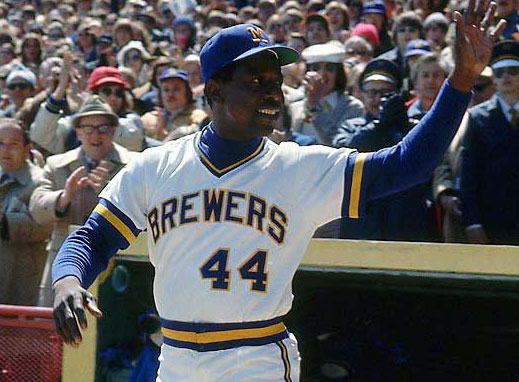
1. Hank Aaron, right field, Milwaukee Braves, 1954-65, plus Milwaukee Brewers, 1975-76. Of his 23 seasons in the major leagues, 14 were spent in Milwaukee, and only the 1st 12 were particularly productive, but he is still an easy choice. After all, Vince Lombardi was a coach, not a player.

He was a legitimate All-Star in all of those 12 seasons, and was selected again in a 13th. Of his 3,771 career hits, 2,437 came in Milwaukee. Of his 755 career home runs, 420 came in Milwaukee, including a walkoff home run on September 23, 1957, which won the game that clinched the city's 1st major league Pennant. In honor of his contributions to Milwaukee baseball, the Brewers retired his Number 44, and dedicated a statue of him that is now outside a 2nd separate ballpark.

He and Babe Ruth are the only individual players to have an exhibit all to themselves at the Baseball Hall of Fame in Cooperstown, New York, to which he was elected in his 1st year of eligibility. He came in 5th on The Sporting News' list of the 100 Greatest Baseball Players, and was easily elected to the Major League Baseball All-Century Team. In 2002, George W. Bush awarded him the nation's highest civilian honor, the Presidential Medal of Freedom.

Thursday, June 15, 2017

Top 10 Athletes From Arkansas

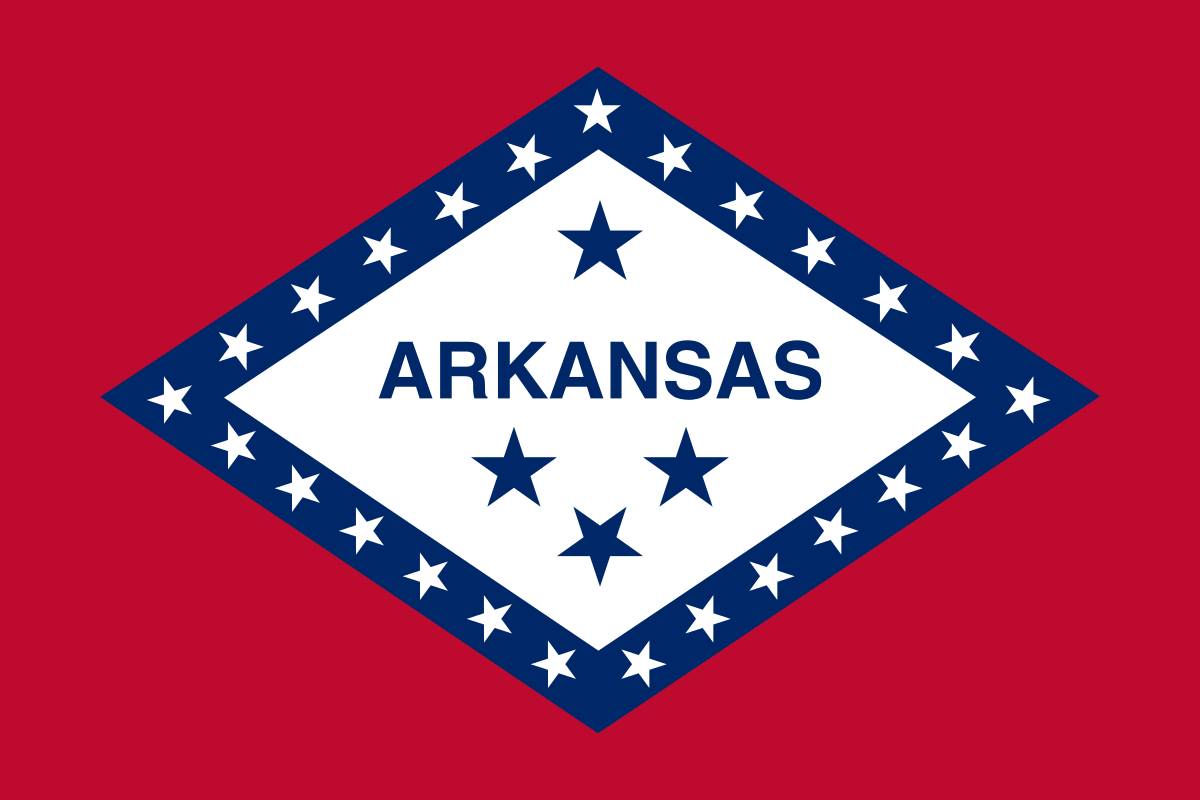
June 15, 1836: Arkansas is admitted to the Union as the 25th State.

The 3 most famous people from Arkansas are probably more identified with other places. Paul W. "Bear" Bryant of Fordyce is remembered as the head football coach at the University of Alabama. Johnny Cash of Dyess is remembered for his connections to Tennessee, both Memphis where he began his recording career and Nashville where he had his greatest fame. And Bill Clinton of Hope and Hot Springs became President, and now lives in New York.

Speaking of Presidents, in 1983, Ronald Reagan posthumously awarded Bryant the nation's highest civilian honor, the Presidential Medal of Freedom.

Top 10 Athletes From Arkansas

Honorable Mention to Allan James Burnett of North Little Rock. A.J. helped the Yankees win the World Series in 2009.

Honorable Mention to Bill Carr of Pine Bluff. At the 1932 Olympics in Los Angeles, he won 2 Gold Medals, including in the 400 meters, setting a world record. A car crash a year later ended his career, and may have prevented him from repeating in Berlin in 1936, and thus rising much higher on this list.

10. Sidney Moncrief of Little Rock. He led the University of Arkansas to the Southwest Conference basketball title and the NCAA Final Four in 1978, and was named SWC Player of the Year in 1979. He became a 5-time NBA All-Star with the Milwaukee Bucks, who retired his Number 4.

How good was he? So far, the voters for the Basketball Hall of Fame haven't considered him good enough for election. But he's in the Wisconsin Sports Hall of Fame. And he was good enough for Michael Jordan to say this about him: "When you play against Moncrief, you're in for a night of all-around basketball. He'll hound you everywhere you go, both ends of the court. You just expect it."

9. George Kell of Swifton. A .306 lifetime hitter, the 3rd baseman for the Detroit Tigers was a 10-time All-Star. In 1949, he won the American League batting title, denying Ted the Triple Crown by the slimmest of margins. He then starred for the Baltimore Orioles, before age led them to turn to someone else on this list. He went back to the Tigers as a broadcaster, and was elected to the Baseball Hall of Fame. His brother Everett "Skeeter" Kell also played in the major leagues.

8. Bobby Mitchell of Hot Springs. He starred in both football and track at the University of Illinois. He thought he could make the 1960 Olympics in Rome, but Cleveland Browns head coach Paul Brown offered him a $6,000 bonus to play pro football, and he made the easy decision.

A 4-time Pro Bowler, he starred for the Browns before becoming the 1st black player for the Washington Redskins in 1962, returning a kickoff for 92 yards and a touchdown in his 1st game. He led the NFL in receiving yards that year and in 1963 (including catching a record-tying 99-yard touchdown pass from Sonny Jurgensen), and in receiving touchdowns in 1964.

A key figure in the long-terrible Redskins' return to respectability, he caught 521 passes, a huge number for his era. He was named to the Pro Football Hall of Fame, the 70 Greatest Redskins (for the team's 70th Anniversary, and then the 80 Greatest for their 80th), and the Washington Redskins Ring of Fame. The Redskins don't retire numbers (except for Sammy Baugh's 33), but his 49 has rarely been given back out.

7. Charles "Sonny" Liston of Sand Slough. Because there was no birth certificate, we don't know exactly when he was born. Because he was found dead shortly after a New Year, we don't know exactly when he died. In each case, we don't even know the year for sure. He may be the most recent famous person for whom both of these facts are true. The best guesses are that he was born on July 22, 1930 and died on December 30, 1970.

I won't get into his past, other than to say that, when Muhammad Ali called him "too ugly to be the world's champ," he meant Liston's face, but could also have been talking about Liston's character. He was Heavyweight Champion of the World for 17 months, from September 25, 1962, when he destroyed Floyd Patterson at Comiskey Park in Chicago, until February 25, 1964, when Ali wrecked him at the Miami Beach Convention Center. Few people cheered when he won the title, and many did so when he lost it. Nevertheless, he was the champ, and that's something no other Arkansas-born or Arkansas-raised heavyweight can say.

6. Dizzy Dean of Lucas. Ol' Diz liked to tell different stories to different people. He told people his name was Jay Hanna Dean (which was true), Jerome Herman Dean, and Jerome Hanna Dean. He told people he was from Arkansas (which was true), Mississippi, Louisiana and Texas. He told people he was born in 1910 (which was true), 1911 and 1912. He also told people he was the greatest pitcher who ever lived.

With a mouth like that, he had better have been great. He was: A 4-time All-Star, he led the St. Louis Cardinals' "Gashouse Gang" to the 1934 World Championship, going 30-7, making him, to this day, the last National League pitcher to win 30 games in a season. His brother Paul Dean, who didn't like being called "Daffy," was also a pretty good pitcher on that Cardinal team.

His career was cut short by a line drive hit by Earl Averill of the Cleveland Indians at the 1937 All-Star Game in Washington, smacking him on the toe. Supposedly, the doctor told him the toe was fractured, and Diz said, "Fractured, hell, the damn thing's broken!" To favor the toe, he altered his pitching motion, and he wrecked his elbow. The Cards traded him to the Chicago Cubs in 1938, and he had enough left to help them win the Pennant. But by 1941, age 31 (we think), he was done, except for a brief 1-game comeback in 1947.

That injury limited him to 150 wins. Nevertheless, he was dominant enough in his brief time, and enough of a cultural icon (in each case, like the much quieter Sandy Koufax 30 years later), that he was elected to the Baseball Hall of Fame. The Cardinals elected him to their team Hall of Fame, and retired his Number 17. Second to Bobby Orr (the Boston Bruins' Number 4), he is probably the greatest athlete whose name rhymes with his uniform number.

5. Scottie Pippen of Hamburg. Say what you want about Michael Jordan, but he won nothing until Pippen arrived at the Chicago Bulls. Together, they won 6 NBA Championships in 8 years: 1991, '92, '93, '96, '97 and '98. Pip nearly led them to another title in 1994, coming a whole lot closer to a title without Jordan than Jordan ever did without him.

He was a 7-time All-Star, an 8-time All-Defensive First Temaer, and led the league in steals in 1995. He won Olympic Gold Medals in 1992 (the Dream Team, another title Jordan won with him) and '96. His Number 33 was retired by both the University of Central Arkansas and the Bulls. He was named to the Basketball Hall of Fame and the NBA's 50th Anniversary 50 Greatest Players.

He is now a senior advisor to the Bulls. In 2011, at age 45, he led the NBA All-Star Celebrity Game in scoring. Even more importantly, he blocked a shot by Justin Bieber: "He played pretty well, but he has an ugly shot." Pippen thus proved not only that he could still play a little, but that his eyes still worked.

4. Willie Davis of Texarkana. A 5-time Pro Bowler, he stands with Reggie White as the 2 greatest defensive ends (and, indeed, defensive linemen) in the long, proud history of the Green Bay Packers. He helped them win 5 NFL Championships, including the 1st 2 Super Bowls in 1967 and '68. He was named to the NFL's 1960s All-Decade Team, the Pro Football Hall of Fame, and The Sporting News' 100 Greatest Football Players.

3. Brooks Robinson of Little Rock. In 1955, he arrived with the Baltimore Orioles. In 1960, he won his 1st Gold Glove at 3rd base, and made his 1st All-Star Team. In 1964, he was the 1st Oriole named American League Most Valuable Player. In 1966, he helped the Orioles win their 1st Pennant and their 1st World Series. In 1970, he won another World Series, redefining the way people viewed the playing of 3rd base, and winning the Series MVP. In 1974, he played in his last All-Star Game, his 18th, and made his 6th postseason appearance. In 1975, he won his last Gold Glove, his 16th.

In 1977, he retired, had his Number 5 retired, and, with Frank Robinson (no relation), became the 1st 2 inductees into the Orioles' Hall of Fame. In 1983, he was elected to the Baseball Hall of Fame. In 1991, he was invited to throw out the ceremonial first ball before the last Orioles game at Memorial Stadium (along with Johnny Unitas of the Colts, who threw a football). In 1999, he was named to The Sporting News' 100 Greatest Baseball Players and the Major League Baseball All-Century Team.

2. Bill Dickey of Searcy. Though born in Bastrop, Louisiana, Arkansas is where he called home most of his life. He is on the short list for the title of "Greatest Catcher Who Ever Lived": A .313 lifetime batting average, 4 20-plus home run seasons (a big number for a catcher at that time), 4 100+ RBI seasons, and 11 All-Star Game appearances, including the 1st 2 and 10 of the 1st 11. He probably would have had 3 or 4 more had the ASG been established earlier.

He helped the Yankees win 8 Pennants (1932, '36, '37, '38, '39, '41, '42 and '43) and 7 World Series (all but '42). He briefly managed the Yankees in 1946, then returned in 1949 as a coach, turning Yogi Berra from a very shaky catcher into one who might have been even better: "Bill Dickey is learning me all his experiences."

The Yankees retired Number 8 for both Dickey and Berra. (Dickey wore 33 as a coach while Berra played and wore 8.) He is in the Yankees' Monument Park, the Baseball Hall of Fame, and The Sporting News' 100 Greatest Baseball Players.

1. Don Hutson of Pine Bluff. Raymond Berry may have put it into question in the late 1950s, but until Jerry Rice came along in the mid-1980s, Hutson was the greatest receiver in football history. (In 1989, Hutson graciously, and perhaps not prematurely, said that Rice had surpassed him.)

He led the University of Alabama to the 1934 National Championship, when "the other end" was a kid named Paul Bryant. The Bear had seen him star in high school: "He was something to see even then. We'd hitchhike to Pine Bluff just to watch him play."

It's unlikely anyone from Arkansas or Alabama hitchhiked all the way to Green Bay, Wisconsin to watch "The Alabama Antelope" play. But for the Green Bay Packers, he won 3 NFL Championships: 1936, 1939 and 1944. He was NFL Most Valuable Player in 1941 and 1942. He was an 8-time All-Pro. In 1940, he led the NFL in receptions and interceptions, so he was great on both sides of the ball. He caught 488 passes for 7,991 yards and 99 touchdowns, all of which stood as records long after he retired. He also had 30 career interceptions.
Don Hutson, playing for the Packers against
the Chicago Bears at Wrigley Field,
pioneering the use of eyeblack.
The photo is colorized, but accurate.

The Packers retired his Number 14, and elected him to their team Hall of Fame. He was elected to the College and Pro Football Halls of Fame (with the latter, a charter inductee in 1963), the NFL's 1930s All-Decade Team, the 50th and 75th Anniversary All-Time Teams, The Sporting News' 100 Greatest Football Players, and, in 2010, 65 years after his last game and 13 years after his death, Number 9 on the NFL Network's 100 Greatest Players, 2nd only to Rice among receivers.