Showing posts with label cleveland spiders. Show all posts

Tuesday, October 15, 2024

October 15, 1899: The End of the Line

October 15, 1899, 125 years ago: The Cincinnati Reds close out the season with 16-1 and 19-3 victories at League Park in Cincinnati, over the hapless Cleveland Spiders. John "Bid" McPhee‚ usually considered the best 2nd baseman of the 19th Century‚ plays in both games‚ the last of his career, with all 18 being spent with the Reds.

Cleveland finished with 20 wins and 134 losses‚ 84 games behind the Pennant-winning Brooklyn Superbas, and in the cellar, 12th place, by 35 games behind the next-worst team, the Washington Senators. They have a "winning percentage" of .149. And on their last day, they lost by an aggregate score of 35-4. They couldn't even die with dignity.

They also conclude a 36-game road trip (1-35) after setting a mark earlier this year with a 50-game road trip. They lost 24 straight at one point (the 2nd-worst ever, behind the 26 of the 1889 Louisville Colonels, the worst since being the 1961 Phillies with 23), and 40 out of their last 41. 

The reason for the Spiders' futility is that they were bought by the owners of the St. Louis team that would soon be renamed the Cardinals. This system, known as "syndicate baseball," was legal at the time. And, as St. Louis natives, the owners brought all of the good Cleveland players, including pitcher Cy Young – but not Louis Sockalexis, the once-powerful but now injured and alcoholic Penobscot tribesman who has been called "the original Cleveland Indian" – to St. Louis.

The result is a Cleveland team that may not even have been, by today's standards, Triple-A quality. True, the 2024 Chicago White Sox may have finished 41-121, with the most losses since the 1899 Spiders, and a winning percentage of .253, the lowest since the 1962 New York Mets finished 40-120 for .250. But they were not as bad as the Spiders.

*

On the same day, The Louisville Colonels beat the Chicago Orphans, 9-5 at the West Side Grounds in Chicago. The former Chicago White Stockings got this name because their longtime 1st baseman and manager, Adrian Anson, known as "Cap" (for "Captain") when he was younger and "Pop" as he got older, had retired, and "they missed their Pop."

The Orphans actually played 2 games against 2 different teams on this day. They also beat the St. Louis Perfectos, 7-0 at the West Side Grounds in Chicago. The Perfectos became the Cardinals in 1900, and the Orphans became the Cubs in 1903.

The Colonels' win over Chicago would be the last game they ever played, as they were absorbed by the Pittsburgh Pirates. Led by manager and left fielder Fred Clarke, and shortstop John "Honus" Wagner, they ended the season on this day in 9th place, at 75-77.

As part of the deal, Pirates owner Barney Dreyfuss negotiated the transfer of the best Louisville players, namely Wagner (himself a Pittsburgh native), Clarke, center fielder Tommy Leach, and pitchers Charles "Deacon" Phillippe and George "Rube" Waddell, to the Pirates.
Honus Wagner

The Colonels, the Spiders, the Baltimore Orioles and the Washington Nationals were contracted out of the National League within weeks, though this made the American League, and its franchises in Cleveland, Washington and, at least for two years, Baltimore, possible.

In their 13-season history, the Spiders were 827-938, a percentage of .4685. Minus that last season, they were 807-804, .5003. They deserved a better fate: They had on their roster, at one time or another, Hall-of-Famers Cy Young, John Clarkson, Buck Ewing, Bobby Wallace, George Davis and Jesse Burkett, plus Cupid Childs, Chief Zimmer, Patsy Tebeau, Lave Cross, Louis Sockalexis, Lou Criger, Kid Carsey and Jack O'Connor, any one of whom would have been an All-Star had there been an All-Star Game in the 1880s or 1890s.

They never won a Pennant, but finished 2nd in the NL in 1892, 1895 and 1896, and were 81-68 (5th out of 12) in 1898 before the syndicate broke them up. They were not a failed franchise: They got sabotaged.

The last surviving 1899 Cleveland Spider appears to have been right fielder Lewis "Sport" McAllister, who lived until 1962. I say, "appears to have been," because no date of death is known for pitcher Frank Bates, who went 3-19 that season, losing his last 14 decisions. The last record anyone has of him is his World War I draft registration form from 1918, showing him living in Cincinnati. He would have been 85 years old when McAllister died, so it is possible that he was the last survivor. But he does not appear in the 1920 Census. Since he is not listed among those killed in action in the war, he was likely a victim of the 1918-19 Spanish Flu epidemic.

No major league team, in any sport, has been called the Spiders since. The highest-ranking teams with the name, that I can think of, are those of the University of Richmond in Virginia. I don't even know of any soccer (football) teams in other countries with the nickname. With the Washington Football Team having dropped the name "Redskins," the Cleveland Indians announced that they would follow for the 2022 season. The hope was that they would call themselves the Cleveland Spiders. Instead, they chose to become the Cleveland Guardians.

As a result of the Pittsburgh-Louisville deal, the Pirates won 4 of the next 10 NL Pennants, and were at least in the race for most of the rest. With Wagner becoming the best player in baseball, the Pirates reached but lost the 1st World Series in 1903, and won the World Series in 1909.

The Colonels began in the American Association in 1882, won the Pennant in 1890, and transferred to the NL with the AA's demise after the 1891 season. But most ballparks at the time were made of wood, and their home field, Eclipse Park, burned down on September 27, 1892. It was rebuilt, but burned down again on August 12, 1899, while the team was on the road, and they finished the season on the road.

Given the team's struggles on the field since entering the NL, and the fact that the NL was determined to contract -- the Baltimore Orioles, the Cleveland Spiders and the Washington Senators were also eliminated -- it made more sense for the Colonels to be one of the teams that gave up.

Louisville has since been one of the top minor-league cities of the last 120 years, in terms of both competitiveness and attendance. But it has never returned to the major leagues, nor is it likely to, since the Louisville metropolitan area is home to only 1.4 million people, and the city is just 82 miles from Cincinnati, itself one of MLB's smallest markets. Louisville has been denied a team in every MLB expansion: 1961-62, 1969, 1977, 1993 and 1998.

In a new, Class AAA league called the American Association, the Louisville Colonels won Pennants in 1909, 1916, 1921, 1925, 1926, 1930, 1939, 1940, 1944, 1945, 1946, 1954, 1960, 1961 and 1962. That team was moved, due to stadium issues. A new Louisville Colonels played in the Class AAA International League from 1967 to 1972, winning no Pennants.

On January 6, 1964, Charlie Finley signed a 2-year pact to move the Athletics from Kansas City to Louisville, pending American League approval. He is later denied that approval, and the A's stay put in Kansas City until after the 1967 season, when they moved to Oakland. 

In 1982, the Louisville Redbirds began play in the IL, and won Pennants in 1984, 1985 and 1995. They were renamed the Louisville RiverBats in 1999, and won the Pennant in 2001. The name was shortened to the Louisville Bats in 2002, and, through the 2022 season, they have not won another Pennant, although they have won their Division as recently as 2010.

The name "Kentucky Colonels" was used by the Louisville-based team in the American Basketball Association. They were the only team to make the Playoffs in all 9 seasons of the ABA, losing the Finals in 1971 and 1973, before winning the title in 1975. They were not one of the teams absorbed into the NBA in 1976.

Charlie Emig, a lefthanded pitcher from Cincinnati, who started 1 game for the Colonels in 1896, was not only the club's last surviving player, but also the last surviving man who had played a Major League Baseball (as we would now call it) game in the 19th Century. He died on October 2, 1975, age 100.

Sunday, October 24, 2021

October 24, 1871: Louis Sockalexis, Pride of the Spiders

October 24, 1871, 150 years ago: Louis Francis Sockalexis is born in Old Town, Maine. A member of the Penobscot tribe, the outfielder starred with the Cleveland Spiders of the National League as a rookie in 1897, batting .338 with 16 stolen bases, and throwing runners out with outfield arm power that wouldn't be seen again in Cleveland until Rocky Colavito in the 1950s.

But his drinking problem, all too common among Native Americans, had already gotten him expelled from Notre Dame. And on July 4, 1897, when the brothel he was visiting was raided by the police, he jumped out of a 2nd-story window and wrecked his ankle. He was never the same player.

The circumstances surrounding the 1899 Cleveland Spiders are too convoluted to briefly summarize, but they were the worst team in Major League Baseball history, and they were his last major league team. They released him on May 7. If they'd kept him, despite all his trouble -- he was hitting .273 in spite of his carousing and his injury -- maybe they wouldn't have finished 20-134.)He died of tuberculosis in 1913, only 42 years old.

In 1993, Steve Rushin of Sports Illustrated wrote an article imagining that Sockalexis hadn't hurt his ankle in 1897. He imagined that, like their fellow charter American League teams in Boston, Chicago, St. Louis and Washington, Cleveland had taken on the name of a former National League team, and the stadium we knew as Cleveland Municipal was named Spider Stadium. He imagined Sock leading the Spiders to win the 1908 World Series (meaning now, the Chicago Cubs hadn't won one since 1907), and being a coach on their 1920 and 1948 World Series winners, still alive and in uniform at age 77.

And, because of his example, combined with that of Jim Thorpe, Native Americans were respected just a little bit more, so that the Boston team of the National League had never become the Braves, and were now known by the name of the former minor-league team in their current city: The Atlanta Crackers. And the NFL team in the Nation's Capital was... in this fantasy article, the Washington Pigskins.

It was long presumed that the Spiders' American League replacements, originally called the Blues, then the Broncos, and then the Naps in honor of 2nd baseman and manager Napoleon Lajoie, were renamed the Indians in 1915 in honor of either "Sock," the 1st Native American to play in the major leagues; or the tribes that once lined the shore of Lake Erie.

Neither story is true: Baseball is a monkey-see-monkey-do game, like most sports; and, the year before, the World Series had been won by the Boston Braves.

The 2021 season was the 107th and last in which the Cleveland team of the American League used the name "Indians." Next season, and in perpetuity, they will be the Cleveland Guardians. It's about time.

Also on this day, as it frequently did in the 19th Century, especially in California, the specter of anti-Asian bigotry rears its head. After hearing (it remains unknown if it was true) that Chinese men had killed a rancher and shot a policeman, a mob of around 500 people walked into Chinatown in Los Angeles, attacking, robbing and killing Chinese immigrants. They were shot, and, regardless of whether they were already dead, hanged. The number varies, between 17 and 20.

Eight men were convicted of manslaughter, but these convictions were overturned on appeal, due to what Wikipedia calls "technicalities," but does not elaborate.

*

October 24, 1721, 300 years ago: Anthony Morris dies in Philadelphia, where he had made a fortune as a brewer, and had served as Mayor in 1703 and 1704. His son, also named Anthony Morris, would serve as Mayor in 1738 and 1739.

October 24, 1795: The Third Partition of Poland takes place. Prussia, Austria and Russia each take part of the country, in each case with over 1 million people. This was a response to the nationalistic fervor stirred up in the Polish people by the Second Partition, in 1793. (The First was in 1772.)

This ended the Polish-Lithuanian Commonwealth. There would not be an independent Polish state again for 123 years. These partitions, as well as their actions against the Jewish people in the lands they controlled, are why I can be impressed with the achievements of King Frederick II of Prussia and Empress Catherine II of Russia -- a.k.a. Frederick the Great and Catherine the Great -- but cannot admire them.

*

October 24, 1857: Sheffield Football Club, the world's first football club (soccer team), is founded in Sheffield, South Yorkshire, England. Today, they are still in business, but are based in Dronfield, about 6 miles south of downtown Sheffield -- not even in Yorkshire, but in Derbyshire.

They are currently stuck in the Northern Premier League Division One East, which is the 8th level of English soccer, 7 levels below the Premier League. Sheffield United, founded in 1889, is in the Premier League. Sheffield Wednesday, founded in 1867, are in the 2nd division, "The Championship."

Sheffield F.C., a.k.a. simply "The Club," have not had much success: Promotion seasons in 1952, 1955, 1966, 1976, 1977, 1989, 1991 and 2007, but also frequent relegations; the FA Amateur Cup in 1904; the Yorkshire League Cup in 1978; the Sheffield & Hallamshire Senior Cup in 1993, 2005, 2006, 2008 and 2010; and the Northern Counties East League Cup in 2001 and 2005.

But they have never been in the Football League proper (the top 4 divisions), meaning they have never been entered into the League Cup; and their best performance in the FA Cup was reaching the 4th Round, all the way back in 1878 and 1880.

In a weird quirk, Sheffield FC wear red jerseys at home and blue on the road; United wear red and white stripes as their basic uniform, while Wednesday wear blue and white stripes.

October 24, 1861, 160 years ago: At the Wheeling Convention, 41 Counties of the Commonwealth of Virginia, which had seceded from the Union and joined the Confederate States of America, vote to secede from the State and the Confederacy.

They soon apply to the federal government in Washington for readmission to the Union, as a separate State. It would take until June 20, 1863 for West Virginia to be admitted as the 35th State, making them the only State to secede from the Confederacy. (Although, since 2000 or so, it seems as though they cling to Southernness.) Once Virginia was readmitted to the Union after the American Civil War, in 1870, West Virginia remained separate.

Also on this day, the transcontinental telegraph begins operation. This renders the Pony Express, which had run from St. Joseph, Missouri to Sacramento, California, since April 3, 1860, obsolete. That's right, the legendary Pony Express only operated for a year and a half. But it was vital in helping establish California (which had only gained Statehood in 1850) as a destination for people seeking a place to live and/or do business.

October 24, 1874: The Boston Red Stockings, forerunners of the team now known as the Atlanta Braves, clinch their 3rd straight championship of the 1st professional baseball league, the National Association. They beat the Hartford Blues, 11-8 at the South End Grounds in the Roxbury section of Boston. They finish the season 52-18. They won their 1st 12 games, from May 2 to 22, and had 3 other streaks of 6 wins.

The last survivor of the 1874 Red Stockings was shortstop George Wright, who was also the last survivor of the 1st openly professional team, for whom this team was named, the 1869-70 Cincinnati Red Stockings. He lived until 1937.

October 24, 1875: In the wake of the National Association Pennant having been taken by the Boston Red Stockings (forerunners of the Atlanta Braves) for the 4th straight season, and by a wider margin (in terms of winning percentage, anyway) than any major league that would come after it ever has, causing several teams to drop out of the NA, the Chicago Tribune calls for the formation of an organization of major professional teams: Chicago‚ Cincinnati‚ Louisville‚ Philadelphia‚ New York‚ Boston‚ and Hartford: "Unless the present Professional Association leadership adopts rules to limit the number of teams allowed to participate in the Championship season‚ all clubs will go broke."

Most likely, this editorial was written by William Hulbert, president of the Chicago White Stockings. Also on this day, he meets in Chicago with Boston Red Stockings pitcher, and Illinois native, Al Spalding. Hulbert stresses to Spalding that his roots are in Illinois, and that he should play for the Chicago club. He also stresses to Spalding that the current National Association is going to result in all teams going broke without tighter control, that teams must stick to their schedules and not leave opponents in the lurch, and that gambling must be driven out of the game. Spalding agrees on all counts, and signs with the White Stockings for the 1876 season.

The following winter, on February 2, 1876, he gathers some other team owners in New York, and founds the National League, and remains its guiding force until his death in 1882, by which point professional baseball had been stabilized. The White Stockings, rather than the American League's Chicago White Sox, are the forerunners of the Chicago Cubs.

While the New York meeting on February 2, 1876 is, essentially, the birthdate of the National League, October 24, 1875 is its conception. Whether that makes Spalding or Hulbert "the mother," I don't know.

October 24, 1883: George Frederick Allison is born in Darlington, County Durham, England. He played for a local amateur soccer team in nearby Stockton-on-Tees, and wrote about his team's exploits, earning him a reporter's position at a newspaper. He also served as assistant manager of nearby team Middlesbrough FC, which would be a conflict of interest today.

He moved to London in 1906, covered soccer and greyhound racing, and in 1911 became the London correspondent for the New York Post. He served in the Royal Flying Corps (forerunner of the Royal Air Force) in World War I, then joined the nascent BBC. He was the 1st radio commentator for the English Derby (thoroughbred horse racing), the Grand National (steeplechase horse racing), and, in 1927, the FA Cup Final, in which Cardiff City of Wales defeated North London's Arsenal, becoming, to this day, the only non-English club ever to win the Cup.

He had already been the editor of Arsenal's matchday programme (we'd call it a "game program" in the U.S.) since 1906. He became club secretary, and after Herbert Chapman died in 1934 and Joe Shaw finished the season as caretaker manager, he was named the full-time manager. He led the club to League titles in 1935 and 1938, and the 1936 FA Cup.

In 1939, The Arsenal Stadium Mystery was filmed, and while the Arsenal players appeared, none of them had any lines. Allison did. After Alf Kirchen scored the only goal of the game filmed for the movie -- an actual Football League Division One match, on May 6, 1939, an Arsenal win over West London club Brentford -- he said, "One-nil to The Arsenal. That's the way we like it." The phrase "One-nil to The Arsenal" became a catchphrase, and eventually a song.

He continued to manage the team through World War II, and resigned after the 1947 season, handing the reins over to Tom Whittaker, his assistant, and a former player and physiotherapist (we would say "trainer") for the team. Ironically, he outlived Whittaker, who died in office in 1956. Allison followed him a year later.

October 24, 1884: The New York Mets lose the World Series. Well, not exactly.

The Providence Grays, Champions of the National League, defeat the New York Metropolitans -- and, yes, this early franchise was called the Mets for short -- 3-1, behind the pitching of future Hall-of-Famer Charlie "Old Hoss" Radbourn, at the Polo Grounds in New York. This gives the Grays the first-ever postseason series between champions of 2 major professional baseball leagues, a series that was officially called the "World's Series."

A Game 3 was played, for charity, and the Grays won that, too. The Grays had won the NL Pennant in 1879, too, but would go out of business after the 1885 season. The last surviving Providence Gray was right fielder Paul Radford, who lived on until 1945.

Aside from teams known as the the Providence Steam Rollers in the NFL (1920-1931, 1928 Champions) and the NBA (only the inaugural 1946-47 season), the State of Rhode Island has never had another major league sports team -- the New England Patriots, who play 25 miles from downtown Providence in Foxboro, Massachusetts, don't count.

The last survivor of the 1884 Providence Grays was outfielder Paul Radford, who lived until 1945 -- 61 years, 10 States and 11 Presidents later.

Also on this day, the Calhoun Street Bridge opens, connecting Trenton, New Jersey and Morrisville, Pennsylvania over the Delaware River. From 1913 to 1928, it was an original part of the Lincoln Highway, until that road's realignment over the new Lower Trenton Bridge (the one with the big letters reading "TRENTON MAKES THE WORLD TAKES"). It is now part of the East Coast Greenway. 

October 24, 1885: The St. Louis Browns, Champions of the American Association, defeat the Chicago White Stockings, Champions of the National League, 13-4 in the 7th and last game in their series. The Browns claim the Game 2 forfeit didn't count, and therefore claim the championship. Each club receives $500.

These 2 teams would meet again the next season, forging the NL rivalry that still exists between the teams, by 1901 known as the St. Louis Cardinals and the Chicago Cubs.

This was the 1st of 4 straight AA Pennants for the Browns. The last surviving member of the 1885-88 AA Champions was 3rd baseman Walter Arlington "Arlie" Latham, who lived until 1952.

October 24, 1892: The Boston Beaneaters, winners of the National League Pennant, defeat the 2nd-place Cleveland Spiders, 5 games to none with 1 tie, and win the Championship Series (it wasn't called the World Series), making themselves, as they were last season, the unofficial World Champions of Baseball.

The Beaneaters would become the Braves in 1912, move to Milwaukee in 1953, and move again to Atlanta in 1966. Hall of Fame outfielder Hugh Duffy would be the last survivor of the 1892 Beaneaters, living until 1954. The Spiders would fold after the 1899 season, and the 1892 Championship Series would be the closest a Cleveland team would come to winning a World Championship until the 1920 Indians.

Also on this day, Goodison Park, the world's 1st stadium built specifically for association football (whose abbreviation "assoc." is the source of the word "soccer") is opened in Liverpool. Home to Everton Football Club, it is across Stanley Park from Anfield, home ground of Liverpool Football Club, which was built in 1884 as Everton's home before they moved across the park, and Liverpool FC was founded to take their place at Anfield. This makes the 2 Merseyside teams in the Premiership the closest major rivals of any major sport on the planet. 

Imagine that, instead of being in their actual locations, the Yankees' home field was where the Metropolitan Museum of Art is, at 82nd Street and 5th Avenue on one side of Central Park, and the Mets played where the American Museum of Natural History is, on the other side of the Park at 79th Street and Central Park West. Now imagine that the Yankees and the Mets play each other as often as the Yankees and the Red Sox (or the Mets and the Phillies) do. Finally, imagine that the Yankees were only half as successful as they've actually been, and you've got Liverpool; and the Mets were twice as much as you know them to have been, and you've got Everton; and that the Mets (Everton) were actually the older team. Now, you've got an idea of the intensity of "the Merseyside Derby."

Goodison Park hosted some of the 1966 World Cup matches, and even hosted a post-World War I tour by two U.S. baseball teams, the New York Giants and the Chicago White Sox. It seats 39,572. Everton wanted to expand the stadium, but there was no room. So they have begun to build a new stadium, at Bramley-Moore Dock on the Mersey waterfront. The current plan is to have it open by 2024.

*

October 24, 1901, 120 years ago: Annie Edson Taylor, a music and dance teacher, having planned it very carefully, pulls a stunt on her 63rd birthday: She goes over Niagara Falls in a barrel. This is not a figure of speech.

She went over on the Canadian side of the Horseshoe Falls, and was retrieved within 20 minutes, her only injury a cut to her head – by a weird coincidence, the exact same injury sustained by the cat she used as a test subject 2 days earlier.

"The Queen of the Mist" lived another 20 years, never made much money off her stunt, warned others against trying it because it was too dangerous, and the barrel itself has long since disappeared into history. The one on display at a local museum is a replica.

Since she tried it, 26 people have tried it, 17 of them surviving. The last successful attempt was in 2019; the last failure, in 2017.

October 24, 1911, 110 years ago: A 6-day postponement due to rain is over, and the field at Shibe Park is ready to play Game 4 of the World Series. With Albert "Chief" Bender pitching, the Athletics beat Christy Mathewson and the Giants 4-2, giving the A's a 3-games-to-1 lead.

Bender, a member of the Chippewa tribe from Minnesota, frequently had to hear fans taunt him with Indian war whoops. Knowing that this was a period of great immigration from Europe, he would sometimes yell at the fans taunting him, "You lousy bunch of foreigners! Why don't you go back where you came from?" Since a lot of them were immigrants, this had the desired effect. He was elected to the Hall of Fame.

Those 6 days are still a Series record for postponement due to inclement weather. But the 1989 San Francisco earthquake resulted in a 10-day postponement.

October 24, 1914: Palmer Stadium opens in Princeton, Mercer County, New Jersey. Princeton defeats Dartmouth 16-12. The 42,000-seat horseshoe will remain the Princeton Tigers' home until 1996, when, finally bowing to the reality that age has rendered it unsafe, it is demolished. Princeton played all their 1997 games on the road while Powers Field at Princeton University Stadium was built on the site, and the new 27,773-seat stadium opened on September 19, 1998.

October 24, 1921, 100 years ago: Edwin George Ditchburn is born in Gillingham, Kent, England. Ted Ditchburn was the goalkeeper on the 1951 Tottenham Hotspur team that won the Football League title, the 1st for the other North London club, known that season as "the Push and Run Spurs."

On June 15, 1952, he played for Tottenham in a 7-1 victory over Manchester United (the winners of the last 2 League titles playing each other) at Yankee Stadium. On June 18, 1953, he played for England as they beat the U.S. 6-3 at the Polo Grounds. He lived until 2005.

October 24, 1931, 90 years ago: The George Washington Bridge opens to traffic, connecting the Washington Heights section of Manhattan with Fort Lee, Bergen County, New Jersey. Today, it carries U.S. Routes 1 and 9 and Interstate 95 over the Hudson River. Until the Golden Gate Bridge opened in San Francisco 6 years later, it was the longest suspension bridge in the world.

The GWB is the gateway for Yankee Fans driving from New Jersey into Yankee Stadium, as it was for the old Stadium, and for baseball Giants fans going to the Polo Grounds. Many was the time that Phil Rizzuto, living in Hillside, Union County, New Jersey during his time as a Yankee broadcaster, would talk about leaving a game early by saying, "I gotta get over that bridge!"

October 24, 1933: William Samuel Bell is born in Goldsboro, North Carolina. Like a later pitcher with the surname, Gary, Bill Bell was nicknamed "Ding-Dong." He pitched in the minor leagues from 1951 to 1959, but made only 5 major league apperances, all for the Pittsburgh Pirtes: 4 in 1952, and 1 more in 1955. He was killed in a car accident in Durhamin 1962, just before his 29th birthday.

October 24, 1936: The East Stand opens at the Arsenal Stadium, nicknamed Highbury for its North London neighborhood. It becomes the stadium's main entrance, on the street named Highbury Hill. It is a companion to the West Stand that opened in 1932. Arsenal play Grimsby Town, then in the Football League Division One, to a 0-0 draw.

Its lobby included a bust of Herbert Chapman, who had managed Arsenal from 1925 until his death in 1934, winning the League title in 1931 and 1933, and the FA Cup in 1930. He had previously managed Huddersfield Town to the League title in 1924 and 1925. What he left in place added a 1926 League title for Huddersfield, and the 1934 and 1935 League titles and the 1936 FA Cup for Arsenal. Arsenal would add a League title in 1938 before World War II closed down League and Cup play for the duration.

The bust was commissioned by The Pals of Herbert Chapman, 12 men, some of whom had known him since he was player-manager at Northampton Town in 1907, and had dinner with him in December 1933 just before he fell victim to pneumonia which, in those days before antibiotics, could easily be fatal -- in Chapman's case, at age 55. They were all wealthy men by the standards of the time, and raised a great deal of money (including their own) for local charities in Chapman's name.

Their names were: Harry Bryant, John Hope, William McLean Johnston, Harry Joyner, W. Kendrick, Joe Levi, Mark Mintz, Hugh Stewart, Mark Swears, William Valentine, William Webster and John Whitehall.

The state of medicine to which I referred meant that, at their 1949 ceremony honoring Chapman at his lobby bust, just 15 years after his death, only 4 of them were able to appear. The last survivor was Stewart, who only lived until 1971, 37 years -- but he did live long enough to see the League and Cup "Double" won by The Arsenal, a Bertie Mee-managed team which thus surpassed the 1930s Chapman side in the public memory as the club's defining team.

When The Arsenal moved a few blocks away to the Emirates Stadium in 2006, the bust of Chapman was moved there as well. In 2011, a full-body live-size statue of Chapman was dedicated.

*

October 24, 1941, 80 years ago: Ulis C. Williams -- I can find no record of what the C stands for -- is born in Hollandale, Mississippi, and grows up outside Los Angeles: Like Duke Snider and the tennis-playing Williams sisters, he was straight outta Compton. He was a member of the U.S. team that won the Gold Medal in the 4x400-meter relay at the 1964 Olympics in Tokyo. He later served as President of Compton Community College outside Los Angeles, and is still alive.

October 24, 1945: The Charter of the United Nations is ratified by the original 5 permanent members of the United Nations Security Council: America, Britain, France, China and the Soviet Union, and by a majority of the other signatories. 

The Charter established the purposes, governing structure and overall framework of the UN system, including its 6 principal organs: The Secretariat, the General Asembly, the Security Council, the Economic and Social Council, the International Court of Justice, and the Trusteeship Council.

In commemoration of the event, the General Assembly celebrates United Nations Day every October 24, and schedules its annual gathering for the days leading up to the date.

Also on this day, Gene Monahan (as far as I know, his full name) is born in Fort Lauderdale, Florida. In 1962, during his senior year in high school, the Yankees began their Spring Training tenure in Fort Lauderdale. Gene ("Geno" to some friends) became a bat boy and clubhouse attendant. After graduating from Indiana University, he was rehired by the Yankees. From 1973 to 2011, he was the team's head trainer, 1 of only 3 people to be a Yankee employee through the entire ownership of George Steinbrenner.

He survived throat cancer in 2009-10, and passed the trainer's job on to his assistant, Steve Donohue, in 2011. While the Yankees had their issues with injuries during his tenure, they have greatly increased since his retirement. He is now a consultant for Hendrick Motorsports in North Carolina, and has returned for every Old-Timers' Day at Yankee Stadium. 

October 24, 1946, 75 years ago: The Bihar Riots take place in Bihar, West Bengal, India. They are in response to the Calcutta Killings the previous August 16, and the Noakhali Riots on October 10, both actions by Muslims against Hindus.

Between both sides, up to 10,000 people are killed, as India heads toward independence, which takes place on August 15, 1947, but Muslims get their separate nation of Pakistan. Even this does not stop the violence, and, to this day, with religion being the key, the two nations still hate each other's guts.

*

October 24, 1956: Tom Whittaker dies of a heart attack in London, only 58 years old. He is 1 of only 2 men to die in office as manager of North London's Arsenal Football Club, the 1st being his former boss, Herbert Chapman, in 1934.

Born in Aldershot, Hampshire on July 21, 1898, where his father was stationed in the British Army, Tom grew up in Newcastle-upon-Tyne, and thus was a "Geordie." He served first in the Army, then in the Royal Navy, during World War I. He played as a "wing half," a position that became obsolete as fullbacks became more defensive, from 1919 to 1925, all for Arsenal. In 1925, on a tour of Australia as part of a Football Association all-star team, he broke his kneecap, and his playing career was over.

But his service to Arsenal was far from over. Chapman, who had led Huddersfield Town to the League title, became manager, and, when Tom's attempt to come back from injury led him to want to study to become a physiotherapist, thinking he could do it better, Chapman encouraged this. He was the club's head trainer from 1927 until 1947, first under Chapman, then under George Allison, taking time off in World War II to be an air raid warden.

When Allison retired in 1947, Tom was named manager. In his 1st season, 1947-48, he took them to the League title. He led them to the FA Cup in 1950 (beating Liverpool in the Final), to the FA Cup Final but lost in 1952 (ironically, to his hometown side, Newcastle United), and winning the closest League title race ever, beating Burnley by goal difference on the last day of the 1953 season. In total, he was a part of the club's 1st 7 League titles, their 1st 6 FA Cup Finals, and their 1st 3 FA Cup wins. (There were no European club tournaments until the 1955-56 season.)

The club's last game with Tom in charge was on October 20, a 3-1 home win over arch-rival Tottenham. It should surprise no one that they lost their next game badly, on October 27, 4-0 to Everton at Goodison Park.

October 24, 1959: The greatest player in the history of basketball makes his NBA debut. If you're paying attention to the date, you will notice that Michael Jordan hasn't been born yet, and neither have LeBron James' parents.

The place is the old Madison Square Garden. The home team is the New York Knicks. The visiting team is the Philadelphia Warriors. Unfortunately for the Knicks, it is the Warriors who have the player in question: West Philadelphia native Wilton Norman Chamberlain.

Wilt, at this point a 23-year-old 7-foot-1-inch center, scores 43 points. Kenny Sears scores 35 for the Knicks, but it's nowhere near enough, as the Warriors beat the Knicks, 118-109. Basketball will never be the same again.

A little more than 2 years later, on March 2, 1962, these teams will play at the Hershey Arena outside Harrisburg, and Wilt will score 100 points in a 169-147 Warriors victory.

*

October 24, 1971, 50 years ago: After playing their 1st home game of the season at their original home, the Cotton Bowl, the Dallas Cowboys open Texas Stadium in the suburb of Irving, Texas. They beat the New England Patriots 44-21. They will go on to win Super Bowl VI at the end of the season. It will remain their home through the 2008 season, including 7 Super Bowl berths, winning 5.

Also on this day, Don McLean releases his album American Pie. The title track is one of the most analyzed songs ever written, including references to the death of Buddy Holly, Bob Dylan replacing Elvis Presley as America's most important rock and roll performer, the rise of the Beatles, the Woodstock and Altamont rock festivals, and the disillusionment faced as the 1960s gave way to the 1970s. The 4th verse uses a football game as a metaphor.

October 24, 1972: Jackie Robinson dies. The 1st black player in modern baseball had been suffering from diabetes, which had robbed him of most his eyesight, caused such poor circulation in his legs that amputation was being considered, and damaged his heart to the point where it killed him at age 53.

Just 10 days earlier, he had flown from his home in Stamford, Connecticut (his wife Rachel, now 93, now lives near their old house), and was a special guest at Game 2 of the World Series between the A's and Reds in Cincinnati. It had been 25 years since the great experiment that he and Brooklyn Dodger president Branch Rickey (who died in 1965) had reached its successful conclusion with the Dodgers winning the Pennant and Jackie making it through the season, not just surviving but excelling. His former teammate, Pee Wee Reese, was on hand, and former Dodger broadcaster Red Barber introduced him. Jackie said, "I'm extremely pleased to be here, but I must confess, I'm going to be even more pleased when I see a black face managing in baseball."

Jackie's eulogy was delivered by the Rev. Jesse Jackson, and his funeral was attended by most of his surviving teammates. Roy Campanella was there in his wheelchair. Among his pallbearers were former Dodger pitcher Don Newcombe and basketball legend Bill Russell.

Earlier in the year, on June 4, in Los Angeles, Jackie's hometown (if not the team's), the Dodgers retired uniform numbers for the first time, packing away Jackie's Number 42, Campy's Number 39 and Sandy Koufax' Number 32. Jackie was the 1st black player in the Hall of Fame, Campy the 2nd, and Koufax had been newly elected at the time of the ceremony.

It would be 2 more years, on October 3, 1974, before Frank Robinson, no relation, was hired as Major League Baseball's 1st black manager, with the Cleveland Indians, the team that had been the first in the American League to add black players with Larry Doby and Satchel Paige.

Oddly, Frank beat Jackie to being the 1st black player to get his number retired: The Orioles let him go before the 1972 season, and, though he was still active, announced the retirement of his number on March 10 of that year.

Ironically, while black Hispanics are now the leading presence in the game, very few black Americans are in the major leagues. Jackie would probably be disturbed by that, but not puzzled, as he would surely factor in the rise of pro football and basketball as sports preferred by African-Americans, especially since he played those, in addition to baseball, at UCLA.

Of the 30 current MLB franchises, 5 have never had a manager who was either black or Hispanic: The Yankees, the Minnesota Twins, the Oakland Athletics, the Los Angeles Angels, and the Philadelphia Phillies -- by an unfortunate coincidence, also the last National League team to have had a black player.

(The Yankees have had black coaches, such as Elston Howard, Willie Randolph and Tony Peña, but no black or Hispanic managers, unless you count Peña on those occasions when Joe Torre or Joe Girardi was thrown out of a game, or took a personal day.)

It took until 2016, with former Red Sox star Dave Roberts, for the Dodgers to have their 1st black manager. Currently, of the 24 MLB teams that don't have vacancies, 5 have a black or Hispanic manager. That's right: More teams have their manager's jobs vacant than have them filled with a nonwhite man.

In 1997, on the 50th Anniversary of Jackie's arrival, Baseball Commissioner Bud Selig announced that Jackie's Number 42 would be retired for all of baseball, as yet a unique honor. All players then wearing it would be allowed to continue to do so for the remainder of their careers, but no new players could wear it, and no current players could switch to it.

The last remaining Number 42 in baseball was Mariano Rivera of the Yankees; the Yankees appeared to have been waiting for Mariano to retire before retiring the number for both him and Jackie, but in 2007, on the 60th Anniversary of Jackie's arrival, they retired it for Jackie, and did so again for Mariano when he hung 'em up in 2013, just as they retired Number 8 for both Bill Dickey and Yogi Berra.

October 24, 1974: The expansion New Orleans Jazz play their 1st home game, the 1st NBA game played in New Orleans. It doesn't go so well: Pete Maravich is held to just 11 points, while Freddie Boyd drops 35, and the Jazz hit a sour note, losing to the Philadelphia 76ers 102-89.

The game is played at the Municipal Auditorium, where they played their 1st season, until the Superdome opened, going from a building that opened in 1930 with 7,853 seats to one brand-new with a basketball capacity of 47,000. The Auditorium was damaged in Hurricane Katrina and, 12 years later, its future remains in doubt.

*

October 24, 1981, 40 years ago: The Dodgers tie the World Series up at 2 games apiece, 8-7, thanks to some poor Yankee fielding. Reggie Jackson and Willie Randolph hit home runs for the Bronx Bombers -- Reggie's last in a Yankee uniform, as it turned out -- but Jay Johnstone, who'd helped the Yankees beat the Dodgers in the 1978 World Series, returns the favor.

Johnstone would later write, in his memoir Temporary Insanity (a title based on his quirky personality), that George Steinbrenner stormed into the locker room and demanded that Ron Davis (Yankee reliever and Ike's father) tell him why he threw Johnstone a fastball.

October 24, 1991, 30 years ago: David Justice, Lonnie Smith and Brian Hunter hit home runs to back Tom Glavine, and the Atlanta Braves beat the Minnesota Twins 14-5. The Braves need 1 more win to clinch their 1st title in Atlanta -- but Game 6 and, if necessary, Game 7 will be at the Metrodome.

This was the only game of the Series that was not close.

October 24, 1992: For the 1st time, a World Series is won by a team from outside the United States of America. The Toronto Blue Jays clinch their 1st World Championship with a 4-3 win over the Atlanta Braves in Game 6.

Dave Winfield's 2-out‚ 2-run double in the top of the 11th gives Toronto a 4-2 lead. The Braves score 1 run in the bottom half of the inning, and have the tying run on 3rd when the final out is made. Jimmy Key wins the game in relief‚ and Candy Maldonado homers for the Blue Jays.

Toronto catcher Pat Borders‚ with a .450 BA‚ is named Series MVP. Winfield, derided as "Mister May" by Yankee owner George Steinbrenner for his poor performances in the 1981 World Series and subsequent Pennant races, finally has his ring, in his 20th season in the majors.

October 24, 1999: The Yankees beat the Braves, 7-2 at Turner Field, behind the pitching of David Cone and 3 hits from Bernie Williams, and take a 2 games to 0 lead in the World Series.

Before the game, the winners in the fan balloting for the Major League Baseball All-Century Team are introduced. With some older players overlooked by young fans, some "wild cards" were added by a "select panel."

* Pitchers: Cy Young, Christy Mathewson, Walter Johnson, Left Grove, Warren Spahn, Sandy Koufax, Bob Gibson, Nolan Ryan and Roger Clemens.
* Catchers: Yogi Berra and Johnny Bench.
* 1st Basemen: Lou Gehrig and Mark McGwire.
* 2nd Basemen: Rogers Hornsby and Jackie Robinson.
* Shortstops: Honus Wagner, Erie Banks and Cal Rikpken Jr.
* 3rd Basemen: Brooks Robinson and Mike Schmidt.
* Outfielders: Ty Cobb, Babe Ruth, Joe DiMaggio, Ted Williams, Stan Musial, Mickey Mantle, Willie Mays, Hank Aaron, Pete Rose and Ken Griffey Jr.

*

October 24, 2000: Game 3 of the World Series at Shea Stadium. The Mets defeat the Yankees‚ 4-2‚ behind the pitching of Rick Reed and their bullpen. Benny Agbayani's 8th inning double is the key hit for the Mets as they cut the Yankees Series lead to 2-games-to-1. Orlando "El Duque" Hernandez strikes out 12, a Series record for a Yankee pitcher, but loses a postseason game for the 1st time after 8 wins.

The loss ends the Yankees' record streak of 14 consecutive wins in World Series action. This would be the last World Series game won by the Mets until Game 3 in 2015.

October 24, 2004: The Boston Red Sox take a 2-games-to-0 lead in the World Series with a 6-2 win over the St. Louis Cardinals at Fenway Park. Curt Schilling, again wearing the Bloody Sock, gets the win. Orlando Cabrera‚ Mark Bellhorn‚ and Jason Varitek each drive in a pair of runs.

But, as disgusting as the Red Sox cheating their way to another World Series is, that wasn't the most disgusting sporting event that happened on this day. Not by a long shot.

Arsenal had gone 49 straight Premier League games without a loss, a record streak for top-flight English "football" dating back to the founding of The Football League in 1888. Arsenal hadn't lost since Leeds United beat them on May 7, 2003 -- 536 days.

Making it 50 straight games without a loss would have been great semantically, but more important was who they are playing in Game 50: They went into Old Trafford, home of the other dominant team of the era, Manchester United. Either Arsenal or Man U had won the last 9 League titles, and 13 of the last 16.

The game is scoreless going into the 72nd minute (out of 90, so, 80 percent done), mainly because
United's players, particularly the Neville brothers -- right back Gary and midfielder Phil, not the singing Neville brothers of New Orleans -- were kicking Gunners forward José Antonio Reyes into oblivion, rendering him too timid to shoot -- he is, literally, intimidated.

In addition, United's Dutch striker, Ruud van Nistelrooy -- nicknamed Van Horseface due to an uncanny facial resemblance to Seattle Slew -- has a challenge on Arsenal defender Ashley Cole that is clearly worthy of a straight red card. So the Red Devils should be down to no more than 10 men, possibly as few as 8.

But the referee is Mike Riley, and he hates Arsenal. He gives only 2 cards to United throughout the match, a yellow each to the Neville brothers. Indeed, van Nistelrooy was retroactively given the punishment he would have gotten if, in fact, he had received a straight red during the game: 3 domestic games. (2 yellows, which equal 1 red, would have been a mere 1-game suspension.)

In that 72nd minute, United's young striker, Wayne Rooney, on his 19th birthday, executes a blatant dive in the 18-yard box. Instead of properly giving him a straight red card and sending him off, Riley calls a foul on Arsenal defender Sol Campbell, who never even touched Rooney. It is a completely bogus call, and Riley awards a penalty, which van Nistelrooy converts. Rooney adds another goal that he didn't deserve to even be on the pitch for in the 90th minute, and United had unfairly won, 2-0.

In contrast to the 2 yellow cards on United, Riley had actually given Arsenal 3 yellow cards -- and the alleged penalty foul by Campbell wasn't one of them.

The fireworks for this most dubious of games in the long and dubious history of Arsenal-Manchester United matches are hardly over at the final whistle. Despite being teammates on the national side, Campbell refuses to shake Rooney's hand, a deserved mark of disrespect. Entering the tunnel to head to the locker rooms, United manager Alex Ferguson is hit in the face by a slice of pizza from the postgame spread in Arsenal's locker room.

The game becomes known as the Battle of the Buffet, and, as it turned out, the Arsenal player who threw the slice was 17-year-old Spanish midfield wizard Cesc Fàbregas. As it also turned out, this, not anything he did on the field from 2003 to 2011, was the best thing Fàbregas did in an Arsenal uniform, the traitorous bastard.

October 24, 2011, 10 years ago: Game 5 of the World Series, at whatever the Texas Rangers were calling their 1994-2019 stadium in Arlington at the time. Mitch Moreland and Adrian Beltre back the veteran Darren Oliver with home runs, and the Rangers beat the St. Louis Cardinals 4-2. The Rangers need 1 more win to take their 1st-ever World Championship.

They're still looking for that 1 more win.

October 24, 2012: Babe Ruth, Babe Ruth again, Reggie Jackson, Albert Pujols… Pablo Sandoval? Yes, Pablo Sandoval hits 3 home runs in a World Series game, helping the San Francisco Giants beat the Detroit Tigers 8-3 in Game 1. 

Also of note was Gerry Davis becoming the umpire with the most postseason games worked: He would finish the Series, which was swept by the Giants, with 115.

October 24, 2017: Game 1 of the World Series, the 1st to be held at Dodger Stadium since Game 2 of 1988, is the hottest Series game ever: The temperature at first pitch was 103 degrees. Clayton Kershaw, until now an underachiever in postseason play, outpitches Dallas Keuchel, and gets home runs from Chris Taylor and Justin Turner. The Los Angeles Dodgers beat the Houston Astros 3-1.

In their respective histories to this point, in World Series games, the Los Angeles edition of the Dodgers is 25-24. The Astros? 0-5. That would change the next night.

Friday, October 15, 2021

October 15, 1946: Exonerating Johnny Pesky

October 15, 1946, 75 years ago: The World Series goes to a deciding Game 7 at Sportsman's Park in St. Louis. Fans of the Boston Red Sox are confident: After all, no Boston team has ever lost a World Series. The Braves won one in 1914; the Red Sox won them in 1903, 1912, 1915, 1916 and 1918. Fans of the St. Louis Cardinals are also confident: They have Game 7 at home.

In the top of the 8th inning, Sox center fielder Dom DiMaggio, brother of Joe, ties the game 3-3 with a 2-run double, but pulls his hamstring on the play, and has to be replaced by Leon Culberson. In the bottom of the 8th, Enos Slaughter is on 1st for the Cards, and Harry Walker is up.

Slaughter takes off for 2nd on the hit-and-run. "Harry the Hat" drives the ball to center. Slaughter sees Culberson bobble the ball, and thinks he can score. He does.

It became known as "the Mad Dash" or "Slaughter's Sprint," and in the telling of the legend, Slaughter is usually said to have scored from 1st on a single. Not really: Walker did make it to 2nd and was credited with a double. But it is the go-ahead run, and the Cardinals win, 4-3.

For the Cardinals, led by Slaughter and the sensational Stan Musial, it is their 6th World Championship, their 3rd in 4 tries in the last 5 seasons. For the Red Sox, it is not only their 1st-ever World Series defeat, after not getting that far for 28 years, and the 1st-ever World Series loss for any Boston team, but it is the beginning of a stretch of 4 seasons in which they will end up bitterly disappointed 3 times.

Billed as the duel between the 2 best hitters in baseball‚ the Series sees Musial go 6-for-27 (.222) and Boston's Ted Williams 5-for-25 (.200 -- combined, the Splendid Splinter and Stan the Man batted .212). This will be the only Series of Williams' career, and the only one the Red Sox will play in a 49-year stretch from 1918 to 1967.

The Cardinals, at first, will fare little better, as they won’t play in another Series for 18 years. Musial, who spent the '45 season in the Navy, and that was the only season from '42 to '46 when the Cards didn't win at least the Pennant, had won a Pennant in each of his 1st 4 full seasons, he will play another 17 seasons without winning one, despite close calls in '47, '48 and '49 and 2nd-place finishes in '56 and his final season of '63.

Harry Brecheen wins 3 games for the Cardinals‚ the 1st lefthander ever to accomplish this. It is a feat that has been matched only by Mickey Lolich in 1968 and Randy Johnson in 2001. Brecheen won Games 6 and 7‚ a feat matched only by the Big Unit.

In the telling of the legend of the Mad Dash, Culberson threw the ball to the cutoff man, shortstop Johnny Pesky, who "hesitated" or "held the ball," and threw home too late. In 1986, in an interview on the 40th Anniversary -- and right before Bill Buckner committed an even more shocking World Series defensive miscue for the Sox -- Pesky said, "Even now, people look at me like I'm a piece of shit."

When the Sox finally won the Series again in 2004, all the old goats and ghosts began to be forgiven, and Pesky, a longtime player, coach, broadcaster and scout with the team, became known as "Mr. Red Sox." He would receive standing ovations at Fenway Park, the last on the ballpark's Centennial in 2012, as he died 4 months later, at the age of 93.

The truth is, he never should have been blamed in the first place.

Top 5 Reasons You Can't Blame Johnny Pesky for the Boston Red Sox Losing the 1946 World Series

5. Dom DiMaggio's Injury. "The Little Professor" wasn't as good a center fielder as his brother Joe -- no one was, ever -- but he was better than just about anyone else in his generation. He might have been able to field the ball cleanly, unlike...

4. Leon Culberson. He not only bobbled the ball, but his throw to Pesky was a bit off. If Pesky had hesitated, that may have been the reason.

Culberson was a decent player, playing 6 seasons in the major leagues, and batting .266. He hit for the cycle in a game in his rookie season, 1943. Unfortunately, this is all he's remembered for -- if that. (After all, Pesky is the one who tends to get the blame, or else this sequence wouldn't be necessary.)

3. The Boston Bats. The Sox scored a grand total of 20 runs in the 7 games. They got shut out on 4 hits in Game 2. As I said, Ted Williams, the so-called "greatest hitter that ever lived," went 5-for-25 (.200) in his only postseason appearance. Roy Partee went 1-for-10 (.100). Tom McBride went 2-for-12 (.167). Pinky Higgins went 5-for-24 (.208). Culberson went 2-for-9 (.222).

And if you're looking to blame Pesky for something, look not at his fielding, but at his batting: 7-for-30 (.233). If any one of those guys had had a good Series at the plate, the result might have been different.

2. Enos Slaughter. He would have scored anyway. I've seen the film of the play many times. Culberson gets the ball to Pesky, and I simply cannot see that with which Pesky has been accused for the last 75 years: "Hesitating" or "holding the ball." And I don't think it would have mattered, as Slaughter scored by plenty.

1. The Cardinals Were Better. Certainly, they were more experienced. This was their 4th World Series in the last 5 years. They'd won in 1942, lost in 1943, and won in 1944. They'd just missed Pennants in 1941 and 1945. It could have been 6 straight Pennants with a few breaks.

In contrast, most of the Red Sox had never been in a Series before. And most of them would never get into another. The Sox fell off in 1947, lost a 1-game Playoff for the Pennant to the Cleveland Indians in 1948, went into the last 2 games of the 1949 season needing to win just 1 against the Yankees and lost them both, and hung close for most of 1950 and 1951 but didn't win either time.

VERDICT: Not Guilty.

Johnny Pesky was a .307 lifetime hitter, a good shortstop, and a good guy. The Red Sox rightfully retired his Number 6, and elected him to their team Hall of Fame. If he were ever to be elected to the Baseball Hall of Fame, in Cooperstown, New York, I wouldn't mind at all.

He deserves better than to be remembered for a mistake, especially when it's not completely clear that he made a mistake -- and when, if he made a mistake, it was hardly all his fault, and not at all the biggest reason his team lost that World Series.

*

October 15, 1582: Pope Gregory XIII orders that the Julian Calendar, which is scientifically off by 11 days, be replaced by a new calendar. The difference in the new Gregorian Calendar is that years ending in -00, while divisible by 4 and thus traditionally "leap years," adding a 29th day to the month of February, will now only be leap years if they are divisible by 400. For example, 1600 was a leap year, but 1700, 1800 and 1900 were not. 2000 was, 2100 will not be.

The new calendar was necessary because certain holy days, such as Ash Wednesday and Easter, were calculated astronomically, and did not fall on the same day every year. Gee, wouldn't it have been simpler to just make them fall on the same day every year, without regard to astronomy? Say, Ash Wednesday should always be  the 3rd Wednesday in February, while Easter is the 1st Sunday in April? Leave it to organized religion to complicate things. As Bill Veeck said, "Religion is like baseball: Great game, lousy owners."

The Catholic world, including Spain and Portugal and their colonies, adopted the Gregorian Calendar immediately. In other words, October 4, 1582 was immediately followed by October 15, 1582. That year, October 5 through October 14 simply never happened.

But not everyone adopted it at once. Protestant nations, such as Britain and the states that would make up modern Germany, didn't. Eastern Orthodox nations such as Greece and Russia didn't, either. Britain didn't adopt the Gregorian Calendar, and January 1 as New Year's Day, until 1752.

As a result, while George Washington's date of birth is now listed as February 22, 1732. But as a man born in the British Empire under the Julian Calendar, he considered his birthdate to be February 11, 1731 -- as the Empire then celebrated the New Year on March 25. Such dates falling between October 4, 1582 and September 13, 1752 are now listed as "O.S." for Old Style.

Russia adopted the Gregorian Calendar after the Bolshevik Revolution in 1917. This is why the year's 2 revolutions are skewed, date-wise: The "February Revolution" that deposed the Czar is now listed as having happened on March 8, not February 23 (O.S.); while the Bolshevik Revolution is also known as the October Revolution, beginning October 25 (O.S.), but now listed as November 7 (N.S. or New Style). The next year, 1918, with the fall of the Ottoman Empire, Turkey became the last major nation to switch over.

*

October 15, 1817: Andrzej Tadeusz Bonawentura Kościuszko dies from complications of a stroke, in exile in Solothurn, Switzerland. He was 71, and a hero of 5 nations: America, France, Belarus, Lithuania, and his native Poland. 

He came to America in 1776, to assist the Continental Army in its war of Revolution against Britain, fighting in the battles of Ticonderoga, Saratoga, Guilford Courthouse, Hobkirk's Hill and James Island. He was both a soldier and an architect, and he designed a fort at West Point, New York, that was the beginning of the U.S. Military Academy.

Along with Kazimierz Pułaski, he is the greatest hero of Polish-Americans. His house in Philadelphia is now part of Independence National Historical Park, near the National Polish-American Museum, and a bridge over Newtown Creek, connecting the highly-Polish neighborhood of Greenpoint, Brooklyn with Long Island City, Queens, is named for him. It was built in 1939, and a replacement, which was also named for him, opened in 2017 (eastbound, 2019 westbound).

And if you're a Honeymooners fan, and have heard of Kosciuszko Street in Brooklyn, note that his name is pronounced "Kosh-CHOOSH-koh," not "KOSS-key-USS-koh."

What does he have to do with sports? Not much, unless you want to count the "Army" sports teams at West Point. But there is a National Polish-American Sports Hall of Fame, in the Detroit suburb of Orchard Lake Village, Michigan.

October 15, 1881, 140 years ago: Harmar Denny McKnight organizes a new Allegheny Baseball Club of Pittsburgh in anticipation of a proposed new league, which becomes the American Association. This is the birth of the club known today as the Pittsburgh Pirates, although they cite their 1887 entry into the National League as their "date of birth," and wore centennial patches on their sleeves in the 1987 season.

October 15, 1897: William Chase Temple, a coal, citrus and lumber magnate based in Pittsburgh‚ who also owns the Pirates, and as such donated a trophy that has been contested for the last 4 baseball seasons by the 1st- and 2nd-place finishers in the National League‚ is dissatisfied with this year's contest. He will attend the League meeting, and ask that the Temple Cup be returned to him. The League will investigate the charge that the players agreed beforehand to divide the receipts equally.

In 1894, despite finishing 2nd, the New York Giants had won the Temple Cup by sweeping the NL Champion Baltimore Orioles in 4 straight. In 1895, the 2nd-place Cleveland Spiders took the Champion Orioles in 5. In 1896, the Pennant-winning Orioles got half of their revenge, sweeping Cleveland in 4. In 1897, the 2nd-place Orioles defeated the Champion Boston Beaneaters (forerunners of the Braves) in 5.

These games are not, however, generally considered to have been for the "world championship," and, after the 1899 season, the Orioles were consolidated out of the NL, making possible the brief 2-year presence of a franchise of the same name in the AL, and then a minor-league team of that name from 1903 to 1953, before the St. Louis Browns moved and returned the City of Baltimore and the Orioles name to the major league level.

There was also a Dauvray Cup, donated by actress Helen Dauvray, wife of Giants star John Montgomery Ward. The Giants won it in 1888 and 1889, but the 3-league strife of 1890 led to its end.

And there was the Chronicle-Telegraph Cup, founded by a Pittsburgh newspaper, and only awarded once, in 1900, when the 2nd-place Pirates thought they were a better team than the Pennant-winning Brooklyn Superbas, and challenged them to a postseason series, with a trophy donated by a Pittsburgh newspaper. The Pirates were wrong, as the Dodgers beat them 3 games to 1. Or maybe they were just premature: The Pirates won the next 3 Pennants. That trophy was never again contested.

Today, the Temple Cup and the Chronicle-Telegraph Cup are on display in the museum section of the Baseball Hall of Fame, while the Dauvray Cup has long since been lost.

I've occasionally wondered if baseball history would have been any different if the game had a prominent trophy such as the Stanley Cup as a prize all those years. Would the White Sox have thrown the 1919 World Series if they knew it meant they would not win the Temple Cup, or the Dauvray Cup?

The current trophy, the Commissioner's Trophy, with its ring of flags, was first awarded in 1967, but it still isn't as identified with its sport as the Stanley Cup, or the Super Bowl trophy, also first awarded that calendar year, and renamed the Vince Lombardi Trophy after Lombardi's death in 1970.

The trophy has been won the following number of times: The Yankees 7 times; 4 times each to the Cardinals, A's and Red Sox *; 3 times each to the Reds, Giants and Dodgers; 2 each to the Pirates, Orioles, Tigers, Mets, Twins, Blue Jays, Marlins, Phillies and Royals; and once each to the Braves, Diamondbacks, Angels, White Sox, Cubs, Astros * and Nationals.

Just as the Cleveland Browns have won 4 NFL Championships, but the last one came before the institution of the Super Bowl, so they don't have a Vince Lombardi Trophy, the Cleveland Indians have won 2 World Series, but they won them before the Commissioner's Trophy was created, so they don't have one. Since the Cubs beat them in the 2016 World Series, the Indians are now the only team to have won a World Series, but not a Commissioner's Trophy. (The Browns, the Detroit Lions, and the Chicago -- now Arizona -- Cardinals are the only active NFL teams to have won an NFL Championship but not a Lombardi Trophy.)

October 15, 1899: The Cincinnati Reds close out the season with 16-1 and 19-3 home victories over the hapless Cleveland Spiders. John "Bid" McPhee‚ usually considered the best 2nd baseman of the 19th Century‚ plays in both games‚ the last of his career, with all 18 being spent with the Reds.

Cleveland finishes with 20 wins and 134 losses‚ 84 games out, and in the cellar by 35 games behind the next-worst team, the Washington Senators. They have a "winning" percentage of .149. They also conclude a 36-game road trip (1-35) after setting a mark earlier this year with a 50-game road trip. They lost 24 straight at one point (the worst ever, the worst since being the 1961 Phillies with 23), and 40 out of their last 41. These all remain records for professional baseball futility.

The reason for the Spiders' futility is that they were bought by the owners of the St. Louis team that would soon be renamed the Cardinals. This system, known as "syndicate baseball," was legal at the time. And, as St. Louis natives, the owners brought all of the good Cleveland players, including pitcher Cy Young – but not Louis Sockalexis, the once-powerful but now injured and alcoholic Penobscot tribesman who has been called "the original Cleveland Indian" – to St. Louis. The result is a Cleveland team that may not even have been, by today's standards, Triple-A quality.

The Spiders, the Baltimore Orioles, the Louisville Colonels and the Washington Nationals will be consolidated out of the National League within weeks, though this makes the American League, and its franchises in Cleveland, Washington and, at least for two years, Baltimore, possible.

In their 13-season history, the Spiders were 827-938, a percentage of .4685. Minus that last season, they were 807-804, .5003. They deserved a better fate: They had on their roster, at one time or another, Hall-of-Famers Cy Young, John Clarkson, Buck Ewing, Bobby Wallace, George Davis and Jesse Burkett, plus Cupid Childs, Chief Zimmer, Patsy Tebeau, Lave Cross, Louis Sockalexis, Lou Criger, Kid Carsey and Jack O'Connor, any one of whom would have been an All-Star had there been an All-Star Game in the 1880s or 1890s.

They never won a Pennant, but finished 2nd in the NL in 1892, 1895 and 1896, and were 81-68 (5th out of 12) in 1898 before the syndicate broke them up. They were not a failed franchise: They got sabotaged.

The last surviving 1899 Cleveland Spider appears to have been right fielder Lewis "Sport" McAllister, who lived until 1962. I say, "appears to have been," because no date of death is known for pitcher Frank Bates, who went 3-19 that season, losing his last 14 decisions. The last record anyone has of him is from 1918. He would have been 85 years old when McAllister died, so it is possible that he was the last survivor.

No major league team, in any sport, has been called the Spiders since. The highest-ranking teams with the name, that I can think of, are those of the University of Richmond in Virginia. I don't even know of any soccer (football) teams in other countries with the nickname. With the Washington Football Team having dropped the name "Redskins," there was a rumor that the Cleveland Indians would do the same, and that "Spiders" was the likeliest alternative. Instead, they have gone with "Cleveland Guardians."

*

October 15, 1908: John Kenneth Gailbraith is born in Iona Station, Ontario. The economist ran the Office of Price Administration during World War II, preventing profiteers from using the war as an excuse to raise prices or rents. After the war, he was a co-founder of Americans for Democratic Action, a group aiming to push for liberal policies without the taint of Communist influence.

President John F. Kennedy, who attended Harvard University at the same time, appointed him U.S. Ambassador to India. His books included The Great Crash, 1929 (1954), The Affluent Society (1958),
The Nature of Mass Poverty (1979), and The Economics of Innocent Fraud (2004). He remained a liberal icon until his death in 2006.

He once said, "The modern conservative is engaged in one of man's oldest exercises in moral philosophy. That is the search for a superior moral justification for selfishness." He used to be right about that. He is not right about it anymore. The modern conservative is no longer engaged in that search.

It's not because he has found a superior moral justification for selfishness. There isn't one. Rather, the moral conservative has come to the conclusion that he no longer needs a moral justification for selfishness. He believes that selfishness is self-justified, and believes it to be "moral" on that basis.

October 15, 1911, 110 years ago: In an exhibition game at the Polo Grounds in New York‚ Honus Wagner‚ Walter Johnson‚ Gabby Street and other white major leaguers take on the Lincoln Giants‚ a star-studded black team featuring John Henry "Pop" Lloyd‚ Dick McClelland‚ and Louis Santop. (Being named for Abraham Lincoln was a sign that it was an all-black team, just as Lincoln's name on a school was an indication of a black neighborhood, in the days before Martin Luther King was killed.)

Johnson strikes out 14 to give the white all-stars a 5-3 win. Wagner, Johnson, Lloyd and Santop would all be elected to the Hall of Fame.

October 15, 1912: In Game 7 on a cold day in Boston‚ the Giants catch up with Joe Wood's smoke‚ teeing off for 6 runs on 7 hits before the 32‚694 fans have settled down. Jeff Tesreau wobbles to an 11-4 win, and the Series is tied at 3-all. (Game 2 was called because of darkness while still tied.) The only Boston bright spot is Tris Speaker's unassisted double play in the 9th‚ still the only one ever by an outfielder in Series play.

Before the game‚ Red Sox management foolishly releases a block of tickets set aside for a fan club known as the Royal Rooters, to the general public. When the Rooters march on to the field shortly before game time‚ they find "their" seats taken. The Rooters refuse to leave the field, and the club resorts to using mounted policemen to herd them behind the left-field bleacher rail or out of the park.

When the Red Sox win the coin flip after today's game to determine the site for the deciding match‚ the upset Royal Rooters boycott the finale‚ lowering the attendance. Imagine that, the Boston Red Sox management doing something to upset their loyal fans. Good thing that didn't become a trend, right?

October 15, 1917: After the White Sox' Urban "Red" Faber and the Giants' Rube Benton match 3 scoreless innings in Game 6‚ the Sox' Eddie Collins leads off the 4th, and hits a grounder to Henry "Heinie" Zimmerman at 3rd base. Collins takes 2nd when the throw gets past 1st baseman Walter Holke. Joe Jackson's fly to right field is dropped by Dave Robertson‚ and Collins goes to 3rd.

When Oscar "Happy" Felsch hits one back to the pitcher‚ Collins breaks for home. Benton throws to 3rd to catch Collins‚ and catcher Bill Rariden comes up the line. But with Zimmerman in pursuit, Collins keeps running and slides home safely. Zimmerman will be blamed for chasing the runner‚ but he shouldn't be, because nobody was covering home plate, so he didn't have anybody to whom he could throw.

The Giants come back with 2 runs on Buck Herzog's triple in the 4th‚ but Faber, a future Hall-of-Famer, wins his 3rd game of the Series 4-2, and the White Sox take the Series.

This turns out to be the last World Series won by a Chicago team for 88 years – partly due to the fault of at least 6 and possibly 7 White Sox "throwing" the Series 2 years later.

A letter signed by 24 members of the World Series Champion Chicago White Sox and manager Pants Rowland contains complaints concerning not receiving their full winners' share after beating the Giants. The written request, which will be discovered as a tattered document more than 40 years later in boxes stored at the Hall of Fame library, may explain the Black Sox' motivation for fixing the Fall Classic the 2 years later.

The last surviving member of the 1917 White Sox was right fielder Harry "Nemo" Leibold, who lived until 1977.

*

October 15, 1923: The Yankees win Game 6 of the World Series, riding a 1st-inning homer by Babe Ruth and the pitching of "Sad" Sam Jones, to beat the Giants 6-4 at Polo Grounds, and clinch their 1st World Championship.

This was not, however, the 1st title for many of the Yankee players. Some of them, including Ruth and Jones, had won titles with the Boston Red Sox in the 1910s. In fact, of the 25 men on the Yankee roster when they won their 1st World Championship, 12, nearly half, had been Red Sox sold off by Boston owner Harry Frazee.

This was also the beginning of the end for Giant manager John McGraw and his style of baseball: Finally, the Yankees had put together a team that did not have to simply rely on Ruth's home runs to beat McGraw's style of "inside baseball" – what would, today, be called "small ball."

The Giants would win another Pennant the next season, but that would be the last under McGraw’s leadership. In the 85 seasons after that, in New York and San Francisco combined, the Giants took 8 Pennants, still more than most teams have. Up until this moment, the Giants had won 11 Pennants and 3 World Championships, either through the World Series, pre-1900 postseason series, or the title of the only league then playing; the Dodgers, 6 and, by the means available to them to win a "world championship" at the time, 3, but none since 1900; the Yankees, 3 and none.

From the Yankees' 3rd Pennant in September 1923 until the end of the Giants' and Dodgers' last season in New York, September 1957, the count was: Yankees, 21 and 17; Giants, 7 and 2; and Dodgers, 7 and 1. (Since 1957, the Giants have since added 3 more Pennants, and won the World Series each time; the Dodgers have added 9 Pennants and 5 World Series, but none of either since 1988 -- although they are in this year's National League Championship Series.)

The last surviving member of the 1923 Yankees was center fielder Ladislaw Waldemar Wittkowski, a.k.a. Lawton Walter Witt, a.k.a. Whitey Witt, who lived until 1988.
October 15, 1925: A steady downpour yesterday and today has left the field at Forbes Field in Pittsburgh a muddy mess, as Game 7 of the World Series is scheduled to be played. The weather forecast suggested rain for the next 3 days for both cities involved, Pittsburgh and Washington, making the moving of Game 7 to Washington a bad idea, and Commissioner Kenesaw Mountain Landis was anxious to get it over with.

I've never seen film of this game. I don't even know if any survives, although YouTube has footage from earlier in the Series, and of the Game 7s of 1924 and 1926. Maybe the film crews didn't want to risk getting electrocuted in the rain. At any rate, all we have to go on for the inclement weather are news reports.

But it would have been just plain wrong to play if the rain were as bad as what Philadelphia and Tampa Bay faced when Game 5 of the 2008 Series was suspended. There was a 4-day delay due to rain in 1911, and there were 3-day delays in 1962 and 1975. It could have been done again.

It's a short day for Pirate starter Vic Aldridge: 3 walks and 2 hits‚ and he's out of there with just 1 out in the 1st. Walter Johnson takes a 4-0 lead to the mound. In what becomes known as "Johnson's Last Stand," the Bucs clobber the 38-year-old Big Train for 15 hits‚ good for 24 total bases. Max Carey's 4-for-5 gives him a Series-high batting average of .458.

The Senators make the most of 7 hits‚ scoring 7 runs‚ including shortstop Roger Peckinpaugh's home run‚ the 12th homer of the Series by both teams combined‚ then a Series record, despite Forbes Field and Washington's Griffith Stadium both having some of the most distant fences in the game. Johnson would have fared better but for 2 more errors by Peckinpaugh‚ his 7th and 8th‚ still the Series record for any position. The Senators made only 1 other error in the 7 games.

Ray Kremer picks up his 2nd win with a 4-inning relief effort‚ as the Pirates win 9-7. This is the Pirates' 1st World Championship in 16 years, and only one player remains from that 1909 title with Honus Wagner: Babe Adams, who had pitched and won 3 games in '09, and was riding out the string in '25. No Washington team has been as close to a World Series win since.

In the next day's New York Times, James Harrison wrote, "In a grave of mud was buried Walter Johnson's ambition to join the select panel of pitchers who have won three victories in one World Series. With mud shackling his ankles and water running down his neck, the grand old man of baseball succumbed to weariness, a sore leg, wretched support and the most miserable weather conditions that ever confronted a pitcher."

The last surviving member of the 1925 Pirates was shortstop Glenn Wright, who lived until 1984.

Also on this day, Theodore N. Lerner (I can't find a reference to what the N stands for) is born in Washington, D.C. The largest real-estate developer in the D.C. area, Ted Lerner has owned the Washington Nationals since 2006. He is also a partner in Monumental Sports & Entertainment, which owns the Capital One Arena, and the teams that play there: The NBA's Wizards, the WNBA's Mystics, and the NHL's Capitals.

*

October 15, 1933: The Philadelphia Eagles play their 1st regular-season NFL game. It doesn't go so well: They lose to the New York Giants at the Polo Grounds, 56-0. The birth of the Eagles was made possible by Pennsylvania finally dropping its law banning sporting events on Sunday. Due to their proximity, Eagles vs. Giants will, eventually, become one of the NFL's best rivalries.

The team chose the name "Eagles" to match the Blue Eagle, the symbol of the New Deal's NRA, the National Recovery Administration. (Not to be confused with the National Rifle Administration.) The Supreme Court ruled that unconstitutional in 1935, but the team's name has stayed to this day. Its blue and gold colors stayed through the 1940 season, after which they switched to green and white, which they still use, with some black and silver thrown in.

October 15, 1935: Willie Eldon O'Ree (not "William") is born in Fredericton, New Brunswick, Canada. He played 44 games for the Boston Bruins between 1958 and 1961, but was still playing at the hockey equivalent of Triple-A ball until he was 43, winning 2 scoring titles in the Western Hockey League.

It was hard to break into a team in the era of the "Original Six," when just 6 teams meant that there were only 120 spots open at the big-league level. It was harder still for O’Ree, because he was nearly blind in one eye. And on top of that, he faced discrimination because he was the 1st black player in the NHL. (At the time, the NHL was dominated by Canadians, and most black Canadians at the time were descended from runaway slaves, many of them marrying "First Nations" citizens -- what Canada calls American Indians.)

In his 45 games, he scored 4 goals and had 10 assists. He also had 26 penalty minutes. He said, "Race never started a fight. I never fought because I had to. I fought because I wanted to." Sounds like a Boston Bruin to me!

After he last played for the Bruins in 1961, not until the expansion season of 1974-75 would there be another black player in the NHL, Mike Marson of the hopeless 1st-year Washington Capitals. After these Afro-Canadians (a term they prefer over "African-Canadians"), the 1st African-American to play in the NHL was Val James, a left wing from Ocala, Florida, who played 7 games for the Buffalo Sabres in 1982 and 4 more for the Toronto Maple Leafs in 1988, but spent most of his career in the minors.

O'Ree would go on to play in the Western Hockey League, for the Los Angeles Blades and the San Diego Gulls, scoring 328 goals in that league. He first played professionally for the Fredericton Junior Capitals of the New Brunswick Junior Hockey League in 1951, at age 15; and last for the San Diego Hawks of the Pacific Hockey League in 1979, at age 43.

His Number 24 was retired by the Gulls (now defunct, but the banner still hangs at the San Diego Sports Arena), and he has been elected to the San Diego Hall of Champions, the city's equivalent of a municipal sports hall of fame.

His hometown of Fredericton named its new arena Willie O'Ree Place, and his country has named him an Officer of the Order of Canada for his youth hockey work. His home Province has awarded him the Order of New Brunswick, and inducted him into the New Brunswick Sports Hall of Fame. The NHL gave him the 2000 Lester Patrick Award, for service to hockey in the U.S. In 2018, he was finally elected to the Hockey Hall of Fame.
Also on this day, Bobby Joe Morrow is born in the Rio Grande town of Harlingen, Texas, and grows up in nearby San Benito. He won the 100 meters and 200 meters, and was part of the U.S. team in the 4x100-meter relay, winning 3 Gold Medals at the 1956 Olympics in Melbourne, Australia. He died this past May 30.

Also on this day, Barry McGuire (no middle name) is born in Oklahoma City, and grows up in California. The lead singer of the New Christy Minstrels, who had a hit with "Green, Green," in 1965 he took Phil Sloan's gloom & doom song "Eve of Destruction" to Number 1, despite most radio stations banning it.

He doesn't have much to do with sports, but there are times when I feel like sports is on the eve of destruction, and I don't mind to tell you, over and over and over again, my friend. Then again, under Trump, the song feels more pertinent than ever.

Also on this day, Carol Coombs (no middle name) is born in Toronto. At the age of 10, she played Jane Bailey, daughter of George and Mary, in It's a Wonderful Life. She later appeared in such films as The Boy with Green Hair, Knock On Any Door, Mighty Joe Young, and the 1953 version of Peter Pan.

After a few guest appearances on early TV shows, she left acting in 1958 to become a teacher. As of 2020, she is 1 of 7 surviving actors from It's a Wonderful Life.

*

October 15, 1940: The Great Dictator premieres, at a time in World War II when things are looking good for the real-life dictators. Charlie Chaplin directs, and plays 2 roles: A poor Jewish man identified only as "The Barber," for his profession, and living in the fictional European country of Tomania (a play on "ptomaine poisoning"); and that nation's dictator, Adenoid Hynkel, who physically resembles Adolf Hitler, except for having curly hair like Chaplin's silent-film era "Tramp" character.

Indeed, when Hitler first became famous, he was said to look like Chaplin, because of the small black mustache. They were born 4 days apart: Chaplin on April 16, 1889 in Walworth, South London; and Hitler on April 20, 1889 in Branau am Inn, northern Austria, on the border with Germany.

Paulette Goddard, Chaplin's real-life wife at the time, plays Hannah, the Barber's girlfriend, and would turn out to be the film's last surviving castmember, living until 1990. Jack Oakie plays Benzino Napaloni, dictator of Tomania's ally, Bacteria. He is meant to invoke Italy's Benito Mussolini, although his name is also a nod toward the chemical benzene and an earlier European dictator, Napoleon Bonaparte.

It is a "prince and the pauper" story: Through a turn of events involving an aide to Hynkel, remembering the Barber as a soldier who saved his life in the previous war, the Barber impersonates Hynkel, who is about to give a radio speech, to be broadcast all over the world (television is still in its infancy), which everyone believes will be justifying Tomania's upcoming invasion of Osterlich (based on Austria), an invasion that Bacteria supports. (Italy also borders Austria, and they've fought a few times.) But with Hynkel secretly out of the picture, the Barber, impersonating him, tells the world that he has had a change of heart, and wants peace, and human rights for all.

Chaplin, a known leftist, had continued to make silent films into the era of "talkies," and this was his 1st full-length sound film. Most people around the world had heard of him and at least seen his picture, but had never heard his voice before. So he put it to good use.

Chaplin would not have lasted in the #MeToo era. He married 4 times, to women then ages 16, 16, 26 (Goddard) and 18 (Oona O'Neill, daughter of playwright Eugene O'Neill, and together she and Charlie were grandparents of Game of Thrones actor Oona Chaplin). And he did get a little too friendly with the Soviet Union after World War II. But he was a pioneer of one of the great arts, and should still be celebrated.

October 15, 1945: James Alvin Palmer is born in Manhattan, and grows up in Scottsdale, Arizona. Jim Palmer helped the Baltimore Orioles win the World Series in 1966, 1970 and 1983, and when I say "helped" I don't just mean he pitched very well in the regular season: He is the only pitcher to win World Series games in 3 different decades.

His 1966 win came in game 2, and he outpitched Sandy Koufax, in what turned out to be Koufax' last game. He was a 6-time All-Star, a 4-time Gold Glove, and won the AL Cy Young Award in 1973, 1975 and 1976. He finished his career with 268 wins. He is in the Hall of Fame, and the Orioles have retired his Number 22. In 1999, The Sporting News ranked him 64th on their list of the 100 Greatest Baseball Players. He has gone into broadcasting.

At Scottsdale High School, he was 2 years ahead of future Vice President Dan Quayle, who was a star on their golf team.

October 15, 1946, 75 years ago: Reichsmarshall Hermann Göring, Adolf Hitler's anointed deputy and successor, and thus the highest-ranking Nazi official to survive World War II and be captured -- dies in his cell at Nuremberg, Germany, where he was scheduled to be among the war criminals executed the next day. He used a cyanide pill to end his life at 53, a final act of defiance.

*

October 15, 1951, 70 years ago: Mitchell Otis Page is born in Los Angeles. An outfielder, he was one of the young players that Oakland Athletics owner Charlie Finley chose to build around, rather than keeping his veterans in-house by singing them to big free-agent contracts.

This didn't work. Page had a respectable rookie season in left field in 1977, and had a good one in 1978. But in Spring Training in 1979, he refused to play in exhibition games, because Finley was refusing to pay the players for them. Finley suspended him, and when he returned, became injury-prone, and was never the same player. When the A's got good again in 1980, Page was barely a factor, and he was left off the postseason roster in 1981.

The A's released him in 1984, and he closed his career that season with 12 at-bats for the Pittsburgh Pirates, with a .266 lifetime batting average. He later coached for the Kansas City Royals, the St. Louis Cardinals and the Washington Nationals, but frequently had to step away to enter rehab for alcoholism. His drinking contributed to his death in 2011, only 59 years old.

Also on this day, Leonard Roscoe Tanner III is born on Kiawah Island, South Carolina, and grows up outside Chattanooga in Lookout Mountain, Tennessee. From 1978 until 2004, he had the fastest serve ever timed in tennis, 153 miles per hour.

This didn't help him much, thought: He won the 1977 Australian Open, but the closest he came to winning any other major was losing to Bjorn Borg in 5 sets in the 1979 Wimbledon Final. He was, however, a member of the U.S. team that won the 1981 Davis Cup.

He is still alive, and has become a successful tennis coach, but has had a number of legal issues, including failure to pay child support and writing bad checks. 

Also on this day, the pilot episode of I Love Lucy airs on CBS. The title explains the plot: "The Girls Want to Go to a Nightclub." Fred (William Frawley) and Ethel Mertz (Vivian Vance) are celebrating their 18th wedding anniversary, and Lucy (Lucille Ball) and Ricky Ricardo (Desi Arnaz) want to do something nice for, and with, them. Lucy and Ethel, as the title suggests, want to go to a nightclub, but Ricky and Fred want to go to a fight card at Madison Square Garden.

They come to an agreement. A stupid agreement. They set each other up with dates. Except all of Lucy's old boyfriends are married or otherwise busy, and Ricky, upon Lucy's claim that it was an American tradition, had long ago burned his "little black book." They end up calling the same woman, an old friend who "has connections to all the women in town." Since Ricky called her first, this friend tells Lucy, and so the couples are set up with... each other. Except Lucy and Ethel are in disguise. And Ricky and Fred don't recognize them at first. But Lucy gives them away, and she and Ethel get dragged to The Garden.

Not yet 3 years old, Tony Thomas must have seen this episode (and others) at some point, and, when he became a TV producer like his father Danny and his sister Marlo, and based half the episodes of Three's Company on it (and those others).

October 15, 1953: Joseph Edward Klecko is born outside Philadelphia in Chester, Delaware County, Pennsylvania. The greatest football player in Temple University history, he played 11 seasons with the New York Jets, forming the "New York Sack Exchange" defensive line with fellow end Mark Gastineau and tackles Marty Lyons and Abdul Salaam from 1979 to 1983.

Ironically, the Jets' best season between 1968 and 1998 would be 1982, when Klecko hurt his knee 2 games in. He did return for the Playoffs, but the Jets lost the AFC Championship Game to the Miami Dolphins. 

The next year, he moved to defensive tackle, and made 4 Pro Bowls at the position. The Jets have retired his Number 73 and inducted him into their Ring of Honor. But he is not yet in the Pro Football Hall of Fame. Should he be?

Some offensive linemen who are already in, and had to block him, say he should. Dolphin center Dwight Stephenson: "He's one of the two best interior linemen I have ever faced." Buffalo Bills guard Joe DeLamielleure: "I had to block Joe Greene and Merlin Olsen when I was playing, and, believe me, Joe Klecko was equal to those two guys." Cincinnati Bengals tackle Anthony Muñoz: "Joe was the strongest guy I ever faced. He had perfect technique."

His son Dan Klecko, a defensive tackle, was named Big East Conference Defensive Player of the Year with Boston College in 2002, and won 3 Super Bowl rings: XXXVIII and XXXIX with the New England Patriots, and LI with the Indianapolis Colts.

*

October 15, 1961, 60 years ago: Buffalo Stadium in Houston, which opened as the home of the Texas League's Houston Buffaloes in 1928, closes with an unofficial all-star game sponsored by the Houston Professional Baseball Players Association. The Buffaloes are replaced the next Spring by a National League expansion team, the Houston Colt .45s.

The Colts considered expanding the 14,000-seat ballpark to 30,000 seats, as a temporary home until the Astrodome opened in 1965 (at which point, the team was renamed the Astros). Instead, they built the temporary 32,000-seat Colt Stadium net-door to the Astrodome site, and Buffalo Stadium was demolished in 1963.

October 15, 1964: Game 7 of the World Series at Sportsman's Park – or, as Cardinals owner and Anheuser-Busch beer baron August Anheuser Busch Jr., a.k.a. "Gussie" Busch, has renamed it, Busch Stadium. The Cardinals start Bob Gibson, loser of Game 2 but winner of Game 5, on 2 days' rest. The Yankees start rookie Mel Stottlemyre, who had defeated Gibson in Game 2.

Lou Brock's 5th-inning home run triggers a 3-run frame and a 6-0 lead for Gibson. Mickey Mantle‚ Clete Boyer‚ and Phil Linz homer for New York – for Mantle, the record 18th and final Series homer of his career – and the Yanks close to within 7-5 in the 9th. But it's not enough, as an exhausted Gibson finds enough gas in his tank to finish the job, and the Cards are the World Champions.

Both Boyers‚ Ken for the Cards and Clete for the Yankees‚ homer in their last Series appearance. While they had homered in back-to-back games, Clete in Game 3 and Ken a grand slam in Game 4, this remains the only time in Series history that 2 brothers have both homered in the same game.

Although the Yankees (27) and the Cardinals (11) have each won more World Series than any other team in their respective Leagues, they have never met in another, despite both making the Playoffs in 1996, 2000, 2002, 2004, 2005, 2006, 2011, 2012 and 2015. (Both teams came close to making the Playoffs in 1974, the Cards just missed in 1981, and the Yanks just missed in 1985.)

For each manager, it is his last game at the helm. Johnny Keane had nearly been fired by Cardinal management in mid-season, and their come-from-behind run to top the Philadelphia Phillies had saved his job. But he had had enough, and he resigns.

Yogi Berra, after helping the Yankees to 14 World Series as a player and now 1 as their manager, also coming from behind, to top the Chicago White Sox, thinks he's done a good job, and expects to be offered a new contract. Instead, he gets fired, and Yankee management hires… Johnny Keane.

This will turn out to be a massive mistake. While the Cardinals will hire their former star 2nd baseman Red Schoendienst, who will lead them to the 1967 World Championship and the 1968 Pennant, Keane, already in ill health, will be a terrible fit for the Yankees, getting fired early in 1966, and he dies in 1967.

Del Webb and Dan Topping, who had owned the Yankees since 1945, had just sold the Yankees to CBS – yes, the broadcast network – and had cared little for keeping the farm system stocked. As a result, there was very little talent left to call up to the majors when the Yanks' current stars got hurt or old, and it seemed like they all got hurt or old at once.

In the 44 seasons from 1921 to 1964, the Yanks won 29 Pennants and 20 World Series, but fell to 6th place in 1965, 10th and last in '66. Despite a 2nd-place finish in '70, they were well behind the World Series-winning Orioles. They didn't get into a race where they were still in it in August until '72, to the last weekend still in the race until '74 (by which time George Steinbrenner had bought the team from CBS), to the postseason until '76 and the World Championship until '77.

In 2008, Buster Olney published The Last Night of the Yankee Dynasty, about the one that began in 1996, and ended at what's now called Chase Field in Phoenix on November 4, 2001. But no baseball dynasty, indeed no sports dynasty, was as, well, dynastic as the 1949-64 Yankees. Peter Golenbock's Dynasty: The New York Yankees 1949-64 tells of how it was built, and how it began to fall apart; David Halberstam's October 1964 tells of how both the Yankees and the Cardinals got to this Game 7, and what happened thereafter; both books put the teams in the context of their times, at home and abroad.

There are 16 surviving players from the 1964 Cardinals, 57 years later: Catchers Tim McCarver and future Hall of Fame broadcaster Bob Uecker, shortstops Dick Groat and Dal Maxvill, 2nd baseman Julián Javier, 1st baseman (and future Yankee broadcaster and NL President) Bill White; outfielders Mike Shannon, Carl Warwick, Bob Skinner and Charlie James; and pitchers Roger Craig, Curt Simmons, Bob Humphreys, Gordie Richardson, Ray Washburn and Ron Taylor. Taylor was thus the only 1969 Met who had previously won a World Series.

There are 8 surviving players from the 1964 Yankees: Pitchers Ralph Terry, Rollie Sheldon, Al Downing and Pedro Ramos; shortstop Tony Kubek, 2nd baseman Bobby Richardson, outfielder Hector López and 1st baseman Joe Pepitone. (In each case, this only counts players who were on the World Series rosters.) 

None of them had any inkling that this was anything other than the last day of a great season, that it was The Last Day of the Yankee Dynasty.

*

October 15, 1966: The Boston Celtics open the NBA season by defeating the San Francisco Warriors, 121-113 at the Boston Garden. Rick Barry scores 41 points for the Warriors, but, as usual, the Celtics have a more balanced team, led by 29 points from Sam Jones.

Bill Russell scores only 8 points, but he had other things on his mind. Namely, he was now a player-coach, the 1st black coach in NBA history, and, unless you count Fritz Polland of the 1st NFL Champions, the 1920 Akron Pros (and the NFL was hardly a major league at that point), the 1st black coach in the history of North American major league sports. That this happens on the birthday of Willie O'Ree, and in the building he also called home with the Bruins, is interesting, but not especially relevant to Russell's story.

The Celtics would fall to the Philadelphia 76ers in the Eastern Conference Finals this season, but Russell would lead them to the NBA title in 1968 and 1969 -- making him the most recent player-coach to lead a team to a World Championship.

Alas, while Bill Russell is still one of the Top 10 players in NBA history, he didn't do so well as a coach when he didn't have Bill Russell as a player: With himself playing, his coaching record is 162-83, for a winning percentage of .661; otherwise, with the 1974-77 Seattle SuperSonics and the 1987-88 Sacramento Kings, he's 100-122, .450; overall, 341-290, for a winning percentage of .540.

Also on this day, the Chicago Bulls make their NBA debut. Guy Rodgers scores 36 points, and they beat the St. Louis Hawks, 104-97 at the Kiel Auditorium. For most of their history, the Bulls will be at least good, and, at times, historically good.

October 15, 1967: The ABA's Denver Rockets play their 1st game, beating the Anaheim Amigos 110-105 at the Denver Auditorium. They will rename themselves after Denver's 1st NBA team, becoming the Denver Nuggets in 1974, and join the NBA in 1976.

Also on this day, Luigi "Gigi" Meroni darts into traffic on the Corso Re Umberto in Turin, Italy, and is hit by a car. The star winger for Torino F.C. was only 24 years old, and had just played in a 4-2 win over Genoa team Sampdoria.

Known as La Farfalla Granata (the Maroon Butterfly, for the color of Torino's shirts and for his fluttering around the field) and Il Beatnik del Gol (the Beatnik of Goals, for his bohemian lifestyle), Meroni was the matinee idol of Italian soccer. He became known for his stylish play, and had appeared for Italy in its ill-fated 1966 World Cup run that was tainted by a shocking loss to North Korea.

Torino, in the shadow of neighboring Juventus since the 1949 Superga Air Disaster killed most of their team, was on the rise again, and went on to win that season's Coppa Italia (and won it again 3 years later, and reached the Final the season before that). They won the Italian league, Serie A, in 1976, and finished 2nd in 1977, by which point Meroni could still have been playing. They could have won more.

Also on this day, the Soviet Union dedicates a statue at Volgograd, formerly named Stalingrad, commemorating the battle there that turned the tide of the Eastern Front in World War II. Known as The Motherland Calls, and standing 285 feet high -- taller than the Statue of Liberty if you don't count the latter's pedestal -- it remains the tallest statue in the world until 1989, and is still, far and away, the tallest statue in Europe.

Currently, the tallest statue in the world is the Statue of Unity, a Buddiest shrine, in Kevadiya, India: 597 feet.

October 15, 1969: A lot is going on in New York City. This includes Game 4 of the World Series at Shea Stadium. The starting pitchers are the New York Mets' Tom Seaver and the Baltimore Orioles' Mike Cuellar, in a rematch of Game 1. It turns out to be a brilliant pitching duel between the Fresno stuff-mixer and the Cuban curve and screwball master.

The Mets were clinging to a 1-0 lead in the top of the 9th, but the O's get Frank Robinson to 3rd and another runner on 1st with 1 out. Brooks Robinson hits a sinking liner to right field, which looks like a game-winning 2-run double. But Ron Swoboda dives and snares it. Frank still manages to tag up and score the tying run, sending the game to extra innings.

In the bottom of the 10th, tied at 1-1, Met manager Gil Hodges gambles on getting a run now, or good work from his bullpen and a run at some later point, and sends J.C. Martin up to pinch-hit for Seaver. "Tom Terrific" is normally a good hitter by pitchers' standards, but this is no time for that. Martin bunts, and Pete Richert, who has relieved Cuellar, tries to throw him out at 1st, but his throw hits Martin on the wrist. The ball gets away, and Rod Gaspar, who had been on 2nd, comes around to score the winning run.

The Mets are now 1 win away from completing their "Miracle." The upset is nearly complete, and former Yankee and Met manager Casey Stengel no longer speaks sarcastically when he uses the word he used to describe the awful early Mets: When interviewed about it, he says, "The New York Mets are amazing, amazing, amazing, amazing… "

There is controversy, as 250,000 people are marching in Washington for the Moratorium to End the War in Vietnam. There are several demonstrations in New York, and Mayor John Lindsay orders that the flag be flown at half-staff at all City-owned buildings. This included police precinct houses and fire stations, many of whom were commanded by men who disobeyed orders and refused to do it.

This also included Shea Stadium, where the Mets had invited 200 returning wounded soldiers to take part in a pregame ceremony. Lindsay consulted with Baseball Commissioner Bowie Kuhn, and they agreed to leave the flag at full staff. Lindsay may have acquiesced because Election Day was 19 days away, and he was desperate. (He won.)

Also on this day, also in New York, a milestone in cable television occurs. What would become The Madison Square Garden Network premieres, the 1st regional sports network in America. The 1st broadcast is the Rangers' 4-3 win over the Minnesota North Stars. At the time, the channel, which didn't even have a name yet, had only 13,000 subscribers, or about 4,000 short of the New Garden's hockey capacity at the time.

*

October 15, 1970: The Baltimore Orioles avenge their upset loss in last year's World Series, and claim their 2nd title with a 9-3 win over the Cincinnati Reds in Game 5 at Memorial Stadium. 

After winning the 1st 3 games and then dropping Game 4 – this remains the only time in Series history that this has ever happened – the O's overcome a 3-0 deficit for the 3rd time in the Series. Frank Robinson and Merv Rettenmund each homer and drive in 2 runs.

Brooks Robinson‚ who has not only fielded so spectacularly that he has been nicknamed the "Human Vacuum Cleaner‚" but has also gotten several key hits, and fields the final out, easily wins the Series MVP award.

There are 11 surviving members of the 1970 Orioles: Brooks Robinson, Palmer (who won this Series on his 25th birthday), Rettenmund, Richert, John "Boog" Powell, Davey Johnson, Bobby Grich, Dick Hall, Terry Crowley, Eddie Watt and Dave Leonhard. Frank Robinson, Tom Phoebus and Andy Etchebarren all died this year.

Also on this day, the Buffalo Sabres play their 1st home game. It turns into their 3rd straight loss, as they fall to the Montreal Canadiens 3-0 at the Buffalo Memorial Auditorium.

Also on this day, President Richard Nixon signs into law the Racketeer Influenced and Corrupt Organizations Act, or RICO. It allows the leaders of a crime syndicate to be tried for the crimes they ordered others to commit, or assisted them in doing.

Although it has been used against organized crime more than anything else, it has been used in sports as well. In 2001, Baseball Commissioner Bud Selig convinced the team owners to eliminate 2 teams, and they were sued under the RICO Act. The case was sent to arbitration, and the teams were not eliminated. And there is a currently ongoing RICO case involving FIFA, the worldwide governing body for soccer.

October 15, 1971, 50 years ago: Julius Erving plays his 1st professional basketball game. The University of Massachusetts star, already known as Doctor J, suits up for the Virginia Squires against the Carolina Cougars at the Greensboro Coliseum. He scores 21 points, but it's former North Carolina star Charlie Scott who leads all scorers with 36, leading the Squires to a 118-114 victory.

Also on this day, Andrew Alexander Cole is born in Nottingham. One of the 1st great black soccer players in England, the striker is the 2nd-leading goal scorer in Premier League history – that is, the 2nd-highest in English league play since the 1st division of "the Football League" became the Premier League in 1992. Too bad he did most of it for Manchester United. He scored 187 times in Premiership play, although this is well behind the record of 260 held by former Newcastle United star Alan Shearer.

With Man U, he won the League in 1996, '97, '99, 2000 and '01; the FA Cup in 1996 and '99, and the UEFA Champions League in 1999, completing England's only European Treble. With Blackburn Rovers, he won the 2002 League Cup. He was usually known as Andy when he played, but now prefers to be called Andrew.

Also on this day, Richard Nader's Rock 'n Roll Revival is held at Madison Square Garden in New York. It was nicknamed "The Garden Party." This helped to kickstart the nostalgia wave for the 1950s and the early 1960s, as the generation that came of age during the Vietnam War wanted to think back to what seemed like a simpler time. (It wasn't, which was why Billy Joel wrote "We Didn't Start the Fire" in 1989.)

Among the performers were Chuck Berry, Bo Diddley, Bobby Rydell and Ricky Nelson. Except Nelson not only insisted, as he had since his 21st birthday, upon being introduced as "Rick Nelson," but came out with long hair, a purple velvet shirt, and bell-bottom jeans, as if he was taking the stage at Woodstock.

As was expected, he played his classics like "Hello Mary Lou," but he also played Bob Dylan's "She Belongs to Me," and the crowd didn't like that. Then he played "Country Honk" by the Stones, and they flat-out booed. And he walked off the stage.

It wasn't until afterward that Nader told Nelson that the audience didn't want current music from anyone at his "oldies shows": Fans had booed The Supremes when they sang "Love Child," and doo-wop legend Little Anthony when he sang "Aquarius." Nelson insisted upon his artistic integrity, and wrote the song "Garden Party" about the event: "If memories were all I sang, I'd rather drive a truck" -- a reference to the job that Elvis Presley had before he got a recording contract.

October 15, 1972: In what turns out to be his last appearance at a major league ballpark, Jackie Robinson, speaking prior to Game 2 of the World Series at Riverfront Stadium in Cincinnati, urges baseball to hire a black manager. Jackie will die of a heart attack, brought on by years of weakening by diabetes, 9 days later.

The 1st African-American skipper will not be hired until 2 years later, just after the conclusion of the 1974 regular season, when the Cleveland Indians hire Frank Robinson to run the team.

In the game, the Oakland Athletics win Game 2, 2-1, as Joe Rudi clouts a homer and makes an amazing game-saving catch in the 9th to back up Catfish Hunter's pitching. Despite being without their best player, the injured Reggie Jackson, the A's take a 2-game advantage over the Big Red Machine as the Series moves to Oakland.

Also on this day, the Winnipeg Jets play their 1st home game. Despite winning their 1st 2 games on the road, over the hapless New York Raiders and the somewhat better Minnesota Fighting Saints, they lose this one, 5-2 to the Alberta Oilers at the Winnipeg Arena.

October 15, 1974: The Washington Capitals play their 1st home game, managing a 1-1 tie against the Los Angeles Kings at the Capital Centre in Landover, Maryland. It was one of the few highlights of a season that saw them go 8-67-5.

October 15, 1977: The Yankees beat the Dodgers in Game 4 at Dodger Stadium, 4-2, to take a 3-1 advantage in the World Series. Reggie Jackson doubles and homers‚ and rookie lefthander Ron Guidry pitches a 4-hitter‚ striking out 7.

From August 10, 1977 through April 22, 1979, including the postseason, Guidry went 42-5 with a 1.93 ERA, one of the greatest runs any pitcher will ever have.

October 15, 1978: The Yankees beat the Dodgers in Game 5 at Yankee Stadium, 12-2, to take a 3-2 advantage in the World Series. Jim Beattie, the Yanks' 4th starter, who had a 6-9 record in the regular season, pitches the 1st complete game of his career. Bucky Dent, Mickey Rivers and Brian Doyle, substituting at 2nd base for the injured Willie Randolph, each collect 3 hits.

After taking the 1st 2 games in L.A., the Dodgers have been shellshocked by Graig Nettles' defensive display in Game 3 and Reggie Jackson's "Sacrifice Thigh" in Game 4, and have not recovered. The Series heads back to California, and the Yankees need to win only 1 of the last 2.

Also on this day, the San Diego Clippers play their 1st home game. The lose 98-94 to the Denver Nuggets at the San Diego Sports Arena.

October 15, 1979: The Utah Jazz play their 1st home game. They have even less luck than the Clippers did a year earlier, getting pounded by the Milwaukee Bucks, 131-107, despite 29 points from Pistol Pete Maravich.

*

October 15, 1981, 40 years ago: The Yankees beat the A's, 4-0 at the Oakland Coliseum, and sweep the ALCS in 3 straight. Bobby Murcer finally wins a Pennant.

Once and future Yankee manager Billy Martin, a native of nearby West Berkeley, California, had previously played for the Oakland Oaks' 1948 Pacific Coast League champion under Casey Stengel, and now, once again, he had revived the fortunes of his hometown team, saving the A’s from total incompetence and irrelevance, taking them from 108 losses the year before he arrived to 2nd place in his 1st season to the AL West title in his 2nd.

This was the 5th time Billy had managed a team into the postseason, and with the 4th different team: Minnesota in 1969, Detroit in '72, the Yankees in '76 and '77, and now the A's in '81. He came close to making it 6 times with 5 different teams, with Texas in '74.

When introduced before Game 1 of this series at Yankee Stadium, Billy got a huge ovation. That made him very happy. George Steinbrenner couldn't be reached for comment. But in this series, the Yankees just had too much for the A's, and took their 33rd Pennant -- the A's, if you count their Philadelphia years, are 2nd among AL teams, with 12.

For reasons partly, but not entirely, his fault, Billy would never manage in the postseason again. And, for reasons partly, but not entirely, Billy's fault, the Yankees' 34th Pennant would not be soon in coming. Today, the total stands at Yankees 40, A's 16. (Red Sox? 13. If you count the last 3*.)

During this Game 3 at the Oakland Coliseum, "professional cheerleader" Krazy George Henderson, a native of nearby San Jose, leads what is thought to be the first audience Wave. "And anybody who says I didn't is a stinkin' liar," he would later say.

Robb Weller, later to co-host Entertainment Tonight, would say he invented the Wave himself, at a University of Washington football game. But the game in question happened 2 weeks later, so I'm inclined to believe Krazy George.

Now 77 years old and still a "free agent" cheerleader, Krazy George once came to a Trenton Thunder game I was at, and we won. I told him, "George, stick around, we need the wins!" To be honest, though (and I didn't tell him this), I've always hated the Wave. I find it juvenile.

People outside North America first saw the Wave during the 1986 World Cup in Mexico, and that's why they call it the Mexican Wave.

October 15, 1983: The Saddledome opens in Calgary, and becomes the home of the NHL's Calgary Flames. But they lose 4-3 to their arch-rivals, the Edmonton Oilers. Ever since, the building has hosted the Flames and the world's largest rodeo, the Calgary Stampede. In 1988, it was the main indoor venue for the Winter Olympics.

The Saddledome will soon be the 2nd-oldest arena in the NHL, after Madison Square Garden. There is a plan to build a new arena, which the Flames hope will open for the 2023-24 season. Whenever it opens, the Saddledome will be demolished.

October 15, 1986: Desperate to win Game 6 of the National League Championship Series at the Astrodome, the Mets do not want to face Houston pitcher Mike Scott – a Met-killer both as a Met and an Astro – in a Game 7, especially in the Astrodome, where Scott is far better than he is on the road.

The Mets use that sense of desperation to score 3 runs in the top of the 9th to force extra innings. In the 14th, the Mets make their first bid to win. After Gary Carter opens with a single, a walk to Darryl Strawberry puts 2 runners on with nobody out. After Knight forces Carter at 3rd, Wally Backman drives a single to right. When Kevin Bass' throw to the plate sails high over Alan Ashby's head to the screen, Strawberry scores.

But with 1 out in the bottom of the 14th, and the Houston fans with their heads in their hands, Billy Hatcher shocks everyone with a line-drive home run off the left field foul pole. It was the 1st earned run allowed by the Mets bullpen in the entire series. Hatcher went 3-for-7 in the game, and his homer meant the Astros would be kept alive for at least one more inning. (This presages his heroics in the 1990 World Series.)

Both teams fail to score in the 15th, and the game goes to the 16th inning, the most innings in baseball's postseason history at that time. The Mets appear to take control of the game once again, this time coming up with 3 runs in the top half of the inning. The rally begins with Strawberry receiving a gift double when Hatcher and Bill Doran misplay his towering fly ball with 1 out. When Knight follows with a single to right, a poor throw to the plate by Bass allows the tiebreaking run to score, just as it had in the 14th. Jeff Calhoun then relieves Aurelio Lopez and uncorks a walk, two wild pitches, and a single by Lenny Dykstra to bring in 2 more runs, putting the Mets up 7–4.

But as they had in the 14th, the Astros refuse to go down without a fight in the bottom of the 16th. Jesse Orosco strikes out Craig Reynolds to open the inning, but a walk and 2 singles later, Houston has a run in and the tying run on base. Orosco induces Denny Walling to hit into a force play at 2nd for the 2nd out, but Glenn Davis singles home another run, bringing the Astros within 7-6.

The tying run is on 2nd, the winning run on 1st – a run that Met fans do not want to allow to score. So damned smug all season long, Met fans are now are freaking out over the possibility of facing Scott in the Dome in Game 7, and their magnificent 108-win season, their "inevitable" World Championship, going down in flames.

But Orosco strikes out Bass, ending the game. He throws his glove in the air, foreshadowing the end of the World Series. As the pitcher of record when the Mets took the final lead, he is was awarded the victory, marking the 1st time in postseason history that a reliever won 3 games in a series.

Despite a .189 batting average, the lowest average ever recorded by a winning team in a postseason series to that point, the Mets have their 3rd National League Pennant. Until 2015, it was the only one they'd clinched on the road.

My Grandma watched Major League Baseball for about 75 years, first as a Dodger fan in Queens and Newark, then as a Met fan in the New Jersey towns of Belleville, Nutley and Brick. I asked her once what her favorite game of all time was. This is the one she chose, without hesitation.

I can't say that I blame her. It wasn't a "heavyweight title fight," with big punches going back and forth. It was more like a middleweight or welterweight fight, with lots of jabs, until finally one fighter finished off a "death of a thousand cuts" and the other fell. It was an epic.

The same day, after being down 3 games to 1 in the ALCS, the Red Sox complete one the greatest comebacks in Playoff history by defeating the California Angels 8-1 to win the American League Pennant.

The game caps yet another heartbreaking failure for Angels skipper Gene Mauch‚ who in Game 5 was 1 strike away from reaching his 1st World Series in 25 seasons as a major league manager. He had previously been a part of the Phillies' collapse in 1964, a tough last-weekend Division loss for the Montreal Expos in 1980, and the Angels' 2-games-to-none choke against the Milwaukee Brewers in 1982. No manager ever managed longer without winning a Pennant. After the game‚ 2nd baseman Bobby Grich retired after a fine career with the Orioles and Angels.

The Mets and Red Sox winning Pennants on the same day -- with the Sox having beaten the Yankees out for the Division en route to doing so. This was a bad day to be a Yankee Fan. Over the next 12 days, it would get worse.

Also on this day, Jerry Smith dies. He played as a tight end for the Washington Redskins from 1965 to 1977, including in Super Bowl VII in 1973. He was a 2-time Pro Bowler, and is a member of the Washington Redskins Ring of Fame. When the 70 Greatest Redskins were selected on the team's 70th Anniversary, he was named to that list -- as were all 70 when the 80 Greatest Redskins were selected 10 years later.

But he was one of the earliest professional athletes who was known to be gay. He couldn't "come out," but his teammates knew. Vince Lombardi, coaching the Redskins in 1969 before dying of cancer, had a gay brother, and, despite his intense Catholicism, refused to accept anti-gay slurs on his team.

Jerry Smith became the 1st former pro athlete known to have died from AIDS. A Redskins logo with his Number 87 on it was added to the AIDS quilt. His Washington teammate, Brig Owens, has said that if Smith weren't gay, he would already be in the Pro Football hall of Fame.

*

October 15, 1988: In one of the most improbable finishes in World Series history‚ pinch hitter Kirk Gibson hits a 2-run home run off Dennis Eckersley with 2 out and 2 strikes in the bottom of the 9th inning, to give the Los Angeles Dodgers a 5-4 win over the Oakland Athletics in Game 1.

The injured Gibson was not expected to play in the Series, and will not play in it again. It is the 1st World Series game to end on a home run since Game 6 in 1975.

Vin Scully, normally the voice of the Dodgers, but broadcasting this game for NBC, said, "In a year that has been so improbable, the impossible has happened." Jack Buck, normally the voice of the St. Louis Cardinals but broadcasting on radio for CBS, said, "I don’t believe what I just saw!"

Yankee Fans of my generation had heard tall tales of Mickey Mantle limping up to home plate, looking like he had no chance, then hitting a home run anyway, and limping around the bases to the rapturous cheers of the Bronx faithful. But since we weren't old enough to have seen it, and the expense of videotape meant that so many of those old games were taped over by WPIX-Channel 11, we've hardly seen any footage of it. (Mickey’s 500th homer, on May 14, 1967, is an exception, thankfully preserved, showing both Mickey and the pre-renovation old Yankee Stadium in full color.)

Gibson, one of many players who got the tag "the next Mickey Mantle" -- and he got a lot more of the Mantle injuries than the Mantle homers -- gave my generation a glimpse of what that must have been like.

After the game, Eckersley coined the phrase "walkoff home run." The powerful A's, winners of 103 games, were expected to make quick work of the comparatively weak-hitting Dodgers, who barely scraped by the Mets in the NLCS. Instead, Gibson's homer set the tone for a very different Series.

It's also worth noting that Gibson had a good enough year to be named NL Most Valuable Player that season, and had previously hit 2 home runs in Game 5 of the 1984 World Series, to give the Detroit Tigers the championship. So he's one of the few players to be a World Series hero for 2 different teams -- in 2 different leagues, no less.

Also on this day, the University of Notre Dame, then ranked Number 4, hosts the University of Miami, ranked Number 1 and defending National Champions, at Notre Dame Stadium in South Bend, Indiana. In 1985, Miami had run up the score on Notre Dame, beating them 58-7. Both teams came into this game undefeated: Miami had won 36 straight regular season games, the only loss in that stretch being the 1987 Fiesta Bowl to Penn State, costing them a National Championship.

The season before 2 Miami players had been arrested, losing their scholarships. However, neither had yet been convicted of any crime. Nevertheless, T-shirts were printed up for the game, reading, "CATHOLICS vs. CONVICTS." Never mind "Presumed innocent until proven guilty," or the fact that Miami had plenty of Catholics on their roster, or that Notre Dame wasn't exactly pure. (Their legend George Gipp would have gotten them put on probation had 1988's NCAA rules been in place in 1920.)

The teams fought in the tunnel before the game. The game went back and forth. Midway through the 4th quarter, Notre Dame led 31-24, and Miami seemed to score a touchdown when Cleveland Gary caught a pass, but the referee ruled that he had fumbled before he was hit. Instant replay seemed to show that his knee was down before the ball came loose, but another angle showed the the ball had been stripped out of his arm before his knee hit the ground. Notre Dame took over.

But Notre Dame fumbled, and with 45 seconds left, Steve Walsh threw a touchdown pass. Except the pass may have been trapped against the ground, meaning, even if the refs took one touchdown away from Miami, they gave them one they didn't deserve. Miami coach Jimmy Johnson decided to go for the game-winning 2-point conversion, but the play was broken up, and Notre Dame held on for a 31-30 win.

Notre Dame went on to win the National Championship. Miami rebounded, making it the only game they lost that season, and won the National Championship in 1989, and again in 1991, and nearly did so again in 1992. From 1985 to 1992, Miami went 88-7, winning 3 National Championships and just missing 3 others.

Also on this day, Mesut Özil is born in Gelsenkirchen, Westphalia, Germany. A 3rd-generation Turkish-German, the midfielder helped Werder Bremen win the 2009 DFB-Pokal (the German national cup), and Spanish club Real Madrid win the 2011 Copa del Rey (King's Cup) and 2012 La Liga (Spanish league) title.

In 2013, he was acquired by North London club Arsenal, and, within a 2-month span in 2014, won the FA Cup with Arsenal and the World Cup with Germany. He won the FA Cup again in 2015 and 2017. With Germany, he also finished 3rd at the 2010 World Cup, and reached the Semifinals of the European Championships in 2012 and 2016.

When Germany got knocked out of the 2018 World Cup in the Group Stage, Özil took more heat for it than anyone. The truth is, none of the great German players -- not goalkeeper Manuel Neuer, not centreback Mats Hummels, not central midfielders Sami Khedira and Toni Kroos, not winger Julian Draxler, not forwards Marco Reus and Thomas Müller, all of them holdovers from the 2014 World Champions except Reus (who was injured for that tournament) -- played up to their established standards.

With the criticism, Özil announced his retirement from "international football." But during this international break, Germany has continued struggling. Someone noticed that whoever runs the English Twitter feed for the national team, a.k.a. "Die Mannschaft," posts a picture of a white, blond, blue-eyed -- or, as they said in Nazi times, "Aryan" -- player when they win; but one of a black, immigrant and/or Muslim player when they lose or draw. (Özil is white, but also Muslim.)

When manager Arsène Wenger left Arsenal in 2018, new manager Unai Emery marginalized Özil, claiming that the best player he has ever managed "didn't fit the system." Upon being substituted off in Arsenal's disastrous loss to Chelsea in the 2019 UEFA Europa League Final, Özil yelled at Emery, "Wallahi" -- an Arabic word, roughly meaning, "I swear to God" -- "You are no coach!" He may have understated the case.

Emery was fired early in the 2019-20 season, and replaced by Mikel Arteta, who played in the same midfield with Özil from 2013 to 2016. But he, too, refrained from playing Özil. Some Arsenal fans, unwilling to accept that their best player is a foreigner and a practicing Muslim, have called him "lazy," even though the statistics prove this to be an incredibly stupid lie: He outruns just about everybody on the pitch.

The real reason he has been kept out of the lineup appears to be more sinister. Özil has spoken out about the treatment of Yugurs (the spelling tends to vary), Muslims living in the People's Republic of China, by the Chinese government. And Arsenal has taken in a lot of money from China, due to a Summer tour and merchandise sales, and may be afraid of offending that government by playing Özil. In other words, Arsenal management may value Chinese money over allowing their best player to give them their best chance to win.

Arsenal sold Özil to Fenerbahçe, of Istanbul, Turkey. He now appears to be in decline. But Fener are in better shape than Arsenal these days.

*
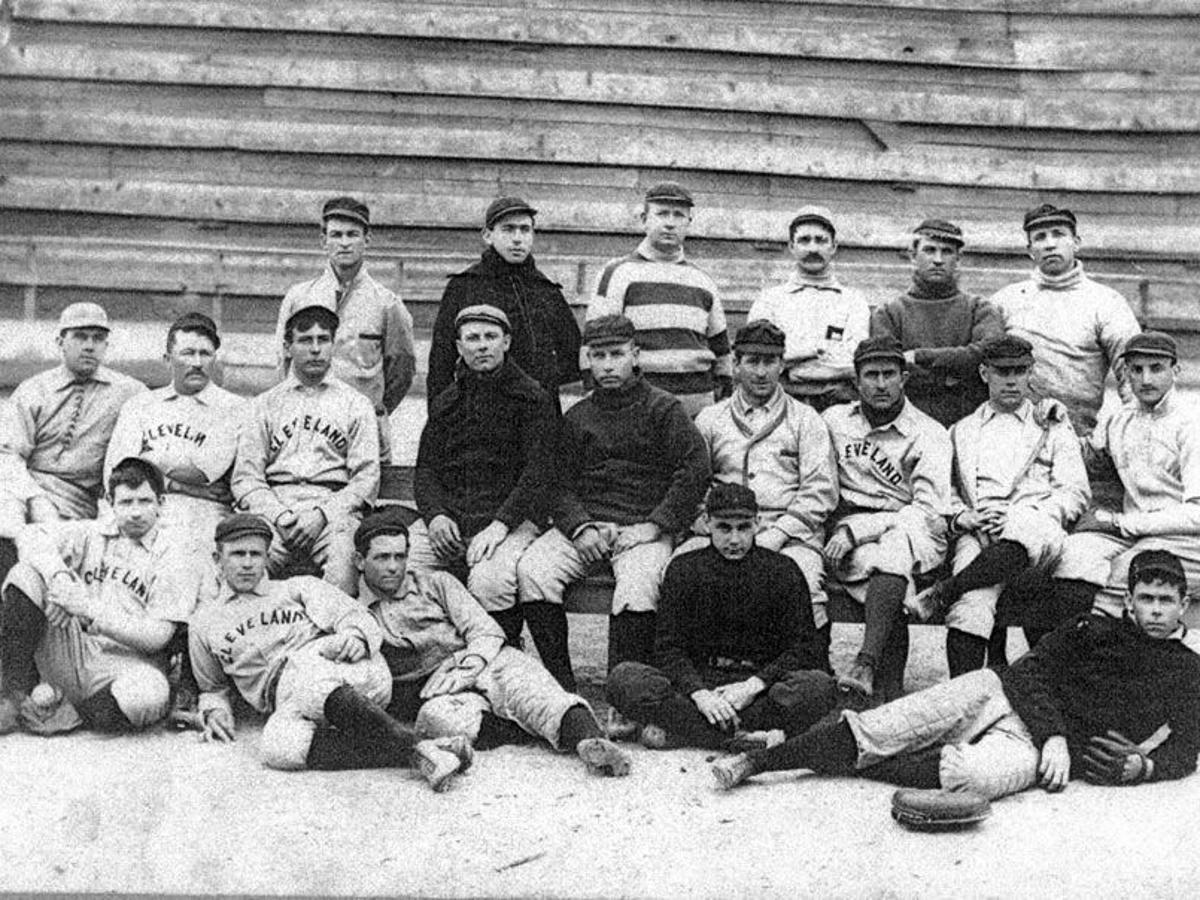
October 15, 1989: Wayne Gretzky scores a goal for the Los Angeles Kings for his 1,851st career point, surpassing Gordie Howe to become the NHL's all-time leading points scorer. The goal comes with 53 seconds left in regulation, tying the game against his former team, the Edmonton Oilers, a game the Kings go on to win in overtime.

October 15, 1991, 30 years ago: The U.S. Senate votes to confirm Clarence Thomas to the U.S. Supreme Court, by a very close vote of 52-48. He got the support of 41 Republicans and 11 Democrats, while 46 Democrats and 2 Republicans voted against him.

He had been appointed by President George H.W. Bush, to fill the seat of the retiring Thurgood Marshall, who had been the 1st black Justice on the Court. Thomas was the 2nd, and his record was so thin, liberals alleged that Bush was only appointing him because he was a black conservative.

I am of the firm belief that had he been, pardon the choice of words, judged solely on his qualifications, he would have been rejected. But women came forward to allege that he had sexually harassed them, and the Republicans on the Senate Judiciary Committee -- especially Orrin Hatch of Utah, Alan Simpson of Wyoming, and, more than any of them, Arlen Specter of Pennsylvania -- attacked the credibility of these women. I think the charges made the Republicans dig their heels in, and do whatever it took to get his nomination confirmed, just for the sake of angering Democrats.

Thomas has been part of the conservative bulwark of the Court that gave us such unacceptable decisions as Bush v. Gore (stopping the recount of the Florida votes in the 2000 Presidential election) and Citizens United vs. Federal Election Commission (the 2010 case that struck down campaign finance laws). Until Justice Antonin Scalia died in 2016, Thomas was notorious for simply voting the exact same way Scalia did, doing so 91 percent of the time.

Although no further allegations of sexual harassment have been leveled at Thomas, he may well be the worst Justice of the last 75 years -- and, with the death of Scalia and the retirement in 2018 of Anthony Kennedy, he is now the seniormost Justice.

Only 2 Senators who voted to confirm Thomas are still serving: Chuck Grassley of Iowa and Mitch McConnell of Kentucky.

October 15, 1995: Nine months after New York Jets owner Leon Hess hired Rich Kotite as head coach, saying, "I'm 80 years old, I want results now!" he gets a result. Not one he's looking for.

The Jets blow a 12-3 lead, and fall to 1-5, playing one of the worst games in team history -- including a Bubby Brister shovel-pass that gets turned into a "pick six" -- and the expansion Carolina Panthers get their 1st regular-season win ever, 26-15, at Frank Howard Field at Memorial Stadium in Clemson, South Carolina.

October 15, 1997: The Baltimore Orioles waste another magnificent effort by Mike Mussina, as the Cleveland Indians score the game's only run on Tony Fernandez's home run in the top of the 12th to win‚ 1-0. Mussina hurls 8 shutout innings and allows just 1 hit‚ while walking 2 and striking out 10. Charles Nagy does not give up a run in 7 1/3rd innings for the Indians‚ while surrendering 9 hits‚ as the O's leave 14 batters on base.

The pitcher who gave up the Pennant-winning homer to Fernandez? Armando Benitez. It is not the last time he will mess up a postseason game, but it is the last time he will do so for the Orioles. The O’s now had a 4-6 record in postseason games played at Camden Yards. Having finally gotten back to the postseason in 2012, but crashed out in the 2012 ALDS and the 2014 ALCS, that record now stands at 6-8, including 1-7 in ALCS games.

*

October 15, 2000: The Yankees lose 6-2 to the Seattle Mariners at Safeco Field, in Game 5 of the AL Championship Series. They still lead the series 3-2. Edgar Martinez and John Olerud hit home runs for the M's.

Dwight Gooden, whom the Yankees reacquired earlier in the season after he helped them win the World Series in 1996, pitched the 7th and 8th innings for the Yankees, without allowing a run. This turned out to be his last major league appearance. The former "Doctor K" had a career record of 194-112, and 2,293 strikeouts. There should have been more. And it wasn't just the drugs and the drinking that hurt him: He'd had serious injuries as well.

At ages 19 and 20, Doc was one of the best pitchers the game had ever seen. From 21 to 26, he wasn't that anymore, but was still one of the best pitchers in baseball. From 27 onward, he was just another injury-ravaged pitcher. He was about to turn 36, and was done.

Or, to put it another way: From 1984 to 1991, he went 132-53; from 1992 to 2000, he went 62-59. When he started, he seemed beyond human. As it turned out, he was all too human.

October 15, 2001, 20 years ago: The Yankees defeat the A's‚ 5-3‚ to move into the ALCS. In doing so‚ they become the 1st team ever to win a best-of-5 series after losing the 1st 2 games at home. Derek Jeter gets a pair of hits to break Pete Rose's postseason record with 87. David Justice hits a pinch-hit homer for the Yanks.

They will face the Seattle Mariners, whose 116-win season nearly went down the drain against the Indians, but they came back from a 2-games-to-none deficit. Not the biggest choke in Indians' history, but bad enough.

October 15, 2003: The Florida Marlins complete a stunning comeback by defeating the Chicago Cubs‚ 9-6 in Game 7 at Wrigley Field‚ to win their 3rd straight game and the NLCS.

The Cubs seemed, at first, not to be affected by their Game 6 disaster, as homers by pitcher (!) Kerry Wood and aggrieved left fielder Moises Alou give them a 5-3 lead. But Florida bounces back to take the lead on Luis Castillo's RBI single in the 6th. Miguel Cabrera hits a 3-run homer for the Marlins.
Catcher Ivan Rodriguez, who wins his 1st Pennant after going 1-9 in postseason games with the Texas Rangers, is named the NLCS Most Valuable Player. (Cough-steroids-cough, cough-Bartman-cough-absolved-cough)

Meanwhile, Game 6 of the ALCS is played at Yankee Stadium, as the Hundred-Year War builds toward a crescendo. The Red Sox rally for 3 runs in the 7th inning to come from behind, and pull out a 9-6 victory over the Yankees to send it to a Game 7. Boston slugs 16 hits‚ including 4 by Nomar Garciaparra‚ and gets HRs from Jason Varitek and Trot Nixon.

October 15, 2007: The Colorado Rockies beat the Arizona Diamondbacks, 6-4 at Coors Field in Denver, and complete a sweep of the NLCS for their 1st Pennant. Matt Holliday's 3-run homer makes the difference.

No team had ever swept their way to the World Series since the Division Series began in 1995. The Rockies were also the 1st team to have a 7-0 start to a postseason since the 1976 Cincinnati Reds finished 7-0, sweeping both the LCS and World Series.

The Rockies now have a chance to match or beat the 1999 Yankees' achievement of 11-1, the best postseason record since the LCS went to a best-4-out-of-7 in 1984. They have now won 21 of their last 22 games. But it will be their last win of the season, as they are, themselves, swept in the World Series by the Boston Red Sox * .

October 15, 2011, 10 years ago: With another home run in the Game 6 clincher, a 15-5 Texas Rangers rout of the Detroit Tigers, Nelson Cruz sets a new record for the most round-trippers in a postseason series with 6. The Texas right-fielder, who ended the regular season in a slump, is named the ALCS MVP.

It is the 2nd straight Pennant for the Rangers, as they'd never won a Pennant in the preceding 38 seasons (49 if you count their time as the "new Washington Senators"). They will try to top their finish of last season by winning the World Series, against the Cardinals.

*

October 15, 2013: After three calls that day, two the day before, and one on the preceding Friday, all to my boss, asking if he was going to show up at the office we used in Sayreville, Middlesex County, New Jersey, and pay me the money he owed me, I decided that, if he did not show up at 3:00, I was going to walk home. This was a problem, as, since he hadn't paid me, I had no money for the bus, lived 9 miles from the office, and hadn't had lunch, either.

He showed up just before 3:00, called me into his office, and reamed me out for making him leave an important meeting. No, paying your employees on time is important. Then, he said he was going to play back the phone message I left him on which I yelled at him, showing him a tremendous amount of disrespect. "You want me to play back that message, Michael?"

I called his bluff: "As a matter of fact, yes, I do want you to play back that message. Go ahead and play it!" I had not yelled at him, and, in fact, had practically begged him to come in, so I could have some money to eat lunch and get home. And, of course, go to work for the rest of the week. I literally could not afford to go to work. He backed down, because he knew that I knew he was lying.

He wanted to know why I was giving him such an attitude. I told him I was not going to accept that charge from someone who lived in a very ritzy town, and drove to work in a gigantic SUV, when I had to live with my parents and take the bus to work, and still had to walk a mile each way to and from the closest bus stop to my house and a mile and a half each way from the closest bus stop to the office.

I showed him enough respect to show up 5 days a week. He didn't show me -- or the other guy working for him, whom he paid even less than the pittance he paid me -- enough respect to show up and pay us what he owed us.

He paid me for the days I'd worked, and sent me home. I have never seen him again, nor do I want to. The truth is, when he was being himself, he was a decent guy; but when he was being The Boss, he was impossible. The truth is, he could have doubled my pay, and the situation would have gone from lousy to merely hard.

I refused to quit on the guy, because then, I would have been ineligible for unemployment insurance (which has long since run out). But I should have left well before it became unresolvable, before I began to see him as impossible to work for.

At times, things have been rough since. But I'm still better off. Not having to get to and from that job, and not having to do that job and work for that man, my stress levels are way down, and I no longer regret getting up in the morning.

I hope he's learned his lesson, and is treating his current employees better. I thought I was over the way he treated me. Maybe I will be, someday. But if he offered me my job back, even at double the pay (ha, ha), I wouldn't take it. Never again will I work for someone who makes me beg.

It's like Dave Barry's line: "If someone is nice to you but rude to the waiter, they are not a nice person."

*

October 15, 2014: The Kansas City Royals win their 1st Pennant in 29 years, beating the Baltimore Orioles 2-1 in Game 4 at Kauffman Stadium. Jason Vargas goes most of the way, to put the Royals in the World Series. The sweep is an embarrassment for the Birds, who scored just 1 run in each of the last 2 games.

October 15, 2015: The Mets win a postseason series. Stop laughing: They won one on this date in 1986, and came within a win of doing so on this date in 1969.

Despite trailing 2-1 going into the top of the 4th inning of the decisive Game 5, and being on the road at Dodger Stadium, the Mets tied it up. Daniel Murphy, seeing the infield shift for lefthanded hitter Lucas Duda, may have remembered the Johnny Damon double-steal in Game 4 of the 2009 World Series, and successfully tried the same, subsequently scoring on a sacrifice fly by Travis d'Arnaud.

Murphy then continued his sizzling late-season hitting with  a home run off Zack Greinke in the 6th. That was all Jacob deGrom, Noah Syndergaard in the 7th, and Jeurys Familia in the 8th and the 9th needed, and the Mets won, 3-2. Familia faced 16 batters in the series, and retired them all. He would not be as fortunate later on.

October 15, 2019: Game 3 of the ALCS at Yankee Stadium II. The Yankees squander the opportunity that winning Game 1 in Houston gave them. The Astros score a run in the 1st, another in the 2nd, and 2 in the 7th. They can't hit Gerrit Cole, and end up losing 4-1, their only run coming on a solo homer by Gleyber Torres in the 8th.

Yankee Fans can talk all they want about how Game 6 ended. But, if the Yankees had won this Game 3, there might not have been a Game 6.

But if the Yankees' hitting is bad, the St. Louis Cardinals' hitting is worse. They set an NLCS record for lowest team batting average: .132. For this Game 4 at Nationals Park, it's their pitching that's the real problem: The Washington Nationals score 7 runs in the 1st inning (oddly, with out a home run), and coast to a 7-4 win.

This is the 1st Pennant for the Nationals, the franchise that played as the Montreal Expos from 1969 to 2004, now in its 51st season. It is also the 1st Pennant won by a Washington team in 86 years, since the 1933 Washington Senators.