Thursday, March 21, 2013

The Interpretation of Fan Dreams


I had a dream last night. The specifics were surprisingly clear for a dream.

It was this coming October, and the Yankees were again facing the Baltimore Orioles in the Playoffs. It was Game 3, in Baltimore, and the series was tied at 1 apiece.

I was traveling, trying to get back to New Jersey. I had this distinct vision of being at a New Jersey Turnpike rest area. When we got "home," I recognized the house not as my current residence, or even the house where I grew up, but as my grandmother's house, near the Jersey Shore, a house I have not visited in the 7 years since my mother sold it after Grandma died.

I walked in there, and, instead of turning on the TV to check the score, the first thing I did was something I did not have the means to do while she was alive: I checked my smartphone for the score. Why didn't I check it in the car?

It was the bottom of the 13th inning, and the game was tied, 1-1, but the Orioles were threatening. There were names in both lineups that I didn't recognize, suggesting that the Yankees had somehow made the Playoffs by filling holes with surprising successes. The Yankees got out of the jam, but lost in the 14th.

Now, they were down 2 games to 1. Not a desperate situation, but not a good one, either. And, judging by the dearth of runs over those 14 innings, it seems like whatever plagued the Yankees in last year's postseason is still there.

The next day -- this is still within the dream -- I'm at a bank, and who should be there, but Joe Torre. Here's the weird part: He was wearing not a suit, not even a baseball uniform, but an Arsenal shirt, home red, with Thomas Vermaelen's name and Number 5 on the back.

Huh? Does Torre even know Arsenal exist? (Maybe, if he looks at the YES Network schedule.) And why Vermaelen? It's not like whatever skills Torre had as a  baseball player (he was a good hitter, a catcher, later a 3rd baseman and finally a 1st baseman) translate into the kind of skills that Vermaelen has in his sport (a centreback, a mainly defensive player who has scored the occasional goal). And Torre never wore 5, either: He wore 15 with the Braves from 1960 to '68, and 9 thereafter as a player for the Cardinals and Mets, and then as manager for the Mets, Braves and Cardinals, before switching to 6 with the Yankees and keeping that as manager of the Dodgers.

This was one whacked-out incongruity. I shrugged it off -- it stuns me more awake than it did asleep -- and said, "Hi, Joe."

He turned, and recognized me. (In real life, we have never met.) And he gave me the Torre Glare. And he said, "You don't get to call me Joe. Not after what you wrote."

Huh? What did I write that got him upset at me? I've usually been supportive of him on this blog. That was my reaction -- not, "Oh my God, Joe Torre not only knows I have a Yankee-themed blog, but he reads it!"

Somehow, I shrugged this off, too, and called him what Derek Jeter still calls him: "Okay, Mr. Torre." And he said, "That's better. Let's talk."

Suddenly, he switched from thinking my blog had cost me the right to call him by his first name to thinking I deserved an exclusive interview for my blog?

Besides, we were at a bank. Was he done with what he had to do there? How did he know I wasn't?

Before he could say anything substantive, I woke up.

I hate when that happens: The dream is just starting to get good, and you wake up. You see you have a lot of money, but you don't get to spend it. Or you see something that looks really good to eat, but you don't get to eat it.

Sigmund Freud would probably have said these dreams represent sex. In my case, seeing these things that give me pleasure -- money, food, baseball -- and I'm close to having them, but, like the beautiful woman who wants to be "just friends," no payoff.

In this case, I was hoping Torre could tell me why the Yankees weren't getting the job done. And then I could tell him, "Don't tell me, tell Joe Girardi." Clearly, within the confines of the dream (and probably in reality), Torre's successor as Yankee manager could use the help.

*

A Yankee Fan's dream is simple: Win the World Series.

Other teams dream of it, some dream that a Pennant is enough, some simply dream of what Met owner Fred Wilpon once said was his goal for his team: "Playing meaningful games in September."

Some fans dream of being at the ballpark for a big win. Others, of meeting their favorite player.

Why would I dream of meeting Torre, at this point? It's not like he has any effect on the Yankees anymore, any more than, say Lou Piniella. Even Yogi Berra and Reggie Jackson, officially still consultants with the club, have more official input.

And why would I dream of the Yankees losing? It didn't feel like a nightmare. It's not like Freddy Kreuger was anchoring SportsCenter on ESPN.

Around 1991 or so, I dreamed of seeing the Yankees beat the Red Sox at Fenway Park -- and, in 1999, literally, that dream came true.

But, in that same 1991 dream, I was having a pregame meal with Phil Rizzuto. That never came true, sadly -- but on my way out of Fenway in 1999, I did, literally, bump into Bobby Murcer and Tim McCarver. A little awkward, but they didn't hold it against me.

What's my dream for the Yankees in 2013? That they overcome all these doomsayers and have a typical Yankee regular season -- and then get the job done in the postseason.

But in order for a dream to come true, you gotta wake up, and make it happen.

Only, in this case, I have no effect on making this happen.

Whatever happens will happen, no matter what I do. Unless I do something criminal like purposely injuring a player.

I wouldn't do that. If I would have, Boone Logan would probably have spent much of last season in traction. (That's totally based on performance, not personality. For all I know, he's a decent person.)

It's frustrating. We fans, collectively, can create an atmosphere that leads a team on to victory -- or demoralizes them into defeat. But, individually, we have no effect.

Shut up, Cub fans: Blaming Steve Bartman for losing you that Pennant is like blaming your morning coffee for your afternoon's bad business deal.

If only I could have been good enough to play... If only that dream had come true...

Except, at my age, I'd now have been retired for a few years anyway. The fact that Mariano Rivera is slightly older than I am is an anomaly.  Mariano himself is an anomaly, in many ways: A struggling starter who came to the majors comparatively late, and was converted into the best middle reliever in the game, and then into the best closer ever; and a man who maintained a humble outlook in a business, professional sports, that, all too often, seems to reward outward displays of ego.

There's something to dream of: That we get more athletes with Mariano's mindset. Get a few more of those, and it won't matter if they have his talent.

Monday, March 18, 2013

The Hitchhiker's Guide to the Yankees

In 1979, British writer Douglas Adams published The Hitchhiker's Guide to the Galaxy, the 1st in a series of science fiction novels that covered a continuing story -- not continuing on Earth, as our home planet is destroyed early in the 1st book. (Must be that wacky British sense of "humour.")

The Hitchhiker's Guide to the Galaxy, the book-within-the-book, is known for its cover, featuring the words "Don't Panic":

It is said that despite its many glaring (and occasionally fatal) inaccuracies, The Hitchhiker's Guide to the Galaxy itself has outsold the Encyclopedia Galactica because it is slightly cheaper, and because it has the words "DON'T PANIC" in large, friendly letters on the cover.

*

Yes, I am aware that Arsenal Football Club are mentioned early in the 1st book, right before the end of the world, which is regarded as a lucky break for them. (It must have been written before the 1979 FA Cup Final.)

But this is not about Arsenal (who, in the last week, won 2-0 away to both Bayern Munich, for all the competitive good that did, and Swansea City). This is about the 1st team I ever loved, and still the team that I love the most, the New York Yankees.

First base: Mark Teixeira has a wrist injury, and could be out until June, and could require surgery that will have him out for the season, and may even threaten his career. He is about to turn 33. His backup will be Travis Hafner, formerly a star with the Cleveland Indians. He'll be 36 in June.

Second base: Robinson Cano is entering his walk year, and the Steinbrenner Brothers may choose to save money by not re-signing him, when he is probably the team's best player.

Shortstop: Derek Jeter is returning from a nasty ankle injury. He will be 39 in June.

Third base: Alex Rodriguez, due to a hip injury, will not play until after the All-Star Break in July; due to a revival of the steroid cloud over him, he may never play for the Yankees again. He will be 38 in July. Slated to fill in for him is Kevin Youkilis. Forget, for a moment, that he was Scum: At the moment, what matters is that he isn't that good anymore. If Youk has to move over to 1st to fill in for Teix, or if either Youk or Hafner is the DH, the 3rd baseman will be Eduardo Nunez, a.k.a. "NunE5."

Left field: Brett Gardner is coming off an elbow injury that kept him out most of last season.

Center field: Curtis Granderson was hit by a pitch in spring training, and had his forearm broken. He is likely to be out until early May. Another former Detroit Tiger, Brennan Boesch, has been signed, and he's got some stick, but there's got to be a reason why the Tigers let him go.

Right field: Ichiro Suzuki is 39.

Catcher: What catcher? As Casey Stengel taught us, "You gotta have a catcher, or you're gonna have a lot of passed balls." Right now the choices are Francisco Cervelli (27 and a career backup), Chris Stewart (31 and a journeyman who's never stuck anywhere, probably due to having a .217 lifetime batting average ), and Austin Romine (22 with 8 career plate appearances in the major leagues, and, even in the minors, he wasn't hitting much).

Starting pitching: CC Sabathia can be counted on. But Andy Pettitte is 41, Hiroki Kuroda is 38, Phil Hughes and Ivan Nova have been inconsistent, and David Phelps is still largely an unknown quantity and may appear more in the bullpen anyway. Michael Pineda may never pitch again, and certainly won't appear in the majors until at least June. (On the other hand, while the Yankees desperately need a good catcher, Jesus Montero, the guy we traded to get Pineda, isn't exactly tearing up Safeco Field for the Seattle Mariners.)

Relief pitching: Mariano Rivera is back for one last season. Forget the injury, he's fine. Forget that he's 43 years old, he's Mariano Rivera. But his replacement as closer has still not been found. Rafael Soriano is gone, and he won't be missed. David Robertson could be the next closer, but he wasn't very good last season. The rest of the bullpen is iffy. Phelps did all right in a middle relief role, but I will never trust Boone Logan, and I have yet to fully trust Cody Eppley and Clay Rapada.

Competition: The Baltimore Orioles greatly improved last season. The Toronto Blue Jays made some key acquisitions, and look much improved. The Tampa Bay Rays have lost a bit of talent, but still have a bit. And the Boston Red Sox cannot be counted on to be as lousy as they were last season. And that's just in the American League Eastern Division.

It sure looks like the Yankees are doomed to their 1st non-Playoff season since 2008, only their 2nd in a full season since 1993.

It's easy to say, "To hell with that: We are the Yankees, and we will find a way to win." Well, it's hard to see a way through all that.

But you never know: Men have grown old waiting for the Yankees to fall apart, and gone bankrupt betting against them.

Confident? It's hard to be.

Still, we are the Yankees.

DON'T PANIC.

*

Hours until the Devils play again: 33, tomorrow night, home to the New York Rangers. Beat The Scum!

Hours until the Devils play another local rival: See the previous answer. Remaining "derby games" in this regular season: Monday, April 1, home to the Islanders; Thursday, April 18, away to Philadelphia; Sunday, April 21 and Saturday, April 27, both away to the Rangers.

Days until the U.S. National Soccer Team plays again: 4, this Friday, against Costa Rica in the last, "Hexagonal" round of CONCACAF World Cup Qualifiers, for the region that encompasses North America, Central America, and the Caribbean nations. The game will be played at Dick's Sporting Goods Park in the Denver suburb of Commerce City, Colorado, home ground of MLS' Colorado Rapids. A must-win if America is to qualify for the 2014 World Cup.


Days until the Red Bulls play again: 5, this Saturday, away to the Montreal Impact. Their home opener, against D.C. United (or, as Metro fans call them, "The D.C. Scum"), was a turgid 0-0 played in a constant snowfall that, thankfully, did not accumulate.


Days until Arsenal play another competitive match: 12, home to Reading. This week is a break from League play so that national teams can play 2 international matches, a.k.a. an "Interlull."

Days until the Red Bulls next play a "derby," against either the New England Revolution, the Philadelphia Union or D.C. United: 12, on Saturday, March 30, home to Philly.

Days until the Yankees play again: 14, on Monday, April 1, at 1:05 PM, at home at Yankee Stadium II, against the Boston Red Sox. Just 2 weeks. Beat The Scum!

Days until the next Yankees-Red Sox series begins: See the previous answer.

Days until the next North London Derby: Unknown, since next season's schedule won't be released until mid-June. The season will most likely open on the 3rd Saturday in August, in this case August 17, but it's been a long time since Arsenal vs. Tottenham was an early game (possibly 1988-89). But even if it is that early, that's 152 days.

Days until Rutgers plays football again: 164, on Thursday night, August 29, away to Fresno State University in California. A little over 5 months. The 1st home game of the 2013 season will be on Saturday, September 7, vs. Norfolk State. The schedule is far from complete, with only the first 4 games set, all nonconference games. The question marks surrounding the Big East, including Rutgers' own bolting for the Big Ten, have forced this.

Days until East Brunswick High School plays football again: Uncertain, since the 2013 schedule has not been released. But if the usual pattern holds, it will be on the 2nd Friday in September... which, next year, just so happens to be a Friday the 13th. Oy vey. Anyway, if that's the way it works out, then it's 179 days. Just 6 months.  nd when it does happen, it will be the first game they play without Marcus Borden as head coach since Thanksgiving Day 1982 (a loss to Colonia High of Woodbridge), as he has left the program. (Did he jump, or was he pushed? I don't know.)


Days until the next East Brunswick-Old Bridge Thanksgiving clash: 255. A little over 8 months.

Days until Super Bowl XLVIII at the Meadowlands: 321 (February 2, 2014). Under 11 months. 

Days until the next Winter Olympics, in Sochi, Russia: 326 (February 7, 2014).


Days until the next World Cup, in Brazil: 451 (June 12, 2014). Under 15 months.

Days until the next Summer Olympics, in Rio de Janeiro, Brazil: 1,236 (August 5, 2016). Under 4 years.

Tuesday, March 12, 2013

Top 10 Religious Nicknames In Sports

Today, a Conclave of Cardinals meets at the Vatican to begin selecting a new Pope, to replace Benedict XVI, who resigned in order to avoid impeachment. I mean, to spend more time with his family. I mean, because he felt he was too old and infirm to do the job.

There's an old joke: "Who are the two former Cardinals honored in Monument Park in Yankee Stadium?" Of course, for centuries, every Pope had been a Cardinal first, so the answer is "Pope Paul VI and Pope John Paul II." Each delivered a Mass at the old Stadium: Paul VI in 1965, the first Papal Mass ever delivered in the Western Hemisphere; and John Paul II in 1979.

What the joke doesn't tell you is that 1920s manager Miller Huggins and 1960s right fielder Roger Maris played for the St. Louis Cardinals, so there was an actual answer to the joke.

The Mass delivered in 2008, in the final season of the old Stadium, by Benedict XVI ruined the actual answer to the stupid joke. Unless Joe Torre, who (like Huggins) both played for and managed the St. Louis ballclub, gets his Plaque before Pope Unknown the Questionmarkth comes to become the first Pontiff to preach at the new Yankee Stadium.

John Paul II delivered Masses at Yankee Stadium, then Shea Stadium. He went to Yankee Stadium first.  Gee, maybe he really was infalliable. He also delivered Mass at Madison Square Garden.

Disclaimer: I was raised Methodist, therefore Protestant. I am not trying to denigrate faith in general or the Roman Catholic Church in particular. However, every organized religion has things for which it must answer to the God it claims to represent.

As Bill Veeck, who owned 3 different Major League Baseball teams, put it, "Baseball is like religion: Great game, lousy owners." Or, to put it another way, all too often, the fans/believers are ahead of the owners/bishops.

I hope the Vatican gets it right with their next "Commissioner."

Top 10 Religious Nicknames In Sports

10. Sports Pope. Bob Raissman of the New York Daily News gave this nickname to WFAN host Mike Francesa, because Francesa apparently believes himself to be infallible. This is the dumbest one, so I'm doing it first.

9. Lord. James William "Jimmy" Jordan was a mediocre middle infielder for the Brooklyn Dodgers in the mid-1930s. He appears to be the only ballplayer whose nickname was "Lord." I can't find any reference to a reason. So I'm doing it next.

8. Jesus. It takes a lot of guts to call someone that, unless it's his name, as many Spanish-speaking players have been named that, with the pronunciation "Hay-ZOOS." But 2 basketball players have had the nickname: Earl "the Pearl" Monroe was Black Jesus, and Larry Bird was Basketball Jesus.

Come on: Both were great players, but the closest either got to performing miracles was the Pearl sublimating his ego so that he could play with Walt Frazier, and Bird's steal on the Detroit Pistons. Although, with all the sweating that goes on on a basketball court, both could be said to have "walked on water."

In 1978, Ron Guidry had the best season any New York-based pitcher has ever had. In 1984, Dwight Gooden became even more celebrated, even though he wasn't as good.  Both times, people would remark about them, "He ain't God, man."

But before the 1978 Yanks-Red Sox playoff game, Guidry heard it from one of the Sox, and sent him a note saying, "No, I'm not God, but I'm the closest thing to it you'll ever face" -- a rare moment of ego from "Louisiana Lightning." And Keith Hernandez defended Gooden by saying, "No, but he might be God's Son."

There was a basketball player from New York whose father named him God Shammgod -- which might have been the inspiration for Ray Allen's character of Jesus Shuttlesworth in Spike Lee's film He Got Game. Not wanting to sound like he thought he was God, Shammgod began using the name Shammgod Wells, and that's how he was known in high school at New York's La Salle Academy. But when he got to Providence College, he was told he had to use his birth name or legally change it. He didn't have the $600 fee to go to court and have his name legally changed, so he became known as God Shammgod from then on. He played 2 years (1997-99) with the Washington Wizards, and then bounced around minor and international leagues for the next 10 years.

7. The Rabbi of Swat. When Babe Ruth arrived with the Yankees in 1920, and started bringing in fans with his home runs, and was nicknamed "The Sultan of Swat," New York Giants manager John McGraw was eager to find someone who could do the same for his club. He thought a Jewish player would be a big draw in New York. So he looked for someone who could be called "The Rabbi of Swat."

The good news: He found one, an outfielder named Mose Solomon, who was not just Jewish, but a New York native, growing up in the most stereotypically Jewish place in America, Manhattan's Lower East Side. And Mose seemed to be a decent player in the minor leagues: His batting average was .313, and in 1923 he hit 49 home runs in just 108 games -- at Class C, which was roughly equivalent to today's "Short-season A-ball."

The bad news: Solomon was less a Babe Ruth, more a Dave Kingman. He was a horrible fielder, and after 8 games in September 1923, McGraw determined that this guy was not going to play in the upcoming World Series against Ruth and the Yankees -- which the Yankees won. Solomon never played another major league game.

6. Superjew. Mike Epstein was a slugging 1st baseman for several teams. He came up to the Baltimore Orioles in 1966, too late to be on their World Series roster, but in 1972, he won a ring with the Oakland Athletics.

In the postseason, he wore a black armband in memory of the 11 members of the Israeli Olympic team who had been killed by terrorists at the Olympics. Teammates Ken Holtzman, who was also Jewish, and Reggie Jackson, who had grown up a black kid in a Jewish neighborhood in a Philadelphia suburb, also wore them. Neither team owner Charlie Finley nor Commissioner Bowie Kuhn, both freaks for conformity, took action against them -- maybe the only time Finley and Kuhn agreed with each other on something and did the right thing. (Reggie was injured in the final ALCS game and did not play in the Series, but he did wear the armband until then.)

5. The Caliph of Conversion. No, he wasn't a proselytizing Muslim, but you should still know the name of musical legend Tommy Walker. No, not the protagonist of The Who's rock opera Tommy. This Tommy Walker played for the University of Southern California in the late 1940s -- both on the football field, as a placekicker, and in the marching band, as a trumpeter.

He is the man who wrote "The Charge Call." He was trying to come up with a sound that would spur his team on, and thought of combining the "charge call" of Western-movie cavalries and the "Call to the Post" from horse racing, and came up with, "Dah dah dah DAT dah dahhhh!"

4. Deacon. This has been used for many baseball players, to suggest that they had high morals, including: James White, 1880s 3rd baseman; James McGuire, early 20th Century catcher; Bill McKechnie, 1910s 3rd baseman and 1920s-40s manager; and Vernon Law, 1960s pitcher.

I had read somewhere that Bill McKechnie actually was a deacon at his church, but this appears to be an exaggeration: He was not an official at the church, but he was a member of its choir. Vern Law, on the other hand, is a Mormon who was named a deacon in that faith at the age of 12, and a priest in it at 17. In 1960, at a time when the Cy Young Award was given to the most valuable pitcher in both leagues, he won it, as he was a major factor in the Pittsburgh Pirates winning the World Series.

Today, March 12, 2013, is Vernon Law's 83rd birthday. He is very much still active, both in his church and in baseball: His son Vance Law, also a former major leaguer, is the head baseball coach at Brigham Young University, and at adjoining Provo High School, Vern is the pitching coach.

But the best-known Deacon in sports is David Jones, the legendary defensive end who anchored the "Fearsome Foursome" of the 1960s Los Angeles Rams. He also had a political nickname: The Secretary of Defense. George Allen, who coached him in L.A., called him the greatest defensive end of modern football. Jones also created the term "sack" to describe tackling the quarterback behind the line of scrimmage. In 1999, The Sporting News ranked their 100 Greatest Football Players, and Deacon Jones came in at Number 13, the highest-ranking defensive end, ahead of even Reggie White.

Speaking of whom, White was an ordained minister. So was Mike Singletary before him. Both were nicknamed the Minister of Defense.

3. Preacher. Elwin Charles Roe was a crafty lefty who pitched for the Brooklyn Dodgers, one of their famed "Boys of Summer." Some "boy": He was already 31 when he threw his 1st pitch for them, and was already a veteran of 4 seasons, plus 6 more in the minors, and he lived to be 92.

He got his nickname at age 3, when, back home in the Ozark Mountains of Arkansas, an uncle asked his name, and he said, "Preacher." When asked why he said that was his name, he said he liked the minister who would take him on horse-and-buggy rides.

Preacher Roe was a 5-time All-Star. In 1951, he went 22-3, and if there had been a National League Cy Young Award that year, it would have been down to him and the New York Giants' Sal Maglie. "Ole Preach" had a great curveball, and a spitball that was, with a wink and a nod, called a sinker.

But he missed out on the Dodgers' 2 most important seasons: He and 3rd baseman Billy Cox were traded there from the Pirates after the 1947 season that launched both Jackie Robinson and the Boys of Summer generation of Dodgers, and both were sent back to the Pirates after 1954, and it was the next year that the Dodgers finally won the World Series. Roe was about to turn 40, and retired rather than report to the Pirates.

My Grandma, a former Dodger fan from Queens, told me this story, and I can now confirm it: A great pitcher but a horrible hitter, Roe batted .110 lifetime, but in 1953 he hit a home run -- at, of all places, the toughest hitters' park in the league, Forbes Field in Pittsburgh. He got a standing ovation from the Pirate fans, who not only remembered him as one of their own, but knew just how strange this achievement was for him.

And Red Barber, the Dodgers' broadcaster, said, "Well, old Number 28 has hit a home run, and we'll never hear the end of it, folks!" Red was assuming that Ole Preach would talk about it forever. As I said, he lived to be 92, in 2008, and I'm sure he was still talking about it. I'm still talking about it now.

2. Mahatma. This title is from the Sanskrit language of the Indian subcontinent, meaning "Great Soul." It is similar in usage to the Christian title "Saint." It is most commonly associated with Mohandas Gandhi.

In sports, it is associated with Branch Rickey, the man who built the St. Louis Cardinal Pennant-winning teams of 1926 to 1946, the Brooklyn Dodger Pennant-winning teams of 1947 to 1956, and the Pittsburgh Pirate World Champions of 1960.

In spite of a decidedly non-Christian nickname, Rickey was a deeply devout Methodist, who wouldn't even show up for work at the ballpark on Sunday, being the Christian Sabbath. However, he had no problem accepting the profits gained on the day. How he rationalized that, I don't know.

1. The Pope. Paul Owens, longtime general manager of the Philadelphia Phillies, was nicknamed Pope not just because his name was Paul and he was greatly admired, but because he actually did bear a bit of resemblance to Pope Paul VI, the Pontiff from 1963 to 1978. Owens also managed the Phillies to their 1983 Pennant.

In case you're wondering about former Baltimore Ravens and Kansas City Chiefs running back Priest Holmes, that's his real name: Priest Anthony Holmes.

Friday, March 8, 2013

The Arsenalisation of the Yankees

I support a team that was once symbolic of excellence in its sport in its country.

But that team has recently fallen on hard times.

That is, hard times by its standards. By most teams' standards, what my team has gone through in the last few years would be considered "the good old days."

To make matters worse, this team has new owners who are determined to cut costs after previous ownership spent money like it was no big deal

This has helped other teams with fabulously wealthy owners spend like crazy, and overtake my team for league honors.

It doesn't help that my team has a business manager who seems to be okay with ownership's desire to spend less.

It also doesn't help that my team has a field manager whose tactics are highly questionable, who has won before, but now seems puzzled by the changes in the game, and who seems too set in his ways, too committed to his old philosophy, too committed to certain players who haven't been getting the job done, and too willing to let good players go, to move the team forward.

In addition, some of my team's big-game opponents have engaged in blatant cheating, and have really not been punished for it, even though everybody knows it. Yet it is my team that gets accused of cheating, more than any other.

Everybody knows it our opponents cheat and play dirty, but few of them care. The national media seem to be against my team, and revel in their near-misses.

And the new stadium that was recently built? It's huge, and it's comfortable, and it's a great theater for a great team. But it's pricing the average fan out of regular attendance. And the rich fans who get the best seats don't seem to be into it, the way the hard-core fans are.

Of course, the team does still contend for honors, but injuries to lots of players haven't helped. Injuries to great attackers, injuries to great defensive players, injuries to men who are seen as team leaders, injuries to role players, injuries to young players who thus have not gotten a fair chance to develop into the players they were expected to become...

True, every team has injuries, but with my team, it never seems to stop. And while the field manager usually seems to find the right role player to fill in, it never seems to be enough.

And a change back to the old successes doesn't seem to be soon in coming.

The team I speak of, of course, is the New York Yankees.

Or... Is it the Arsenal Football Club?
Since winning the World Series in 2000, their 4th title in 5 years, the Yankees have played 13 seasons, reaching the American League Championship Series 7 times, which is good, but the World Series just 3 times, and winning it only once. In that time, 3 teams have won 2 World Series: Boston, St. Louis and San Francisco.

Since winning the FA Cup in 2005, their 7th "major trophy" in 8 years (and just missing 3 others), The Arsenal have played 8 seasons, and while they've reached the Champions League Final once, the CL Semifinal one other time, the FA Cup Semifinal once, the League Cup Final twice, and twice made serious runs at the Premier League title, and have qualified for the CL every season by finishing no lower than 4th, they haven't won another trophy, and haven't finished higher than 3rd.

In that time, only 2 English teams have done better than the Pride of North London: Manchester United and cross-London team Chelsea. Manchester City have done better in the last 3 years, but not in the 5 before that.

Since the death of George Steinbrenner, his sons Hank and Hal, and daughters Jennifer and Jessica, seem determined to beat the one thing Dear Old Dad never beat: The luxury tax threshold, which, for this season, will be $189 million. That's still a lot, and, at the moment, the only team, other than the Yankees, projected as spending more than that is the Los Angeles Dodgers.

Still, Yankee fans, used to their team spending whatever they thought it would take to win, are distressed: The biggest reason to root for the Yankees is that, more than any other team, they were trying to win.

Every team has owners whose wealth, by most people's standards, would be insane. Every owner can afford to spend as much as the Yankees do; most choose not to even come close. It's why, as much as I hate the Red Sox, I respect owner John Henry and his management team: They, too, are trying to win first and make money second, knowing that winning will make money. So many team owners, such as David Glass of the Kansas City Royals, are richer than the Steinbrenners, but keep payrolls low so as to minimize cost. Essentially, they are okay with their teams not making the Playoffs.

Glass was an already wealthy man who married into the Walton family of Wal-Mart treachery, so he can spend whatever he wants; he just doesn't spend enough. This is also true of Stan Kroenke: He made his money in real estate before marrying a daughter of Bud Walton. (Glass married a daughter of Sam Walton, making he and Kroenke cousins-in-law.)

Kroenke has been sole or part owner of teams that have won league titles in 3 different sports: The 1996 and 2001 Colorado Avalanche of the NHL, the 1999 St. Louis Rams of the NFL, and the 2010 Colorado Rapids of MLS -- meaning he's won a league title in soccer, the sport played by Arsenal. He became a part-owner of Arsenal in 2007 and controlling owner in 2011.

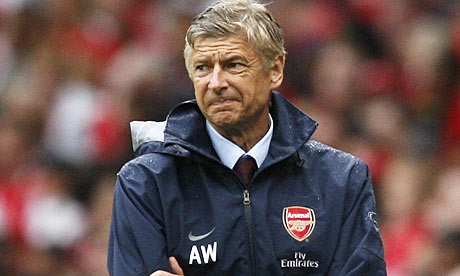
But Arsenal fans have seen manager Arsène Wenger spend amounts that would have seemed big when the club were winning, but seem small in comparison to what Chelsea, the Manchester clubs, and once-great but now struggling Liverpool (owned by the Red Sox' owners) are spending.

At games, they yell at Wenger, "Spend some fucking money!" Other fans think it's not Wenger's fault, and yell, "Sack the board!" Like Liverpool, whose previous owners were also Americans (George Gillette of the Montreal Canadiens and Tom Hicks of the Texas Rangers and Dallas Stars), they think "Yanks" know "fuck all" about "football" and shouldn't be involved in "England's game."

In North American sports, especially after World War II, the manager (baseball or soccer) or head coach (football, basketball or hockey) is almost never the same person as the general manager (GM). It's too much work for any one man.

The last man to be both head coach and GM and win a "World Championship," as far as I know, was Whitey Herzog, who got the St. Louis Cardinals to win the 1982 World Series, and won 2 more Pennants, losing the Series in Game 7 both times. It's been tried in the NBA and the NHL, frequently on an interim basis until a new head coach can be hired, but it hasn't worked.

In the NFL, a Super Bowl-winning coach can fall out with ownership, and be offered the head job at another team, but he'll remember what happened with his last team, and tell his prospective new boss, "I'll take the job on one condition: I want it all. I want full control. Make me not just the head coach, but the GM, too. Give me complete control over player personnel decisions. Otherwise, I'll stay retired, or go into broadcasting."

This has almost worked: Bill Parcells, after winning 2 titles with the Giants, got the New England Patriots to a Super Bowl and the Jets to within one game of one, and got the Dallas Cowboys to the Playoffs, but couldn't go all the way. Mike Holmgren, after winning a title with the Green Bay Packers, got the Seattle Seahawks into a Super Bowl, but couldn't win it, and is now president of the Cleveland Browns, who are no closer to respectability than when he arrived. Jimmy Johnson, after winning 2 titles with the Cowboys, got the Miami Dolphins into the Playoffs, but couldn't even get them to an AFC Championship Game.

But in soccer, both jobs, head coach and GM, are held by a single "manager." And, with the amount of money ratcheting up the pressure, and the pushiness of the European media, it's too much for any one man. Unless you pay off the refs like Man United's Alex Ferguson does. Even Jose Mourinho, who revived Chelsea, has bounced around; he's been successful in his native Portugal, England, Italy and now Spain, but he never stays anywhere for very long, because the image he's created for himself as "The Special One" has been turned by the media into both a blessing and a curse.

And even if Arsenal boss Wenger were making the right acquisitions, his in-game decisions make Arsenal fans wonder if he's reading from a binder, as Yankee manager Joe Girardi is often doing.

Just as Girardi will tweak his lineup with what-the-hell moves, Wenger tinkers with his starting XI with positioning that most fans simply don't get. He has stuck with players long since proven inadequate, because, unlike the last great Arsenal manager, George Graham, he simply doesn't have the ruthlessness.

How many times did he have to see mistakes by Manuel Almunia, Abou Diaby, Carlos Vela, Denílson Pereira Neves, Alex Song, Mikaël Silvestre, Sebastien Squillaci, Johan Djourou, Gaël Clichy, Emmanuel Eboué and Nicklas Bendtner before he realized that these players simply were not Arsenal quality? (Incredibly, Diaby and Squillaci are still on the active roster; while Vela, Denílson, Djourou and Bendnter are on loan, and thus are still, officially, Arsenal property. Why?)

Giving it a little more thought, a better comparison for Wenger would be to the last Yankee manager, Joe Torre.  Each man began running the club in question in 1996. In Torre's 1st 8 seasons: 8 Playoff berths, 6 American League Pennants, 4 World Championships. In his last 4 seasons, with some odd lineups and pitching changes (including trusting several inadequate relievers way too much), 4 Playoff berths, only 1 trip to the AL Championship Series, no Pennants.

In Wenger's 1st 9 seasons: 3 League titles, 4 FA Cups, 1 Champions League Final, finished 3rd in his first season and then never finished lower than 2nd. In the 7 seasons since, since he began the youth project by letting Patrick Vieira go and building the team around unfaithful servant Cesc Fabregas (including trusting several inadequate players way too much), 1 CL Semifinal, 2 other CL Quarterfinals, 1 FA Cup Semifinal, 2 League Cup Finals, and 3rd or 4th every year, and may not even finish that high this year. He sill qualified for the CL every season except his 1st, although that streak may end this year.

The replacement of Torre with Girardi is also a wakeup call: Girardi's 1st season, 2008, was the Yankees' 1st season since 1994 -- since 1993 if you remember that '94 was the year the Strike led to the postseason's cancellation -- that the Yankees didn't make the Playoffs. Understandable, since there were problems Girardi couldn't erase in 1 year.

Then he won the 2009 World Series. Back to normal, right? Wrong: The Yankees lost in the ALCS in 2010 and '12, and in the AL Division Series in '11, all while Girardi made some mistakes that were rather Torresque.

In other words, replacing Torre, which so many Yankee Fans wanted in 2006 and '07, may not have been the best idea; replacing Wenger, which so many Arsenal fans have wanted since 2010, is no guarantee of restoration, either. Especially since, as with the Yankees of 1982-95, the Arsenal performance before Wenger wasn't so hot. Yes, there were 6 trophies in 8 years, but the last 5 pre-Wenger seasons, including 3 of those trophies, Arsenal finished 4th, 10th, 4th, 12th and 5th in the League, which, if Wenger had done it, would make the "Wenger Out Brigade" demand that Le Boss be sacked, tarred-and-feathered, shot, hanged, and drawn-and-quartered -- not necessarily in that order.

Not that I have no problem with Wenger. My main problem with him is his lack of ruthlessness, a trait he shares with Torre and Girardi. He won't make substitutions when he needs to, and then frequently makes the wrong substitutions. And, just as Torre did with Paul Quantrill, Scott Proctor and Kyle Farnsworth, and Girardi has done with Boone Logan, Wenger's stuck too long with players who would never have made the starting XI on his better teams, even in place of injured starters.

Usually, the 1st of the 3 substitutions that are allowed per game (and, like MLB but unlike the NFL, the NBA and the NHL, once a player leaves a game, he can't go back in) doesn't come until at least the 70th of the regulation 90 minutes. He'll let a player who's been making mistakes all game long stay in, and when the 1st substitution is finally made, he'll take off a completely different player -- even if the player he's sending in can also play the position of the player who's been crapping it.

Only once have I ever seen Wenger replace a player at halftime for reason other than injury: Denílson. Emphasis on the NIL. Not to be confused with the Denílson who starred with Brazil's 2002 World Cup winners. This one is the worst player Arsenal have had since I started watching in 2008. He was once the Captain of Brazil's Under-17 national team, but hasn't played for Arsenal since the close of the 2010-11 season, having been on loan to his former club São Paulo since then.

(To be fair, Graham often took it too far, marginalizing and/or selling good players too soon: Kenny Sansom, Niall Quinn, Martin Hayes, John Lukic, David Rocastle, Michael Thomas. In some cases, it paid off; in others, it didn't.)

Some Arsenal fans like to say of Wenger, "His tactics are shit." Funny, but they didn't seem to think his tactics were shit when he won the League and the FA Cup in 1998 (this is known as "Doing The Double"), nearly won the League again in 1999, finished 2nd and reached the UEFA Cup Final in 2000, finished 2nd and reached the FA Cup Final in 2001, won another Double in 2002, narrowly missed yet another Double but still won the FA Cup in 2003, went through an entire League season undefeated in 2004 (the only time it's happened since 1889), won the FA Cup in 2005 and reached the CL Final in 2006.

They say he doesn't know about defense (or "defence" as it would be spelled over there). They say he only won what he won because inherited "Graham's back four": Right back Lee Dixon, left back Nigel Winterburn, and centrebacks Tony Adams and Steve Bould, plus reserve centreback Martin Keown. Sometimes they say "Graham's back five," counting goalkeeper David Seaman.

Let the record show that, under Graham, the 2-3-5-6 of Dixon, Winterburn, Bould and team Captain Adams won 2 League titles (1989 and '91), each of the domestic cups (FA Cup and League Cup) once (a "Cup Double" in 1993, the 1st time it had ever been done), and the 1994 European Cup Winners' Cup (a competition that is no longer played). Adams had also been around for an additional League Cup in 1987, with the others acquired over the next 2 seasons. Seaman came along for the '91 League title, and also won the Cup Double and the Cup Winners' Cup.

But they won the Double under Wenger. Seaman, Adams and Dixon won another Double under Wenger. Adams and Dixon then retired, but Seaman won another FA Cup under Wenger. In other words, Graham's players not only had their careers salvaged by Wenger, but they won more under Wenger than they did under Graham.

And Wenger managed to replace each of them with a player of similar quality: Bould in 1999 with Keown, Winterburn in 2000 with Ashley Cole, Adams in 2002 with Sol Campbell (Sol pretty much took Adams' place in the 2001-02 season), Dixon in 2002 with Lauren Etame Mayer (usually just called "Lauren"), Seaman in 2003 with Jens Lehmann, and the retiring Keown in 2004 with Kolo Toure (who had pretty much forced Keown into retirement the year before, much the same way that Sol had led Adams to do).

True, Wenger has had trouble replacing those defenders, but goalie Wojciech Szczesny, right back Bacary Sagna, left back Kieran Gibbs and centrebacks Laurent Koscielny and Per Mertesacker are as good at their positions as anyone in the League, and reserve right back Carl Jenkinson and left back Nacho Monreal are good and getting better. The real problem, aside from the injuries, is centreback Thomas Vermaelen, a disappointment who has the enthusiasm of a Captain, but not the leadership ability, and never should have been appointed to the post.

Another issue, besides keeping the wrong players, is the players they let go. In the Yankees' case, this is less Girardi's fault and more GM Brian Cashman's. He shouldn't have let catcher Russell Martin go, especially after letting catching prospect Jesus Montero go to get pitcher Michael Pineda, who's been hurt and hasn't pitched in Pinstripes at all. He may also have let pitcher A.J. Burnett get away too soon. And say what you want about Melky Cabrera's steroid use, but the Melkman was a big reason why the San Francisco Giants won the World Series last year.

Wenger always seems to find players to replace the good ones who whine their way out, but he keeps letting those players whine their way out. Whether it's over money or their perception of the club's "ambition," Wenger has lost Ashley Cole to Chelsea in 2006, Thierry Henry to Barcelona in 2007, Mathieu Flamini to AC Milan and Aleksandr Hleb to Barcelona in 2008, Emmanuel Adebayor and Kolo Toure to Manchester City in 2009, Cesc Fabregas to Barcelona and Samir Nasri and Gael Clichy to Man City in 2011, and Robin van Persie to Man United in 2012.

It can be argued that some of those -- Flamini, Hleb, Kolo, Nasri, and now even Cesc at his boyhood club -- have been marginalized, and that it would have been better for them, at least as individuals, if they had stayed. But the team successes enjoyed by all but Adebayor (who was loaned out by Man City and then sold to Tottenham before City won the 2011 FA Cup and the 2012 Premier League title) shows that, at least as far as the "ambition" argument goes, they were right. Hell, in 2012, even Eboué won a League title, in Turkey with Istanbul club Galatasaray.

*

The cheating? It's not just the Boston Red Sox who have used performance-enhancing drugs, and beanballs and other forms of purposeful attempts to injure, to stop the Yankees, but the Sox, more of an arch-rival to the Yankees than the Mets (or even the Baltimore Orioles, who are slightly closer than the Sox to the Yankees in terms of distance) could ever be, have been getting away with it for about 15 years.

Steroids by David Ortiz and Manny Ramirez, and suspected use of them by Pedro Martinez, Kevin Millar, Trot Nixon, Mark Bellhorn and Bill Mueller. Beanballs from Pedro, Bronson Arroyo, Daisuke Matsuzaka, Jon Lester and John Lackey.

Look at some of the Yankees' other postseason opponents: The 1995-2001 Seattle Mariners (widely suspected with Jay Buhner and the young, pre-Yankee A-Rod), the 1996-97 Orioles (proven with Rafael Palmeiro and suspected with Bobby Bonilla and Brady Anderson), the 1997-98 Cleveland Indians (proven with Manny and Matt Williams), the 1996-99 Texas Rangers (proven with Juan Gonzalez and widely suspected with Ivan Rodriguez), the 2000-02 Oakland Athletics (proven with both Giambi brothers, future Yankee Jason and Jeremy), the 2000 Mets (widely suspected with Mike Piazza), the 2001 Arizona Diamondbacks (proven with Williams, widely suspected with Luis Gonzalez), the 2003 Florida Marlins and 2006 Detroit Tigers (both with the aforementioned Ivan Rodriguez).

If the Yankees have used PEDs to succeed, their opponents have used them more to stop them.

In Arsenal's case, the 2 clubs most successful against them, Manchester United and Chelsea, have had lots of players guilty of diving, dropping to the ground when there has been no contact against them, especially in the penalty area, which (they hope) leads the referee to award a penalty kick.

Those teams have had referees let their players get away with vicious fouls, while giving their opponents yellow cards (warnings) and red cards (throwing them out of the game, either through a 2nd yellow or a foul deemed to be so bad it deserves a "straight red") for fouls for which the punishment most certainly does not fit the crime.

Man United have also had plenty of offside goals ruled good, and opponents' legitimate goals ruled offside. And Man U's tendency to receive phony penalties, and to have their opponents denied stonewall penalties, especially at their home ground of Old Trafford (a.k.a. Old Trashdump and Old Tramshed) is legendary.

Like the Yankees, the Cowboys, the Los Angeles Lakers and the Detroit Red Wings, Man U are the most loved club in their sport, but also the most hated, and there are more people who hate them.

But the Man U haters are only on the streets and in the pubs. Not in the media. Just like ESPN and Fox Sports have pandered to Yankee-haters to get better ratings, British broadcasters and studio pundits, and now American soccer coverers, have been sucking Sir Alex's dick for years, overlooking the gifts his team gets, and taking in stride the kind of peccadilloes, onfield and off, that they would shred those players for if they were with Arsenal.

After all, Wayne Rooney cheats on his wife while she's pregnant, pushes referees, curses at referees and TV cameras, and dives, dives, dives to win game-deciding penalties, but he's Man U, and he's English, so they forgive everything.

But when Eduardo da Silva, now playing in the Ukraine, got bumped in a Champions League game against Glasgow club Celtic in August 2009 and went down as if he'd been hammered, the entire British media, seeing an Arsenal player and a foreigner (he's from Brazil but a citizen of Croatia) called him a diver and a cheat.

Everywhere Arsenal went that season, the old chant went up: "Same old Arsenal, always cheating!" Which is total bullshit.

By the way, that Robert Pires dive against Portsmouth, early in the 2003-04 season that won a draw-salvaging penalty, making the "Invincibles" season possible? There was major contact. It was not a dive.

*

The new Yankee Stadium may look a lot like the original Stadium did in before its 1973-76 renovation, but the spirit of the old place seems not to have made it across the street. "The Moat," the walkway between the hideously expensive seats and the merely ridiculously expensive ones, might as well be an enclosure, for how it insulates the guys who are merely taking clients to a game to impress them and get a better business deal from the real fans.

Likewise, Arsenal's former home, officially named Arsenal Stadium but known by its neighborhood as Highbury, was a monument of both architecture and on-field success. But after the Hillsborough Disaster of 1989 led to the deaths of 96 Liverpool fans and injuries to 600 or so others, and the 1993 Taylor Report making recommendations to prevent another such disaster ruled that all English stadiums had to be made all-seater, thus taking out the "standing terraces" that included Highbury's famed ends, the North Bank and the Clock End, Highbury's capacity was reduced from over 73,000 to about half that, 38,419 -- not much more than Fenway Park now holds.

A new stadium had to be built to hold Arsenal's crowds and the people already on the season-ticket waiting list. So, just 500 yards away, a new stadium went up, named the Emirates Stadium after the United Arab Emirates airline who bought the naming rights to the stadium and the sponsorship rights to the club's jerseys (having previously been on Chelsea's shirts).

The Emirates -- called Ashburton Grove after the street that used to exist there, or "New Highbury," by people who hate corporate names or are mistrustful of Middle Eastern dictatorships, royal or otherwise -- seats 60,361, making it the 2nd-largest club soccer stadium in Britain, behind Man U's 75,000-seat Old Trafford.

But opponents, as they did with the old stadium (because it comes close to rhyming with "Highbury"), have called the new stadium "The Library," for how quiet it seems. As if fans of Tottenham, Chelsea and Man United would know what the inside of a library sounds like, the illiterate mugs!

But they do have a point: The atmosphere at the Emirates is considerably less than it was at Highbury. Arsenal's traveling support often seem to be louder than not just the opponents' home fans, but their own home fans.

The same is true of existing stadiums that were redeveloped after the Taylor Report, especially Old Trafford and Chelsea's Stamford Bridge: Where once, visiting fans had to be afraid of the home fans, in each case with hooligan or even fascist reputations, "beating the seven shades of shit out of you," the marketing of the newness of the stands, and the newer, "gloryhunting" fans that the success those clubs have had since, has taken much of the sting out, to the point where, even if you get into the successors to Old Trafford's Stretford End and Stamford Bridge's "Shed," the biggest threat you face is the home team cheating your team out of points.

True, the higher prices (not to mention the hoolies of the 1970s, '80s and '90s getting older and giving it up) have kept out most (but not all) of the rougher element, and have led to more comfortable seats, wider walkways, and better concession and bathroom facilities, just like the post-1992 Camden Yards-style ballparks in America. But so much of the good part of the atmosphere has been lost.

*

And then there's the injuries. Last year, the Yankees got to the American League Championship Series despite injuries to 3rd baseman Alex Rodriguez, 1st baseman Mark Teixeira, left fielder Brett Gardner (missed nearly the entire season), catcher Russell Martin, designated hitter Eric Chavez (who filled in a bit for A-Rod at 3rd), starting pitchers CC Sabathia, Ivan Nova, Andy Pettitte and Michael Pineda (only the latter 2 missed significant time, Pineda the entire season), setup reliever David Robertson, and closer Mariano Rivera (nearly the entire season).

True, the Yankees don't seem to get beat by injuries every year, but last year, they sure did, especially after shortstop and Captain Derek Jeter broke his ankle in Game 1 of the ALCS -- not that we Yankee Fans were all that confident of beating the Detroit Tigers, anyway.

And now, in preseason, Teixeira and center fielder Curtis Granderson have injuries that look like they'll keep the players out until early May, while A-Rod's hip surgery, delayed since last season, will keep him out until at least the All-Star Break in mid-July -- if, that is, the Yankees, heeding the warnings of another steroid controversy with him, don't get rid of him before that.

In Arsenal's case, it seems to happen every year. In 2006, Dan Smith of Sunderland made a straight-red-card tackle on Abou Diaby, who has had recurring injuries ever since and has never lived up to the potential that lots of Arsenal fans think he has. Having seen Diaby pass to the opposition too many times, I'm not sure he ever had that potential.

In 2008, Martin Taylor of Birmingham City made a straight-red-card tackle on Eduardo da Silva, breaking his leg and keeping him out of action for a year.  Eduardo was never the same, appearing to be afraid to move forward with the ball -- literally, intimidated.

In 2010, Ryan Shawcross of Stoke City made a straight-red-card tackle on Aaron Ramsey, breaking his leg and putting him out for a year. Only recently has Ramsey gotten back to his former potential. Stoke punished Shawcross for this despicable action by making him team Captain.

From 2005 to 2011, Arsenal's 2 best young talents, and eventually their 2 best players, Spanish midfield maestro Cesc Fabregas and Dutch striker Robin van Persie were constantly hurt, often at the same time, resulting in losses that should have been easy wins.

Instead of being grateful to Wenger and the club for standing by them when they could have been tossed on the scrapheap, Fabregas allowed himself to be "tapped up" by his childhood club Barcelona, and refused to play in the first few games of the 2011-12 season, in August, as the summer transfer window closed on the 31st, forcing him to be sold to Barca for far less than he should have been.

Similarly, van Persie, over the course of that season, refusing to sign an extension to the contract that ran through the end of the 2012-13 season, and announcing on his personal website that he wasn't happy with the direction the club was taking.

And instead of doing what Fabregas and the legendary Thierry Henry had done, going to a club in a different country and thus a different league, van Persie wanted to go to the most successful club in England, Manchester United. This has led me to call him Robin van Rat and the author of Arseblog, --- the most famous Arsenal-themed blog, possibly the best, and definitely the funniest -- to call him The Dutch Skunk. 

("Arseblogger," an Arsenal fan from Dublin, does not forgive and does not forget: He still calls Ashley Cole "Cuntley Cunt," and Frank Stapleton, a great striker who left Arsenal for Man U in 1981, when Man U were good but not yet the juggernaut they would become, "Staplecunt" -- 32 years later.)

There was a point late in the 2010-11 season when Arsenal had all 4 goalkeepers on their senior roster unavailable. Starter Wojciech Szczesny was injured. Second-stringer Lukasz Fabianski, who isn't very good, was also injured. Third-stringer (now second) Vito Mannone was on loan. And fourth-stringer Manuel Almunia, who had a few great games as starter between 2008 and 2010 but had since proven himself incapable handling Premiership pressure, had been put back in as a starter, because there was no other choice besides reserve team goalie James Shea, not yet 20.

This led Wenger to bring back the goalie he had unceremoniously sold in 2008, despite being one of the 2004 Invincibles, German lunatic/genius Jens Lehmann, who had already retired. Mad Jens was only supposed to be an emergency backup. And then Almunia got hurt in warmups for a home match against Blackpool. And Jens had to play. He held Blackpool to 1 goal and Arsenal won. At 41, Jens became the oldest player for Arsenal in a League match, and missed by 8 days becoming the oldest player for Arsenal in any kind of competitive match. (He stayed through the end of the season, without making another appearance, and then retired again.)

There was a point early in the 2011-12 season when Arsenal had all four fullbacks out with injury: Right backs Bacary Sagna and Carl Jenkinson, and left backs Kieran Gibbs and Andre Santos. Thomas Vermaelen was moved over to the left, and Johan Djourou over to the right. This, plus the Fabregas and Samir Nasri whineouts in the days leading up to the end of the summer transfer window, making them unavailable for the game, led to an 8-2 shellacking by Man U at Old Trafford.

And yet, the traveling Arsenal fans stayed the entire game, and 5,000 of them outsang 70,000 Man U fans. Whereas, later that year, when Man City beat Man U 6-1 at Old Trafford, the Man U fans headed for the exits when it was only 3-1 early in the 2nd half. This is why Man U's home support is called "70,000 muppets."

Tomáš Rosický wrecked a hamstring tendon in 2008, and missed the entire 2008-09 season, and has never been the same, frequently being injured. Jack Wilshere, Arsenal's great English hope, hurt his ankle in a preseason match in 2011, and missed the entire season and the beginning of this one, although he has come back with a vengeance: Unlike Diaby, Eduardo, Ramsey and Rosický, he's actually gotten better.

Theo Walcott has been frequently injured. So has Thomas Vermaelen, once hailed as "The Verminator," a cyborg from the future who was going to destroy opposing strikers. Instead, he's been a pussycat -- and I'm not sure about the "cat" part. Gibbs gets hurt a lot, too. So does Djourou, currently on loan.

*

Questionable management in the boardroom. Questionable management from the bench. Cheating opponents. A new stadium that seems to suck out the atmosphere. Injuries, injuries and more injuries. Not enough success by the standards to which the team's fans had become accustomed. And a change back to the old successes doesn't seem to be soon in coming.

The New York Yankees have become a lot like the Arsenal Football Club. What Arsenal has called "the Arsenalisation of the Emirates Stadium," putting up the murals of club legends on the outside of the stadium and dedicating statues to a few of them, has not restored the atmosphere. Now, the Yankees are undergoing "Arsenalisation." (Or "Arsenalization," as we would spell it here.)

There is one significant difference. Arsenal's arch-rivals, 5 miles away, are Tottenham Hotspur. They haven't finished ahead of Arsenal in the League in 18 years, haven't won a major trophy in 22 years (since the 1991 FA Cup, they've won just 2 League Cups), and haven't won the League in 52 years. Yet they still claim that they're not only the "real team" in North London, but that they're better. They have yet to prove it in this generation.

Contrast that with the Yankees' local rivals, the Mets, 10 miles away. They haven't won the World Series in 27 years, and have still been playing after the Yankees have been eliminated from the postseason only once in the last 25 years. And while Met fans claim to be "the real New York team," a sense of purity that they really don't deserve, they know damn well their club is never going to be the equal of the more successful team.

I've called Met fans stupid, but they ain't that stupid.

I have often called Tottenham "the Mets of London." But that's not fair.

Since April 17, 1961, when Tottenham last clinched a League title, and the Mets existed only on paper, a year away from making their on-field debut, the Mets have won their League 4 times. Tottenham, none.

And while Met fans tore up the field at Shea Stadium when they won the 1986 National League Eastern Division title -- mounted cops stopped them from doing so when they won the World Series at home a month later -- they've never rioted outside the stadium. Tottenham fans did so in August 2011.

Even Red Sox fans aren't that bad.

Wednesday, March 6, 2013

Remembering the USFL: 30 Years Later

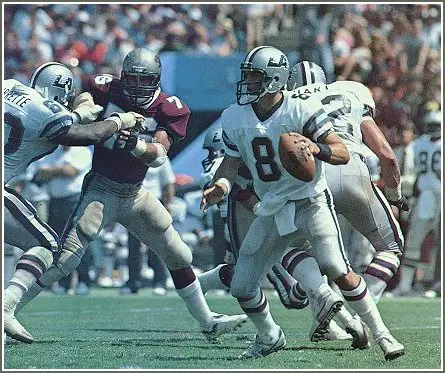
March 6, 1983, 30 years ago today: The United States Football League plays its first games.

You don't remember the USFL? Even if you're over 35, that's not surprising. Its detractors called it the USeless Football League and the Undeniably Sorry Football League.

It could have succeeded. Indeed, the timing seemed to be right: The NFL was coming off a season in which there had been a strike, canceling almost half the season. Fans should have been willing to take something new: A professional football league playing in the Spring, when there was no pro football.

But the timing wasn't right, at least according to the calendar. The 1st season started on March 6, when the NBA and NHL seasons were coming down the home stretch. The Championship Game was held on July 17, just as baseball's 2nd half was getting underway.

Had the league started in early May, by which point all but a few teams would have been eliminated from the NBA Playoffs and the Stanley Cup Playoffs, and the Championship Game on August 28, the last Sunday before the NFL season started, then, for most of the season, they would have only had baseball to contend with, as the North American Soccer League was already fading into irrelevance.

Here were the original 12 teams, and what else they had to compete with nearby at the time:

* Arizona Wranglers. No NFL, MLB or NHL at the time, just the NBA's Phoenix Suns. Played at Sun Devil Stadium, which was (and is) owned by Arizona State University, so even if there had been an NFL team playing there at the time, it couldn't have kept the Wranglers out. This was a good market for the USFL.

* Birmingham Stallions. Nothing: No MLB, no NBA, no NHL, and while the State of Alabama considers college and high school football to be a religion, there is no NFL team there. (This is also the case for several other Southern States, and for basketball in Kentucky. It is also why the Pacers have never been more popular than IU and Purdue in Indiana, and why no pro basketball team has succeeded in North Carolina.) Played at Legion Field. This was a good market for the USFL.

* Boston Breakers. Everything: The Celtics and Bruins, both perennial postseason teams at that point, and the Red Sox in April. Played at Nickerson Field, the 21,000-seat stadium of Boston University, where the Patriots played in their first few AFL seasons. The Patriots wouldn't let them play at what was then named Sullivan Stadium (formerly Schaefer, later Foxboro), and Boston College wouldn't let them use their larger Alumni Stadium. This franchise should never have been placed in Boston, even though the Patriots were a joke franchise at the time.

* Chicago Blitz. Everything: The Bulls and Blackhawks, both perennial postseason teams at the point, and the Cubs and White Sox in April. Played at Soldier Field, which was (and is) city-owned, so the Bears couldn't keep them out. Too many distractions for the fan dollar, but Chicago was the 3rd-biggest market and a football-mad one, so they had to have a Chicago team.

* Denver Gold. There was then no MLB or NHL team, but the NBA's Nuggets were a perennial postseason team. Played at Mile High Stadium, which was city-owned, so the Broncos couldn't keep them out. Still, the Broncos were a good team at the time, and the "Broncomania" that began with their 1st good season in 1973, and was seriously hyped up during their run to the Super Bowl in the 1977 season, had hardly abated. So this was a bad market for the USFL.

* Los Angeles Express. Everything: The Lakers and Kings, both perennial postseason teams at that point, and the Dodgers and the team then known as the California Angels in April. Played at the Los Angeles Coliseum, which was (and is) city-owned, so the Raiders, then using it as their home field, couldn't keep them out. Plus the Rams were still in the area, playing at Anaheim Stadium. But L.A. was the 2nd-biggest market, so they had to have an L.A. team.

* Michigan Panthers. Everything: The Pistons and Red Wings weren't very good at this point, but had solid fan bases that would not abandon them; and the Tigers in April. Played at the Silverdome, which was owned by its municipality, the Detroit suburb of Pontiac (it is now privately owned), so the Lions couldn't keep them out. The Lions were a good team at this point, and playing football in nice weather got canceled out by the dome, so as much as the State of Michigan loves its football, putting a franchise there was a bad idea.

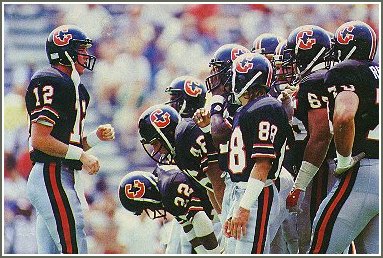
* New Jersey Generals. Everything: The Knicks, Rangers and Islanders, all perennial postseason teams at that point, plus the Nets, who were (unusual for them) in the middle of back-to-back Playoff seasons; the Devils, finishing their terrible 1st season; and the Yankees and Mets in April. Played at Giants Stadium in the Meadowlands, which was State-owned, so the Giants couldn't keep them out. But New York was the biggest market, so they had to have a "New York" team, yet they took advantage of the ill feelings of New Jerseyans (including myself) who were mad at the Giants for moving to the State but not changing their names. More on this in a moment.

* Oakland Invaders. No NHL team then. The NBA's Golden State Warriors were pretty weak. Neither the San Francisco Giants nor the Oakland A's were any good at the time. The 49ers across San Francisco Bay had just had a letdown season after winning the Super Bowl the season before, and no one foresaw the Niners becoming the NFL's dominant team. And the Raiders had split down the Coast a year earlier, leaving the Oakland Coliseum, then as now owned by Alameda County (so the Raiders couldn't have kept them out anyway), available for football all year long. And they would pick up all the Raider fans still angry about the team abandoning the East Bay. So the nation's 4th-largest market was a good one for the USFL experiment.

* Philadelphia Stars. Everything: The 76ers and Flyers, both perennial postseason teams at that point, and the Phillies in April. Played at Veterans Stadium, which was city-owned, so the Eagles couldn't keep them out. But Philly was in a rare period where all its teams had recently been good, so while the Eagles had collapsed the preceding fall, the timing was still bad for a Spring football team based in Philadelphia. But Philly was a market both big and football-mad, and so the team was put there.

* Tampa Bay Bandits. Nothing: No MLB, no NBA, no NHL, and the NFL wasn't starting again until September. Played at Tampa Stadium, "the Big Sombrero," which was city-owned, so the Buccaneers couldn't keep them out. And the Bucs stunk then, so this was a good market for the USFL.

* Washington Federals. No MLB team at that point, but the NBA's Bullets (now Wizards) and the NHL's Capitals; neither was then good, but both were there. Played at Robert F. Kennedy Stadium, which was (and is) owned by the federal government, so the Redskins couldn't keep them out. But while putting a team in the Nation's Capital seemed like a must, putting a team in the same town as the Redskins -- who were not only a wildly popular institution in the town but had just won the Super Bowl a few weeks before -- was financial suicide.

A league needs big names. At first, the biggest names were the coaches. New Jersey was coached by Chuck Fairbanks, who had led the University of Oklahoma to 3 Big Eight titles and the Patriots to their first AFC East title. Jim Stanley had led Oklahoma State to a Big Eight title, and was appointed to coach the Michigan franchise. Chicago was coached by George Allen, who had led the Redskins to the 1972 NFC title.

Oakland was coached by John Ralston, who had won 2 conference titles each at Utah State and Stanford, and had guided the Broncos to NFL respectability. Ralston's successor with the Broncos was Red Miller, who led them to the 1977 AFC Championship, and was hired to run the Denver franchise. Philadelphia was coached by Jim Mora Sr., who was not yet a big name, but he had coached at Stanford, UCLA, and the universities of Colorado and Washington, and had been an NFL assistant; he coached Philadelphia.

Tampa Bay was coached by Steve Spurrier, not yet "the ol' ball coach" who led his alma mater, the University of Florida, to SEC dominance and a National Championship, but was already a Heisman Trophy-winning quarterback, a respected college assistant, and the biggest living name in Florida collegiate football -- unless you want to count actor Burt Reynolds, a Florida State alum, and a part-owner of the team, named after his character in Smokey and the Bandit, although their logo was a Wild West desperado on a charging horse. The Bandits were Spurrier's 1st head coaching job.

Burt is an old man now, washed-up as far as acting goes. And he was never a particularly good actor. It's hard to explain to kids today just how big he was in the late Seventies and early Eighties. Like another guy who played college football in Florida, Dwayne "The Rock" Johnson -- but with a Southern drawl, a classic mustache, and a series of toupees that changed with the styles of natural hair.
"For the good old American life: For the money,
for the glory, and for the fun. Mostly for the money."

Los Angeles was coached by Hugh Campbell, who was not yet a big name in the U.S., but had coached the Edmonton Eskimos to the last 5 Grey Cups, the "Super Bowl" of the Canadian Football League (and had also played on a Grey Cup winner with Saskatchewan in 1966). His predecessor with the Esks (I know, dumb nickname, but they're a very successful franchise) was Ray Jauch, also not yet a big name in the U.S., but he had coached the Esks to the 1975 Grey Cup (and had also played on a Grey Cup winner with the Winnipeg Blue Bombers in 1959); he coached the Washington franchise.

Boston was coached by Dick Coury, who had previous insurgent-league experience, coaching the Portland Storm of the 1974-75 World Football League. Birmingham was coached by Rollie Dotsch, a respected assistant under Dan Devine at the University of Missouri and Notre Dame, and in the NFL under Fairbanks in New England and Chuck Noll in Pittsburgh. Arizona was coached by Doug Shivley, who'd been an assistant in New Orleans and Atlanta and at several colleges.

*

I was 13 years old when the USFL began, and I was very excited about the New Jersey Generals.  At the time, I hated the Jets, because most of their fans were Met fans, and I hated the Mets. This was due to geography (both then played at Shea Stadium in Queens and also tapped into the Long Island fan base) and timing (both arrived in the early 1960s, just in time to take on Baby Boomers not steeped in Yankee & Giant traditions, and both won their leagues' championships in calendar year 1969). Until the Mets and Giants both won their leagues' 1986 championships (in that season if not that calendar year), it would never have occurred to 95 percent of Met fans to root for the Giants.

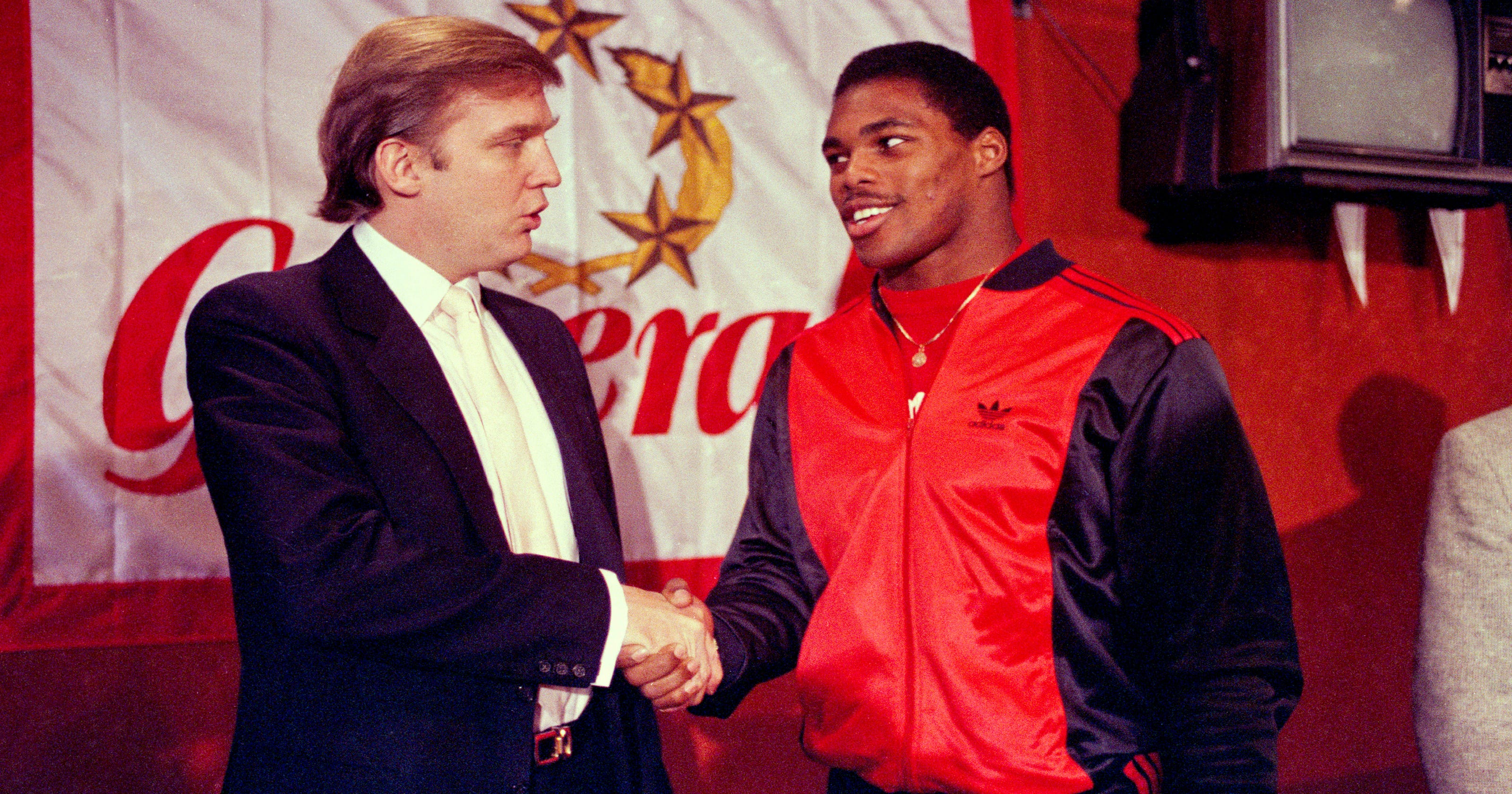
And I hated the Giants because of their refusal to acknowledge that they played in my home State by changing their name. The Generals admitted that they were based in the New York City market, but playing in New Jersey. They had Herschel Walker, one of the best running backs the college game had ever seen, a smart, personable young man. (It would be a long time before we knew about his personal demons, which, thankfully, haven't ruined him, and now appear to be under control.) And I loved their helmet logo, a five-star general's ring of stars with leaf clusters.

As Theodore Roosevelt said about his 1912 Progressive Party, "Unhampered by tradition, uncorrupted by power, undismayed by the magnitude of the task, the new party offers itself as the instrument of the people, to sweep away old abuses." To me, and to many other fans, especially after the Strike of '82, the NFL represented established interest, corporate power, regimentation. True, I wasn't yet mature enough to think in those terms, but I could certainly feel it, watching games of what was already being called the No Fun League.

The USFL represented a clean slate. A chance to have a team without the connections to the Giants, then 27 years without a title and pretty frustrating since then, even if you did like them; or to the Jets, who had just come within 1 game of the Super Bowl, but were symbolized by Mark Gastineau, whose long hair, "porn 'stache," and obnoxious behavior made him the favorite player, and the Jets the favorite team, of "ginkers," what we called metalheads in East Brunswick in the Egregious Eighties.

The Generals had no past, and while this meant that we couldn't glory in their 1932, 1947, 1956, 1961 or 1977 titles (as we could with the Yankees), it also meant there was no dark age (as the Giants and Knicks were still in and the Yankees had been in from 1965 to 1975). There was no glory, but no shame, either.

And this was coming on the back of the Nets, who were in New Jersey and (all too briefly) winning; and the Devils, who were wrapping up their 1st season, playing horribly, but the novelty hadn't worn off yet, so we new Devils fans didn't care. The Generals, playing in a league where all the teams were expansion teams, would have a chance to win right from the start.

I was excited. I was buzzing. I was jazzed.

I was monumentally disappointed.

*

Is it possible for a league to be made by one game? People who study the history of the NFL seem to think so: It was when Red Grange took his "Galloping Ghost" fame from the University of Illinois into the Polo Grounds in 1925 and sold it out, and, although his Chicago Bears beat the Giants that day, the gate receipts from a 70,000-seat sellout saved the Giant franchise, thus making football in the New York market viable, thus making professional football in America viable. (This probably also killed off the best chance professional soccer had to make it in America for half a century.)

Is it possible for a league to be ruined by one game? From my perspective, it was. The Generals had signed the league's biggest coup, the sitting Heisman Trophy winner, Herschel Walker, lured out of his senior season at the University of Georgia and being a sure top pick in the 1984 NFL Draft by money and lots of it. But the Generals had no defense, and their 1st game, televised live on ABC, with the great college football voice Keith Jackson doing play-by-play, ended with the Los Angeles Express beating the Generals, 20-15, in front of just 32,008 fans, meaning the Coliseum had over 60,000 empty seats.

Other 1st-week games in the USFL: In the 1st game to be played, Tampa Bay beat Boston 21-17, Michigan beat Birmingham 9-7, Philadelphia beat Denver 13-6, Chicago beat Washington 28-7, and Oakland beat Arizona 24-0.

The Generals lost their 2nd game, too, losing 25-0 to the Stars at the Vet. They lost their 3rd game, their 1st home game at the Meadowlands (or, I was I was calling it then, "Generals Stadium"), 32-9 to the Bandits. They lost their 4th game, 31-21 to Boston at the Meadowlands.

As Stars coach Jim Mora would later say when he was coaching the New Orleans Saints, "Playoffs?" Don't talk about Playoffs! You kidding me? Playoffs? I just hope we can win a game!"

Finally, the Generals went on a bit of a hot streak: They beat Arizona in Tempe, 35-21; then lost a home game to Michigan, 21-6, then got their 1st home win, 23-22 over a pathetic Washington squad; then lost in overtime in Chicago, 17-14; then beat Denver at Mile High, 34-29. Winning 3 out of 5 is good.

Then they lost their next 3, killing their momentum. They closed the season doing what a New York-area team should not do: They lost to a New England team, losing 34-10 in Boston. In the USFL's 18-game regular season, they finished 6-12, and didn't make the Playoffs.

Philadelphia won the Atlantic Division, Michigan the Central, Oakland (with a mere 9-9 record) the Pacific, and Chicago (tied for the Central lead but lost the tiebreaker) got the only Wild Card berth for the Playoffs. Philly beat Chicago at the Vet, Michigan beat Oakland in Pontiac, and in the Championship Game, played on July 17, 1983, on neutral ground at Mile High in Denver, the Michigan Panthers, starring former University of Michigan receiver Anthony "The Darter" Carter, beat the Philadelphia Stars, 24-22.
Carter and the Panthers

*

The standard of play wasn't great, but it wasn't abject misery as claimed by the media, which was in the pocket of the NFL. Don't forget, while ABC did the USFL's games, it also did Monday Night Football, and thus had a vested interest in the NFL's dominance. Even so, it was the 3rd-largest network, and both CBS and NBC had it in their interest for the USFL to fail.

If a sportswriter wanted to be interviewed for his football knowledge on a major network, he had to treat the USFL like a minor league. And not like in soccer, where England's 2nd division (now oddly named "The Championship") is a standard not that far below the 1st division ("The Premier League"), which would have been close to the USFL's actual performance level: The USFL was treated by the national media as if it was, truly, minor-league. And, as baseball pitcher turned sportscaster turned author Jim Bouton taught us, "The minor leagues are all very minor." (Though Bouton made an exception for Triple-A baseball's Hawaii Islanders.)

In management terms, the USFL was a colossal mess. The Denver Gold were a prime example: Red Miller feuded with management, so they fired him in midseason, and brought in his former Bronco quarterback, Craig Morton, who had just retired as a player, and had never coached before.

The L.A. Express were losing money left and right, and made a huge mistake the next season, signing Steve Young, the Brigham Young University quarterback who had nearly won the Heisman Trophy the year before, to an enormous contract, comparable in its excess to that of Alex Rodriguez, in its deferred payments to that of Bobby Bonilla, and in its results to that of Kevin Brown, who, lest we forget, was once considered good enough of a pitcher to get MLB's 1st contract worth a total over $100 million.
Steve Young, wondering if the money
he was promised was worth it

The USFL was also failing spectacularly at the box office. Leading the league in percent of stadium capacity filled were the Boston Breakers, with 61 percent -- but that meant they were getting 12,817 at Nickerson, which seated 21,000 at the time. Denver, which hadn't played to an unsold seat at a Bronco game since 1976 (and still hasn't, except for the Scab Year of 1987), had the highest average attendance, but even their 41,736 was only 56 percent. Tampa Bay had 39,896, but that was just 55 percent.

New Jersey (35,004), Oakland (31,211) and Arizona (25,776) also topped 25,000, but Birmingham's 22,046 was shockingly low for the football-mad State of Alabama, and L.A.'s 19,002 and Chicago's 18,133 were unacceptable for big markets. Even the teams that made it to the title game weren't packing 'em in: Michigan averaged 22,250, Philadelphia 18,650. These would have been unacceptable attendances even by the standards of 1983 baseball. Washington bottomed out at 13,850, in contrast to the Redskins, who hadn't played to an unsold seat since World War II.

Birmingham coach Dotsch, perhaps, said it best:

Every good coach has a game plan. In this case, the USFL got away from the game plan. There's no question we did, or I'll say the USFL did. I don't think we (meaning the Stallions) did, or Tampa Bay did. Hindsight is much better than foresight, I know, but things were done that hurt us. We didn't go crazy. We lost the fewest dollars of any USFL team. We were always the poorest team in the playoffs, but we held our own, and I'm proud of that. We did a good job with what we had. We won a lot more than we lost, and that's the biggest thing.
*

Clearly, the smart thing for the USFL to do was to look at which markets were doing well, and which markets didn't have as much competition in other sports, and move the failing teams (even if they were playing well) to lesser-tapped markets for the Spring of 1984.

Clearly, the USFL did not do the smart thing.

They moved the Breakers from Boston to New Orleans, where the only major league team in place was the Saints, who stunk at the time, and didn't own the Superdome. (The State of Louisiana did, and still does.) That wasn't a bad move, and attendance did jump to 30,557.
John Walton, who quarterbacked in the Continental Football League,
the WFL, the NFL (Philadelphia) and the USFL (the Breakers).

But the league made a huge mistake in expanding from 12 to 18 teams. A tremendous sub-mistake was making one of the added teams the Pittsburgh Maulers, who signed Heisman winner Mike Rozier of Nebraska. Ed DeBartolo, owner of the NHL's Penguins, and father of 49ers owner Eddie DeBartolo, seemed like the right guy to own a Pittsburgh team in the USFL... if putting a USFL team in Pittsburgh had been the right thing to do.

It wasn't. It wasn't so much that the Pittsburgh area had lost so many jobs, and with  it so many people, who went elsewhere to look for work. It was that the Steelers owned that market. In Western Pennsylvania, here's how sports popularity went at the time: 1. Steelers; 2. Penn State; 3. Pirates; 4. University of Pittsburgh football; 5. Uh, do we still have a hockey team?

Giving the Maulers purple uniforms didn't help. And what's a "mauler," anyway? The helmet logo was a guy in a hard hat swinging a sledgehammer, suggesting a factory or mill worker. Right, remind the people of Western Pennsylvania of the jobs they'd been losing like crazy for the last 20 years.
Rozier, looking for a pass from Glenn Carano, while Jim Lohmann blocks.
You've never heard of Carano or Lohmann? That's not surprising.

The Maulers' 1st game saw them lose to Birmingham, whose quarterback was Cliff Stoudt, reviled as Terry Bradshaw's inadequate backup with the Steelers, and the locals at Three Rivers Stadium threw snowballs at him. Rozier, a native of Camden, New Jersey, did not have the same impact in the USFL as Walker, and his pro career was a disappointment (although not an outright bust, as he later did all right for the Houston Oilers). The Maulers finished tied with Washington for the league's worst record, 3-15.

Seeing the Southeast as underserved -- Texas and Florida had NFL teams, but the rest of the old Confederacy then had only Atlanta and New Orleans in the NFL -- and seeing how Birmingham was working out, the USFL expanded to include the Memphis Showboats and the Jacksonville Bulls, playing at the Liberty Bowl and the Gator Bowl, respectively.

Memphis was respectable mainly for one reason: Defensive end Reggie White, who played in the State at the University of Tennessee. They were coached by Franklin "Pepper" Rodgers, who'd done well at the stadium for Memphis State (now the University of Memphis). But Lindy Infante, already a respected NFL assistant, couldn't get much out of the Bulls.
The USFL also expanded into the Southwest. Putting a team in Dallas to compete with the Cowboys would have been lunacy, but the Oilers were awful at the time, so they put in the Houston Gamblers, coached by Jack Pardee, a former linebacker who'd been All-American at Texas A&M and All-Pro with the Rams and Redskins, and had coached the Bears and Redskins to Playoff berths. The Gamblers signed University of Miami quarterback Jim Kelly, and won the Central Division.
Jim Kelly, apparently trying to invent an alternative to the huddle

Putting a team in San Antonio seemed to make sense, as the city had only the NBA's Spurs. But longtime Texas A&I (not A&M) coach Gil Steinke couldn't get the Gunslingers into gear. Putting a team in Oklahoma, where they could peel off Sooner fans, and fans who were a long way from Dallas and Kansas City, seemed to make sense, and hiring former Steeler defensive coordinator Woody Widenhofer as head coach and former Buccaneers quarterback Doug Williams were good moves. And the Oklahoma Outlaws had cool uniforms, black jerseys with a nasty-looking desperado on their helmets. But they went nowhere.
Doug Williams had Jimmie Giles in Tampa,
and Gary Clark and Ricky Sanders in Washington.
In Tulsa, he had... the other Mel Gray.

And in the oddest transaction in pro football history, the owners of the Chicago Blitz and Arizona Wranglers traded their entire franchises. Including rosters, coaching staffs, and front office personnel. Where Chicago had been good and Arizona terrible in '83, the reverse was true in '84.

L.A. got Steve Young, and former San Diego Charger quarterback John Hadl as coach, and they won the Pacific Division. Philadelphia had the best record in the league at 16-2, edging New Jersey for the Atlantic Division title.

The Generals had been sold to Donald Trump, who brought in Walt Michaels, who'd coached the Jets to the AFC Championship Game in the '82 season, and former Cleveland Browns quarterback Brian Sipe, thus giving the Herschel-centric offense more diversity.
One of these men would later be treated for mental illness.
The other hasn't been, but became President.

(Supposedly, Trump originally wanted to lure Don Shula away from the Miami Dolphins, but balked when Shula wanted a condo in Trump Tower. Somehow, I suspect, the older Trump would have accepted this.)

The Generals lost to the Stars in the 1st round of the Playoffs, as former Penn State quarterback Chuck Fusina, running back Kelvin Bryant, and linebacker Sam Mills flattened Jersey's team. In the longest game in the history of professional football, one which went to a 3rd overtime (Sports Illustrated's article on it was titled "It Was a Game and a Half"), Steve Young led Los Angeles to dethrone defending champion Michigan, 27-21. Birmingham beat Tampa Bay, 36-17, and Arizona beat Houston, 17-16.
Kelvin Bryant. Like the Phillies, the Stars had uniforms
that really clashed with the horrid artificial turf at The Vet.

In the Conference Championships, Arizona beat L.A., 35-23, and Philly beat Birmingham, 20-10. The title game was played at Tampa Stadium, and Philly beat Arizona, 23-3.
This is what a USFL Championship ring looks like.

*

Did the USFL learn from its '83 and '84 mistakes? Partly. The league was contracted to 14 teams. Chicago and Pittsburgh were out. Michigan and Oakland were merged, keeping the Oakland Invaders name. Oakland and Arizona were merged, becoming the Arizona Outlaws, with the colors somewhat merged and Oklahoma's logo kept.

There were moves. To take advantage of the fact that the Baltimore Colts had been moved to Indianapolis, the USFL should have moved the Washington Federals to Baltimore. Instead, they moved their most successful team, the Philadelphia Stars, down Interstate 95.

But a legal wrangle prevented them from moving to Memorial Stadium for 1985, so they went to Byrd Stadium at the University of Maryland, inside the Capital Beltway in College Park. So while they had the name "Baltimore Stars," they were a lot closer to Washington. This sent their per-game attendance from 28,668 in '84 to a dismal 14,275 in '85.

The Federals were moved, to Central Florida, an untapped market, to become the Orlando Renegades. Their coach was Lee Corso, a big name in the State as he'd been Florida State's coach. Did this work out? As Corso would say in his later ESPN punditry career, "Not so fast, my friend!" The 'Gades finished 5-13, with an average attendance of 24,136, better than they were in Washington, but still awful.

And the Breakers were moved again, to Oregon, where they became the Portland Breakers. True, Portland only had the NBA's Trail Blazers, but anybody who was an NFL fan in Oregon was either a Seattle Seahawks fan, or rooted for a faraway team like the Raiders, Steelers or Cowboys. And the L.A. Express crashed and burned: Their owners were bankrupt, and even with Steve Young, they were just 3-15, with an average attendance of 8,415.

In the quarterfinals, Birmingham beat Houston 22-20, Memphis beat Denver 48-7, Oakland beat Tampa Bay 30-27, and Baltimore beat New Jersey 20-17 -- another Heisman winner, quarterback Doug Flutie, then considered "too short for the NFL," getting the Generals into the Playoffs, but no further.
One is a very small man. The other is a Heisman Trophy winner.
Alas, Flutie was a Republican, and continues to support Trump.

In the semifinals, Baltimore beat Birmingham 28-14, and Oakland beat Memphis 28-19.  In the Championship Game, Baltimore (formerly Philadelphia) beat Oakland (sort of getting revenge on Michigan for the first title game), 28-24, at Giants Stadium.

The date was July 14, 1985. The USFL never played another game. Although this was suspected by many, no one knew it for sure.

*

Later that year, the USFL announced that their challenge to the NFL was going to be full, starting in 1986: They were going to a Fall schedule, going head-to-head with the big boys. And they had sued the NFL on antitrust grounds. The USFL sought damages of $567 million, which, under antitrust law, would have been tripled to $1.7 billion if the jury found in their favor.

The USFL gave the NFL a chance to settle, proposing 2 remedies: Either force the NFL to negotiate new television contracts with only 2 networks, or force the NFL to split into two competing 14-team leagues, each limited to a contract with one major network.

Each NFL franchise was named as a co-defendant, with the exception of the Raiders, whose owner Al Davis was a major witness for the USFL, and had been excluded from the lawsuit in exchange for his testimony.

ABC announcer Howard Cosell was also a key witness for the USFL -- and this, more than his personality, his drinking, or his referring to a black receiver as "that little monkey" during a game, probably doomed him to being fired from Monday Night Football.

The lawyer for the USFL, Harvey Myerson, had what he felt were 3 "smoking guns":
1. A memo from March 1973 to NFL broadcasting director Robert Cochran, from attorney Jay Moyer stating that an "open network" might be open to the "invitation to formation of a new league."
2. A memo from August 1983 from Jack Donlan, NFL management council executive director, to his staff. The memo laid out plans for NFL teams to "increase salary offers to USFL to existing players or run the risk of losing them."
3. A memo from a Harvard professor named Michael Porter, which included a plan to "Conquer" the United States Football League.
The case went to trial in the Spring of 1986 and lasted 42 days. On July 29, 1986, the jury handed down a verdict that was a Pyrric victory. The jury declared the NFL a "duly adjudicated illegal monopoly," and found that the NFL had "willfully acquired and maintained monopoly status through predatory tactics." In other words, guilty as charged.
However, the jury rejected the USFL's other claims. They found that the USFL had changed its strategy to a more risky goal of a merger with the NFL. Furthermore, the switch to an Autumn schedule caused the loss of several major markets. It has been established that Trump, as owner of the Generals, specifically wanted to force a merger, knowing that the majority of teams would be eliminated.
Most importantly, the jury found that the NFL did not attempt to force the USFL off television. (Emphasis mine.) In essence, the jury felt that, while the USFL was harmed by the NFL's de facto monopolization of pro football in the United States, most of its problems were due to its own mismanagement. 

The jury awarded the USFL only one dollar in nominal damages, which was tripled under antitrust law to three dollars. It later emerged that the jury incorrectly assumed that the judge could increase the award.

Almost immediately upon announcement of the verdict, the USFL announced it was suspending operations for the 1986 season, with the intent of returning in 1987. Players signed to contracts were free to sign with NFL (or other professional teams) immediately.

The USFL was now some $160 million in debt. With nearly all of its players under contract to the NFL and the Canadian Football League, Commissioner Harry Usher announced the league would stay shuttered in 1987 as well. In 1990, now basically a shell of a corporation (if not a "shell corporation," a term with which Trump is well familiar), the USFL finally received a check for $3.76 in damages in 1990, the additional 76 cents representing interest earned while the ultimately failed appeal had continued. Notably, 23 years after being written, that check has not yet been cashed.

*

So what is the USFL's legacy? Actually, when you look at it, it could hardly be seen to have been a waste of time:

* Four players from the league made the Pro Football Hall of Fame: Steve Young went on to quarterback the 49ers to a title, Jim Kelly led the Buffalo Bills into 4 Super Bowls, Reggie White became a terror on defense for the Eagles and helped the Green Bay Packers win a Super Bowl, and Los Angeles Express offensive tackle Gary Zimmerman protected John Elway for 2 Bronco titles.

* The Redskins used some players who'd gotten their profiles raised in the USFL to win the title in the 1987 season. Oklahoma/Arizona's Doug Williams became the 1st black quarterback to play in, and the 1st to win, a Super Bowl, throwing passes to Jacksonville's Gary Clark and Houston's Ricky Sanders, and handing off to Philadelphia/Baltimore's Kelvin Bryant.

* Herschel Walker is not in Canton, but he should be: It's the Pro Football Hall of Fame, not the National Football League Hall of Fame. He gained 8,225 rushing yards and 4,859 receiving yards in the NFL, scoring 82 touchdowns. Put that together with his USFL stats, and that's 13,787 rushing yards, 6,843 receiving yards, and 143 touchdowns. Those are easily Hall-worthy numbers.

His NFL career is best remembered for the Cowboys trading him to the Minnesota Vikings for 5 players and 6 draft picks, which became a huge part of the Cowboys' quasi-dynasty of the 1990s. Herschel never won a ring, but he made the Playoffs with the Vikings, the Eagles and a return to the Cowboys, where he closed his career after the 1997 sesaon. He also returned to the Meadowlands in 1995, with the Giants, but they didn't make the Playoffs that year.

* Steve Spurrier moved on to Duke University, and revived their football program, giving them one of their few good periods, before going home to Gainesville and leading the University of Florida to the prominence that it still enjoys. Even if, at times, he does seem like a redneck version of Manchester United soccer manager Alex Ferguson.

* Doug Flutie was signed by the Chicago Bears after the USFL folded, but coach Mike Ditka didn't give him much of a shot. So he went to the CFL, and won Grey Cups with the Vancouver-based BC Lions, the Calgary Stampeders and the Toronto Argonauts.

Finally, the Bills gave him a shot, and, as Kelly's successor, he led them to the Playoffs. He would also do so with the San Diego Chargers, and closed his career in with his "hometown" Patriots (he grew up in Natick, on the opposite site of Boston from Foxboro, but was actually born outside Baltimore), backing up Tom Brady and pulling off a trick that would have been in character for the USFL: On New Year's Day 2006, faking an extra point attempt as the holder, he dropped back and scored on a dropkick, something that hadn't been done, or even tried, in the NFL since 1941. That left...

* Sean Landeta as the last former USFL player still active. He'd been the Stars' punter, and won 2 Super Bowls with the Giants. He then bounced around, but reached the Playoffs with the Buccaneers, Packers, Eagles and Rams, before wrapping it up with the Giants in 2006, 21 years after the last USFL game.

* Houston's Jack Pardee and Darrel "Mouse" Davis (who took the Denver Gold reins in '85) both took the Gamblers' "run-and-shoot offense" elsewhere, Pardee racking up big scores as head man at the University of Houston, and Davis becoming the offensive coordinator of the Detroit Lions, helping them to what remains their last decent period.

* The USFL, like the 1960s AFL and the 1970s WFL, used the 2-point conversion. The NFL finally adopted it after the USFL used it.

* Many high school football teams named the Panthers, including Perth Amboy here in Middlesex County, New Jersey, adopted the Michigan Panthers' helmet design for their own, and some still use it, 29 years after the Panthers folded.

* Perhaps the most lasting legacy of the USFL is its stock footage. Rather than pay the NFL the enormous licensing fees for use of their games, many TV shows and advertising agencies (for their commercials) have used USFL game footage to simulate people watching football games.

It's been 30 years. As Billy Joel would say, "There are not many who remember. They say a handful still survive." And many of those who do remember would like to forget.

Not me. On the 20th Anniversary, I wrote this piece for the song-parody website Amiright.com.

Long live The Three Dollar League!