Thursday, June 30, 2022

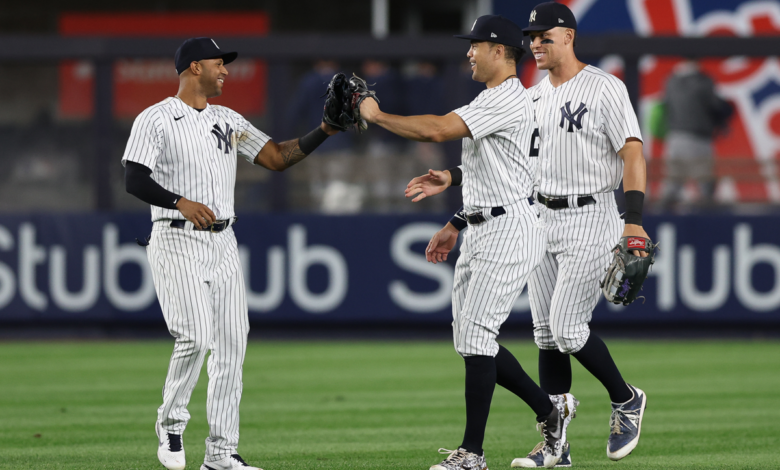
Yankees Sweep A's Before Brief Trip to Cheatland South

After a rough series with the Houston Astros, the struggling Oakland Athletics were just what the Yankees needed. Last night was the finale of their 3-game home series, and they teased us again, by falling behind early, and then coming back.

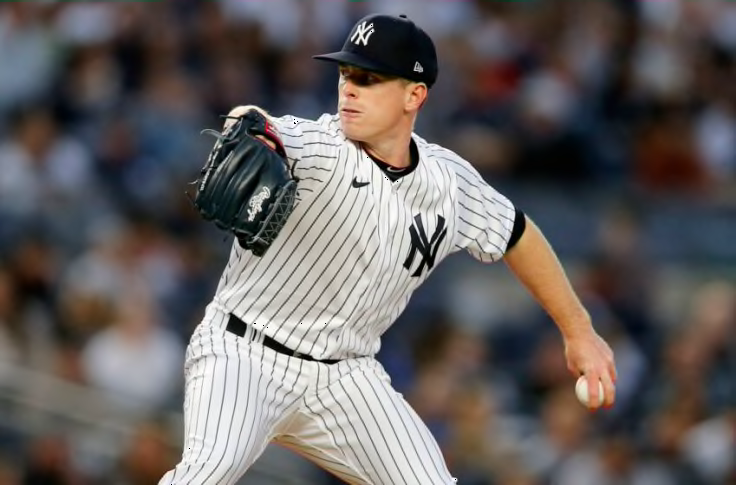
Jameson Taillon, as he did at home against the Astros the previous Thursday, allowed 3 runs in the top of the 1st inning. In the bottom of the 1st, DJ LeMahieu singled, and Aaron Judge hit a home run, to make it 3-2. In the 3rd, LeMahieu singled, Judge drew a walk, and Giancarlo Stanton hit a home run.

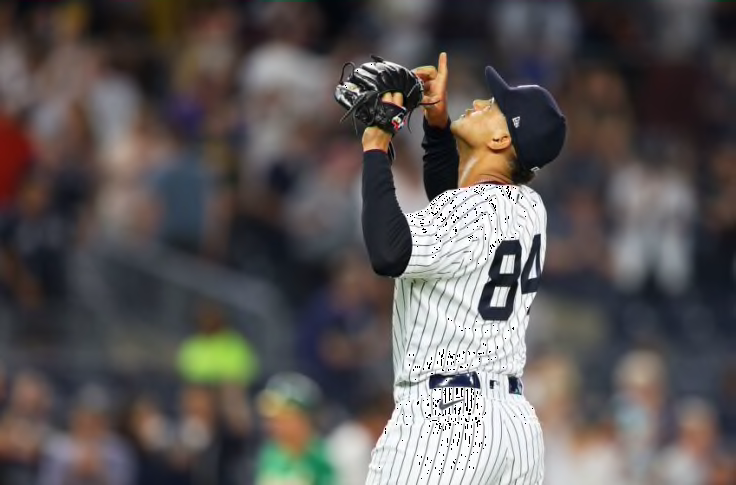
That made it Yankees 5, A's 3, and that would be the final. Taillon got through the 5th inning with no further damage. Lucas Luetge pitched a perfect 6th and 7th, Miguel Castro a scoreless 8th, and Clay Holmes a perfect 9th. WP: Taillon (9-3). SV: Holmes (14). LP: Cole Irvin (2-6).

The Yankees are now 9-0 this season, 25-1 overall, when Judge and Stanton hit home runs in the same game.

So the Yankees completed the sweep. The Magic Number to clinch the American League Eastern Division is now 75.

Tonight, the Yankees play the Astros in Houston, in one of the games that was postponed from the season's first week as a result of the settlement of the Spring Training lockout. The other two of that series will be made up as a doubleheader on Thursday, July 21. Tonight's starting pitchers are Luis Severino for the Good Guys, and Luis Garcia for the Cheats. (I had previously mistakenly listed this game as the first of a four-game series.)

Hopefully, they can win this game in Cheatland South, especially since, next month, they have to go back there, and to Cheatland North, Boston.

The Yankees have not, as was previously believed, activated Aroldis Chapman from the Injured List. That is now expected to happen tomorrow, to make him eligible for the next series, away to the Cleveland Guardians. Pitcher Ryan Weber has been brought up, but it may only be for tonight's game.

Wednesday, June 29, 2022

There's More for the Yankees' Life With Sears

Brian Cashman's "Bomb the opposition out of the yard, so it doesn't matter how good your pitching is" philosophy often doesn't work. Especially when you get to a game where your starting rotation has a hole in it, and you need to call someone up from the minor leagues. Last night's game against the Oakland Athletics at Yankee Stadium was an example: Rookie JP Sears (like CC Sabathia, no periods) had been called up to start.

It turned out to be the 23rd time in their 1st 75 games this season that the Yankees scored 2 or fewer runs. But the pitching has been good enough that their record in those games is 9-14.

So after Aaron Boone put this game on his Sears card -- I can tell that joke, because I worked at a Sears store for a year and a half -- Sears pitched into the 6th inning, allowing no runs, just 3 hits and 1 walk. The store's old slogan was right on this occasion: "There's more for your life at Sears." Ron Marinaccio, Wandy Peralta and Michael King got the team through the 8th inning with no damage.

But you need to score runs to win. Jose Trevino singled home a run in the 1st inning, and Marwin González hit a home run in the 2nd. The Yankees didn't get many more chances. Isiah Kiner-Falefa got to 2nd base with 1 out in the 5th, and that was as close as they came to a 3rd run.

Clay Holmes has done a fantastic job substituting as the closer during the injury to Aroldis Chapman -- who, it has been suggested, may be activated today. (If he is, then it will probably be Sears who gets sent down to open the roster spot. "Thanks for the win, pal, now get back to Scranton.") But last night, Holmes struggled to finish the game off. He struck out the 1st 2 batters he faced. Then, Trevino committed catcher's interference -- after the Yankees benefited from that call twice in 1 inning the night before. King then allowed 2 singles, leading to a run, before getting a groundout to end it.

Yankees 2, Athletics 1. WP: Sears (3-0). SV: King (13). LP: Frankie Montas (3-8). The Yankees are now 55-20.

The series concludes tonight. Cole starts -- not Gerrit Cole for the Yankees, but Cole Irvin for the A's. The Yankee starter will be Jameson Taillon. Then we go down to Houston for a big, big series against the cheating Astros. The idea of starting Sears last night was to make the Yankee rotation line up better against the Astros this weekend.

Tuesday, June 28, 2022

Yankees Rebound to Beat A's

You would think that, with the cheating Houston Astros walking out of Yankee Stadium II, and the seriously struggling Oakland Athletics walked in, the Yankees would have an easier time of things.

You would think, but you would be wrong. At least, at first.

Jordan Montgomery got roughed up, allowing 5 runs in the 3rd inning. Aaron Boone left him in as long as he could, to preserve the bullpen. He brought Albert Abreu in during the 7th, and he pitched hitless ball the rest of the way.

Anthony Rizzo hit a home run in the 1st inning, and Giancarlo Stanton hit one in the 4th. But they were only solo homers. In the 5th, DJ LeMahieu drew a walk, stole 2nd, and came home on an Aaron Judge single, to close the Yankees to within 5-3.

The bottom of the 7th told the tale. In it, the Yankees had pretty much everything but a home run. With 1 out (made by Joey Gallo, as you might have guessed), LeMahieu drew another walk. Judge reached on catcher's interference. Rizzo was hit by a pitch to load the bases. And then Stanton... was also awarded 1st base on catcher's interference. Remember when Jacoby Ellsbury seemed to specialize in that? Better question: To paraphrase the broadcaster in Bull Durham, What was A's catcher Sean Murphy thinkin' about? 'Cause it sho' wasn't baseball!

The fun continued. Josh Donaldson doubled home Judge and Rizzo. Aaron Hicks lined out to right, too short to score Stanton. But Jose Trevino took care of that, and Donaldson, with a double. And Marwin González singled Trevino home.

That produced the final score: Yankees 9, Athletics 5. WP: Abreu (1-0). No save. LP: A.J. Puk (1-1 -- and, yes, that is his real name).

The series continues tonight. JP Sears starts for the Yankees, Frankie Montas for the A's.

How to Be a Red Bulls Fan In Kansas City -- 2022 Edition

Next Sunday, July 3, the New York Red Bulls visit Sporting Kansas City, the only major league sports team ever to play home games in the State of Kansas, although they also represent Western Missouri.

Going to Kansas City.
Kansas City, here I come.
They got some crazy little women there
and I'm a-gonna get me one.


Jerry Lieber and Mike Stoller wrote that tune back in the 1950s, and it's been recorded by a lot of people. It hit Number 1 for Wilbert Harrison in 1959. They were referring to the larger Kansas City, Missouri (a.k.a. "KCMO,") not the smaller Kansas City, Kansas (a.k.a. "KCK").

The song doesn't say anything about sports, though. Even if it had, in 1959 in America, the sport it would have mentioned wouldn't have been soccer. But SKC are one of MLS' better programs.

Before You Go. K.C. can get really hot in the summer, and really cold in the winter, with the wind blowing across the Plains. This will be early March so it could be considerably warmer than New York and New Jersey. Check the Kansas City Star website for the weather forecast before you go. (The rival Kansas City Times stopped publishing in 1990.)

For the moment, they are predicting that temperatures on Sunday afternoon will be in the high 80s, and the mid-70s at night. They are also predicting "scattered thunderstorms" for the morning, but this should not affect the game, which is an 8:00 PM (Central Time) start. Still, stay hydrated.

Kansas City is in the Central Time Zone, 1 hour behind New York. Adjust your timepieces accordingly.

Tickets. SKC averaged 18,884 fans per home game in 2019, the last pre-COVID season, a sellout. Tickets may be hard to come by. But, being that this is soccer, there is a section set aside for away supporters, and some may still be available.

Away fans sit in Section 124, in the southern corner -- or, if you prefer, the bottom right corner of the horseshoe. Tickets are $39.

Getting There. Keep in mind that the day after this game is the 4th of July, increasing demand for tickets, and thus for prices.

Kansas City's Crown Center is 1,194 road miles from New York's Times Square. Children's Mercy Park is 1,196 miles from Red Bull Arena. Knowing this, your first reaction is going to be to fly out there.

A round-trip nonstop ticket from Newark Liberty to Mid-Continent International Airport, while changing planes in Chicago, can be had for under $600. When you get there, the 129 bus takes you to downtown in under an hour, so that's convenient.

Bus? Not a good idea. Greyhound runs 6 buses a day between Port Authority and Kansas City, and only 2 of them are without changes in Pennsylvania (possibly in Philadelphia, possibly in Harrisburg). The total time is about 29 hours, and costs $671 round-trip, although it can drop to $425 with advanced purchase. The Greyhound terminal is at 1101 Troost Avenue, at E. 11th Street. Number 25 bus to downtown.

Train? Amtrak will make you change trains in Chicago, from their Union Station to K.C. on the Southwest Chief – the modern version of the Santa Fe Railroad's Chicago-to-Los Angeles Super Chief, the train that, along with his Cherokee heritage, gave 1950s Yankee pitcher Allie Reynolds his nickname.

Problem is, you would need to leave New York on the Lake Shore Limited at 3:40 PM Eastern Time on Saturday, getting to Union Station in Chicago at 10:12 AM Central Time on Friday, switching to the Southwest Chief at 2:50 PM, arriving in K.C. at 10:00 PM Saturday night, in order to make the game on Sunday.

But it's not particularly expensive by Amtrak standards: It's a round-trip fare of $502 -- possibly cheaper than the bus. Union Station is at Pershing Road and Main Street. Take the MAX bus to get downtown.
Union Station in Kansas City. This city has a fountain fetish.

If you decide to drive, it's far enough that it will help to get someone to go with you and split the duties, and to trade off driving and sleeping. You'll need to get on the New Jersey Turnpike, and take Interstate 78 West across New Jersey, and at Harrisburg get on the Pennsylvania Turnpike, which at this point will be both I-70 and I-76. When the two Interstates split outside Pittsburgh, stay on I-70 west.

You'll cross the northern tip of West Virginia, and go all the way across Ohio (through Columbus), Indiana (through Indianapolis), Illinois and very nearly Missouri (through the northern suburbs of St. Louis). You'll begin the Missouri section in St. Louis, on the Stan Musial Memorial Bridge; and end it in Kansas City, on the George Brett Super Highway. (The St. Louis portion of I-70 had been the Mark McGwire Highway, but after the steroid revelations, it was renamed the Mark Twain Highway.)

Exit 2C is for downtown, but it might be cheaper for you to get a hotel on the Kansas side. Continue West on I-70. Exit 411B will be for the stadium, onto Interstate 435. The 1st exit you see will be Exit 13B, and that's the exit for the stadium.

If you do it right, you should spend about an hour and 15 minutes in New Jersey, 5 hours in Pennsylvania, 15 minutes in West Virginia, 3 hours and 45 minutes in Ohio, 2 hours and 30 minutes in Indiana, 2 hours and 30 minutes in Illinois, and 4 hours and 15 minutes in Missouri before you reach the exit for your hotel. If you keep going into Kansas for a hotel, add another half-hour. That's going to be nearly 20 hours. Counting rest stops, preferably 7 of them, and accounting for traffic in both New York and Kansas City, it should be about 28 hours.

Once In the City. Kansas City, founded in 1838, and named for the Kanza tribe of Native Americans who lived there, is one of the smallest cities in North American major league sports, with just 480,000 people, and one of the smallest metropolitan areas, with 2.4 million.
Kansas City is set on the confluence of the Missouri and Kansas rivers, and on the Missouri/Kansas State Line. Kansas City, Kansas is a separate city with about 150,000 people, and is known locally as KCK, while the more familiar city is KCMO. As for KCMO, Main Street runs north-south and divides Kansas City addresses between East and West, while the north-south addresses start at 1 at the Missouri River. The metro area does not have a "beltway."
The base fare for buses and light rail is $1.50, though to go to the Missouri suburbs or KCK it's doubled to $3.00. A 3-day pass is $10. The sales tax in Missouri is 4.225 percent, but it more than doubles to 8.475 within KCMO. The sales tax in Kansas is 6.5 percent.
ZIP Codes for the Missouri side of the Kansas City area start with the digits 640 and 641; and for the Kansas side, 660 and 661. The Area Codes are 816 in Missouri, 913 in Kansas. Kansas City Power & Light Company (KCP&L) runs the electricity.

KCMO is about 55 percent white, 30 percent black, 10 percent Hispanic and 3 percent Asian. KCK is more balanced: About 40 percent white, 28 percent Hispanic, 27 percent black and 3 percent Asian. Strangely, the State Line flips the housing segregation: On the Missouri side to the east, it's white on the North Side, black on the South; but on the Kansas side to the west, it's minorities on the North Side, and white on the South.

The Missouri State Capitol is in Jefferson City, 147 miles east of downtown Kansas City, 126 miles west of downtown St. Louis, and 30 miles south of the University of Missouri campus in Columbia.
The Missouri State House,
on the Missouri River in Jefferson City

The Kansas State Capitol is in Topeka, 64 miles west of downtown KCMO, 50 miles west of Children's Mercy Park, 26 miles west of the University of Kansas campus in Lawrence, 60 miles southeast of the Kansas State University campus in Manhattan (sure doesn't look like the one in New York), and 140 miles northeast of Kansas' largest city, Wichita.
The Kansas State House, in Topeka

Going In. Opening in 2011 as Livestrong Sporting Park, and known as simply Sporting Park after the fall of Lance Armstrong in 2013, since 2015 the home of Sporting Kansas City has been named Children's Mercy Park, with the naming rights bought by a nearby hospital.
It is 16 miles west of downtown KCMO, and 11 miles west of downtown KCK. The official address is 1 Sporting Way (usually written as "One Sporting Way"). It is across the State Line in Kansas City, Kansas. This makes SKC the only major league sports team that the State of Kansas has ever had -- if you count MLS as "major league," and, since it had now celebrated its 20th Anniversary, you should.

Seating 18,467, the stadium is at State Aveune & France Family Drive (named for the family that founded and still runs NASCAR). CommunityAmerica Ballpark, home for the independent baseball team the Kansas City T-Bones (and home to SKC, then the Wizards, from 2008 to 2010), the Kansas Speedway racetrack, and the Legends Shopping Mall (yet another place in the KC area with a fountain fetish) are all adjacent.

From downtown, take the Number 37X bus, transferring to the Number 101 bus on Wyandotte Street at 7th Street. If you drive in, parking is free. Yes, free! As with the Royals and especially the Chiefs, tailgating is encouraged.

The field is natural grass, and is aligned northeast-to-southwest. From 2012 to 2014, SKC shared it with National Women's Soccer League team FC Kansas City, who won the NWSL title there in 2014. In 2021, Sporting began sharing it with a new NWSL team, the Kansas City Current. Locals call the stadium "The Blue Hell," and, as with Red Bull Arena and Yankee Stadium, the color blue does dominate.
The view from Section 124, where away supporters sit

The U.S. national soccer team has played 4 games there: A 1-0 win over Guadeloupe on June 14, 2011; a 3-1 win over Guatemala on October 16, 2012; a 2-0 win over Jamaica on October 11, 2013; a 1-1 draw with Panama on July 13, 2015, in the Group Stage of the CONCACAF Gold Cup; and a 4-0 win over Bolivia in the Copa America on May 28, 2016. It's hosted 2 games of the CONCACAF Gold Cup in 2011 and 2015, and will do so again this year. (UPDATE: In 2021, it hosted 5 Gold Cup games.)

It hosted the 2013 MLS Cup Final, in which SKC beat Real Salt Lake on penalties in frigid conditions: The game began at 22 degrees, 12 with the wind chill factor, and got colder as night fell. This hosting made it the only stadium that has ever hosted an MLS Cup Final, an MLS All-Star Game, and a USMNT game in the same calendar year.

Food. Kansas City has a reputation for great steaks and great barbecue, and CMP reflects this. Guy's BBQ is at Section 134. Kansas City Steak is at 118, featuring "Kansas City Steak Ribeye Sandwich," "Ultimate Kansas City Steak Chips" (I'm presuming that's a form of French fries), and "Kansas City Steak Beef Jerky."

Sporting Fare, with hot dogs and other sausages, is at 101 and 127. The Grill, with burgers and fries, is at 114 and 129. The Tap serves "gourmet pretzels" (you could get shot in Philadelphia for trying to sell a pretzel as "gourmet") and a chicken and waffle sandwich (I thought that abomination was limited to the Columbus Crew's stadium) at 117. Also at 117 is The Big Cheese, which serves various varieties of grilled cheese sandwiches, and also the traditional complement to grilled cheese, tomato soup.

Champion Chips sells nachos and "Street Tacos" at 119. Also at 119 is Crafty Dogs, where you can "Build Your Own Dog." Wok This Way sells rice bowls at 120. Fresh Market sells fruit, vegetables, triple-decker peanut butter & jelly sandwiches, Rice Krispies and "Giant Cupcake" at 123.

Aladdin Cafe sells Middle Eastern food at 130 (bet that doesn't exactly sit well with all those Kansas and Missouri Tea Partiers). State Line Fare serves "State Fair" type food (Corn dogs, funnel fries, cotton candy, etc.) at 134. Finally, there's a Papa Johns Pizza stand at 112, but screw Papa John until he dips into his billions and pays for his employees' health care.

Team History Displays. SKC won the MLS Cup in 2000 (beating the Chicago Fire in the Final) and 2013 (beating Real Salt Lake on penalties in the Final, on home soil). They lost the Final in 2004 (to the D.C. Scum). They also won the Supporters' Shield in 2000, and the U.S. Open Cup in 2004, 2012, 2015 and 2017 (beating the Red Bulls in the Final). The north wall has a display for these honors. When they win another, the ultras' tradition is "Paint the Wall," before the club can officially add it.
Not on the wall are regular-season Western Conference titles, won in 1997, 2000, 2004 and 2018; and regular-season Eastern Conference titles, won in 2011 and 2012. 

They have no retired uniform numbers, but they have "Sporting Legends." This is, effectively, their team hall of fame, including the following:

* Lamar Hunt, League and team founder, also founder of the AFL and founding owner of the NFL's Kansas City Chiefs, and the man for whom the U.S. Open Cup is now named.

* Bob Gansler, manager of their 2000 MLS Cup winners.

* Tony Meola, Number 1, goalkeeper and native of Kearny, New Jersey, who played for the Red Bulls in 1996, '97 and '98 as the MetroStars; and in 2005 and '06 under the new name. He also played at the Prudential Center for the New Jersey Ironmen in 2007 and '08.

* Peter Vermes, Number 6, defender and native of Willingboro, New Jersey, Rutgers University graduate, played for the Paterson-based New Jersey Eagles in 1988, and was an original MetroStar in 1996. He has managed SKC since 2009, and has won the MLS Cup with them as both a player and a manager (2000 and 2013, respectively).

* Predrag Radosavljević , Number 11, the Serbian midfielder better known as Preki, the club's all-time leader in goals and assists. A member of their 2000 MLS Cup winners.

* Chris Klein, Number 17, midfielder. The Captain of their 2000 MLS Cup winners and their 2004 U.S. Open Cup winners.

* Kerry Zavagnin, Number 15, later 5, midfielder. A member of their 2000 MLS Cup and 2004 U.S. Open Cup winners.

* Maurice "Mo" Johnston, Number 10, forward. A member of their 2000 MLS Cup winners

* Jimmy Conrad, Number 12, defender. A member of their 2004 team that won the U.S. Open Cup and reached the MLS Cup Final.

* Josh Wolff, Number 15, forward. A member of their 2004 team that won the U.S. Open Cup and reached the MLS Cup Final.

* Davy Arnaud, Number 22, forward. A member of their 2004 team that won the U.S. Open Cup and reached the MLS Cup Final.

* Jimmy Nielsen, Number 1, goalkeeper. Captain of their 2013 MLS Cup winners.

There appears to be no commemoration for these players in the fan-viewable parts of the stadium.
A video tribute to Lamar Hunt

Perhaps the greatest legend to play for the club -- if not the player with the greatest performances at
the club -- is Mo Johnston, a striker who closed his career with the then-Wizards from 1996 to 2001. The Scot starred at Patrick Thistle in Glasgow, Watford outside London, back in Glasgow with Celtic, and then in France with Nantes, before Glasgow's Rangers signed him in 1989 -- the 1st Catholic player in the club's modern era (though not quite their 1st ever).

The club's Protestant fan base, despising Catholics, especially those who once played for Celtic, played up to their image as Britain's most bigoted club, booing him at every opportunity and even sending him death threats. He lasted 2 years before moving on to Liverpool's Everton, Edinburgh's Heart of Midlothian (another club with a mostly-Protestant fan base, but they treated him well), and Falkirk before coming to Kansas City. Fans on both sides of the Old Firm hate him now, but Kansas City fans love him.
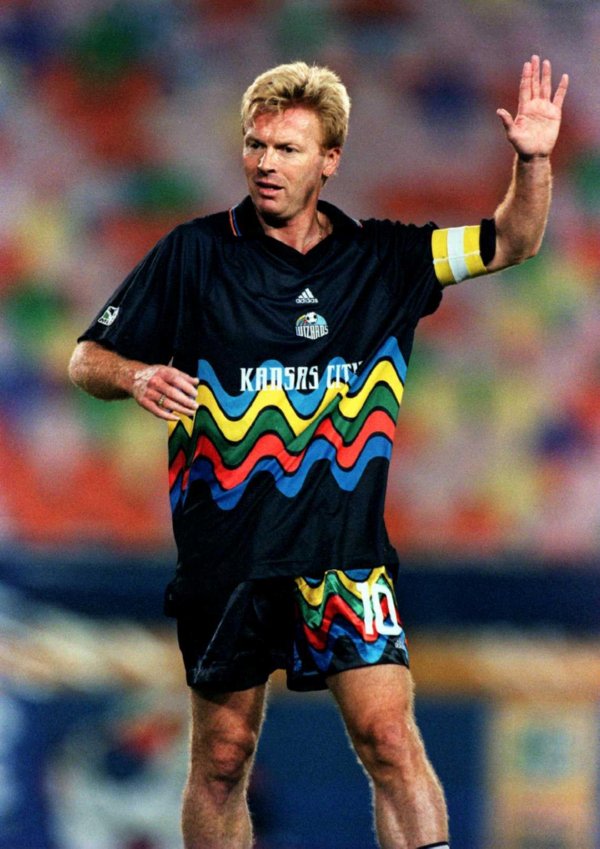
Compared to what he faced at Ibrox,
wearing this horrid kit at Arrowhead was a breeze.

With St. Louis City SC not beginning play until the 2023 season, SKC don't yet have an obvious geographical rival. They could look east and say it's the Chicago Fire, or south and say it's the Dallas Burn or the Houston Dynamo, or west and say it's the Colorado Rapids. The region's established AFC Western Division rivalry could kick in, and make a KC-Denver rivalry with the Rapids, but it hasn't really happened. And, while Chiefs fans hate the Raiders, the Earthquakes are in San Jose, not Oakland, so that doesn't fit, either.

Stuff. The Sporting Style stores are located near Sections 114 and 131, and Scarf Bars at 101 and 122. Yes, "scarf bars." Does that mean that if you put one around your neck, you can absorb alcohol through your skin?

The sports staff of The Kansas City Star published the commemorative book We Love Ya! Sporting Kansas City -- 2013 MLS Champions. Defender Matt Besler, a native of nearby Overland Park, Kansas who has spent his entire pro career with SKC, has written No Other Home: Living, Leading and Learning What Matters Most.

However, as far as I can tell, there is no commemorative video for either of the team's MLS Cup wins, or for their 20th Anniversary.

During the Game. Because of their Great Plains/Heartland image, Kansas City fans like a "family atmosphere." Yeah, let them say that with a straight face when they play the Chicago Fire, or the Colorado Rapids, or FC Dallas. But they have no special distaste for either of the New York teams. So they will not directly antagonize you. At least, they won't initiate it. But don't call them rednecks, hicks or sheep-shaggers.

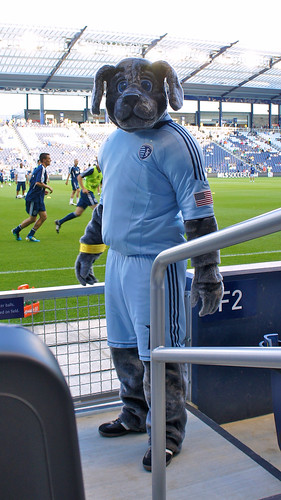
SKC hold auditions for National Anthem singers, instead of having a regular. The club's mascot is Blue, a 7-foot gray dog in a blue uniform. (Maybe he should've been named Gray.)
The main supporters group of Sporting Kansas City cheers in the Members' Stand, on the North side of Children's Mercy Park, known as The Cauldron. The name is derived from the large metal pots used for boiling potions, due to the team's former name of the Kansas City Wizards. That name was never popular, and after an attempt to rename them the Bees, since the bee is the State Insect of both Missouri and Kansas, the European-sounding name "Sporting Kansas City" was chosen in 2011.

Current groups in the north stands along with The Cauldron include La Barra KC, the Brookside Elite, the Mass Street Mob, the King City Yardbirds, the Trenches, the Omaha Boys, the Northland Noise, the Ladies of SKC, and the K.C. Futbol Misfits.

The South Stand SC cheers from the south end of Children's Mercy Park, and is the umbrella group for The Wedge and Ad Astra SKC, while the Kansas City Chapter of the American Outlaws, the fan club for the men's and women's national teams, is also present in the stands.

Their songs include the variation on Little Peggy March's "I Will Follow Him" ("We love ya, and where you go we'll follow"), a variation on Chelsea FC's "Carefree" ("We are the famous SKC"), and some songs that still include the old nickname of "Wiz" for Wizards. One, to the tune of "The Battle Hymn of the Republic," goes:

Sporting, Sporting Kansas City
as the Wiz go marching on on on!
A sign taunting Seattle Sounders fans
about the 2008 loss of the NBA's SuperSonics.
As if KC hadn't lost the Kings to Sacramento in 1985.

After the Game. Since the stadium is not in any neighborhood, let alone a bad one, you should be safe after a game, day or night. As I said, leave the home fans alone, and they'll probably leave you alone.

This being the suburbs, there are loads of chain restaurants near the stadium. In a shopping center to the west, between the stadium and the minor-league ballpark, there's an Applebee's, a Chili's, a Hooters, a Whataburger, a LongHorn Steakhouse, a Bob Evans, and an El Toro Loco. Across Village Parkway from that shopping center, there's a McDonald's, a Panera, a Chipotle, and some lesser-known (possibly regional) chains. To the east, across France Family Drive, there's a Lone Star Steakhouse and a Famous Dave's.

Chappell's Restaurant & Sports Museum, not really a museum but with a huge memorabilia collection, has been called the best sports bar in the Kansas City area. 323 Armour Rd., at Erie St, 11 miles northeast of the sports complex, and 5 miles north of downtown. 

If you want to be around other New Yorkers, Johnny's Tavern, 1310 Grand Blvd., downtown, across from the T-Mobile Center (the new arena), is known as a Giants fan's bar. Be advised that it is also known as a Sporting KC bar -- and a USMNT bar, and a University of Kansas bar. 

If your visit to Kansas City is during the European soccer season, which is now approaching its climax, you can watch your favorite club at the following locations, which are in KCMO unless otherwise stated:

* Arsenal: The aforementioned Johnny's Tavern.

* Liverpool and Tottenham Hotspur: Strange Days Brewing Co., 316 Oak Street. Bus 77 to 3rd & Grand.

* Chelsea: The Belfry, 1532 Grand Blvd., downtown, 3 blocks south of the T-Mobile Center.

* Everton: District Pour House, 7122 Wornall Road. MAX bus to Wornall & Gregory.

* Manchester United: Quinton's Waldo Bar, 7438 Warnall Road, 3 blocks from District Pour House.

* Bayern Munich: Kansas City Bier Company (a.k.a. KC Bier), 310 W. 79th Street. MAX bus to Broadway & 74th, then walk 7 blocks south.

If your team isn't listed here, your best bet may be No Other Pub, 1370 Grand Blvd., also across from the Sprint Center.

Sidelights. Kansas City's sports history is a bit uneven. When the Royals and Chiefs have been good, they've been exceptional. But they've also had long stretches of mediocrity. Still, there are some local sites worth checking out.

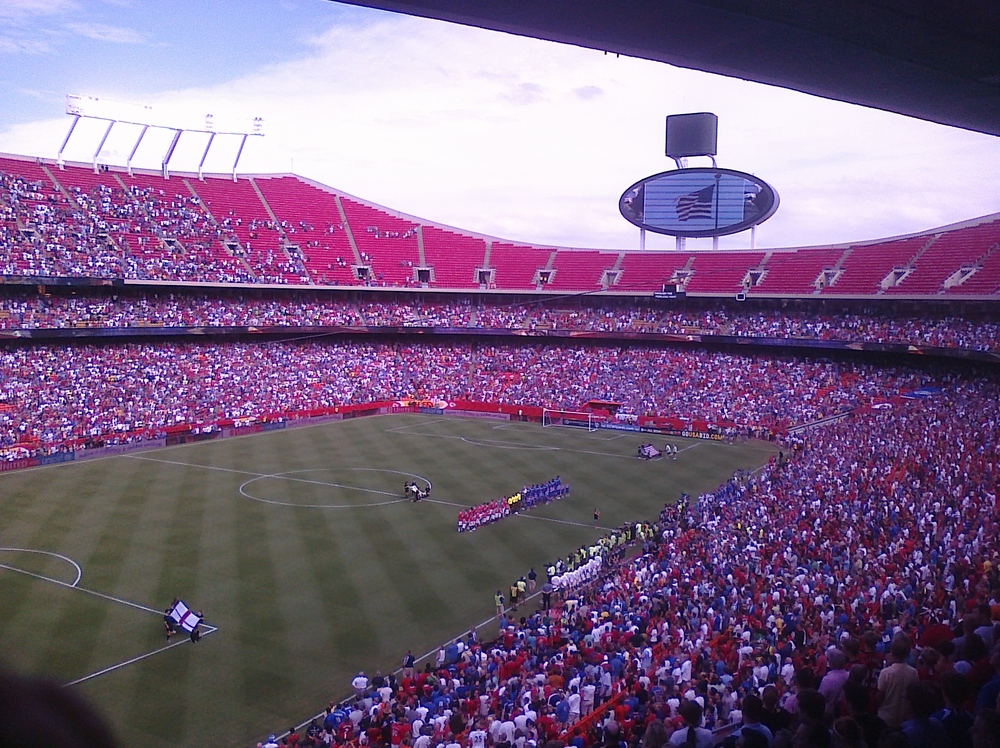
The Harry S Truman Sports Complex, including Kauffman Stadium (known as Royals Stadium from 1973 until the 1993 death of founder-owner-pharmaceutical titan Ewing M. Kauffman) and Arrowhead Stadium, home of the NFL's Kansas City Chiefs and site of a 2001 U.S. soccer team win over Costa Rica, is 8 miles southeast of downtown Kansas City, at the intersection of Interstates 70 and 435, still in the city but on the suburban edge of it.
Top: Kauffman Stadium. Bottom: Arrowhead Stadium.

The official address of Arrowhead Stadium is 1 Arrowhead Way, and that of Kauffman Stadium is 1 Royal Way. Public transportation is not much of an option. In fact, aside from Arlington, Texas, this is one of the least friendly stadiums in MLB and the NFL for those without a car. The Number 28 bus will drop you off at 35th Street South and Blue Ridge Cutoff, and then it's a one-mile walk down the Cutoff, over I-70, to the ballpark. The Number 47 bus will drop you off a little closer, on the Cutoff at 40th Terrace, about half a mile away.

Arrowhead has hosted the Big 12 Conference football championship game 5 times, most recently in 2008. The "Border Showdown" between the universities of Kansas and Missouri, the oldest college football rivalry west of the Mississippi River, was played at Arrowhead from 2006 to 2011, when Missouri left the Big 12 for the Southeastern Conference.

They are not scheduled to play each other in football this year or next year, and as far as I know, there are no plans to revive the rivalry in 2019 or later. But such rivalries never stay dormant for long, and if the Big 12 continues to fall apart (they're now at 10 teams, as they've lost Missouri and Texas A&M to the SEC, Nebraska to the Big 10 and Colorado to the Pac-10/12, but have also gained West Virginia from the Big East and Texas Christian from the Western Athletic Conference), it wouldn't be outrageous to see Kansas in the SEC in the foreseeable future.

As Chiefs founder-owner Lamar Hunt was one of the main movers and shakers of American soccer -- the American equivalent of England's FA Cup is officially named the Lamar Hunt U.S. Open Cup -- he helped to found MLS, and the Kansas City Wizards began play at Arrowhead in 1996. They won the MLS Cup in 2000. But the Hunt family sold that team in 2007, and, under the name Sporting Kansas City, it now plays across the State Line in Kansas City, Kansas. Still using the Wizards name in 2010, they played a preseason friendly against Manchester United at Arrowhead, and won 2-1. It has been approved by FIFA to be one of the host venues for the 2026 World Cup.
Arrowhead Stadium, set up for soccer

* Site of Municipal Stadium. This single-decked, 17,000-seat ballpark was built as Muehlebach Field in 1923, by George Muehlebach, who also owned the beer and the hotel that bore his name, and the American Association's Kansas City Blues. It hosted the Blues' Pennants in 1929, 1938, 1952 and 1953 – the last 3 as a farm club of the Yankees. (They'd previously won Pennants in 1888, 1890, 1898 and 1901, for a total of 8 Pennants -- or 5 more than the A's and Royals combined in nearly 60 years thus far.) Future Yankee legends Phil Rizzuto (Sporting News Minor League Player of the Year in 1940) and Mickey Mantle (1951) played for this club at this ballpark.

The Kansas City Monarchs of the Negro Leagues also played at Muehlebach, renamed Ruppert Stadium for the Yankees' owner in 1937 and Blues Stadium in 1943. They won 13 Pennants there from 1923 to 1955, including 3 straight, 1923-25, and 4 straight, 1939-42.

Hall-of-Famers Satchel Paige, Willard Brown and Hilton Smith were their biggest stars, although it should be noted that, while he played with them in the 1945 season, Jackie Robinson was, at the time, not considered as much of a baseball prospect some of the other players who were thought of as potential "first black players," like Paige, Monte Irvin and Larry Doby; it was his balance of competitiveness and temperament, as much as his talent, that got Brooklyn Dodgers president Branch Rickey interested in him. And in a travesty, Monarchs legend Buck O'Neil has never been elected to the Hall of Fame. The Monarchs had to leave after the 1955 season, because of the arrival of the A's.

Muehlebach Field, as it was then known was also the home to Kansas City's 1st pro football team, the team known as the Blues in 1924 and the Cowboys in 1925 and '26.

In 1954, the Philadelphia Athletics were sold to trucking company owner Arnold Johnson, and he moved the club to Kansas City, where his pal Del Webb, co-owner of the Yankees, had his construction company put an upper deck on what was renamed Kansas City Municipal Stadium, raising the capacity to 35,020. Thanks to the Webb-Johnson friendship, a lot of trades went back and forth (including Billy Martin out there in 1957 and Roger Maris to New York in the 1959-60 off-season), and it was joked that Kansas City was still a Yankee farm club.

When Johnson died during spring training in 1960, insurance magnate Charles O. Finley bought the club, and he put a stop to that. Finley also debuted some of his promotional shenanigans at Municipal, including Harvey the Rabbit, a Bugs Bunny lookalike that mechanically popped out of home plate to deliver fresh baseballs to the plate umpire. And Finley convinced Brian Epstein to let the Beatles play there, on September 17, 1964, their only concert in Kansas City.

But Finley wanted a new ballpark, and Kansas City wouldn't give it to him. It's not that they didn't support big-league ball, it's that they couldn't stand him. After flirting with Atlanta, Louisville, Dallas and Denver, he moved the team out of Kansas City in 1967, leading Senator Stuart Symington of Missouri to say, "Oakland, California just became the luckiest city since Hiroshima."

Despite being from the St. Louis side of the State, Symington lobbied Major League Baseball for a replacement team in K.C., and MLB granted an expansion franchise to Ewing Kauffman, to start play in 1969. Symington was invited to throw out the first ball at the first Royals home game. For the new team, with Kauffman rather than Finley as owner, the city built a new park. The Royals moved out after the 1972 season. Neither the Royals nor the A's ever came close to October while playing there.

The Chiefs began playing at Municipal Stadium in 1963, with a bleacher section from the left field pole to center field increasing the seating capacity to 47,000. Playing there, they won AFL Championships in 1966 and 1969 (in addition to their 1962 title as the Dallas Texans), won Super Bowl IV, and played their last game there on Christmas Day 1971, a double-overtime loss to the Miami Dolphins that is still the longest game in NFL history.

The Kansas City Spurs of the old North American Soccer League played the 1968, '69 and '70 seasons there. In spite of a name that brought London's Tottenham Hotspur to mind, they were actually Birmingham-area team Wolverhampton Wanderers in the English league's off-season.

The U.S. soccer team played Bermuda at Municipal Stadium on November 2, 1968, and won. The attendance was 2,265. That gives you an idea of how far U.S. soccer has come.

When the merger happened, the NFL required its teams to have stadiums seating at least 50,000 people. Combined with one of Major League Baseball's requirements for a new K.C. team being a new ballpark, this doomed Municipal Stadium. It was torn down in 1976, and a housing development is going up on the site.

22nd Street and Brooklyn Avenue, near the 18th and Vine district that was the home of Kansas City jazz, making it a favorite of the Monarchs players. The original outpost of the legendary Arthur Bryant's barbecue restaurant is 4 blocks away at 1727 Brooklyn Avenue. Number 123 bus.

* Negro Leagues Baseball Museum and American Jazz Museum. Founded by Buck O'Neil and some friends, this museum "tells the other side of the story." As Buck himself said, the pre-1947 all-white major leagues called themselves "Organized Baseball," but, "We were organized." The museum's lobby features statues of several Negro League legends, including Paige, Josh Gibson, Buck Leonard and Oscar Charleston – having played for the Monarchs was by no means a requirement for that.

The Negro Leagues were a sometimes dignified, sometimes willingly silly, and very successful response to the color bar. But the raiding of their rosters, with no regard to contracts and thus no money changing hands, by the white majors from 1947 onward, was the beginning of the end. But Buck O'Neil had the right perspective, as he said in Ken Burns' Baseball miniseries: "Happy. Happy... Of course, it meant the death of our baseball, but who cared?" The owners of the Negro League teams cared. Other than that...

1616 E. 18th Street. The same building is home to the American Jazz Museum, which includes a working jazz club, the Blue Room. Number 108 bus. The Museum is 5 blocks west of Arthur Bryant's, and a short walk from the site of Municipal Stadium, and neither of these facts is a coincidence.

* Municipal Auditorium. Built in 1935 in the Art Deco style then common to public buildings (especially in New York), it replaced the Convention Hall that was across the street, which hosted the 1900 Democratic Convention which nominated William Jennings Bryan for President (and at which a 16-year-old Harry S Truman served as a page) and the 1928 Republican Convention that nominated Herbert Hoover.

The replacement arena has a Presidential connection as well, as the 2nd and last debate of 1984 was held at the Music Hall within. This was the one that President Ronald Reagan began by brushing away fears that, at 73 years old, he was too old for the job, by citing former Vice President Walter Mondale's "youth and inexperience" (ignoring that Mondale was very experienced at age 56, while Reagan never even ran for office until he was 55), and ended it by giving a rambling closing statement that restored the fears of some. (He won in a landslide, but he was, clearly, already dealing with Alzheimer's disease.)

The arena seats 7,316 people, but for special events can be expanded to 10,721. The NCAA hosted what would later be called the Final Four here in 1940 (Indiana beat Kansas in the Final), 1941 (Wisconsin over Washington State), 1942 (Stanford over Dartmouth), 1953 (Indiana over Kansas again), 1955 (the University of San Francisco, with Bill Russell, over LaSalle with Tom Gola), 1957 (North Carolina over Kansas with Wilt Chamberlain in triple overtime), 1961 (the University of Cincinnati over Ohio State with Jerry Lucas and John Havlicek) and 1964 (UCLA winning its 1st title under John Wooden, with Walt Hazzard and Gail Goodrich, over Duke).

The NBA's Kansas City Kings played their 1972-73 and 1973-74 home games here after moving from Cincinnati – having to change their name because Kansas City already had a team called the Royals. An accident at the Kemper Arena forced the Kings to move back to the Auditorium for a few games in the 1979-80 season. The basketball team at the University of Missouri at Kansas City (UMKC) played their home games here from its opening until they opened an on-campus arena in 2010. Elvis Presley sang there as a new national star on May 24, 1956, and as an entertainment legend on November 15, 1971 and June 29, 1974.

* Kemper Arena. Built in 1974, it immediately began hosting 2 major league sports teams – neither of which lasted very long. The NBA's Kansas City Kings played here until 1985, when they moved to Sacramento. The NHL's Kansas City Scouts were the ne plus ultra – or should that be ne minus ultra? – of expansion teams, lasting only 2 seasons before moving in 1976 to become the Colorado Rockies – and then again in 1982 to become the New Jersey Devils. A few minor league hockey teams have played here since, but its only current tenant is the American Royal show.

In the Kings' final season in Kansas City, they hosted the Knicks in a game that resulted in one of the most frustrating injuries in NBA history, Knick star Bernard King jumping for a rebound and tearing up his knee. I'll never forget watching on TV and hearing him yell, "Oh, damn! Oh, damn!" and then crumpling to the floor, repeatedly slapping it with his hand. Bernard did play again, and well, but a great career turned into a what-might-have-been. But that wasn't the worst injury here, and I don't mean the 1979 roof damage, either: This was where professional wrestler Owen Hart was killed on May 23, 1999.

Kemper was also the last building seating under 20,000 people to host a Final Four, hosting the 50th Anniversary edition in 1988, in which the University of Kansas, led by Danny Manning, upset heavily favored Oklahoma. In fact, KU made the 40-mile trip from Lawrence many times, creating an atmosphere that got the place nicknamed Allen Fieldhouse East, a name they have now transplanted to the Sprint Center. They went 80-24 at Kemper, including the 1988 title game.

The 1976 Republican Convention was held there, nominating Gerald Ford. Elvis sang there on April 21, 1976 and, in one of his last concerts, June 18, 1977. 1800 Genesee Street, at American Royal Drive, a block from the Missouri-Kansas State Line. Number 12 bus.

In addition to the preceding, Elvis sang in Western Missouri at the Shrine Mosque in Springfield on May 17, 1956; and the Hammons Student Center at Southwest State University (now Missouri State) in Springfield on June 17, 1977.

* Sprint Center. This arena opened in 2007, with the idea of bringing the NBA or NHL back to Kansas City. (The arena builders appear not to care which one they get, but with K.C. being a "small market," they'll be lucky to get one, and will not get both.) It almost got the Pittsburgh Penguins, before a deal to build the Consol Energy Center was finalized. It was also being considered for the New York Islanders, before they cut a deal to move to the Barclays Center in Brooklyn.

For basketball, it seats 18,555; for hockey, 17,752. For the moment, no teams, major-league or minor-league, play here regularly, although has hosted college basketball: KU games, the Big 12 Tournament, NCAA Tournament games. 1407 Grand Boulevard, at W. 14th Street. Number 57 or MAX bus from downtown. (UPDATE: In 2020, it was renamed the T-Mobile Center.)

On May 12, 2014, The New York Times printed a story that shows NBA fandom by ZIP Code, according to Facebook likes. You would think that, being between Chicago and Oklahoma City, with no team in St. Louis, the Kansas City area would be divided between Bulls and Thunder fans. Instead, the distance is so great (508 miles from Sprint Center to United Center, 349 miles to whatever OKC's arena is called now), that they divide up their fandom among the "cool" teams: The Bulls, the Los Angeles Lakers and the Miami Heat.

(As yet, there is no hockey version. The closest NHL team is the St. Louis Blues, 247 miles away, but the KC-St. Louis rivalry may get in the way of K.C. people supporting the Blues.)

It's unlikely that, even with a new arena, Kansas City will get a new team anytime soon. The metro area would rank 26th in population in the NBA, and 23rd in the NHL. Face it: With his desire to take teams out of Canada and cold-weather cities and put them in Sun Belt cities, if Commissioner Gary Bettman wanted Kansas City to have a team, it would have one by now.

* Swope Soccer Village. FC Kansas City played here in 2015, and won another NWSL title. They also played here in 2016 and 2017, before moving to Salt Lake City and becoming the Utah Royals, and were ultimately replaced in 2021 by the Kansas City Current. 6310 Lewis Road, 7 1/2 miles south of downtown. Any of several buses can get you to 63rd and Paseo, where you would transfer to Bus 63.

* Colleges. Downtown Kansas City is 126 miles from the University of Missouri in Columbia, 44 miles from the University of Kansas in Lawrence, and 124 miles from Kansas State University in Manhattan, Kansas.

And yet, despite KU (never written as "UK" even though that would be correct) being 3 times as close as UM, the State Line is the absolute delineator: If you live in Kansas City, Missouri, you are much more likely to be surrounded by Missouri Tiger fans than you are Kansas Jayhawk fans. Kansas having won the 1988 National Championship at Kemper Arena and a few KU-UM games being played at Arrowhead have done nothing to change that.

* Museums. Kansas City has 2 prominent art museums. The Nelson-Atkins Museum of Art is K.C.'s "Metropolitan Museum of Art," 3 miles north of downtown, at 4525 Oak Street, in Southmoreland Park. And their "Museum of Modern Art" is the Kemper Museum of Contemporary Art, 2 blocks away, at 4420 Warwick Boulevard at 45th Street. Both can be reached by the Number 57 bus.

Kansas City is still, in a way, Harry Truman's town. The 33rd President, serving from April 12, 1945 to January 20, 1953, was born in nearby Lamar, and grew up in nearby Independence. He opened his Presidential Library and Museum in 1957, and frequently hosted events there until a household accident in 1964 pretty much ended his public life.

Upon his death in 1972, he was buried in the Library's courtyard; his wife Bess, born Elizabeth Wallace, followed him in 1982, at age 97, to date the oldest former First Lady; and their only child, Margaret Truman Daniel, was laid to rest there in 2008. Currently, the Library is run by his only grandchild, Clifton Truman Daniel.

500 West U.S. Highway 24, Independence. Number 24X bus to Osage & White Oak Streets, and then 4 blocks north on Osage and 3 blocks west on Route 24. The Truman Home – actually the Wallace House, as Bess' family always owned it – is nearby at 219 N. Delaware Street. Same bus.

Truman's successor, Dwight D. Eisenhower, is, so far, the only President from Kansas. But "Ike" put his Presidential Library (and his final resting place) in his hometown of Abilene, 200 SE 4th Street, 150 miles west of Kansas City and 90 miles north of Wichita. Car only: Neither Amtrak nor Greyhound goes there. All of which is a polite way of saying it's in the middle of nowhere.

Just west of the Crown Center is the Liberty Memorial, including the National World War I Museum, honoring the 1914-18 conflict that was then frequently called "The Great War" (accurate) and "The War to End All Wars" (not accurate, as it turned out). 100 West 26th Street.
There aren't a whole lot of tall buildings: One Kansas City Place, at 1200 Main Street, is the tallest in the State, at 624 feet, but only 2 other buildings are over 500 feet. The Kansas City Power & Light Building, at 1330 Baltimore Street, and the twin-towered 909 Walnut were built in the early 1930s and are the city's tallest classic buildings.

If you want to copy the song "Kansas City," and be "standing on the corner, 12th Street and Vine," you're out of luck: Due to urban renewal, it no longer exists. There is, however, a park with a plaque roughly where it was.

There haven't been many TV shows set in Kansas City. By far the most notable was Malcolm & Eddie, the 1996-2000 UPN sitcom that starred Malcolm-Jamal Warner and Eddie Griffin (a KCMO native). ABC Family's Switched at Birth is also set there. But both shows were taped in Los Angeles and did no location shots, so if you're a fan of that show, there's nothing in Kansas City to show you. The United States of Tara was set in suburban Overland Park, Kansas. The post-apocalyptic Jericho was set in a fictional Kansas town of that name.

There have been a few movies set in Kansas City and the surrounding areas. The 1962 horror film Carnival of Souls was filmed in Lawrence, Kansas. The 1983 nuclear-war TV-movie The Day After was filmed in KCMO and Lawrence. Much of Supernatural was set in Lawrence and in other places in Kansas. Raquel Welch's roller-derby movie Kansas City Bomber was filmed in KCMO, as were Mr. & Mrs. Bridge and Article 99.

Most movies filmed or set in Kansas itself tend to be Westerns, such as The Plainsman, Dodge City, Santa Fe Trail, Red River, Winchester '73, Dances with Wolves and Sarah, Plain and Tall. The TV Western Gunsmoke was set in Dodge City, 335 miles southwest of Kansas City, and was filmed in Hollywood. Kansas' desolate plains lend themselves well to Depression-era films like Splendor in the Grass, Paper Moon and The Great Waldo Pepper.

The 1978 version of Superman established the hero's hometown of Smallville, previously considered a typical American small town, as being in Kansas, and every version of Superman since has accepted this. Plains, Trains and Automobiles had a big chunk set in Kansas, but actually filmed in Illinois.

And, of course, Kansas was the setting for the "real" parts of L. Frank Baum's novel The Wonderful Wizard of Oz, and all its film adaptations since. (Judy Garland's line as Dorothy in the most familiar version, 1939, is one of those movie/TV lines everybody gets wrong: It's actually, "Toto, I've a feeling we're not in Kansas anymore!")

*

Kansas City is a great American city, almost literally in the center of this great country. And its citizens, and the people who come from hundreds of miles around to see the Royals and Chiefs, love their sports. They have come to love soccer as well, and pack the little horseshoe in Kansas City, Kansas. It's well worth saving up to check it out. 

How to Be a Yankee Fan In Cleveland -- 2022 Edition

Next Friday, July 1 the Yankees will do something they've never done before: Play the Cleveland Guardians in Cleveland.

Okay, sure: From 1903 to 1914, they played the Cleveland Naps; and from 1915 to 2021, they played the Cleveland Indians; and it's the same team. Still, the name is different.

Unlike a lot of these cities, I have been to Cleveland, and have even seen the Yankees beat the Indians, now the Guardians, at Jacobs Field -- sorry, Progressive Field. (I hate the corporate name. But I love the "Flo" commercials.)

Before You Go. You've no doubt heard the legends of wind blasting off Lake Erie and "lake-effect snow." Well, this will be July, so cold and wind won't be an issue.

Cleveland.com, the website connected with the city's main newspaper, The Plain Dealer, is predicting temperatures in the high 70s for the afternoons, and the high 60s at night. Rain is predicted for Friday and Saturday, which might really mess things up, since this is the Yankees' only scheduled visit to Cleveland this season.

Despite former Indian 3rd baseman Graig Nettles' joke on a Yankee flight to Cleveland in 1977 -- "Ladies and gentlemen, we are about to land in Cleveland. Please set your watches back 42 minutes." -- Cleveland is in the Eastern Time Zone, so you won't have to change your timepieces.

Tickets. The Indians won a surprise American League Pennant in 2016, but any bounce they got from it is already gone: They averaged 21,123 fans per home game in 2019, the last pre-COVID season. Ohio has never really recovered from the Bush Recession -- and short memories may explain why the State fell for Trump's line of bull twice.

This should be shocking to those of you who remember their home field, then known as Jacobs Field for Richard Jacobs, the owner who got the place built, being sold out every game from 1995 to 2001. But it shouldn't be shocking to those of you whose memories go back further, to the days when they played at 86,000-seat Municipal Stadium, a.k.a. "Cavernous Cleveland Stadium," where there were often 75,000 to 80,000 people who showed up disguised as empty seats.

However, the Yankees are always the biggest draw of the year for the Guardians, and the park officially seats 34,830 people (from a 2009 peak of 45,569). And, as it happens, these games are pretty much sold out. You may have to go to StubHub or a similar website.

Naturally, tickets to see the Guardians play the Yankees are more expensive than those against other opponents. Field Boxes (lower-level infield) are $92, Lower Boxes (lower-level down the foul lines) are $85, Lower Boxes in the corners by the poles are $65, Lower Reserved (right-field bleachers) are $74, View Box (first few rows of upper deck) are $54, Upper Box are $35, and Upper Reserved (pretty high up) are $29. The Bleachers, in left field under the big scoreboard, are $45.

Getting There. Note that this coming Monday is the 4th of July, making this the 4th of July weekend. So there will be more demand for tickets, and less supply.

Cleveland is 500 land miles from New York. Well, not quite: Specifically, it is 465 miles from Times Square to Public Square; and 467 miles from Yankee Stadium to Progressive Field. Knowing this, your first reaction is going to be to fly out there.

This may be a good idea -- if you can afford it: Like New York, Boston and Chicago, but unlike most of the American League cities, Cleveland has good rapid transit from the airport to downtown. In fact, with the extension of the RTA Rapid Transit's Red Line in 1968, Cleveland became the 1st city in the Western Hemisphere to have rapid transit direct from downtown to its major airport. But round-trip fare could run you over $900.

Cleveland Hopkins International Airport, named for William R. Hopkins, a City Manager in the 1920s and an early pilot, is about 12 miles southwest of downtown, and the Red Line takes 24 minutes, 9 stops, to get from Hopkins to Tower City.

From Tower City, underneath the iconic Terminal Tower on Public Square, there is a walkway directly to the ballpark and the adjoining Quicken Loans Arena – meaning you could fly in, ride in, walk in, see a game, walk out, ride out and fly out, all in one day. But you really should take a day to see the city.

Train? Bad idea. Not because of the price, but because of the schedule. The Lake Shore Limited (formerly known as the Twentieth Century Limited when the old New York Central Railroad ran it from Grand Central Terminal to Chicago's LaSalle Street Station) leaves Penn Station at 3:40 every afternoon, and arrives at Cleveland's Lakefront Station at 3:53 in the morning. Let me say that again: 3:53 AM. In reverse, the train leaves Lakefront Station at 5:50 AM and arrives back at Penn Station at 6:47 PM. Time-wise, this is incredibly inconvenient.

And it's sold out this time, so you can't do it, anyway.

And, unlike the Cleveland Union Terminal, now known as Tower City Center but hasn't had long-distance passenger rail traffic since 1977, Lakefront Station, at 200 Cleveland Memorial Shoreway, is not exactly one of the great rail terminals of this country. To make matters worse, while the RTA Green Line and Blue Line both serve Lakefront Station, the RTA doesn't run overnight, and thus any Amtrak train that comes into the station will not be serviced by it.
Not only isn't it an Art Deco masterpiece like Union Terminal,
but Lakefront Station is about the size of Metropark in Woodbridge.
Pathetically small for a metro area of Cleveland's size.

How about Greyhound? There are 9 buses leaving Port Authority every day with connections to Cleveland, but only 2 of these are nonstop: The rest require you to change buses in Pittsburgh or Buffalo. The ride, including the changeover, takes about 13 hours. Round-trip fare is $423, although it can be as little as $229 with advanced purchase.

The terminal, at 1465 Chester Avenue, adjacent to the Cleveland State University campus east of downtown, was a hideously filthy hole on my 1st visit in 1999, but by my next visit in 2004, they'd gotten the message and cleaned it up, and it's tolerable again. At least on the inside; on the outside, it's a magnet for panhandlers. It's a 7-block walk from the terminal to Public Square, but it's better to take a cab, or to walk 3 blocks to the corner of 13th Street & Superior Avenue and take the Number 3 bus in.
If you decide to drive, the directions are rather simple, down to (almost literally) the last mile. You'll need to get into New Jersey, and take Interstate 80 West. You'll be on I-80 for the vast majority of the trip, through New Jersey, Pennsylvania and Ohio. In Ohio, in the western suburbs of Cleveland, I-80 will merge with Interstate 90. I point this out merely to help you avoid confusion, not because I-90 will become important. You'll take I-80's Exit 173, and get onto Interstate 77 North. Take Exit 163 toward E. 9th St. This will take you into downtown. If you're driving, I would definitely recommend getting a hotel, and there are several downtown, including some near the ballpark.

If you do it right, you should spend about an hour and a half in New Jersey, 5 hours and 15 minutes in Pennsylvania, and a little over an hour in Ohio. Counting rest stops, preferably at either end of Pennsylvania, and accounting for traffic in both New York and Cleveland, it should be no more than 10 hours.

Once In the City. Cleveland, which once had a city population of over 900,000, but is now under 400,000 with a metro area population of 3.5 million, was founded in 1796 by Moses Cleaveland, a hero of the War of the American Revolution, a General in the Connecticut militia, and a shareholder in the Connecticut Land Company. When the Northwest Ordinance was passed in 1787, a lot of New Englanders moved to what's now the Great Lakes States, and many "original" Ohio families can trace their roots back to Connecticut and Moses' expedition to what was known as the Western Reserve.

Supposedly, the reason for the difference in spelling is that, in 1830, the city's 1st newspaper was established, but the editor found "Cleaveland Advertiser" was too long to fit on the incorporation form, so he dropped an A.

The city doesn't really have a highway "beltway" as we understand that term. It is centered on Public Square, at the intersection of Ontario Street and Superior Avenue (U.S. Route 6), with Euclid Avenue (U.S. Route 20) flowing into it. The Terminal Tower, a 708-foot Art Deco masterpiece, is at the southwest corner of Public Square, and includes the Tower City rail hub and shopping mall. It opened in 1930 and, until 1964, was the tallest building in North America outside New York.
At the southeast corner is the Soldiers & Sailors Monument, probably the best memorial to the American Civil War outside of that war's preserved battlefields. And at the northeast corner is the Key Tower, at 948 feet now the tallest building in the State of Ohio; Richard Jacobs, who owned the Indians for a time, also owned the real estate development company that built the Key Tower (named for Key Bank) in 1991.

The sales tax in Ohio is 5.75 percent, and in Cuyahoga County (which includes Cleveland), it's 8 percent. ZIP Codes in Cleveland begin with the digits 441, and the Area Code is 216. Ohio Edison runs electricity for the Cleveland area, but not the Columbus and Cincinnati areas. Yankee broadcaster Bill White, who grew up in Cleveland, mentioned on the air once that, like Consolidated Edison in New York, "Ohio Ed" sponsored a program to take inner-city kids to Indians games.

Cleveland is one of the cities that had a major race riot which led to "white flight": The city's population was 83 percent white in 1950, but just 33 percent white now, along with 53 percent black, 10 percent Hispanic and 2 percent Asian.

Cleveland had been comparatively free of racial strife until July 18, 1966. But that doesn't mean it was free of crime. In particular, the East Side, centered on the Hough neighborhood, had issues, including with The Seventy-Niner's Café at East 79th Street and Hough Avenue. A confrontation there between police and patrons escalated to the point where, over the next 5 days, 4 people were killed, 50 others were injured, and 275 were arrested.

Two years later, there was another incident on the East Side, what became known as the Glenville Shootout. The police and black nationalists fired at each other on July 23, 1968, and this led to rioting. Between the shootout and the riot, 9 people were killed including 3 policemen, and 16 others were wounded in the shootout.

The Kent State University massacre, about 40 miles southeast of Public Square, on May 4, 1970, was about the Vietnam War, not racial issues. Northern Ohio had no more civil disturbances until October 15, 2005, when neo-Nazis calling themselves the National Socialist Movement demonstrated against black gang activity in Toledo, and got their asses handed to them by a group called Anti-Racist Action.

On November 22, 2014, Tamir Rice, a 12-year-old black boy, was carrying a toy gun at the Cudell Recreation Center on Cleveland's West Side, was shot and killed by police. Along with the police killings of Eric Garner in New York and Michael Brown in the St. Louis area, both earlier in the year, this was one of the sparks of the Black Lives Matter movement.
The Greater Cleveland Regional Transit Authority (RTA) runs a heavy rail Red Line, similar to New York's Subway, and light rail Blue and Green Lines. They converge at the Tower City, and all 3 run together from there to East 55th Street. The Blue and Green Lines both start at South Harbor, and run together to Shaker Square before diverging. The fare is $2.25, and is the same for RTA buses. An all-day pass is a bargain at just $5.00.
An RTA line at Tower City

Going In. Progressive Field, named for the insurance company (with TV spokesgal Flo) and called Jacobs Field from 1994 to 2008 -- once "The Jake," it's now "The Prog" -- is 7 blocks from Public Square, at 2401 Ontario Street. Parking at lots around the ballpark runs from $5.00 to $20.
As I said, a walkway connects Tower City Rail and the ballpark. Ontario Street is the 3rd base side, Carnegie Avenue the 1st base side, 9th Street the right field side, and Eagle Avenue the left field side. Gates A and B, including a statue of Bob Feller, are at the left field corner. Gate C is a the right field corner, and Gate D is behind home plate. Each gate features a ticket office as well as an entry point.

Rocket Mortgage FieldHouse, formerly Gund Arena and Quicken Loans Arena, is across Eagle Avenue. It is the home of the 2016 NBA Champion Cleveland Cavaliers, a minor-league hockey team called the Lake Erie Monsters (but there's no monster in Lake Erie, the way some people say there are in Loch Ness and Lake Champlain), and an Arena Football team called the Cleveland Gladiators.
The first thing that will catch your eye when you get to your seat is the big scoreboard in left field. The light towers are also distinctive, known as "The Toothbrushes." If you've been to Citizens Bank Park in Philadelphia, "The Jake" is going to seem rather familiar. The layout is nearly identical, with the wraparound being from the left field corner around home plate, around the right field corner nearly to center field, with the bleachers in left field under a huge board. There's even a statue of a legendary pitcher outside left field (in Philly's case, Steve Carlton; in Cleveland's, Bob Feller).

The ballpark faces northeast, and from some sections Cleveland's taller buildings, such as the Terminal and Key Towers, can be seen. The field is natural grass. Outfield distances are as follows: Left pole, 325 feet; left-center, 370; center, 405; deepest part of the park, to the right of dead-center, 410; right-center, 375; right, 325. Home plate was moved from Municipal Stadium, although it's not clear how long that particular plate has been used: It may not have been from the old stadium's beginnings.

On July 3, 1999, Jim Thome hit the park's longest home run, 511 feet. There is some dispute as to the longest ever at Municipal Stadium: Officially, Luke Easter holds the record with a 477-footer in 1950, but Mickey Mantle may have hit one there a little longer in 1952, and Ted Williams may also have surpassed it.

Food. Ohio -- much more than New Jersey (Rutgers) and Maryland -- is part of Big Ten Country, where college football tailgate parties are practically a sacrament. However, unlike the Tigers, White Sox and Brewers, there really isn't a lot of great food options.

Their "Ballpark Classics," "Ballpark Grill," "Cleats" and "Market Pavilion" stands have the usual fare, and there's a Subway sandwich shop and a snow-cone cart inside. But you're better off going somewhere either before or after the game and loading up.

According to a recent Thrillist article on the best food at each of the 30 current MLB parks, the best at Cleveland's is the grilled cheese sandwich at Melt Bar and Grilled, in "The Right Field District."

There was a restaurant called the New York Spaghetti House on East 9th Street, just a few steps from the ballpark, but it went out of business in 2001. Original owner Mario Brigotti, who died in 1998 at age 99, was a childhood friend of another Italian Clevelander, Mario Boiardi – a.k.a. Chef Boyardee.

Team History Displays. The Guardians put their title notations under the right field roof: Their 1920 and 1948 World Championships; their 1954, 1995 and 1997 American League Pennants; and their 1996, 1998, 1999, 2001, 2007, 2016, 2017 and 2018 AL Central Division titles.

Many of those upper-deck seats in right field have been closed off, hence the drop in seating capacity. Atop the current last row of seats, the Guardians have their retired numbers: 3, Earl Averill, center field 1929-39; 5, Lou Boudreau, shortstop 1938-50 and manager 1942-50; 14, Larry Doby, center field 1947-58 (grew up in Paterson, New Jersey); 18, Mel Harder, pitcher 1928-47; 19, Bob Feller, pitcher 1936-56; 20, Frank Robinson, outfielder 1974-76 and manager 1975-77; 21, Bob Lemon, pitcher 1946-58 (and Yankee manager 1978-79 and 1981-82); 25, Jim Thome, 1st baseman 1991-2002; and, of course, Jackie Robinson's universally-retired Number 42.
All of their honorees except Harder are in the Baseball Hall of Fame. They have also retired a number for their fans, 455, for the number of consecutive sellouts at the park from 1995 to 2001 (a record since topped by the Boston Red Sox in 2008, and lasting until 2012).

Outside the left field gates is a statue of Feller, who was the 1st Cleveland-based athlete to have his number retired, and is generally considered the greatest Indian of all time by those who don't remember Napoleon "Nap" Lajoie and Tris Speaker, who played before uniform numbers became standard. (Speaker would later wear Number 43 as an Indians coach.)
Feller's statue

Also outside those gates are statues to Boudreau, Doby, Thome, and Robinson, showing him handing in his lineup card as MLB's 1st black manager on Opening Day 1975.
Robinson got statues in Cincinnati in 2003, Baltimore in 2012,
and Cleveland in 2017, and lived to attend all 3 dedications.

In center field, the Guardians have Heritage Park, similar to Monument Park at Yankee Stadium. Unlike the Yankees, who have a rather exclusive list, the team honored the 100 Greatest Indians, as chosen in a 2001 poll for the team's 100th Anniversary. It has since been expanded into a Cleveland Guardians Hall of Fame:

* From the team's early days: Bill Bradley (no relation to the Knick-turned-Senator), Elmer Flick (Baseball Hall of Fame in Cooperstown), Vean Gregg, Shoeless Joe Jackson, Addie Joss (Cooperstown), Napoleon Lajoie (Cooperstown, player-manager, team had previously been named "Cleveland Naps" in his honor before the 1915 switch to "Indians" to copy Boston's World Champion Braves), Robert "Dusty" Rhoads (not to be confused with the New York Giant who beat the Indians with a walkoff homer in the 1954 World Series), Terry Turner and Cy Young (Cooperstown, and had previously pitched for the National League's Cleveland Spiders).

* From the 1920 World Champions: Jim Bagby Sr., George Burns (supposedly, the New York-born comedian named himself for this former Giant star), Ray Chapman (accidentally hit by Yankee pitcher Carl Mays, the only player to die in an on-field incident), Stan Coveleski, Larry Gardner, Jack Graney (became the first former player to become a broadcaster), Charlie Jamieson, Guy Morton, Steve O'Neill (no relation to the man of the same name who owned the Indians in the late 1970s and early '80s), Joe Sewell (Cooperstown), Tris Speaker (Cooperstown, player-manager of the '20 champs), George Uhle and Bill Wambsganss (pulled unassisted triple play in the '20 Series).

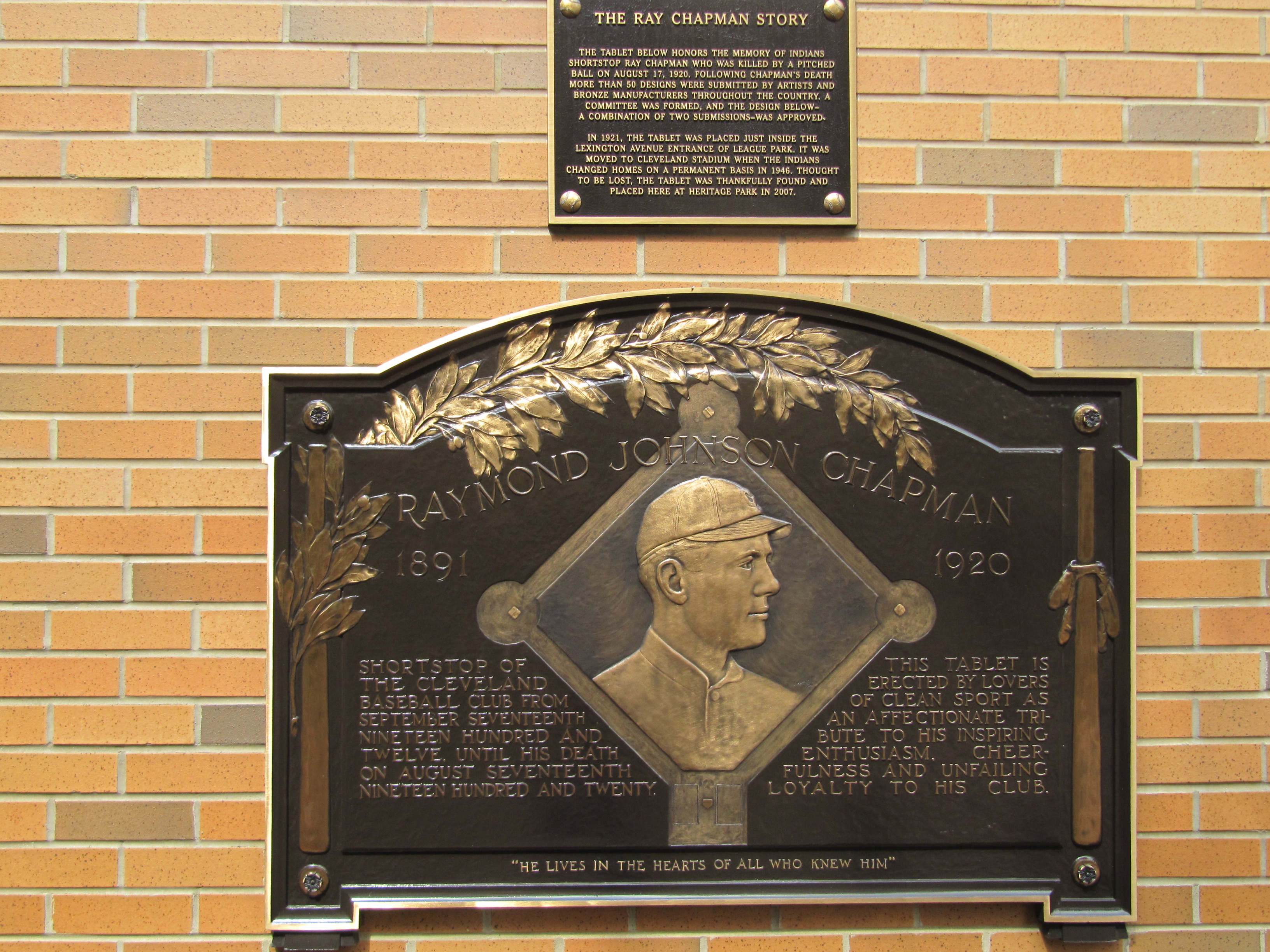
There is also a monument to Chapman that had been inside the right-field gate at League Park, before the team moved into Municipal Stadium full-time. It got lost, and was finally found in 2007, inside a trunk at Jacobs Field. Obviously, it had gotten moved in with the move to the new ballpark in 1993-94, but it took them 13 years to open the trunk in question.
* From the 1920s and '30s: Averill, Harder, Sewell, his brother Luke Sewell, Wes Ferrell (the Cooperstown Hall probably should have elected him instead of his brother Rick Ferrell), Lew Fonseca (better known as the director, editor and sometimes narrator of the official World Series highlight films in the 1940s and early '50s), Willis Hudlin, Johnny Hodapp and Joe Vosmik.

* From the 1940 team that just missed the American League Pennant: Harder, Johnny Allen (former Yankee), Feller, Boudreau, Odell Hale, Jeff Heath, Ken Keltner and Hal Trosky.

* From the 1948 World Champions: Feller, Boudreau, Doby, Keltner, Lemon, Gene Bearden, Mike Garcia, Joe Gordon (came to the Indians in the trade that sent Allie Reynolds to the Yankees), Steve Gromek, Jim Hegan, Dale Mitchell (helped Dodgers win 1956 Pennant and became Don Larsen's last victim in his perfect game), Satchel Paige (Cooperstown) and Al Rosen (general manager of Yanks' 1978 World Champions and now the last surviving man who played on a World Series winner in Cleveland).

Also, broadcasters Graney and Jimmy Dudley, scout Cy Splanicka, and owner Bill Veeck.

* From the 1954 Pennant winners: Feller, Doby, Lemon, Garcia, Hegan, Mitchell, Rosen, Dudley, Slapnicka, manager Al Lopez (Cooperstown), Bobby Avila, Luke Easter, Don Mossi, Ray Narleski and Early Wynn (Cooperstown).

* From the 1959 team that nearly won a Pennant: Dudley, Slapnicka, Rocky Colavito (Bronx native who closed his career with the Yankees), Jim "Mudcat" Grant (who pitched the Minnesota Twins to a Pennant and became ow an Indians broadcaster), Herb Score (Queens native whose stunning career what short-circuited by a line drive from Yankee Gil McDougald, but became their beloved broadcaster, their Phil Rizzuto, their Richie Ashburn), Woodie Held, Minnie Minoso, Jim Perry (Gaylord's brother and a pretty good pitcher in his own right), Vic Power (had been in Yankee system) and Al Smith (better remembered for his "beer shower" while chasing a home run for the White Sox in the '59 Series).

* From the 1960s: Dudley, Score as a broadcaster, Max Alvis, Joe Azcue, Gary Bell, Tito Francona (father of former Red Sox manager and current Guardians manager Terry), Sam McDowell (briefly a Yankee toward the end of his career), Luis Tiant (better known as a Red Sock but also a Yankee toward the end), Johnny Romano, Sonny Siebert and Leon Wagner.

* From the 1970s: Score, Frank Robinson (although he's in Cooperstown for what he did well before becoming MLB's 1st black manager), Buddy Bell, Dennis Eckersley (Cooperstown, though not for what he did in Cleveland), Ray Fosse, Rick Manning, Toby Harrah, George Hendrick, Duane Kuiper, Gaylord Perry (Cooperstown), Andre Thornton, Rick Waits (who had this nasty habit of beating the Yankees, including in the 1978 regular-season finale to force the Bucky Dent Playoff), and trainer Jim Warfield.

* From the 1980s: Score, Warfield, Len Barker (pitched a perfect game in 1981), Bert Blyleven (Cooperstown, but not for what he did with the Indians), Tom Candiotti, Joe Carter, Joe Charboneau, Mike Hargrove (managed them to their 1995 and '97 Pennants), Brook Jacoby, Doug Jones and Pat Tabler.

* From the 1995 and 1997 Pennant winners: Score, Warfield, Hargrove, Sandy Alomar, Carlos Baerga (who they sent to the Mets in exchange for Jeff Kent, dumb Met trade), Albert Belle, Julio Franco (starred for the Tribe in 1980s but returned to them for 1997 Pennant, closed his career with the Mets), Kenny Lofton, Jose Mesa, Charles Nagy, Orel Hershiser, Manny Ramirez (not only was he an Indian, but shaved his head instead of wearing dreadlocks, and as far as we know he was clean then), Jim Thome, Omar Vizquel, owner Dick Jacobs and general manager John Hart.

* Since 1997: Roberto Alomar (Cooperstown) and Travis Fryman.

There is a Greater Cleveland Sports Hall of Fame. Naps/Indians in it include Bradley, Flick, O'Neill, Wambsganss, Speaker, Harder, Vosmik, Feller, Easter, Score, Thornton, Barker, Hargrove, Charboneau and Hegan. Also, some Indians players born in and around Cleveland, who might have become stars elsewhere: Roger Peckinpaugh, Paddy Livingston, Ray Mack, Ellis Burks, coach Joe Nossek, and owner Larry Dolan.

Also, Rich Rollins, who played only the 1970 season with the Indians, previously an All-Star with the Minnesota Twins, but played at nearby Kent State University -- as did Thurman Munson, but he's not in this Hall of Fame. Also, Brian Anderson, who pitched 3 seasons with the Indians, but grew up in suburban Geneva, Ohio. And Rick Manning, a mediocre center fielder in the 1970s but now a beloved broadcaster. And Travis Hafner, from the 2000s Playoff teams.

In 1933, Indians Averill, Ferrell and Oral Hildebrand were named to the 1st All-Star Game. Young, Lajoie, Jackson, Speaker, Feller, Paige, Wynn, Perry and Robinson were named to The Sporting News' 100 Greatest Baseball Players in 1999. Also in 1999, Young was named to the Major League Baseball All-Star Team. In 2006, Feller was Indians fans' choice in the DHL Hometown Heroes poll.

In 2022, ESPN named its 100 Greatest Baseball Players. Among players who played significant time for the Naps/Indians, Young came in 21st, Speaker 36th, Paige 41st, Lajoie 48th, Feller 50th, Ramirez 68th, Roberto Alomar 86th (Sandy Alomar didn't make it), Jackson 89th, and Thome 98th.

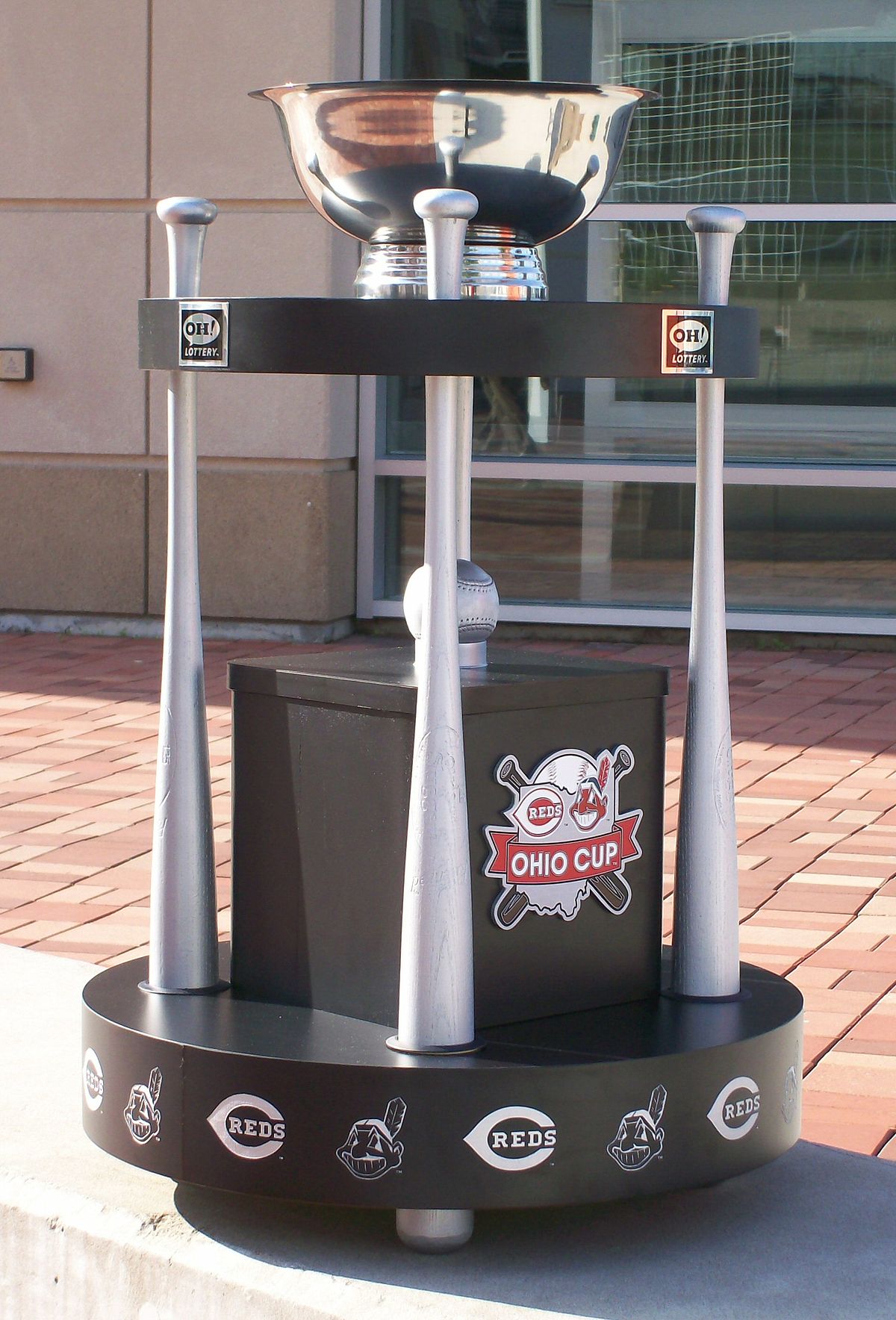
Since the start of Interleague Play in 1997, the Guardians and the Cincinnati Reds have competed for the Ohio Cup. The winner of the season series gets it. The Guardians have won it 11 times, the Reds, 5, and there have been 9 splits, including this season, for which all games have already been played. Overall, the Guardians lead the series, 71-56. 
They have never met in the World Series, the closest call coming in 1940, when the Reds won their Pennant and the Indians fell just short in theirs. They've made the postseason in the same year in 1995 and 1999.

The Cleveland-Pittsburgh rivalry is nasty in football, but almost nonexistent in baseball, since the Guardians and the Pittsburgh Pirates are in different Leagues. There has never been a postseason matchup: The only season in which they both made the Playoffs has been 2013. In the old single-division format, only in 1908 and 1926 did they both come within 5 games of the Pennant.

They don't play each other in Interleague Play every year. They don't even play each other in Spring Training, since the Pirates have trained at Bradenton, Florida, and the Guardians at various sites in Arizona, for as long as I can remember. In regular-season play, they have split, 24-24. The Pirates have won 10 season series, the Guardians 5.

Stuff. The Cleveland Guardians Team Shop is located under the 3rd base stands, with a non-game entry on Ontario Street. Additional team stores are located throughout the ballpark. However, if you're looking for Native American-themed items, you won't find them anymore.

The 1920 World Series was before the age of official World Series highlight films, but the 1948 highlight film is available on DVD. However, there is, as yet no DVD of The Essential Games of the Cleveland Indians (or Guardians).

The best books about the team are a series by Terry Pluto, the great columnist of The Plain Dealer: The Curse of Rocky Colavito: A Loving Look at a 33-Year Slump, about the fall from regular contention from 1940 up to the trade of Colavito for Harvey Kuenn 20 years later, and hadn't even been in a Pennant race through the book's 1994 publication; Burying the Curse, about the Jacobs-led recovery, the new ballpark, the return to contention and the 1995 Pennant; and Our Tribe, an overall history of the team that dovetailed with the life of Pluto's father Tom, born in the World Series year of 1920 and died in 1998, just after their most recent World Series appearance; Pluto himself remarked that he was born in 1955, just in time to miss the last Pennant the team would win for over 40 years.

Our Tribe is, I believe, truly one of the best books ever written about any baseball team.  Its chapter comparing the less-than-intellectual Cleveland hitters Shoeless Joe and Manny is fascinating, and shows that "Manny Being Manny" started well before Ramirez arrived in Cleveland, let alone in Boston.

During the Game. A recent Thrillist article on Baseball's Most Intolerable Fans ranked Indians fans 10th. In other words, not good, but not up there (or down there) with the very worst.

Cleveland fans really hate the Yankees. Which is understandable, as the Yankees ruined many a Pennant race for them: 1921, 1923, 1926, 1940 (even though the Yanks didn't win that one, either), 1949, 1950, 1951, 1952, 1953, 1955, 1956 and 1957. Too long ago, you say? Well, the Yankees also ruined the Indians' bid for a Pennant in 1998, and also won Pennants that Indian fans felt their team should have won in 1996, 1999, 2000 and 2001. That the Indians beat the Yanks in Division Series play in 1997 and 2007 seems only to have fed their contempt for us. As city native Drew Carey put it when they finally broke their 41-year Pennant drought in 1995, "Finally, it's your team that sucks!"

So don't tell the classic "Cleveland Jokes." You know, the ones about the city going broke in 1969 (besides, New York came pretty close to going broke in 1975) and Lake Erie catching fire the same year (actually, it was the Cuyahoga River, not the Lake). Or the one told by 1970 outfielder Richie Scheinblum: "We should change our name to the Cleveland Utility Company. All we have are utility players." Or the one told by the late umpire Ron Luciano: "I loved umpiring Indian games, because they were usually out of the race by Memorial Day and I knew my calls wouldn't affect the Pennant race." Or the one I mentioned from Nettles about setting your watches back. Or Russian comedian Yakov Smirnoff's line: "They made me feel at home in Cleveland. So I had to escape again."

And you definitely do not want to remind Guardians fans that George Steinbrenner was from Cleveland. However, it's not as bad as it would be if you were wearing Pittsburgh Steelers or Cincinnati Bengals gear to a Browns game: Chances are, no one will try to pick a fight with you. But, aside from Red Sox and Met fans, Indian fans may hate the Yankees more than anyone else.

Each of the 3 games will feature a promotion. Friday night will be Dollar Dog Night and T-Shirt night. Saturday will be Fireworks Night and Larry Doby jersey night. Having been to a then-Indians home game on a night with postgame fireworks, I can tell you that these have a particularly loud echo through the skyscrapers of downtown Cleveland. Be warned. And Sunday afternoon will be Kids Fun Day, with kids being allowed to run the bases after the game.

In the 1970s, '80s and '90s, Rocco Scotti, an opera-singing construction worker, sang the National Anthem at Indians games, and along with Robert Merrill of the Yankees was one of the most popular Anthem singers in baseball. He died in 2015, at age 95. The Guardians now hold auditions for Anthem singers, rather than hire a regular.
The mascot is Slider, a big pink thing that doesn't seem to be any animal in particular. During the 1995 Playoffs, the man in the Slider suit performed a stunt, and injured an ankle. The Guardians played the Seattle Mariners in the ALCS, and for the first time ever, both mascots were injured, as the Mariner Moose had broken an ankle during a stunt a few weeks earlier. Slider has been elected to the Mascot Hall of Fame.

The Guardians also have an unofficial mascot, John Adams. The native of nearby Parma was a drummer in his high school band, is a longtime employee of AT&T, and teaches at Cleveland State University. Starting in 1973, he sat in the bleachers at Municipal Stadium, 513 feet from home plate -- he had it measured -- and pounded away on a 26-inch-wide bass drum while the Indians batted, and during the 9th inning when the Indians were getting close to victory.

He said Indians fans used to bang on their seats during rallies, but since he was in the bleachers, where there were no seats, just wooden planks, he needed something else to bang on. It was publicized by Bob Sudyk, the famed reporter for the now-defunct Cleveland Press. Herb Score nicknamed him "Chief Boom-Boom."

Now 71 years old, the 2022 season is his 50th with the drum, and he claims to have missed only 45 home games in that time, mainly midweek afternoon games when the phone company wouldn't give him the day off, and made the move from the last row of the bleachers at Municipal Stadium to the last row under the scoreboard at Jacobs/Progressive Field.  He claims he goes through 3 sets of mallets a year, and occasionally has to replace the skins on his drum, but that he's still using the same drum from the beginning.

He was invited to throw out the first ball for a Playoff game against the Yankees in 2007, and when he drummed for his 3,000th game (though not consecutive) in 2011, the Indians set up a first-pitch ceremony with another of their club's characters, 1980 American League Rookie of the Year and noted wacko Joe Charboneau: "Super Joe" threw the pitch, and Adams hit it with his drum.

At the old Stadium, his drumming was especially noticeable when there was a small crowd in the huge old stadium, and it used to particularly bother Red Sox star Carl Yastrzemski, who complained about it to the media. "Ever since then," Adams said, "I play a little louder when the Red Sox are in town." In spite of the big crowds the Indians got in the Hargrove years, he could still be heard over the noise.
Since 2007, the Guardians have had a takeoff on the Milwaukee Brewers' Sausage Race, the Sugardale Hot Dog Derby. At the end of the 5th inning, a race is held between hot dogs with the following toppings: Mustard, listed as "the all-American boy of the group" on the Guardians' website; Ketchup, wearing nerd glasses in "honor" of the Charlie Sheen character in the Indians-themed Major League
films, and like Sheen will cheat in order to be "Duh, winning"; and Onion, a female character who is described as a diva, and supposedly has a crush on Mustard, which irritates Ketchup.
Nevertheless, the results are usually rather even among the 3 racers. (Sometimes Slider attempts to influence the outcome of the race.)

Before the game, the Guardians play a new song, "We Are Cleveland" by local band Welshly Arms. They do not have a regular song to play in the 7th inning stretch after "Take Me Out to the Ball Game." But in the 8th inning, they play "Hang On Sloopy" by The McCoys, an Ohio-based rock band, and long part of the repertoire of the Ohio State band.

After a win, they play The Presidents of the United States of America's version of Ian Hunter's "Cleveland Rocks" – the version you may remember as the theme to The Drew Carey Show. (Although the 1st season of that show had Drew himself singing "Moon Over Parma" and the 2nd season had the Vogues' 1966 hit "Five O'Clock World" -- which probably had to be dropped since you don't want to be a Cleveland guy with a Pittsburgh group's song.)

After the Game. Cleveland has some rough areas, but you should be safe downtown. There are a number of places you could go after the game, with names like the Winking Lizard (a.k.a. Winks, at the Galleria, 1301 E. 9th Street). A House of Blues is at 308 Euclid Avenue, 5 blocks from the park. However, since the COVID closures, there is no location that seems to cater to New Yorkers.

If your visit to Cleveland is during the European soccer season, which gets underway in mid-August, the best place to watch your club is probably The Old Angle Tavern, at 1848 West 25th Street in the Ohio City neighborhood, across the Cuyahoga, west of downtown. Red Line to West 25th-Ohio City.

Sidelights. Cleveland has a losing reputation. The Indians/Guardians haven't won a World Series since 1948, the Browns haven't won an NFL Championship sine 1964 (Super Bowl –II, if you prefer), and the Cavaliers have played since 1970 and didn't win so much as 1 NBA Finals game until 2015, before finally winning the title in 2016. And now, they've lost LeBron again. But Cleveland is still a great sports city.

As I said, Rocket Mortgage FieldHouse, home of the Cavs, is next-door to Progressive Field. The Browns' new stadium, now named FirstEnergy Stadium, stands at on the Cleveland Memorial Shoreway at West 3rd Street, across from Lakefront Station to the south. To the east are the Rock and Roll Hall of Fame and Museum and the Great Lakes Science Center – good museums, but expensive.

Built in 1999, FirstEnergy Stdium has hosted U.S. soccer games. The men's team won a friendly 2-0 over Venezuela on May 26, 2006; lost a friendly 4-2 to Belgium on May 29, 2013; and won a CONCACAF Gold Cup Group Stage game 3-0 over Nicaragua this past July 15. The women's team has won 3 friendlies there: 4-0 over Germany on May 22, 2010; 2-0 over Japan on June 5, 2016; and 2-1 over China on June 12, 2018. It has not, however, been chosen as a venue for the 2026 World Cup.

The Three Tenors -- Luciano Pavarotti, Placido Domingo and José Carreras -- sang at FirstEnergy Stadium on June 25, 2000. (UPDATE: On February 18, 2023, Ohio State and Michigan will renew their rivalry at FirstEnergy Stadium, in college hockey.)

Formerly named simply Cleveland Browns Stadium, the new stadium was built on the site of Municipal Stadium, which was the Indians' part-time home from 1932 to 1946, and their full-time home from 1947 to 1993.

The stadium opened on July 3, 1931, with a Heavyweight Championship fight. Max Schmeling, quite popular in America before the rise of Nazism in his native Germany, delivered the only knockout of William "Young" Stribling's career.

An NFL team named the Indians played at the Stadium in its 1st season, 1931. The NFL's Rams played there from 1936 to 1945, winning the 1945 NFL Championship Game there, but moved to Los Angeles due to lousy attendance.

The Browns, founded with the All-America Football Conference in 1946 and moving into the NFL in 1950, played there until 1995, before being moved to Baltimore to become the Ravens and being reborn in 1999. The U.S. soccer team has played 2 games there, a win over Venezuela in 2006 and a draw to Belgium in 2013.
The Browns won the AAFC Championship in all 4 seasons of that league's existence, then won NFL Championships in 1950, 1954, 1955 and 1964. In fact, the Browns played in a league championship game every season they played, from their 1946 debut until 1955.

The 1950 NFL Championship Game, won by a Lou Groza field goal in the last 30 seconds of a chilly Christmas Eve encounter over, ironically, the Rams, is regarded as one of the greatest games in pro football history, although the Rams got revenge in the 1951 title game in Los Angeles. The Browns lost the 1952 Title Game at home to the Detroit Lions, lost to the Lions in Detroit in 1953, beat the Lions at home in 1954, and beat the Rams in Los Angeles in 1955.

A new generation of Browns won the 1964 NFL Championship Game at home against the Baltimore Colts – though it's hard to argue that Baltimore taking the Browns in 1995 was revenge. Still, that '64 Title remained the city's last World Championship for 51 1/2 years. No city with at least 3 major league sports teams has waited longer.

Most Clevelanders who watch college football are Ohio State University fans, even though Ohio Stadium is 145 miles away in Columbus, which is further from Browns Stadium than the Steelers' Heinz Field, 135 miles.

Still, while O-State has won many Big Ten titles and some National Championships over the years, including since 1964, they are a team for the entire State, not Cleveland-specific, and have played very few home-away-from-home games in Cleveland. And Cleveland State only restarted their football program in 2010. So while Cleveland is a great pro football city and a great high school football city, it is not a good college football city.

Municipal Stadium hosted a Beatles concert on August 14, 1966. The Beatles also played Cleveland's Public Auditorium on September 15, 1964. That building, which opened in 1922, not only still stands, it now hosts the annual Rock and Roll Hall of Fame induction ceremony. Elvis Presley sang there on November 6, 1971 and June 21, 1974.

It also hosted the Republican Conventions of 1924 (nominating Calvin Coolidge) and 1936 (Alf Landon). And it hosted the only Presidential Debate of 1980, when Ronald Reagan hit Jimmy Carter with the lines, "There you go again," and, "Are you better off than you were four years ago?" 500 Lakeside Avenue East, a 6-block walk from Public Square and across from City Hall.

There were 2 different ballparks known as League Park, constructed at East 66th Street and Lexington Avenue on the city's East Side. The 1st was built in 1891, and was the home of the National League's Cleveland Spiders until 1899 and the American League team that became the Indians from 1901 to 1909. A 2nd park built there in 1910 was the Indians' home until 1946. A pro football team called the Cleveland Indians played there from 1916 to 1921.
League Park was also the home of the Cleveland Buckeyes, who played in the Negro Leagues from 1943 to 1950, and won the Negro World Series in 1945.

Unlike most parks of the pre-World War I era (or even those built before the 1960s), something remains of this park: The ticket office that stood behind the right-field corner still stands. And there is a baseball field, a public park, on the site today, although it is currently undergoing renovations. However, this is a poverty-stricken neighborhood – it has never really recovered from the 1966 riot – so do not visit at night.
The Number 3 bus will take you up Superior Avenue to 66th, and it's a 6-block walk; a bus called "The HealthLine," which can be picked up on Euclid Avenue across from the Soldiers & Sailors Monument at Public Square, will take you up Euclid Avenue to 66th, and it's a 7-block walk.

There is a Baseball Heritage Museum, inside the 5th Street Arcades shopping center at 530 Euclid Avenue.  It began as a private collection of Negro League memorabilia, and it grew to include stuff from the Indians and all kinds of baseball, including amateur, industrial/semi-pro, women's and international leagues.

The Cleveland Arena was home to one of the great minor-league hockey teams, the Cleveland Barons, from 1937 to 1974 and the World Hockey Association's Cleveland Crusaders from 1972 to 1974. It was home to the Cleveland Rebels in the 1st NBA season of 1946-47, and the Cavaliers from their 1970 debut until 1974.

It was here, on March 21, 1952, that local disc jockey Alan Freed hosted the Moondog Coronation Ball, which is often called the first rock and roll concert (which is why Cleveland is the home of the Rock and Roll Hall of Fame). The place held about 10,000, but about twice that tried to get into Freed's show, launching him on a career that would take him to his pioneering job on New York's WINS and then WABC.
The Crusaders didn't do much: They got to the WHA Semifinals in their 1st season, 1972-73, but that's as far as they got. Nick Mileti, who owned the Barons, the Indians and Cavaliers at various times, owned them. Their biggest player was the once and future Boston Bruin goaltender, Hall-of-Famer Gerry Cheevers, who made the WHA's All-Time Team.

Elvis sang at the Arena on November 23, 1956. While the 1988 film Heartbreak Hotel shows him, played by David Keith, in concert at the Cleveland Arena in 1972, that film is fiction, and the website elvisconcerts.com clearly states that he gave only one concert in the State of Ohio that year, at the University of Dayton Arena.

The Arena was demolished in 1977. The HealthLine bus will drop you off at 36th Street; but, again, this is an uneasy neighborhood, so be aware of your surroundings.

From 1974 to 1994, between the Cleveland Arena and the Gund/Quicken Loans Arena, the Cavs played at The Coliseum at Richfield, a.k.a. the Richfield Coliseum. This was also the home of the WHA's Crusaders in the 1974-75 and 1975-76 seasons, and the NHL version of the Barons (who had been the California Golden Seals) in the 1976-77 and 1977-78 seasons, before money problems forced them to be merged with the Minnesota North Stars.
On March 24, 1975, in his first fight after regaining the heavyweight title from George Foreman, Muhammad Ali fought a journeyman fighter from North Jersey, Chuck Wepner, a.k.a. the Bayonne Bleeder. Wepner actually knocked Ali down in the 9th round, and that pissed Ali off: He clobbered Wepner, but the Marine veteran refused to go down, until he had nothing left and fell to an Ali punch with 19 seconds left in the 15th and final round. Supposedly, seeing this fight on TV led Sylvester Stallone to create the character of Rocky Balboa. Wepner is still alive at age 74, and recently retired from running a liquor store in Carlstadt, Bergen County.

Like the Meadowlands Arena and the Nassau Coliseum, the Richfield Coliseum had two levels of seats and one level of concourse – and, when a full house of 20,000 showed up, this was a mess. The location was also bad, picked because it was halfway between downtown Cleveland and downtown Akron, but it didn't exactly help people of either city.

When the Cavs moved out, its days were numbered, and it was demolished in 1999. The site is now a wildlife sanctuary. 2923 W. Streetsboro Road, and don't expect to take public transportation: The closest bus, the 77F, drops you off almost 6 miles away.

Elvis sang at the Coliseum on July 10 and 18, 1975; and on March 21 and October 23, 1976. Elvis actually gave concerts in Cleveland before becoming nationally famous. On February 26, 1955, nearly a year before "Heartbreak Hotel" hit the charts as his first national hit single, he did 2 shows at the Circle Theater, at 105th & Euclid (built 1920, demolished 1959 for the expansion of the Cleveland Clinic, hence the bus is called the "HealthLine," and this area is a bit safer). On October 19, 1955, he again played 2 shows at the venue. The next day, he did a matinee at Brooklyn High School (9200 Biddulph Road, Number 45 bus to Biddulph and walk a mile west) and an evening show at St. Michael's Hall (Mill Road & Wallings Road, 77F bus to Wallings, walk a mile west and a couple of blocks south on Mill).

No NCAA Final Four has ever been held in the State of Ohio. Ohio State won it in 1960, and lost Finals in 1939, 1961, 1962 and 2007, but they're in the State capital of Columbus, 142 miles from Public Square, and considerably closer to Cincinnati. The most notable college in the area is Cleveland State University, whose Vikings notably reached the Sweet Sixteen as a 14th seed in 1986, upsetting Indiana and St. Joseph's of Philadelphia before David Robinson and Navy beat them by 1 point to keep them out of the Elite Eight, but that's as close as any Northern Ohio team has come to the Final Four. Their campus is headquartered on Euclid Avenue between 17th and 26th Streets.

With the demise of the Barons, minor-league hockey has been played at the Coliseum and The Q, but the closest NHL team is the Pittsburgh Penguins, 134 miles away. It's not clear how much of the fandom of the Columbus Blue Jackets, 142 miles away, comes from Cleveland, but with Cleveland being a big boost to Ohio State's fandom, I can easily imagine Clevelanders preferring a team from Ohio's capital, however much they might dislike the State government, over the team from Steeler Town. If Cleveland ever did get another hockey team, it would rank 19th in population in NHL markets.

Cleveland's highest-ranked soccer team is Cleveland SC, which plays in the National Premier Soccer League, the 4th tier of American soccer. Their home field is the 7,800-seat George Finnie Stadium, at Baldwin-Wallace University, a private liberal-arts school in NCAA Division III.
141 E. Bagley Road, in Berea, 14 miles southwest of Public Square. Red Line to West Park Station, then Bus 86 to Bagley & Tressel.

I once asked Drew Carey, through Twitter, if he loves soccer so much, why didn't he try to get a Major League Soccer franchise for Cleveland, instead of buying into the group that owns the Seattle Sounders? Especially since Cleveland had done so well in the Major Indoor Soccer League.

He said there was no suitable playing facility, unless they wanted to play before 50,000 empty seats at the new Browns stadium. This made sense, which is why the nearest MLS team is the Columbus Crew, 138 miles away. The next-closest are FC Cincinnati, 247 miles; and Toronto FC, 289 miles.

There is a Cleveland Museum of Art, but it's way out on the East Side of the city, at 11150 East Boulevard at Wade Oval Drive, near the campus of Case Western Reserve University. It's a 15-minute walk from the Euclid-East 120th Street Station on the Red Line, or a 35-minute ride on the HealthLine bus.

Cleveland was home to a President, James Garfield, elected in 1880 but assassinated just a few months into his Presidency. Although he died near us, at his "Summer White House" in Long Branch, New Jersey, he was born in the Cleveland suburb of Orange (now Moreland Hills, and he was the last President to be born in a log cabin), and his home, Lawnfield, stands at 8095 Mentor Avenue in Mentor, northeast of the city. It takes 4 buses to get there: The 3, the 28, the R2 and the R1, but it is possible to get there without a car or an expensive taxi.

William McKinley, elected in 1896 and 1900, was from Canton, 60 miles away, and there are some historic sites there relating to him. We Yankee Fans also know Canton as the home town of Captain Thurman Munson. But most sports fans know it as the home of the Pro Football Hall of Fame, selected because it was the location of the NFL's founding meeting on September 17, 1920, at the Hupmobile showroom of Ralph Hay, also the owner of the Canton Bulldogs. The Frank T. Bow Federal Building is now on the site. 201 Cleveland Avenue SW.

The Hall of Fame itself is 3 miles to the northwest, at 2121 George Halas Drive NW, off Exit 107 on Interstate 77. Just to the south is Tom Benson Hall of Fame Stadium, named for the owner of the New Orleans Saints, who made a big donation to renovate the Hall and the adjoining Fawcett Stadium, which was renamed for him. Originally built in in 1938 for McKinley High School, just to the south, it replaced the old 8,000-seat League Field. It now seats 22,375, and annually hosts the NFL's exhibition season-opening Hall of Fame Game.

The Canton Bulldogs played at League Field from 1905 to 1926, winning Ohio League titles in 1915, 1916, 1917 and 1919, and NFL Championships in 1922 (10-0-2), 1923 (11-0-1) and 1924 (7-1-1 -- that's 28-1-4 in 3 seasons). They featured eventual Pro Football Hall-of-Famers Jim Thorpe, Joe Guyon, Guy Chamberlin, Pete Henry, Link Lyman and Greasy Neale, though not all at the same time.

But starpower meant big salaries, and their owners couldn't afford them. After the 1926 season, the NFL cast off several weaker franchise, and the Bulldogs were among them. Thus passed the 1st great professional football team.

The Akron-Canton Regional Airport, where Thurman Munson died on August 2, 1979, is at 5400 Lauby Road in North Canton. He is laid to rest at Sunset Hills Burial Park and Memory Gardens, 5001 Everhard Road NW. Thurman Munson Memorial Stadium is a 5,700-seat minor-league ballpark at 2501 Allen Avenue SE. It was built in 1989, before Camden Yards in Baltimore revolutionized ballpark construction in both the majors and the minors, so it is an all-aluminum stadium, and the Canton-Akron Indians left after the 1996 season to become the Akron Aeros.

It is possible to get from Cleveland to Canton via public transportation, via GoBus, but it takes 2 hours and 20 minutes. Each way.

Akron is about 40 miles south of Cleveland on I-77, a little more than halfway to Canton. There is a Bus C that goes there, taking a little under an hour and costing $10, each way. Since 1997, the Double-A Eastern League team known as the Akron Aeros, and now the Akron RubberDucks (1 word), has played at Canal Park, 300 S. Main Street at Exchange Street.

The 1st NFL Champions were the Akron Pros, in 1920. Their coach was also their best player, two-way back Frederick Douglass "Fritz" Pollard -- the 1st black head coach in any major league sport. (Well, sort of: He was, unquestionably, the head coach; it's the NFL's status as "major league" up until 1933 or so, or even until after World War II, that's questionable.) Another great black football player of the era, the 1917 and '18 All-America end at Rutgers and later actor and singer Paul Robeson, played for them in the 1921 season. (He also played for the Milwaukee Badgers in 1922.)

The Pros played under various names, in various leagues, from 1908 to 1926, but financial problems made them part of the NFL's post-1926 purge, and they folded. They played at League Park, at the southeast corner of Carroll and Beaver Streets, a mile and a half east of downtown. The area is industrial now.

The University of Akron Zips play football at InfoCision Stadium, built in 2009 and seating 27,881. 300 Vine Street. It replaced the 35,000-seat Rubber Bowl (Akron is home to the Goodyear Tire and Rubber Company and its iconic blimps), which stood from 1940 until this year, at 800 George Washington Blvd.

On November 19, 2018, Moneywise compiled a list of their Worst College Football Stadiums, the bottom 19 percent of college football, 25 out of 129. InfoCision Stadium came in 14th, apparently due to a serious lack of atmosphere.

Kent State University is in Kent, about 40 miles southeast of Cleveland. Yankee Legend Thurman Munson was a student there before signing with the Yankees, and was a baseball teammate there of Steve Stone, 1980 American League Cy Young Award winner with the Baltimore Orioles and a Chicago Cubs broadcaster. The Kent State Golden Flashes play at 25,319-seat Dix Stadium, which opened in 1969. 2213 Summit Street.

Of course, Kent State is best known for the events of May 4, 1970, when a demonstration against the Vietnam War led to the Ohio National Guard firing on the protesters, wounding 13 people, 4 of whom died. The fallen fell at what is now Parking Lot R-3. It'll be 50 years next Spring. The May 4 Visitors Center is across from the site. 300 Midway Drive. Hard to reach by public transit: The best way is Greyhound to Akron and then Bus 90 to the Student Center.

The best-known Kent State students are comedians, who may have helped people there deal with the trauma: Arsenio Hall in the mid-1970s, and Drew Carey, who left in 1981 and enlisted in the Marine Corps Reserve.

Also associated with Ohio are Presidents William Henry Harrison, Ulysses S. Grant, Benjamin Harrison and William Howard Taft, but they were from the Cincinnati side; Rutherford B. Hayes, whose hometown of Fremont was closer to Toledo; and Warren G. Harding, whose birthplace of Blooming Grove and adult hometown of Marion are closer to Columbus.

The Armstrong Air & Space Museum was built to honor Neil Armstrong, the 1st man to walk on the Moon, in his hometown of Wapakoneta, Ohio. The building is, naturally, shaped like a crescent moon. 500 Apollo Drive, 185 miles southwest of Cleveland, 93 miles southwest of Toledo, and 88 miles northwest of Columbus.

If you're a fan of The Drew Carey Show, and you remember the cast's hangout, the Warsaw Tavern, you should know that there is a real-life bar with that name, in Brooklyn (a separate city) south of downtown, on West 22nd Street at Calgary Avenue. Take the Number 35 bus.

Aside from The Drew Carey Show, the biggest TV show filmed in the Forest City has been Hot In Cleveland. 3rd Rock from the Sun was set at Pendleton State University in fictional Rutherford, said to be 52 miles from Cleveland, a distance suggesting that the school was probably based on Kent State University.

The Fernwood franchise -- Mary Hartman, Mary Hartman and its spinoffs, Forever Fernwood and
Fernwood 2 Night, running on from 1976 to 1978, was set in a city named Fernwood, which is the name of a real town in eastern Ohio, but hardly big enough to match the shows' setting. It was probably based on Cleveland, hometown of Martin Mull, who played twin brothers Garth and Barth Gimble on the shows.

The House from the film A Christmas Story, in which Cleveland stands in for Chicago and author Jean Shepherd's hometown of Hammond, Indiana, is at 3159 W. 11th Street at Rowley Avenue, and was restored by a fan to its exact appearance in the movie, made in 1983 but set around 1939 or so. Take the Number 81 bus. The Higbee's store was also real, but was most likely based on Chicago's real-life Marshall Field's chain. Higbee's still stands on Public Square, and the sign visible in the movie is still there, but the store went out of business years ago. The building is now home to the Cleveland Convention & Visitors Bureau and Horseshoe Casino Cleveland.

Thurman Munson is not the only Monument Park honoree buried near Cleveland. Charles "Red" Ruffing, a Hall of Fame pitcher in the 1930s and the early '40s, is laid to rest at Hillcrest Memorial Park, 26700 Aurora Road in Bedford Heights, about 17 miles southeast of Public Square. Light rail on the Blue/Green/Waterfront Line to Van Aken-Warrensville, then transfer to Bus 41.

Bob Feller is buried in Gates Mills North Cemetery, at the southeast corner of River Oaks Trail and Chagrin River Road, in Gates Mills. In spite of being only 16 miles east of downtown Cleveland, it's very rural, and not reachable by public transit. Cy Young is buried in New Peoli Cemtery, next to the local Methodist Church, on State Route 258 in Port Washington, Ohio, 111 miles south of downtown.

Roy Orbison played his last concert, on December 4, 1988, 2 days before his death, at the Front Row Theater. It was torn down in 1995, and a Home Depot is now on the site. 6199 Wilson Mills Road, in Highland Heights, 13 miles east of Public Square. Red Line to Stokes-Windermere, then Bus 7A.

Toledo is 115 miles west of Cleveland, where the Maumee River flows into Lake Erie. Megabus can get you there in 2½ hours. In fact, it's closer to Detroit: 60 miles. For this reason, their Triple-A baseball team, the Toledo Mud Hens, has been a farm club of the Detroit Tigers for much of their history, including continuously since 1987.

What's a "mud hen"? It's a bird that flocked near Bay View Park, where the team played from 1886 to 1896. It's also known as an American coot. The team left the next season, but the name stuck. The stadium remained in place, and was used as the site of the Heavyweight Championship fight of July 4, 1919, when Jack Dempsey won the title by destroying Jess Willard. It's all parkland now, except for the clubhouse of the Bay View Yacht Club. 3900 Summit Street, 3½ miles northeast of downtown.

Originally known as the Toledo Blue Stockings, they played at League Park from 1883 to 1885, before moving to Bay View Park. It was here, in the 1884 season, that they fielded catcher Moses Fleetwood "Fleet" Walker and his brother, outfielder Weldy Wilbeforce "Welday" Walker, the 1st 2 black players in what we would now call Major League Baseball, but were forced by the baseball establishment to let them go.

The Taylor Body Shop is now on the site of this important, but shunted-aside, piece of baseball history. 1400 Monroe Street, just west of downtown. 

The Mud Hens moved to Armory Park, playing there from 1897 to 1909. This was the home of an early pro football team, the Toledo Maroons, from 1902 onward. In 1922, they entered the NFL, but it became too expensive for them, and they folded after the 1923 season. Armory Park was demolished in 1934, and the site is now part of the Civic Center Mall, on Jackson Street between Spielbusch Avenue and Erie Street.

Swayne Field opened in 1909, and was the home of the Mud Hens until 1955. This stadium, eventually reaching 14,800 seats after a 1928 expansion, would have been home-away-from-home to the M*A*S*H character Max Klinger, played by Toledo native Jamie Farr, who made the Hens' jersey and block-T cap (copied by the Texas Rangers) nationally famous. For this reason, the modern version of the team retired Number 1, which Klinger wore, for Farr.

In 1927, they won their 1st Pennant at Swayne Field. But they were never prosperous, and in 1955, they moved, and the ballpark was soon demolished. A shopping center, including a McDonald's, is on the site now. 3000 Monroe Street, at Detroit Avenue (U.S. Route 24), 2 miles west of downtown, and a mile and a half's walk down Monroe from the site of League Park.

The team was revived in 1965, when the 10,197-seat Lucas County Stadium opened, thanks to the efforts of County Commissioner Ned Skeldon. They won the Pennant in 1968. In 1988, when it was learned Skeldon was dying, the County government renamed the stadium for him. He lived long enough to see it, dying 3 months later.

Ned Skeldon Stadium remains a home for amateur baseball, as part of the Lucas County Recreation Center. 2901 Key Street in suburban Maumee, 8 miles southwest of downtown.

In 2002, the Mud Hens moved back downtown, to the 10,300-seat Fifth Third Field, named for an Ohio-based bank (which also holds naming rights to Dayton's ballpark and the University of Cincinnati's arena). They won Pennants there in 2005 and 2006. 406 Washington Street at Huron Street, downtown.

And while Adam's Ribs, the Chicago barbecue joint mentioned in one of the better M*A*S*H
episodes, isn't real (though many places with the name have popped up since that 1974 episode), Klinger's beloved sausage emporium, Tony Packo's Café, was and is absolutely real. The original is at 1902 Front Street at Consaul Street, 2 miles across the river from downtown, and they have another across from the ballpark at 7 S. Superior Street.

Elvis sang at the 5,230-seat Toledo Sports Arena on November 22, 1956, and at the University of Toledo's 8,300-seat John F. Savage Arena on April 23, 1977. The old Sports Arena stood at 1 Main Street at Riverside Drive, a mile across the river from downtown, from 1947 to 2007, hosting concerts and minor-league hockey. It was replaced by the 5,000-seat Huntington Center, at 500 Jefferson Avenue at Huron Street, downtown. It is home to minor-league hockey's Toledo Walleyes. The Savage Arena is at 2025 Douglas Road, on campus, 4 miles west of downtown.

Bowling Green State University, of the Mid-American Conference, is 112 miles west of Public Square, and 22 miles south of downtown Toledo. They won hockey's National Championship in 1984. The 5,000-seat Slater Family Ice Arena is at 417 N. Mercer Road.
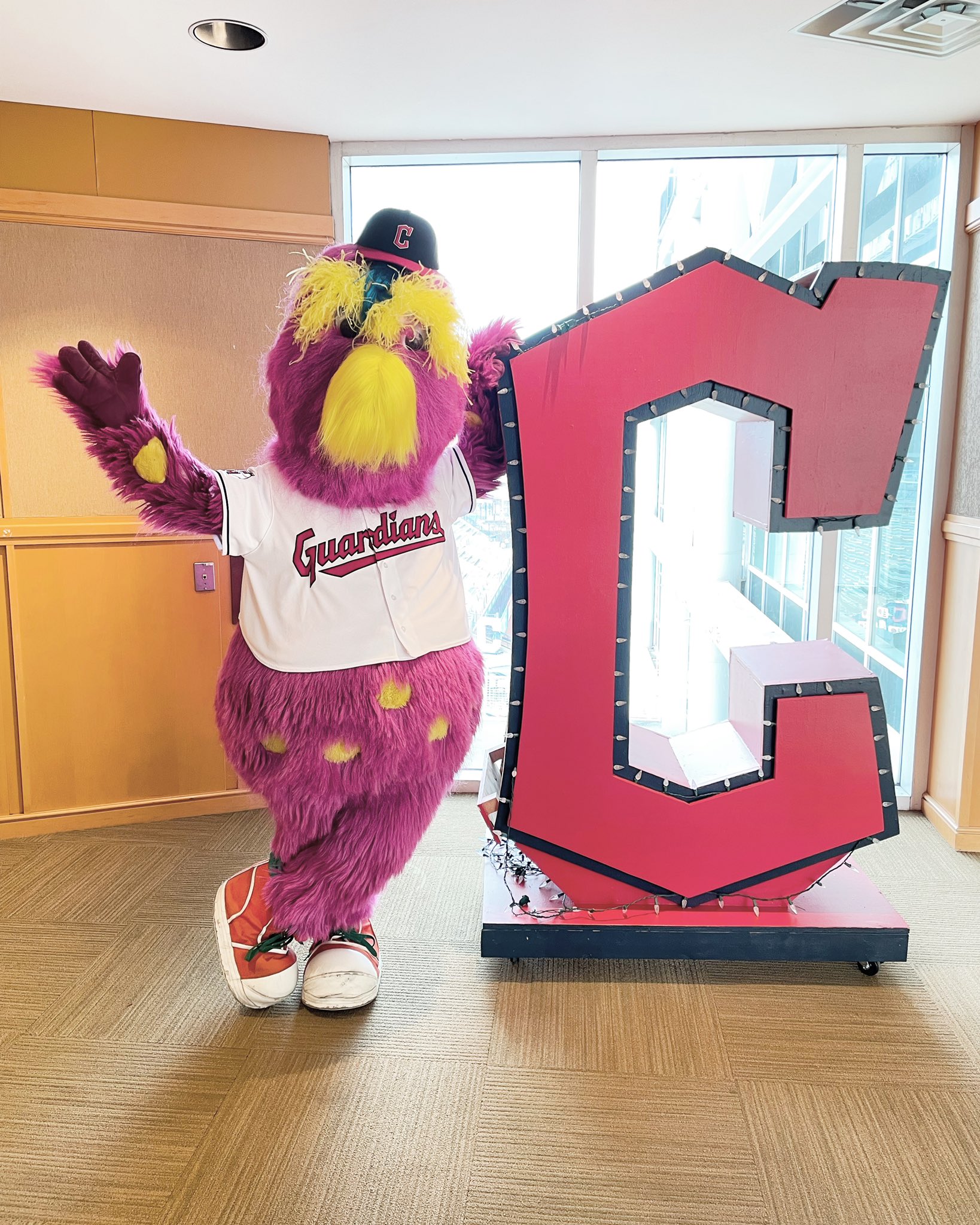
The 24,000-seat Doyt Perry Stadium, built in 1966 and named for their former football coach, who from 1955 to 1964 won 5 of the school's 12 MAC Championships, is next-door, at Stadium Drive & Alumni Drive.

Cleveland likes to call itself "America's North Coast," but, in spite of its infamous Winter, it does have beach resorts. Headlands Beach State Park attracts 2 million visitors a year from America and Canada (presumably, mostly from nearby Ontario). 9601 Headlands Rd., in Mentor, 29 miles northeast of Public Square. Unreachable by public transit.

And there's a beach at Cedar Point, the lakeshore town that also includes an amusement park that serves as Ohio's answer to Great Adventure. (Six Flags has nothing to do with it.) They call themselves the Roller Coaster Capital of the World. Cedar Point Road, in Sandusky. 61 miles east of Public Square. Again, no public transit, but Sandusky can be reached by Greyhound.

*

A visit to Cleveland can be a fun experience. These people love baseball. They don't like the Yankees, but they love baseball, and their city should be able to show you a good time. Again, don't mention that The Boss was a Clevelander. And, for your own sake, don't mention the name of Art Modell.

And one more warning, from Major League: Is very bad to steal Jobu's rum.
Is very bad.