
May 13, 1985, 40 years ago: A police helicopter drops an incendiary device on an apartment building in West Philadelphia. The purpose was to force out a group calling itself MOVE.
It worked out too well: It wiped out most of a city block. There were 11 deaths, including MOVE founder John Africa; and 250 people were left homeless.
Born Vincent Leaphart in West Philadelphia in 1931, John Africa founded the Christian Movement for Life in 1972, as a communal organization advocating for nature laws and natural living. Africa used the term "anarcho-primitivism." For example, raw food was good, and cooked food was not. Their ideology combined Black Power, like the Black Panther Party, with animal rights.

Eventually, Africa changed the name to simply "MOVE." According to him, the letters were not an acronym: When asked what they stood for, he simply said, "Stands for 'Move.'" He later explained, "Everything that's alive moves. If it didn't, it would be stagnant, dead."
On August 8, 1978, a standoff with the police resulted in the death of Officer James J. Ramp and injuries to 16 officers and firefighters, as well as members of the MOVE organization. Nine members were convicted of killing the officer, and each received prison sentences of 30 to 100 years.
Lots of people thought that, having elected the city's 1st black Mayor, Wilson Goode, in 1983, that racist incidents would happen less often, and be less egregious, than they were under the mayoralty of notorious racist Frank Rizzo, a former Police Commissioner, from 1972 to 1979, and the less oppressive but ineffective term of Bill Green from 1980 to 1983.

They thought wrong. The city's police were still Rizzo's department. But MOVE did themselves no favors. In 1981, they relocated to a row house at 6221 Osage Avenue, in the Cobbs Creek area of West Philadelphia. Neighbors complained to the city for years about trash around their building, confrontations with neighbors, and bullhorn announcements of sometimes obscene political messages by MOVE members.
In 1985, the police obtained arrest warrants, charging four MOVE occupants with crimes including parole violations, contempt of court, illegal possession of firearms, and making terrorist threats. Good and Police Commissioner Gregore J. Sanbor classified MOVE as a terrorist organization. On May 13, the police evacuated residents of the area from the neighborhood prior to their action. Residents were told that they would be able to return to their homes after a 24-hour period.
Nearly 500 officers arrived in force, and attempted to clear the building and execute the arrest warrants. Water and electricity were shut off in order to force MOVE members out of the house. Commissioner Sambor read a long speech addressed to MOVE members that started with, "Attention MOVE: This is America. You have to abide by the laws of the United States." When the MOVE members did not respond, the police decided to forcibly remove the 13 members from the house, which consisted of 7 adults and 6 children.
There was an armed standoff, with the police lobbing tear gas canisters at the building. The MOVE members fired at them in return, and a 90-minute gunfight ensued, in which one officer was bruised in the back by gunfire. Police used more than 10,000 rounds of ammunition before Commissioner Sambor ordered that the compound be bombed.
From a Pennsylvania State Police helicopter, Philadelphia Police Department Lt. Frank Powell proceeded to drop two one-pound bombs, which the police referred to as "entry devices," made of FBI-supplied Tovex, a dynamite substitute, targeting a cubicle on the roof of the house.
The ensuing fire killed 11 of the people in the house: John Africa, 5 other adults, and 5 children, aged 7 to 13. The fire spread, and eventually destroyed approximately 65 nearby houses on Osage Avenue and nearby Pine Street. Although firefighters had earlier drenched the building prior to the bombing, after the fire broke out, officials said they feared that MOVE would shoot at the firefighters, so held them back.
The adult members of MOVE were a public nuisance, and deserved arrest. They shot at the police, and deserved imprisonment. They did not deserve death. And none of the people left homeless deserved that fate.
A commission appointed by Goode issued its report on March 6, 1986. It denounced the actions of the city government, stating, "Dropping a bomb on an occupied row house was unconscionable." Following the release of the report, Goode made a formal public apology. No one from the city government was criminally charged in the attack, and Goode was actually re-elected in 1987, defeating Rizzo by a mere 14,201 votes. Had the Republican nominee not been Rizzo, a former Democrat who was easily tarred as a racist, he might have won.
The only surviving adult MOVE member, Ramona Africa, John's wife, was charged and convicted on charges of riot and conspiracy. She served 7 years in prison.
In 1996 a federal jury ordered the city to pay a $1.5 million civil suit judgment to survivor Ramona Africa and relatives of two people killed in the bombing. The jury had found that the city used excessive force and violated the members' constitutional protections against unreasonable search and seizure, as guaranteed by the 4th Amendment to the Constitution of the United States. In 2005, a jury awarded residents seeking damages for having been displaced by the widespread destruction a $12.83 million verdict against the City of Philadelphia.
New houses were built on the 6200 block of Osage Avenue, but were criticized for being badly built. The Philadelphia Inquirer wrote:
The homes were so shoddily reconstructed after the 1985 fire -- nearly every house had leaky roofs, bad plumbing, sagging floors because beams had not been properly installed, cedar siding peeling off exteriors, and faulty electrical wiring -- that the original contractors went to jail because money was misused.
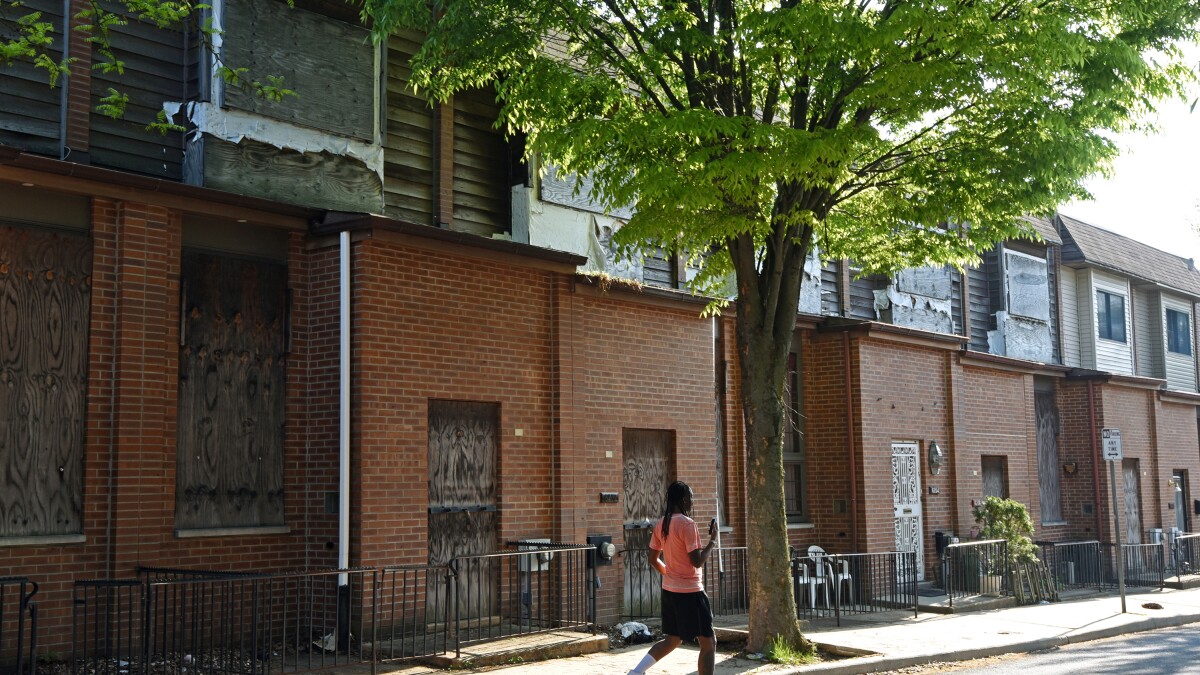
A resident on Pine Street, whose house was spared the fire even though others on that street were not, called the new homes "tissue paper." The City bought many of the residents out, and many of the new homes remain vacant and boarded up in 2025.


No comments:
Post a Comment