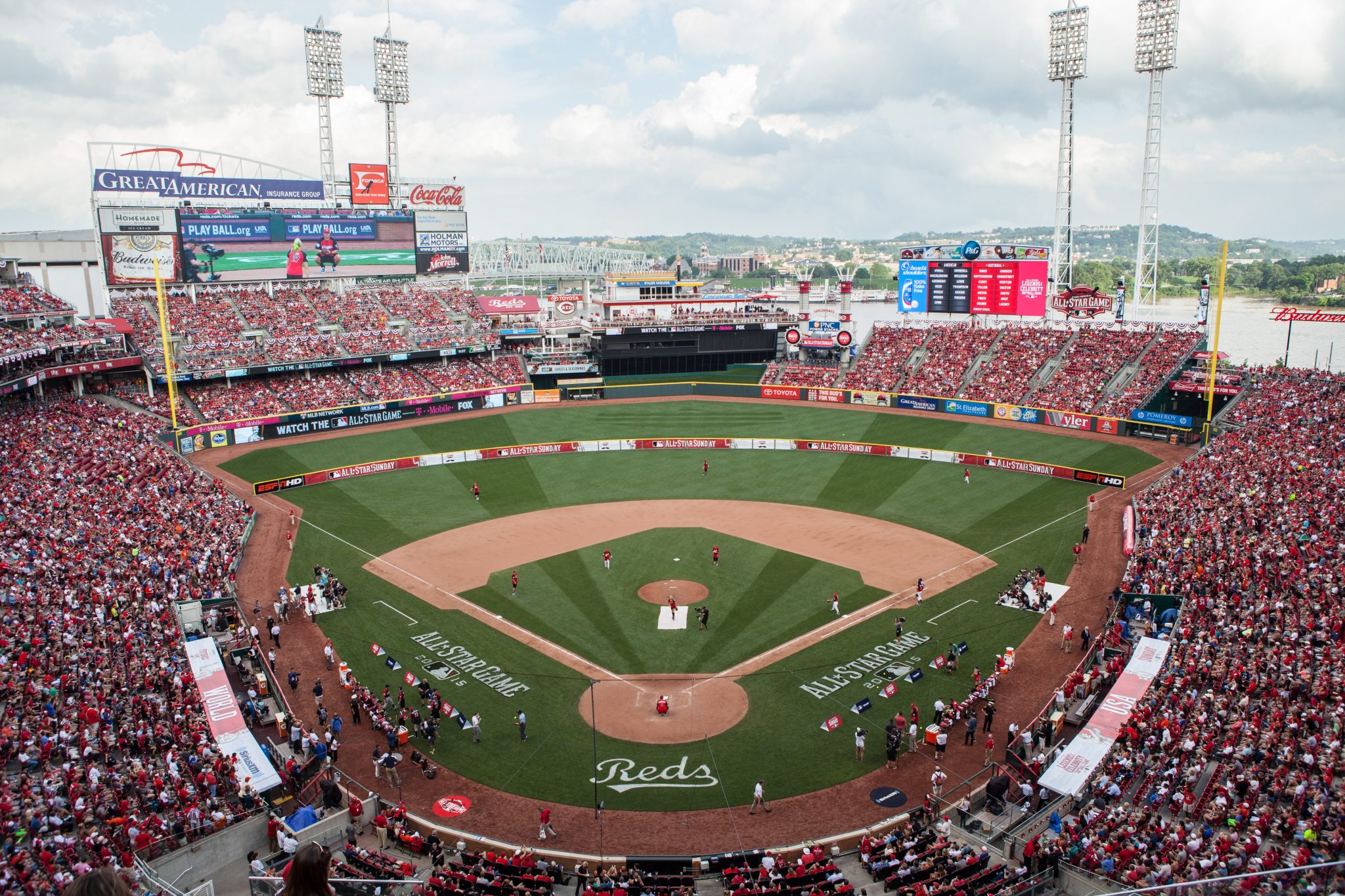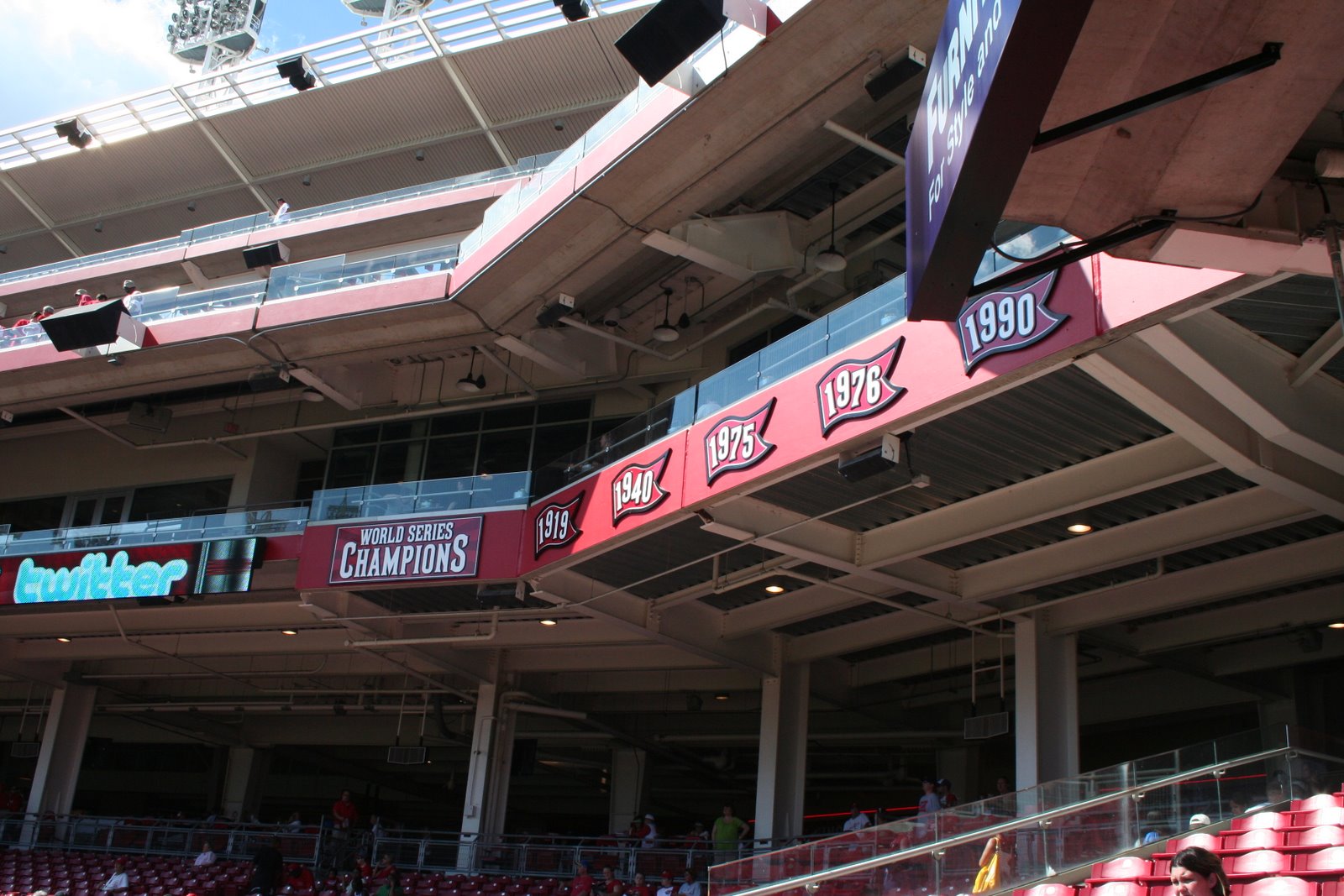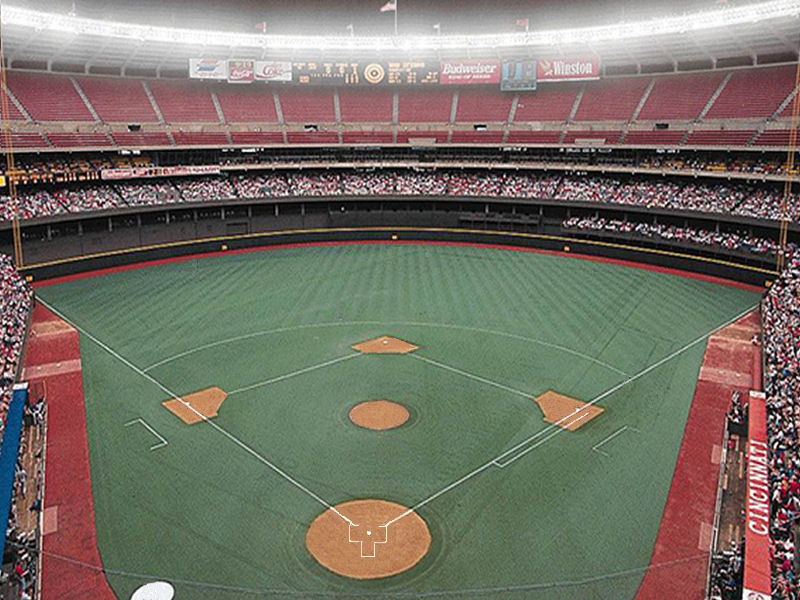
October 14, 1975: In a game featuring 6 home runs‚ 3 by each team‚ Game 3 of the World Series is won by the Cincinnati Reds, 6-5 in the 10th inning at Riverfront Stadium in Cincinnati..
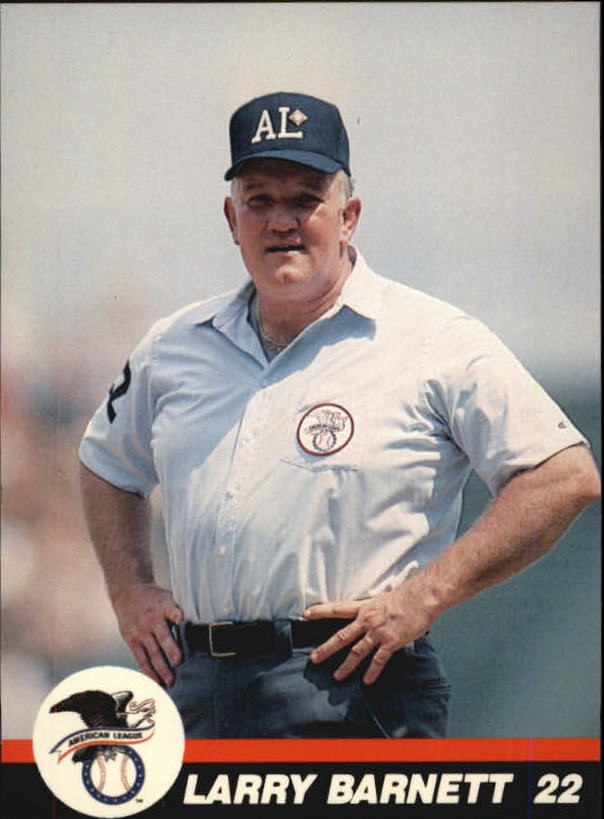
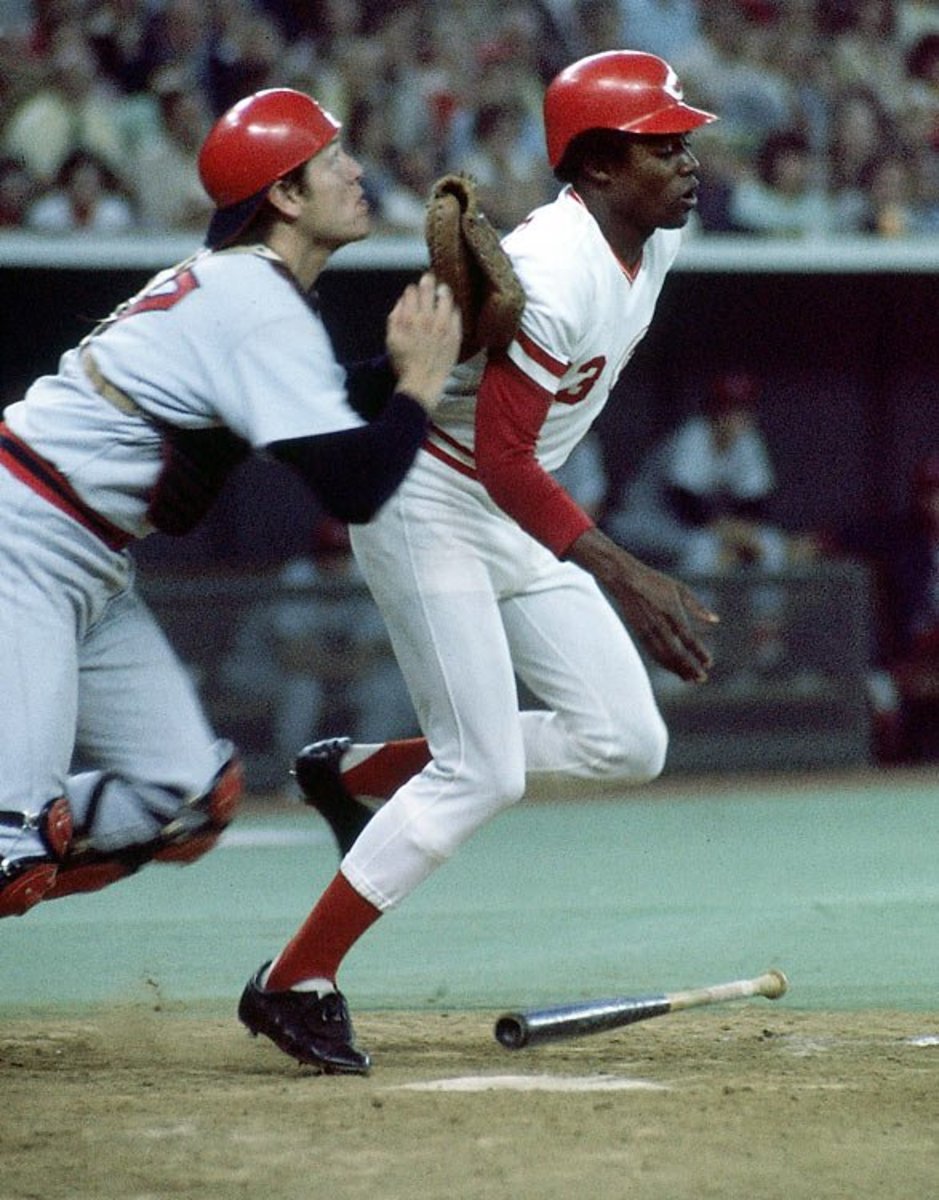
The inning is marked by a controversial play involving Cincinnati’s Ed Armbrister and Boston's Carlton Fisk: Armbrister, a backup outfielder, lays down a sacrifice bunt, and seemingly hesitates breaking out of the batter's box; Fisk's subsequent throwing error leads to the Reds' winning run. The Sox scream for an interference call from umpire Larry Barnett‚ but to no avail.
Left to right: Fisk, Barnett, Red Sox manager Darrell Johnson,
Red Sox shortstop Rico Petrocelli
Tony Kubek, former Yankee shortstop and now one of the NBC broadcasters, says on the air that Barnett blew the call. Barnett ends up getting thousands of angry letters, some of them death threats, nearly all of them from the New England States.
The Red Sox won Game 4. The Reds won Game 5. Game 6 was an all-time classic, won by the Red Sox on Fisk's walkoff home run in the 12th inning. The Reds won Game 7, 4-3, on a 9th inning single by Joe Morgan, who died a few days ago.
The Reds won their 1st World Championship in 35 years. Red Sox fans, who'd waited 57 years, would have to wait 29 years more.
The Armbrister play happened 45 years ago, but Red Sox fans still complain about it. It was even mentioned in the U.S. version of the movie Fever Pitch. Finally having won 4 World Series has done nothing to diminish Sox fans' feelings about it. They still think that, if interference had been called on Armbrister, they would have won the Series.
Top 5 Reasons You Can't Blame Larry Barnett for the Boston Red Sox Losing the 1975 World Series
5. Barnett Made the Right Call. There was no interference. Watch Armbrister's eyes: He's surprised that the ball went practically straight up into the air, and that made him hesitate. Intentional interference simply cannot be seriously called on that play.
4. The Game Was Still Tied. Curse of the Bambino or no, the game was still tied when it happened. Considering everything that went wrong with the team from 1918 to 2003, if they had gotten the call their way, they still could have lost the game later, possibly in another shocking way.
3. The Red Sox Blew Game 2. They led 2-1 going into the 9th inning, but Johnny Bench led off with a double. Johnson pulled Bill Lee, and replaced him with Dick Drago. Tony Pérez moved Bench to 3rd on a groundout, and George Foster popped up. But Dave Concepción singled up the middle to tie the game, and Ken Griffey Sr. doubled Concepción home.
Had the Red Sox held that lead, and nothing else changed, there never would have been a Game 7. And Fisk's home run to win Game 6 would have won the Series, and made him the greatest sports hero in New England history. And Barnett's alleged bad call wouldn't have mattered. But they didn't hold that lead.
2. The Red Sox Blew Game 5. They led 1-0 going into the bottom of the 4th, but gave up a run in the 4th, a run in the 5th, 3 runs in the 6, and a run in the 8th. Pérez hit 2 home runs. The Sox pulled a run back in the 9th, but lost the game, 6-2.
Again: Had the Red Sox held that lead, and nothing else changed, there never would have been a Game 7. And Barnett's alleged bad call wouldn't have mattered. But they didn't hold that lead.
Yeah, about that Game 7...
1. The Red Sox Blew Game 7. They took a 3-0 lead in the bottom of the 3rd, and held it into the top of the 6th. Then Lee decided to get cute. He started throwing his blooper pitch. He threw one to Pérez,
who deposited it onto the Massachusetts Turnpike, making it 3-2. The Reds tied the game in the 7th when Griffey walked, stole 2nd, and was singled home by Pete Rose.
In the 9th, Griffey led off with another walk. Cesar Gerónimo bunted him to 2nd. A Dan Driessen groundout got him to 3rd. Rose was walked intentionally to set up the force play, but Morgan singled off Jim Burton, and the Red Sox couldn't answer in the bottom of the 9th. Cincinnati 4, Boston 3, for the game, and for the World Series.
Had they just prevented the Reds from scoring for 9 more outs, the Barnett non-call would have been a footnote in baseball history, a minor annoyance on the magical way to a title.
VERDICT: Not Guilty. Umpire Larry Barnett was not the reason that the Boston Red Sox lost the 1975 World Series. They had many chances to win it, but they couldn't finish it off. This seems never to have occurred to Red Sox fans. But then, it's been a long time since I gave up on expecting Red Sox fans to be rational. They still blame Don Zimmer for 1978, and they still believe that David Ortiz didn't cheat.
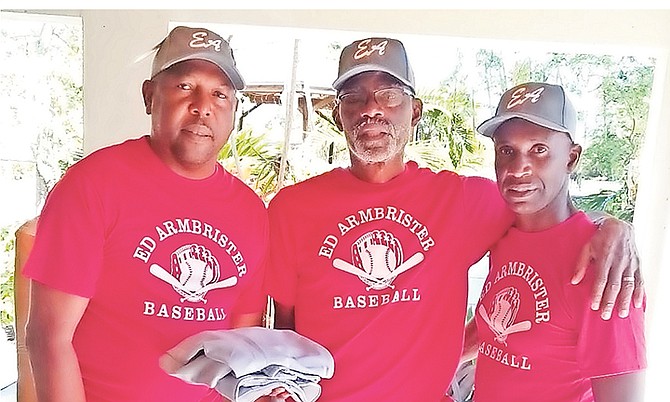
Ed Armbrister would also help the Reds win the World Series in 1976, and played 1 more season in the major leagues. Today, he is 72 years old, living in his native Bahamas, runs a youth baseball league, and is a consultant to the national Ministry of Sports.
Armbrister flanked by league employees
Larry Barnett continued as an MLB umpire until 1999, and was the home plate umpire for the Jeffrey Maier Game in the 1996 American League Championship Series, although he had nothing to do with the game's controversial call by Rich Garcia. He is now 75.
UPDATE: Ed Armbrister died on March 17, 2021, of diabetes, in his hometown of Nassau, the Bahamas. He was 72.
*
October 14, AD 222: Pope Callixtus I is assassinated in Rome, by being thrown down a well according to tradition. His age was unknown, although he had been born a slave, and had been Pope for 4 years. The Church made him a Saint.
October 14, 1066: On Senlac Hill, 7 miles from Hastings, England, the forces of William, Duke of Normandy, defeat the Saxon army of King Harold II of England.
According to legend, the battle was hours long (unusual for that era), was approaching sundown, and was fairly even, until Harold was struck in the eye by a Norman arrow. Once their King and commander fell, the Saxons lost hope.
However, Lord Baltimore and his followers, still loyal to Harold, insist that a young squire named Geoffrey of Mighor interfered with the arrow's path. (Just a joke.)
The Duke, previously known as "William the Bastard" for his illegitimate birth, becomes known as "William the Conqueror." The old joke about King William I is that you should never go into battle against someone called "the Bastard," because he's probably got a chip on his shoulder already; and you should never go into battle against someone called "the Conqueror," because he's probably done something to earn that nickname.
October 14, 1322: This one doesn't go so well for the English either. The Battle of Old Byland is fought at Scawton Moor in Thirsk, North Yorkshire, and Scottish troops under King Robert I, a.k.a. Robert the Bruce, defeat English troops under John of Brittany, Earl of Richmond.
Unlike his father, King Edward I of England, a.k.a. The Hammer of the Scots, King Edward II was not much of a military leader. He was forced to make peace with the Scots, and to accept Scotland's independence. By 1327, he was deposed and assassinated in favor of his son, who became King Edward III -- one of England's least effective monarchs being replaced by one of its most effective.
The Scots tend to make big deals about their victories over the English, such as the Battles of Stirling Bridge (September 11, 1297), Bannockburn (June 24, 1314) and Old Byland, and their soccer wins at the old Wembley Stadium in London in 1928 and 1967. But as the English never cease to remind them, there was Flodden Field (September 9, 1513), Culloden (April 16, 1746), and Euro 96.
October 14, 1633: James Stuart is born at St. James's Palace in London. The son of King Charles I of England, he was created Duke of York. In 1649, his father was overthrown and executed as a result of the English Civil War, and James and his brother Charles had to flee to France. In 1660, the monarchy was restored, and his brother became King Charles II.
In 1664, England took the colony of New Netherland, including its capital, New Amsterdam, from the Netherlands. Both the colony and the city were renamed for James: "New York."
Charles had many illegitimate children (he claimed at least 6, and some historians believe there were at least 20), but no legitimate ones, so when he died on February 6, 1685, James became King James II of England, and also King James VII of Scotland.
But unlike his Protestant brother, James was Catholic, and this terrified the English establishment, who knew their history, including the threats posted by Queen Mary I in the 1550s, her widower King Philip II of Spain in the 1580s, and the Guy Fawkes Gunpowder Plot in 1605 -- the last of these, within the lifetimes of men then living.
The nobles invited James' Protestant daughter Mary and her Dutch husband, William, Stadtholder of Orange, to come, and in 1688 the Glorious Revolution overthrew James. The couple ruled together as King William III and Queen Mary II, while James died in exile at a chateau outside Paris on September 16, 1701.
James' Catholic forces fought William's Protestant army at the Battle of the Boyne in Oldbridge, County Meath, Ireland on July 1, 1690, and the Protestants won. Despite one more attempt by James' grandson, a.k.a. Bonnie Prince Charlie, to retake the throne, a.k.a. "The 45" (in which Charlie's forces lost the aforementioned Battle of Culloden, outside Inverness, Scotland), the monarchs of Britain have been Protestant ever since.
But the religious divide has hung over Britain, including in Glasgow, Scotland, in the soccer rivalry between Celtic Football Club, founded as an advocacy group for the Irish Catholic minority in town, and still the favorite club of many Catholics throughout the English-speaking world (kind of a proto-Notre Dame); and Rangers Football Club, an all-Protestant team until 1989 and still the favorite club of anti-Catholic bigots in Britain, including in Northern Ireland.
After Mary II died, William III ruled alone until his death in 1702. James' other daughter, a Protestant, became Queen Anne. When she died on August 1, 1714, that was the end of the House of Stuart, and the House of Hanover began.
October 14, 1644: William Penn is born. He would go on to found the colony of Pennsylvania. In 1901, the city he founded, Philadelphia, would place a statue of him, sculpted by Alexander Calder, atop their new City Hall. It was 585 feet high, counting the statue, and until the completion of the Singer Building in New York in 1908, it was the tallest building in the world. It was also the first secular (non-religious) building to be the tallest building in the world; Penn, a Quaker who deeply believed in religious freedom, would have loved that.
For decades, an "unwritten law" (sometimes called a "gentleman's agreement") stated that no structure in the city could be taller than the hat on the Penn statue. In 1987, One Liberty Place opened. At 948 feet, it was the first structure in the city taller than City Hall – in fact, for a few years, it was the tallest building between New York and Chicago.
From that point forward, no Philadelphia team won a World Championship in any sport. Between them, the Phillies, the Eagles, the 76ers and the Flyers would make 5 trips to their sports' finals, but none would win. No college basketball team from the Philadelphia area even reached the NCAA Final Four, as, between them, Temple, St. Joseph's and Villanova would make 5 trips to the Elite Eight, but none could get into the Final Four. And Smarty Jones, a horse born and trained in the Philly suburbs, won the 2004 Kentucky Derby and Preakness Stakes, and was leading in the Belmont Stakes, before falling behind and finishing a close 2nd, so Philly even choked in the thoroughbred Triple Crown.
Some people, believing in forces larger than life, suspected that the building of what were now several structures taller than City Hall's Penn statue began calling the city’s inability to win a major sports championship "the Curse of Billy Penn."
On June 18, 2007, the Comcast Center was "topped off," at 975 feet the tallest in the city and the tallest between New York and Chicago. A miniature version of the City Hall statue of William Penn was placed on top, so that "Billy Penn" could once again look out over his city without having his view obstructed by taller buildings.
Within 16 months, the Phillies won the World Series. Five months after that, Villanova reached the Final Four. The Curse of Billy Penn was broken. However, in between, the Eagles lost an NFC Championship Game, the Flyers lost a Stanley Cup Finals, and the 76ers have still stunk, so maybe there's more to Philly's struggles than the Penn statue. Then again, Villanova went on to win 2 out of 3 National Championships. So, who knows.
The Comcast Innovation and Technology Center opened at 1800 Arch Street in 2018. It is 1,121 feet tall, taller than its namesake a block away at 1700 John F. Kennedy Blvd. And the Eagles have now won a Super Bowl. So the 76ers and the Flyers are now on the clock.
October 14, 1696: Samuel Johnson is born in Guilford, New Haven County, Connecticut. Not to be confused with the later English writer, this Samuel Johnson was a minister who had graduated from Yale. In 1754, he founded King's College in Manhattan. In 1896, it was renamed Columbia University. Johnson died in 1772.
*
October 14, 1734: Francis Lightfoot Lee is born in Hague, Virginia. He and his brother, Richard Henry Lee, both signed the Declaration of Independence. He died in 1797. The Lee family of Virginia would also produce a General of the American Revolution, Henry "Light Horse Harry" Lee, and his son, Civil War General Robert E. Lee.
October 14, 1784: Fernando de Borbon is born at El Escorial, then the official residence of the King of Spain, outside Madrid in San Lorenzo. In 1808, with the Peninsular War ongoing and Napoleon Bonaparte on his way, his father, King Charles IV, abdicated and fled, making the son King Ferdinand VII.
After only 48 days on the throne, he was overthrown, and Napoleon put his brother, Joseph Bonaparte, already King of Naples, on the Spanish throne. Napoleon's defeat in Russia forced him to retreat from all his victories, and Ferdinand was restored to the throne in 1813. But his incompetence led to Spain losing nearly all its possessions in the Western Hemisphere, including Mexico and South America. (They still hung on to Puerto Rico and Cuba, until 1898.) He died in 1833, and is not remembered fondly.
October 14, 1790: William Hooper dies in Hillsborough, North Carolina, only 48 years old. He also signed the Declaration of Independence, and lost more than most of the men who did, including 2 homes, and his health due to malaria.
October 14, 1842: Joseph Start (no middle name) is born in New York. He was one of the first baseball stars, playing for the Brooklyn Atlantics from 1862 to 1870, the New York Mutuals from 1871 to 1876, the Hartford Dark Blues in 1877, the Chicago White Stockings (forerunners of the Cubs) in 1878, the Providence Grays from 1879 to 1885, and the Washington Nationals in 1886.
He led the Atlantics to undefeated seasons in 1864 and 1865 (although there was no league whose "Pennant" could be won then), helped the Atlantics beat the Cincinnati Red Stockings for the closest thing there was to a "world championship" of baseball in 1870, and the Grays to National League Pennants in 1879 and 1884. He is said to have been the first 1st baseman to play away from the bag, although like everyone else in the game at the time, he didn't use a glove. He lived on until 1927.
October 14, 1857: Joseph Rucker Lamar is born in Ruckersville, Georgia, a town named for his mother's family. He later lived in Augusta, George, next-door to Woodrow Wilson, whose father was the local Presbyterian minister.
Served in his home State's House of Representatives, and then on its Supreme Court. Ironically, it was President William Howard Taft, a Republican, who appointed him to the U.S. Supreme Court, not his fellow Democrat Wilson, who defeated Taft for re-election in 1912. Wilson ended up having to replace Lamar, who died in 1916.
October 14, 1861: Paul Revere Radford is born in Roxbury, now a part of Boston. An outfielder, he won National League Pennants with the 1883 Boston Beaneaters (forerunners of the Braves) and the 1884 Providence Grays.
In 1887, with the New York Metropolitans (nicknamed the Mets but with no connection to the current team), he set a new major league record, long since broken, with 106 walks. He helped the Boston Red Stockings win the last American Association Pennant, in 1891. He closed his career in 1894, and lived until 1945.
October 14, 1872: Reginald Frank Doherty is born, appropriately enough, in Wimbledon, South London. He would win Wimbledon 4 straight times, from 1897 to 1900. He teamed with his brother Laurie Doherty to win several doubles titles. But he had a bad heart, and died in 1910, only 38.
Laurie won Wimbledon 5 straight times, from 1902 to 1906, and, unlike his brother, won the U.S. Open, in 1903. But he wasn't any healthier, and died of kidney disease in 1919, just 43.
October 14, 1873: Raymond Clarence Ewry is born in Lafayette, Indiana. In events that are no longer part of the Olympics -- the standing high jump, the standing long jump, and the standing triple jump -- he won Gold Medals in Paris in 1900, in St. Louis in 1904, and in London in 1908, a total of 8 Golds. He died in 1937.
Also on this day, Jules Rimet is born in Theuley, France. In 1897, he founded Red Star Football Club, the 1st great French soccer team, although it is in Ligue 2 today. He was one of the founders of FIFA, the governing body of world soccer, in 1904, and ran the tournament at the 1908 Olympics in London.
He was President of the French Football Federation from 1919 to 1921, and of FIFA from then until 1954. He founded the World Cup in 1930, and died in 1956, just after turning 83. The World Cup trophy is named the Jules Rimet Trophy for him. This year, following the 2018 World Cup in Russia, it "came home," just like the English song said it would: It was won by France, as it was in 1998, and arguably should have been in 1938, 1958 and 1982.
October 14, 1882: Charles Warrington Leonard Parker is born in Prestbury, Gloucestershire, England. Not to be confused with the jazz legend of the same name, this Charlie Parker was a Gloucestershire bowler, who played first-class cricket from 1900 to 1935, and remains the 3rd-highest wicket-taker in the sport's history. He later became an umpire, and died in 1959, age 76.
Also on this day, George de Valero is born in Manhattan, the son of a mother from County Limerick, Ireland, and a father from the Basque Country of Spain. We will never know how history would have changed if he had returned to his father's homeland: Maybe he could have saved the Spanish Republic of the 1930s, prevented the regime of Francisco Franco, and shown the world's democracies that Fascism could and should be stopped. Or, he could have become just another casualty of the Spanish Civil War.
But his father died when George was 2 years old, and his mother took him back to her hometown of Bruree, where he became known as Edward or "Eddie" de Valera. In 1905, he played professional rugby for the City of Limerick-based Munster team. The southernmost and westermost of Ireland's regions, Munster includes the Counties of Limerick, Clare, Cork, Kerry, Tipperary and Waterford.
He Gaelicized his name to Éamon de Valera, and joined the Irish Volunteers in 1913. He was one of the few people involved in the Easter Rising of 1916 who was not executed by the British government, because they did not want to take the risk of executing an American citizen.
He served as leader of the political party Fianna Fáil (meaning “Soldiers of Destiny”) from 1919 until 1959, President of the Irish Republic in 1921 and '22, President of the Executive Council from 1932 to 1937, the year he wrote the country’s current Constitution; Taoiseach (Prime Minister) from 1937 to 1948, again from 1951 to 1954, and again from 1957 to 1959; and President of the Republic of Ireland (the country's official name became this in 1948) from 1959 to 1973. He died in 1975, and a recent biography was titled The Man Who Was Ireland.October 14, 1885: Ivan Massie Olson is born in Kansas City, Missouri. A shortstop, Ivy Olson played in the major leagues from 1911 to 1924. He helped the Brooklyn Dodgers -- or Robins, as they were then known, in honor of manager Wilbert Robinson -- to win the National League Pennant in 1916 and 1920, and almost again in 1924. He later coached for both the Dodgers and their arch-rivals, the New York Giants, and died in 1965.
October 14, 1886: Roddy Bell Burdine is born in Verona, Mississippi, and grows up in Bartow, Florida, outside Orlando, and then in Miami. His father founded a dry goods store, and Roddy inherited it in 1911, making Burdine's the leading department store in Florida by 1924. He was the 1st man ever to build a parking garage into a business he owned.
After the Great Miami Hurricane of 1926, he was named the head of the committee to rebuild in the city. In 1936, he died, shortly after that rebuilding began to include a 23,000-seat football stadium, which was named Roddy Burdine Municipal Stadium. On New Year's Day, January 1, 1938, Burdine Stadium became the home of the Orange Bowl game.
In 1959, the stadium itself was renamed the Miami Orange Bowl. It was home to the Orange Bowl game from 1938 to 1996 (plus once more in 1999), the University of Miami football team from 1937 to 2007, the Miami Seahawks of the All-America Football Conference in 1946 (making it the home of the 1st major league sports team in a former Confederate State), the Miami Dolphins from 1966 to 1986, and the Miami Toros of the North American Soccer League from 1973 to 1975. It was torn down in 2008, and Marlins Park (now LoanDepot Park) was built on the site in 2012.
October 14, 1888: The Detroit Wolverines, just 1 year after winning the Pennant, drop out of the National League, due to poor finances. The NL accepts the Cleveland Spiders of the American Association to take their place, and the Spiders get most of the Wolverines' players.
There is precedent: The Providence Grays won the Pennant in 1884, but dropped out a year later. Despite already being one of America's largest cities, Detroit will not return to the major leagues until the founding of the American League in 1901.
On this same day, the oldest known surviving motion picture is filmed, in the backyard -- or, as the English would call it, the garden -- of a house in the Roundhay section of Leeds, West Yorkshire, England. It is known as
Roundhay Garden Scene, is recorded by Frenchman Louis Le Prince, and features his son Adolphe, and his in-laws, Joseph and Sarah Whitley, who owned the home. It lasts all of 2.11 seconds.
A little over 2 years later, Louis Le Prince disappeared from a Dijon-to-Paris train, and was never seen again. He was 49, and it is suspected that he left the train at some point, and drowned.
October 14, 1890, 130 years ago: Dwight David Eisenhower is born in Denison, Texas. He grew up in Abeline, Kansas, and played football and baseball at the U.S. Military Academy at West Point, New York. He played on the losing side in the legendary upset of Army by the Carlisle Indian School in 1912.
Legend has it that the future Supreme Commander of Allied Forces in World War II and 34th President of the United States tried to tackle the man behind Carlisle's rise, Jim Thorpe, and that Thorpe crashed into Eisenhower and broke the future President's leg.
The truth is less romantic: "Ike" played in Army's next game, and got hurt in that one. So if he did try to tackle Thorpe, it was not injurious. But it probably wasn't all that successful, either, as Thorpe was the greatest football player of the 1910s, and the greatest track star of that time, and played Major League Baseball as well, and remains one of the greatest all-around athletes of all time.
In 1953, his 1st year as President, Ike was invited, as all Presidents had been since 1910, to throw out the first ball on Opening Day at Washington's Griffith Stadium. He declined, saying he had a golf date that day. But it rained, postponing the ballgame, and that enabled him to throw out the first ball. He also threw out the first ball before Game 1 of the 1956 World Series at Ebbets Field. The next day, his election opponent, Adlai Stevenson, threw out the first ball.
When Eisenhower became President on January 20, 1953, there were 16 MLB teams in 10 cities, none further south than Washington, nor further west than St. Louis; there were 12 NFL teams, Coast to Coast, but none in the South; and there were 10 NBA teams, none further south than Baltimore nor further west than St. Louis, and in cities as small as Syracuse, Rochester and Fort Wayne.
When he left office on January 20, 1961, there were 20 teams (at least on paper), from Coast to Coast, and (again, at least on paper) from North to South; there were 22 teams combined in the NFL and AFL, North to South; and there were still only 10 NBA teams, but not the same 10, and the league was now Coast to Coast.
October 14, 1891: Former Chicago White Stockings (forerunners of the Cubs) pitcher Larry Corcoran, the 1st man to pitch 3 no-hitters, dies in Newark at the age of 32 of the kidney disorder Bright's Disease, exacerbated by alcoholism. Corcoran's best year was 1884, when he went 27-12.
October 14, 1892: The scheduled game between the Boston Beaneaters (forerunners of the Braves) and the Washington Nationals (who fold in 1899 and are not to be confused with any later D.C. team) is postponed because the Senators' field has already been reserved by the Columbia Athletic Club for a football game against Princeton University.
As far as I know, this is the 1st time football has ever asserted its authority, whatever that might be, over baseball.
Also on this day, Norman Boswell Fowler is born in Peterborough, Ontario. "Hec" Fowler was a hockey goaltender in the 1910s and 1920s, and was named to the Pacific Coast Hockey Association's All-Star Team in 1917 and 1918. He is a member of the Ontario Sports Hall of Fame, and died in 1897.
October 14, 1893: Woolwich Arsenal play their 1st FA Cup match, and it remains their biggest blowout win to this day, beating Ashford United of Kent, 12-0.
October 14, 1895, 125 years ago: Silas Joseph Simmons is born in Middletown, Delaware. A pitcher and an outfielder, he played in the Negro Leagues from 1913 to 1929, playing for the Homestead Grays, New York Lincoln Giants, and Cuban All-Stars. He lived until October 29, 2006, age 111.
He is believed to be the oldest professional baseball player who ever lived. The longest-lived major leaguer was Chester "Red" Hoff, who pitched in the 1910s and lived to be 107.
October 14, 1896: Oscar McKinley Charleston is born in Indianapolis. A center fielder, he played black baseball at its highest professional level from 1915 to 1941, for such storied teams as the Indianapolis ABCs, the Chicago American Giants, the Hilldale Club of Philadelphia, the Homestead Grays of Washington, and, as player-manager, the Pittsburgh Crawfords. He died on October 5, 1954, shortly before he would have turned 58.
In 2001, Bill James published The New Bill James Historical Baseball Abstract. In it, he ranked Charleston as the 4th-best player of all time. This was a very foolish thing to do, because, as a statistician and a historian, he should have known that the statistics available on Charleston are, as they are with all the Negro League stars, A, woefully incomplete; and, B, based on a standard of competition that, let's be honest, was not at the major league level.
The best Negro League players would have been among the best major league players; the average players would have struggled, at best, in the white majors. To put it another way: Josh Gibson, whom Charleston played with and managed in Pittsburgh, might have hit 500 career home runs in the white majors, but he would not have hit the 800 that Negro League fans claimed he hit there.
That said, in 1976, Charleston was elected to the Baseball Hall of Fame. In 1999, The Sporting News listed their 100 Greatest Baseball Players, and ranked him Number 67. There's little doubt that he would have excelled in the white majors in the 1920s and '30s. But we'll never know for sure just how much he would have done.
*
October 14, 1901: The Houston Chronicle is founded. Since buying out its rival, the Houston Post, in 1995, it has been the only major paper in Texas' largest city, the 4th-largest city and 8th-largest metropolitan area in America. It is now owned by the Hearst Corporation.
MLB.com columnist Richard Justice, a frequent contributor to ESPN, is a former sports columnist for the Chronicle.
October 14, 1905: Christy Mathewson pitches his 3rd shutout in 6 days‚ giving up 6 hits to Chief Bender's 5. The Giants win, 2-0, and clinch the World Series in 5 games, thus proving their point from last year, when they refused to play the Boston Americans (forerunners of the Red Sox), that they were already the best team in baseball.
The 3 goose eggs make Mathewson, already the most popular player in the game, bigger than any U.S. athlete has ever been. The A's' .161 team BA remains the lowest ever for a Series, and the teams' combined .185 is also the lowest.
The last survivor from the 1905 Giants was shortstop Bill Dahlen, who lived until 1950.
October 14, 1906: The Chicago White Sox jump on Three-Finger Brown for 7 runs in the 1st 2 innings‚ and coast behind Guy "Doc" White to a 7-1 Series-ending victory in what is still the only all-Chicago World Series. Despite winning 116 games in the regular season, the Cubs lose to the "Hitless Wonders." But the Cubs will be back. No, that is not a joke.
White, a dentist from Washington, D.C. (so "Doc" wasn't just a nickname), had pitched 45 consecutive scoreless innings that year. That record would be surpassed by Walter Johnson and eventually Don Drysdale. White would live to see both occurrences, dying in 1969, making him the last survivor from the 1906 White Sox.
Also on this day, Johanna Cohn Arendt is born in Hannover, Germany. Better known as Hannah Arendt, she escaped from the Nazis and came to America in 1941, Her books include The Origins of Totalitarianism, published in 1951. Having observed both fascists and Communists, she wrote, "The most ardent revolutionary will become a conservative the day after the revolution." She lived until 1975.
October 14, 1907: Union Station opens in Washington, D.C., replacing the former New Jersey Avenue Station across the street, and the Baltimore and Potomac Railroad Station a few blocks away. Like most stations with the name, it formed a "union" of many railroads in one location, and became particularly nown as the southern terminus of the Pennsylvania Railroad.
In 1971, it became the national headqurters for the newly-created Amtrak. In 2012, all bus companies serving Washington, including Greyhound, moved their operations to its parking deck.
October 14, 1908: Before the smallest crowd in World Series history, just 6‚210 at Bennett Park in Detroit, the Tigers are tamed on 3 hits by Orval Overall‚ who fans 10 in a 2-0 win. The Chicago Cubs win the series in 5 games. In the 108 years since, they have never won another, despite 15 trips to the postseason. They're in the National League Championship Series again this year, so we'll see.
Upset over seating arrangements at the Series‚ sports reporters form a professional group that will become the Baseball Writers Association of America.
The last survivor of the 1907 and 1908 World Champion Cubs is infielder Henry "Heinie" Zimmerman, not yet ready in 1907 or 1908 to displace 3rd baseman Harry Steinfeldt, shortstop Joe Tinker or 2nd baseman Johnny Evers, but who ends up playing all 3 positions and becomes one of the top 3rd basemen of the 1910s. He lives until 1969.
October 14, 1909: Game 6 of the World Series is played at Bennett Park in Detroit. The Pittsburgh Pirates tag Detroit Tiger starting pitcher George Mullin for 3 runs in he 1st inning, but he cruises the rest of the way, and the Tigers win, 5-4.
There will be a Game 7 in the World Series, for the 1st time, also at Bennett Park. But it will not be the next day. Rain makes sure of that.
Also on this day, James Albert Ripple is born outside Pittsburgh in Export, Pennsylvania. An outfielder, Jimmy Ripple played in the World Series for the New York Giants in 1936 and 1937, and won it with the Cincinnati Reds in 1940. He died in 1959, only 49 years old, of pancreatitis.
Also on this day, Bernd Rosemeyer is born in Lingen, Lower Saxony, Germany. He became an auto racer, winning Grand Prix races. As with boxer Max Schmeling and the 1936 Olympians, the Nazi Party used him for propaganda purposes. Like Schmeling, he was not happy about this.
On January 28, 1938, he attempted to set a land speed record on the Autobahn between Frankfurt and Darmstadt. He did set a record: 268 miles per hour. Despite the wind picking up, he wanted to extend the record, but his car went out of control, and he was killed, only 28 years old. His wife lived to be 100.
*
October 14, 1910, 110 years ago: John Robert Wooden is born in Hall, Indiana. One of the top basketball players of his time, he led Purdue University's team to a season in 1932 that was retroactively awarded National Championship status. In 1947, he coached Indiana State University to a conference title, and his team was invited to play at a tournament in Kansas City. He declined, because the tournament was segregated, and he refused to leave his team’s one black player behind.
In 1949, he was hired to coach at the University of California at Los Angeles, UCLA. Not until 1962 did they reach what's now known as the Final Four. But in 1964, he coached them to an undefeated season. They would win 10 National Championships in 12 seasons, including 7 in a row from 1967 to 1973, with a 47-game winning streak from 1966 to 1968 and an 88-game winning streak from 1971 to 1974, still the 3rd-longest and longest winning streaks in the history of men's college basketball. (The University of Connecticut's women's team has surpassed it.)
His players included Basketball Hall-of-Famers Kareem Abdul-Jabbar (known by his birth name of Lew Alcindor at the time), Bill Walton and Gail Goodrich, and Olympic Gold Medalists Goodrich and Walt Hazzard.
John Wooden died just short of his 100th birthday, and was the 1st of 4 people who are in the Basketball Hall of Fame as both a player and a coach. There are few more respected people in the history of sports, living or dead.
October 14, 1911: John Marshall Harlan dies in Washington, D.C. at age 78. He had been on the U.S. Supreme Court for nearly 34 years, still the 6th-longest tenure. Despite being from a Southern State, Kentucky, he was the only Justice to vote against "separate but equal accommodations" in the case of Plessy v. Ferguson in 1896.
His grandson, John Marshall Harlan II, was 18 at the time of his death. He would also serve on the Supreme Court, from 1955 until his death in 1971. He arrived a year too late to vote on Brown v. Board of Education of Topeka, Kansas, which struck down "separate but equal" as inherently unequal, but joined his grandfather as a great voice for civil liberties.
October 14, 1912: Running to regain the White House, as the nominee of the Progressive Party -- a.k.a. the Bull Moose Party, in honor of his argument that he felt as fit as a bull moose -- after his Republican Party essentially rejected him for being too liberal, Theodore Roosevelt is shot coming out of the Gilpatrick Hotel at 333 W. Kilbourn Avenue in Milwaukee.
The shooter is John Schrank, a 36-year-old German immigrant, who claimed that William McKinley, Roosevelt's predecessor, had come to him in a dream and told him to do it. Doctors examined him and ruled him insane. He was committed to a State hospital, and died there in 1943.
Roosevelt was on his way to the Milwaukee Auditorium, at 500 W. Kilbourn. His life was saved because he had his long speech tucked in his pocket, and it slowed the bullet down. He gave the speech anyway, telling the crowd, "It takes more than a bullet to stop a Bull Moose!" He talked for an hour and a half before he was finally persuaded to go to the hospital.
The doctors, possibly remembering how the doctors attending McKinley after his shooting in 1901, and James Garfield after his in 1881, had made things much worse in trying to remove the bullets, left Roosevelt's bullet in. He recovered, finished 2nd in the election, and lived another 6 years. When he died on January 6, 1919, his assassination attempt had little to do with it.
The 4,086-seat Milwaukee Auditorium, built in 1909, still stands, under the name of the Miller High Life Theatre. The Milwaukee Arena, a.k.a. the MECCA, was built next-door in 1951, the Bradley Center across State Street from the MECCA in 1988, and the new Fiserv Forum across Highland Street from that. The Bradley Center has now been demolished, while the MECCA has been renamed the UW-Milwaukee Panther Arena, after the University of Wisconsin's Milwaukee campus and its teams.
Both William Howard Taft, the President he suggested as his successor and then opposed for deviating from his principles, and Woodrow Wilson, who beat both of them 3 weeks after the assassination attempt, gave speeches at the Auditorium.
So did West German Chancellor Konrad Adenauer in 1956, Presidential candidate John F. Kennedy in 1960, Martin Luther King in 1964, Presidential candidate Michael Dukakis in 1988, Presidential candidates George W. Bush and Ralph Nader in 2000, and Presidential candidate Donald Trump in 2016 -- which, along with Russian hacking and leftists abandoning Hillary Clinton, may have helped him win Wisconsin.
The Gilpatrick, opened in 1907, was torn down in 1970. A new hotel, the Hyatt Regency, was built on the site.
October 14, 1913: Hugh Thomas Casey is born in Atlanta. The righthanded pitcher starred in the minors, including with his hometown Atlanta Crackers of the Southern Association, then arrived in the major leagues for 13 games with the 1935 Cubs, then got sent down to the Pacific Coast League’s Los Angeles Angels, then spent 1937 with the Birmingham Barons of the SA and 1938 with that league's Memphis Chicks, before the Brooklyn Dodgers rescued him.
He went 15-10 for the '39 Bums, and was then converted into a reliever. In 1942 and '47, he led the NL in saves, and probably should've been named to the All-Star Game in 1939, '42, '46 and '47. Casey, rather than late '40s Yankee star Joe Page, was the 1st relief pitcher to receive the nickname of "the Fireman."
But he's best remembered for one pitch he threw, to Tommy Henrich of the Yankees, which Henrich missed. That should have been strike 3 and the last out of the Dodgers' win in Game 4 of the 1941 World Series, tying the Series at 2 games apiece. But catcher Mickey Owen couldn’t handle the ball, Henrich saw that, he ran to 1st, and got there safely. Casey came unglued after that, allowing a single to Joe DiMaggio and a double to Charlie Keller, blowing the game.
The Yankees probably would've won that Series anyway, as Dodger manager Leo Durocher -- in a rare moment of blaming himself instead of anybody or everybody else -- admitted that he'd messed up the Dodgers' starting rotation. But Casey got as much of the blame for the mishandled 3rd strike as Owen, as many people (including players on both teams) have speculated that he threw a spitball, catching Owen by surprise.
Casey enlisted in the Navy during World War II, missing the 1943, '44 and '45 seasons -- at ages 29, 30 and 31, usually peak years for a pitcher -- so we shouldn't judge his career statistics too harshly. But, whether due to stress over his pitching, the ridicule from the '41 pitch, or his war experiences, he began to drink heavily. The Dodgers released him in 1948, he was picked up and then released by the Pittsburgh Pirates, and then the Yankees picked him up for the 1949 stretch drive, but he only appeared in 4 games.
He never appeared in the majors again. He spent the 1950 season back home in Atlanta with the Crackers, was not picked up for another season, and, distraught over the end of his career and his girlfriend breaking up with him, on July 3, 1951, he shot and killed himself. He was only 37.
Also on this day, the Senghenydd Colliery Disaster takes place outside Caerphilly, Wales, It is Britain's greatest mining disaster, an explosion that kills 440 people.
October 14, 1914: Harry David Brecheen is born in Broken Bow, Oklahoma. In 1946, the St. Louis Cardinal became the 1st lefthanded pitcher to win 3 games in a single World Series. Only Mickey Lolich and Randy Johnson have joined him since.
He was known as "the Cat," and a younger Cardinal lefty who was something of a protégé, Harvey Haddix, became known as "the Kitten." The experience of mentoring Haddix led to a long career as a pitching coach, including with the 1966 Baltimore Orioles, who held the Los Angeles Dodgers to 33 consecutive scoreless innings in the World Series. Brecheen died in 2004.
Also on this day, James Quinton Lumpkin is born in Macon, Georgia. A star center at the University of Georgia, Quinton Lumpkin was the 1st player from that school chosen in the NFL Draft, by the 1939 Washington Redskins. But he never played pro football. He did serve in the U.S. Navy in World War II, and was elected to the Georgia Sports Hall of Fame. He died in 1990.
October 14, 1915: Kenneth Alphonse Heintzelman is born outside St. Louis in Peruque, Missouri. A pitcher, Ken Heintzelman was one of the older players on the Philadelphia Phillies team known as the "Whiz Kids," winning the 1950 National League Pennant. In a major league career that lasted from 1937 to 1952, he went 77-98, with 10 saves. He lived until 2000. His son Tom Heintzelman itched in the major leagues in the 1970s.
October 14, 1916: Sophomore tackle and guard Paul Robeson is excluded from the Rutgers football team when the players of Washington and Lee University of Virginia refuse to play against a black person. The game, played at Neilson Field in New Brunswick, New Jersey, ends in a 13-13 tie. A friend of Robeson's called it "a wound that never healed."
A month later, West Virginia University sent its team to play Rutgers, and insisted that Robeson not play. This time, Rutgers coach George Foster Sanford stood up for Robeson, saying that if the Mountaineers didn't want to play against a black man, they could go home. They didn't want to forfeit either the game or the money their school would make by playing, so they played, and Robeson made a game-saving tackle near the goal line to preserve a scoreless tie. Afterward, the WVU players lined up to shake his hand.
In 1917 and 1918, Robeson was considered by many observers to be the best player in the country. In 1920, making his all-time All-American team, Walter Camp, the legendary Yale player and coach who invented the "All-American team" concept, named Robeson the best defensive end he'd ever seen.
His pro career was brief, but he did play for the 1st champions of the league that became the NFL, the Akron Pros, led by black coach and back Fritz Pollard. Robeson went on to bigger things in the law, music, acting and social activism.
Also on this day, Union Station opens in Dallas, to serve the Texas & Pacific Railway; the Atchison, Topeka and Santa Fe Railway (usually just "the Santa Fe"); the St. Louis Southwestern Railway (nicknamed "the Cotton Belt"); the Fort Worth & Denver Railway; the Chicago, Rock Island and Pacific Railroad (usually just "the Rock Island Line"); the Burlington-Rock Island Railroad (usually just "the Burlington"); the St. Louis and San Francisco Railway (usually just "the Frisco"), the Missouri-Kansas-Texas Railroad (nicknamed "the Katy"); and, easily the biggest of these, the Southern Pacific Railroad.
Amtrak took over in 1974, and runs the Texas Eagle south to Houston and San Antonio, and north to St. Louis and Chicago. In 1996, Dallas Area Rapid Transit (DART) began running Light Rail service, and Union Station is its hub. The same year, Trinity Railway Express (TRE) began running commuter rail service between the Union Stations of Dallas and Fort Worth.
In 2016, Dallas Union Station was renamed the Eddie Bernice Johnson Union Station, in honor of the Congresswoman who has served Dallas since 1993.
Dallas' most familiar structure, the Reunion Tower, is across the tracks from Union Station. The Reunion Arena, original home of the NBA's Mavericks and (after their move from Minnesota) the NHL's Stars, was just to the south of the Tower. The Station is 4 blocks south of Dealey Plaza, where President John F. Kennedy was assassinated in 1963.
Also on this day, Charles Everett Koop is born in Brooklyn. After serving as surgeon-in-chief at the Children's Hospital of Philadelphia -- which eventually expanded and built a new facility on the site of the Philadelphia Civic Center -- in 1981 he was appointed the Surgeon General of the United States by President Ronald Reagan, serving in that post from 1982 to 1989.
While he shared Reagan's anti-abortion stance, C. Everett Koop is best known for being the greatest anti-smoking advocate ever -- even more so than Luther Terry, the Surgeon General who issued the famous warning against smoking to be printed on cigarette packs in 1964. Koop was also an advocate for the handicapped and increased AIDS research. He lived until 2013.
October 14, 1917: Donald Lester Wemple is born outside Albany in Gloversville, New York. An end, Don Wemple played at Colgate University, and in the 1941 season for the NFL version of the Brooklyn Dodgers, including the game in which they beat the Giants at the Polo Grounds when it was announced that Pearl Harbor had been attacked.
He enlisted in the U.S. Army Air Force, and was part of a team serving the "Hump" air route, getting supplies from British India to British units in Burma and Nationalist Chinese forces in China. On June 23, 1943, the cargo plane he was aboard crashed in India, and, at age 25, he was lost with all others aboard.
October 14, 1918: Douglas Thomas Ring is born in Hobart, Tasmania, Australia. One of Australia's all-time top cricket bowlers, Doug Ring played for the Victoria state team in the 1940s, and was a member of Australia's "Invincibles" team of 1948, which went undefeated on a tour of England. He later became an announcer in the sport, and lived until 2003.
But he may not have been the greatest Australian athlete born on this day. Thelma Dorothy Coyne is born in Sydney, New South Wales. Better known by her married name of Thelma Coyne Long, she won the Australian Open in 1952 and 1954. She lived until 2015.
*
October 14, 1921: Thomas Soares da Silva is born outside Rio de Janeiro in São Gonçalo, Brazil. From 1939 to 1950, "Zizinho" was an attacking midfielder for Rio team Flamengo, and is considered the "first idol" of the club. He later starred for Rio team Bangu and São Paulo FC.
He helped the Brazil national team win the 1949 South American Championship, but was also on the team that shockingly lost the 1950 World Cup Final on home soil. He refused to accept last-minute appointments to the 1954 and 1958 World Cup teams, saying it wouldn't be fair to the player who would have to be dropped for him.
He lived until 2002, long enough for a poll to list him 10th on the list of the greatest South American players -- not just Brazilian, but for all of South America. No less than Pelé called him the best player he ever saw: "He was a complete player. He played in midfield, in attack. He scored goals, he could make, head and cross."
October 14, 1922: Dudley Field opens on the campus of Vanderbilt University in Nashville, Tennessee. The stadium was named for Dr. William Dudley, the late dean of Vandy's medical school. The host Commodores take on national power Michigan, and come away with a 0-0 tie. It turns out to be the only blemish on either team's record that season.
In 1981, the stadium was rebuilt, and while Dudley Field was kept for the name of the playing surface, the structure was named Vanderbilt Stadium. Another renovation, in stages from 2008 to 2011, modernized it further. The main 1981 structure makes it, technically, the newest stadium in the Southeastern Conference.
Vanderbilt's football successes have been rare, and the stadium may be best known for the 1998 NFL season, when, after moving from Houston and playing in Memphis to tiny crowds the year before, the Tennessee Oilers moved to Nashville a year earlier than intended, and played at Vandy while what is now Nissan Stadium was built. Team owner Bud Adams figured that the capacity of 41,000 was more than he was getting at the Liberty Bowl, since people in Memphis hate Nashville and vice versa, and Memphians treated the Oilers as brief interlopers that they would soon lose.
It worked: While, of the 8 games the Oilers played at the Liberty Bowl in 1997, only 1 would have sold out Dudley Field/Vanderbilt Stadium, 3 of their 8 home games in Nashville were sold out in 1998, and their smallest crowd there was bigger than all but 1 of their Memphis games. In 1999, they moved to their new stadium, and became the Tennessee Titans.
Also on this day, the University of Alabama goes to Atlanta to play Georgia Tech, and loses 33-7. Tech's head coach, Bill Alexander (for whom their basketball arena is named), told the Alabama fans, "Your football team isn't worth a nickel, but you have a million-dollar band." The 'Bama band has been "The Million Dollar Band" ever since.
October 14, 1923: Game 5 of the World Series. The Yankees torch the Giants' Jack Bentley for 7 runs in the 1st 2 innings, including a home run from an unlikely source, an inside-the-park job by light-hitting 3rd baseman Joe Dugan. Bullet Joe Bush allows just 3 hits,and the Yankees cruise, 8-1. They can clinch tomorrow.
Dugan would remain the Yankees' starting 3rd baseman through the 1927 and '28 World Champions. Of those "Murderers' Row" Yankees, he would say, "It's always the same. Combs walks. Koenig singles. Ruth hits one out of the park. Gehrig doubles. Meusel singles. Lazzeri triples. Then Dugan goes in the dirt on his can." In other words, after facing 6 straight superstars, pitchers took their frustrations out on him.
October 14, 1924: William Benaditto Renna is born in Hanford, in the San Joaquin Valley of Central California. An outfielder, Bill Renna debuted with the Yankees in 1953, getting into 61 games, but not making the World Series roster. He was with the Athletics when they moved from Philadelphia to Kansas City in 1954-55, and ended his career with the Boston Red Sox in 1959. He died in 2014.
Also on this day, David Jolly (no middle name) is born in Stony Point, North Carolina. A pitcher, he was an original Milwaukee Brave in 1953, and pitched for them until 1957, but did not appear on their World Series roster that year. He finished with a career record of 16-14 and 19 saves. He died of a brain tumor in 1963, only 38 years old.
Also on this day, Robert Blackburn (no middle name) is born in Los Angeles. He went into the radio business as an 18-year-old college student in 1942, at a station in nearby Santa Ana. He later broadcast for the Portland Beavers of the Pacific Coast League, and for the football games of the University of Oregon and Oregon State University when they played "home games" at Civic Stadium in Portland (now named Providence Park).
In 1967, Bob Blackburn became the original radio voice of the NBA's Seattle SuperSonics, remaining with them through 1992, including their 1979 NBA Championship. The team raised a banner with his name on it, and a microhone in place of a "retired number." He died in 2010.
October 14, 1927: Walter Johnson, regarded by many as the greatest pitcher of all time, announces his retirement as a player. In 2 weeks‚ the Big Train will sign a 2-year contract to manage the Newark Bears of the International League.
Also on this day, Roger George Moore is born in Stockwell, South London. You might know him by another name: That name is Bond. James Bond. We lost him in 2017, but he will always be Mr. Bond to me.
What does that have to do with sports? Well, in Live and Let Die, he raced a boat. In The Man With the Golden Gun and The Spy Who Loved Me, he raced cars. Not good enough? In The Spy Who Loved Me and For Your Eyes Only, he not only skied, but unlike competitive skiers, he actually had to "play defense." Not to mention he got into fights in all his Bond movies. As Mr. Bond, Mr. Moore was definitely athletic.
October 14, 1928: Fresh off their 3rd straight World Series appearance and 2nd straight win, Babe Ruth and Lou Gehrig of the Yankees bring their "barnstorming" tour to Delorimier Downs, the new 20,000-seat home of the International League's Montreal Royals.
They would play for Ahuntsic, a semi-pro team from the north side of the city (Montréal-Nord), against the Chappies, a team of black American players led by George "Chappie" Johnson, the top catcher in black baseball in the 1900s and 1910s.
Bad weather held the crowd to 16,000, but they were thrilled when Ruth hit 5 balls over the fence in batting practice. The actual game was tight, and the Babe came in to pitch. In the top of the 9th, Gehrig hit a home run to give Ahuntsic the lead, and the fans rushed the field, making the bottom of the 9th unplayable.
Also on this day, José Héctor Rial Laguía is born in Pergamino, Argentina. A forward, he helped Nacional win Uruguays' league in 1952, before being purchased by Real Madrid. With them, he won 5 La Liga titles, and the 1st 5 European Cups, 1956 to 1960.
Héctor Rial later managed several teams, in Spain and South America, and the national teams of Saudi Arabia and El Salvador. He died in 1991.
October 14, 1929: After a day off, because sports on Sunday are illegal in the Commonwealth of Pennsylvania (and will remain so until 1934), a special train from Washington brings President Hebert Hoover and his wife Lou to Shibe Park, to see if Howard Ehmke of the Philadelphia Athletics can wind up the Series against Pat Malone and the Chicago Cubs in Game 5.
Ehmke and Malone match zeroes for 3‚ but with 2 outs in the 4th‚ a walk and 3 hits give the Cubs a 2-0 lead. Malone stifles the A's with 2 hits, and the 2-0 lead holds up into the 9th. The A's rally and come up with 3 runs‚ the winning run scoring on a Bing Miller double‚ and take the series 4 games to 1. There won't be another winning rally by a team down 2 runs in the 9th of a Series game in this century. The next team to do it will be the 2001 Yankees.
NL MVP Rogers Hornsby‚ hobbled with a heel spur‚ manages just 5 hits in the Series. This is the last Major League Baseball game played before the stock market begins to crash 10 days later, beginning the Great Depression. As a result, when Hoover attends the 1930 Series in Philadelphia, instead of getting cheered like he was the year before, he will be booed.
The last survivor of the '29 A's, considered by some people to be the greatest team of all time, was right fielder Walt French, who lives until 1984.
Also on this day, nearby in Yeadon, Pennsylvania, Joe Borden dies at age 75. A native of nearby North Hanover, Burlington County, New Jersey, he didn't pitch long in the major leagues, only with the Philadelphia White Stockings of the National Association in 1875, and with the Boston Red Caps (forerunners of the Atlanta Braves) of the National League in 1876. His career record was 13-16, before he left baseball and worked as a shoemaker and later a banker.
But he has 2 tremendous distinctions. On July 28, 1875, he pitched a no-hitter for Philadelphia against the Chicago White Stockings (forerunners of the Cubs). It was the 1st time a pitcher had held a team hitless in professional baseball.
And on April 22, 1876, he started and won the 1st game in National League history, ironically away to his hometown's team, the Philadelphia Athletics. They folded at the end of that season, and neither the Phillies nor the Oakland Athletics, who played in Philadelphia from 1901 to 1954, have any connection to them.
Also on this day, Yvon Durelle -- no middle name, which was unusual for a Catholic in those days -- is born in Baie-Ste-Anne, New Brunswick. "The Fighting Fisherman" came out of Canada's Maritime Provinces, and in 1948 and '49, he won 22 of his 1st 23 professional fights, the 1 loss by a dubious disqualification.
In 1953, he knocked George Ross out to become Canada's Middleweight Champion, and then knocked Archie Hannigan out to become the country's Light Heavyweight Champion. But before the year was out, he lost the Light Heavyweight title to Doug Harper.
His record against American fighters was not good. Floyd Patterson, already an Olympic Gold Medalist but not yet Heavyweight Champion of the World, beat Durelle in his native Brooklyn in 1954, and then beat Durelle again in his native New Brunswick in 1955. Durelle managed to get a fight with the Light Heavyweight Champion of the World, Archie Moore, sort-of on home soil, at the Montreal Forum, in 1958. But Moore knocked him out in the 11th round, in what was then considered one of the best fights ever seen. A year later, also at the Forum, Moore knocked him out in the 3rd.
A 1959 fight with George Chuvalo for the Canadian Heavyweight Championship at Maple Leaf Gardens in Toronto ended in a 12th-round knockout. Durelle kept fighting for another 5 years, finishing with a career record of 87-24-2. He was elected to the Canada and New Brunswick Sports Halls of Fame, and died in 2007.
*
October 14, 1930, 90 years ago: Joseph-Désiré Mobutu is born in Lisala, in what was then the Belgian Congo. He was Chief of Staff of the Army that forced Belgium out in 1960, and deposed the democratically-elected government of President Patrice Lumumba the following year. In 1965, he led another coup, and became the Congo's sole leader.
In 1971, he decided to remove as much white influence as he could, including banned Western-style clothing. He changed the country's name to the more African-sounding Zaire, and his own name to Mobutu Sese Seko Kuku Ngbendu Wa Za Banga -- meaning "the all-powerful warrior, who, because of his endurance and inflexible will to win, goes from conquest to conquest, leaving fire in his wake." Usually, this was shortened to "Mobutu Sese Seko," or "President Mobutu."
Like the ancient Roman Emperors, he believed in providing his people with "bread and circuses." This, he was able to do, because of Zaire's large gold and diamond deposits, making it the richest country in Africa, and himself one of the world's wealthiest heads of state. It also helped that he opposed Soviet influence, so that both America-led NATO and Red China stood by him, ignoring his excesses.
He was able to stage the Heavyweight Championship fight between champion George Foreman and challenger/former champion Muhammad Ali at the soccer stadium in the capital of Kinshasa on October 30, 1974, a fight that became known as The Rumble in the Jungle, and saw Ali, unlike Foreman emboldened by fighting on the continent of his ancestors, take the title back.
But it didn't last forever. A depression forced him into a power-sharing agreement in 1991, but he continued to suppress opposition. His declining health made standing up to his enemies impossible, and he fled in 1997, dying in exile in Morocco 3 months later.
October 14, 1931: David L. Diles (I can find no record of what the L stands for) is born in Middleport, Ohio. He worked for the Associated Press in Columbus and Detroit, before becoming sports director at WXYZ-Channel 7, the ABC affiliate in Detroit. He hosted programs such as Race for No. 1 and The Big Ten Today. On WXYZ radio, he hosted Dial Dave Diles, Detroit's 1st radio sports-talk show.
He also broadcast for the Detroit Lions, the Detroit Pistons, and the Ohio State basketball team, and was Terry Bradshaw's "as told to" writer for his 1979 autobiography Terry Bradshaw, Man of Steel. He was honored by the National Football Foundation and Hall of Fame, and inducted into the Michigan Sports Hall of Fame. He lived until 2009.
Also on this day, the comic strip Dick Tracy, written and drawn by Chester Gould, debuts in the Detroit Mirror. So, like the Lone Ranger and the Green Hornet, Dick Tracy was "born" in Detroit. The Chicago Tribune's national syndicate made the strip nationally known, and made Tracy an icon of American law enforcement, a police detective who became known for his yellow hat and raincoat, and then-futuristic gadgets such as a two-way wrist radio.
He also became one of the earliest fictional characters to be known for a rogues' gallery of villains, including Alphonse "Big Boy" Caprice (obviously based on real-life crime lord Al Capone), Stud Bronzen (kind of an evil version of Doc Savage), Bob Oscar "B.O." Plenty (a smelly hillbilly who was a moonshine runner) Pruneface Boche (a disfigured scientist who sells out to the Nazis), Flattop Jones (a machine-gunning hitman patterned after the real-life hitman Charles "Pretty Boy" Floyd) and Alfred "The Brow" Brau (another Nazi agent).
Gould drew the strip until 1977, and died in 1985. The strip still runs today. There were movie serials based on the character in the 1930s and the 1940s, but, since then, the only film version has been the splashy, star-studded, but artistically and commerically disastrous film starring Warren Beatty in 1990.
October 14, 1932: Harold Boyd Easterwood is born in Franklin, Mississippi. A center, Hal Easterwood was an All-American as Mississippi State in 1954. He didn't play pro football, but became a high school coach, and died in 2005. He was subesequently elected to the Mississippi Sports Hall of Fame.
October 14, 1933: Stanley Woodward, sports editor of the New York Tribune, writes in that paper, "A proportion of our eastern ivy colleges are meeting little fellows another Saturday before plunging into the strife and the turmoil."
Woodward referred to schools we now associate with the official Ivy League playing nearby schools that never joined it. That day, Harvard beat the University of New Hampshire 34-0, Yale beat Washington & Lee of Virginia 14-0, Princeton beat Williams College of Western Massachusetts 45-0, Columbia beat Virginia 14-6, Dartmouth beat Bates College of Maine 14-0, Brown beat Springfield College 14-6, and the University of Pennsylvania beat Franklin & Marshall College of nearby Lancaster 9-0.
Of the 8 schools that would later officially form the Ivy League in 1954, only Cornell lost, having made the mistake of playing away, and to the University of Michigan, no less, getting walloped 40-0. Rutgers, not an Ivy League school then or now, lost 25-2 away to Colgate. In New York City, in addition to Columbia's win, Fordham hosted West Virginia and won 20-0, while NYU edged Lafayette of Easton, Pennsylvania, 13-12.
As Woodward said, the following week, the schools in question began their schedule against each other: Princeton 20, Columbia 0; Yale 14, Brown 6; and Dartmouth 14, Penn 7. The exceptions were Harvard, who lost 10-7 to Holy Cross of nearby Worcester; and Cornell, who lost 14-7 to nearby Syracuse.
Woodward is thus not the creator of the term "the Ivy League," but we wouldn't have that phrase without him. He had played football at Amherst College in Amherst, western Massachusetts. That school isn't in the Ivy League, officially founded in 1954, but is rather Ivy-ish.
October 14, 1934: Thomas Edgar Cheney is born in Morgan, Georgia. Tom Cheney pitched in the major leagues from 1957 until 1966, and was both a member of the 1960 World Champion Pittsburgh Pirates and an original 1961 member of the "new" Washington Senators, the team that became the Texas Rangers in 1972.
On September 12, 1962, pitching for the Senators against the Baltimore Orioles at District of Columbia (later Robert F. Kennedy) Stadium, he struck out 13 batters through 9 innings, but the game was tied. He ended up pitching 16 innings, striking out 21 batters, before Bud Zipfel hit a home run off Oriole pitcher Dick Hall to win it 2-1 for the Senators. The 21 strikeouts remains a record for a major league game, although Roger Clemens (twice), Kerry Wood, Randy Johnson and Max Scherzer have each fanned 20 in a 9-inning game.
Cheney's career went downhill after that game, suffered a nasty elbow injury in 1963, and threw his last major league pitch in 1966, finishing at 19-29. He died in 2001.
October 14, 1935: Ralph Dupas (no middle name) is born in New Orleans. "The Cajun Ghost" was the Light Middleweight Champions of the World for 4 months, winning the title from Denny Moyer on April 29, 1963, and losing it to Sandro Mazzinghi on September 7. He went 109-23-6 in his career.
Unfortunately, he became one of the many boxers who fell victim to dementia pugilistica, and spent his last few years in a nursing home. He died in 2008, and was elected to the Louisiana Sports Hall of Fame.
Also on this day, after refusing to to call a general election for as long as he legally could, because he knew he would lose, Prime Minister Richard B. Bennett of Canada finally faces the voters. Those voters were angry at the way he handled the Great Depression. Just as a car pulled by a horse because the owner couldn't afford gasoline was known in America as a Hoover Wagon, it was known in Canada as a Bennett Buggy.
The Conservative Party fell from 134 seats to just 39, while the Liberal Party rose from 90 to 171. This returned their Leader, William Lyon Mackenzie King to the post of Prime Minister, which he had lost to Bennett in the 1930 election.
With Canada still part of the British Empire, Bennett was offered a post in the War Cabinet in 1939, and never returned home. He died in 1947, after World War II, with Mackenzie King still serving as Prime Minister. Bennett was buried in England, and remains the only deceased Canadian Prime Minister not buried on Canadian soil.
October 14, 1936: Hans Kraay is born in Utrecht, the Netherlands. A centreback, he won his country's national league, the Eredivisie, with hometown club DOS in 1958, and with Rotterdam-based Feyenoord in 1962 and 1965.
He later became a manager, including in the old North American Soccer League, with the Edmonton Drillers in 1979 and 1980. One of his players there was his son, Hans Kraay Jr. Hans Sr. became head scout at NEC Nijmegen, and died in 2017. Hans Jr. is also in management, at the amateur level.
Also on this day, Dorothy Ann Seib is born in Park Ridge, Bergen County, New Jersey. She acted under the name Dyanne Thorne. Her blonde, busty form got her acting roles in bit parts on TV shows, including one of the most popular Star Trek episodes: Early in "A Piece of the Action," she (listed in the closing credits only as "First Girl") complains to gangster Kalo (Lee Delano) that the street lights need to be fixed by "boss" Bela Okmyx (Anthony Caruso) because "a girl ain't safe."
By this point, she'd also been a singer, and appeared on comedy albums with Vaughn Meader, Allen & Rossi, and Loman & Barkley. And her film credits included such exploitation films as Sin in the Suburbs, and Encounter, where hear character was identified only as "Wicked Lady." Her Trek
appearance would be followed by appearances in films like Point of Terror, The Erotic Adventures of Pinocchio, Blood Sabbath and Snatched Women.
Then came marriage to producer Howard Maurer, who booked her in a Las Vegas stage show, and in the title role of the 1974 film Ilsa, She Wolf of the SS, in which she played a sadistic, nymphomaniac Nazi concentration camp commandant. (In real life, the Nazis would never have put a woman in charge of such a camp.)
This was followed by Ilsa, Harem Keeper of the Oil Sheiks. And Greta, the Mad Butcher, an obvious takeoff on the preceding, which was redubbed in America so that her character was named Ilsa, and it was retitled Ilsa, the Wicked Warden. And Ilsa, the Tigress of Siberia, with the character's loyalty switching from far right to far left, but behaving the same.
Although the time period and location of each film was different, and her character was killed at the end of each, they are considered a series. And unlike in the original, where she remains a loyal Nazi to the end, she turns against her bosses in the others.
In real life, she was nothing like Ilsa. She was kind to the adoring fans who showed up to welcome her to movie-fan conventions, and she and her husband both became ordained ministers, so they could marry couples at a chapel they opened in Las Vegas. Dyanne Thorne died on January 28, 2020, in Las Vegas, from pancreatic cancer.
October 14, 1938: Ronald Lancaster (no middle name) is born in the Pittsburgh suburb of Fairchance, Pennsylvania, and grows up in nearby Clairton. He is a great figure in the history of football, and yet most Americans have never heard of him.
Ron Lancaster was a 5-foot-5 quarterback, shorter than Doug Flutie, shorter than even Eddie LeBaron. So no major college wanted him, and he played at little Wittenberg University in Springfield, Ohio. No NFL or AFL team wanted him, so he headed up north, and, like Flutie a generation later, he became one of the greatest quarterbacks in the history of the Canadian Football League.
"The Little General" won the Grey Cup, the CFL Championship, in 1960 with the Ottawa Rough Riders, and in 1966 with the Regina-base Saskatchewan Roughriders (yes, 2 teams in the same league with the same name), the 1st title in franchise history. He led them into the Grey Cup Playoffs for 14 straight seasons, and was the 1st CFL quarterback to pass for at least 50,000 yards.
He then went into coaching, going directly from Saskatchewan's quarterback to its head coach in 1979. In 1993, he coached the Edmonton Eskimos to the Grey Cup. In 1999, he did it with the Hamilton Tiger-Cats. That's 2 teams as a player, 2 as a head coach, 4 different teams to Grey Cups. No NFL player and coach has come close to matching that admittedly odd feat. He died of cancer in 2008, and is still 4th on the CFL's all-time coaching wins list.
He is the only football player with a star on Canada's Walk of Fame in Toronto, and is also a member of the Canadian Football and Saskatchewan Sports Halls of Fame.
Also on this day, John Wesley Dean III is born in Akron, Ohio, and grows up in Marion, the hometown of President Warren Harding. He would later write a biography of Harding, and attended a military high school in Staunton, Virginia, birthplace of Harding's predecessor as President, Woodrow Wilson. He was a classmate of Barry Goldwater Jr., son of he archconservative Senator from Arizona and 1964 Republican nominee for President, and himself later a Congressman from California.
During a career as a lawyer that had its ups and downs, he wrote position papers for Richard Nixon's 1968 Presidential campaign. He was appointed an Associate Deputy Attorney General, and in 1970 became Counsel to the President. In this role, his Arizona connections, received through his friendship with Barry Goldwater Jr., led him to talk Nixon in appointing an Arizona native, Assistant Attorney General William Rehnquist, to the Supreme Court.
But it was also in his role as Counsel to the President that John Dean met with Nixon's "Plumbers," men whose job it was to stop "leaks" of information in the White House. This led to his role in the cover-up of the Watergate break-in of June 17, 1972. On March 21, 1973, one of Nixon's Oval Office tapes recorded Dean telling Nixon that buying the silence of some of them would cost "a million dollars over the next 2 years." Nixon can then be heard saying, "We could get that."
Knowing the law was coming for him, Dean cut a deal, and was soon fired by Nixon. On June 25, 1973, Dean began testifying before the Senate Watergate Committee, mentioning the conversation in question, and saying also that he told Nixon, "There is a cancer on the Presidency." He also mentioned that he suspected there were recordings, and recommended to the Committee that they ask questions about them, and White House Assistant Alexander Butterfield confirmed the tapes' existence.
Dean pleaded guilty to obstruction of justice, and in his plea, he revealed the existence of what became known as "Nixon's Enemies List." He ended up serving 4 months, but was disbarred, and has never been allowed to practice law again.
Now 82 years old, Dean has written 11 books: 5 about the Nixon Administration, including his own memoir, Blind Ambition (later turned into a movie, with Martin Sheen playing Dean); the aforementioned biography of Harding, and teaming up with Barry Goldwater Jr. on a biography of Barry Sr.; and 3 books critical of the George W. Bush Administration: Worse Than Watergate, Conservatives Without Conscience, and Broken Government: How Republican Rule Destroyed the Legislative, Executive and Judicial Branches.
He appears on MSNBC as an expert on the Presidency and legal issues, and has spoken out against the Administration of Donald Trump. His latest book is Authoritarian Nightmare: Trump and His Followers.
October 14, 1939: Ronald Douglas McBride is born in the Los Angeles suburb of South Gate, California. A linebacker, he was captain of the football team at San Jose State University in 1962. After playing semipro ball, he went into coaching, starting at his alma mater in 1965, and including 2 tenures at the University of Utah.
In 1990, Utah offered him the head coaching job. "Utah was a soft program," he would later say, "an underachieving program, and a program that was going nowhere. Their expectations weren't that high. When they hired me they said, 'Well, if you cannot embarrass us against BYU and be in about the middle of the league, and be respectable, you can stay here as long as you want.' The bar was low. The expectations were they just didn't want to get embarrassed on Saturday."
He raised the bar, leading them to the Championship of the Western Athletic Conference in 1995. They moved to the Mountain West Conference, and he won that in 1999. He won the Freedom Bowl in 1994, and the Las Vegas Bowl in 1999 and 2001. While he lost his 1st 3 meetings with arch-rival Brigham Young University, he won the next 3, eventually going 6-7 against them.
Also in Utah, he led Weber State University (pronounced "WEE-ber," not "WEBB-er") to the 2008 Big Sky Conference Championship. Overall, his head coaching record was 131-101. He was elected to the Utah Sports Hall of Fame, and is still alive.
Also on this day, Ralph Lifshitz (no middle name) is born in The Bronx. We know him as Ralph Lauren. Drawing on his love of sports, he launched his 1st full line of menswear in 1968, calling it Polo.
On a personal note: On 4 occasions before my 7th birthday, because of problems with my legs, I was a patient at the Hospital for Joint Diseases at 123rd Street & Madison Avenue in Spanish Harlem. HJD has since moved to the Union Square area, and their old hospital is now the Ralph Lauren Cancer Center, founded by Ralph after he had a benign brain tumor removed in 1987.
When I was released from that hospital, it was in a wheelchair. Many times, I told myself that, one day, I would walk out of that hospital. Despite all my trips into New York City from my New Jersey residences, I kept putting it off.
Finally, on February 21, 2019, I decided to do it: I got on the Subway to 125th Street, walked over to the entrance, and saw that the main entrance now served as that of a very secure apartment building. So I walked over to the side of the building, where the Cancer Center was. I walked in, explained what I was doing, and walked out.
On December 15, 2019, I did the same for the new Joint Diseases. So I could truthfully say I walked out of the building in question, and out of the institution in question.
*
October 14, 1940, 80 years ago: The Buffalo Memorial Auditorium opens. The 1st event is a campaign rally for Republican Presidential nominee Wendell Willkie. He lost -- even in Buffalo, which is normally a Republican city, but Franklin D. Roosevelt was Governor of New York before he was President, and was still beloved in the western part of the State.
The Buffalo Bisons of the American Hockey League -- named for the city's minor-league baseball team -- played there from 1940 until 1970, at which point the NHL gave the city an expansion franchise, the Sabres. In 1946, it hosted a basketball team named the Bisons, but it went bust; the NBA gave it an expansion team in 1970, called the Braves. Necessary for these new teams was an expansion from 10,449 seats to 15,858.
The Braves moved after the 1978 season, and the Sabres built the arena now named the KeyBank Center in 1996. "The Aud" was demolished in 2009, and the Canalside park project has been extended onto the site.
Also on this day, Tommy Harper (apparently, his entire name) is born in Oak Grove, Louisiana, and grows up in Alameda, in California's East Bay. Like baseball stars Frank Robinson, Curt Flood, Willie Stargell and Joe Morgan, and basketball star Bill Russell, he was born in the South but grew up and became a sports star in the Oakland area. He played all 3 outfield positions and 3rd base, starting with the Cincinnati Reds in 1962. In 1965, he led the NL in runs scored.
In 1969, he led the American League in stolen bases as a member of the expansion Seattle Pilots, and the team announced it would hold Tommy Harper Night. He told his teammates he wanted to practice his speech in front of them. Here's his entire speech, as he read it: "'Preciate it. Thanks."
He moved with the Pilots as they became the Milwaukee Brewers in 1970, and as the leadoff hitter, he was the 1st batter in both Major League Baseball for a Seattle team and for the Brewers. He led the AL in stolen bases again with the Boston Red Sox in 1974. His only postseason appearance was in the 1975 American League Championship Series with the Oakland Athletics, and he last played with the Baltimore Orioles in 1976.
From 1980 to 1984, he was a coach with the Red Sox. But in Spring Training of 1985, he complained about an incident he saw as racist, and was fired. He sued the Sox for discrimination, and won. From 1990 to 1999, he coached with the Montreal Expos. In 2000, the Sox took him back, and he coached with them through 2002. He was elected to their team Hall of Fame in 2010. He is still alive.
Also on this day, William Joe (apparently, his entire name) is born in Aynor, South Carolina. Naturally known as Billy Joe, the running back was the AFL's Rookie of the Year with the 1963 Denver Broncos. He helped the Buffalo Bills win the 1965 AFL Championship, still the last league title won by the franchise, and was named an All-Star that season. It was the last time the AFL Champion didn't get to play the NFL Champion in a Super Bowl.
The following season, he became an original Miami Dolphin, and then a New York Jet. Wikipedia lists him as playing for the Jets through 1969, but doesn't list him with the team's Super Bowl III winners, and provides no explanation for this non-listing.
In 1970, he went into coaching, at Cheyney University, a historically black school outside Philadelphia. Hired as an assistant at the University of Maryland in 1971, he became the 1st black man on an Atlantic Coast Conference football coaching staff. Cheney hired him as their head coach in 1972, and he lasted 7 seasons.
He went to a Super Bowl with the 1980 NFC Champion Philadelphia Eagles, then was hired as head coach at Central State, then Florida A&M in 1994, lasting until 2004. He was named NAIA Coach of the Year in 1992, and 3 times was Mid-Eastern Athletic Conference Coach of the Year. He is still alive.
Also on this day, Daniel Lee Birdwell is born in Big Spring, Texas. A defensive lineman, he won the 1967 AFL Championship with the Oakland Raiders, and was an All-Star the next season. He said of professional football, "You have to play this game like somebody just hit your mother with a two-by-four." Sadly, he died of a heart attack in 1978, only 37 years old.
Also on this day, Jesse Carlyle Snead is born in Hot Springs, Virginia. A nephew of Sam Snead, J.C. Snead wasn't quite as good as "Slammin' Sammy." He won 8 PGA Tour events, but the closest he came to a major was finishing 2nd at the 1973 Masters. He is still alive, and a member of the Virginia Sports Hall of Fame.
Also on this day, Billy Lee Sorrell is born in Morehead, Kentucky. A 3rd baseman, he made his major league debut with the Philadelphia Phillies on September 2, 1965.
Baseball-Reference.com says that this made him the 10,000th player in Major League Baseball history. According to B-R, at the close of the 2020 regular season, 19,902 men had played in MLB. So the 2021 season might see the 20,000th player.
Billy Sorrell also had brief call-ups with the 1967 San Francisco Giants and the 1970 Kansas City Royals, and died in 2008.
October 14, 1941: Arthur Louis Shamsky is born in St. Louis. On his 28th birthday, the right fielder (though not starting in front of Ron Swoboda – lucky for the Mets in Game 4) nicknamed "Smasher" would help the Mets win Game 3 of the World Series. He was also the last Met to wear Number 24 before Willie Mays.
Of course, he's best known for being the hero of NYPD Detective Robert Barone, played by Brad Garrett on Everybody Loves Raymond. Robert loved Shamsky so much as a kid, he named his dog "Shamsky."
In 1999, on the 30th Anniversary of the Mets' "Miracle," Robert and his brother Ray, a sportswriter for Newsday, played by Ray Romano, drove up to Cooperstown, where some of the '69 Mets were signing autographs at the Baseball Hall of Fame. Ray wanted to use his press credentials to skip to the head of the line. But Tug McGraw recognized Ray, and remembered a critical column that Ray had written. Shamsky wasn't impressed, either, and the brothers got thrown out of the Baseball Hall of Fame.
Later, at a diner, Robert said they should have waited in line like everybody else. Ray: "But we're not
like everybody else!" Robert: "Obviously, we're not like everybody else. Because everybody else got to meet the Mets!"
Also on this day, Jerry Michael Glanville (not "Gerard" or "Jerome") is born in the Toledo suburb of Perrysburg, Ohio. He was a linebacker at Northern Michigan University, before becoming a graduate student and assistant coach at Western Kentucky. He got his 1st NFL job as special teams coach with the Detroit Lions in 1974, and also served on the staffs of the Atlanta Falcons (developing the "Gritz Blitz" defense that won NFC West titles in 1977 and '78), Buffalo Bills and Houston Oilers.
In 1986, he was named head coach of the Oilers, and get them into the Playoffs 3 times in 4 years. He then got the Falcons into the 1991 Playoffs. His career head coaching record in the NFL -- as he put it to a rookie referee, "which stands for 'Not For Long' when you make them fuckin' calls" -- was 69-73, and he's probably best known for that comment, famed for NFL Films' use of it, and for criticizing the Falcons' drafting of Brett Favre due to his party-animal lifestyle, and then for making them see his point and get rid of Favre. (It should be noted, though, that Favre got the Green Bay Packers to only 2 Super Bowls, just 1 more than the Falcons were in over the same stretch.)
He was a studio analyst for CBS' The NFL Today, and once said of a big running back, "You run him until his tongue looks like a necktie!" In other words, is hanging very low. He coached Portland State University's team from 2007 to 2009. He now runs a truck racing team.
October 14, 1942: Charles Cooke (no middle name) is born in St. Monans, Fife, Scotland. A left winger, Charlie Cooke helped West London club Chelsea win the 1970 FA Cup and the 1971 European Cup Winners' Cup.
He later played in North America for the Los Angeles Aztecs, the Memphis Rogues, the Calgary Boomers, the California Surf, the Cleveland Force and the Dallas Sidekicks. He is still alive.
October 14, 1943: Thomas Lance Rentzel is born in Flushing, Queens, New York City, but grows up in Oklahoma City. Dropping his first name, Lance Rentzel starred at the University of Oklahoma as a running back, and was drafted by both the NFL's Minnesota Vikings and the AFL's Buffalo Bills. He signed with the Vikings, but after 2 years was traded to the Dallas Cowboys.
The Cowboys converted him into a flanker, and he scored a touchdown in the 1967 NFL Championship Game, the Ice Bowl, catching an option pass from future NFL head coach Dan Reeves. Nevertheless, the Cowboys lost to the Green Bay Packers.
In 1970, he was arrested for exposing himself to a 10-year-old girl. It came to light that he had been arrested for this before, 4 years earlier, and had pled down to a lesser charge. He was ordered into psychiatric care. His wife, singer and actress Joey Heatherton, dumped him.
He missed Super Bowl V, which the Cowboys lost. He was traded to the Los Angeles Rams in 1971, thus missing the Cowboys' win in Super Bowl VI, and his career never recovered. He was caught in possession of marijuana in 1973, and was suspended indefinitely at the start of the season. He was reinstated for the next season, but waived just before the start of the 1975 season. He wrote a book about his troubles, titled When All the Laughter Died in Sorrow. He is still alive.
Also on this day, Karen Gail Sexton is born in the Salt Lake City suburb of Sandy, Utah. She married auto dealership and broadcast tycoon Larry Miller, and became publicly known as Gail Miller. Upon his death in 2009, she inherited all his holdings, including the NBA's Utah Jazz and their arena, becoming the wealthiest person in the State of Utah. She has since remarried.
October 14, 1944: Field Marshal Erwin Rommel, implicated in the 20th of July Plot that tried and failed to assassinate Chancellor Adolf Hitler of Germany, is given a choice: A long trial that would result in his disgrace and execution, or committing suicide, with the promise that his death would be told as one from battle, and his reputation and his family would be left alone. He chooses to say goodbye to his family at their home in Herrlingen, and takes a cyanide pill. He was 52 years old.
"The Desert Fox" was a hero of World War I, supported Hitler's rise to power, and was vital in Nazi victories in France and North Africa. He was hailed for his unwillingness to fight dirty, appears not to have shared the anti-Semitic views of the Nazi high command, and did associate with the leaders of the 20th of July Plot. For this reason, he was one of the few Germans whose reputation improved after World War II.
But he made a key tactical mistake: In 1937, then-Lieutenant Colonel Rommel published a book, whose English title was Infantry Attacks. Surely, he must have known that Hitler was preparing for another war, at least on a continental scale, and that he would be a commander in it (he was only 46 at the time of the book's publication), and that his tactics might be read and anticipated.
One man who did just that was another man who was then a Lieutenant Colonel, the U.S. Army's George S. Patton, a West Point graduate who never missed a trick. Whether Patton, eventually a full General (4 stars), actually said, as George C. Scott did in playing him in the 1970 film Patton, "Rommel, you magnificent bastard, I read your book!" only he knew for sure.
Also on this day, Douglas McMillan (no middle name) is born in Dundee, Angus, Scotland, but grew up in America. A forward, he was a member of the Los Angeles Aztecs when the won the 1974 North American Soccer League title, finishing 3rd in the NASL in goals that season. Because he grew up in the U.S., he was eligible for our national team as well as for Scotland's, and he played 2 games for the U.S. in 1974. He later went into management, and is still alive.
October 14, 1945, 75 years ago: This may have been the birthdate of Spider-Man. The character debuted in Amazing Fantasy #15, with a cover date of August 1962. Peter Parker is generally agreed to have been 16 years old at the time of his debut. And October 14 has been given as his canonical birthday by Marvel Comics. So, October 14, 1945, in Forest Hills, Queens, New York City.
October 14, 1946: Albert Oliver Jr. (no middle name) is born in Portsmouth, Ohio. A 7-time All-Star, the center fielder (later 1st baseman) was a member of the Pittsburgh Pirates’ 1971 World Champions. In 1970, Al hit the last home run at Forbes Field and drove in the first run at Three Rivers Stadium. In 1978, he was traded to the Texas Rangers, and switched from Number 16 to Number 0 – not a zero, but an O for Oliver.
His 2,743 career hits make him 4th among players currently eligible for the Hall of Fame but not in, trailing Rafael Palmeiro (who is not banned but will never get in due to steroids), Barry Bonds (ditto) and Vada Pinson. The fact that Harold Baines was ahead of him, and has now gotten in, may help his candidacy. His son Aaron Oliver played for Texas A&M’s football team in their 1998 Big 12 Conference Championship season, and now teaches at a Texas high school.
Also on this day, Frank Thomas Duffy is born in Oakland. A shortstop, he made the postseason in his 1st 2 major league seasons, with the 1970 Cincinnati Reds and the 1971 San Francisco Giants. But he is best remembered for his tenure with the ill-fated 1978 Boston Red Sox, whom he descried as follows: "The team gets off a plane, and 25 players go off in 25 different cabs." He is still alive.
Also on this day, Robert Bernard Grant is born in Jacksonville. A linebacker, he was a member of the Baltimore Colts when they lost Super Bowl III, and when they won Super Bowl V. He is still alive.
Also on this day, Justin David Hayward is born in Swindon, Wiltshire, England. From 1967 to 1974, their greatest period, he was the lead singer and lead guitarist of the British band The Moody Blues. He wrote and sang most of their hits, including the magisterial "Nights In White Satin." The Moodys were finally elected to the Rock and Roll Hall of Fame in 2018.
October 14, 1947: Captain Charles E. Yeager, U.S. Air Force, pilots a Bell X-1 plane he named
Glamorous Glennis, after his wife, to a speed of 700 miles per hour, over the Rogers Dry Lake in the Mojave Desert of California. At his altitude, 45,000 feet (about 8 1/2 miles above sea level), that was faster than the speed of sound, making Chuck Yeager the 1st human to travel faster than sound.
Yeager retired from the USAF with the rank of Brigadier General (1 star), and is now 97 years old, having lived long enough to see the start of the Space Age, the 1st Moon landing, and the speed of sound surpassed by a land vehicle -- by a pair of British Royal Air Force pilots in Utah, the day after the 50th Anniversary of Yeager's flight. He even lived long enough to see the event of October 14, 2012 on this entry. (UPDATE: He died on December 7, 2020.)
The Glamorous Glennis is now at the Smithsonian Institution's National Air and Space Museum in Washington.
Also on this day, Robert John Kuechenberg is born in Gary, Indiana, outside Chicago. A 6-time Pro Bowler, the linebacker started for the Miami Dolphins' back-to-back Super Bowl winners in the 1972 and '73 seasons. He died in 2019.
Also on this day, Charles B. Joiner Jr. (I have no record of what the B. stands for) is born in Many, Louisiana. The receiver began his pro football career with the 1969 Houston Oilers. When he retired in 1986, he was the last active player who had played in the American Football League.
A 3-time All-Pro, he caught 750 passes for 12,146 yards, each of which was a record at the time of his retirement. The San Diego Chargers elected him to their team Hall of Fame, and their 40th and 50th Anniversary Teams. He is a member of the Pro Football Hall of Fame and the San Diego Hall of Champions. He has also been an NFL assistant coach, most recently with the 2012 Chargers.
October 14, 1948: Eduardo Figueroa Padilla is born in Ciales, Puerto Rico. He signed by the Mets, and is one of the few major league players who actually served in combat in Vietnam. He got out all right, but hurt his arm in the Mets' farm system, and they released him. Yet another boneheaded Met transaction.
He signed with the San Francisco Giants, who traded him to the California Angels in 1973, and he made his debut with them in 1974. The Yankees picked him up on December 11, 1975, along with center fielder Mickey Rivers, in exchange for Bobby Bonds, who hadn't really fit in with them in his 1 season in Pinstripes.
It was a great trade, as Figgy and Mick the Quick helped the Yankees win the next 3 AL Pennants. Figgy led the 1976 Pennant winners with 19 wins, won 16 for the 1977 World Champions, and in 1978 he went 13-2 down the stretch to become the 1st, and still the only, Puerto Rican-born pitcher to win 20 games in a season.
He started and lost Game 4 of the 1976 World Series, and an injured finger kept him out of the 1977 Fall Classic, and in the 1978 Series, he lost Game 1 and did not figure in the decision after starting Game 4. Nonetheless, he won 2 World Series rings.
He got hurt in 1979, and ended up pitching for Texas and Oakland, and retired in 1982. He now runs Mexican-themed restaurants in the Puerto Rican capital of San Juan.
Also on this day, Brent Terry Strom is born in San Diego. A pitcher, he debuted with the Mets in 1972, and finished with the San Diego Padres in 1977, going 22-39.
He has since coached with the Kansas City Royals and the Houston Astros, receiving a World Series ring in 2017. He is still with the Astros.
October 14, 1949: David William Schultz is born in Manheim, Saskatchewan. A left wing, Dave was infamous as "The Hammer," perhaps the scariest of the Philadelphia Flyers' 1970s "Broad Street Bullies." But he wasn't just a thug: He scored 20 goals in the 1974 season, on the way to the 1st of back-to-back Stanley Cups for the Flyers, the only ones they've ever won. The Flyers elected him to their team Hall of Fame.
*
October 14, 1950, 70 years ago: The new Tacoma Narrows Bridge opens, connecting the Washington State city of Tacoma, outside Seattle, to the Kitsap Peninsula. It replaces the previous bridge of the name, which opened in 1940, but wobbled in high winds, earning it the nickname "Galloping Gertie," and collapsed after just 3 months, with spectacular color home-movie footage taken.
The new bridge was a test case for high-wind-area bridges, and many others have followed its design. Known as "Sturdy Gertie," it is still in use, carrying westbound traffic over the Narrows. A 2nd bridge, to carry eastbound traffic, opened in 2007, making it a "Twin Bridges," much like the Delaware Memorial Bridge at the western end of the New Jersey Turnpike.
Also on this day, Kurt Jara is born in Innsbruck, Austria. A midfielder, he won the Austrian Cup with hometown team FC Wacker Innsbruck in 1970, and the Austrian Bundesliga (national league) with them in 1971. He then moved across town to SSW Innsbruck, and won the league with them in 1972, and the League and the Cup for a "Double" and 1973.
With Grasshoppers Zurich, he won the Swiss Super League in 1982, '83 and '84, adding the Swiss Cup for a Double in '83. He also played for Austrian in the 1978 and 1982 World Cups. He has since managed teams in Austria, Switzerland, Germany, Greece and Cyprus.
October 14, 1951: John Mitchell Jr. (no middle name) is born in Mobile, Alabama. In 1971, the defensive end transferred from Eastern Arizona Junior College to become the 1st black football player at the University of Alabama, and was named an All-American in 1972.
Coach Paul "Bear" Bryant knew Mitchell was undersized for a professional defensive lineman, so he made Mitchell his 1st black assistant coach. He also served on the staffs of Arkansas, Temple, Louisiana State (becoming the Southeastern Conference's 1st black defensive coordinator), the USFL's Birmingham Stallions, and the Cleveland Browns.
Since 1994, he has been on the staff of the Pittsburgh Steelers, serving as defensive line coach until 2017, and as assistant head coach since then. He is a member of the Alabama Sports Hall of Fame, and has 1 National Championship and 2 Super Bowl rings.
October 14, 1952: The United Nations Building opens, standing 510 feet, on 1st Avenue between 42nd and 48th Streets in Manhattan.
Also on this day, Claude Ferragne (no middle name) is born in Montreal. He competed in the high jup for Canada in the 1976 Olympics, held in his home town. Across the country, in Edmonton, he won the Gold Medal at the 1978 Comonwealth Games. He is still alive, and a member of the Quebec Sports Hall of Fame.
Also on this day, Harry Laverne Anderson is born in Newport, Rhode Island, and spent his teenage years in Los Angeles. A magician and comedian, he starred as Judge Harry Stone on Night Court, and as Miami Herald humor columnist Dave Barry on Dave's World. He died of a stroke in 2018 in Asheville, North Carolina, where he'd been living the last few years. He was 56.
October 14, 1953: The Brooklyn Dodgers force Charley Dressen's resignation as manager when he refuses to sign anything less than a 2-year contract. The club reportedly offered him a $7‚500 raise‚ but, on the insistence of his wife, he tried for a 2-year contract, and lost.
My Grandma, a major Dodger fan in those days, hated Dressen, telling me decades after the fact about how bad he was: "Oh, that Dressen was so stupid!" And she confirmed that his wife bossed him around and demanded that he ask for the 2-year contract. But for as long as Walter O'Malley and his son Peter owned the Dodgers, from 1950 to 1997, the Dodgers only offered their managers 1-year contracts – 23 such contracts to Walter Alston, Dressen's replacement, and then 20 such contracts to Alston's successor, Tommy Lasorda.
Dressen immediately signs to manage the Oakland Oaks in the Pacific Coast League. He had previously been one of Casey Stengel's coaches with Oakland. He would later manage the Washington Senators and the Detroit Tigers, and died as the Tigers' manager in 1966. As far as I know, he remains the last MLB manager to die in office. He was also an early pro football player, an original member of the 1920 Decatur Staleys, the team that became the Chicago Bears.
Also on this day, Alfonso Rafael Garcia is born outside Oakland in Martinez, California. While not as good as that town's greatest native, Joe DiMaggio, Kiko Garcia was a shortstop who appeared on Pennant winners in each League, the 1980 Baltimore Orioles and the 1983 Philadelphia Phillies. Oddly, he lost both World Series, losing the 1983 edition to the Orioles.
He played from 1976 to 1985, mostly as a reserve, batting .239. He is now a youth coach, and runs a chain of batting cages, both in his native East Bay.
October 14, 1954: Thomas Ray Williams is born in Mount Vernon, Westchester County, New York. A guard, and the younger brother of NBA All-Star Gus Williams, he played for both New York Tri-State Area NBA teams, twice: The Knicks from 1977 to 1981, and again in 1983-84; and the Nets in 1981-82, and again in 1986-87. He died in 2013.
October 14, 1955: Zachary Ryall Henderson is born in Jena, Louisiana. An All-American defensive back at the University of Oklahoma, Zac Henderson was nonetheless not drafted by an NFL team. Two seasons with the CFL's Hamilton Tiger-Cats got the attention of the Philadelphia Eagles, and he played for them in 1980, helping them win the NFC Championship, although they lost Super Bowl XV.
The Eagles cut him, and he returned to Canada. He was an All-Star with the Toronto Argonauts in 1982, but 1983 was his last season in pro football. He died this past April 20.
October 14, 1957: In the film Witness for the Prosecution, released 2 months later on December 17, this was the day that Leonard Vole, having convinced elderly London widow Emily French to make him the main beneficiary of his will, kills her.
Directed by Billy Wilder, this would be Power's last film before suffering a fatal heart attack a year later, only 44 years old. The film also stars Marlene Dietrich as Vole's wife Christine, the titular witness who (Spoiler Alert) first appears to have betrayed him (in most countries, a person cannot be compelled to testify against their spouse, but can volunteer to do so), but was in actuality saving him, and finally kills him, not because he is guilty of murder, but because he is guilty of adultery (as if she wasn't). The husband and wife team of Charles Laughton and Elsa Lanchester also star, as Vole's defense attorney, Sir Wilfrid Robarts, and his overprotective nurse, Miss Plimsoll.
October 14, 1959: Alexei Viktorovich Kasatonov is born in Leningrad, the Soviet Union -- once again, St. Petersburg, Russia. A defenseman, he starred for hometown hockey team SKA Leningrad and then for the Red Army team, CSKA Moscow. He was a member of the Soviet team that won the Silver Medal after losing to the U.S. at the 1980 Winter Olympics in Lake Placid, then won Gold Medals at Sarajevo in 1984 and Calgary in 1988.
In 1989, his best years behind him, he was allowed to leave and play in the NHL. He played for the Devils, the Mighty Ducks of Anaheim, the St. Louis Blues and the Boston Bruins, before going home and returning to CSKA Moscow. He never got past the 1st round of the Stanley Cup Playoffs.
He is now the general manager of his 1st club, now named SKA Saint Petersburg, and a member of the International Ice Hockey Federation's Hall of Fame, which, like the main Hockey Hall of Fame, which he is not yet in, is in Toronto.
Also on this day, President Adolfo Lopez Mateos of Mexico, visiting the U.S., is given a ticker-tape parade in New York.
*
October 14, 1960, 60 years ago: Steven Cram (no middle name) is born in Gateshead, Tyne-and-Wear, England. In a span of just 19 days in the Summer of 1985, he set world records in the 1,500-meter, mile and 2,000-meter runs. He is now a TV presenter for the BBC.
Also on this day, King Frederick IX of Denmark, and his wife, Queen Ingrid, visiting the U.S., are given a ticker-tape parade in New York.
October 14, 1961: The expansion Mets, preparing for their 1st season, are loading up on as many ex-Yankees, ex-New York Giants and ex-Brooklyn Dodgers as they can get their hands on. They purchase Johnny Antonelli, one of the heroes of the Giants' 1954 World Championship. Rather than play for such a lousy team, Antonelli retires. He is only 31 years old.
This is a policy that won't work any better for the New Jersey Devils when they start in 1982, as the ex-Rangers and ex-Islanders they could sign were also mostly washed-up stars and backups.
October 14, 1962: Ronald Dwayne Pitts is born in Detroit. He was the son of Green Bay Packer running back Elijah Pitts, and played at Orchard Park High School while his father was an assistant coach in that city for the Buffalo Bills. He played cornerback at UCLA, and for the Bills and the Packers.
After his last playing season in 1990, he broadcast college football for ABC. From 1995 to 2012, he was an NFL analyst for Fox Sports. He now broadcasts for CBS, and has done some acting, mostly playing himself or a fictional announcer.
Also on this day, Sasho Cirovski is born in Vratnica, Yugoslavia -- now part of North Macedonia. He moved to Canada at age 8, and starred in soccer at the University of Wisconsin. Since 1993, he has been the head coach at the University of Maryland, winning National Championships in 20005, 2008 and 2018. His Terrapins did not allow any goals in the entire 2018 NCAA Tournament. He has been elected to the Maryland Sports Hall of Fame.
October 14, 1963: Lori Petty is born in Chattanooga, Tennessee, and grows up in Sioux City, Iowa. The actress has 2 sports connections: She played Kit Keller in the film A League of Their Own, and starred in the National Thoroughbred Racing Association's 1998 promotional commercials: "Go, Baby, Go!"
October 14, 1964: Roger Maris and Mickey Mantle hit home runs on back-to-back pitches from Curt Simmons‚ and Joe Pepitone belts Gordie Richardson for a grand slam. The Yankees win, 8-3 at St. Louis, and send the World Series to a deciding Game 7. With all the home runs that Mickey and Roger hit, this is the only time they hit back-to-back homers in a postseason game.
Also on this day in Yankee history, Joseph Elliott Girardi is born in Peoria, Illinois, and grows up in neighboring East Peoria. On the plus side, Joe Girardi was a good catcher, who reached the postseason with the 1989 Cubs and the 1995 Colorado Rockies, and 4 times with the Yankees.
In 1996, he caught Dwight Gooden's no-hitter, and his triple off Greg Maddux got the Yankees on the scoreboard in Game 6 of the World Series. He mentored Jorge Posada, and while Posada caught David Wells' perfect game in 1998, Girardi caught David Cone's perfect game in 1999.
Joe was named National League Manager of the Year with the 2006 Florida Marlins, but was fired after just 1 year anyway. After a year in the YES Network broadcast studio, the Yankees named him manager. As a Yankee player, he wore Number 25; as manager, he switched to 27, a sign that he was determined to win the Yankees their 27th World Championship. In 2009, he did, joining Billy Martin and Ralph Houk as the only men to win World Series with the Yankees as both player and manager.
He then switched to 28, but he wasn't able to get that 28th World Championship. And now we get to the minus side: While injuries, and bad transactions by general manager Brian Cashman, have hampered the Yankees, Girardi had this nasty habit of trusting his "binder" rather than his eyes. He was in thrall to pitch counts, and instead of saying, "You know what, this guy is cruising, showing no sign of tiring, I'm going to leave him in for another inning," he'll take him out.
And, all too often, he made one of the same mistakes as his predecessor, Joe Torre: Bring in a pitcher to pitch to 1 batter because they're of the same hand. This is a bad idea, especially when you need to get a lefthanded batter out and your lefty reliever is Boone Logan. Girardi didn't know how to properly manage a bullpen; the 2009 title was won mainly because the Yankees got the key hits when they needed to. He was fired after the Yankees lost Game 7 of the 2017 ALCS.
That said, having won 3 Series as a player and 1 as a manager is enough to make Girardi a Yankee Legend. I would not be surprised to see him receive a Plaque in Monument Park one day. He is now the manager of the Philadelphia Phillies.
Also on this day, James Philip Rome is born in Tarzana, California. But any man whose 2 favorite athletes of all time are Manny Ramirez and Rickey Henderson – in that order – gets no respect from me.
Also on this day, Nikita Khrushchev is ousted. Leonid Brezhnev leads the Supreme Soviet, unhappy with his overtures to the West, to recommend his "retirement." Tired and not in good health, the 70-year-old Khrushchev resigns as General Secretary of the Communist Party, and therefore as both head of state and head of government.
Because he went quietly, he was allowed to retire in peace, given a pension, an apartment in Moscow, and a countryside dacha. He lived until 1971, a year after his memoirs were smuggled out of the country. His son Sergei, a dead ringer for his father, became a professor at Brown University of Providence, Rhode Island -- and an American citizen. Quite a legacy for the man who famously told the West, "We will bury you."
October 14, 1965: Game 7 of the World Series, at Metropolitan Stadium in the Minneapolis suburb of Bloomington. So far, every game in this Series has been won by the home team.
The Minnesota Twins stunned Los Angeles Dodger pitchers Don Drysdale in Game 1 and Sandy Koufax in Game 2 in Minnesota. But the Dodgers came back in Los Angeles, winning Game 3 behind Claude Osteen, Game 4 behind Drysdale, and Game 5 behind Koufax. Back in Minnesota, the Twins took Game 6 thanks to a shutout and a home run by Jim "Mudcat" Grant.
Now, working on 2 days rest‚ and throwing only fastballs so that his great curveball doesn’t hurt his aching elbow as much as it hurts the Minnesota batters, Koufax fights both the pain and the home-team trend, pitches a 3-hitter, and blanks the Twins, 2-0. In other words, the Twins, led by Hall-of-Fame 3rd baseman Harmon Killebrew and should-be Hall-of-Fame right fielder Tony Oliva, knew exactly what was coming, but it was so good that they still couldn’t hit it.
This is the Dodgers' 4th World Championship, their 3rd since moving to Los Angeles, and their 2nd in 3 years. In each of the last 2, Koufax was named Series MVP.
There are 9 members of the 1965 Dodgers who are still alive, 55 years later. Koufax, shortstop Maury Wills, 1st baseman Wes Parker, and 2nd baseman Dick Tracewski played in the game. On the roster, but not appearing in this game, were outfielders Tommy Davis and Al Ferrara; 2nd baseman Jim Lefebvre, catcher Jeff Torborg, and pitcher Claude Osteen. Ron Fairly, Lou Johnson and Ron Perranoski all died within the last year.
Playing for the Twins in this game, and still alive: Oliva, center fielder Joe Nossek, pinch-hitters Rich Rollins and Sandy Valdespino, and pitchers Jim Kaat, Jim Merritt and Jim Perry.
October 14, 1966: Le Métro de Montréal opens, the 2nd subway system in Canada after Toronto's in 1954. With its speed, its quiet rubber tires, and its artwork, it might be the best subway in North America. Certainly, it inspired the one that opened in Washington, D.C. 10 years later. In so many ways, Montréal is like New York. This is one way in which it is very different.
Atwater station would be used for Canadiens games at the Forum; Parc station for Expos games at Jarry Park; Pie-IX for Expos and Alouettes games at the Olympic Stadium, and Impact games at Stade Saputo; McGill station for McGill football and current Alouettes games at Molson Stadium; and Bonaventure station for Canadiens games at the Bell Centre.
October 14, 1967: The San Diego Rockets make their NBA debut. The St. Louis Hawks beat them 99-98 at the San Diego Sports Arena, as Zelmo Beaty lights them up for 39 points. They will make the Playoffs in 1969, and move in 1971, becoming the Houston Rockets.
Also on this day, the Indiana Pacers of the American Basketball Association play their 1st game. They beat the Kentucky Colonels 117-95 at the Fairgrounds Coliseum. They will win 3 ABA titles, the only team to do so, before entering the NBA in 1976. They have only reached 1 NBA Finals, though, and lost it.
Also on this day, the Los Angeles Kings make their NHL debut. They beat the Philadelphia Flyers 4-2, at the Los Angeles Sports Arena, their temporary home until the Forum in suburban Inglewood is ready later in the season. Brian Kilrea scores their 1st goal, and later serves as longtime coach of the Ontario Hockey League's Ottawa 67's, and it is in that capacity that he was elected to the Hockey Hall of Fame.
Also on this day, Patrick Franklin Kelly is born in Philadelphia. He played 2nd base for the Yankees from 1991 to 1997. In 1995, his home run brought the Yanks back from behind to win a key game against those pesky Blue Jays in Toronto, and enabled them to clinch the 1st-ever AL Wild Card. He was a member of the Yankees' 1996 World Championship team, although he was not on the active roster for the postseason.
He should not to be confused with 2 other Pat Kellys who have played Major League Baseball, an outfielder for the Baltimore Orioles on their 1979 Pennant team, and a catcher who had a cup of coffee with the Blue Jays in 1980.
Also on this day, Sylvain Jean Lefebvre is born in Richmond, Quebec. A defenseman, he was with the Quebec Nordiques when they became the Colorado Avalanche in 1995 and then won the 1996 Stanley Cup. He has since gone into coaching.
Also on this day, Stephen Anthony Smith is born in Manhattan. Stephen A. is one of the titanic talking heads of ESPN, and I loved reading his column in the Philadelphia Inquirer in the late 1990s and early 2000s. He's the black Howard Cosell: A brilliant writer who fell in love with the sound of his own voice, and now people either adore him or despise him. At least he has better hair.
October 14, 1968: American sprinter Jim Hines becomes the 1st man ever to break the 10-second barrier in a 100-meter race without the aid of wind, at the Olympic final at Estadio Universitario in Mexico City. (Not Estadio Azteca.)
His time is 9.95 seconds. This will stand as a world record for 15 years. Hines also anchors the U.S. 4×100-meter relay team, the 1st all-black team of any kind, in any sport, from any country, to win an Olympic Gold Medal. This night became known as "The Night of Speed."
Like baseball legend Frank Robinson and basketball legend Bill Russell, Hines is a graduate of McClymonds High School in Oakland, California. Unfortunately, he is not as well remembered as some other Gold Medalists from the ’68 Olympics, such as George Foreman, Dick Fosbury and Tommie Smith.
Like a few great sprinters, he got a pro football tryout, and he played 10 games with the Miami Dolphins in 1969 and 1 with the Kansas City Chiefs in 1970, but dropped so many passes he got the nickname "Oops." (No, I'm not making that up.) He later worked on oil rigs in Houston, and now, at age 74, runs an inner-city youth advocacy program.
Also on this day, Matt Le Tissier was born in St. Peter Port, the capital of Guernsey, in the Channel Islands. – closer to France than to England, and he's ethnically French, but a citizen of England and of the United Kingdom of Great Britain. A midfielder for English soccer club Southampton, he is regarded as the greatest player in the Hampshire club’s history, their fans calling him "Le God."
He was 47-for-48 on penalty kicks in his career, and is often considered to be the greatest player ever at that task. His only miss was on March 24, 1993, when he was stopped by Matt Crossley of Nottingham Forest. And it was a stop, not a miss.
Also on this day, Dwayne Kenneth Schintzius is born in the Tampa suburb of Brandon, Florida. He played center for the Nets in the mid-1990s, and played Ivan Radovadovitch, Georgian (ex-Soviet) center, in the 1996 film Eddie, starring Whoopi Goldberg as a fan who becomes coach of the Knicks. He died of leukemia in 2012. He was only 43.
Also on this day, Timothy Lincoln Beckwith is born in Williamsburg, Virginia. His father was Robert Todd Lincoln Beckwith. His mother was Jessie Harlan Lincoln. Her father was Robert Todd Lincoln. And his father was Abraham Lincoln. This makes Tim Beckwith the great-great-grandson of Honest Abe, and his only living descendant.
Or is he? Robert Beckwith claimed he had a vasectomy before marrying Tim's mother, Annemarie Hoffman, and that she cheated on him. Vasectomies have failed before, and Abe's admirers don't like to believe that his line died out with Robert in 1985. At any rate, Tim lives in West Palm Beach, and is a State's Attorney -- having entered "the family business."
October 14, 1969: For the 1st time, Shea Stadium hosts a World Series game -- the 1st Series game played in a National League Park in New York since October 10, 1956.
The Mets continue their "Miracle," winning Game 3 of the World Series, 5-0 over the Baltimore Orioles. Ed Kranepool, the last remaining Met from their original, pathetic 1962 squad, justifies his place on this team by hitting a home run. So does Tommie Agee, who makes 2 sensational running catches in center field.
Also on this day, Collier Brown Jr. is born in Detroit. We know him as P.J. Brown. I don't know why. My theory is that his father, who must have been named Collier Brown Sr., had a nickname that started with a P, and thus Collier Jr. became P(whatever it was) Junior, thus "P.J." Either that, or he once got locked out of his hotel room in his pajamas (P.J.'s).
A teammate of Schintzius on those Nets, he was also in a movie, playing a cop in Romance & Cigarettes. He closed his playing career as an NBA Champion, with the 2008 Celtics.
Also on this day, Arnie Herber dies of cancer in Green Bay, Wisconsin. The former Packer quarterback, known for connecting with Don Hutson as the NFL's 1st great passing combination, was just 59. He was a 4-time NFL Champion: 1930, 1931, 1936 and 1939. He was named to the Pro Football Hall of Fame and the NFL's 1930s All-Decade Team.
*
October 14, 1970, 50 years ago: No team has ever come from 3 games to none down to win a World Series, but the Cincinnati Reds take the 1st step toward doing so. A Lee May home run in the 8th inning gives them a 6-5 win over the Baltimore Orioles in Game 4, and keeps them alive.
It also ends a 17-game winning streak for the O's: They had won their last 11 games of the regular season, swept the Minnesota Twins in 3 straight in the American League Championship Series, and taken the 1st 3 games against the Reds.
Also on this day, the NBA's 2 new expansion teams debut against each other. The Buffalo Braves defeat the Cleveland Cavaliers, 107-92, at the Buffalo Memorial Auditorium, on the 30th Anniversary of The Aud's opening.
Both teams will struggle that 1st season, the Cavs especially so. But both would become Playoff teams by the mid-1970s. The Cavs took until 2016 to get an NBA title, are now 1-3 in NBA Finals, and are 7-15 in NBA Finals games.
But that beats what happened to the Braves: They were moved in 1978 to become the San Diego Clippers, and in 1984 to become the Los Angeles Clippers, and they've never even played in a Conference Finals.
Also on this day, Pär Zetterberg is born in Falkenberg, Sweden. A midfielder, he played for Anderlecht, and, despite having diabetes, helped them win Belgium's top division, the Jupiler League, in 1994 (as well as the Belgian Cup for a Double), 1995, 2000, 2004 and 2006.
Also on this day, Daniela Peštová is born in Teplice, in what is now the Czech Republic. The supermodel appeared on the cover of the Sports Illustrated Swimsuit Issue in 1995 and 2000.
Also, this was early in the 2nd season of the PBS kids' show Sesame Street. In this season, the character of Grover would become a regular. Grover's birthday would later be given as October 14.
However, he made his debut, in a considerably less cute form, on The Ed Sullivan Show on December 24, 1967. Ed was a fan of the Muppets, and frequently invited Jim Henson to bring his Muppeteers onto the "really big shew." On a sketch airing on Christmas Eve, a greenish version of Grover, named Gleep, was said to be a monster inhabiting Santa Claus' workshop.
Frank Oz voiced the character, with Eric Jacobson being his backup from 1998, and taking over completely in 2012.
October 14, 1971: Just 4 years after their 1st NBA game, in San Diego, the Houston Rockets play their 1st game under their new name. It doesn't go any better: They lose to the Philadelphia 76ers, 105-94 at Hofheinz Pavilion. They will get good in the late 1970s, thanks to Rudy Tomjanovich, Calvin Murphy and Moses Malone. They will reach the Finals in 1981 and 1986, and Rudy T will then coach them to titles in 1994 and 1995 with Hakeem Olaujwon.
Also on this day, Frank John Wycheck is born in Philadelphia. A tight end, he caught 505 passes for 5,126 yards and 28 touchdowns, making 3 Pro Bowls with the Tennessee Titans.
But he's best known not for any pass he caught, but one he threw: Taking a handoff on a kickoff from Lorenzo Neal, he lateraled the ball to Kevin Dyson, who took off 75 yards for a game-winning touchdown, giving the Titans a Playoff win over the Buffalo Bills, known as "The Music City Miracle." Bills fans still insist it was a forward pass, which would have been illegal. He later hosted a sports-talk show on a Nashville radio station.
Also on this day, Jorge Paulo Costa Almeida is born in Porto, Portugal. Usually listed as Jorge Costa, the centreback starred for hometown club F.C. Porto, winning his national league 8 times from 1993 to 2004, winning the Taça de Portugal 5 times (including League ad Cup "Doubles" in 1998 and 2003), and the UEFA Champions League in 2004.
He managed CFR Cluj to the Romanian league title in 2012, and is now the manager of Clubul Sportiv Gaz Metan Mediaș (usually shortened to "Gaz Metan") in Mediaș, Romania.
Also on this day, the environmental advocacy group Greenpeace is founded in Vancouver, British Columbia, Canada. The city's unusual physical and meteorological diversity made it a good founding site for the group.
October 14, 1972: Oakland Athletics catcher Gene Tenace becomes the 1st player ever to hit home runs in each of his 1st 2 World Series at bats‚ leading the A's to a 3-2 opening-game win over the Cincinnati Reds at Riverfront Stadium.
This is the 1st postseason victory for the A's franchise since Game 7 of the 1931 World Series, when the A's were still in Philadelphia (though that game was played in St. Louis).
Also on this day, the expansion Atlanta Flames play their 1st home game, at The Omni in Atlanta. This is the 1st event at the arena. After losing their 1st games, this time, they don't lose. The manage a tie, 1-1 with the Buffalo Sabres.
They manage a decent 1st season, and become a Playoff team comparatively quickly, but never catch on at the box office, and in 1980 they moved to Calgary.
Also on this day, Stephen Gough (no middle name) is born in Fredericton, New Brunswick, Canada. He competed for Canada in the 1994 Winter Olympics in Lillehammer, Norway, and was elected to the New Brunswick Sports Hall of Fame.
October 14, 1973: The Mets win Game 2 of the World Series‚ 10-7‚ scoring 4 runs in an 11th inning featuring what turns out to be the last major league hit by Willie Mays, and 2 errors by A's 2nd baseman Mike Andrews.
Andrews, who'd previously played for the Red Sox in their 1967 "Impossible Dream" Pennant season, is subsequently put on the "disabled list" by an enraged A's owner Charlie Finley, triggering the baseball equivalent of a constitutional crisis, just as the one started by the Watergate scandal is reaching a new peak.
Also on this day, DeJuan Shontez Wheat is born in Louisville, Kentucky. An All-American guard at the Unviersity of Louisville, he was the 1st player to have each of the following in NCAA Division I play: 2,000 pointes, 450 assists, 300 3-point field goals and 200 steals. He briefly played in the NBA for the Minnesota Timberwolves and the Vancouver Grizzlies, before playing a few years in Mexico. He is a member of the Kentucky Sports Hall of Fame.
October 14, 1974: On a travel day for the World Series, Natalie Louise Maines is born in Lubbock, Texas. The lead singer of The Dixie Chicks, on March 14, 2003, in the lead-up to the Iraq War, Maines interrupted a Chicks concert at Shepherd's Bush Empire, a theater in West London, and said, "We don't want this war, this violence, and we're ashamed that the President of the United States if from Texas."
The backlash was disgusting. By June 2006, the war was a disaster for everybody involved (except the defense contractors and ISIS), and the Chicks recorded an I-told-you-so song titled "Not Ready to Make Nice." By the following February, with the war having gotten worse, the song had risen to Number 4 on the pop charts, their highest-charting single ever (they've had several Number 1s on the country chart), and it won the Grammy Awards for Record of the Year (given to performers) and Song of the Year (given to writers).
She was married to actor Adrian Pasdar at the time of her 2003 remarks. Despite his own conservative leanings, they stayed married. In 2017, with Donald Trump in the White House, they could hold it together no longer, and separated. In 2020, in response to the racist subtext to the group's name, they became simply "The Chicks," and released the Trump-connotative single "Gaslighter."
*
October 14, 1976: For the 1st time in 12 years, the Yankees are in Major League Baseball's postseason. For the 1st time ever, a Kansas City team is. The Yankees lead the Royals in the deciding Game 5, 6-3, in the top of the 8th inning. But George Brett slams a long home run off Grant Jackson to tie it. The game goes to the bottom of the 9th, and a few fans had thrown garbage onto the field, delaying action. Mark Littell, the Royals' closer at the time, had to restart his warmup pitches, and it may have unsettled him just a little bit.
Leading off the inning was Yankee 1st baseman Chris Chambliss. Good player. Very good with the glove. Had a little power. But not a big-time slugger like Graig Nettles, who led the American League in homers that year with 32; or Reggie Jackson, the newly-minted free agent who was moonlighting in the ABC booth with Keith Jackson and Howard Cosell.
The time was 11:43 PM. Littell threw one pitch. Just one pitch. Phil Rizzuto, who once wore the Number 10 now worn by Chambliss, had the call on WPIX, Channel 11:
He hits one deep to right-center! That ball is… outta here! The Yankees win the Pennant! Holy cow, Chris Chambliss on one swing!
And the Yankees win the American League Pennant. Unbelievable, what a finish, as dramatic a finish as you'd ever wanna see! With all that delay, we told you, Littell had to be a little upset. And, holy cow, Chambliss hits one over the fence, he is being mobbed by the fans, and this field will never be the same, but the Yankees have won it in the bottom of the 9th, 7-6!
And on the scoreboard, they're placing, "We're Number 1!" And I wanna tell you, the safest place to be is up here in the booth!The fans jumped over the fences and come pouring onto the field by the thousands. This had happened in many a ballpark celebration, and I'm sure some of them had seen their fathers or older brothers do it in 1969 when the Mets did all 3 of their clinchings (Division, Pennant and World Series) at home at Shea Stadium. The Mets had also clinched the Pennant at home in 1973.
I'm sure there were a few "Yankee fans" running onto the field that night in '76 who had been "Met fans" in '69 and '73. Maybe some were now running onto their 2nd New York ballfield. Maybe it was the 3rd, 4th, 5th or… 3 in '69, 2 in '73… 6th time.
Chambliss threw his arms into the air before reaching 1st base. As soon as he turned for 2nd, a fan ran over and pulled the base out. Who says you can't steal 1st base? The New York Police Department and Yankee Stadium's orange-capped, orange-blazered ushers, that's who. But there was little they could do at this point, as they were hopelessly outnumbered.
So was Chambliss. He touched 2nd, but was then tripped up. He later said his big fear was falling and being trampled by fans. By the time he got to the 3rd base area, the base was gone. He did the best he could, ran by home plate, and, remembering his training as a high school football player, threw a couple of blocks and got into the dugout.
On Channel 7, doing the game for ABC, this is what happened: Reggie noticed that, as cold as it was, Chambliss had the top button of his jersey undone, something that would likely have gotten him fined today. Of course, Reggie did that a lot, too, once he came to the Yankees and was no longer wearing a pullover jersey, like he had in Oakland and in his one, just-concluded season in Baltimore.
Reggie: Chambliss is so hot right now, he's got his top button undone. He’s in heat!Keith: Mark Littell delivers, there’s a high drive, deep to right-center field… Howard, interrupting: That’s gone!Keith: It could be, it is… gone!Howard: Chris Chambliss has won the American League Pennant for the New York Yankees! A thrilling, dramatic game with overtones of that great sixth game in the World Series last year, and the seventh game, too! (Etc., etc., etc., in that oft-imitated Cosellian way.)The scoreboard – ignoring for the moment that there was still a World Series to play – flashed, "WE'RE #1" for a minute, and then, "N Y YANKEES 1976 AMERICAN LEAGUE CHAMPIONS."
When they got into the locker room, the big question was asked: "Did you touch home plate?" Of course, Chambliss didn't touch home plate! What home plate? Did you see a home plate? He didn't see no home plate! There wasn't no home plate left to see!
(In case you're wondering, the home plate that was used at the old Yankee Stadium before the renovation that began in 1973 was given to Claire Ruth, the Babe's widow. Eleanor Gehrig got 1st base. So the plate that was stolen that night in '76 was valuable, but it wasn't the same priceless artifact.)
Fortunately, Lee MacPhail, President of the AL and a former general manager of the Yankees (and son of former Yankee part-owner Larry MacPhail), was at the game, and the ruling was easy: Since the ball left the field of play, and no one was on base for Chambliss to pass, which would have nullified one or more bases, the home run stood, and the Yankees remained 7-6 victors.
Just to be sure, Chambliss, the umpires, and a couple of cops cleared a path through the fans, walked him over to the locations of 3rd base and home plate, and he stepped on the spots where they were supposed to be, and all was official.
The Yankees were set on a course to greatness that made the Yankee Mystique, and the Yankee Stadium Mystique, grow volumes. So I'd like to wish a Happy Chris Chambliss Day to everyone.
Of the 1976 Yankees: Munson was killed in a plane crash in 1979, utilityman Cesar Tovar died in 1994, pitcher Jim "Catfish" Hunter died of complications from Lou Gehrig's disease in 1999, pitcher Ken Brett died in 2003, catcher Elrod Hendricks died in 2005, pitcher Dock Ellis died in 2008, outfielder Kerry Dineen died in 2015, and outfielder Oscar Gamble died in 2018.
Still alive, 44 years later, are 28 players: Pitchers Doyle Alexander, Ed Figueroa, Ron Guidry, Ken Holtzman, Grant Jackson, Albert "Sparky" Lyle, Dick Tidrow and Jim York; catcher Fran Healy; 1st basemen Chambliss and Ron Blomberg, 2nd basemen Willie Randolph and Sandy Alomar Sr., shortstops Fred Stanley and Jim Mason, 3rd basemen Graig Nettles and Gene "Mickey" Klutts; and outfielders Juan Bernhardt, Rich Coggins, Gene Locklear, Elliott Maddox, Carlos May, Larry Murray, Lou Piniella, John "Mickey" Rivers, Otto Velez, Roy White and Terry Whitfield.
Also on this day, Henry Antonio Mateo Valera is born in Santo Domingo, Dominican Republic. A 3rd baseman and left fielder, Henry Mateo was with the Montreal Expos when they moved to become the Washington Nationals.
*
October 14, 1977: The Yankees win Game 3 of the World Series, defeating the Dodgers 5-3 at Dodger Stadium. Mike Torrez goes the distance for the win, and Mickey Rivers collects 3 hits, 2 of them doubles.
Also on this day, gay activist Thom Higgins responds to singer Anita Bryant's anti-gay legislative campaign by hitting her in the face with a pie during a press conference in Des Moines, Iowa. At first, she maintained her composure, and joked, using a slur on gay men, "At least it's a fruit pie." She soon broke down in tears.
Gay people had run a boycott of her most famous endorsement, of Florida orange juice. The growers soon realized they were losing money, and dropped her as a spokesperson. Jokes about her had become part of Johnny Carson's monologue on
The Tonight Show and questions on
Match Game.
Although she had peaked as a decidedly non-rock singer in the early 1960s, she was still fairly popular until her "Save Our Children" campaign. But after this, her career was ruined. Her marriage soon broke up. Eventually, the only town where she could get hired was Branson, Missouri, the place known as "the Redneck Vegas." She is still alive, age 80. Higgins died in 1994, from complications of AIDS.
Also on this day, Harry Lillis "Bing" Crosby dies at age 74. How good a golfer the legendary singer and actor known as "Der Bingle" was is open to debate, but he did sponsor the Bing Crosby Open tournament.
Golf isn't a real sport? I agree. Okay, then: From 1946 until his death, he was a part-owner of the Pittsburgh Pirates, while his frequent movie costar and golfing buddy Bob Hope was a part-owner of the next-closest big-league team, the Cleveland Indians. Fortunately for them, the 2 teams are in different leagues, so the nasty Pittsburgh-Cleveland football rivalry did not spill over into baseball. (In fact, 2013 marked the 1st time both the Pirates and the Indians ever made the postseason in the same year.)
Also on this day, Francis "Hun" Ryan dies in Philadelphia at age 69. A midfielder, he was a member of the U.S. soccer team at the 1928 and 1936 Olympics, and the 1934 World Cup. He lived long enough to see himself elected to the National Soccer Hall of Fame.
Also on this day, Joseph Anthony Didulica is born in the Melbourne suburb of Geelong, Victoria, Australia. A goalkeeper, Joey Didulica won League titles in the Netherlands with Ajax Amsterdam in 2002 and AZ Alkmaar in 2009, and in Austria with Austria Wien in 2006. He also won the equivalent of the
FA Cup with Ajax (the KNVB Beker) in 2002 and Austria Wien (the ÖFB-Cup) in 2004 and 2006 (the latter making for a Double).
He represented his parents' homeland, Croatia, in international football because the Australian manager at the time had refused to select him for senior matches, even though he was eligible. He played for Croatia in Euro 2004 and the 2006 World Cup. He retired in 2011 after concerns about head and neck injuries.
October 14, 1978: It's Game 4 of the World Series at Yankee Stadium, and there's another allegation of interference, 3 yeasr to the day after the Ed Armbrister Game.
The Yankees trail the Dodgers, 3-1 with 1 out in the bottom of the 6th. The Dodgers are 11 outs away from taking a 3-games-to-1 lead in the Series. But Reggie Jackson singles home a run, and Thurman Munson takes 2nd base on the play. Then Lou Piniella comes to bat. Sweet Lou hits a low line drive toward shortstop Bill Russell.
The ball was very low. If it had been any higher, the umpires would probably have invoked the infield-fly rule, which would automatically have declared the batter, Piniella, out for the 2nd out of the inning, and forced Munson to stay at 2nd and Jackson at 1st. But there is no time for the IFR to be called, and Russell… drops the ball. Thurman sees this and heads for 3rd. Russell recovers the ball, and steps on 2nd to force out Reggie, who's stuck just off of 1st, seemingly frozen. Russell throws to 1st, and…
And the ball hits Reggie on the leg and caroms away into foul territory. Lou gets to 1st safely. Thurman rounds 3rd and scores. The Yanks now trail 3-2, with Lou on 1st and 2 outs.
Dodger manager Tommy Lasorda storms out of the dugout, and furiously argues with the umpires' crew chief, AL ump Marty Springstead, that Lou should be called out due to Reggie's "intentional interference."
Springstead decides that he cannot determine Reggie's intent, and he lets the result of the play stand. Lasorda would later say he was impressed with Reggie's presence of mind to attempt the "tactic," which becomes known as "the Sacrifice Thigh," but he still thought it was an illegal play.
The Yankees tie the game in the 8th when Munson doubles home Paul Blair. The score remains tied until the bottom of the 10th, when Piniella singles home Roy White with the winning run, tying the Series at 2 games apiece.
This game still ticks off Dodger fans, but since when do I give a damn what they think? They're rooting for a team that belongs in Brooklyn.
Dodger fans claim they can see Reggie sticking his hip out to deflect the ball on the replay. They need to get their vision checked. Umpires
from both Leagues determined that there was no intentional interference. So we can also rule out AL bias.
Russell dropped the ball. If he'd caught it, he could have stepped on 2nd and thrown Piniella out at 1st, and the inning would have been over before anybody had realized what happened.
The Dodgers were still winning. After the run scored, it was Dodgers 3, Yankees 2. What's more, the Dodgers were up 2 games to 1. The Dodger bullpen could have held that lead, and they would then have had 3 chances to get 1 win. Even after losing the game, the Series was still tied. They had 3 chances to get 2 wins, with Game 6 and, if necessary, Game 7 at Dodger Stadium. Instead, they blew a 2-0 lead in games. The Dodgers flat-out choked, and the Yankees happily took advantage of this.
You could also blame Lasorda for losing the Series, for losing his cool. I don't blame him for arguing the call, because a manager needs to stand up for his team when he believes they're being wronged. But, as they say in English soccer, he lost the plot, and his team followed his lead.
He wasn't the 1st manager to do this in a postseason game, and he certainly hasn't been the last: Witness Whitey Herzog of the St. Louis Cardinals in the 1985 World Series, Davey Johnson of the Baltimore Orioles in the 1996 AL Championship Series (also against the Yankees), and Mike Scioscia (a Lasorda disciple) of the Los Angeles Angels in the 2005 ALCS. And those are just examples from baseball in the last 40 years.
On top of everything else, the Yankees were simply better. They were the defending World Champions, having beaten the Dodgers the year before. They had won 100 games to the Dodgers' 97, and in a tougher Division, too. They had a better lineup, a better defense, a better starting rotation, a better bullpen, and a calmer manager in Bob Lemon.
Even if Reggie had been called out, and the inning ended, there's no guarantee that the Yankees still wouldn't have come from behind to win. This was a team that did what it had to do to win. The Dodgers wouldn't do that until 1981.
Also on this day, Ryan Matthew Church is born in Santa Barbara, California. The right fielder played for the Montreal Expos when they moved to become the Washington Nationals, and was traded to the Mets in the trade in which the Mets gave up on Lastings Milledge. He suffered 2 nasty concussions in 2008, and was never the same player. He retired after the 2010 season.
Also on this day, Javon Liteff Walker is born in Galveston, Texas, and grows up in Lafayette, Louisiana. He was a Pro Bowl honoree in 2004, as a receiver for the Green Bay Packers.
Also on this day, Steven Howard Thompson is born in Paisley, Scotland. With Glasgow-based Rangers, the striker won the Scottish Premier League in 2003 and 2005, the Scottish Cup in 2003 (making for a Double), and the Scottish League Cup in 2005. In 2008, he helped Lancashire club Burnley get promoted to the Premier League. He returned to Scotland, and helped St. Mirren with the Scottish League Cup in 2013. He retired in 2016.
Also on this day, Devo appear as the music guests on Saturday Night Live. In their robotic persona, the play the Rolling Stones' "(I Can't Get No) Satisfaction."
Also on this day, Usher Raymond IV is born in Dallas, but grows up in Chattanooga, Tennessee, and is usually identified with Atlanta, where he lives and records. A big Braves fan, he has a talent for cheating on the women he supposedly loves. I understand he does some singing, too. Yeah. Yeah.
Okay, in all fairness, Usher did a fantastic job playing a young Marvin Gaye in the 1960s-themed TV series American Dreams, singing "Can I Get a Witness." But he also "discovered" Justin Bieber, and he will have to answer for that.
Also on this day, Michigan State, with future baseball star Kirk Gibson playing baseball for them, goes into Ann Arbor and beats arch-rival Michigan 24-15. This win leads to the Spartans gaining a share of the Big Ten title with the Wolverines. Thus having the head-to-head tiebreaker, State should have gone to the Rose Bowl.
But they were on probation due to a previous coach's misdeeds, and were ineligible for any bowl. And so Michigan went to the Rose Bowl, and lost to USC when future Heisman winner Charles White scored a touchdown, despite photographed proving he'd fumbled the ball. Michigan State would only have to wait until late March, though, for Earvin "Magic" Johnson to win them basketball's National Championship. The Wolverines lead the rivalry 71-36-5, despite the Spartans having won 8 of the last 12.
October 14, 1979: Fresh off their trip to the Stanley Cup Finals the previous season, the New York Rangers open a new season at Madison Square Garden. For the 1st time in their 53-year history, they retire a uniform number, the 7 of their all-time leading scorer, Rod Gilbert. They beat the Washington Capitals 5-3.
This will prove to be the highlight of their season. They may the Playoffs, but struggled most of the way. In response to the ridiculous commercial shot for Sasson designer jeans by Phil Esposito, Ron Duguay, Dave Maloney and Anders Hedberg, frustrated fans would sing, "Ooh, la la, you suck!"
Also on this day, Game 5 of the World Series is played at Three Rivers Stadium in Pittsburgh. It is do or die for the Pittsburgh Pirates: They must beat the Baltimore Orioles tonight, and then take Games 6 and 7 in Baltimore, to win the Series.
To make matters worse, Game 1 starter Bruce Kison was injured and unable to pitch. To top it all off, Pirate manager Chuck Tanner's mother died that morning. The Pirates' battle cry of "We Are Family," based on the hit record of earlier in the year by Sister Sledge, is tested more than ever before.
Tanner started Jim Rooker, who held the O's to 1 run in 5 innings, before Bert Blyleven and what was then the toughest curveball in the major leagues was ready to take over. With the score 1-0 Birds in the bottom of the 6th, the Bucs finally got to Mike Flanagan with a sacrifice fly by Willie Stargell and an RBI single by Bill Madlock. They got 2 more runs in the 7th and 2 more in the 8th, and won 7-1 to stay alive.
After 41 years, this remains the last World Series game ever played in Pittsburgh.
*
October 14, 1980, 40 years ago: Game 1 of the World Series is played at Veterans Stadium, the 1st Series game played in Philadelphia in 30 years. Given that Royals Stadium (now Kauffman Stadium) in Kansas City also has artificial turf, this will be the 1st World Series played entirely on the plastic stuff.
Philadelphia Phillies pitcher Bob Walk becomes the 1st rookie to start a World Series opener since Joe Black of the 1952 Dodgers, and the Phillies rally from a 4-0 deficit to beat the Royals 7-6.
Kansas City's Willie Aikens hits a pair of homers‚ becoming only the 3rd player to do so in his 1st Series game. Bake McBride homers for the Phils. It's also only the 2nd Series game won by the Phillies, the 1st being Game 1 in 1915.
Also on this day, Terrence Dewayne McGee is born in Tyler, Texas. He's not the best football player to come from there -- that would be Hall-of-Famer Earl Campbell, the Tyler Rose -- but he played 12 seasons as a cornerback for the Buffalo Bills, and was a Pro Bowler in 2004 and 2005.
Also on this day, Benjamin John Whishaw is born in Clifton, Bedfordshire, England. Ben Whishaw has played gadgetmaster Q in the James Bond films, starting with
Skyfall in 2012.
October 14, 1981: Game 2 of the ALCS. Graig Nettles singles twice in a 7-run 4th inning to become the 1st player ever to collect 2 hits in 1 inning in LCS play. The Yankees set LCS records for runs and hits (19) in a 13-3 rout of the Oakland Athletics.
As he had before Game 1, A's manager Billy Martin got a huge ovation from the Yankee Stadium crowd. George Steinbrenner's reaction to these ovations has not been recorded. Martin, from West Berkeley, California, is managing what is essentially his hometown team, has the A's playing an aggressive style that's become known as "Billy Ball," and has gotten back a lot of the respect he lost from his 2 crashed-and-burned tenures as Yankee manager. He seems to be happy, although losing this series certainly didn't help.
Also on this day, John Paul Bonser is born in St. Petersburg, Florida. The pitcher eventually changed his legal name to his childhood nickname: Boof Bonser. He spent most of his career with the Twins, but injuries cut it short, finishing 19-25, retiring after the 2014 season.
He was the losing pitcher against the Yankees on July 2, 2007, the day my nieces Ashley and Rachel were born. I managed to make them Yankee Fans, but I also had to explain to them that, the day they were born, the Yankees beat a team called the Twins, and about Minnesota's "Twin Cities."
October 14, 1982: In only its 3rd episode, "The Tortelli Tort,"
Cheers airs an installment that starts with the Yankees beating the Red Sox 5-0 at Fenway in a game watched at the bar.
The Sox actually did lose 5-0 to the Yankees just 12 days earlier, but that was at Yankee Stadium. The game shown on the TV at the bar was clearly at Fenway, with first Tommy John, then George Frazier pitching for the Yankees.
John did pitch against the Red Sox at Fenway in 1982, and Frazier did relieve him in that game. But it was on June 9, the Sox won 3-2, and Frazier did not pitch to Carl Yastrzemski in the game, let alone get him to pop up for the final out. So the clips shown on the show had to be from different games.
A guy calling himself "Big Eddie" comes into the bar and winds the Cheers regulars up for a few minutes. He recognizes bar owner Sam Malone (played by Ted Danson) as a former Red Sox pitcher, and starts some good-natured banter.
Sam's heard it all before (things like, "What was it like, coming in with the bases loaded -- and so were you?") and takes it in stride. But Carla (played by Rhea Perlman, and who, let's face it, was always in love with Sam) jumps on Eddie's back, grabs him by the ears, and starts slamming his head into the bar. (Refresh my memory: Which character was the alcoholic?)
Eddie threatens to sue unless Sam fires Carla, so Sam sends Carla to an anger-management class. When Eddie returns, he tests her, starting by saying, "Boston stinks." Then, "This bar stinks." It gets worse and worse, until he mentions hockey, and Sam warns him against that. "A sore spot, eh?" He asks, and bellows, "The Bruins are a bunch of ugly... stupid... sissies!" Carla holds her tongue, and Sam finally says, "What more do you want, Eddie?" He gives up, and starts to walk out, when he is met by a Bruin player, who, we can presume, gave Eddie his comeuppance outside.
The scriptwriters did not have him say "Boston sucks," but "Boston stinks." Which, to be honest, in some spots of the city, is much closer to the truth. Oddly, the scriptwriter got one thing wrong: He has Eddie say the Yankees have won 23 World Series, 1 more than they actually had at the time.
Big Eddie was played by Ron Karabatsos, who must've been cast because he looked like a typical loudmouth ethnic N'Yawkah. Close: He was a cop in Union City, New Jersey and a pro wrestler calling himself the Golden Greek. He was also in the movies
Prince of the City,
Flashdance, The Cotton Club and
Get Shorty. He died in 2012, shortly before his 79th birthday, meaning he was 49 when he appeared on
Cheers. He looked even older than that.
October 14, 1983: Jim Palmer pitches 2 innings of scoreless relief, and gets win as the Baltimore Orioles beat the Philadelphia Phillies in Game 3 of the World Series, 3-2. The future Hall-of-Famer thus becomes the only pitcher in baseball history to win a World Series game in 3 different decades.
October 14, 1984: The Detroit Tigers beat the San Diego Padres, 8-4, and win their 4th World Series, their first in 16 years, in 5 games. Series MVP Kirk Gibson blasts 2 upper-deck home runs at Tiger Stadium, including a 3-run shot off Goose Gossage in the 8th inning. Tiger fans riot all over the city‚ another black eye for their beleaguered hometown.
The Tigers have not won another Series in the 36 years since. The Red Wings have since won 4 Stanley Cups, and the Pistons 3 NBA titles, but the Tigers are without another ring. They've since lost 2 World Series, 2 ALCS, and an ALDS, and blown 3 Division titles that they should have won. Strangely, no one calls them underachievers. I'm starting to wonder.
Also on this day, LaRon Louis Landry is born in the New Orleans suburb of Metairie, Louisiana. A safety, he won a National Championship with Louisiana State in 2003. He was a Pro Bowler with the Jets in 2012, but was suspended for using performance-enhancing drugs with the Indianapolis Colts in 2014, and never played again.
Also on this day, Alexandra Virina Scott is born in London. Alex Scott was a defender with Arsenal Ladies Football Club, and played for England 140 times, not counting the 5 games she played for the combined Great Britain squad in the 2012 Olympics in her hometown.
After playing in America with the Boston Breakers in 2009, '10 and '11, she returned to Arsenal. In 2016, she won Bear Grylls' reality TV show
Mission Survive, which apparently launched her career as a TV "football" pundit following her recent retirement as a player.
October 14, 1985: Ozzie Smith homers off Tom Niedenfuer with 1 out in the bottom of the 9th, to give the Cardinals a 3-2 lead in the NLCS. It is the switch-hitting Smith's 1st big-league home run while batting lefthanded. Cardinal broadcaster Jack Buck tells the fans, "Go crazy, fans, go crazy!" They do, although they don't riot or storm the field. They know the Cards still have to win 1 of the last 2 games in Los Angeles.
October 14, 1986: Breaking out of a 1-for-21 slump‚ Mets catcher Gary Carter drives in the winning run of the Mets' 2-1 win over the Houston Astros in the bottom of the 12th inning‚ rendering meaningless Nolan Ryan's 9 innings of 2-hit‚ 12-strikeout pitching. Jesse Orosco earns the win by hurling 2 perfect innings.
With no score in the top of the 2nd, Dwight Gooden surrendered consecutive singles to Kevin Bass and José Cruz, putting runners on the corners with nobody out. He then caught Alan Ashby looking on a full count, and induced Craig Reynolds to ground into a double play to escape the jam.
Keith Hernandez would reveal in 2011 that he had stepped off the bag as the 1st baseman. Hernandez would say, "(Reynolds) clearly beat it, but I cheated, and we got the call." Had Reynolds correctly been called safe, Kevin Bass would have scored from 3rd, and the Astros would have taken an early 1–0 lead. So the Mets cheated. They still have to win 1 of the last 2 games in Houston.
October 14, 1987: Perfect Strangers airs the episode "Taking Stock." Owning one share of stock in the United Corn Company makes Mypiot immigrant Balki Bartokomous (Bronson Pinchot) a stockholder, which becomes important after he discovers that you do not, in fact, as the commercial jingle goes, "get one hundred raisins in every box of Uni-Corn Raisin Puffs." Or "Poofs," as he says in his Myposian accent.
Do Balki and his cousin and roommate, Larry Appleton (Mark-Linn Baker) solve the problem? Well, it's a 1980s sitcom, when problems were expected to be solved in half an hour, so, as Balki would say, "Of course, we do, don't be ridiculous!" And when they did, they were so happy, they did the Dance of Joy!
It also happens to be the birthday of Melanie Wilson, who plays Larry's girlfriend, and eventual wife, Jennifer Lyons. She turns 58 today, and is the daughter of Dick Wilson, a.k.a. Mr. Whipple from the Charmin commercials.
Also on this day, Jared Antonio Farrow is born outside Norfolk in Chesapeake, Virginia. Despite his name, he is not an adopted child of actress Mia Farrow. Using the stage name Jay Pharoah, he was a castmember of Saturday Night Live from 2010 to 2016.
His impersonations included President Barack Obama, Denzel Washington, Will Smith, Jay-Z, Kanye West, former Giants star turned talk-show host Michael Strahan, sportscaster Stephen A. Smith, and former SNL castmembers Eddie Murphy, Chris Rock and Tracy Morgan.
October 14, 1988: Pia Toscano (as far as I know, her entire name) is born in New York, growing up in Howard Beach, Queens. She was a contestant on American Idol, and seemed to be doing well, but was eliminated early, shocking many people.
She still got a recording contract. In 2012, the Los Angeles Kings hired her to sing the National Anthem during the Stanley Cup Playoffs, and they won. She has sung the Anthem for them ever since.
October 14, 1989: A tribute to the late Commissioner Bart Giamatti is held before Game 1 of the World Series is held at the Oakland Coliseum. His son Marcus (like another son of Bart's, Paul Giamatti, now an actor) throws out the ceremonial first ball, and the Whiffenpoofs, a famous musical group from the Commissioner's alma mater, Yale University, sing the National Anthem.
And so, the 1st World Series between 2 teams in the same metro area in 33 years -- the 1st from a metro area other than New York in 45 years -- gets underway. The Oakland Athletics score 3 runs in the bottom of the 1st, and never look back for the rest of the Series, beating the San Francisco Giants 5-0.
Dave Stewart pitches a 5-hit shutout, backed by home runs by 1979 Pittsburgh hero Dave Parker and light-hitting but slick-fielding shortstop Walt Weiss. Referring to Stewart's pitching, Giant slugger Will Clark says, "We ran into a buzzsaw."
*
October 14, 1990, 30 years ago: John Simon (no middle name) is born in Youngstown, Ohio. The linebacker was named Big Ten Conference Defensive Player of the Year at Ohio State in 2012. He now plays for the New England Patriots, and was with them when they won Super Bowl LIII.
October 14, 1991: The Washington Capitals beat the New York Rangers, 5-3 at Madison Square Garden. But Mike Gartner, the former Capital now with the Rangers, scores the 500th goal of his career.
October 14, 1992: For the 1st time ever, a team from outside the United States of America wins a Major League Baseball Pennant. The Toronto Blue Jays win the ALCS in 5 games with a 9-2 victory over the Oakland Athletics. Joe Carter and Candy Maldonado both homer, while Juan Guzman gets the win.
The NL Pennant is also won today, in Game 7. With the Atlanta Braves down 2-0 to Doug Drabek of the Pittsburgh Pirates entering the 9th‚ the decisive blow comes with 2 outs‚ as seldom-used 3rd-string catcher Francisco Cabrera drives in the tying and winning runs with a pinch-hit single.
The scene of ex-Pirate Sid Bream, often ridiculed as the slowest man in baseball, somehow reaching home plate before the tag of Pirate catcher Mike LaValliere, is one of the signature plays in the Braves' postseason years of 1991 to 2005. John Smoltz‚ who works 6 strong innings without a decision‚ is named the series MVP.
It took 21 years, until 2013, for the Pirates to even have another winning season, let alone make the postseason. An entire generation of Western Pennsylvanians was born and reached adulthood without ever having had a real Pennant race in their lifetime.
Also on this day, Ahmed Musa is born in Jas, Nigeria. The soccer winger won the Russian Premier League with CSKA Moscow in 2013, 2014 and 2016, making a Double with the 2013 Russian Cup. He now plays for Saudi team Al-Nassr. He helped Nigeria win the 2013 Africa Cup of Nations.
Also on this day, Willie Waddell dies in Glasgow, Scotland at age 71. An outside right, he helped Glasgow team Rangers win the Scottish League in 1939, 1947, 1949 and 1953. In 1949 and 1953, he also helped them win the Scottish Cup, for "The Double." In 1946, he was a member of the Scotland national team that beat England in a post-World War II "Victory International" at Hampden Park in Glasgow.
He went into management, and took Kilmarnock to their only League title, in 1965. He returned to Rangers, where he won the Scottish League Cup in 1971 and the team's only European trophy, the 1972 UEFA Cup Winners' Cup. But his tenure included the Ibrox Stadium disaster, on January 2, 1971. Following a 1-1 draw in an "Old Firm" match with Glasgow arch-rivals Celtic, a stairway collapsed, killing 66 fans.
Following this, he left the manager's job to oversee the modernization of Ibrox, to prevent such a tragedy from happening again. He was still on the board of directors at the time of his death.
October 14, 1994: A big day for movie premieres. Pulp Fiction premieres. It has a sports connection, with Bruce Willis playing a boxer. Willis' character ends up killing John Travolta's -- but not in the ring. Willis and Travolta both made big comebacks in this Quentin Tarantino film. But both have habits of following up big comebacks with laughably bad films.
Someone made the point that Willis, the 1988 action star, killing Travolta, the 1977 blockbuster star, was a metaphor for the action films of the 1980s ending the "New Hollywood" era that began, essentially, with Arthur Penn's Bonnie and Clyde in 1967 and ending with Martin Scorcese's Raging Bull in 1980.
The Shawshank Redemption premieres, based on the novel by Stephen King. Tim Robbins stars, but he's not playing a goofy young ballplayer. He is in need of guidance, though, but that's what you cast Morgan Freeman for.
Exit to Eden premieres, based very loosely on the novel by Anne Rice, which was not a comedy. But when you've got Dan Aykroyd and Rosie O'Donnell playing cops, what are you going to do?
There are 2 great lines in this film about a BDSM resort island. Aykroyd yells to O'Donnell, "How can we be the only people on this island without handcuffs?" And O'Donnell is faced by a very chiseled man wearing only 2 towels (around his waist and around his head), who asks her, "How can I fulfill your fantasy?" She says, "Go paint my house." That's all that's worth it from this movie. There, I just saved you 1 hour, 56 minutes, 2 dollars and 99 cents.
Also on this day, Jared Thomas Goff is born in the San Francisco suburb of Novato, California. The Los Angeles Rams chose the quarterback with the 1st pick in the 2016 NFL Draft, and he got them to Super Bowl LIII -- although they lost it.
October 14, 1995, 25 years ago: The man playing Cleveland Indians mascot Slider, a large, furry fuchsia-colored creature, falls 6 feet off an outfield wall, and tears knee ligaments. For the rest of the postseason, he shows up at games with a bandage over his costume's knee and a crutch. The Indians win Game 4 of the ALCS anyway, 7-0 over the Seattle Mariners, and tie up the series.
Ironically, the man playing Seattle's mascot, the Mariner Moose, had been hurt in an on-field accident a few weeks before, and had not yet returned to duty.
In the NLCS, the Atlanta Braves complete a 4-game sweep over the Cincinnati Reds, 6-0. Steve Avery pitches 8 innings of 3-hit shutout ball, and Mike Devereaux hits a home run. The Reds have not played an NLCS game since.
October 14, 1997: The Florida Marlins win their 1st Pennant by defeating the Braves‚ 7-4‚ and winning the NLCS‚ 4 games to 2. Kevin Brown goes the distance for the clincher‚ while Bobby Bonilla gets 3 RBIs to lead Florida.
October 14, 1999: Jim Jordan dies at age 74. A guard, he is one of the few men to have played basketball for 2 of the leading collegiate programs in the country. As far as I know, he is the only man to play in the NCAA Final Four for 2 different schools: North Carolina in 1946 and Kentucky in 1948. (I don't know why he was allowed to do so, and the rules may have changed significantly since then.)
That 1946 team was the 1st Tar Heel hoop squad to reach the Final Four, and they lost a close Final to Oklahoma A&M, which was led by the 7-feet-even Bob "Foothills" Kurland, known as "the 1st big man in basketball." That school changed its name to Oklahoma State in 1958. Jordan's Number 8 has been retired by Carolina.
*
October 14, 2000, 20 years ago: The Yankees whitewash the Seattle Mariners‚ 5-0‚ behind Roger Clemens' 1-hit shutout. Clemens fans 15 Mariners as the Yanks take a commanding 3-games-to-1 lead over Seattle. The Yankees score their runs on a 3-run homer by Derek Jeter and a 2-run blast by David Justice.
Al Martin's double off the glove of Tino Martinez in the 7th inning is the Mariners' only hit. Had Tino gotten his glove just 2 inches higher, Clemens would have had the 2nd no-hitter in postseason history. Alas, a no-hitter is an accomplishment that will elude Clemens.
It will be 12 years before another Yankee pitcher throws a complete game in the postseason: CC Sabathia in Game 5 of the 2012 ALDS against Baltimore.
Also on this day, Art Coulter dies at the age of 91. He won 2 Stanley Cups, with the 1934 Chicago Blackhawks, and as the Captain of the 1940 New York Rangers. The defenseman is a member of the Hockey Hall of Fame.
Also on this day, Tony Roper is killed in a truck-racing crash at Texas Motor Speedway in Fort Worth. He was 35, and had never won a race, although he'd finished in the top 10 of races 8 times.
Also on this day, Nomar Garciaparra plays himself in a "Boston Teens" (a.k.a. "Sully and Denise") sketch on Saturday Night Live. The host was Kate Hudson, and the musical guest was Radiohead.
October 14, 2001: The Yankee bats finally come alive as they defeat the A's, 9-2 at the Oakland Coliseum‚ to even their ALDS at 2 games apiece. Orlando Hernandez gets the victory as he improves his postseason mark to 9-1. Bernie Williams has 5 RBIs to lead the Yankees. A's outfielder Jermaine Dye breaks his leg when he fouls a ball off his left shin. He will miss the rest of the postseason and the start of spring training next year.
Also on this day, Rowan Blanchard (no middle name) is born in Los Angeles. From 2014 to 2017, she played Riley Matthews on Girl Meets World, the sequel series to the 1990s sitcom Boy Meets World. Ben Savage and Danielle Fishel reprised their roles as Cory Matthews and Topanga Lawrence-Matthews, now parents to Riley and her brother Auggie, played by August Maturo.
Rowan later played Jackie Geary on The Goldbergs, which, like Boy Meets World, is an ABC sitcom set in a suburban part of Philadelphia -- albeit in the 1980s, not the 1990s. She now plays Alexandra Cavill on the TV series version of Snowpiercer.
October 14, 2002: The Giants beat the Cardinals‚ 2-1‚ to take the NLCS and move on to the World Series against Anaheim. Kenny Lofton's base hit in the bottom of the 9th scores David Bell with the winning run.
*
October 14, 2003: David Wells hurls the Yankees to a 4-2 win over the Red Sox and a 3-games-to-2 lead in the ALCS. Karim Garcia, victim of a Pedro Martinez fastball off his back in Game 3, delivers the key hit with a 2-run single in the 3rd.
But despite the implications of a Yankees-Red Sox postseason game, and everything that happened in Game 3 of that series, today's action at Fenway Park pales in comparison to what happens at MLB's other surviving pre-World War I ballpark, Wrigley Field in Chicago.
By advancing to the NLCS, the Cubs had already won a postseason series for the 1st time in 95 years. Now, leading 3-0 with 1 out in the 8th inning, and with ace Mark Prior on the mound, the Cubs are just 5 outs away from their 1st Pennant in 58 years. Wrigley and the surrounding streets are jammed with people anticipating the Cubs' 1st trip to the World Series since 1945, shortly after World War II ended.
But Marlins' 2nd baseman Luis Castillo – Met fans will recognize that name from his 2009 miscue against the Yankees – hits a fly ball down the left-field line. Cub left fielder Moises Alou – another name Met fans will go on to remember with regret – reaches for the ball at the fence, but he can’t get it. A Cub fan named Steve Bartman reaches for it, and knocks it away.
Despite appeals from the Cubs, umpire Mike Everitt rules there was no interference, that Bartman had not reached out into the field of play, and thus was entitled to try to catch the ball every bit as much as Alou was.
Castillo, with his at-bat extended, draws a walk. Iván Rodríguez singles, to make it 3-1 Cubs. Miguel Cabrera hits a ground ball to to Cub shortstop Alex Gonzalez – the Marlins had a shortstop of the same name – and he bobbles the ball. He could have turned a double play to end the inning and preserve the Cubs' lead. Instead, all runners are safe, and the bases are loaded. Derrek Lee doubles, tying the score and chasing Prior from the game.
Cub manager Dusty Baker brings in a new pitcher… Kyle Farnsworth! Oh no! Foreshadowing his later Yankee screwups, he delivers an intentional walk to load the bases and set up a force play. But he gives up a sacrifice fly that scores Cabrera with the go-ahead run. He repeats the set-up-the-DP intentional walk, and then gives up a double to Mike Mordecai that clears the bases and makes it 7-3. The Marlins score another run for the final score of 8-3, and tie up the series.
Bartman had to be led away from the park under security escort for his own safety, as Cubs fans shouted profanities towards him, and others threw debris onto the field and towards the exit tunnel from the field. News footage of the game showed him surrounded by security as passersby pelted him with drinks and other debris. Bartman's name, as well as personal information about him, appeared on Major League Baseball’s online message boards minutes after the game ended. As many as 6 police cars gathered outside of his home to protect Bartman and his family following the incident.
Afterwards, then-Illinois Governor Rod Blagojevich suggested that Bartman join a witness protection program (look who's talking), while then-Florida Governor Jeb Bush offered Bartman asylum. For once, Jeb Bush was a better man than a Democrat; but, of course, living on Fisher Island, 15 miles from Joe Robbie Stadium, his gesture could be seen as a rather snarky one.
Shortly after the incident, Bartman released a statement, saying he was "truly sorry." He added, "I had my eyes glued on the approaching ball the entire time and was so caught up in the moment that I did not even see Moisés Alou much less that he may have had a play." His family changed their phone number to avoid harassing phone calls. He requested that any gifts sent to him by Marlins fans be donated to the Juvenile Diabetes Research Foundation (a Cub cause celebre due to its association with former star-turned-broadcaster Ron Santo).
Prior and former Cubs pitcher-turned-broadcaster Rick Sutcliffe spoke out in defense of Bartman. Even Jay Mariotti, then a Chicago Sun-Times columnist and a panelist on ESPN's Around the Horn, who seems to revel in the miseries of his favorite team, defended Bartman. But Michael Wilbon, columnist for the Washington Post and co-host of ESPN's Pardon the Interruption, a Chicago native and a huge Cub fan, has repeatedly said that he refuses to forgive Bartman.
The Cubs have finally won a Pennant and a World Series. But, to this day, Bartman refuses to make public appearances to talk about it, despite huge offers. I'm waiting for someone to do a Chris Crocker-style video and say, "Leave Bartman alone!"
*
October 14, 2006: Magglio Ordóñez hits a walkoff 3-run homer with 2 outs in the bottom of the 9th, to give the Tigers a 6-3 win over the Athletics at Comerica Park, a sweep of the ALCS, and their 1st Pennant in 22 years.
The only season to date in which Oakland has won a postseason series with Billy Beane as general manager comes to an ignominious end. In 23 seasons, they have never won an ALCS game. Someone tell me again that Beane is a "genius."
Despite having had such heavy hitters as Ty Cobb, Sam Crawford, Harry Heilmann, Goose Goslin, Charlie Gehringer, Hank Greenberg, Rudy York, Al Kaline, Norm Cash, Rocky Colavito, Willie Horton, Kirk Gibson, Lance Parrish and Cecil Fielder, this is the first postseason walkoff homer in the Tigers' 106-year history. It remains the only one in their now 120-year history.
On this same day, Silas Simmons, believed to be the oldest former professional baseball player of all time, celebrates his 111th birthday. Born the same year as Babe Ruth, "Si" is joined by former players of the Negro Leagues, and receives a 1913 Homestead Grays jersey with No. 111 stitched beneath his name from Steve Henderson of the Devil Rays, at his home in the Westminster Suncoast retirement community in St. Petersburg. (When he played, there were no uniform numbers.)
A native of Middletown, Delaware, he played professional baseball from 1913 to 1926. He died just 15 days after the meeting.
Also on this day, 15 years to the day after Mike Gartner reached the same milestone, Mats Sundin scores the 500th goal of his NHL career. It's 1 of 3 goals he scores, and the last is in overtime, giving the Toronto Maple Leafs a 5-4 win over the Calgary Flames at the arena now known as the Scotiabank Arena.
Also on this day, Florida International University and the University of Miami meet for the 1st time, at the Orange Bowl, in what was supposed to be the beginning of an annual crosstown rivalry game. Nine minutes into the 2nd half, a brawl breaks out, including one injured FIU player on crutches and one UM player using his helmet as a weapon. The violence later spills into the stands, where several spectators were arrested and later released without charges.
The brawl appeared to have gotten into the heads of the FIU players, as Miami won the game 35-0. 31 players were later punished for the incident, including 13 Miami players and 18 FIU players. Two FIU players were kicked off the team.
October 14, 2007: Keeping Up with the Kardashians premieres on E! Lock up your athletes. It was recently canceled after 13 seasons, probably because there's only so much Kanye West that even E! can take.
October 14, 2008: Canada holds a federal election. The Conservative Party, led by Prime Minister Stephen Harper, gains 16 seats in the House of Commons, to maintain their lead, but not enough to gain a majority. So, having a 2nd straight minority, Harper has to form a 2nd straight coalition, before Liberal Party Leader Stéphane Dion does. He manages this, because Dion has never been especially popular, even within his own caucus, and subsequently steps down as Party Leader.
October 14, 2011: Game 5 of the National League Championship Series. When you make the postseason as often as the St. Louis Cardinals do, you take advantage of mistakes. So when you make the postseason as rarely as the Milwaukee Brewers do, you should avoid mistakes.
Instead, the Brewers make 4 errors, and the Cardinals win 7-1 at Busch Stadium, taking a 3-2 lead. The winning pitcher is Octavio Dotel -- the same Dotel that Bobby Valentine kept in the bullpen, instead bringing on Kenny Rogers to pitch to Andruw Jones in the 1999 NLCS.
October 14, 2012: Game 2 of the American League Championship Series. Aníbal Sánchez retires the 1st 15 Yankees and pitches a 4-hit shutout, with help from Phil Coke (who stunk as a Yankee). The Detroit Tigers beat the Yankees 3-0. It would be another 5 years before Yankee Stadium hosted an ALCS game.
Also on this day, Felix Baumgartner, a 43-year-old Austrian former air force officer wearing a pressurized suit, jumps from a hot-air balloon 24 miles above the Earth, and breaks the sound barrier without a vehicle, peaking at 834 miles per hour. He opens his parachute, and lands safely in eastern New Mexico.
The jump had been scheduled for October 9, but weather delays allowed him to make his jump on the 65th Anniversary of Chuck Yeager becoming the 1st man to travel faster than the speed of sound with a vehicle. Interviewed that day on CNBC, Yeager said he wasn't impressed by it, claiming it had been done before by others. This is in dispute, but Baumgartner was the 1st person certified to have done it.
October 14, 2013: Game 3 of the NLCS. Hyun-jin Ryu pitches 7 shutout innings, and the Los Angeles Dodgers beat the Cardinals 3-0 at Dodger Stadium. The Dodgers still trail the series 2-1.
October 14, 2014: Game 3 of the NLCS. The San Francisco Giants score 4 runs in the bottom of the 1st inning, but the Cardinals tie the game in the top of the 7th. Cardinals manager Mike Matheny discovers why I once nicknamed Yankee reliever Randy Choate "Randy Choke": In the bottom of the 10th, he issues a leadoff walk to Brandon Crawford and a single to Juan Pérez. Cliche alert: Walks can kill you, especially the leadoff variety.
Gregor Blanco tries to bunt them over, but Choate fields, the bunt, and makes a bad throw to 1st base, and Crawford scores. The Giants win, 5-4 at AT&T Park, and take a 2-1 series lead.
October 14, 2016: President Barack Obama lifts America's embargo on Cuban cigars and rum. Since President John F. Kennedy -- himself a noted cigar smoker -- placed the ban in 1962 in response to Fidel Castro's Communist takeover, many Americans had gone to Canada, bought Cuban cigars and rum, and tried to sneak them back over the border without Customs officials finding out. Many succeeded, many did not.
October 14, 2017: Watford, of Hertfordshire, beat Arsenal, of North London, 2-1 at the Vicarage Road ground in Watford. Arsenal led 1-0 after 70 minutes, but Watford were awarded a dubious penalty when forward Richarlison de Andrade (like many Brazilian players, he is known by only his first name) dove in the penalty area. (Or is that "dived"? What's correct in American grammar may not be correct in English soccer lingo.)
Troy Deeney converted the penalty kick, and former Manchester United trophy-winner Tom Cleverley scored the winning goal in stoppage time. After the game, Deeney said of Arsenal, "They don't have the cojones for the fight." This is a common myth among English "football" fans: "Arsenal don't like it up 'em."
In 2020, Watford beat Liverpool, denying them an unbeaten Premier League season. But Watford were then relegated back to The Championship, English soccer's 2nd division. Who doesn't have the cojones now, Troy?
October 14, 2268: If we presume that "stardates" on Star Trek were represented by percentages of the year, and that Stardate 5784.2 meant that they were 78.42 percent of the way through the 4th year of the USS Enterprise's "five-year mission," then this is the date on which the episode "Plato's Stepchildren" takes place. It aired on November 22, 1968, and featured superpowered aliens, who had come to Earth 2,500 years earlier, and admired Greek culture, and adopted it as their own.
But they failed to grasp the wisdom of the Greeks, and kidnapped the Enterprise's officers, leading to humiliations like Spock (Leonard Nimoy) being forced to ride Captain Kirk (William Shatner) as Kirk imitated a horse, Spock singing, and Kirk and Lieutenant Uhura (Nichelle Nichols) being forced to kiss. It was the 1st interracial lip-lock on American TV -- and, while the actors had consented, the characters most definitely had not.