Showing posts with label don drysdale. Show all posts

Tuesday, October 14, 2025

October 14, 1965: The Mystique of Sandy Koufax

October 14, 1965, 60 years ago: A World Series loaded with storylines comes to a classic end.

After surviving a long and hard National League Pennant race with their arch-rivals, the San Francisco Giants, the Los Angeles Dodgers were in the Series for the 3rd time in the last 7 seasons. If you count their time in Brooklyn, it had been 9 times (with 3 other near-misses) in 19 years.

Although 2-time former batting champion Tommy Davis had been injured for most of the season, they still had the premier base thief of the era, Maury Wills, the starting pitching tandem of lefthander Sandy Koufax and righthander on Drysdale, and an exceptional defense. It surprised no one that they were back in the Fall Classic.

But the American League Champions were a surprise, because they were not the New York Yankees. For various reasons, the team that had won 29 of the last 44 AL Pennants, including the last 5, had collapsed, falling to 6th place.

After a few years of improvement, the Minnesota Twins, who had been the Washington Senators until 1960, surged to 1st place. Although their main slugger, Harmon Killebrew, had an injury-plagued season that kept his power stats down, they also had power in Bob Allison and Don Mincher, their own 2-time batting champion in Tony Oliva, and their own Wills equivalent in shortstop Zoilo Versalles.

"Zorro" batted .273, and led the AL in total bases, doubles, triples and runs scored -- but also in strikeouts -- and finished 2nd to Oliva in hits. He added 19 home runs and 77 RBIs from the leadoff spot in the order. He was also awarded a Gold Glove. Versalles and Koufax were named their respective Leagues' Most Valuable Players.

For the Twins franchise, it was their 1st Pennant since 1933, as the Senators, and they were seeking their 1st World Series since 1924. The Minneapolis Millers of the American Association had won a Pennant as recently as 1958.

It was a bitter reality for Senators fans, who lost their team because owner Calvin Griffith was not only a cheapskate, but a racist, who wanted to move from a majority-black city to one with hardly any black people. (That has since changed, tremendously.) An expansion team named the Washington Senators replaced them, but was terrible, and became the Texas Rangers for the 1972 season. To make matters worse, the Twins' Pennant-clinching game was against the "New Senators." The Washington Nationals finally came along in 2005, and won a World Series in 2019.

The Dodgers were favored, due to their pitching and their overall experience. But they had a problem: Game 1 was scheduled for October 6. On the Jewish calendar, that coincided with Yom Kippur, the Day of Atonement, the faith's holiest day. And Koufax was Jewish.

It doesn't fall on the same day of the Christian calendar every year. In 1934, it fell on September 19, and the Detroit Tigers had a key game on that date, and their biggest star, Hank Greenberg, sat it out. The Tigers ended up winning the Pennant, anyway. But Koufax told manager Walter Alston that he wouldn't pitch Game 1. So it would be Drysdale instead, starting against a black pitcher, Jim "Mudcat" Grant.

October 6, 1965: In Britain, serial killer Ian Brady was arrested for murder in Manchester. His accomplice, Myra Hindley, was arrested 5 days later. Steve Scalise, later elected to Congress from Louisiana, was born.

The 1st World Series game ever played in Minnesota got underway at Metropolitan Stadium, selected for a site in suburban Bloomington because it was roughly the same distance from downtown Minneapolis and downtown St. Paul, and the Twins wanted to pander to both of the "Twin Cities" by not offending either one.

The Dodgers' Ron Fairly opened the scoring with a home run in the top of the 2nd inning. But Mincher hit one to tie the game in the bottom of the 2nd. And the bottom dropped out on Drysdale in the bottom of the 3rd. He gave up 6 runs on 6 hits, including a 3-run homer by Versalles, plus a walk and an error. When Alston came to the mound to take him out, he said, "I bet you wish I was Jewish, too!" Meaning, that he wasn't available to have such a bad outing. In contrast, Grant cruised after the Mincher homer, going the distance, and the Twins won, 8-2.

October 7, 1965: The Soviet Union announced that their probe, Lunik 7, had landed on the Moon. What they didn't say was that it landed so hard, it was destroyed, and was unable to send any information back to Earth. British intelligence picked this up, and told the NATO alliance, including the U.S.

The refusal to pitch on Yom Kippur raised Koufax from the level of a superstar to that of an all-time Jewish-American icon. But the extra day of rest did neither him nor the Dodgers any good. He and Twins starter Jim Kaat traded goose eggs until the bottom of the 6th, but an error by Wills to start that inning opened the door to 2 Minnesota runs. The teams traded runs in the 7th, and Kaat helped his own cause with a 2-RBI single in the 8th. The Twins won, 5-1.

The Series went west, and the Twins had a 2-0 lead, and they had already beaten Koufax and Drysdale once each. Their confidence was at an all-time high.

October 8, 1965: A travel day in the Series. The International Olympic Committee accepted West Germany and East Germany as separate nations, to present separate teams starting in 1968. They would continue to do so through 1988.

The Post Office Tower, now the BT Tower, opened in London. At 619 feet, it was then the tallest structure in the United Kingdom.

President Lyndon B. Johnson ended Bethesda Naval Medical Center, in the Washington suburb of Bethesda, Maryland, for surgery to remove his gall bladder. He stayed for 2 weeks, and upon his return to the White House, enjoyed showing the White House press corps his scar. In 2022, my mother, who was then older than LBJ lived to be, had her gall bladder removed. She was released 2 days later.

October 9, 1965: At a nursing home in Seriate, Italy, 8 elderly women died, and another 7 were seriously injured, after all 15 had been given seemingly routine injections of a "heart tonic" as part of their regular treatment. The deaths all happened within 2 hours after they were given the shots. No cause was ever found, and no one was ever punished for the deaths.

The Dodgers were desperate. They had the home crowd behind them, but they would be facing Twins pitcher Camilo Pascual. If Koufax had the best curveball in the NL at the time, then Pascual had the best one in the AL.

But John Roseboro singled home 2 runs in the bottom of the 4th, Lou Johnson doubled 1 home in the 5th, Wills doubled 1 home in the 6th, and Claude Osteen pitched a 4-hit shutout. The Dodgers won, 4-0, and were back in the Series.

October 10, 1965: A 24-day strike by New York City's newspapers ends. However, it will end up being the final blow for the New York Herald-Tribune (a.k.a. The Trib), the New York Journal-American, and the New York World-Telegram & Sun (a.k.a. The World-Telly). All would fold the following Spring, leaving The New York Times, the Daily News, and the New York Post.

Actor Chris Penn was born. He became an actor, like his brother, Sean Penn, but never achieved the same level of notoriety, and died of heart disease in 2006.

The starters for Game 4 would be the same as those of Game 1. This time, the Dodgers got to Grant early, scoring a run in the 1st and another in the 2nd. Killebrew and the Dodgers' Wes Parker traded home runs in the 4th. Oliva hit a home run in the 6th, but the Dodgers answered right back, chasing Grant with 3 runs. Johnson added a homer in the 8th.

Drysdale was on his game, going the distance and striking out 11. The Dodgers won, 7-2, to tie the Series. And Koufax would be pitching Game 5. True, he would have only 3 days' rest, but so had Drysdale.

October 11, 1965: Dorothea Lange, who documented the effects of poverty during the Great Depression through her photography, including the iconic 1936 photo Migrant Mother, died at the age of 70. And the Indianapolis Times, a newspaper founded in 1888, published its last issue.

Pitching through pain, Koufax allowed just 4 hits and 1 walk, striking out 10. Kaat didn't make it out of the 3rd inning. In the 7th, Koufax himself had an RBI single off Jim Perry. The Dodgers won, 7-0, and now led the Series 3-2.

The Twins' sky-high confidence had vanished in 3 days. However, they would be going home, where they had already beaten the Dodgers twice. And if they won Game 6, they would have to face either Drysdale on 3 days' rest or Koufax on 2 in Game 7, so they liked their chances.

This was also (probably) the day on which Orlando Hernández Pedroso was born in Villa Clara, Cuba. "El Duque," brother of fellow pitcher and fellow Cuban escapee Livan Hernández, pitched for the 2 most demanding bosses in the Western Hemisphere: Fidel Castro and George Steinbrenner. He won 4 World Series: 1998, 1999 and 2000 with the Yankees, and 2005 with the Chicago White Sox.

October 12, 1965: Another travel day in the Series. Hirokazu Yasuhara, the Japanese video game designer who created Sonic the Hedgehog, was born.

October 13, 1965: Grant pitched on just 2 days' rest, and he was fine. He went the distance, allowed just 1 run, a homer by Fairly in the 7th, and hit a home run of his own in the 6th. Allison hit a home run in the 4th, and the Twins won, 5-1. The Series was going to a Game 7.

Twins manager Sam Mele decided to start Jim Kaat for the 3rd time. Alston decided to skip over Drysdale and go with Koufax. Both men would be going on 2 days' rest. The difference was, Kaat had been knocked out of Game 5 early. Koufax had pitched a complete game.

What's more, the circulatory issue in his left arm, which would lead him to retire after 1 more season, made throwing his amazing curveball too painful. He was going to the mound with everybody in the ballpark, including the Twins' hitters, knowing that he was going to throw a fastball on every single pitch.

And the Twins had a good lineup, and The Met was a hitter-friendly ballpark. And, so far, every game in the Series had been won by the home team.

October 14, 1965, 60 years ago: American poet Randall Jarrell was hit by a car in Chapel Hill, North Carolina, and died. He was only 51 years old, and had been prescribed heavy drugs due to depression. And Steve Coogan, the British comedian famous for playing inept newscaster Alan Partridge, was born in the Manchester suburb of Middleton.

Jim Gilliam singled for the Dodgers in the top of the 1st, but it came to nothing. With 2 outs in the bottom of the 1st, Koufax walked Oliva and Killebrew, but struck Earl Battey out to end the threat. The Dodgers began the top of the 3rd by Roseboro hitting a double, Koufax drawing a walk, and both men advancing on a groundout by Wills. But neither Gilliam nor Willie Davis (no relation to the injured Tommie) could bring them around. Versalles singled with 1 out in the bottom of the 3rd, but did not score.

The top of the 4th began with Johnson hitting a home run, Fairly a double, and Parker a single. Down 2-0, Mele took Kaat out, and replaced him with Al Worthington. He ended the threat, but, essentially, the game was over. In spite of his pain, Koufax sent the Twins down 1-2-3 in the 4th. With 1 out in the 5th, he allowed a double to Frank Quilici and a walk to Rich Rollins, but got out of it.

The Dodgers got 2 men on in the 6th, and 2 more in the 7th, but none of them scored. Koufax sent the Twins down 1-2-3 in the 6th, the 7th, and the 8th. In the 9th, he got Oliva to ground out, but Killebrew singled to left. That brought the tying run to the plate with only 1 out. Koufax must have been in agony at this point. But he struck Battey out on 3 pitches. With a 2-2 count, he struck Allison out to end it. Dodgers 2, Twins 0. The Dodgers were the World Champions, and Koufax accepted handshakes -- with, of course, his pain-free right hand.

He had thrown 122 pitches to 33 batters. He allowed no runs on 3 hits and 3 walks striking out 10. The game was still in doubt when he threw his last pitch.

For the 2nd time, the 1st in 1963, Sandy Koufax was named the Most Valuable Player of the World Series. This was after he had refused to pitch on his religion's holiest day. Whatever he had to atone for, refusing to pitch on that day was not part of it.

Would his place in history actually be higher if he had lost Game 7, and his refusal to pitch on Yom Kippur had cost the Dodgers the World Series? It would have been a point of pride for some American Jews, and for people of any faith who like to say, "It's only a game" (or "It's just a game").

Instead, in spite of how much it hurt, he got to have it all: He was true to his faith, he was true to himself, and he got the job done for his team. Because of this, Sandy Koufax is one of the few baseball players ever who can truly be said to have had a "mystique."

The Dodgers won the Pennant again in 1966, but lost the World Series to the Baltimore Orioles. Koufax then bowed to the pain and retired, just short of turning 31. Three years after that, Drysdale also had to retire due to injury, only 33. The Dodgers went into rebuilding mode, and began building a team that won 5 Pennants and a World Series between 1974 and 1981 -- and then, with another rebuild, made it 8 Division titles, 6 Pennants and 2 World Series between 1974 and 1988.

The Minnesota Twins would fall just short of the Pennant in 1967, and win the newly-created AL Western Division in 1969 and 1970, but lose the AL Championship Series both times. In 1982, they and the NFL's Minnesota Vikings left Metropolitan Stadium for the Metrodome in downtown Minneapolis. The Twins won the World Series in 1987 and 1991. Each time, they won all their home games, and lost all their away games. To this day, the Twins' all-time record in World Series games is 0-9 on the road, but 11-1 at home. The only loss was 1965 Game 7.

There are 5 members of the 1965 Dodgers who are still alive, 60 years later. Koufax, 1st baseman Wes Parker and 2nd baseman Dick Tracewski played in Game 7. On the roster, but not playing in that game, were 2nd baseman Jim Lefebvre and pitcher Claude Osteen.
Sandy Koufax, throwing out a ceremonial first ball
in the 2018 World Series

Playing for the Twins in this game, and still alive, are 5 men: Right fielder Tony Oliva, center fielder Joe Nossek, and 3 pitchers named Jim: Jim Kaat, Jim Merritt and Jim Perry. Also on the roster and still alive: 1st baseman Rich Reese, 2nd baseman Bernie Allen, 3rd baseman Frank Kostro, center fielder Jimmie Hall, right fielder Andy Kosco, catcher John Sevchik, and pitchers Camilo Pascual, Al Worthington, Dick Stigman, Bill Pleis, Jerry Fosnow, Pete Cimino and Garry Roggenburk. So, 18 players.

Worthington is 1 of 6 surviving former New York Giants. Roggenburk, along with the late Rich Rollins and Don Mincher, and the late Dodger Tommy Davis, would play for the ill-fated 1969 Seattle Pilots.

Koufax is also 1 of the last 4 living former Brooklyn Dodgers, and the last survivor of their 1955 World Series winners. If he makes it to December 30, he will be 90 years old.

He shares that birthday with:

* From sports: Baseball players Frank Torre, A.J. Pierzynski; football players Jim Marshall, Mel Renfro and Carson Wentz, and executive Ron Wolf; basketball players Steve Mix, Kenyon Martin and LeBron James; hockey pioneer Lester Patrick; soccer stars Gordon Banks, Berti Vogts, Charlie Nicholas; boxer Laila Ali (daughter of Muhammad Ali); disgraced sprinter Ben Johnson; and, if you count golf as a sport, which I don't, Eldrick "Tiger" Woods.

* From show business: Authors Rudyard Kipling and Douglas Coupland; actors Joseph Bologna, Russ Tamblyn, Fred Ward, Daniel Sunjata; actresses Jeannette Nolan, Concetta Tomei, Patricia Kalember, Sheryl Lee Ralph, Tracey Ullman, Eliza Dushku, Kristin Kreuk and Caity Lotz; TV director James Burrows; singers Bo Diddley, Skeeter Davis, Del Shannon, Paul Stookey (of Peter, Paul & Mary), Michael Nesmith and Davy Jones of The Monkees, Patti Smith, Jeff Lynne, Suzy Bogguss, Tyrese Gibson, Ellie Goulding, and Kim Tae-hyung (a.k.a. V of BTS); Miss America Pageant host Bert Parks;  rock musician and producer Felix Pappalardi; and TV journalists Meredith Vieira and Matt Lauer. And, sort of, "Hollywood Madam" Heidi Fleiss.

* And from politics: Coca-Cola founder and Atlanta Mayor Asa Griggs Candler, New York Governor and 1928 Democratic Presidential nominee Alfred E. Smith, Japanese general and war criminal Hideki Tojo, Fox News host Sean Hannity, and former Secretary of State Mike Pompeo.

Monday, March 31, 2014

Los Angeles' All-Time Baseball Team

The Los Angeles Dodgers' "territory" might well be the best of them all. As Duke Snider pointed out, the Southern California climate allows you to play all year long, when much of the country is too cold to play. This results in Southern California producing a disproportionately large amount of good players. This is also why the Sun Belt produces most of the College World Series winners.

Eligibility has nothing to do with whether the player in question actually rooted for the Dodgers growing up, or even if the Dodgers were already in Los Angeles at the time. The only requirement is that the player had to have been trained as a player – "grew up," for want of a better term – in one of the following California Counties: Kern, Los Angeles, San Bernardino, San Luis Obispo, Santa Barbara and Ventura.

Orange and Riverside Counties are, for my purposes, the "territory" of the Whatever They're Calling Themselves This Season Angels of Anaheim. San Diego and Imperial Counties are for the San Diego Padres. Alameda, Contra Costa, Sacramento, San Joaquin, Solano and Stanislaus Counties are the ones I've assigned to the Oakland Athletics. And the rest are for the San Francisco Giants, who are also a serious contender for having the best "talent pool" of any of the 30 teams.

6. Los Angeles' All-Time Baseball Team

How strong is this team? I can take either of 3 starting pitchers, and end up with a Hall-of-Famer at every position except catcher -- and even that has an asterisk, as Gary Carter was born in Culver City, Los Angeles County, but grew up in Fullerton, in the Angels' home of Orange County.

1B Eddie Murray of Watts, Los Angeles. He is 1 of only 4 men – 3 to do it honestly – to collect 3,000 hits and hit 500 home runs. He won 3 Gold Gloves, and probably would have won more if Don Mattingly hadn't come along. He helped the Baltimore Orioles win the 1979 American League Pennant and the 1983 World Series. The Orioles retired his Number 33, and he's been elected to the Hall of Fame. When The Sporting News announced its 100 Greatest Baseball Players in 1999, he came in at Number 77.

Honorable Mention to Bob Watson of Fremont, Los Angeles, and Cecil Fielder of La Puente. (Son Prince grew up in Melbourne, Florida, and thus qualifies for the Tampa Bay Rays' all-time regional team.) Mark McGwire of Claremont is ineligible, and you know why. (Although, when The Sporting News announced its 100 Greatest Baseball Players in 1999, he came in at Number 91.) Same with Jason Giambi of Covina. And neither one was better than Murray, anyway.

2B Jackie Robinson of Pasadena. Let me tell you how strong this position is for the Dodger region: Bobby Doerr of the Fremont section of Los Angeles is in the Hall of Fame. Chase Utley of Long Beach sure looked like he'd make it as of 2009. Freddy Sanchez of Burbank was a batting champion and a 3-time All-Star.

And none of them match the performance – let alone the impact on the game and on society at large – of Jack Roosevelt Robinson. Indeed, so much has been made of Jackie Robinson the pioneer that Jackie Robinson the player often gets forgotten.

He won the NL Rookie of the Year award the 1st year it was given, 1947, He won the NL batting title and Most Valuable Player award in 1949. He was a 6-time All-Star, batted .311 lifetime, had a 132 OPS+, and in just 10 seasons had 1,518 hits (so he could have gotten to 3,000), 273 doubles, 54 triples, 137 homers and 197 stolen bases. And with his aggressive baserunning, he changed how the game was played, not just by whom.

Of course, Hall of Fame, All-Century Team, and Number 42 retired not just by the Dodgers (even though he played for the Brooklyn version, retiring before they moved to L.A.), but by Commissioner Bud Selig for all of baseball. When The Sporting News announced its 100 Greatest Baseball Players in 1999, he came in at Number 44. And, to think, I almost didn’t include Jackie because he was born in Georgia, though his mother moved the family to Pasadena when he was 1 year old.

SS Robin Yount of Woodland Hills, Los Angeles. Born in the Chicago area, he went to Taft High School in L.A. This guy never got the credit he deserved. He and Hank Greenberg are the only players to win MVPs at 2 different positions, Yount doing so at shortstop in 1982, when he led the Milwaukee Brewers to what is still their only Pennant, and in center field in 1989.

Playing in Milwaukee instead of Chicago or another bigger city meant he only made 3 All-Star Games, but after debuting in 1974 at age 18, he gave the Brewers 20 years, 3,142 hits including 583 doubles, 126 triples and 251 home runs, and 271 stolen bases.

Of all players with at least as many stolen bases as he has, only Willie Mays has at least as many home runs and at least as many hits, although Yount has more doubles than Mays (but not more hits, triples, homers or steals), and his ex-teammate Paul Molitor has more hits and steals and nearly as many homers. Career OPS+ 115.

The Brewers have retired Yount's Number 19, which Molitor wore to honor him went he went to the Toronto Blue Jays and found his Brewers number, 4, was already being worn. The Brewers also dedicated a statue of Yount outside Miller Park. He was easily elected to the Hall of Fame, and while he's not the most popular player in Milwaukee baseball history -- both Hank Aaron and Eddie Mathews were more celebrated there -- if you're a Wisconsinian my age or younger, he's the best you've ever had.

Honorable Mention to Nomar Garciaparra of Bellflower. From age 23 to 29, he was one of the best baseball players you'll ever see. At age 32, he briefly recaptured his former greatness. But injuries turned him from "What a player!" to "What might have been."

This guy hit .357 and .372 in back-to-back seasons (as a righthanded hitter!), 4 times hit over 40 doubles (twice reaching 50), and 4 times reached 100 RBIs (twice reaching 120.) He seemed like a sure bet for 3,000 hits and the Hall of Fame. As it is, he finished with a career batting average of .313, .361 on-base, .521 slugging, .882 OPS and 124 OPS+.

But he also finished with "just" 1,747 hits and 229 home runs. And note that the Boston Red Sox did not win a World Series until after they traded him, then won another 3 years after that. Hmmmm... He does rather fit "the steroid profile"... But no serious accusation has ever been made against him.

I wonder if the Sox will ever retire his Number 5? And, by marrying Mia Hamm, he's no longer even the most accomplished athlete in his own marriage. On the other hand, he's married to Mia Hamm, which ain't bad at all. Fortunately, their kids look like Mom, and not like "Nosemar."

Honorable Mention to 2 other Red Sox shortstops, Rick Burleson of Downey and Vern "Junior" Stephens of Long Beach; and to Mike Young of Covina.

Honorable Mention also to Osborne Earl Smith, born in Mobile, Alabama and a graduate of Locke H.S. in Watts, Los Angeles, where he played 1 season with Murray. He won 13 Gold Gloves, made 15 All-Star Teams, collected 2,460 hits, and helped the St. Louis Cardinals win the 1982 World Series and the 1985 and 1987 NL Pennants -- but his career OPS+ is just 87. I don't care how good Ozzie's defense was: His bat would kill rallies, so Nomar, once a really good fielder himself, is the starter. Still, he's in the Hall of Fame, and Cards have retired his Number 1.

3B Eddie Mathews of Santa Barbara. Born in Texarkana, Texas, he and his family moved to California when he was 6 years old, probably to escape the Dust Bowl and head for "the land of milk and honey." He is the only man to play for the Braves in all 3 cities, he reached them in 1952 in Boston, stayed with them until 1966, their first season in Atlanta, and was the most popular player on the team for all 13 years in Milwaukee.

He also has the distinction, with New York Giants catcher Wes Westrum, of being on the cover of the first issue of Sports Illustrated magazine, dated August 16, 1954. Apparently, there was no "Dreaded SI Cover Jinx" yet: Mathews went on to have a great career, and the Giants won the World Series that year.

He and Hank Aaron set a record for most home runs by teammates, 863. (While they were together, from 1954 to 1966, Aaron hit 442, Mathews 421.) He hit a total of 512 home runs, including 47 in 1953, a team record that Aaron would later tie, but not until Andruw Jones in 2005 would it be surpassed.

He led the Milwaukee Braves to the 1957 World Championship, hitting a walkoff 10th-inning homer in Game 4 and fielding the final out in Game 7, and the 1958 Pennant. Won another World Series while playing out the string with the 1968 Detroit Tigers. He also managed the Braves, including in 1974 when Aaron hit Number 715.

He's in the Hall of Fame, and his Number 41 was retired by the Braves. When The Sporting News announced its 100 Greatest Baseball Players in 1999, he came in at Number 63.

Honorable Mention to George Brett of El Segundo. Born in West Virginia, and older brother Ken Brett (who nearly makes this team as a pitcher) was born in Brooklyn, but they grew up in Dodger territory. Mr. Kansas City Royal is the only man to win batting titles in 3 different decades: 1976, 1980 (.390!) and 1990. The Royals have been to the postseason 7 times with him, never without him. 1980 AL Pennant, 1985 World Championship.

He had a career batting average of .305, and an OPS+ of 135. He is a member of the 3,000 Hit Club, and hit 317 homers despite playing his home games at Royals/Kauffman Stadium. Hall of Fame, Number 5 retired. When The Sporting News announced its 100 Greatest Baseball Players in 1999, he came in at Number 55.

Also, Honorable Mention to Darrell Evans of Pasadena, Doug DeCinces of Sepulveda and Terry Pendleton of Oxnard. Evan Longoria of Bellflower still has a ways to go.

LF Ralph Kiner of Alhambra. He was born in New Mexico, but lived most of his off-season life in the Los Angeles area. He only played 10 seasons due to a back injury cutting short his career at age 32. But he led the National League in homers in each of his 1st 7 seasons, had 2 50-homer seasons while playing his home games in spacious Forbes Field, put together a career OPS+ 149 (wow), and hit 369 home runs.

At his pace, if he'd been able to play until he was 40, he would have had close to 600 homers, and might have been a serious threat to get to Babe Ruth's then-record of 714 home runs well before Hank Aaron got close to it.

He's in the Hall of Fame, and his Number 4 was retired by the Pittsburgh Pirates. When The Sporting News announced its 100 Greatest Baseball Players in 1999, he came in at Number 90. And if patience is a virtue, then Ralph is a saint, for he was been an employee of the New York Mets, as a broadcaster, from Day One, April 11, 1962, until his recent death, 52 seasons.

Honorable Mention to Roy White of Compton, and Garret Anderson and Ryan Braun, both of Granada Hills, Los Angeles. Also to the Meusel brothers of Los Angeles, who would have been perennial All-Stars had the All-Star Game existed in the 1920s: Bob of the Yankees and Emil of the Giants. (Emil was known as Irish, even though the family was German.)

And to Joe Rudi, born in Modesto, the home territory of the A's, for whom he would play in both Modesto in the minors and Oakland in the majors, but grew up in Downey, in the Dodgers' territory. And to George Foster of the 1970s Cincinnati "Big Red Machine," born in Alabama but raised in Lawndale, California, who hit 348 home runs, including 52 in 1977, most in NL play between 1965 and 1998.

CF Edwin Donald "Duke" Snider of Compton. That's right, Da Duke o' Flatbush went straight outta Compton to the little ballpark on the edges of Flatbush, Bed-Stuy and Crown Heights. Ya wanna make somethin' of it?

It's a strange thing: The 2 best players the Brooklyn Dodgers ever had, Jackie Robinson and Duke Snider, were both from Los Angeles (or close to it); while the best player the Los Angeles Dodgers have ever had, Sandy Koufax, was born in Brooklyn, but did nothing for the Dodgers until well after they moved.

The Duke, at least, not only had one of his best seasons, including a great World Series, in 1955, but was still a solid contributor to their 1959 Series win in his hometown. And at the time of his 1964 retirement, his 407 home runs were 10th all-time. He's in the Hall of Fame, and the Dodgers retired his Number 4. When The Sporting News announced its 100 Greatest Baseball Players in 1999, he came in at Number 83.

Honorable Mention to George Hendrick and Eric Davis, both graduates of Fremont H.S. And to Lyman Bostock of Manual Arts H.S. in Los Angeles, a .311 career hitter with a 123 OPS+ when he was shot and killed in 1978, not yet 28 years old. Fremont and Manual Arts are both in South Central, but not as far south as Watts.

Bryce Harper is from Las Vegas, Nevada, which, due to its proximity to L.A. and its Hollywood connection, is in the Dodgers' market. But he's had only 2 MLB seasons, and has split his games almost evenly between the 3 outfield positions (104 left, 101 center, 81 right), so even if I wanted to put him in this soon, where would I? Don't tell me, "That's a clown question, bro." Harper will have to wait.

RF Tony Gwynn Sr. of Long Beach. The greatest player the San Diego Padres have ever had, he helped them win their only 2 Pennants, in 1984 and 1998. His .394 in the strike-shortened 1994 season remains the highest in MLB since 1941. Hall of Fame, Number 19 retired, 3,000 Hit Club. When The Sporting News announced its 100 Greatest Baseball Players in 1999, he came in at Number 49.

His brother Chris Gwynn once batted .300 for the Kansas City Royals, but his son Tony Gwynn Jr. grew up in Poway, and thus qualifies (by background, if not by talent) for the San Diego All-Time Team, rather than the Los Angeles one.

Honorable Mention to Floyd Caves "Babe" Herman, born in Buffalo but raised in Glendale. Phil Rizzuto, who grew up watching him with the Brooklyn Dodgers, thought Herman should be in the Hall of Fame. The Scooter had a case: Herman batted .324 lifetime, an OPS+ of 141, hit 399 doubles even though he had his last full big-league season at age 33, and in 1930 batted .393 with 241 hits, 48 doubles, 11 triples, 35 homers, 130 RBIs and 18 stolen bases.

The problem was that Babe played his first few seasons for the "Daffiness Boys" Dodgers, and he was the daffiest of them all. He frequently protested that he was never, as commonly thought, hit on the head by a fly ball. When asked if he was ever hit on the shoulder by one, he said that didn't count.

He never, as commonly thought, tripled into a triple play. But in 1926, thanks to a baserunning mistake by Dazzy Vance, a Hall of Fame pitcher not used to reaching third base, Herman did double into a double play, resulting in the old joke that the Dodgers have three men on base: "Yeah? Which base?"

He moved west well before the Dodgers themselves did, playing for a "hometown" team, the Hollywood Stars of the Pacific Coast League,  and starring there, batting .346 at age 41, before returning to a Dodger roster ravaged by the World War II draft for a cup of coffee in 1945.

Additional Honorable Mentions to Tom Brunansky of West Covina, Dwight Evans of Chatsworth, Los Angeles, and Jeff Burroughs of Long Beach. What about Darryl Strawberry of Crenshaw, Los Angeles? Well, he's gone back to the Mets for employment – nothing wrong with that – but he’s been saying that not only would the 1986 Mets have beaten the 2009 Yankees, but they would’'e beaten the 1998 Yankees. If he believes that, then he must've started dipping into his stash again.

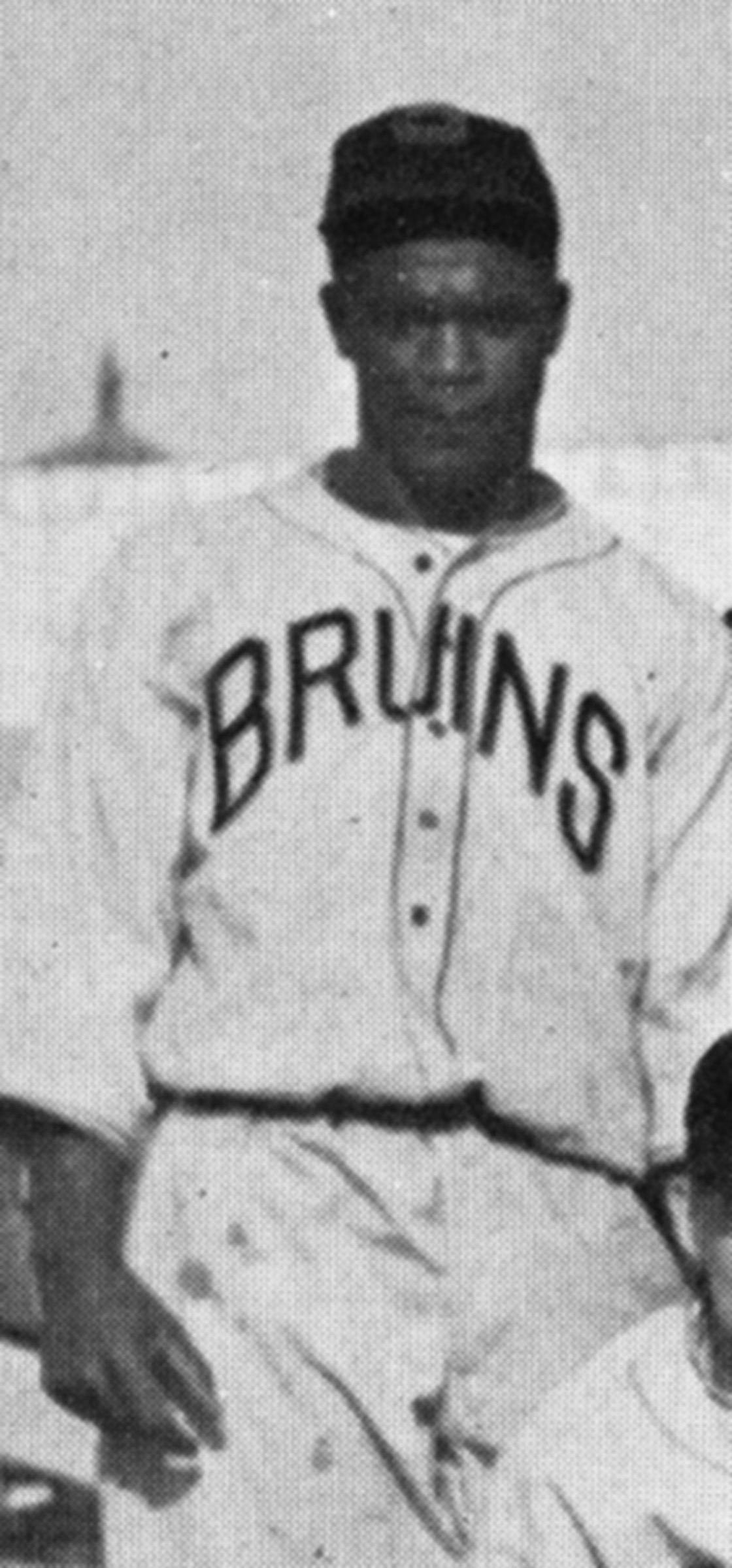
C Earl Battey of Watts, Los Angeles. This is the only position in this team's starting lineup that doesn't have a Hall-of-Famer, or a future HOFer. But Battey was no slouch. He was the backup to Sherman Lollar with the 1959 AL Champion Chicago White Sox, but the Sox made a bonehead move trading him to the Washington Senators.

The Senators became the Minnesota Twins, and Battey became one of the best catchers in baseball, reaching 4 All-Star teams and winning 3 Gold Gloves. He helped the Twins win the 1965 AL Pennant and very nearly the World Series – ironically, striking out against Sandy Koufax for the last out, against his hometown team (although that Game 7 was played in Bloomington, Minnesota).

Honorable Mention to Mike Lieberthal of Westlake Village, Los Angeles, whose stats almost all top Battey's, but is hurt by the fact that the Philadelphia Phillies won a Pennant in 1993, Lieberthal arrived in 1994, his last season with them was 2006, and they've made the postseason every year since he left. He's their Donnie Regular Season Baseball. Good guy, but that record hurts him here.

SP Bob Lemon of Long Beach. A hitter converted into a pitcher, he helped the Cleveland Indians win the 1948 World Series and the 1954 AL Pennant. He later managed the Yankees to the 1978 World Championship, which makes him the manager of this team as well. Hall of Fame, Number 21 retired by the Indians. As he himself would have said to one of his players, "Nice job, Meat."

SP Don Drysdale of Van Nuys. At Van Nuys High, he was a baseball teammate of Robert Redford. The speedy, headhunting righthander helped the Dodgers win the World Series in 1959, '63 and '65, teaming with Sandy Koufax to form one of the few righty-lefty Hall of Fame pairs ever.

In 1968, he pitched 58 2/3rds consecutive scoreless innings, breaking a Walter Johnson record that stood for 55 years, and would stand for another 20 until another Dodger, Orel Hershiser, broke it. Unfortunately, an injury ended his career at age 33 the next season (as one ended Koufax' career at 31), but he still reached the Hall. The Dodgers retired his Number 53, and the Disney Volkswagen "Herbie the Love Bug" got Number 53 in Big D's honor.

Don later became one of the game's most respected broadcasters, and married basketball star Ann Meyers -- the only husband-and-wife pair to both be elected to their sports' halls of fame.

SP Jim Lonborg of Santa Maria. "Gentleman Jim" won 22 games for the Red Sox in their 1967 "Impossible Dream" season, including the tense finale against the Twins, to clinch the Pennant, all while doing National Guard duty on some weekends, never knowing if he'd be called up to serve in the Vietnam War. (He wasn't.) He won Games 2 and 5 of the World Series against the St. Louis Cardinals, but was called on to outpitch Bob Gibson in Game 7 on 2 days' rest (Gibson had 3), and got pounded.

He broke his leg in a skiing accident in the offseason, and was never the same, although he became a fine reliever for the Phillies, and helped them win the NL East in 1976, '77 and '78. He retired to become a dentist. On Cheers, the photo of a righthanded pitcher wearing Number 16, hanging over the bar, meant to be Sam Malone (Ted Danson), is actually Lonborg.

Lonborg won the AL's Cy Young Award in 1967, the 1st year it was given out to the most valuable pitcher in each League, and the NL winner was also from the L.A. area: Mike McCormick of Alhambra and the San Francisco Giants.

SP Scott McGregor of El Segundo. He was a teammate of Murray's on the late Seventies, early Eighties Orioles. He arguably should have been the Most Valuable Player of the 1983 World Series. He went 138-108 for his career, was a 1981 All-Star, and the Orioles elected him to their team Hall of Fame.

The Yankees let him, and the actual '83 WS MVP, Rick Dempsey, get away in a 1976 trade for pitcher Grant Jackson. That trade was necessary to win the '76 Pennant, but in '79, when Dempsey was becoming one of the game's best catchers, and McGregor was part of an Oriole rotation that helped them win the Pennant, and Thurman Munson was aching and then dead and the Yankees really needed another starter, it became a bad trade.

SP Jack McDowell of Sherman Oaks, Los Angeles. Black Jack was the ace of the White Sox team that won the AL Central in 1993 (he won the AL Cy Young Award) and was in 1st place in 1994 when the strike hit.

But the Yankees traded for him, and his performance in the 1995 Playoffs against the Seattle Mariners became legendary for the wrong reasons. He blew it, and got booed off the mound at Yankee Stadium. He lifted his middle finger to the fans, and while the New York Post called him JACK THE FLIPPER on its back page, the Daily News, for once, went further than the Post, and called him JACK ASS. After blowing a lead in Game 5 of that series, and the series itself, the Yankees let him go.

He went to the Indians and helped them win the AL Central in 1996, but it was all downhill from there. Injuries meant that he was only 33 when he threw his last major league pitch. He finished with a record of 127-87, and has since gone on to a music career, first with a band named V.I.E.W, now one named Stickfigure.

SP Greg Maddux of Las Vegas, Nevada. This is a bit of a cheat on my part, since his father was in the U.S. Air Force, and Greg was born while his father was stationed in San Angelo, Texas, then in Madrid, Spain, before moving to Las Vegas, where Greg attended high school. But it does appear that he got his most serious baseball training in Vegas, so I'm putting him there.

With 355 wins, he is the winningest living pitcher, 1 ahead of Roger somebody. He had 3,371 strikeouts, a career ERA+ of 132, and a WHIP of 1.143. 8 All-Star Teams, 4 Cy Young Awards (and just missed 3 others), and a record 18 Gold Gloves. (OK, he's a pitcher, but, still... )

His Number 31 has been retired by both the Cubs (NL East title 1989) and the Atlanta Braves (World Champions 1995, NL Pennants in 1996 and '99). He is a newly-elected, soon to be inducted, member of the Hall of Fame. When The Sporting News announced its 100 Greatest Baseball Players in 1999, he came in at Number 39, the highest-ranking pitcher then active.

Honorable Mention to Larry Dierker of Woodland Hills, Los Angeles. A terrific pitcher for the Houston Astros in the 1970s, he later broadcast for them, managed them to the NL Central title in 1997, ’98 and ’99 before a bout with cancer (which, thankfully, he survived) ended his managing career. Number 49 retired.

Honorable Mention to Mike Scott of Santa Monica, whose greatness, and thus his place on this team, must be doubted because he was 110-81 when his home park was the Astrodome, but just 14-27 when it was Shea Stadium – and that was a pitcher’s park, too.
RP Dan Quisenberry of Santa Monica. The submarining righthander for the Royals helped them reach the 1980 World Series, got the last out of the 1985 World Series, and once held the record for saves in a season, 45. To this day, the Royals have never won a Pennant without him.

In fact, the L.A. region has one heck of a bullpen: Honorable Mention to Jesse Orosco of Santa Barbara, Todd Worrell and Tim Worrell of Arcadia, Rod Beck of Van Nuys, and Robb Nen of Los Alamitos. Strange that both Quiz and Beck died young.

Sunday, June 27, 2010

Los Angeles' All-Time Baseball Team

Yes, that's Jackie Robinson in a
UCLA baseball uniform, circa 1940

The Yankees led 3-0 yesterday on a Mark Teixeira home run, but A.J. Burnett imploded for the 5th start in a row, and the Dodgers beat the Yankees 9-3 at O'Malley's Temple of Greed.

Anyway, in commemoration of this Yankee visit to Los Angeles, I finally managed to go through a massive list of players – over 850 to choose from – to do an all-time all-star team of players from the Los Angeles Dodgers' "territory."

Eligibility has nothing to do with whether the player in question actually rooted for the Dodgers growing up, or even if the Dodgers were already in Los Angeles at the time.

The only requirement is that the player had to have been trained as a player – "grew up," for want of a better term – in one of the following California Counties: Kern, Los Angeles, San Bernardino, San Luis Obispo, Santa Barbara and Ventura.

Orange and Riverside Counties are, for my purposes, the "territory" of the Whatever They're Calling Themselves This Season Angels of Anaheim. San Diego and Imperial Counties are for the San Diego Padres. Alameda, Contra Costa, Sacramento, San Joaquin, Solano and Stanislaus Counties are the ones I've assigned to the Oakland Athletics. And the rest are for the San Francisco Giants, who may end up with the 2nd-best "talent pool" of any of the 30 teams.

But with so many to choose from, the L.A. area may be the best of the bunch. How strong is this team? I can take either of 2 starting pitchers, promote one of my "Honorable Mentions" at shortstop, and end up with a Hall-of-Famer at every position except catcher -- and even that has an asterisk, as Gary Carter was born in Culver City, Los Angeles County, but grew up in Fullerton, in the Angels' home of Orange County.

Los Angeles' All-Time Baseball Team

1B Eddie Murray of Los Angeles.
One of only 4 men – 3 to do it honestly – to collect 3,000 hits and hit 500 home runs. (UPDATE: It's now 6, 4 honestly.) And he won 3 Gold Gloves, and probably would have won more if Don Mattingly hadn’t come along. Helped the Baltimore Orioles win the 1979 American League Pennant and the 1983 World Series. Number 33 retired. Hall of Fame. Ranked 77th on The Sporting News' 100 Greatest Baseball Players.

Honorable Mention to Bob Watson of Fremont, Los Angeles, and Cecil Fielder of La Puente. (His son Prince Fielder grew up in Melbourne, Florida, and thus qualifies for the Tampa Bay Rays' all-time regional team.) Mark McGwire of Claremont is ineligible, and you know why. Same with Jason Giambi of Covina. And neither one was better than Murray, anyway.

2B Jackie Robinson of Pasadena. Let me tell you how strong this position is for the Dodger region: Bobby Doerr of Fremont, Los Angeles is in the Hall of Fame. Chase Utley of Long Beach probably will be. (UPDATE: So much for that idea.) Freddy Sanchez of Burbank is already a 3-time All-Star. And none of them match the performance – let alone the impact on the game and on society at large – of Jack Roosevelt Robinson.

Of course, Hall of Fame, All-Century Team, ranked 44th on The Sporting News' 100 Greatest Baseball Players, and Number 42 retired not just by the Dodgers (even though he played for the Brooklyn version, retiring before they moved to L.A.), but by Commissioner Bud Selig for all of baseball.

And, to think, I almost didn't include Jackie because he was born in Georgia, though his mother moved the family to Pasadena when he was 1 year old. Going the other way, Hall-of-Famer Joe Gordon was born in Los Angeles, but grew up in Portland, Oregon.

SS Nomar Garciaparra of Bellflower. From age 23 to 29, he was one of the best players you'll ever see. At age 32, he briefly recaptured his former greatness. But injuries turned him from "What a player!" to "What might have been?"

This guy hit .357 and .372 in back-to-back seasons (as a righthanded hitter!), 4 times hit over 40 doubles (twice reaching 50), and 4 times reached 100 RBIs (twice reaching 120.) He seemed like a sure bet for 3,000 hits and the Hall of Fame. As it is, he finished with a career batting average of .313, .361 on-base, .521 slugging, .882 OPS and 124 OPS+.

But "just" 1,747 hits and 229 home runs. And note that the Boston Red Sox did not win a World Series until 3 months after they traded him, and another 3 years after that. Hmmmm... He does rather fit "the steroid profile"... But no serious accusation has ever been made against him.

I wonder if the Sox will ever retire his Number 5? And, by marrying Mia Hamm, he's no longer even the most accomplished athlete in his own marriage. On the other hand, he's married to Mia Hamm, which ain't bad at all. Fortunately, their kids look like Mom, and not like "Nosemar."

Honorable Mention to 2 other Red Sox shortstops, Rick Burleson of Downey and Vern "Junior" Stephens of Long Beach; and to Mike Young of Covina.

Honorable Mention also to Osborne Earl Smith, born in Mobile, Alabama and a graduate of Locke H.S. in Los Angeles. He won 13 Gold Gloves, made 15 All-Star Teams, collected 2,460 hits, and helped the St. Louis Cardinals win the 1982 World Series and the 1985 and 1987 NL Pennants -- but his career OPS+ is just 87.

I don't care how good Ozzie's defense was: His bat would kill rallies, so Nomar, once a really good fielder himself, is the starter. Still, Ozzie is in the Hall of Fame, the Cards have retired his Number 1, and he was ranked 87th on The Sporting News' 100 Greatest Baseball Players.

3B Eddie Mathews of Santa Barbara. Born in Texarkana, Texas, but moved with his family to California when he was 6 years old, probably to escape the Dust Bowl and head for "the land of milk and honey."

The only man to play for the Braves in all 3 cities, he reached them in 1952 in Boston, stayed with them until 1966, their first season in Atlanta, and was the most popular player on the team for all 13 years in Milwaukee. Also has the distinction, with New York Giants catcher Wes Westrum, of being on the cover of the first issue of Sports Illustrated magazine, dated August 16, 1954. (Apparently, there was no "Dreaded SI Cover Jinx" yet: Mathews went on to have a great career.)

With Hank Aaron, he set a record for most home runs by teammates, 863. (While they were together, from 1954 to 1966, Aaron hit 442, Mathews 421.) Hit a total of 512 home runs, including 47 in 1953, a team record that Aaron would later tie, but not until Andruw Jones in 2005 would it be surpassed. Led the Milwaukee Braves to the 1957 World Championship, hitting a walkoff 10th-inning homer in Game 4 and fielding the final out in Game 7, and the 1958 Pennant. Won another World Series while playing out the string with the 1968 Detroit Tigers. Also managed Braves, including in 1974 when Aaron hit Number 715.

Hall of Fame, Number 41 retired by Braves, ranked 63rd on The Sporting News' 100 Greatest Baseball Players.

Honorable Mention to George Brett of El Segundo. Born in West Virginia, and older brother Ken Brett (who nearly makes this team as a pitcher) was born in Brooklyn, but they grew up in Dodger territory. Mr. Kansas City Royal. Only man to win batting titles in 3 different decades: 1976, 1980 (.390!) and 1990. Royals have been to postseason 7 times with him, never without him. (UPDATE: That's not longer true.) 1980 AL Pennant, 1985 World Championship. Career batting average of .305, OPS+ of 135, 3,000 Hit Club, 317 homers despite playing his home games at Royals/Kauffman Stadium.

Hall of Fame, Number 5 retired, and ranked 55th on The Sporting News' 100 Greatest Baseball Players.

Also, Honorable Mention to Darrell Evans of Pasadena, Doug DeCinces of Sepulveda and Terry Pendleton of Oxnard. Evan Longoria of Bellflower still has a ways to go.

LF Ralph Kiner of Alhambra. Born in New Mexico, but has lived most of his off-season life in the Los Angeles area. He only played 10 seasons due to a back injury cutting short his career at age 32. But he led the National League in homers in each of his first 7 seasons, had 2 50-homer seasons while playing his home games in spacious Forbes Field, put together a career OPS+ 149 (wow), and hit 369 home runs.

At his pace, if he'd been able to play until he was 40, he would have had close to 600 homers, and might have been a serious threat to get to Babe Ruth's then-record of 714 home runs well before Hank Aaron got close to it.

Hall of Fame, Number 4 retired by the Pittsburgh Pirates, ranked 90th on The Sporting News' 100 Greatest Baseball Players. And if patience is a virtue, then Ralph is a saint, for he has been an employee of the New York Mets, as a broadcaster, from Day One, April 11, 1962. A wonderful man, now 87 years old.

Honorable Mention to Roy White of Compton, and Garret Anderson and Ryan Braun, both of Granada Hills, Los Angeles. (UPDATE: This was before the PED revelations about Braun.) Also to the Meusel brothers of Los Angeles, who would have been perennial All-Stars had the All-Star Game existed in the 1920s: Bob of the Yankees and Emil, a.k.a. "Irish," of the Giants. And to Joe Rudi, born in Modesto, the home territory of the A's, for whom he would play in both Modesto in the minors and Oakland in the majors, but grew up in Downey, in the Dodgers' territory. And to George Foster of the 1970s Cincinnati "Big Red Machine," born in Alabama but raised in Lawndale, California, who hit 348 home runs, including 52 in 1977, most in NL play between 1965 and 1998.

CF Duke Snider of Compton. That's right, Da Duke o' Flatbush went straight outta Compton to the little ballpark on the edges of Flatbush, Bed-Stuy and Crown Heights. Ya wanna make somethin' of it?

Strange thing is, the 2 best players the Brooklyn Dodgers ever had, Jackie Robinson and Duke Snider, were both from Los Angeles (or close to it); while the best player the Los Angeles Dodgers have ever had, Sandy Koufax, was born in Brooklyn, but did nothing for the Dodgers until well after they moved. The Duke, at least, not only had one of his best seasons, including a great World Series, in 1955, but was still a solid contributor to their 1959 Series win in his hometown.

And at the time of his 1964 retirement, his 407 home runs were 10th all-time. Hall of Fame, Number 4 retired, ranked 84th on The Sporting News' 100 Greatest Baseball Players.

Honorable Mention to George Hendrick and Eric Davis, both graduates of Fremont H.S. in Los Angeles. And to Lyman Bostock of Manual Arts H.S. in Los Angeles, a .311 career hitter with a 123 OPS+ when he was shot and killed in 1978, not yet 28 years old.

RF Tony Gwynn Sr. of Long Beach. The greatest player the San Diego Padres have ever had. Helped them win their only 2 Pennants, in 1984 and 1998. His .394 in the strike-shortened 1994 season remains the highest in MLB since 1941.

Hall of Fame, Number 19 retired, 3,000 Hit Club, ranked 57th on to The Sporting News' 100 Greatest Baseball Players. His brother Chris Gwynn once batted .300 for the Kansas City Royals, but his son Tony Gwynn Jr. grew up in Poway, thus qualifies (by background, if not yet by talent) for the San Diego All-Time Team, rather than the Los Angeles one.

Honorable Mention to Floyd Caves "Babe" Herman, born in Buffalo but raised in Glendale. Phil Rizzuto, who grew up watching him with the Brooklyn Dodgers, thought Herman should be in the Hall of Fame. The Scooter had a case: Herman batted .324 lifetime, an OPS+ of 141, hit 399 doubles even though he had his last full big-league season at age 33, and in 1930 batted .393 with 241 hits, 48 doubles, 11 triples, 35 homers, 130 RBIs and 18 stolen bases.

The problem was that Babe played his first few seasons for the "Daffiness Boys" Dodgers, and he was the daffiest of them all. He frequently protested that he was never, as commonly thought, hit on the head by a fly ball. When asked if he was ever hit on the shoulder by one, he said that didn't count. He never, as commonly thought, tripled into a triple play. But in 1926, thanks to a baserunning mistake by Dazzy Vance, a Hall of Fame pitcher not used to reaching 3rd base, Herman did double into a double play, resulting in the old joke that the Dodgers have 3 men on base: "Yeah? Which base?"

Moved west well before the Dodgers themselves did, playing for a "hometown" team, the Hollywood Stars of the Pacific Coast League and starring there, batting .346 at age 41, before returning for a cup of coffee to a Dodger roster ravaged by the World War II draft in 1945.

Additional Honorable Mentions to Tom Brunansky of West Covina, Dwight Evans of Chatsworth, Los Angeles, and Jeff Burroughs of Long Beach. What about Darryl Strawberry of Crenshaw, Los Angeles? Well, he's gone back to the Mets for employment – nothing wrong with that – but he's been saying that not only would the 1986 Mets have beaten the 2009 Yankees, but they would've beaten the 1998 Yankees. If he believes that, then he must've started dipping into his stash again.

C Earl Battey of Watts, Los Angeles. He was the backup to Sherman Lollar with the 1959 AL Champion Chicago White Sox, but the Sox made a bonehead move trading him to the Washington Senators. The Senators became the Minnesota Twins, and Battey became one of the best catchers in baseball, reaching 4 All-Star teams and winning 3 Gold Gloves. He helped the Twins win the 1965 AL Pennant and very nearly the World Series – ironically, striking out against Sandy Koufax for the last out, against his hometown team (although that Game 7 was played in Bloomington, Minnesota).

Honorable Mention to Mike Lieberthal of Westlake Village, Los Angeles, whose stats almost all top Battey's, but is hurt by the fact that the Philadelphia Phillies won a Pennant in 1993, Lieberthal arrived in 1994, his last season with them was 2006, and they've made the postseason every year since he left. He’' their Donnie Regular Season Baseball. Good guy, but that record hurts him here.

SP Bob Lemon of Long Beach. A hitter converted into a pitcher, helping the Cleveland Indians win the 1948 World Series and the 1954 AL Pennant. Later managed the Yankees to the 1978 World Championship, which makes him the manager of this team as well. Hall of Fame, Number 21 retired by the Indians. As he himself would have said to one of his players, "Nice job, Meat."

SP Don Drysdale of Van Nuys. At Van Nuys High, he was a baseball teammate of Robert Redford. Speedy, headhunting righthander helped the Dodgers win the World Series in 1959, '63 and '65, teaming with Sandy Koufax to form one of the few righty-lefty Hall of Fame pairs ever.

In 1968, he pitched 58 2/3 consecutive scoreless innings, breaking a Walter Johnson record that stood for 55 years, and would stand for another 20 until another Dodger, Orel Hershiser, broke it. Unfortunately, an injury ended his career at age 33 the next season (as one ended Koufax's career at 31), but he still reached the Hall. Number 53 retired, and "Herbie the Love Bug" got Number 53 in Big D's honor. Later became one of the game's most respected broadcasters.

His 2nd wife was former UCLA women's basketball star Ann Meyers. They are the only husband and wife both in their respective sports' halls of fame. (Unless Nomar gets elected to the Hall as a manager, which seems unlikely.)

SP Jim Lonborg of Santa Maria. "Gentleman Jim" won 22 games for the Red Sox in their 1967 "Impossible Dream" season, including the tense finale against the Twins, to clinch the Pennant, all while doing National Guard duty on some weekends, not knowing if, as Curt Simmons was to Korea to nearly cost the Phillies the Pennant in 1950, he'd be called up to serve in the Vietnam War. (He wasn't.) He won Games 2 and 5 of the World Series against the St. Louis Cardinals, but was called on to outpitch Bob Gibson in Game 7 on 2 days' rest (Gibson had 3), and got pounded.

He broke his leg in a skiing accident in the offseason and was never the same, although he became a fine reliever for the Phillies and helped them win the NL East in 1976, '77 and '78. Retired to become a dentist. On Cheers, the photo of a righthanded pitcher wearing Number 16, hanging over the bar, meant to be Sam Malone (Ted Danson), is actually Lonborg.

Lonborg won the AL's Cy Young Award in 1967, the 1st year it was given out to the most valuable pitcher in each League, and the NL winner was also from the L.A. area: Mike McCormick of Alhambra and the San Francisco Giants.

SP Larry Dierker of Woodland Hills, Los Angeles. A terrific pitcher for the Houston Astros in the 1970s, later broadcast for them, managed them to the NL Central title in 1997, '98 and '99 before a bout with cancer (which, thankfully, he survived) ended his managing career. Number 49 retired.

SP Scott McGregor of El Segundo. Was a teammate of Murray's on the late Seventies, early Eighties Orioles. Arguably should have been the Most Valuable Player of the 1983 World Series. The Yankees let him, and the actual '83 WS MVP, Rick Dempsey, get away in a 1976 trade for pitcher Grant Jackson.

That trade was necessary to win the '76 Pennant, but in '79, when Dempsey was becoming one of the game's best catchers, and McGregor was part of an Oriole rotation that helped them win the Pennant, and Thurman Munson was aching and then dead and the Yankees really needed another starter, it became a bad trade.

SP Jack McDowell of Sherman Oaks, Los Angeles. Black Jack was the ace of the Chicago White Sox team that won the AL Central in 1993 (he won the AL Cy Young Award) and was in 1st place in 1994 when the strike hit.

But the Yankees traded for him, and his performance in the 1995 Playoffs against the Seattle Mariners became legendary for the wrong reasons. He blew it, and got booed off the mound at Yankee Stadium. He lifted his middle finger to the fans, and while the New York Post called him JACK THE FLIPPER on its back page, the Daily News, for once, went further than the Post, and called him JACK ASS. After blowing a lead in Game 5 of that series, and the series itself, the Yankees let him go.

He went to the Indians and helped them win the AL Central in 1996, but it was all downhill from there. There was no obvious injury, he just lost it. It got into his head. He's since gone on to a music career, first with a band named V.I.E.W, now one named Stickfigure.

Honorable Mention to Mike Scott of Santa Monica, whose greatness, and thus his place on this team, must be doubted because he was 110-81 when his home park was the Astrodome, but just 14-27 when it was Shea Stadium – and that was a pitcher's park, too.

I was going to add Barry Zito, who was born in Las Vegas, which is considerably closer to Los Angeles than to San Francisco, Phoenix or Denver, to this team, as he is easily the best of the 23 MLB players to have been born in Nevada. But he grew up in San Diego, and thus qualifies there, not here.

RP Dan Quisenberry of Santa Monica. The submarining righthander for the Kansas City Royals got the last out of the 1985 World Series, and once held the record for saves in a season, 45.

In fact, the L.A. region has one heck of a bullpen: Honorable Mention to Jesse Orosco of Santa Barbara, Todd Worrell and Tim Worrell of Arcadia, Rod Beck of Van Nuys, and Robb Nen of Los Alamitos. Strange that both Quiz and Beck died young.