Tuesday, July 21, 2026

Top 10 Observations of the 2026 World Cup

10. The Hosting Went Okay. Sure, the ticket prices for the games, the parking, and (at least on New Jersey Transit) the trains were insane. But there were no complaints about the stadiums, no complaints about the amenities, no unpleasant situations between fans. Not in the U.S., not in Canada, not in Mexico. Everybody seemed to get along.

We welcomed people from all over the world:

* North America: Canada, Mexico, Panama, Haiti, Curaçao.

* South America: Brazil, Argentina, Colombia, Ecuador, Paraguay, Uruguay.

* Africa: Egypt, Tunisia, Algeria, Morocco, Ghana, the Democratic Republic of the Congo, Senegal, Côte d'Ivoire, South Africa, and Cabo Verde.

* Europe: England, Scotland, France, Spain, Portugal, Belgium, the Netherlands, Norway, Sweden, Switzerland, Germany, Austria, Czechia, Croatia, Bosnia and Herzegovina, and Türkiye.

* Asia: Japan, South Korea, Uzbekistan, Saudi Arabia, Jordan, Qatar, and, amazingly, visitors from Iran and Iraq were treated well, by the people if not by the government.

* Oceania: Australia and New Zealand.

And while there was certainly banter between fans of various countries, there were no unpleasant incidents. No fights. None of Mexican fans' tendency toward homophobic slurs, not even in the Azteca. No hooligans smashing up bars or store windows. Even the drunks were pleasant:

9. Scotland's Tartan Army and Norway's Rowing Fans. Scotland hadn't qualified since 1998, and hadn't won a World Cup match since 1990. I once read a book about soccer, by a Scotsman who lived in Mexico for a few years. He said that if the World Cup were decided by who had the most frustrated fans, the Final would be between Scotland and Mexico.

But the Scottish fans made the most of it, "drinking Boston dry," taking over Fenway Park, even filling a section at Yankee Stadium. They were a great contrast with the English and their arrogance of "We invented football" and "It's coming home." It's a shame their team couldn't advance to the Knockout Stage.
"Deep-fry yer lobsters, we're gonna deep-fry yer lobsters!"

And the Norway fans, also seeing their team in the World Cup for the 1st time in 28 years, wearing their horned helmets that Vikings never actually wore, and their synchronized air-rowing, delighted Americans all the way to the Quarterfinal. If only Erling Haaland didn't play for Manchester City...
"Rowing" in Times Square

8. It Was Good to See Arsène Wenger Again. Knowing that his protégé, Mikel Arteta, had finally managed Arsenal to the Premier League title, and that several current and former Arsenal players were playing, and that, in his official role with FIFA, he could watch the games without pressure, he looked happy. Older, but much more relaxed. Like a former President.
7. The Early Shocks. It just doesn't feel right to have a World Cup without Italy -- especially in the U.S., with New York, Philadelphia, Boston, Toronto and San Francisco all having a heavy paesano presence. And for major powers Germany and the Netherlands to be knocked out in the Round of 32, it just didn't make sense. Granted, they both lost to good teams, Paraguay and Morocco, respectively. And it's never a surprise to see the Dutch lose on penalties. But Ze Germans, losing on penalties? That was a bigger shock than Scotland making it and Italy not!

Once Die Mannschaft and De Oranje were out, it felt like it could be anybody's tournament. Maybe the U.S did have a chance. Maybe it really would be "coming home" to England. Maybe it would be somebody that nobody expected.

This was heightened by Brazil losing in the Quarterfinals. Just as Benjamin Franklin once said, "Every man has two countries: His own, and France," every soccer fan seems to have two countries: His own, and either the Netherlands or Brazil. The two most stylist "football nations," and each has lots of beautiful women in the stands.

This time, though, Brazil were dull. Defense-minded. Neymar being hurt made things worse, but it looked like Vinícius Júnior was carrying the attack. Watching Brazil "park the bus" is like watching Ozzy Osbourne sing "You Light Up My Life." It's just... it's just... it's just wrong-guh.

6. The Saga of Cabo Verde. Formerly known as Cape Verde, this chain-of-islands nation is about 430 air miles off the west coast of Africa, and over 1,800 from Portugal, the nation from which it gained its independence in 1975. It wasn't the smallest nation by population to qualify for the World Cup -- Curaçao is home to 156,000 people, roughly as many as Paterson, New Jersey -- but it does have only about 490,000 people, roughly as many as Staten Island. And, at 2,506 square miles, it's the smallest nation by land area ever to qualify.

They began the Group Stage by holding Spain, Champions in 2010 and one of the favorites this time, to a 0-0 draw. Then they held Uruguay, Quarterfinalists in 2018 and Semifinalists in 2010, to a 2-2 draw. Then they held Saudi Arabia to a 0-0 draw. To put that in perspective: As I said, Cabo Verde has less than half a million people; Spain, 50 million; Uruguay, 3.5 million; Saudi Arabia, 33 million. Population-wise, they should have been pounded. Instead, those 3 draws allowed them to finish 2nd to Spain in Group H, and advance, rather than sneaking in as 1 of the top 8 3rd-place teams.

Then came one of the greatest games in World Cup history, at the Miami Dolphins' stadium on July 3. They trailed Argentina, defending Champions, Finalists in 2014, and a nation of 46 million people, 1-0 until just before the hour, and tied it up. It ended 1-1, and it went to extra time.

Argentina seemed to end the dream in the 92nd, but Cabo Verde found another equalizer in the 103rd. All they had to do was hold that 2-2 score for another 20 minutes or so. With a 40-year-old goalkeeper. Against a team led by Lionel Messi. They couldn't do it, with the Albiceleste forcing an own goal in the 111th.
Saluting their fans after the game

As occasionally happens in soccer, one team won the game, while the other team won the hearts of the world. Unfortunately, as also occasionally happens, the officiating seemed to suggest an agenda. For all of Argentina's usual dirty play, they were only given 1 yellow card, and that in the 115th minute.

5. The U.S. Sabotaged by the Manager -- Again. You would think that, after the awful experience of having Jürgen Klinsmann, a lousy manager and a former Tottenham Hotspur player, the U.S. Soccer Federation wouldn't be dumb enough to hire another "Spurs" man in the job.

How dumb were they? They hired Mauricio Pochettino, a former Spurs manager. As manager at Paris Saint-Germain, whose financial advantages over the rest of France's Ligue 1 suggest that they should win every trophy, every season, he won the Coupe de France in 2021 and Ligue 1 in 2022 -- and that's it. Those are his only major trophies as a manager.

He lost in the Finals of the 2015 League Cup and the 2019 UEFA Champions League with Tottenham, of the 2024 League Cup with Chelsea, and of the 2025 CONCACAF Gold Cup with the U.S. And, famously, after challenging for the Premier League title with Spurs in 2015-16, he "finished 3rd in a 2-team race," behind Leicester City and Spurs' arch-rivals, Arsenal.

He was one Argentine who didn't do well at this tournament. The U.S. beat Paraguay, 4-1 at Los Angeles/Inglewood, and then beat Australia 2-0 at Seattle to assure Knockout Stage qualification. In the meaningless Group D finale, which should have told him which players should be played and in which positions, he lost 3-2 to Türkiye at L.A./Inglewood.

The U.S. failed to qualify in 2018; failed to get to the Knockout Stage in 1990, 1998 and 2006; got to the Round of 16 in 1994, 2010, 2014 and 2022; and got to the Quarterfinals in 2002. At this point in the program's development, and given home soil, getting to the Quarterfinals should have been the minimum for the World Cup run to be considered a success.

The U.S. beat Bosnia, 2-0 at San Francisco/Santa Clara. The controversy over the straight red card given to Falorin Balogun aside, the team should have played better in the Round of 16 against Belgium. Instead, they were dreadful, losing 4-1. Pochettino should have been fired before he even left the stadium.

It is true that the players simply aren't good enough. Christian Pulisic is never, ever, ever going to become our talismanic striker, no matter how much Fox and Men In Blazers' Roger Bennett try to promote him as "Captain America." And he's the best we've got.

It is also true that, whatever could be gotten out of these players, "Poch" wasn't going to be able to get it. You can take the idiot out of Tottenham, but you can't take the Tottenham out of the idiot.

4. England Trusted Arsenal... But Only So Far. Since winning the World Cup in 1966, with just 1 Arsenal player on the roster, George Eastham, and he didn't play a minute of it, England have avoided using Arsenal players. True, Arsenal have had a lot foreign players over the years: Scotsmen, Welshmen, "the Irish Connection" of the late 1970s, and Wenger's United Nations setup. But look:

* 1970: Arsenal had just won the Inter-Cities Fairs Cup. Arsenal players on the England team: None. Result: Quarterfinal, lost to Germany in extra time.

* 1974: In the interim, Arsenal had won the Premier League at the FA Cup in the same year, "doing The Double," reached another FA Cup Final, and had 2nd- and 3rd-place finishes. Arsenal players on the England team in 1973, as they attempted to qualify for the World Cup: None, although midfielder Peter Storey was sometimes a reserve. Result: They failed to qualify. Could they have used forwards Charlie George or John Radford? Midfielder Ray Kennedy? Winger George Armstrong? Left back Bob McNab? Yes.

* 1978: Arsenal were in a down period, so I can't blame England this time. Result: They failed to qualify.

* 1982: Arsenal had been to 4 cup finals, but won only 1, the 1979 FA Cup. They finished 3rd in 1981. So they had talent, although, as I pointed out, a lot of it was Irish, not English. Arsenal players on the England team: Left back Kenny Sansom and midfielder Graham Rix. Result: In a format not used since, England advanced to the 2nd Group Stage, making them one of the last 12 teams, but they did not finish 1st, and did not advance to the Final. Can't blame this one on not selecting Arsenal players.

* 1986: Arsenal were in a down period. Selected for the England team: Sansom and right back Viv Anderson. Result: Quarterfinal, England defeated by a cheating Argentina. It's hard to imagine that adding English players from Arsenal would have made the difference. That would not be the case the next time:

* 1990: Arsenal had won the 1987 League Cup and the 1989 Football League title. Players on the England team: None. Centerback and Captain Tony Adams was not selected, and would have had to be dropped anyway, due to his drunken-driving conviction which came after the selection. Result: England reached the Semifinal, and were defeated by Germany on penalties.

Would a sober and selected Adams have made a difference? By himself, probably not. Would having Lee Dixon at right back instead of Queens Park Rangers' Paul Parker, Nigel Winterburn at left back instead of Nottingham Forest's Stuart Pearce, David Rocastle on the right wing instead of former Tottenham star Chris Waddle, and Alan Smith up top along with Tottenham star Gary Lineker, instead of Aston Villa's David Platt in central midfield, have made a difference, first against Germany, and then against Argentina in the Final? Probably.

* 1994: Arsenal had won the 1991 League title, both domestic cups in 1993, and the European Cup Winners' Cup in 1994. This time, Arsenal players Adams, Dixon, goalkeeper David Seaman and forward Kevin Campbell were on the team, but it didn't qualify. Adding Smith and Winterburn would have helped.

* 1998: Arsenal had won The Double again. Players on the England team: Seaman, Adams, and centerback Martin Keown. Result: Quarterfinal, losing to Argentina on penalties. I'm not sure having Dixon instead of Gary Neville of Manchester United at right back would have made a difference, although Dixon was known as a good penalty-taker.

* 2002: Arsenal had won The Double again. Players on the England team: Seaman, Keown, centerback Sol Campbell (with Tottenham when he was selected for the 1998 squad), and left back Ashley Cole. Result: Quarterfinals, losing to eventual Champions Brazil. This is probably as good as it could have gotten, for both club and country.

* 2006: Arsenal had won the FA Cup in 2003 and 2005, had their "Invincible" Premier League title season in 2004, and reached the Champions League Final in 2006. Players on the England team: Campbell, Cole and Theo Walcott. This time, England made the opposite mistake: Walcott probably wasn't ready. Result: Quarterfinals, losing to Portugal on penalties.

* 2010: Arsenal had been good but not great in the interim. Players on the England team: None. Walcott was not selected. Jack Wilshere was injured, and would have been selected, but probably not chosen as a starter. Result: Round of 16, losing to Germany.

There was no other Arsenal player from England who could have made a difference. Still, by this point, I had become an Arsenal fan, and the idea of rooting for 4 Chelsea players (including the defected Cole), 3 Liverpool players, 2 Manchester United players, and 5 players for arch-rival Tottenham was sickening.

* 2014: Arsenal had been good but not great, but they had just won the FA Cup. Players on the England team: Wilshere and Alex Oxlade-Chamberlain. Result: England finished last in its group. Who could have made a difference? Walcott was injured, and might not have been selected, anyway. Right back Carl Jenkinson and left back Kieran Gibbs weren't selected, and shouldn't have been, anyway.

* 2018: Arsenal had finished 2nd in 2016, and won the FA Cup again in 2015 and 2017. Players on the England team: Forward Danny Welbeck. That's it. Wilshere was injured again. Walcott and Oxlade-Chamberlain was no longer starting for Arsenal, so he wasn't going to be selected for England. Nor were backup centerbacks Rob Holding and Calum Chambers.

Result: Semifinals, losing to Croatia in extra time. A healthy Wilshere could have helped, but would it have been enough to beat Croatia and then France in the Final? I don't think so. So, for the 6th World Cup in a row, this one doesn't fit the narrative.

* 2022: Arsenal had won the FA Cup again in 2020. Players on the England team: Forward Bukayo Saka, centerback Ben White, and goalkeeper Aaron Ramsdale. Result: Quarterfinals, losing to France -- with the winning goal scored by Olivier Giroud of AC Milan, formerly of Arsenal.

Would starting Ramsdale in goal instead of Jordan Pickford have made a difference? Would having Eddie Nketiah available as a forward? Would having Emile Smith-Rowe available as a midfielder? Put the three of them together, and they might have beaten France, who went on to lose the Final to Argentina on penalties.

* 2026: Arsenal had finished 3 years in a row, and finally won the Premier League. Players on the England team: Saka, midfielders Declan Rice and Eberechi Eze, and forward Noni Madueke. This was the most Arsenal-laden England team since the 1930s. And it was the England team least dependent upon Spurs, Chelsea, Liverpool and Man U in my lifetime.

Result: England reached the Semifinal against Argentina, including beating Mexico at the Azteca Stadium, which counts as a massive upset; and eliminating Norway in extra time in the Quarterfinal. But manager Thomas Tuchel refused to start any of them in the Semifinal against Argentina except Rice. Result: England led 1-0 in the 85th minute, and blew it, losing, 2-1. If Saka had started, who knows?

So: England would have done better with more Arsenal representation in 1970, 1974, 1990, 1994, 2022 and 2026; but probably not in 1978, 1982, 1986, 1998, 2002, 2006, 2010, 2014 or 2018.

3. The Other Arsenal Connections. Aside from the 4 players selected for England, these Gunners chosen by their national teams for the tournament: Backup goalkeeper David Raya, midfielder Mikel Moreno and midfielder Martin Zubimendi of Spain; centerback William Saliba of France; midfielder and Captain Martin Ødegaard of Norway; centerback Gabriel Magalhães and forward Gabriel Martinelli of Brazil; Forward Kai Havertz of Germany; forward Leandro Trossard of Belgium; forward Viktor Gyökeres of Sweden; and left back Piero Hincapié of Ecuador. And Argentina's goalie, Emiliano Martinez, used to play for Arsenal.

2. The Deserving Team Lost. Putting aside everything about the country itself, from its internal racism to its welcoming of surviving Nazi war criminals after World War II, from its "Dirty War" and the tens of thousands of people its Fascist government made to "disappear" to the fixing of the 1978 World Cup they hosted to the stupid invasion of the Falkland Islands in 1982: Historically, Argentina have been one of the dirtiest national teams in soccer.

Granted, Spain were no prize, either. But the world seemed to be divided into 2 camps going into the Final: People who were rooting not so much for Argentina but for Lionel Messi; and people who might not have liked Spain, but were rooting for them because they hated Argentina.

This included, outside of Argentina, pretty much every Spanish-speaking country on Earth, including those that had once been part of the Spanish Empire, which had devastated those lands' indigenous peoples, from the Tainos of Puerto Rico to the Aztecs and Mayans of Mexico, from the Incas of Peru to the natives of the Philippines.

And they were justified by Argentina's behavior in the Final. Only one of their players was sent off, Enzo Fernández, for two yellow cards, both late and dumb: One for dissent in the 85th minute, and one for a pointless foul in the 93rd, stoppage time. But they should have had at least two others sent off.

Martinez made 11 saves, a record for a World Cup Final. But Argentina had only 2 shots in 125 minutes, none of them on target. They seemed to determined to park the bus and play for penalties, which, despite the 3-3 result, was how they won the 2022 Final against France.

Unai Simón, of Athletic Bilbao, a goalie good enough to make Raya, the goalie of the Premier League Champions, his backup, led a defense that allowed just 1 goal in 7 games. Merino saved Spain with very late goals against Portugal in the Round of 16 and Belgium (the only team to score on Spain) in the Quarterfinal. Forward Lamine Yamal of Barcelona, only 19 years old, was Spain's breakout star. But it was another Barcelona player, substitute Ferran Torres (no relation to Fernando Torres), who broke the deadlock in the 106th minute.
After a career based on benefiting from his teammates cheating, both club and country, Lionel Messi was beaten, and beaten fairly. Did the team that deserved to win win? Yes. Even more so, the team that deserved to lose lost.
1. Trump Got Booed Like He Deserved. He can spin it however he wants, but did he really believe he could go into a stadium in New Jersey, close to New York, filled with Spanish-speaking people, most of them immigrants or at most 2 generations removed from immigrants, and not get booed?

The only sporting event he can go to now and not get booed is the Army-Navy Game, where everyone is under orders to cheer. He even got booed at a NASCAR event. There was an Iowa vs. Iowa State football game, in a State that he won with 51, 53 and 55 percent of the vote, increasing over time, and he got booed and had people giving him the finger. He's been booed at the Super Bowl in 2017, the World Series in 2019, and the NBA Finals and the World Cup this year.

But he's also a jinx. In 2019, he went to the World Series, hosted by the Washington Nationals, and they lost the game -- but won the Series. A month later, he went to the Alabama-LSU game, a home game for 'Bama at Tuscaloosa. 'Bama were ranked Number 3, LSU Number 2. LSU won, so it wasn't exactly an upset, but 'Bama should still have been able to defend their home field. Trump jinxed them.

This year, he went to Game 3 of the NBA Finals at Madison Square Garden, and it was the only game the Knicks lost in a 16-game Playoff stretch. Then he tried to intervene on the U.S. soccer team's behalf at the World Cup, and we got slaughtered in the next game. Then he said he was rooting for Argentina, because he sees Messi as "a winner," and because Argentina's President, a conservative named Javier Milei, has been friendly to him, while Spain's Prime Minister, Pedro Sánchez, a Socialist, has opposed him.

Yesterday afternoon, on Deadline White House on MS Now, host Nicolle Wallace, who had been White House Communications Director in George W. Bush's 2nd term, and a key adviser in both Bush's 2004 re-election campaign and John McCain's 2008 campaign, interviewed Kevin Blackistone and Pablo Torre, both veterans of the late, lamented Pardon the Interruption on ESPN. Referring to the Balogun situation, Blackistone, who is black, said, "Once again, Donald Trump trampled on the ethics of a particular institution, and this gentleman suffered the consequences."

She asked if FIFA's appeasement of Trump with the newly-made-up, and totally unearned "FIFA Peace Prize" had come back to bite them when Spain cropped Trump out of their official victory photo -- and then came back to bite Trump when FIFA, themselves, did the same with theirs. She said, "Appeasement never works out for the appeaser."

Torre, of Filipino and therefore also of Spanish descent, said, "FIFA is a bit of the apex predator when it comes to sports' corrupt governing bodies. So this, for them, I think, is almost literally the price of doing business." He then brought up Robert J. Hanlon's line, known as Hanlon's Razor: "Never ascribe to malice that which can be blamed on incompetence." He said, "At certain point, your incompetence becomes malice, because you are the literal President." He went on:

I like to imagine how the athletes that Trump has publicly picked and rooted for have felt over the last year. Because we have seen the New York Knicks, Nicole, when he showed up to that game, lose the one Playoff game in their entire magical run. That was the game that he attended. We have seen him mention that he played, I believe it was golf with England's Harry Kane. England loses. We have seen him say that he's going to pick Leo Messi and Argentina, and Argentina loses. It's just a bit of a running joke in sports.

So, once again, what former Republican strategist turned anti-Trump crusader Rick Wilson titled his book has come true: "Everything Trump Touches Dies."

Monday, July 20, 2026

Yankees Struggle Against Dodgers

The Yankees began the official, though not numerical, 2nd half of the season by hosting the 2-time defending World Champions, the Los Angeles Dodgers. For a team riddled with injuries, it was not a good combination.

Gerrit Cole started on Friday night, and in 6 innings, he allowed 5 hits, no walks. He was brilliant. But the Yankee bats, depleted by injuries to Aaron Judge and Giancarlo Stanton, couldn't hit, either. Jazz Chisholm singled with 2 out in the 2nd. Trent Grisham drew a walk with 2 out in the 3rd. In the 4th, Jasson Domínguez doubled, reached 3rd on an error on the throw to 2nd, and scored on a passed ball with Chisholm up.

In the 6th, Ben Rice singled with 1 out, and Cody Bellinger singled with 2 out. But Domínguez, having giveth a run, now taketh away a chance, by striking out to end the inning. So, through 6 innings, the Yankees were lucky to have a 1-0 lead.

Cole had thrown 92 pitches. That's usually enough for manager Aaron Boone to take a starting pitcher out, possibly on orders from general manager Brian Cashman. This time, he made the opposite mistake: He left Cole in for the top of the 7th. Cliché Alert: Walks can kill you, especially the leadoff variety. Cole hadn't walked anybody yet, but he started the inning by walking Mookie Betts. And then Max Muncy hit a home run.

As the great New York sportscaster Warner Wolf would say, "Turn your sets off right there." Three Yankee relievers allowed just 2 baserunners, and it didn't matter. The Yankees went down 1-2-3 in the 7th. They looked like they might have something going in the 8th. Grisham walked with 1 out, and Rice doubled, but Grisham was thrown out at the plate. Paul Goldschmidt was intentionally walked, with Max Schuemann sent as a pinch-runner. Bellinger just got under a pitch, and it didn't quite go out, and Andy Pages caught it in center field. The Yankees went down 1-2-3 in the 9th.

Dodgers 2, Yankees 1. I'd like to say this one is all on Boone, but the Yankees only needed to score 1 more run to at least send this game to extra innings.

The Saturday afternoon game was rained out, forcing a day-night, split-admission doubleheader for yesterday. The opener was a battle of aces. Yoshinobu Yamamoto was up to the task. He allowed a home run to Grisham in the 4th, and a double to Chisholm and an RBI single to Anthony Volpe in the 8th.

Schlittler was not up to it. He gave up 2 runs in the 3rd, including an RBI double by Shohei Ohtani. He gave up 2 more runs in the 5th, and, at 4-1, the game already felt over. In the 8th, Jake Bird allowed a double, 3 singles and a walk, and ended up with 5 runs charged to him. He should not be in the major leagues. The Dodgers won, 8-2.

So the nightcap became a must, to prevent a total humiliation, not quite on the same level as the Dodgers taking 2 out of 3 Yankee Stadium games in the 2024 World Series, but perhaps capable of preventing the Yankees from being taken seriously for the rest of this season.

Boone decided to go for a bullpen game. I shuddered. But Ryan Yarbrough pitched 2 2/3rds innings, Paul Blackburn pitched 2 1/3rd, and Brent Headrick pitched 2, so no runs through 7. With 2 outs in the 1st inning, Goldschmidt doubled and Bellinger singled, giving the Yankees a 1-0 lead.

But Boone brought Fernando Cruz in to pitch the 8th, and he gave up a game-tying leadoff homer to Tommy Edman. After 2 walks, Boone got Cruz out of there, and brought in David Bednar, the closer. He got 5 outs, allowing just 1 walk. And Chisholm hit one out in the bottom of the 8th. Yankees 2, Dodgers 1, to salvage the finale, and restore some pride.

*

And yet, the Yankees actually benefited from their arch-rivals, the Boston Red Sox, being on a hot streak. They swept the Tampa Bay Rays 4 straight at Fenway Park. They have now won 13 straight games, and 18 out of their last 20. So the Rays now lead the American League Eastern Division by a game and a half over the Yankees, with the Sox having gotten back into the race, 6 games back.

That's a little good news. There was also bad news on the injury front: Aaron Judge probably won't be back before August 1, and Max Fried's 1st injury-rehab start, at Class AA Somerset, was a bit shaky. But Clarke Schmidt had his 1st batting-practice session, and it apparently went well.

Tonight, the Yankees begin another 3-game home Interleague series, this one with the Pittsburgh Pirates. Paul Skenes pitched yesterday, so the Yankees won't be facing him. As Bill Murray would say, So we've got that going for us, which is nice.

Each Country's Best Performance at the World Cup, 1930-2026

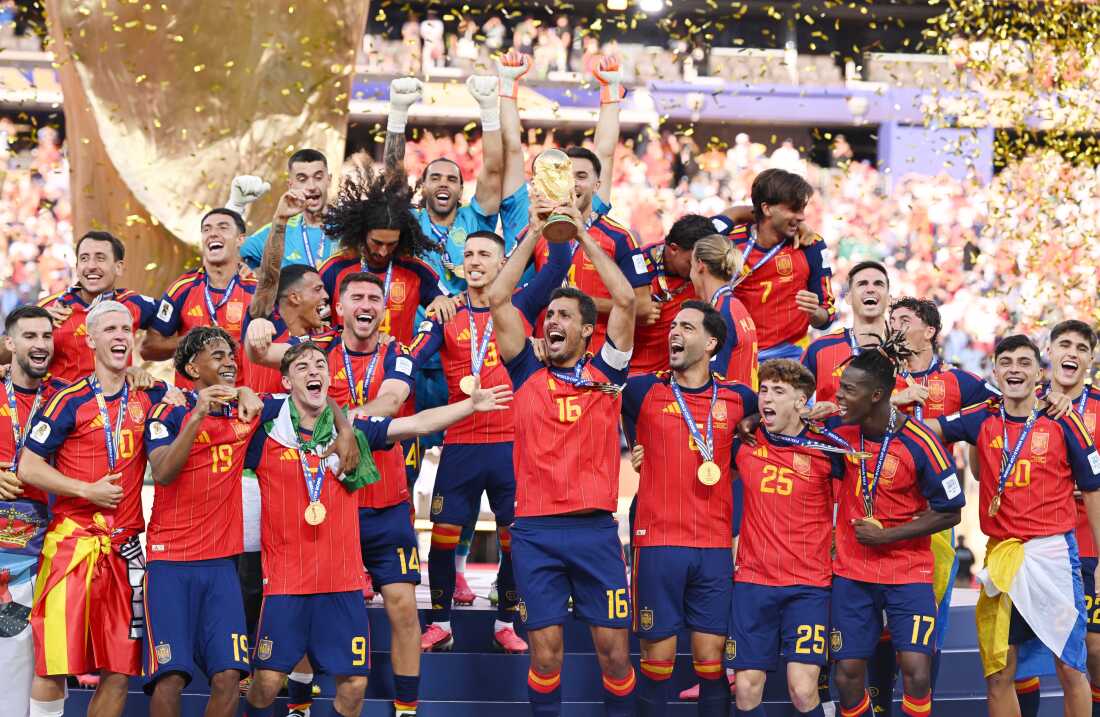
Congratulations, I guess, to Spain, winners of the 2026 World Cup. I didn't want them to win -- until the Final. With the possible exception of Russia, anybody would have been easier to root for than Argentina.

There have been 84 different countries that have competed in the World Cup, including some that no longer exist. Ties broken by most recent.

1. Brazil, 5 wins: 1958, 1962, 1970, 1994 and 2002
2. West Germany/Germany, 4 wins: 1954, 1974, 1990 and 2014
3. Italy, 4 wins: 1934, 1938, 1982 and 2006
4. Argentina, 3 wins: 1978, 1986 and 2022
5. Spain, 2 wins: 2010 and 2026
6. France, 2 wins: 1998 and 2018
7. Uruguay, 2 wins: 1930 and 1950
8. England, 1 win: 1966
-
9. Netherlands, 3 Finals, most recently in 2010
10. Czechoslovakia/Czechia, 2 Finals, most recently in 1962 
11. Hungary, 2 Finals, most recently in 1954 (Joint-best performance by a Communist country)
12. Croatia, Final in 2018 (Best performance by a former Yugoslav team)
13. Sweden, Final in 1958 (Best performance by a Scandinavian team)
-
14. Poland, 2 Semifinals, most recently in 1982
15. Yugoslavia/Serbia, 2 Semifinals, most recently in 1962
16. Morocco, Semifinal in 2022 (Best performance by an African team)
17. Belgium, Semifinal in 2018
18. South Korea, Semifinal in 2002 (Best performance by a Far East team)
19. Turkey, Semifinal in 2002 (Joint-best performance by an Asian team)
20. Bulgaria, Semifinal in 1994
21. Portugal, Semifinal in 1966
22. Soviet Union/Russia, Semifinal in 1966
23. Chile, Semifinal in 1962
24. Austria, Semifinal in 1954
25. America, Semifinal in 1930
-
26. Switzerland, 4 Quarterfinals, most recently in 2026
27. Mexico, 2 Quarterfinals, most recently in 1986
28. Peru, 2 Quarterfinals, most recently in 1978
29. Norway, Quarterfinal in 2026
30. Colombia, Quarterfinal in 2014
31. Costa Rica, Quarterfinal in 2014 (With Mexico, joint-best performance by a Central American team)
32. Paraguay, Quarterfinal in 2010
33. Ghana, Quarterfinal in 2010
34. Ukraine, Quarterfinal in 2006
35. Senegal, Quarterfinal in 2002
36. Denmark, Quarterfinal in 1998
37. Romania, Quarterfinal in 1994
38. Ireland, Quarterfinal in 1990
39. Cameroon, Quarterfinal in 1990 (With Ghana & Senegal, joint-best performande by a Sub-Saharan African team)
40. East Germany, Quarterfinal in 1974
41. North Korea, Quarterfinal in 1966
42. Wales, Quarterfinal in 1958
43. Northern Ireland, Quarterfinal in 1958
44. Cuba, Quarterfinal in 1938
-
45. Japan, Round of 16 4 times, most recently in 2022
46. Nigeria, Round of 16 3 times, most recently in 2014
47. Australia, Round of 16 twice, most recently in 2022
48. Egypt, Round of 16 in 2026 
49. Canada, Round of 16 in 2026
50. Greece, Round of 16 in 2014
51. Algeria, Round of 16 in 2014
52. Slovakia, Round of 16 in 2010 (Smallest nation to reach the Round of 16)
53. Ecuador, Round of 16 in 2006
54. Saudi Arabia, Round of 16 in 1994 (With Egypt, joint-best performance by a Middle Eastern team)
55. Indonesia, Round of 16 in 1938
-
56. Cabo Verde, Round of 32 in 2026 (Smallest nation to reach the Knockout stage)
57. Côte d'Ivoire, Round of 32 in 2026
58. South Africa, Round of 32 in 2026
59. Democratic Republic of the Congo, Round of 32 in 2026
60. Bosnia and Herzegovina, Round of 32 in 2026
61. Scotland, 7 times in Group Stage, most recently in 2026
62. Iran, 7 times in Group Stage, most recently in 2026
63. Tunisia, 7 times in Group Stage, most recently in 2026
64. New Zealand, 3 times in Group Stage, most recently in 2026
65. Honduras, 3 times in Group Stage, most recently in 2014
66. Bolivia, 3 times in Group Stage, most recently in 1994
67. Qatar, twice in Group Stage, most recently in 2026
68. Haiti, twice in Group Stage, most recently in 2026
69. Panama, twice in Group Stage, most recently in 2026
70. Iraq, twice in Group Stage, most recently in 2026
71. Slovenia, twice in Group Stage, most recently in 2010
72. El Salvador, twice in Group Stage, most recently in 1982
73. Curaçao, Group Stage in 2026
74. Jordan, Group Stage in 2026
75. Uzbekistan, Group Stage in 2026
76. Iceland, Group Stage in 2018
77. Togo, Group Stage in 2006
78. Trinidad and Tobago, Group Stage in 2006
79. Angola, Group Stage in 2006
80. China, Group Stage in 2002
81. Jamaica, Group Stage in 1998
82. United Arab Emirates, Group Stage in 1990
83. Kuwait, Group Stage in 1982
84. Israel, Group Stage in 1970

Sunday, July 19, 2026

July 19, 1976: Nadia Comăneci Is Perfect

July 19, 1976, 50 years ago: For the 1st time, a gymnast scores a perfect 10 in Olympic competition. Her name was Nadia Comăneci, she was 14 years old, and she was from Onești, Romania.

For people who only follow gymnastics at Olympic time, this may have been a surprise. For people who follow the sport regularly, it was not. The previous year, at the World Championships in Skien, Norway, she had won 4 Gold Medals: In the All-Around competition, the uneven bars, the balance beam and the vault.

In March 1976, she competed in the American Cup at Madison Square Garden in New York. She achieved the 1st perfect 10s that any gymnast had ever received, in any sanctioned competition, for her vault in the preliminary stage and her floor exercise in the final, leading to her winning the all-around.

So when the Olympics were held in Montreal, Quebec, Canada, she was, despite her age, fully ready for the world stage. She scored 7 perfect 10s: 4 on the uneven bars, 3 on the balance beam. She ended up winning 3 Gold Medals: The All-Around, the uneven bars and the balance beam; a Silver Medal, for Romania in the Team competition; and a Bronze Medal, in the Floor Exercise. She had totally stolen the spotlight from the gymnastic heroine of the previous Olympics, Ukrainian star Olga Korbut, who nonetheless helped the Soviet team win the team Gold Medal.

For its Olympic coverage, ABC used an instrumental titled "Cotton's Dream" as background music for highlights of her performances. She never used it as performance music, but it became known as "Nadia's Theme." Ironically, the song was already being used as the theme song for a show on another network, CBS' soap opera The Young and the Restless. The composers, Barry De Vorzon and Perry Botkin Jr., released it under their own names, under the title of "Nadia's Theme," and it hit Number 8 on the U.S. charts.

Nadia became one of the biggest stars in the world, and a big propaganda tool for her home country and its Communist government. In 1980, she competed in the Olympics again, in Moscow, winning Golds in the balance beam and the floor exercise, and Silvers in the team and the all-around.

On a 1981 tour of the U.S. by Romanian gymnasts, she met American gymnast Bart Conner for the 3rd time -- but, now being 19, this was the 1st time she really noticed him. Her coaches, Béla and Márta Károlyi, defected from the tour. With typical Communist paranoia, the Romanian government kept her under tight control. While they did not join the Warsaw Pact boycott of the 1984 Olympics in Los Angeles, they only let her go as an observer, not a competitor. Conner was part of the U.S. team that won the men's Gold Medal.

On November 27, 1989, about a month before the revolution that finally toppled and executed dictator Nicolae Ceaușescu, Nadia was part of a group of Romanians that crossed the border at Cenad, into Hungary, made their way to Austria, and got on a plane to America. (Just 1 month later, on Christmas Day, rebels executed Ceaușescu and his wife, and Romania was free. But she has no regrets about her timing.)
She settled in Oklahoma, teaching at Conner's gymnastics school. In 1996, they went to Romania together for their wedding, and she was welcomed back as a national hero. Their son Dylan was born in 2006. As of July 19, 2026, they are still together.

Also on July 19, 1976, English actor Benedict Cumberbatch was born. In the Marvel Cinematic Universe, he played Dr. Strange. Robert Downey Jr. played Iron Man. Each of them had played a version of Sherlock Holmes. I think the Marvel writers missed an opportunity: Neither actor had the chance in any Marvel film to say to the other, "No shit, Sherlock!" 

Saturday, July 18, 2026

July 18, 1966: The Death of Bobby Fuller

Left to right: DeWayne Quirico, Bobby Fuller, Randy Fuller, Jim Reese

July 18, 1966, 60 years ago: With his 1st big hit still on the charts, and another one coming up, Bobby Fuller is found dead in his car in Los Angeles. He was only 23, just a little older than his fellow West Texan, Buddy Holly, whom he tried hard to copy, was when he died.

Robert Gaston Fuller was born on October 22, 1942 outside Houston in Baytown, Texas. Along with his family, including his brother Randy, he moved to Salt Lake City, Utah, and then, in 1956, to El Paso, Texas. In high school, he began forming bands, with Randy on bass guitar as the only constant. Basically, they copied Holly's style, down to Bobby playing the Fender Stratocaster, which Holly had made famous, and even going to Norman Petty's recording studio in Clovis, New Mexico, where Holly had recorded with The Crickets.

In 1964, the Fuller brothers moved to Los Angeles, and formed The Bobby Fuller Four, with rhythm guitarist Jim Reese and drummer DeWayne Quirico. They signed with Mustang Records, and were produced by Bob Keane, who had produced Ritchie Valens, who had died in the same 1959 plane crash as Holly.

Their first album was released in November 1965: KRLA King of the Wheels, with a title track about a hot rod that became a mascot for a Los Angeles radio station, at 1110 AM. (It was a Top 40 station from 1959 to 1977, and is now a Christian talk station with the call letters KWVE.) KRLA played the single "Let Her Dance" enough to make it a regional hit, but that's as far as they got.

In 1958, Sonny Curtis wrote "I Fought the Law," and he recorded it in 1959 when he joined the Crickets, after Buddy Holly left them. The song was included on their 1960 album In Style with the Crickets, but received very little airplay. The Fuller Four recorded it in 1964, but their original version didn't get very far, either. But a much more professional-sounding version was recorded with Keane, who released it in October 1965, and it reached Number 9 on Billboard magazine's Hot 100 in February 1966.

The group subsequently recorded an album titled I Fought the Law, which included the title track and "Let Her Dance," releasing it in February. Quirico left the group shortly thereafter, and was replaced by Dalton Powell.

They recorded another Crickets song, this one written and sung by Holly, "Love's Made a Fool of You." Like a lot of acts in the 1960s, they copied the formula that made them hits: It had a sound very similar to "I Fought the Law." As The Four Tops had recently put it, "It's the Same Old Song." (That song sounded a lot like their Number 1 hit "I Can't Help Myself.") Sometimes, as with that Tops song, the formula worked; other times, it didn't: "Love's Made a Fool of You" only reached Number 26. They released one more single, "The Magic Touch," but it wasn't a hit at all.

They played both hits on Hollywood a Go Go, a local TV show on independent Los Angeles station KHJ-Channel 9. (That channel became KCAL in 1989, and has been a CBS affiliate since 2002.) They also backed Nancy Sinatra on 2 songs in the film The Ghost in the Invisible Bikini, a comedy that was an attempt to combine several film trends of the era: Beach, horror, and biker movies. It was released on April 6, and, despite starring Tommy Kirk and Deborah Whalley, and also having horror icon Boris Karloff and, in one of his last films, former Sherlock Holmes Basil Rathbone, it flopped.

Things went from bad to worse for the band: In July, Reese received a draft notice. Knowing he wouldn't need it, he decided to sell his sports car, a Jaguar XKE, to Bobby at the band's next meeting, on July 18. And Powell had decided that, at that meeting, he would announce that he was leaving the band, to return home and support his family.

We'll never know how the Fuller brothers would have responded to this: That meeting took place, but Bobby didn't show up for it. His body was found, beaten inside his car, a 1962 Oldsmobile, parked just outside of his Hollywood home. Evidence suggests that he had ingested gasoline. Initially, these details were not released to the public.

The Los Angeles medical examiner could not reach a conclusion, checking the boxes for "accident" and "suicide," but putting question marks next to each. The police officially ruled it a suicide. Randy and Powell went on record as saying they didn't believe that.

Powell, in particular, believed Bobby was incapable of suicide. In a 1996 interview, he said, "I saw the body. Anybody who can write it off as a suicide is either totally incompetent or scared to death... Whoever did this had the connections," meaning to have the case end up ignored.

Speculation arose that he was killed by the Mob, because he'd taken a hitman's girlfriend. One version says that Phil Spector had it done: The biggest producer in L.A. liked to claim organized crime connections, and he was certainly mean enough to have it done. He attended Bobby's funeral, and was seen smiling there. But he wouldn't seem to have had a motive: Bobby never worked with him, and he isn't known to have had a rivalry with Keane, either.

Another version suggests Keane himself had it ordered, since he knew the band was breaking up, and that dead rock stars sell better than live ones. But that's almost certainly not what happened. Another version says that Frank Sinatra had it done, because he thought Bobby had been fooling around with his daughter Nancy. That doesn't seem likely, either: While it's possible that they'd met, Frank knew Nancy, who was 2 years older and already divorced, was her own person, and wouldn't have appreciated it. As her producer, Lee Hazelwood, put it, "You're not a sweet young thing," telling her to sing like she wasn't one on "These Boots Are Made for Walkin'."

We may never know the truth. Those who have tried, well, in a way, they, too, have fought the law, and the law has, thus far, won. The name of the alleged hitman and the girlfriend have been lost to history. ("Melody," with some irony, has been suggested as her name.)

Bobby Fuller's name is remembered. And "I Fought the Law" remains one of the all-time rock and roll classics. The Clash had a hit with it in their native Britain in 1979, although it didn't make the U.S. charts. It's also been recorded by, among others, Hank Williams Jr., the Dead Kennedys, Status Quo and Green Day.

Randy Fuller was convinced by DeWayne Quirico to continue his musical career. He formed a new band, naming it The Randy Fuller Four, but had no hits. He occasionally reunited with other members of the band. In 2015, Randy collaborated with Miriam Linna, drummer for the punk band The Cramps, and later a rock historian, to write I Fought the Law: The Life and Strange Death of Bobby Fuller, the first authorized biography of Bobby and his band. Quirico also remained active as a session drummer, and sometimes toured with Randy.

Jim Reese and Dalton Powell went back to Texas, and formed a band named Murphy's Law -- perhaps appropriate, given what had happened to their previous band: "Murphy's Law" is a cliché that says, "Anything that can go wrong, will." After a few years, that band broke up, and Powell played in a series of bands. Reese stayed out of the spotlight.

On October 26, 1991, after playing a round of golf, Jim Reese suffered a heart attack, and died at the age of 54. Bob Keane died on November 28, 2009, at 87. Randy Fuller died on May 16, 2024. He was 80. As of July 18, 2026, DeWayne Quirico and Dalton Powell, the 2 drummers, are still alive.

*

July 18, 1966 was a Monday. Dan O'Brien, winner of the Gold Medal in the decathlon at the 1996 Olympics, was born.

Thursday, July 16, 2026

July 16, 1951: "The Catcher in the Rye" Is Published

July 16, 1951, 75 years ago: The Catcher in the Rye is published by Little, Brown and Company. The author, J.D. (Jerome David) Salinger, was then 32 years old, a native of the Upper East Side of Manhattan, and had already published several short stories.

The novel tells the story of Holden Caulfield, a name that Salinger had used in earlier stories based on his experiences serving in World War II. In this novel, taking place during the Christmas season of 1948, Holden, obviously a different character, is 16 years old.

He has been expelled from a private prep school in Pennsylvania, and goes home to New York to see his family, especially his younger sister, Phoebe, to whom he is close. While there, he has a number of disappointing experiences, with people he ultimately describes as "phonies."

He hears a boy singing, "If a body catch a body comin' through the rye." He begins to imagine himself as a protector of children playing in a field of rye near the edge of a cliff, and catching them when they start to fall off.

But Phoebe, only 10 years old, correctly reminds him that the line in Robert Burns' 1782 poem is, "If a body meet a body... " His beautiful illusion shattered by the last person who still matters to him, Holden starts crying. He ends up in a psychiatric ward, and tells conflicting stories of his goals: Either he will live with his brother, D.B., a Hollywood screenwriter, or go to another private school.

Some schools, including East Brunswick High School in New Jersey, which I attended in the mid-1980s, have included the novel in their English Department curriculum. Other schools have banned it, because Holden mentions seeing graffiti reading, "FUCK YOU." (Ironically, Holden might have agreed with them: The graffiti was near an elementary school, and he didn't want small children finding out the words' meaning.)

The novel has never been filmed. Salinger was furious with the way one of his stories was adapted for a film, and shut down attempts to film CITR. He stopped writing in 1965, and retreated to a house on a hilltop in New Hampshire, seeing as few people as possible.

In 1962, as part of his parody album Allan Sherman's Mother Presents My Son, the Celebrity, Sherman sang:

Do not make a stingy sandwich.
Pile the cold cuts high.
Customers should see salami
coming through the rye.

On December 8, 1980, Mark David Chapman, having read the novel, bought a new copy in New York, went to the Dakota Arms Hotel at 72nd Street and Central Park West, waited for former Beatle John Lennon, shot him, and then sat down on the sidewalk, pulled out the new copy of the book, and started reading it. Lennon died within minutes. Chapman claimed that Lennon, by abandoning what he had once been, had become "the ultimate phony." Chapman was convicted, has been in prison ever since, and the book will always have that cloud over it.

In 1982, W.P. Kinsella published Shoeless Joe, in which a farmer in Iowa tracks Salinger down, rekindles Salinger's love of baseball, and takes Salinger with him on a journey that ends at the Iowa farm with the baseball field built into it. In 1989, the film Field of Dreams was released, based on the novel. However, to avoid a lawsuit, the author character was changed to the fictional Terence Mann, his race from white to black, the character's favorite baseball team from the New York Giants to the Brooklyn Dodgers, and his peak years of writing from the 1950s to the 1960s.

The character of William Forrester, played by Sean Connery, in the 2000 film Finding Forrester is also based on Salinger. In 2017, Nicholas Hoult played Salinger in the film Rebel in the Rye, which may be as close as we ever get to a film version of CITR.
A rare photo of an older Salinger. Rarer still because he's smiling.

Salinger married 3 times, and died in Cornish, New Hampshire in 2010, at the age of 91. He had 2 children, both with his 2nd wife, Claire Douglas. His daughter Margaret Salinger wrote a memoir of him, titled Dream Catcher.

His son Matt Salinger became an actor, and played superhero Captain America in a 1990 film, before moving into producing plays and films. He has said of his sister's memoir, "I can't say with any authority that she is consciously making anything up. I just know that I grew up in a very different house, with two very different parents from those my sister describes."

Tuesday, July 14, 2026

Yankee All-Star Appearances, 1933-2026

Stan Musial and Mickey Mantle,
1975 All-Star Game, Milwaukee County Stadium

This list takes into account all times a player was named to an All-Star Team, whether he got into the All-Star Game or not; but not the doubled-up ASGs of 1958 to 1962. It does not include managers. And it only includes berths in the Game while with the Yankees, not with other teams.

Also, while the All-Star Game was canceled twice, in both cases due to travel restrictions, in 1945 because of World War II and in 2020 due to COVID-19, All-Star Teams were still named in those seasons.

Keep in mind also that the All-Star Game did not start until 1933. If it had started earlier -- say, in 1920 -- Babe Ruth and Lou Gehrig, in particular, would have had many more appearances.

Players in Yankee Blue are Monument Park honorees. Players in bold are Baseball Hall of Fame inductees.

Mickey Mantle, 16: 1952, 1953, 1954, 1955, 1956, 1957, 1958, 1959, 1960, 1961, 1962, 1963, 1964, 1965, 1967, 1968
Yogi Berra, 15: 1948, 1949, 1950, 1951, 1952, 1953, 1954, 1955, 1956, 1957, 1958, 1959, 1960, 1961, 1962
Derek Jeter, 14: 1998, 1999, 2000, 2001, 2002, 2004, 2006, 2007, 2008, 2009, 2010, 2011, 2012, 2014
Joe DiMaggio, 13: 1936, 1937, 1938, 1939, 1940, 1941, 1942, 1946, 1947, 1948, 1949, 1950, 1951
Mariano Rivera, 12: 1997, 1999, 2000, 2002, 2004, 2005, 2006, 2008, 2010, 2011, 2013
Bill Dickey, 11: 1933, 1934, 1936, 1937, 1938, 1939, 1940, 1941, 1942, 1943, 1946

Elston Howard, 9: 1957, 1958, 1959, 1960, 1961, 1962, 1963, 1964, 1965
Whitey Ford, 8: 1954, 1955, 1956, 1958, 1959, 1960, 1961, 1964
Dave Winfield, 8: 1981, 1982, 1983, 1984, 1985, 1986, 1987, 1988

Aaron Judge, 8: 2017, 2018, 2021, 2022, 2023, 2024, 2025, 2026
Lefty Gomez, 7: 1933, 1934, 1935, 1936, 1937, 1938, 1940
Bobby Richardson, 7: 1957, 1959, 1962, 1963, 1964, 1965, 1966
Alex Rodriguez, 7: 2004, 2005, 2006, 2007, 2008, 2010, 2011
Lou Gehrig, 6: 1933, 1934, 1935, 1936, 1937, 1938
Red Ruffing, 6: 1934, 1938, 1939, 1940, 1941, 1942

Joe Gordon, 6: 1939, 1940, 1941, 1942, 1943, 1946

Thurman Munson, 6: 1971, 1973, 1974, 1975, 1976, 1977
Don Mattingly, 6: 1984, 1985, 1986, 1987, 1988, 1989

Tommy Henrich, 5: 1942, 1947, 1948, 1949, 1950
Phil Rizzuto, 5: 1942, 1950, 1951, 1952, 1953
Allie Reynolds, 5: 1949, 1950, 1952, 1953, 1954

Gil McDougald, 5: 1952, 1956, 1957, 1958, 1959
Mel Stottlemyre, 5: 1965, 1966, 1968, 1969, 1970
Graig Nettles, 5: 1975, 1977, 1978, 1979, 1980
Reggie Jackson, 5: 1977, 1978, 1979, 1980, 1981
Willie Randolph, 5: 1976, 1977, 1980, 1981, 1987
Bernie Williams, 5: 1997, 1998, 1999, 2000, 2001
Jorge Posada, 5: 2000, 2001, 2002, 2003, 2007

Robinson Canó, 5: 2006, 2010, 2011, 2012, 2013
Red Rolfe, 4: 1937, 1938, 1939, 1940
Charlie Keller, 4: 1940, 1941, 1943, 1946
Spud Chandler, 4: 1942, 1943, 1946, 1947
Vic Raschi, 4: 1948, 1949, 1950, 1952
Bill "Moose" Skowron, 4: 1958, 1959, 1960, 1961
Bobby Murcer, 4: 1971, 1972, 1973, 1974
Rich "Goose" Gossage, 4: 1978, 1980, 1981, 1982
Ron Guidry, 4: 1978, 1979, 1982, 1983

Rickey Henderson, 4: 1985, 1986, 1987, 1988
Wade Boggs, 4: 1993, 1994, 1995, 1996

Paul O'Neill, 4: 1994, 1995, 1997, 1998
Dellin Betances, 4: 2014, 2015, 2016, 2017
Ben Chapman, 3: 1933, 1934, 1935
Joe Page, 3: 1944, 1947, 1948
Hank Bauer, 3: 1952, 1953, 1954
Tony Kubek, 3: 1958, 1959, 1961
Roger Maris, 3: 1960, 1961, 1962
Joe Pepitone, 3: 1963, 1964, 1965
Sparky Lyle, 3: 1973, 1976, 1977
Jason Giambi, 3: 2002, 2003, 2004
Curtis Granderson, 3: 2010, 2011, 2012
Gerrit Cole, 3: 2021, 2022, 2023
Babe Ruth, 2: 1933, 1934
George Selkirk, 2: 1936, 1939
Frank Crosetti, 2: 1936, 1939
Johnny Murphy, 2: 1937, 1939
Monte Pearson, 2: 1936, 1940
Tiny Bonham, 2: 1942, 1943
Hank Borowy, 2: 1944, 1945
George McQuinn, 2: 1947, 1948
Bob Turley, 2: 1955, 1958
Ryne Duren, 2: 1958, 1959
Tom Tresh, 2: 1962, 1963
Roy White, 2: 1969, 1970
Jim "Catfish" Hunter, 2: 1975, 1976
Tommy John, 2: 1979, 1980
Bucky Dent, 2: 1980, 1981
Dave Righetti, 2: 1986, 1987
Steve Sax, 2: 1989, 1990
Jimmy Key, 2: 1993, 1994
Andy Pettitte, 2: 1996, 2001
David Cone, 2: 1997, 1999
Roger Clemens, 2: 2001, 2003
Alfonso Soriano, 2: 2002, 2003
Hideki Matsui, 2: 2003, 2004
Gary Sheffield, 2: 2004, 2005
Mark Teixeira, 2: 2009, 2015
CC Sabathia, 2: 2011, 2012
Masahiro Tanaka, 2: 2014, 2019
Luis Severino, 2: 2017, 2018
Gary Sánchez, 2: 2017, 2019
Gleyber Torres, 2: 2018, 2019
DJ LeMahieu, 2: 2019, 2020
Aroldis Chapman, 2: 2019, 2021
Clay Holmes, 2: 2022, 2024
Tony Lazzeri, 1: 1933
Marius Russo, 1: 1941
Buddy Rosar, 1: 1942
Johnny Lindell, 1: 1943
Rollie Helmsley, 1: 1944
Nick Etten, 1: 1945
Oscar Grimes, 1: 1945
George "Snuffy" Stirnweiss, 1: 1946
Aaron Robinson, 1: 1947
Frank "Spec" Shea, 1: 1947
Billy Johnson, 1: 1947
Tommy Byrne, 1: 1950
Jerry Coleman, 1: 1950
Eddie Lopat, 1: 1951
Johnny Mize, 1: 1953
Johnny Sain, 1: 1953
Irv Noren, 1: 1954
Billy Martin, 1: 1956
Johnny Kucks, 1: 1956
Bobby Shantz, 1: 1957
Bob Grim, 1: 1957
Jim Coates, 1: 1960
Luis Arroyo, 1: 1961
Ralph Terry, 1: 1962
Jim Bouton, 1: 1963
Al Downing, 1: 1967
Fritz Peterson, 1: 1970
Bobby Bonds, 1: 1975
Chris Chambliss, 1: 1976
Mickey Rivers, 1: 1976
Ron Davis, 1, 1981
Phil Niekro, 1: 1984
Scott Sanderson, 1: 1991
Roberto Kelly, 1: 1992
Mike Stanley, 1: 1995
John Wetteland, 1: 1996
Tino Martinez, 1: 1997
David Wells, 1: 1998
Scott Brosius, 1: 1998
Mike Stanton, 1: 2001
Robin Ventura, 1: 2002
Javier Vázquez, 1: 2004
Tom Gordon, 1: 2004
Nick Swisher, 1: 2010
Phil Hughes, 1: 2010
Russell Martin, 1: 2011
David Robertson, 1: 2011
Brett Gardner, 1: 2015
Carlos Beltrán, 1: 2016
Andrew Miller, 1: 2016
Giancarlo Stanton, 1: 2022
Jose Trevino, 1: 2022
Nestor Cortes, 1: 2022
Juan Soto, 1: 2024
Jazz Chisholm Jr., 1: 2025
Max Fried, 1: 2025
Carlos Rodón, 1: 2025
Ben Rice, 1: 2026
Cody Bellinger, 1: 2026
Cam Schlittler, 1: 2026

DiMaggio played 13 seasons, missing 1943, 1944 and 1945 due to service in World War II, and made the All-Star Game every season. He's the only player with as many seasons to make the All-Star Game every season.

Living Yankee All-Stars, in chronological order: Bobby Shantz, Bobby Richardson, Tony Kubek, Al Downing, Roy White, Sparky Lyle, Graig Nettles, Chris Chambliss, Mickey Rivers, Willie Randolph, Reggie Jackson, Ron Guidry, Goose Gossage, Tommy John, Bucky Dent, Dave Winfield, Don Mattingly, Dave Righetti, Steve Sax, Roberto Kelly, Wade Boggs, Jimmy Key, Paul O'Neill, Mike Stanley, Andy Pettitte, John Wetteland, Mariano Rivera, Bernie Williams, Tino Martinez, David Cone, Derek Jeter, David Wells, Scott Brosius, Jorge Posada, Roger Clemens, Mike Stanton, Jason Giambi, Alfonso Soriano, Robin Ventura, Hideki Matsui, Alex Rodriguez, Gary Sheffield, Javier Vázquez, Tom Gordon, Robinson Canó, Mark Teixeira, Nick Swisher, Phil Hughes, Curtis Granderson, CC Sabathia, Russell Martin, David Robertson, Masahiro Tanaka, Dellin Betances, Brett Gardner, Carlos Beltrán, Andrew Miller, Aaron Judge, Luis Severino, Gary Sánchez, Gleyber Torres, DJ LeMahieu, Gerrit Cole, Giancarlo Stanton, Clay Holmes, Jose Trevino, Nestor Cortes, Juan Soto, Jazz Chisholm Jr., Max Fried, Carlos Rodón, Ben Rice, Cody Bellinger, Cam Schlittler.

Cone, Beltrán and Soto are the only players to be named to the All-Star Game as a Yankee and as a Met.

Based solely on most All-Star berths, this would be the all-time Yankee lineup:

1B Lou Gehrig
2B Bobby Richardson
SS Derek Jeter
3B Alex Rodriguez
LF Dave Winfield
CF Joe DiMaggio
RF Aaron Judge
DH Mickey Mantle
C Yogi Berra
SP1 Whitey Ford
SP2 Lefty Gomez
SP3 Red Ruffing
SP4 Allie Reynolds
SP5 Mel Stottlemyre
RP Mariano Rivera