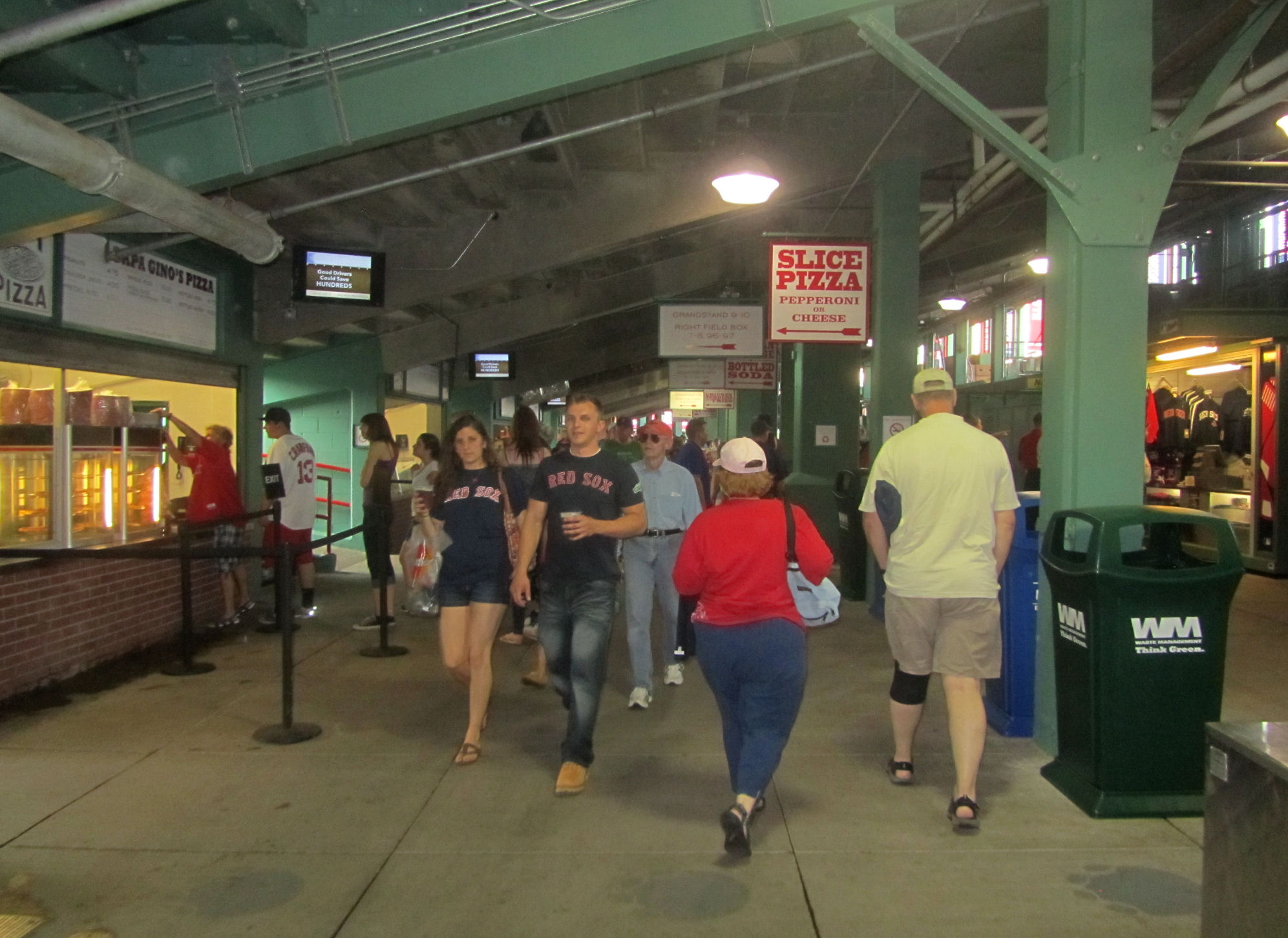
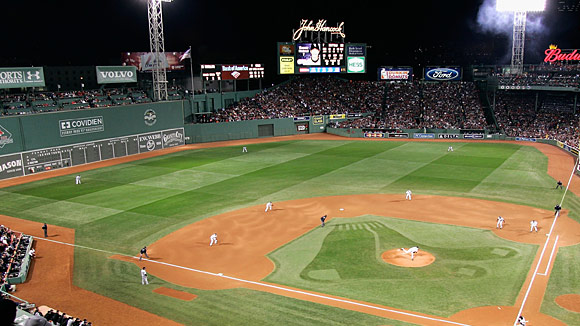
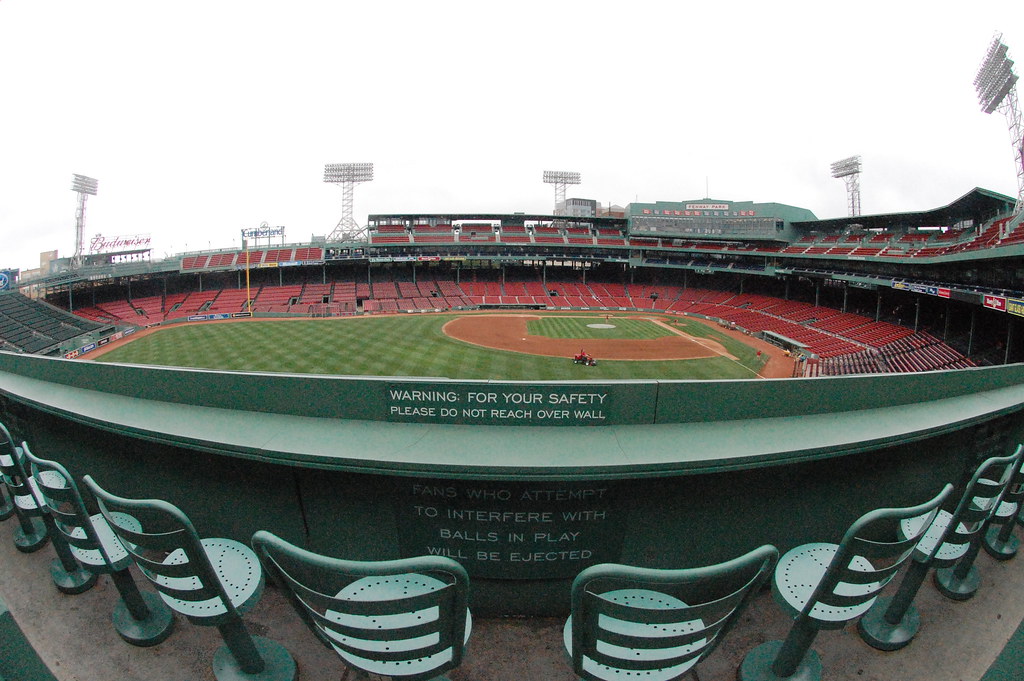
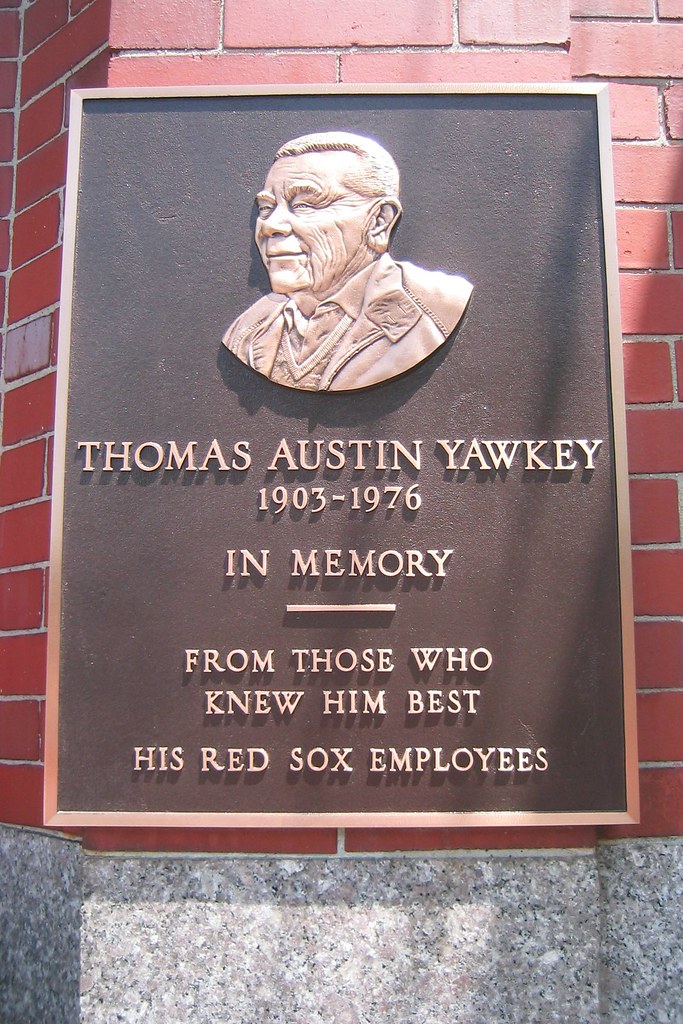
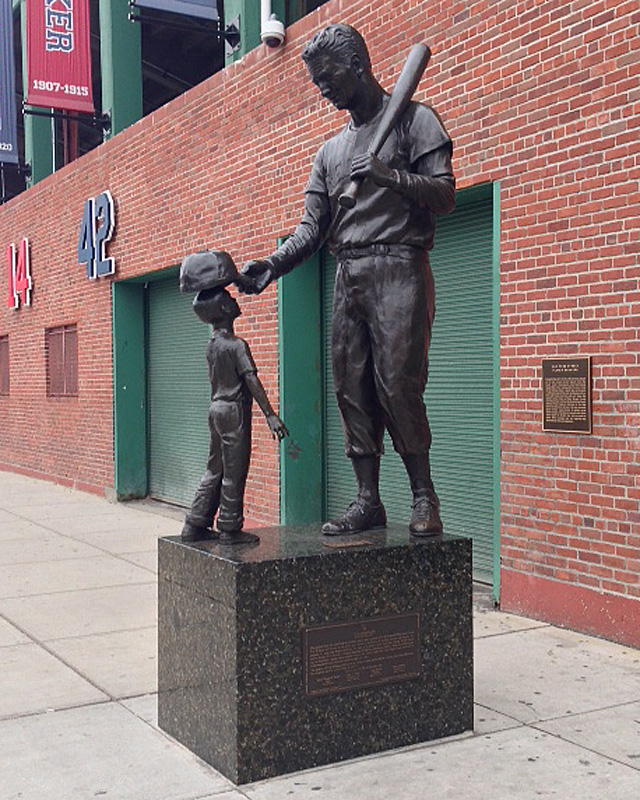
You can get pretty much anything you want, from T-shirts with names and numbers of long-gone players to team-oriented DVDs, in the souvenir stands across Jersey Street, including the official Team Store. Before the Sox bought this store, it was pretty much the originator, along with the River Avenue shops across from the original Yankee Stadium, of the ballpark souvenir stand we've come to know.
Despite the foolishness and ignorance so often associated with Red Sox fans in the 21st Century, in the late 20th, they had a much better intellectual reputation. The typical Red Sox fan used to be seen not as a drunken "townie" (or drunken college student), but as a tweedy professor from a liberal arts college in New England.
Boston is America's most literary city, and New England its most literary region, and this is reflected in the Sox being the most-written-about team in baseball, even more than the Yankees. As newspaper columnist and baseball fan George Will has said, "All this happens in New England, the literary capital of America, and so the Red Sox get written about to death."
As a result, good books about the Red Sox are plentiful. Unfortunately, so are bad ones. Here's a selection:
, Louis P. Masur's book about the 1903 season and how the World Series was first set up, leading to a battle between the team then known as the Boston Americans and the Pittsburgh Pirates, including all-time titans Cy Young of Boston and Honus Wagner of Pittsburgh facing off against each other.
, written by Benton Stark in 1991 -- obviously, before 1994 -- about the 1904 Pennant Race between the Americans and the New York Highlanders, and the Giants' refusal to play the AL Pennant winners, especially if it turned out to be the proto-Yankees, and how the Giants were shamed into not only participating in, but setting up the ground rules for, future World Series.
, Mike Vaccaro's book that argues that, even more than the 1st one and the 1909 Wagner vs. Ty Cobb battle, the 1912 edition made the World Series into "The World Series," the national phenomenon as we know it.
, by Thomas J. Whalen.
, by Ty Waterman and Mel Springer, written in 1999, obviously before 2004.
, Vaccaro's account of the history of the rivalry.
, Jerry M. Gutlon's history of the club that exposes the real reason they didn't win the World Series for 86 years: Mismanagement, often including bigotry, but by no means limited to it. There's an old saying: Never ascribe to malice that which can be blamed on incompetence. From 1918 to 2004, Red Sox management had plenty of both.
, by Boston native Leigh Montville, is the definitive look at the Splendid Splinter. It properly lauds him for batting .400 at age 23, nearly doing it again at age 39, serving in 2 wars and nearly dying in combat in the 2nd, how he actually earned a place in the Hall of Fame of a 2nd sport (fishing), and the fact that he literally wrote the book on hitting. (
But it doesn't shy away from the flaws in his character. How he could be a bit prickly if you weren't reverent. How he wasn't the best family man, to put it politely. And how he went out of his way to deny his Mexican ancestry, thus denying Hispanic ballplayers, and fans, the man who could have been their 1st true
, Jerome M. Mileur's book about baseball's troubled return from World War II, and how the Red Sox of Williams and the Cardinals of Stan "the Man" Musial set up what was, at least on paper, the best World Series matchup ever: The Cards won 106 games, the Sox 105.
, by Raymond Sinibaldi and '67 Sox pitcher Billy Rohr, the most recent book about the year that turned what had become an afterthought ballclub into the defining sports team of New England.
, by Tom Adelman, about the 1975 season that culminated in that great Boston vs. Cincinnati World Series.
*
'78: The Boston Red Sox, A Historic Game, and a Divided City. in which Bill Reynolds does for Boston what Jonathan Mahler's
The Bronx Is Burning did for New York, Mitchell Nathanson's
The Fall of the 1977 Phillies did for Philadelphia, and Michael Fallon's
Dodgerland has since done for Los Angeles.
It tells an epic urban tale of which the rise of the local baseball team is a large part of what life was like there in the late 1970s. It describes the run to the '75 Pennant, but also the Busing Crisis, and its denouement in "The Soiling of Old Glory" at City Hall in '76. It also mentions the Blizzard of '78, and how it trapped people inside the Boston Garden during the Beanpot Tournament.
Having already read the New York, Philly, Boston and L.A. versions of this story, I'd love to see a Chicago version, involving the Cubs' fall from 1st place at the '77 All-Star Break, Bill Veeck, the White Sox' "South Side Hit Men," the death of Mayor Daley Sr., and the blizzard that electorally buried his successor, Michael Bilandic.
And a San Francisco version, with the fall and then rise of the A's, the fall and then rise of the Giants, the glory days of the Raiders, the '75 title and then fall of the Warriors, the Moscone-Milk assassination, and Jonestown. Armistead Maupin's Tales of the City books do a great job with the setting, but they're fiction, and they don't look at the sports side of it at all.
I'd also like to see a Montreal version, with the Canadiens dynasty, the Alouettes winning 2 Grey Cups, the rise of the Expos, the Olympics, and the great struggle between the Canada nationalists led by Pierre Trudeau and the Quebec nationalists led by Rene Levesque.
*
One Strike Away: The Story of the 1986 Red Sox, by Dan Shaughnessy of
The Boston Globe, the man who's written more, and better, about the team than anyone. Lots of Sox fans hate him. That's reason enough for me to respect him.
*
The Curse of the Bambino, the 1990 book by Shaughnessy that popularized the phrase, though he admits that he didn't think of it.
*
Reversing the Curse: Inside the 2004 Red Sox. Shaughnessy finally gets to write the sequel.
The team sells DVDs honoring the team's 100th Anniversary (1901-2001) and the ballpark's 100th Anniversary (1912-2012). There are highlight film packages for their 3 21st Century World Series wins*. They have ESPN's film about their 2004 ALCS win,
Four Days in October; and the MLB series "Baseball's Greatest Games" for both Game 6 of the 1975 World Series and Game 4 of the 2004 ALCS.
They also have
Impossible to Forget: The Story of the '67 Boston Red Sox, issued on the 40th Anniversary, including the original postseason highlight film put together by WHDH (then on Channel 5) and narrated (in verse) by then-Sox broadcasters Ken Coleman and Ned Martin. It also includes not the clinching season finale against the Minnesota Twins on October 1, 1967 (though it does have highlights thereof), but the previous day's game against the Twins, on September 30, 1967, which is believed to be the oldest surviving MLB game whose entire content is still available in color.
And they have
The Essential Games of Fenway Park. The games included on this DVD set are: The September 30, 1967 game with the Twins; Game 6 of the '75 Series; Roger Clemens' 20-strikeout game of April 29, 1986; the 1999 All-Star Game, complete with the pregame moment with Williams; Game 3 of the 1999 ALCS, in which the Sox clobbered the Yankees, knocking the "traitor" Clemens out of the box while Pedro kept dealing, but it turned out to be the only game the Yanks lost in that entire postseason, thus, as Shaughnessy pointed out, the Sox fans totally missed the point; and April 22, 2007, when the Sox beat the Yankees with a record-tying 4 straight home runs: Manny, J.D. Drew, Mike Lowell and Varitek.
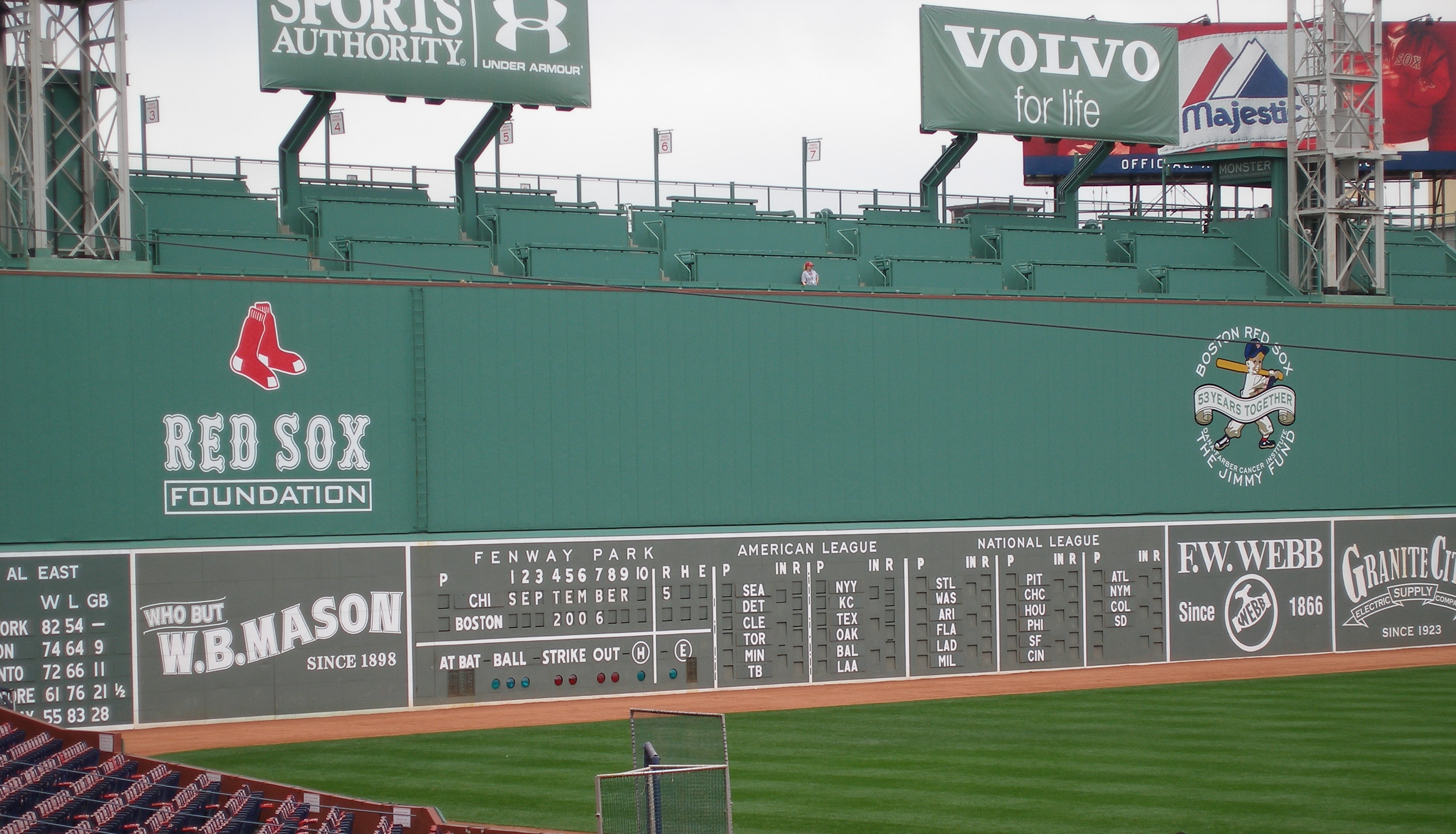
About that 1975 Game 6: That Fisk home run is mainly remembered because of the camera of shot of Fisk waving his arms, as if that would keep the ball from going foul. The legend is true: The NBC cameraman inside the Green Monster scoreboard was supposed to follow the ball, but a rat ran past him, and he was too afraid to move, and so he kept the camera on Fisk, and that's why we have that clip.
It is the most-replayed moment in baseball history, ahead of such homers as title-clinchers by Bobby Thomson, Bill Mazeroski, Chris Chambliss and Joe Carter; milestones like those of Roger Maris, Hank Aaron and Barry Bonds; and otherwise famous homers like those of Bucky Dent and Kirk Gibson. Indeed, in 1999,
TV Guide ruled it the greatest moment in the history of televised sports.
But its endless replaying brought up what should have been an obvious question: "Wait a second, the Red Sox haven't won the World Series since 1918, and this was Game 6, so, obviously, the Sox lost Game 7. So this home run ended up not mattering. So what's the big deal?"
The big deal is that the home run, and the great game that it capped, brought a lot of people back to baseball, after it had declined in popularity for a few years, especially in comparison to football. That Series also helped to cement the Sox as an American cultural icon, not just a regional one, as are the Cincinnati Reds -- the team that actually won that Series. It made a lot of people who didn't previously like baseball, or who didn't previously have a favorite big-league team (including many who lived near a minor-league team but not a major-league one), or whose love for their local team had waned for whatever reason, become Red Sox fans.
That home run also, I think it can be safely said, made the difference between Fisk being elected to the Hall of Fame in his 2nd year of eligibility, through the Writers' Association, and Fisk not being in yet, having to wait until he became eligible through the Veterans' Committee. (The opposite happened to Mazeroski: He became "the guy who hit the home run who won the 1960 World Series," rather than "the greatest-fielding 2nd baseman ever," overwhelming his chief qualification. If the Pirates had won that Series any other way, Maz probably would've gotten in years sooner.)
Also, as Shaughnessy put it, "Game Six" was something very special for Red Sox fans -- for 11 years. But, after 1986, as he puts it, when you say "Game Six" to a Red Sox fan, you have to explain which one.
During the Game. A recent
Thrillist article on "Baseball's Most Intolerable Fans" ranked Red Sox fans 3rd out of the 30 Major League Baseball teams -- ahead of the Yankees at 4th, but, surprisingly, behind 2 other teams. (
Read the article to find out which ones.) I quote:
There has never been a fall from national grace quite like Red Sox fans' tumble over the last 12 years (2004 to 2016). Before that first World Series win, they were the lovable losers, a provincial town of hilariously accented n'er-do-wells crushing Fenway Franks, that spicy brown mustard lodged in the sides of their "Cowboy Up" Kevin Millar playoff beards. People appreciated the spectacle, and felt a little sorry for the chubby guys from Revere wearing Tom Brunansky jerseys who spent all their money on beers at the game, and ended up passing out in Kenmore station until the blue line picked back up. (Mike's note: They meant the Green Line.)
And then they won. And as anyone who's ever been to Gillette Stadium can attest, there is nothing worse than Boston fans when a Boston team is winning. But unlike the unshakeable confidence of the Yankees fan, the Sox fan possesses a terrifyingly pessimistic view of the game. Boston sports talk radio is filled with conspiracy theorists and apologists in equal measure, as is Fenway.
Luckily, unless you're in a Yankees jersey, the fans are more likely to pick fights based on local high school Thanksgiving Day football rivalries ("There go those kids from Catholic Memorial! Get 'em!"), but then again, in Boston it's usually best not to press your luck. Having been to Boston many times, including a few times when the teams were playing each other, and having actually been inside Fenway for such games, I can vouch for all of this: This is one of the few places in North American major league sports where safety
is an issue. Aside from a few college sports matchups, it may be the one where a strong security presence is most necessary.
This isn't like soccer games in Europe or South America, where fans of the visiting team are all put together in one or two sections, to keep the home fans from physically assaulting them -- one of the few instances where segregation is a good thing. (After all, in this case, it's not based on race.)
If a fan near you wants to engage in civil discussion, by all means, engage back. If not, get a feel for those around you, to see if they're going to be okay, before you start talking to any of them. Most likely, if you behave yourself, so will they. If you simply support your team, and lay off theirs, you should be all right.
Because, let's face it, like any other group of people, there's always a 1 percent (or less) of the bunch who ruin it for the other 99 percent. The type of people parodied in the
Saturday Night Live sketch "The Boston Teens" (featuring Jimmy Fallon before he played a Sox fan in the U.S. version of
Fever Pitch) were, in the Pedro Martinez era (1998-2004), too young to remember 1986, let alone 1978, 1975, 1967, or Boston's agonizing close calls of the late 1940s.
These fans, these Townies, the British would call them "chavs" (and no American city is chavvier than Boston, at least not that I know of), really didn't deserve the victories of 2004, 2007, 2013 or 2018, and yet they're the first to brag about them.
Most Sox fans are at least reasonably intelligent, know the game, and love the game, not just their own team. Many of them embrace the idea of keeping score. In the city that has been the center of American intellectual life for over 200 years, the Sox have had a lot of famous writers as fans: John Cheever, John Updike, Robert B. Parker, Stephen King, Doris Kearns Goodwin. The Kennedys, who have celebrated intellectualism for most of Fenway's existence, are nearly all Red Sox fans.
(Except for the Shriver wing of the family: They're from Baltimore and they're Oriole fans, and John F. Kennedy Jr. and I both attended the same Yankee game at least once -- the night before his plane crash, as it turned out.)
"Red Sox Nation" also counts among its citizens lots of comedians who, while occasionally crude, are very observant: Lenny Clarke (who played Uncle Carl in
Fever Pitch), Steven Wright, Mike O'Malley, Conan O'Brien, Dane Cook, John Krasinski, and
SNLers Seth Meyers and Amy Poehler – but not, as it turns out, former
SNLer Fallon, who's a Yankee Fan in real life. (Wow, he really
canact.)
We may mock Matt Damon, his pal Ben Affleck, Ben's brother Casey Affleck, and their friends Jake and Maggie Gyllenhaal, but they're smart people
and Red Sox fans. Michael Chiklis may have played a New York cop in
The Commish and a New York superhero in the Fantastic Four movies, but he's a Sox fan.
Denis Leary, one of the funniest comedians in the business (but also perhaps the most plagiarizing), may have played a New York cop in
The Job and a New York fireman in
Rescue Me, but in real life, he's another Sox fan, from Worcester – who says, "Every Yankee Fan, whether I know you or not, can kiss my ass." Hey, Denis: Kiss my rings, all 27 of them!
So if the Sox fans around you just want to talk, by all means, talk with them. But keep it on a civil level. If they don't want to antagonize you, why antagonize them? These are not the Townies: They're baseball fans first and Sox fans second. So be a baseball fan first and a Yankee Fan second. It's worth it.
A lot of the Grandstand seats are wooden with iron armrests. These are a remnant of the park's 1934 renovation, and, aside from many of the seats at Wrigley Field, they are the oldest remaining seats in the majors. (Aside from the outer shell of the stadium, including that front entrance, I don't think there's anything left from the original 1912 construction. This would still make it the 2nd-oldest active MLB stadium, aside from Wrigley, but the 1912 date is considered official, so it is
the oldest.) These seats are not very wide and provide little legroom. If you end up with one of these seats, you may need to stand up a few times to improve your circulation.
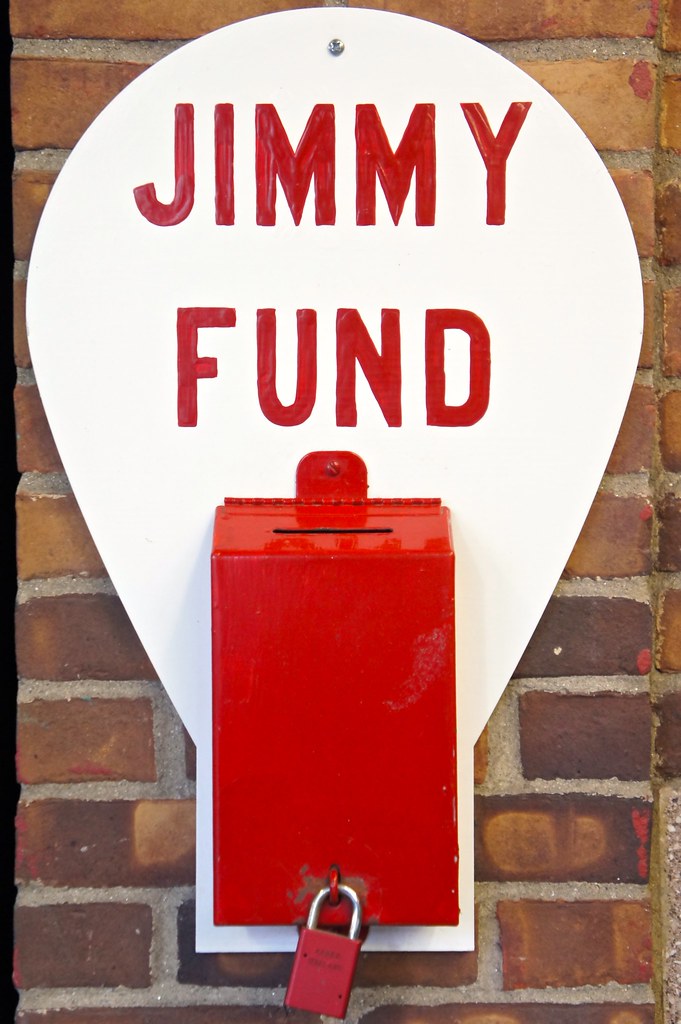
Because of their connection with the Jimmy Fund, the Sox often let disabled or sick children sing the National Anthem. Say whatever you want about the Sox players, and about loudmouth former team president Larry Lucchino, but the organization, as run by John W. Henry and Tom Werner, does seek to have and show class, and usually they do. Other than these special-needs kids, they accept auditions for Anthem singers.
You may hear someone call Ted Williams "the Greatest Hitter Who Ever Lived." This is an opinion based on some facts, but the greatest hitter who ever lived, according to the Splendid Splinter himself in his 1995 book
Ted Williams' Hit List, was Babe Ruth, who is still something of a sore spot among Sox fans. So tread on that opinion lightly.
None of their home games against the Yankees will feature a promotion. The matchup hardly needs it.
As I said, the mascot is Wally the Green Monster. Wall-y, get it? He doesn't look like an especially mean monster. He looks like... how can I put this... If Oscar the Grouch from
Sesame Street is the evil twin, then Wally the Green Monster is the good twin. (I know, I know: "He's a Red Sox fan, so how 'good' can he be?")
The wisdom of putting shoe polish, as sun protection
for the eyes, over fake fur is debatable.
This season, the Red Sox will be wearing uniform patches in memory of former 2nd baseman and broadcaster Jerry Remy, who died from cancer on October 30, 2021.
The Red Sox don't have a special song they use to follow "Take Me Out to the Ballgame" in the 7th inning stretch. Nor do they have a true theme song. But in 1903, when the Boston Americans (named for the American League -- the name "Red Sox" did not become official until 1907) won the 1st World Series against the Pittsburgh Pirates, one of the big hit songs of the year was "Tessie," from a Broadway musical called
The Silver Slipper. (So the Sox' connection with Broadway predates Harry Frazee.)
The Sox fans of the day, known as the Royal Rooters, sang it really loud, and it began to unnerve the Pirates: Interviewed 60 years later by Lawrence S. Ritter for the book
The Glory of Their Times, Pirates outfielder Tommy Leach said, "It was a real hum-dinger of a song, but it sort of got on your nerves after a while."
In 2004, the Boston-area-based punk band the Dropkick Murphys recorded a new version, with new lyrics about how the Rooters used the original over a century before. That version has led me, on a number of occasions, to shout, or type in this blog, "
Tessie Was a Whore." (And this was before I got into rooting for the English soccer club Arsenal, whose fans always sing about the current manager of arch-rival Tottenham Hotspur, saying that his mother is a whore. That's also where I began referring to the arch-rivals of my teams -- the Red Sox, the New York Rangers, Penn State and my high school's rivals -- as "The Scum.")
In the middle of the 8th inning, the public-address system plays
Neil Diamond's 1969 hit "Sweet Caroline." This song has nothing to do with Boston, or New England, or the team. Neil Diamond is not a Red Sox fan: Like the Dodgers, he started in Brooklyn, moved to Los Angeles, and, unlike most Brooklynites, stayed loyal to the Dodgers. And 1969 was not a particularly special year for the team. So why do the Sox play this song? Whoever knows for sure, he isn't talking.
If the Yankees get a lead, I don't care how big it might turn out to be (at Fenway, a lead for either team can disappear rather quickly), or how dispirited the Sox fans might get as a result: Let sleeping dogs lie. In other words, do not mention Bucky Dent, Bill Buckner, or (except in reference to his current capacity as Yankee manager) Aaron Boone. Unless you do get into a civil conversation with a Sox fan (it is possible), and they actually do want to talk about the tumultuous events in question.
When the game ends, if the Sox win, the public address system will play "
Dirty Water" by the Standells, a 1966 garage-rock hit (often called one of the earliest punk-rock songs) that is the singer's perception of "my town," Boston. Actually, the Standells were from Los Angeles. So was the song's author, Ed Cobb, a member of the 1950s pop group the Four Preps – make of that whatever you want!
Unlike the Standells, he had other hits: Besides the Preps' songs, he also wrote Brenda Holloway's song "Every Little Bit Hurts" and, believe it or not, "Tainted Love," which was a non-charting song for R&B singer Gloria Jones in 1965, before its 1981 cover by Soft Cell and its reworking into Rihanna's 2006 song "SOS." (And, yes, Jones' version is still the best of the 3.)
"Dirty Water" is also used as a victory song for the Celtics, the Bruins and the Northeastern University hockey team.
After the Game. Win or lose, get out of the ballpark and back to your hotel -- or to South Station, if you came up just for the day -- as quickly and as quietly as possible. This will require you to be on the streets of Boston, and, unless you can get a taxi or an Uber (and you're not likely to get a taxi to pick up a Yankee Fan at that hour), to take the Green Line in one direction or the other.
TripAdvisor recommends the intersection of Massachusetts Avenue and Boylston Street as a good place to pick up a taxi. But that's a half-mile walk east of Fenway.
You'll have to take some verbal on the streets and especially on the subway. Respond as little as possible. If the Yankees have won, you'll know the venom the Sox fans are spewing at you will not change the result. If the Sox have won, their fans will be in a better mood, and may actually give you
less of a hard time. This is a good time to observe the advice of the great football coach Paul Brown: "When you win, say little; and when you lose, say less."
Chances are, no one will try to pick a fight with you, or damage your Yankee gear (by spilling a drink on it, or worse). If they do, there will most likely be other Yankee Fans nearby, and they may have your back. Most Sox fans, regardless of how much they've had to drink, will not fight. And if they see Yankee Fans ready to defend each other, they could very well back off entirely.
Perhaps the best way to avoid a confrontation is to stay at your seat for as long as the Fenway ushers will let you. This is a tactic used in European and Latin American soccer, with stadium stewards keeping the visiting fans in their section until the entire rest of the stadium is emptied of home supporters, to minimize the chance of hooliganism. This will also allow the crowd to thin out a little and make it easier to leave the park, regardless of the level of aggression.
Another way to avoid any unpleasantness is to find a bar where New Yorkers not only hang out, but are left alone. Easier said than done, right? Well, just as there have been Sox-friendly bars in New York (though both the Riviera Café off Sheridan Square in the West Village and Professor Thom's on 2nd Avenue in the East Village have since bitten the dust), there are places in Boston that welcome Yankee Fans.
I had heard that Jillian's, across from Fenway at 145 Ipswich Street, was one of them, but I've only seen it rammed with Chowdaheads, so I advised against it. It doesn't matter, now, as it's been converted into a bowling alley named Lucky Strike.
The local Giants fan club meets at The Greatest Bar, 262 Friend Street off Canal, a block from the Garden. M.J. O'Connor's, at 27 Columbus Avenue next to the Boston Park Plaza Hotel, is the local home of Jets fans. (Green Line to Arlington.)
If you're visiting during the European soccer season (which starts up again in mid-August), The Phoenix Landing in Cambridge is the original Boston-area footie pub. As other supporters' groups have found their own places, they appear to be down to hosting mainly Liverpool fans, although they welcome all who behave themselves. Red Line to Central.
The Banshee Pub in Dorchester (which, unlike Cambridge, actually is in the City of Boston) is much more working-class, but if you think you're "hard enough," "come and have a go." (No, I'm not suggesting that anyone will try to fight you: As long as you show respect, you will have that respect returned.) Red Line to JFK/UMass.
Sidelights. On November 30, 2018,
Thrillist published a list of "
America's 25 Most Fun Cities," and Boston came in 6th.
Boston is probably America's best sports city, per-capita. Which doesn't make it an easy place to be a fan of a non-New England team.
Have you ever walked through the Public Garden onto the cobblestone streets of Beacon Hill on a crisp fall day, and found a cannoli from Mike's that you didn't even realize you'd purchased hours before, and thought that you were in the greatest city in the world; the Hub, if you will, of the universe?
And then did you get hit in the head by a Sam Adams bottle thrown by a 320lb liquored-up dude wearing a Marchand jersey over a Welker jersey over a Foulke jersey over a Scalabrine jersey, who'd just gotten so fired up rattling off Deflategate conspiracy theories that he missed the last Red Line train to the Quincy Adams station, and thought that you might not care if this city burned to the ground? Then congratulations, you truly understand the ups and downs of the Boston experience.
The number of sports-themed sites you might want to check out is large:
* Site of the Huntington Avenue Grounds. The only other home the Boston Red Sox have ever known, from their founding in 1901 to 1911, was this location in Boston's South End. When the Sox won the 1st World Series in 1903, Games 1, 2, 3 and 8 were played here, meaning it both opened and was clinched here.
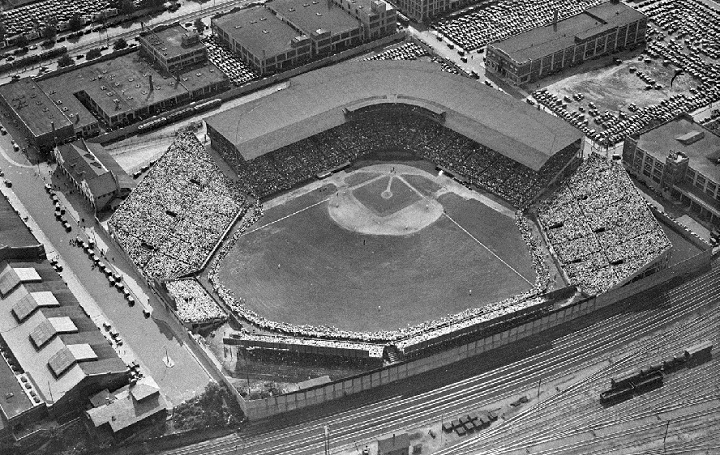
It seated 11,500, and had faraway fences, typical of the ballparks of the dawn of the 20th Century. So when the World Series had overflow crowds, it was no big deal to plant stakes in the outfield, and tie ropes to them, and let fans stand behind the rope, as seen in this photo, the most familiar photo of the 1903 World Series.
Huntington Avenue Grounds, with the 1894-1914 version
of the South End Grounds in the background
The ballpark was torn down shortly after Fenway Park opened in 1912. In 1954, Northeastern University opened the Godfrey Lowell Cabot Physical Education Center on the site. Solomon Court is an 1,800-seat gym that hosts basketball and volleyball. The Solomon Indoor Track hosts track & field meets. The adjacent Barletta Natatorium hosts NU's swim meets.
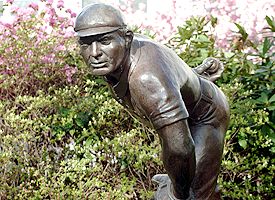
Since 1993, a statue of Cy Young, who pitched for the Sox in their 1903 and 1904 World Championship seasons, and ended his career with the 1911 Braves, has stood outdoors, at roughly the spot where the pitcher's mound was. 360 Huntington Avenue at Forsyth Street, with a side street named World Series Way. Green Line E train to Northeastern.
Cy's statue
* Site of South End Grounds. This is still the most successful baseball location in Boston history. It was home to 3 ballparks, all named the Sound End Grounds. When the Huntington Avenue Grounds were built, the parks were separated only by a railroad, now part of the MBTA's subway and commuter rail systems.
1871-87 version
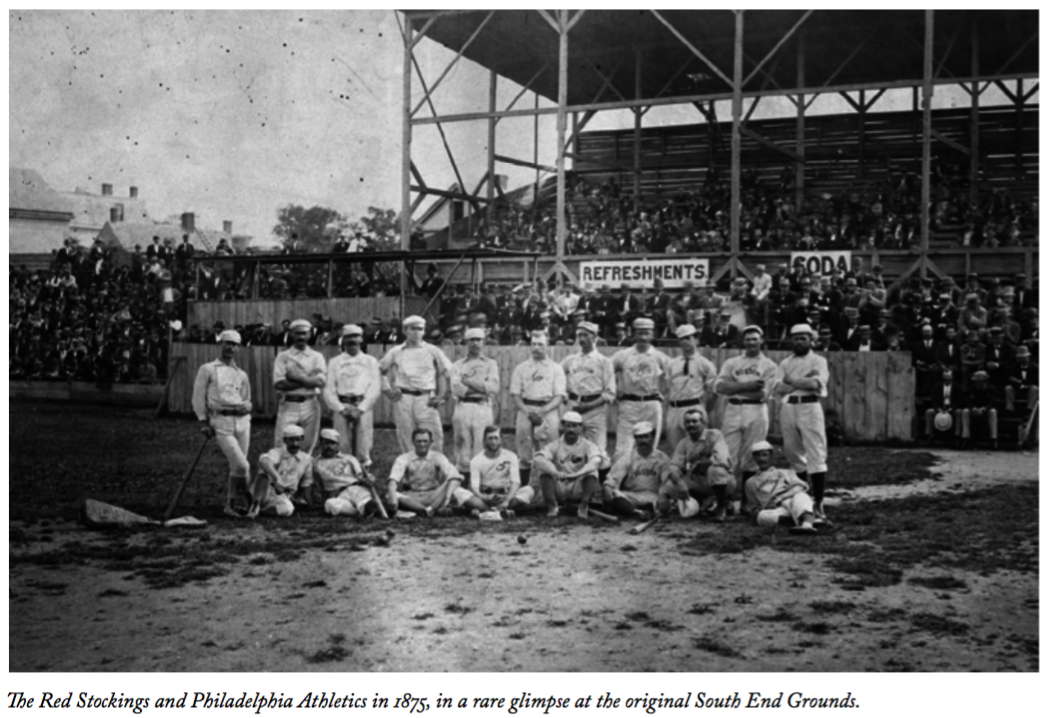
In 1871, the 1st such park was built there, and was home to the Boston Red Stockings of the 1st professional baseball league, the National Association. This team featured half the members of the 1st openly professional team, the Cincinnati Red Stockings (hence the name). They also had a young pitcher named Al Spalding, who would later co-found the team now known as the Chicago Cubs and the sporting-goods empire that still bears his name.
That Boston Red Stockings team won Pennants in 1872, '73, '74 and '75, and its strength (its domination, really) was one of the reasons the NA collapsed.
1888-94 version, outside
When the National League was founded in 1876, the Red Stockings were a charter member. They won Pennants in 1877 and '78, and by the time they won the 1883 Pennant, they were popularly known as the "Boston Beaneaters." No, I'm not making that name up. Their success gave them the money they needed to build a new park on the site in 1888, they won Pennants in 1891, '92 and '93.
1888-94 version, inside
But on May 15, 1894, in a game against the NL version of the Baltimore Orioles, a fight broke out, and no one noticed that some kids had started a fire in the right-field seats. (Or maybe it was the ashes of a grown man's cigar, or the match that lit said cigar. Both have been suggested, and it's likely that nobody knew for sure.) It became known as the Great Roxbury Fire, and the story goes that the park and 117 (or 170, or 200) buildings burned to the ground, and 1,900 people were left homeless – but nobody died. (I don't buy that last part at all.)
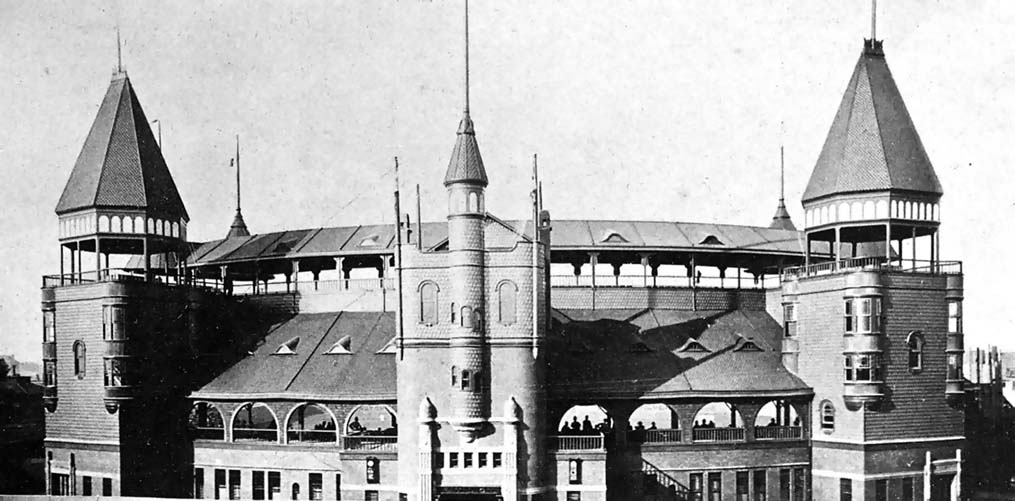
A new park was hastily built on the site, while the Beaneaters temporarily played at the home of the city's team in the 1890 Players' League. This last South End Grounds hosted the Braves' 1897 and '98 Pennant winners, and lasted until 1914, when, with the team now called the Braves (owner James Gaffney had been a "Brave," or officer, in New York's Tammany Hall political organization), decided it was too small for the crowds the team was now attracting.
This is the best photo I could find
that clearly shows the 1894-1914 version,
which the Huntington Avenue photo really doesn't.
So he moved the team to Fenway, and played their 1914 World Series games there, and opened Braves Field the next season. Overall, 13 Pennants were won here, in a 44-year span -- as many as the Red Sox have won at Huntington Avenue Grounds and Fenway Park combined in 116 seasons.
Parking for Northeastern University is now on the site -- and save your Joni Mitchell jokes. Columbus Avenue at Hammond Street. Orange Line to Ruggles.
A recent photo of the site
* Third Base Saloon. There's some question as to what was the first "sports bar": St. Louis Brown Stockings (the team now known as the Cardinals) owner Chris von der Ahe's place on the grounds of Sportsman's Park, or Michael T. McGreevy's establishment that opened just outside the South End Grounds, both in the 1880s.
"I call it Third Base, because it's the last place you go before home," McGreevy would tell people, adding, "Enough said." McGreevy used that phrase, usually accompanied by contributing tobacco to a spittoon or the ground, to settle any and all arguments. Not "Nuf Ced" become his nickname, but he had it (spelled that way) laid in mosaic tile on the bar's floor.
Third Base Saloon became the headquarters of the Royal Rooters, a Beaneaters' booster club, founded during the Pennant-winning season of 1897. In 1901, when the American League and the team that became the Red Sox was formed, Beaneaters founder-owner Arthur Soden made one of the dumbest mistakes in sports history: Despite competition practically next-door to his team, he raised ticket prices.
This infuriated the working-class Irish fan base of the NL club, and they immediately accepted Nuf Ced's suggestion of switching to the AL outfit. (I wonder if they built their park near Nuf Ced's place for just that reason, to get his customers?)
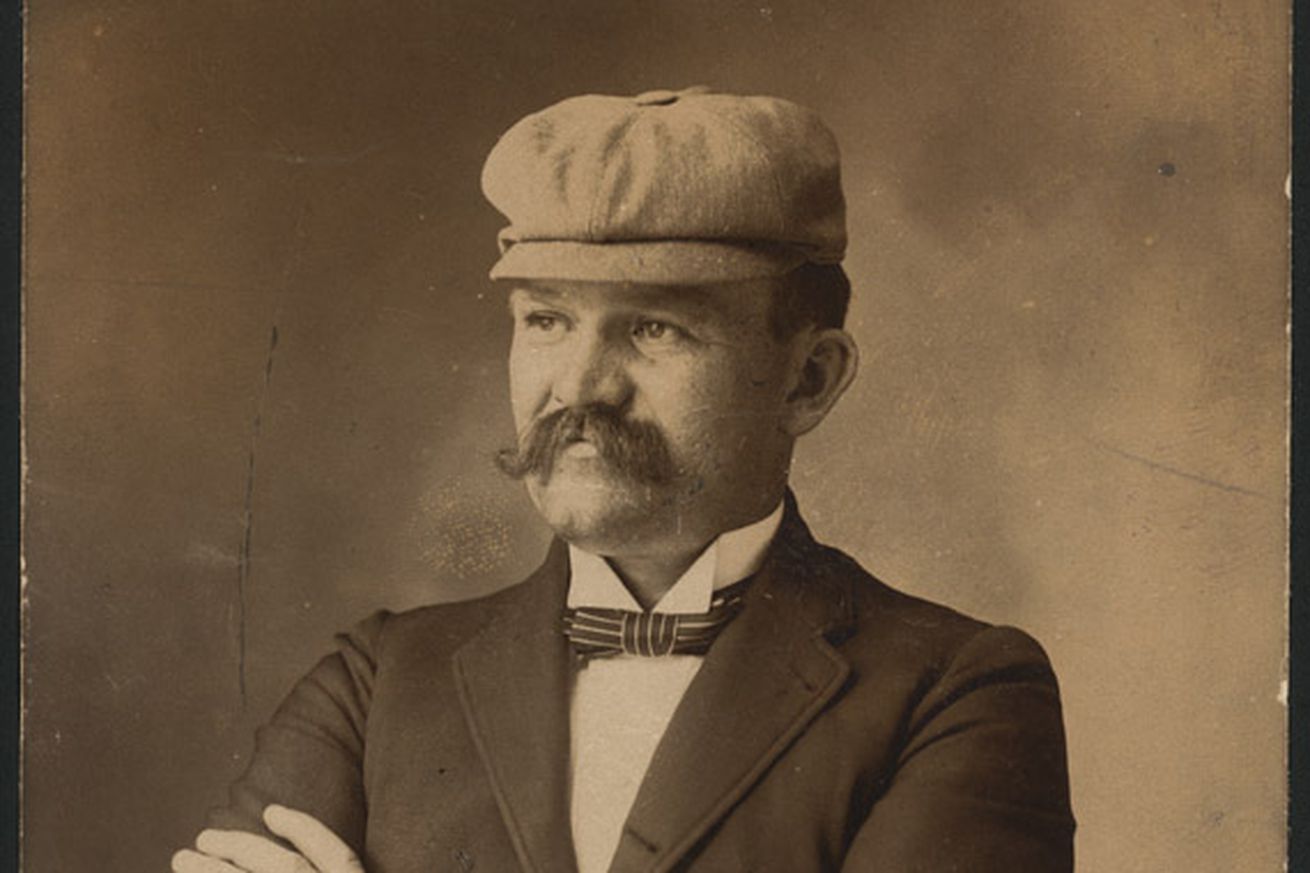
Michael T. McGreevy. Nuf Ced.
Nuf Ced and the Rooters stayed with the Sox after their 1912 move to Fenway, until 1920 when Prohibition closed him down. He died in 1930, and to this day, no Boston baseball team has ever won a World Series without him being present at all home games. (Not legitimately, anyway.)
A park with a bike trail is now on the site, so the address, 940 Columbus Avenue, is no longer in use. The approximate site is the east corner of the X intersection of Columbus Avenue and Melnea Cass Blvd. (Roxbury and the South End are now mostly black, and Cass was a local activist, essentially Boston's answer to Jane Addams, as well as a suffragette and a union leader.) As with the site of South End Grounds, take the Orange Line to Ruggles.
A tribute bar, named McGreevy's Boston, was founded by Dropkick Murphys member Ken Casey, with "an exact replica of McGreevy's original barroom." A sign proclaims that the bar is "1200 Steps to Fenway Park." 911 Boylston Street. Green Line B, C or D train to Hynes-Convention Center.
* Site of Congress Street Grounds. Built in 1890, this was the home of the Boston Reds, who won the only Pennant of the Players' League that year, and moved to the American Association in 1891 and won that league's Pennant. Both leagues folded. Does that make the Reds the original "cursed" baseball team in Boston?
The only known surviving photograph of Congress Street Grounds
The ballpark still stood in 1894, so when the South End Grounds burned down, the Beaneaters moved in, playing 26 "home" games there before the South End Grounds reopened on July 20. One of those games featured the 1st time a player hit 4 home runs in a major league game. It was May 30, 1894, the player was Beaneaters 2nd baseman Bobby Lowe, and all 4 were down the left field line, where the fence was very close. It was a Decoration Day (Memorial Day) doubleheader, and the Beaneaters swept a doubleheader from the Cincinnati Reds, the teams scoring a combined 54 runs in one day. (Lowe hit only 71 home runs in his career, counting those 4. He was better known for his fielding: When he retired in 1907, he had the highest fielding percentage for his position in baseball history.)
It's not clear when the ballpark was demolished. Office buildings now occupy the site, and a scene for
The Departed was filmed in an alley there. A bar named simply "Drink" is at 348 Congress Street, between Farnsworth Street and Thomson Place, across the Fort Point Channel from downtown. A 10-minute walk from South Station, past the Boston Tea Party Ship & Museum and the Boston Children's Museum.
* Matthews Arena. Opened on April 16, 1910 as the Boston Arena, this is the oldest currently-used multi-purpose athletic building in use in the world. Northeastern still uses it, while BC, BU, Harvard, MIT and Tufts all once played home games here.
It was the Bruins' 1st home, from 1924 to 1928, and when the Windsor Arena, the original home of the Detroit Red Wings (1926-27), is demolished within the next couple of years, that will make Matthews the only remaining original arena of one of the NHL's "Original Six" teams. (The Montreal Forum and Maple Leaf Gardens still stand, but neither was their team's original arena.) The New England Whalers played their 1st season here, 1972-73 and won the 1st World Hockey Association title.
The Celtics played the occasional home game here from 1946 to 1955, on occasions when there was a scheduling conflict with the Garden. In 1985, the Celtics played an alumni game here, with the opposing teams coached by Red Auerbach (his players wearing the white home jerseys) and Bill Russell (who didn't play, his players wearing the road green).
A gift from NU alumnus George J. Matthews led the school to rename the arena for him. In spite of its age, the building is fronted by a modern archway. 238 St. Botolph Street at Massachusetts Avenue. Green Line E train to Symphony. Symphony Hall, Boston's answer to Carnegie Hall, is a block away at Massachusetts and Huntington Avenues.
* Site of Braves Field/Nickerson Field. Although Boston University no longer has a football team, it still plays other sports at Nickerson Field, which opened in 1957. Its home stand is the surviving right field pavilion of Braves Field, where the Braves played from 1915 until they left town.
In return for being allowed to play their 1914 World Series games at Fenway, the Braves invited the Sox to play their Series games at Braves Field, which seated 40,000, a record until the 1st Yankee Stadium was built. The Sox played their home Series games there in 1915, '16 and '18.
The Braves themselves only played 1 World Series here, in 1948, losing to the Indians, who had just beaten the Sox in a one-game Playoff for the AL Pennant at Fenway, negating the closest call there ever was for an all-Boston World Series.
Notice the ticket office behind the right field pavilion.
Notice also the serious parking issues.
The Braves' top farm team was the Triple-A version of the Milwaukee Brewers, and, with their team in decline after the 1948 Pennant and the Sox having the far larger attendance, they gave up the ghost and moved just before the start of the 1953 season, and then in 1966 to Atlanta.
But they already had Warren Spahn and Eddie Mathews, and, ironically, if they'd just hung on a little longer, they would have had Hank Aaron (they'd already integrated with Sam Jethroe in 1950, 9 years before the Sox finally caved in to the post-1865 world and added Pumpsie Green). They could have played the 1957 and '58 World Series in Boston instead of Milwaukee.
If this had happened, once Ted Williams retired in 1960, interest in the declining Sox would have faded to the point that Tom Yawkey, not a Bostonian, could have gotten frustrated, and the Red Sox could have moved with the Braves staying. If so, while the 1967, '75, '86, 2004, '07 and '13 World Series would have been played somewhere else, Boston would have gained the 1957, '58, '91, '92, '95, '96 and '99 World Series. Or, to put it another way: Since 1953, Boston would have appeared in 7 World Series instead of 6 -- although they would have won 1 instead of 3. (But who knows? Maybe having a ballpark other than Fenway, or Milwaukee County Stadium, or Fulton County Stadium, or Turner Field, changes a result or two.)
And, because of the proximity, there would still have been a big New York-Boston rivalry in baseball, but it would be Mets-Braves. (Of course, this would have meant the Yankees' main rivals would be the Baltimore Orioles -- who are, after all, the closest AL team to them, closer than the Red Sox.)
Instead, the Braves moved, and BU bought the grounds and converted it into Nickerson Field. The NFL's Boston Redskins (named for the Braves) played their 1st season, 1932, at Braves Field, before playing 1933-36 at Fenway and then moving to Washington.
The AFL's Boston Patriots played at Nickerson 1960-62, and then at Fenway 1963-68. A team called the Boston Bulldogs played the 1929 season at Braves Field. A team called, yes, the Boston Yanks played a few NFL games at Braves Field, but Fenway was its main home in its existence, 1944 to 1948. And the Boston Breakers of the USFL played there in 1983.
The field, sadly, is now artificial, so it can stand up to having several sports played on it. The former Braves Field ticket office still stands, converted into the BU Police headquarters. Agganis Arena is across the street from the BUPD HQ. Harry Agganis was one of several athletes of the era nicknamed The Golden Greek, a a BU quarterback who briefly played for the Red Sox, before getting sick and dying at age 24 in 1955. The extension of Pleasant Street that separates the stadium from the arena is now named Harry Agganis Way. Commonwealth Avenue at Babcock Street. Green Line B train at Pleasant Street.
Nickerson Field. Those dorm towers were built
on the site of the old grandstand.
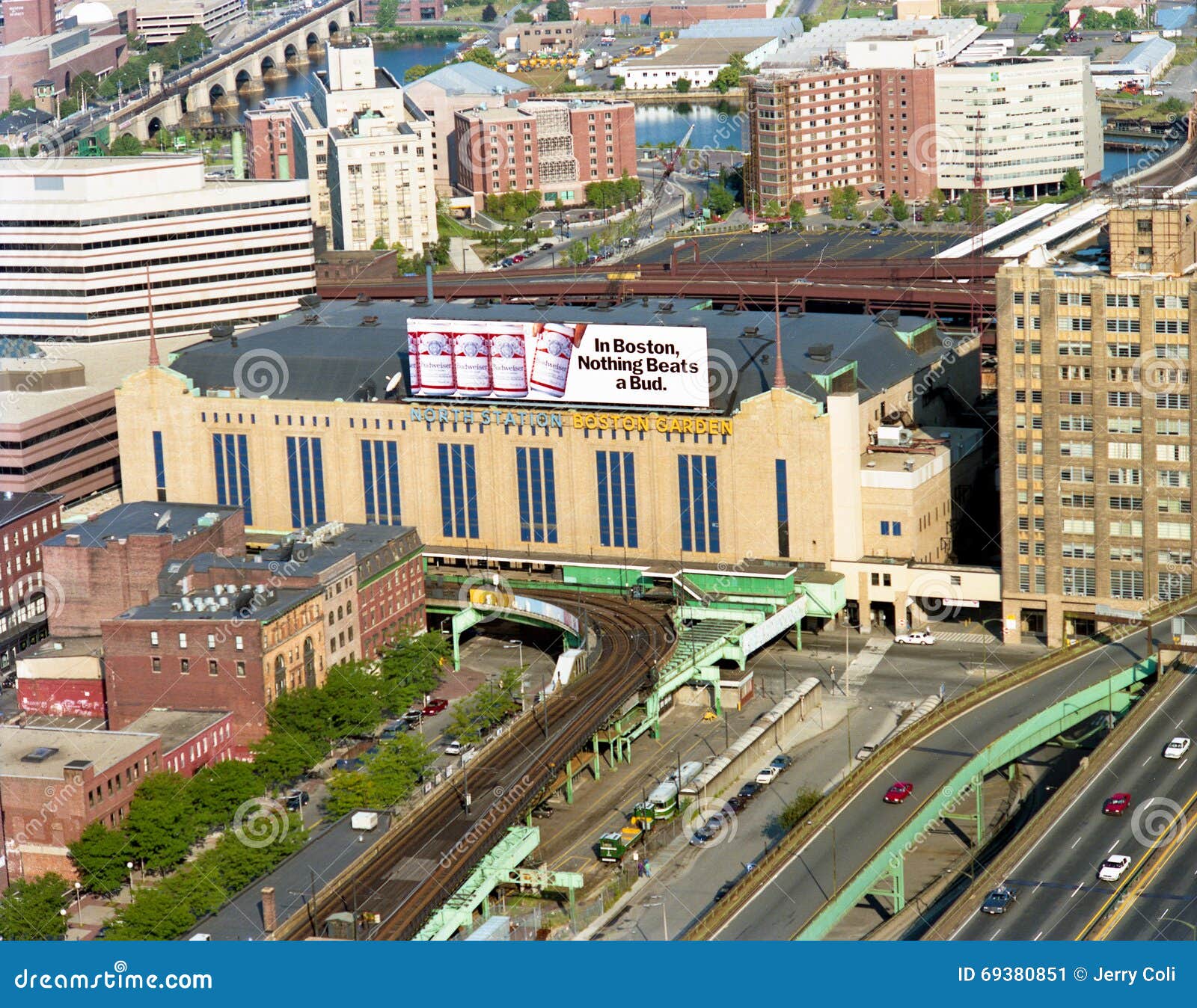
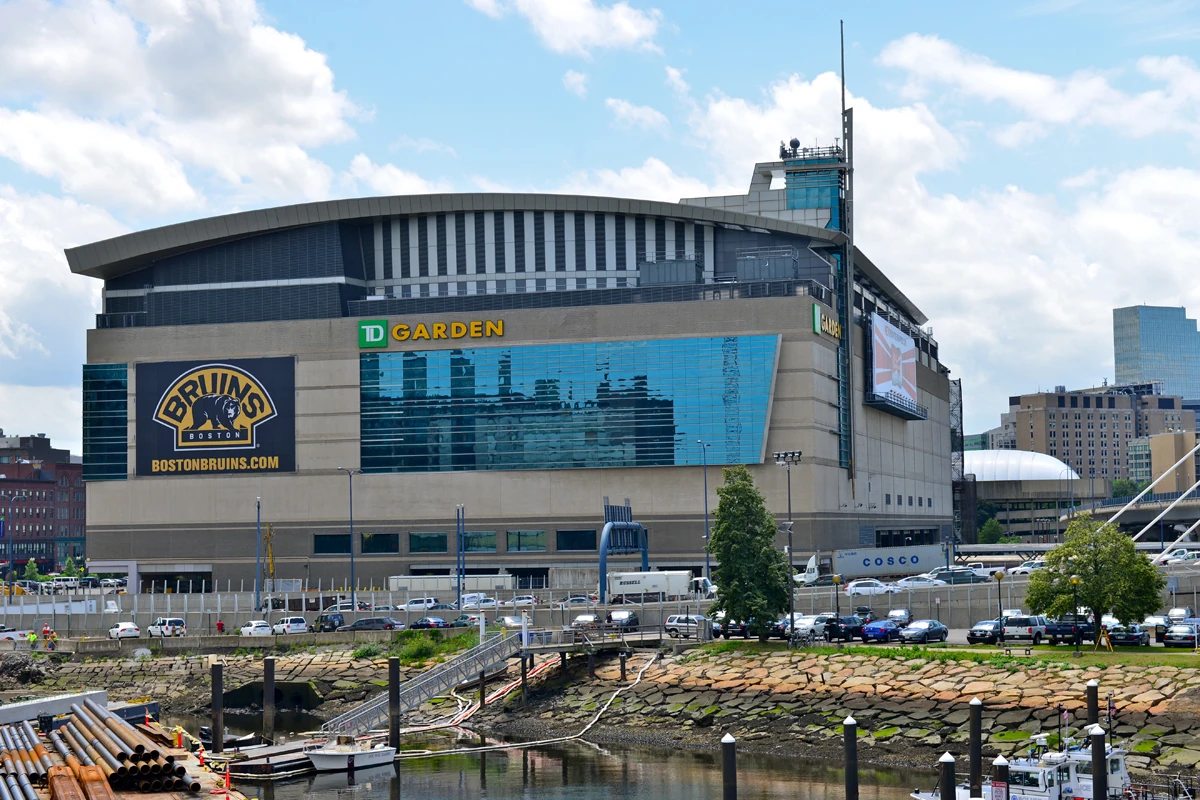
* TD Garden and site of Boston Garden. The TD Garden, formerly the Shawmut Center, the FleetCenter and the TD Banknorth Garden (TD stands for Toronto-Dominion Bank), opened in 1995, atop Boston's North Station, as a replacement for the original Boston Garden, home to the NHL's Bruins starting in 1928 and the NBA's Celtics starting in 1946.
The old "Gahden" (which stood on the site of the parking lot in front of the new one) and the new one have also, since 1953, hosted the Beanpot hockey tournament, contested by BC, BU, Northeastern and Harvard. It hosted 1 fight for the Heavyweight Championship of the World, with Joe Louis defending the title by knocking Al McCoy out in the 5th round on December 16, 1940.
The Celtics finally ended their drought in 2008, winning their 17th NBA Championship, 22 years after winning their 16th in the old Garden. The Bruins ended a drought in 2011, winning their 6th Stanley Cup 39 years after winning their 5th. (However, they still haven't clinched at home since Bobby Orr's "Flying Goal" in 1970, 2 days after Willis Reed limped onto the court and gave the Knicks their 1st title).
The Beatles played the old Garden on September 12, 1964. Elvis Presley played it on November 10, 1971. The new Garden is also home to the Sports Museum of New England. The Democratic Convention was held there in 2004, nominating home-State Senator John Kerry for President.
The old Garden hosted the NCAA's hockey version of the Final Four, now known as the Frozen Four, in 1972, 1973 and 1974. The new one has done so in 2004 and 2015.
The old Garden's address was 150 Causeway Street; the new one's is 100 Legends Way. Green (outbound, so no letter necessary) or Orange Line to North Station.
Elvis also sang in Massachusetts at the Springfield Civic Center (now the MassMutual Center) on July 14 and 15, 1975; and July 29, 1976.
NCAA basketball tournament games have been held at the TD Garden, the Hartford Civic Center (now the XL Center), the Providence Civic Center (now the Dunkin Donuts Center), the Worcester Centrum (now the DCU Center), and the University of Rhode Island's Keaney Gymnasium in Kingston. But no New England building has ever hosted a Final Four, and none ever will, due to attendance requirements, unless the Patriots put a dome on Gillette Stadium.
No school within the city limits of Boston has ever reached the Final Four. One Massachusetts school has: Holy Cross, in Worcester, winning the National Championship in 1947 with George Kaftan, another "Golden Greek," and reaching the Final Four again in '48 with Bob Cousy, a freshman in '47 and ineligible under the rules of the time. (Kaftan is also the last surviving member of the Knicks teams that reached the NBA Finals in 1951 and '52.)
The University of Massachusetts, with its main campus in Amherst, made the Final Four in 1996, under coach John Calipari, but had to vacate the appearance when later Knick Marcus Camby admitted he'd accepted money and gifts from agents. The University of Connecticut (UConn, in Storrs, closer to Boston than to Manhattan) has made it 5 times, winning it all in 1999, 2004, 2011 and 2014, and losing in the Semifinal in 2009.
The only New Hampshire school to make it is Dartmouth, in Hanover, in 1942 and 1944, losing in the Final both times. The only Rhode Island school to make it is Providence, in 1973 and 1987 (coached by future Big East Commissioner Dave Gavitt and future preening schmo Rick Pitino, respectively). No school from Maine or Vermont has ever reached the Final Four.
* Garden Bars. Several noted drinking emporiums are near TD Garden. Perhaps the most famous, and once rated the best sports bar in America by
Sports Illustrated, is The Fours, at 166 Canal Street. It's named for "the Miracle of the Fours": 1970 Stanley Cup Finals, Game 4, overtime (therefore the 4th period), winning goal scored by Number 4, Bobby Orr, while tripped up by Noel Picard, Number 4 of the St. Louis Blues, to clinch the Bruins' 4th Stanley Cup. (Some people like to point out that it was Orr's 4th goal of the Finals, but it was actually his 1st.)
As mentioned, the Sports Grille Boston is at 132 Canal Street. McGann's is at 197 Portland Street; while The Greatest Bar – a name, if not an apt description – is at 262 Friend Street.
* Alumni Stadium. Boston College has played football here since 1957, and the Patriots played their 1969 home games here. Prior to 1957, BC played at several sites, including Fenway and Braves Field.
Attached to the west stand of Alumni Stadium is their basketball arena, the Conte Forum, named for a BC grad, longtime Congressman Silvio Conte, a native of Pittsfield, across the State in the Berkshire Mountains. It was built on the site of BC's original arena, the McHugh Forum, which hosted the 1963 edition of the NCAA's hockey version of the Final Four, now called the Frozen Four. Across the street is a library named for Conte's friend and fellow Congressman from Massachusetts, Cambridge native and 1977-86 House Speaker Thomas "Tip" O'Neill. Beacon Street at Chestnut Hill Drive. Green Line B train to Boston College.
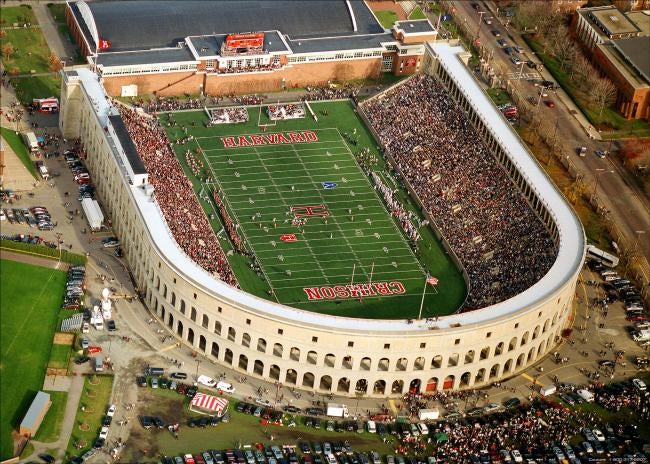
* Harvard Stadium. The oldest continually-used football stadium in America – the University of Pennsylvania's Franklin Field is on the oldest continually-used football
site – this stadium was built in 1903, and renovations (funded by those wealthy Harvard alums) have kept it in tip-top condition, if not turned it into a modern sports palace.
This stadium is responsible for the legalization of the forward pass in football. When the organization that became the NCAA was founded in 1906, rules changes were demanded to make the game safer. One suggestion was widening the field, but Harvard – at the time, having as much pull as Notre Dame, Michigan and Alabama now do, all rolled into one – insisted that they'd just spent all this money on a new stadium, and didn't want to alter it to suit a rule change. Much as Notre Dame has sometimes been a tail wagging college football's dog, the Crimson were accommodated, and someone suggested the alternative of legalizing the forward pass, which had occasionally been illegally done.
Today, the stadium is best known as the site of the 1968 Harvard-Yale game, where the two ancient rivals both came into the game undefeated, and a furious late comeback from 29-13 down led to the famous
Harvard Crimson (school newspaper) headline "HARVARD BEATS YALE 29-29" and a tie for the Ivy League Championship. (Actor Tommy Lee Jones, then listed as "Tom Jones," started at guard for Harvard in that game. His roommate at Harvard was future Vice President Al Gore.) The Patriots played 1970, their 1st season in the NFL and their last season under the name "Boston Patriots," at Harvard Stadium.
Olympic Trials for track and field were held there in the 1920s. The stadium hosted 6 soccer games of the 1984 Olympics, even though the Games were held all the way across the country in Los Angeles. It's held concerts, including what turned out to be Janis Joplin's last on August 12, 1970, and Bob Marley in 1979. The Boston Bruins are working with the University and the NHL to have the 2024 Winter Classic played there, to celebrate their 100th Anniversary.
Although its mailing address is 79 North Harvard Street in "Allston, MA," and the University is in Cambridge, the stadium is actually on the south, Boston side of the Charles River. Harvard Street at Soldiers Field Road. Unfortunately, it's not that close to public transportation: Your best bet is to take the Red Line to Harvard Square, and walk across the Anderson Memorial Bridge.
A short walk down Soldiers Field Road, at 65 N. Harvard Street, is Jordan Field, the 4,000-seat home of the Harvard men's and women's soccer teams. It was also the home of the Boston Breakers -- not a descendant of the USFL team, but the local XI in the National Women's Soccer League. The Breakers previously (2009-11) played at Harvard Stadium. They announced they were folding in 2018.
BC played a couple of football games at the old stadium in the early 1980s, thanks to the popularity of quarterback Doug Flutie. The old stadium was basically an oversized version of a high school stadium, complete with aluminum benches for fans, and it was terrible. The new stadium is so much better.
It has one problem: The location is awful. It's just off U.S. Route 1, not a freeway such as I-95, and except for Pats' gamedays, when an MBTA commuter rail train will take you right there, the only way to get there without a car is to take the MBTA Forge Park-495 Line from South Station to Walpole, and then get a taxi. That'll cost you $18 each way, as I found out when I went to see the New York Red Bulls play the Revs in June 2010.
60 Washington Street (Route 1) – or "1 Patriot Place," Foxboro. It's actually closer to downtown Providence, Rhode Island than to downtown Boston. Adjoining is the Patriot Place mall.
* Suffolk Downs. Opened in 1935, this is New England's premier horse-racing track. On their last tour, on August 18, 1966, the Beatles played here. However, as horse racing has declined, so has the track, to the point that New England's best known race, the Massachusetts Handicap (or the Mass Cap) hasn't been run since 2008. Previously, it had been won by such legendary horses as Seabiscuit, Whirlaway, Riva Ridge and Cigar.
So, unless you really loved the film
Seabiscuit or are a huge Beatlemaniac, I'd say that if you don't have the time to see everything on this list, this is the 1st item you should cross off. 525 McClellan Highway, at Waldemar Avenue, in the East Boston neighborhood, near Logan Airport. Blue Line to Suffolk Downs station.
George Wright, of the 1869-70 Cincinnati Red Stockings and the 1872-75 Boston Red Stockings dynasty that grew out of it, is buried at Holyhood Cemetery in Brookline. So is Francis Ouimet, the young Bostonian who shocked the world by beating British golf superstars Harry Vardon and Ted Ray at The Country Club in Brookline in 1913. So are Joseph and Rose Kennedy, parents of Jack, Bobby and Teddy. So is their daughter Rosemary. Heath Street & Tully Street. Green Line D Train to Chestnut Hill. (The Country Club, if you can get in, is at 191 Clyde Street, but is not really reachable by public transit.)
Legendary Boston Beaneaters catcher Mike "King" Kelly, often (but erroneously) called the 1st baseball superstar, is buried at Mount Hope Cemetery, 355 Walk Hill Street in Mattapan. Also buried there is George Dixon, the 1st black (and the 1st Canadian-born) boxing champion in any weight class (bantamweight, then featherweight, off and on from 1890 to 1901). Eddie Collins, one of the best 2nd basemen ever and GM of the Red Sox when he died in 1951, is buried at Linwood Cemetery, at U.S. Route 20 and Linwood Avenue in Weston. Jack Chesbro, a native of Western Massachusetts and the 1st great Yankee pitcher, is buried at Howland Cemetery on Shelburne Falls Road in Conway, 120 miles to the west. None of these is easily reached without a car.
* Museum of Fine Arts. This is Boston's equivalent to the Metropolitan Museum of Art. I'm not saying you
have to visit, but you should see
one major Boston tourist site that
doesn't involve sports, and it's a 10-minute walk from Fenway and a 5-minute walk from the sites of the Huntington Avenue and South End Grounds. 465 Huntington Avenue at Parker Street. Green Line E train to Museum of Fine Arts station.
* Museum of Science. This is Boston's answer to the Museum of Natural History and the Hayden Planetarium. It has an address of 1 Science Park, on the Monsignor O'Brien Highway, as part of a dam on the Charles River. Green Line to Science Park/West End.
* Freedom Trail. Boston's most familiar tourist trap is actually several, marked by a red brick sidewalk and red paint on streets. Historic sites include Boston's old and new City Halls, Massachusetts' old and new State Houses (old: Built 1711, with the State Street subway station somehow built into it; "new": 1798), the Old North Church (where Paul Revere saw the two lanterns hung) and the Old South Meeting House (where Samuel Adams started the Boston Tea Party and would be horrified at the right-wing bastards using the "Tea Party" name today), Revere's house, the Boston Tea Party Ship, the U.S.S.
Constitution, and the Bunker Hill Monument.
The Trail starts at Boston Common, at Park and Tremont Streets. Green or Red Line to Park Street.
* Cambridge. Home to Harvard and MIT, it is not so much "Boston's Brooklyn" (despite the name, that wouldn't be Brookline, either, but would be South Boston or "Southie" and neighboring Dorchester) as "Boston's Greenwich Village," particularly since Harvard Square was the center of Boston's alternative music scene in the Fifties and Sixties, where performers like Joan Baez and the aforementioned Kingston Trio became stars. Later, it would be rock acts like Aerosmith and the J. Geils Band that would make their names in Cambridge.
The city is also home to the Longfellow House, home of the poet Henry Wadsworth Longfellow. And while Harvard Yard is worth a visit, it does not allow motorized vehicles, so, no, you cannot, as the old saying demonstrating the Boston accent goes, "Pahk yuh cah in Hahvuhd Yahd." Centered around Harvard Square at 1400 Massachusetts Avenue. Red Line to Harvard Square.
* Beaches. Despite being noticeably north of New York, Long Island and the Jersey Shore, there are beaches not just near but
in Boston. L Street Beach and M Street Beach are in South Boston (a.k.a. Southie), 2 1/2 miles southeast of downtown. Red Line to Broadway, then Bus 9 to East Broadway and L Street, then walk 7 blocks south -- no further from the closest transit than the beach is from the train station at Point Pleasant Beach and the bus station at Ocean City, New Jersey.
Revere Beach is the oldest public beach in America, opening in 1896. 350 Revere Beach Blvd. in Revere, 7 miles northeast of Downtown Crossing. Blue Line to Wonderland.
But the best-known New England beaches are quite a trip. Cape Cod runs from Sandwich (57 miles) to Provincetown (119 miles). The island of Martha's Vineyard (90 miles), famed as a rich man's playground, but also the stand-in for Amity Island in
Jaws), can be accessed by the Woods Hole-Vineyard Haven Ferry, about 50 minutes; while the separate island of Nantucket (100 miles) uses the Hyannis-Nantucket Ferry, about 2 hours.
Other notable New England beach towns include Newport, Rhode Island (74 miles); Mystic, Connecticut (98 miles); and Old Orchard Beach and Boothbay Harbor, Maine (97 and 164 miles).
* John F. Kennedy Presidential Library and Museum. Ask now what a visit here can do for you, ask what you can do on your visit here (or "heah").
Unlike the Franklin D. Roosevelt Library, which is a 2-hour drive north of Midtown Manhattan in Hyde Park, closer to Albany, the JFK Library is much more accessible – not just to drivers and non-drivers alike, but to anyone. Maybe it's because it's more interactive, but maybe it's also because FDR is a figure of black-and-white film and scratchy radio recordings, while JFK is someone whose television images and color films make him more familiar to us, even though he's been dead for over 50 years now. (Incredibly, he's now been dead longer than he was alive.)
Sometimes it seems as though his Library is less about
his time than it is about
our time, and the time beyond. While I love the FDR Library, there's no doubt in my mind that this is the best Presidential Library or Museum there is. Columbia Point, on the Boston campus of the University of Massachusetts. Red Line to JFK/UMass, plus a shuttle bus.
Also on the UMass-Boston campus is the Clark Athletic Center, which hosted one of the 2000 Presidential Election's debates between Al Gore and George W. Bush. 100 Morrissey Blvd., 4 blocks from the JFK Library.
Other Massachusetts Presidential sites include the JFK Tour at Harvard, JFK's birthplace at 83 Beals Street in Brookline (Green Line B train to Babcock Street), those involving John and John Quincy Adams in Quincy (Red Line to Quincy Center –
not to the "Quincy Adams" stop), the house at 173 Adams Street in Milton where George H.W. Bush was born (Red Line to Milton, now has a historical marker although the house itself is privately owned and not available for tours), and the Calvin Coolidge Presidential Library and Museum, in Northampton, where he was Mayor before becoming the State's Governor and then President (20 West Street, 100 miles west of Boston, although Greyhound goes there). Closer than Northampton are sites relating to Franklin Pierce in Concord and Hillsboro, New Hampshire.
Salem, home to the witch trials, is to the north: MBTA Commuter Rail Newburyport/Rockport Line out of North Station to Salem. A statue of Elizabeth Montgomery as Samantha Stephens in
Bewitchedwas put there by the nostalgia network TV Land, instead of in Westport, Connecticut, where the show was based, because she's the most famous witch in American pop culture. Well, except maybe for Margaret Hamilton as the Wicked Witch of the West in
The Wizard of Oz.
Plymouth, where the Pilgrims landed and set up the Massachusetts Bay Colony, is to the south: MBTA Kingston/Plymouth Line out of South Station to Kingston, then switch to FreedomLink bus. And Alexander Graham Bell invented the telephone in downtown Boston on March 10, 1876, at his house at 109 Court Street. The Government Center T station is there now.
Lexington & Concord? Lexington: Red Line north to its terminal at Alewife, then switch to the 62 or 76 bus. Concord: MBTA Fitchburg/South Acton Line out of North Station to Concord. Bunker Hill? 93 bus on Washington Street, downtown, to Bunker Hill & Monument Streets, across the river in the Charlestown neighborhood, then 2 blocks down Monument.
The Bull & Finch Pub, which was used for the exterior shot and the basis for the interior shot of Cheers, was at 84 Beacon Street at Brimmer Street, across from Boston Common and near the State House. It's since been bought and turned into an official Cheers, with the upstairs Hampshire House (the basis for the show's Melville's) also part of the establishment. Green Line to Arlington.
A version designed to look more like the one on the show, complete with an "island bar" instead of a "wall bar," is at Faneuil Hall. Congress & Market Streets. Orange or Blue Line to State, since Government Center is closed for renovations.
The Suffolk County Court House, recognizable from David E. Kelley's legal dramas
Ally McBeal, The Practice and
Boston Legal, is at the Scollay Square/Government Center complex. The official address is 3 Pemberton Street, at Somerset Street. Again, use State, due to the closure of Government Center.
Boston wasn't always a popular filming location, or setting, for TV shows. But when Dan Wakefield sold the TV rights to his 1970 coming-of-age novel
Going All the Way, he was tired of so many shows being set in New York or Los Angeles, so he set it in a city he knew, and so, in the 1977-78 season,
James at 15 aired, and was set in Boston. Although Kevin Williamson filmed
Dawson's Creek in his hometown of Wilmington, North Carolina, he was influenced by James at 15, and set the show in fictional Capeside, Massachusetts.
Also set in Boston (some filmed location shots there, but were mostly shot in L.A.) have been
Banacek, Cheers, St. Elsewhere, Spenser: For Hire (based on the novels by Bostonian Robert B. Parker),
Tru Calling, Crossing Jordan, Boston Public (David E. Kelley goes to school), the Disney Channel series
The Suite Life of Zack & Cody, Rizzoli & Isles, and, in the realm of sci-fi and fantasy,
Fringe and the U.S. version of
Being Human.
On
M*A*S*H, Boston was the hometown of Captain "Trapper" John McIntire (Wayne Rogers) and Major Charles Emerson Winchester III (David Ogden Stiers), and a one-time residence (possibly medical school and hospital work) for Mainer Captain Benjamin Franklin "Hawkeye" Pierce (Alan Alda). Yet Trapper and Charles never appeared onscreen together, Hawkeye didn't recognize Charles by face or name, and when Trapper's name was mentioned, Charles showed no recognition.
Wings was set on the island of Nantucket, off the south coast of Massachusetts.
Sabrina the Teenage Witch was set in Westbridge, a fictional suburb of Boston. It might have been appropriate to set it in the real town of Salem, home of the legendary 1690s witch trials, but the cat was named Salem, and they didn't want to overdo the joke. Salem
was the setting of Arthur Miller's play about the witch trials,
The Crucible; Nathaniel Hawthorne's Gothic novel
The House of the Seven Gables; and the Bette Midler witch movie
Hocus Pocus.
In contrast to TV, Boston has long been a film setting:
The Story of Alexander Graham Bell, the film version of Edwin O'Connor's novel
The Last Hurrah, both versions of
The Thomas Crown Affair, The Friends of Eddie Coyle, The Verdict, the Terence Mann scenes in
Field of Dreams, Blown Away, the basketball-themed
Celtic Pride, The Boondock Saints, Mystic River, the baseball-themed
Fever Pitch, The Departed, Gone Baby Gone, and the film about the Boston Marathon bombing,
Patriots Day.
Lots of Harvard-set films have filmed in Cambridge, including
Good Will Hunting. Ben Affleck also set
The Town in Cambridge, but that was a working-class setting: As the saying goes, "Town, not gown." Louisa May Alcott set
Little Women in her hometown of Concord. The seaport town of Gloucester was home to
The Russians Are Coming, the Russians Are Coming and
The Perfect Storm. Lowell, in addition to being the real-life home of novelist Jack Kerouac and actress Bette Davis, is the hometown of boxer Micky Ward, the subject of the film
The Fighter.
Manchester By the Sea was set in the town of the same name. Amherst was the setting for
Carnal Knowledge. And the best-known Massachusetts movie of them all,
Jaws? Martha's Vineyard, like Nantucket off the south coast, stood in for the fictional Amity Island.
The Prudential Tower, a.k.a. the Prudential Center, at 749 feet the tallest building in the world outside New York when it opened in 1964, contains a major mall. 800 Boylston Street. The finish line of the Boston Marathon, and the site of the bombing, is at 755 Boylston at Ring Road. Green Line B, C or D to Copley, or E to Prudential.
There are two John Hancock Buildings in Boston, although neither one officially carries the name anymore. The older one, at 200 Berkeley Street at St. James Avenue, went up in 1947 and is better known as the Berkeley Building. As I said earlier, it is 495 feet high counting a spire that lights up, as the weather beacon mentioned earlier.
The glass-facaded newer building, at 200 Clarendon (which is now its official name as well) across from the old one, was completed in 1976 and is 790 feet tall, making it not just the tallest in Boston, in Massachusetts, or in New England, but the tallest in North America east of Manhattan. Green Line to Copley.
*
I hope every Yankee Fan gets to see at least one game at Fenway Park -- although not necessarily a Yankees-Red Sox game. Those games are not for the faint of heart. But it is a truly great experience to see a game there. And, since the plans for a New Fenway Park were scuttled a few years ago, it looks like the original will be in place well past its recent Centennial.


/cdn.vox-cdn.com/photo_images/1837705/GYI0063314045.jpg)