Showing posts with label j.p. parise. Show all posts

Friday, April 11, 2025

April 11, 1975: The J.P. Parisé Game

April 11, 1975, 50 years ago: The greatest upset in the history of New York Tri-State Area hockey takes place, and represents a changing of the guard.

In 1972, after years of rebuilding, the New York Rangers reached the Stanley Cup Finals, for the 1st time since 1950. However, they were defeated by the Boston Bruins. They remained contenders over the next 3 seasons.

Calendar year 1972 also saw the Canada-Soviet "Summit Series," the establishment of the World Hockey Association, and 2 new expansion teams in the NHL: The Atlanta Flames, who ended up moving to Calgary in 1980; and the New York Islanders, playing 25 miles east of Midtown Manhattan, at the Nassau County Veterans Memorial Coliseum, in the Town of Hempstead, but with a mailing address of Uniondale.

In their 1st 2 seasons, as could be expected, the Islanders were terrible. But head coach Al Arbour and general manager Bill Torrey were building a team that would steadily get better. In their 3rd season, 1974-75, they acquired left wing Jean-Paul "J.P." Parisé and center Jude Drouin from the Minnesota North Stars. The new acquisitions excited Isles fans, and they started chanting, "J.P.! J.P.! J.P.!" for Parisé and, "Na na na na, hey, Jude!" (as in The Beatles' song) for Drouin.

That season, the Isles made the Stanley Cup Playoffs for the 1st time, gaining the East Division's 5th seed, meaning they would play its 4th seed in the 1st round, a best-2-out-of-3 series. As it turned out, that 4th seed was the Rangers. And in Game 1, at the still-new Madison Square Garden atop Penn Station, the Islanders came from 2-0 down after 2 periods to win, 3-2. The Rangers won Game 2 at the Nassau Coliseum, 8-3, to set up a Game 3 at The Garden.

The Islanders jumped out to a 3-0 lead, on a goal by Clark Gillies and 2 by Denis Potvin. But within 10 minutes in the 3rd period, the Rangers got 2 goals from Bill Fairbairn and 1 from Steve Vickers. The game went to overtime, and, just 11 seconds in, Parisé put the puck past the Rangers' Hall-of-Fame goaltender, Eddie Giacomin. At the time, it was the fastest goal in NHL overtime history. Aside from the goal scored by Bob Nystrom 5 years later, it remains the most famous goal in club history. (Sorry, Pierre Turgeon, but it is.)
Jean-Paul Parisé

The '75 Isles weren't done. The next series was a best-4-out-of-7 with the Pittsburgh Penguins. The Pens, then good, but hardly a legitimate Cup contender, won the 1st 3 games. In all of sports history, only 1 team had ever come from 3-games-to-none down and won, but it was in the NHL: The 1942 Toronto Maple Leafs, in the Stanley Cup Finals against the Detroit Red Wings. The Isles turned the trick.

They had now reached the Stanley Cup Semifinals, against the defending Champions, the Philadelphia Flyers. As with the other Pennsylvania team, the Isles lost the 1st 3, and then came back to win the next 3. But the Flyers ended the shocks, and won Game 7, and then beat the Buffalo Sabres to win back-to-back Cups. (The Flyers haven't won since. Nor have the Sabres, who've only been to the Finals once since.)

The Isles' upset of the Rangers was a stunning event, and it was part of a transition period in New York sports: The Yankees were playing in Shea Stadium while the original Yankee Stadium was being renovated, the Mets began to decline, the Giants played first at the Yale Bowl in Connecticut and then at Shea while waiting for Giants Stadium to be finished, the Jets fell apart along with Joe Namath's knees, and the Knicks got old and fell apart while watching the Nets win 2 ABA titles.

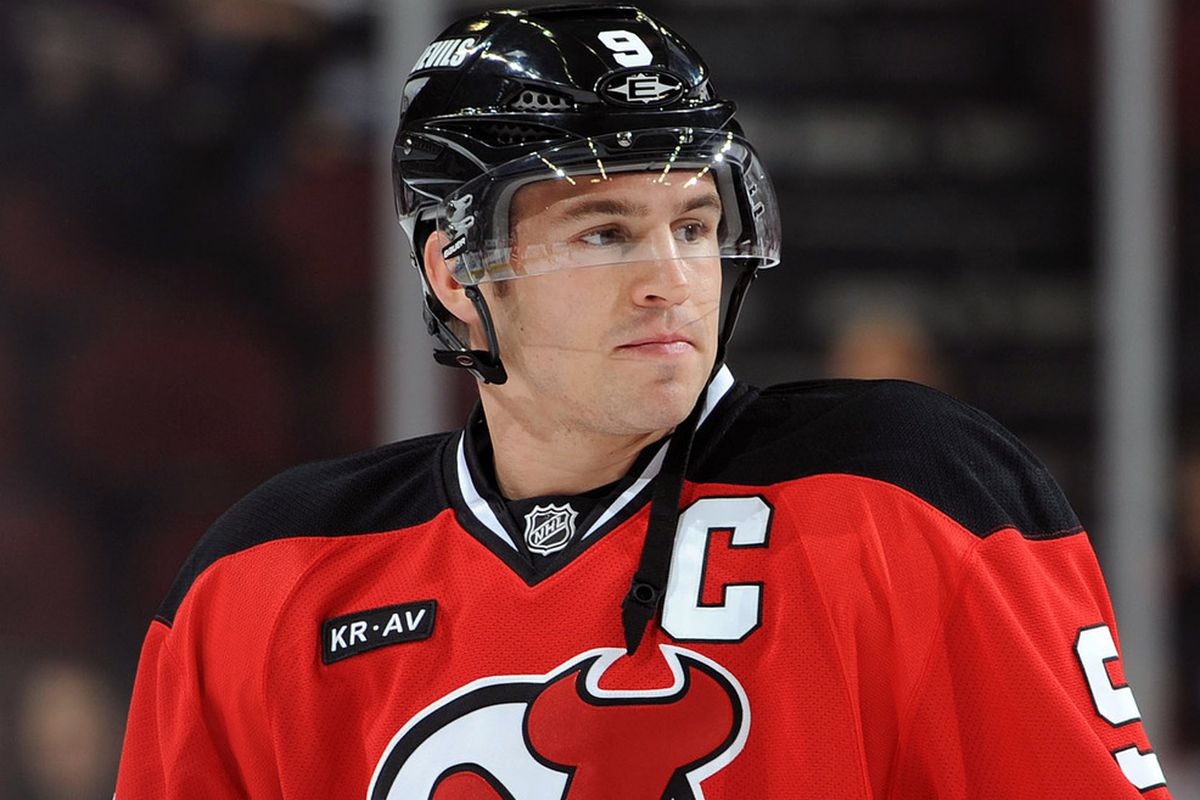
The hockey shift was the most noticeable of all. The Islanders began a dominant stretch that would eventually see them, under Arbour, Torrey, and Potvin as Captain, reach 5 straight Finals, winning 4 straight Cups. Parisé, however, would not be a part of it: He was traded in 1978, never played in a Stanley Cup Finals, and died in 2015. His son, Zach Parisé, would play in a Finals, in 2012, with a team that did not exist until 1982: The New Jersey Devils.

But calendar year 1975 was the Rangers' annus horribilis. Ranger management, having already traded Vic Hadfield, fired Emile Francis as head coach after the Playoff loss to the Isles, ending his tenure in that role after 11 years. He remained general manager a little longer, being relieved of duty the following January.

But before that, he made a few deals, including waiving the still-popular Giacomin, which became a public-relations nightmare for the team; and trading Bard Park and Jean Ratelle to the Bruins for Phil Esposito and Carol Vadnais, which ruined whatever chemistry the team had left.

The team bottomed out in 1977, but a new regime rebuilt them, and, in 1979, they beat the Islanders to advance to the Stanley Cup Finals, losing them to the Montreal Canadiens. The Islanders won the Cup in 1980, and '81, and '82, and '83, and reached the Finals in '84 -- beating the Rangers along the way in '81, '82, '83 and '84.

It would take the Rangers until 1994 to reach another Finals, and also to win another Cup. The Devils won in 1995, 2000 and 2003. Since 2003, between them, the 3 NHL teams in the New York Tri-State Area have been frustrated. The Devils reached the Finals in 2012, the Rangers 2014, but both lost to the Los Angeles Kings. The Islanders reached the Eastern Conference Finals in 1993, 2020 and 2021, but not the Finals.

Thursday, January 8, 2015

J. P. Parisé, 1941-2015

Every sports team, assuming it doesn't get so badly mismanaged that it folds quickly (a la the Seattle Pilots), ends up having a first hero, who, if he doesn't also end up being the man who helps them win their first championship, becomes the man who provides the first big moment in franchise history.

For example, even though the early Mets had Duke Snider, Gil Hodges, Richie Ashburn, Warren Spahn and, for just a few games, Yogi Berra, the franchise's first real hero was Tom Seaver -- so much so that one of his nicknames was "The Franchise."

For the Yankees, despite starting their history with Hall-of-Famers Clark Griffith, Willie Keeler and Jack Chesbro, the first true team hero was Babe Ruth. For the Jets, it was Joe Namath. For the Knicks, it was Carl Braun, whose free-throw practice led to him saying, "Swish!" when the ball went through the net, inspiring broadcaster Marty Glickman to use it on the radio, and making "Swish!" a basketball byword to this day. For the Nets, it was Rick Barry (even if he was there only a couple of years). For the Rangers, who were contenders right away, it was Frank Boucher. For the Devils, who weren't, it was John MacLean.

For the New York Islanders, that man was J.P. Parisé.

*

Jean-Paul Joseph-Louis Parisé was born on December 11, 1941, in Smooth Rock Falls, Ontario, way up north, closer to Hudson Bay than to Toronto. Ain't nothin' to do up there for adults but mine for ore, and ain't nothin' to do up there for children but to play hockey.

Though he grew to be only 5-foot-9 and 180 pounds, the Franco-Ontarian left wing impressed a scout for the Boston Bruins. But in the "Original Six" era, when only 120 jobs were available in the NHL, he didn't make his big-league debut until 1966, when he was already 24. His warmup for this was 2 seasons playing for Boston's farm club, the Minneapolis Bruins, making him a star in the Twin Cities before they ever got an NHL team.

They got one in the 1967-68 season, the Minnesota North Stars, playing their home games at the Metropolitan Sports Center (a.k.a. "The Met Center"), across the street from Metropolitan Stadium, home of baseball's Twins and the NFL's Vikings, in the suburb of Bloomington. (The Mall of America is on the site now.) The North Stars were one of the NHL's "Second Six," in an expansion that doubled the League's size with the stroke of a pen.

The Bruins left Parisé exposed to the expansion draft, and he was taken by the Oakland Seals. But they traded him to the Toronto Maple Leafs, who were in the process of dismantling the dynasty that had won 4 Stanley Cups in the last 7 seasons and were defending Champions, a dismantling they were doing for no reason but to cut costs. They haven't made the Stanley Cup Finals since -- 48 years.

(The Seals were even worse: They named themselves after a minor-league team in San Francisco, who had named themselves after the city's old minor-league baseball team, eventually changed their name to the California Golden Seals, and made the Playoffs exactly once, before bowing to the Bay Area's apathy for them, moving in 1976 and becoming the Cleveland Barons. More on that later in this post.)

Parisé had played 21 NHL games for the Bruins. He played 1 for the Leafs before they traded him to the North Stars. Already known by the Minnesota fans, he was their 1st big star before he was the same thing for the Isles. He played on a line with Jude Drouin at center and Bill Goldsworthy on the right. This combination helped the Stars reach the Playoffs 5 times. (They would reach the Finals in 1981 and 1991, before being moved to Dallas in 1993 and winning a Cup there in 1999.) J.P. was named to the NHL All-Star Game in 1970 and 1973.

In 1972, Parisé was named to play for Team Canada in the "Summit Series" against the Soviet Union team. He played in 6 of the 8 games, along with Phil Esposito (who didn't get to the Bruins until after Parisé was traded), and scored 2 goals and 2 assists. In the decisive Game 8 (the series was tied at 3 with 1 tie game), he nearly attacked Soviet referee Josef Kompalla, for dishing out ridiculous penalties to Canada. Parisé was ejected, but the officiating improved, and Canada won the game on Paul Henderson's last-minute goal.

*

In 1975, at age 34, Parisé was traded to the Islanders. So was Drouin. This was the 3rd season for the club, and the 1st 2 had been abysmal. But the new acquisitions excited Isles fans, and they started chanting,"J.P.! J.P.! J.P.!" for Parisé and, "Na na na na, hey, Jude!" (as in the Beatles' song) for Drouin.

The Isles made the Playoffs. Who did they draw in the 1st round? None other than the New York Rangers. The Rangers were heavily experienced, and thus heavily favored. But the Islanders stunned the Rangers at Madison Square Garden in Game 1, lost Game 2 at the Nassau Colisem, and the series went to a deciding Game 3, at The Garden, on April 11, 1975.

The game went to overtime, and, just 11 seconds in, Parisé put the puck past the Rangers' Hall-of-Fame goaltender, Eddie Giacomin. At the time, it was the fastest goal in NHL overtime history. Aside from the goal scored by Bob Nystrom 5 years later, it remains the most famous goal in club history. (Sorry, Pierre Turgeon, but it is.)

The '75 Isles weren't done. The next series was a best-4-out-of-7 with the Pittsburgh Penguins. The Pens, then good but hardly a legitimate Cup contender, won the 1st 3 games. In all of sports history, only 1 team had ever come from 3-games-to-none down and won: The 1942 Toronto Maple Leafs, in the Stanley Cup Finals against the Detroit Red Wings. The Isles turned the trick.

They had now reached the Stanley Cup Semifinals, against the defending Champions, the Philadelphia Flyers. As with the other Pennsylvania team, the Isles lost the 1st 3, and then came back to win the next 3. But the Flyers ended the shocks, and won Game 7, and then beat the Buffalo Sabres to win back-to-back Cups. (The Flyers haven't won since. Nor have the Sabres, who've only been to the Finals once since.)

*

That was as close as J.P. Parisé would ever get to winning the Stanley Cup. In 1978, desperate to stave off bankruptcy, the ex-Seals, the Cleveland Barons, made a trade with he Islanders, getting Parisé and Denis Potvin's brother Jean. It didn't work, and, with both the Barons and the North Stars in danger of going out of business, the NHL merged the teams. Parisé thus returned to Minnesota, and became the team's Captain in 1978-79, and retired.

He finished his career with 238 goals and 356 assists for 594 points in 890 regular season games, with 27 goals and 31 assists in 86 Playoff games -- even though the 1 goal in 1975 is what people remember.

He then began coaching in he North Stars' organization. He was an assistant coach from 1980 to 1983 (including the run to the 1981 Finals, where they lost to the Islanders), then the head coach of their farm team, the Salt Lake Golden Eagles, for 1 season, then an assistant with he big club again until 1988.

Remaining in Minnesota, he became the head coach at Shattuck-St. Mary's School, an Episcopal boarding school in the Twin Cities suburb of Faribault. Nicknamed "the Hogwarts of Hockey" due to its architecture, Parisé developed several fine players there, including 3 of the biggest stars in the NHL today: Penguins superstar Sidney Crosby, Chicago Blackhawks captain Jonathan Toews, and his own son, Zach Parise (who doesn't use the accented é in his name, and uses the Italian pronunciation "Pah-REE-see," rather than the French "Pah-REE-say," or the incorrect "Pah-REES" that Islander fans usually used). Another son, Jordan, is a goaltender currently playing in Europe.
Zach has become a bigger star than his father ever was. He reached the Devils after the lockout ended to begin the 2005-06 season. Named an alternate captain for 2008-09, he responded with 45 goals. He has scored 241 goals in NHL regular-season play (194 of them for the Devils), plus 26 more in the postseason (21 for New Jersey).

Since he was born in Minneapolis, he has played for Team USA in international competition, unlike his father, who suited up for Team Canada. In the Gold Medal game of the 2010 Winter Olympics in Vancouver, Zach scored a last-minute tying goal, before his fellow Shattuck alumnus Crosby scored an overtime winner, giving the Gold Medal to a Team Canada that also included Toews, who followed Zach at both Shattuck and the University of North Dakota.

J.P. left Shattuck-St. Mary's in 2008, to accept the posts of head coach and general manager for the minor-league Des Moines Buccaneers. He served just 1 season and retired. It is possible that he may already have begun to battle lung cancer.

J.P.'s illness also explains why, on July 4, 2012, with his Devils contract having run out shortly after reaching the Stanley Cup Finals, Zach signed with the Minnesota Wild, the expansion team that replaced the North Stars in 2000.

(It was a bad day for me, sports-wise: That same day, Robin van Persie released his open letter to Arsenal fans, explaining why he wanted to leave the club.)

Zach must have known his father wasn't well, and wanted to go home to be with his family. While Zach's scoring and playmaking has been sorely missed in New Jersey these last 2 1/2 seasons, Devils fans who booed him on the Wild's visits to the Prudential Center, or who thought he went back just for the money, have to rethink those ideas now.

While Zach wore Number 9 in New Jersey, it was then held on the Wild by their captain, Mikko Koivu, so he asked for 11, the number J.P. wore with the North Stars. J.P. wore 12 with the Islanders.

J.P. Parisé died yesterday, January 7, 2015, at the family home outside Minneapolis. He was 73 years old. Zach had received permission from the Wild to leave the team to be at his father's side in his last days.

I have yet to see any word as to whether the Islanders or the Wild will wear any notation on their jerseys in J.P.'s memory. However, someone pointed out to me that the Isles' last regular-season home game at the Nassau Coliseum in Uniondale (Hempstead), before moving to the Barclays Center in Brooklyn next Fall, will be on April 11, the 40th Anniversary of the day an overtime goal by J.P. Parisé, against their arch-rivals, made an expansion team come of age, and launched them toward the greatest dynasty in the history of American hockey.

UPDATE: His final resting place is not publicly known.