Showing posts with label bruce smith. Show all posts

Tuesday, January 8, 2019

Western New York's 10 Greatest Athletes

Tonight, the New Jersey Devils are in Buffalo to play the Sabres.

Western New York's 10 Greatest Athletes

Honorable Mention to members of the Baseball Hall of Fame from the 1880s Buffalo Bisons: Jim "Pud" Galvin, Jim "Orator" O'Rourke, Jim "Deacon" White, Dan Brouthers, and one of the few black players to make the major leagues before the color line was drawn, Frank Grant. Apparently, you didn't have to be named Jim and have a cool nickname to play for those old Bisons, but it apparently helped.

Honorable Mention to the following players from the Class AAA version of the Buffalo Bisons who are in the Baseball Hall of Fame: Ray Schalk, Jim Bunning, Johnny Bench, Ferguson Jenkins and Jim Thome.

Honorable Mention to Buffalo Bills in the Pro Football Hall of Fame, other than those in this Top 10: Billy Shaw, Joe DeLamielleure, James Lofton and Andre Reed.

Honorable Mention to Bob McAdoo, center, Buffalo Braves, 1972-76. He helped the Braves reach 3 straight Playoffs, 1974-76. He was named NBA Most Valuable Player in 1975. He was a 5-time All-Star, including 3 with the Braves. He later won NBA Championships with the Los Angeles Lakers in 1982 and 1985, and is in the Hall of Fame.

Honorable Mention to Dale Hawerchuk, center, Buffalo Sabres, 1990-95. He's in the Hockey Hall of Fame, but is better known for his play with the Winnipeg Jets.

Honorable Mention to Pat LaFontaine, center, Buffalo Sabres, 1991-96. He is 1 of 5 players to play for all 3 teams in the State of New York: The Sabres, the Rangers and the Islanders. He once said, "I think I'm the only player in history who has been traded twice and hasn't had to change his license plate."

He'd be a bit higher on this list if he'd been a one-club man. A 5-time All-Star, his struggles against injury led the NHL to award him the Bill Masterton Memorial Trophy in 1995. He had 3 40-goal seasons with the Sabres, topping out at 53 in 1992-93. He is in the Hockey Hall of Fame. In 2017, he was named to the NHL's 100th Anniversary 100 Greatest Players.

Now, the Top 10:

10. Phil Housley, defenseman, Buffalo Sabres, 1982-90. A defenseman who can score 338 goals in NHL play is rare, and Housley scored over half of them, 178, with the Sabres. He had 1,232 points in his career.

He played in 7 NHL All-Star Games, and was a member of the U.S. team that won the 1996 World Cup. He is in the Hockey Hall of Fame, and is now the Sabres' head coach.

9. Dave Andreychuk, left wing, Buffalo Sabres, 1982-93. A 2-time All-Star, he scored 640 goals in his career, 368 of them for the Sabres. He holds the record for most career power-play goals, and not even Wayne Gretzky can match his 274. He had 1,338 points. He finally won a Stanley Cup in 2004, with the Tampa Bay Lightning.

In spite of his goal totals, he was not named to the NHL's 100th Anniversary 100 Greatest Players in 2017. He was, however, elected to the Hockey Hall of Fame that year.

8. Bob Davies, guard, Rochester Royals, 1945-55. He would probably be called a "slow white guy" by today's NBA fans. But he helped the Royals win the National Basketball League title in 1946, and the NBA title in 1951. He was a 4-time All-Star, and led the NBA in assists in 1949.

Both Seton Hall University in South Orange, New Jersey and the Sacramento Kings, the successor to the Royals franchise, have retired his Number 11. He was named to the NBA's 25th Anniversary Team and the Basketball Hall of Fame.

7. Jim Kelly, quarterback, Buffalo Bills, 1986-96. A 7-time All-Star -- twice in the USFL with the Houston Gamblers, and 5 times in the NFL with the Bills -- he remains the only man to quarterback a team to 4 straight Super Bowl appearances. He is in the Pro Football Hall of Fame and the Bills have retired his Number 12.

6. Dolph Schayes, forward, Syracuse Nationals, 1948-63. Another one of the "slow white guys" who dominated the early NBA. But he wasn't that slow: He was a 12-time All-Star, reaching the All-Star Game both before and after the institution of the 24-second shot clock in 1954. That season, he led the Nats to the NBA Finals; the following year, he led them to win it. He led the NBA in rebounding in 1951.

He was with the Nats when they moved to become the Philadelphia 76ers in 1963, and was NBA Coach of the Year with them in 1966. They retired his Number 4. He was named to the NBA's 25th Anniversary team, its 50th Anniversary 50 Greatest Players, and the Basketball Hall of Fame.

His son Danny Schayes played in the NBA even longer, 18 years. Four of his grandchildren won medals at the Maccabiah Games, the Jewish mini-Olympics: Grandson Mickey Ferri won a Gold Medal in track in 2005, and granddaughters Abi, Carla and Rachel Goettsch won Silver Medals in volleyball in 2001.

5. Dominik Hasek, goaltender, Buffalo Sabres, 1992-2001. Had he played his entire career with the Sabres, he might be Number 1 on this list. He was never the greatest goalie ever, or even of his own time, as he was a contempoary of Patrick Roy and Martin Brodeur. But he was sensational -- the hockey goaltending equivalent of a great dunker in basketball.

With the Sabres, he led NHL goalies in save percentage 6 straight seasons (1993-99). His goals-against average of 2.20 is the 2nd-lowest in NHL history. He made 6 All-Star Games, won the Vezina Trophy as best goalie 6 times, and won the Hart Memorial Trophy as NHL regular-season Most Valuable Player in 1997 and 1998.

He led the Czech Republic to the Gold Medal at the 1998 Winter Olympics in Nagano, Japan. The closest he got to a Stanley Cup with the Sabres was in 1999, allowing that controversial goal to Brett Hull of the Dallas Stars in overtime of Game 6 of the Finals. In 2002, he and Hull were teammates on the Detroit Red Wings, and Hasek finally won a Cup. He won another with the Wings in 2008.

He is in the Hockey Hall of Fame, and the Sabres have retired his Number 39. In 2017, he was named to the NHL's 100th Anniversary 100 Greatest Players.

4. Gilbert Perreault, center, Buffalo Sabres, 1970-1986. The 1st pick in the 1970 NHL Draft, he was the original Sabre, and remains the best. He still holds franchise records for most games played (1,191), goals (512), assists (814) and points (1,326).

He won the Calder Memorial Trophy as NHL Rookie of the Year in 1971, and the Lady Byng Memorial Trophy for "most gentlemanly player" in 1973. He was named to 9 NHL All-Star Teams. Alas, the closest he got to a Stanley Cup was the 1975 Finals, which the Sabres lost to the Philadelphia Flyers in 6 games.

He is in the Hockey Hall of Fame. The Sabres retired his Number 11, along with the 7 of Rick Martin and the 14 Rene Robert. Together, they were "the French Connection Line," and a joint statue of them stands outside the KeyBank Center. In 1998, Gil Perreault was ranked Number 47 on The Hockey News' list of the 100 Greatest Hockey Players. In 2017, he was named to the NHL's 100th Anniversary 100 Greatest Players.

3. Thurman Thomas, running back, Buffalo Bills, 1988-99. A 5-time Pro Bowler, he was named NFL MVP in 1991, helping the Bills win the 2nd of 4 straight AFC Championships. He had 12,074 yards rushing for 65 touchdowns, and 472 receptions for 4,458 yards for 23 touchdowns.

He was named to the College and Pro Football Halls of Fame, the NFL's 1990s All-Decade Team, and the Bills Wall of Fame. The Bills retired his Number 34.

2. O.J. Simpson, running back, Buffalo Bills, 1969-77. It is easy to forget that, until June 12, 1994, Orenthal James Simpson was a beloved figure in America, one of the greatest runners in football history, a decent actor, a good football announcer, and a great commercial pitchman. Few people saw the warning signs, and saw what he was really like. It's hard to now think of him as someone other than the despicable man he has been known to be for almost a quarter of a century now.

At USC, he won the National Championship in 1967 and the Heisman Trophy in 1968. In 1973, he became the 1st player to reach 1,000 yards rushing in just 7 games (only Terrell Davis has matched that since), and the 1st player to reach 2,000 yards in a season.

He set a record (also since broken) with 273 yards in a single game, and was 2nd all-time in rushing yards to Jim Brown when he retired, with 11,236. But he only played in 1 Playoff game, in 1974, which the Bills lost. The joke was that he never had a good defense until 1994. 

Just as Adolf Hitler is the only wax figure behind protective glass at Madame Tussaud's in London, O.J. has the only bust in the Pro Football Hall of Fame that cannot be displayed, for fear that it will be vandalized.

The Bills have kept his Number 32 out of circulation, but they have not officially retired it, since that will require an explanation. In 1999, The Sporting News listed him at Number 26 on their list of the 100 Greatest Football Players. In 2010, the NFL Network listed him at Number 40 on their list of the 100 Greatest Players.

Thankfully, the greatest athlete in the history of major league sports in Western New York is only a killer in the metaphorical sense:

1. Bruce Smith, defensive end, Buffalo Bills, 1985-99. As Dennis Hopper famously said in a Nike commercial, "You know what Bruce Smith does in this shoe? Bad things, man! I mean bad things!" An 11-time Pro Bowler, he was named NFL Defensive Player of the Year in 1990 and 1996, and helped the Bills win the 1990, 1991, 1992 and 1993 AFC Championships.

His 200 sacks are an NFL career record. He was named to the College and Pro Football Halls of Fame, the Buffalo Bills Wall of Fame, and the NFL's 1980s and 1990s All-Decades Teams. The Bills have retired his Number 78. In 1999, The Sporting News listed him at Number 58 on their list of the 100 Greatest Football Players. In 2010, the NFL Network listed him at Number 31 on their list of the 100 Greatest Players.

Sunday, June 25, 2017

Top 10 Athletes from Virginia

June 25, 1788: Virginia becomes the 10th State to ratify the Constitution of the United States, thus joining the Union.

Top 10 Athletes from Virginia

You know how we sometimes say about a great athlete, "He's not human!" Well, the greatest athlete from Virginia might not have been human. It might have been a horse: Secretariat, born at The Meadow, a horse farm outside Bowling Green, Caroline County, Virginia. Genuine Risk, who in 1980 became only the 2nd filly to win the Kentucky Derby (and only 1 other has done it since), was born at Catoctin Stud in the Washington suburb of Waterford.

At any rate, in spite of Virginia being a Southern State, basketball dominates this list, not football. And the Norfolk-Virginia Beach-Hampton Roads area dominates, not the suburbs of Washington, D.C., or the State capital of Richmond.

Honorable Mention to Ken Clay of Lynchburg. He was a relief pitcher who helped the Yankees win the 1977 and 1978 World Series.

Honorable Mention to Wendy Gebauer of Reston, and Kim Maslin-Kammerdeiner of Fairfax, both suburbs of Washington, D.C. They were members of the U.S. team that won the 1st Women's World Cup in soccer, in 1991.

Honorable Mention to Ali Krieger of Dumfries, also a D.C. suburb. She was a member of the U.S. team that won the 2015 Women's World Cup.

Honorable Mention to Jonathan Clay Redick of Roanoke -- his parents called him "J" for short, but one of his baby sisters turned it into "J.J." -- who won the James E. Sullivan Memorial Award as the outstanding amateur athlete in America in 2005, as a basketball player at Duke University. While still Duke's all-time leading scorer, and they retired his Number 4, his pro career has been a letdown, although he did reach the 2009 NBA Finals with the Orlando Magic. He will play the 2017-18 season with the Philadelphia 76ers.

Honorable Mention to Andrew Rodriguez of Alexndria. The linebacker for the Army football team overcame a severe back injury to not only play again, but win the 2011 Sullivan Award. He has remained in the U.S. Army, and is unlikely ever to play pro ball, especially since his father, David M. Rodriguez, is a retired 4-star General (and also a former West Point football and baseball player), and all the branches of the armed forces the Army like to train the sons of "flag officers" to be flag officers as well.

Honorable Mention to Pernell Whitaker of Norfolk. "Sweet Pea" boxed his way to a Gold Medal at the 1984 Olympics in Los Angeles. He 1st held a championship, the IBF Lightweight title, in 1989; and last did so, the WBA Super Welterweight title, in 1995.

Honorable Mention to Dwight Stephenson of Hampton. The center helped the University of Alabama win back-to-back National Championships at the University of Alabama. A 5-time Pro Bowler, he helped the Miami Dolphins win the 1982 and 1984 AFC Championships, though they lost the Super Bowl each time. He was named to the Pro Football Hall of Fame, the NFL's 1980 All-Decade Team, and the Miami Dolphin Honor Roll.

Honorable Mention to Ralph Sampson of Harrisonburg. The center led the University of Virginia to the 1980 NIT title and the 1981 NCAA Final Four, winning 3 National Player of the Year awards. They retired his Number 50.

A 4-time All-Star, he was the 1984 NBA Rookie of the Year, MVP of the 1985 All-Star Game, and helped the Houston Rockets win the 1986 Western Conference Final, losing in the Finals. Injuries cut his career short, but he still had enough, college and pro combined (basketball does it that way, even though football doesn't), to be elected to the Basketball Hall of Fame.

Honorable Mention to Dell Curry of Grottoes. A 16-year NBA veteran who got his Number 30 retired by Virginia Tech, and was also a renowned high school baseball player, he will probably be best remembered for being the father of Steph Curry -- Wardell Stephen Curry II. Another son, Seth Curry, also plays in the NBA.

Somewhat Honorable Mention to Burress of Norfolk. He caught 553 passes for 8,499 yards and 64 touchdowns in regular-season play. And that doesn't count the greatest service he could have provided to football: Catching a last-minute touchdown pass from Eli Manning to win Super Bowl XLII for the Giants, and end the New England Cheatriots' bid for 19-0.

What happened to him after that is the stuff of both tragedy and farce. But he's cleaned up his life, and is now an assistant coach with, appropriately enough, the team that plays its home games in the stadium where he wrote his name into history, the Arizona Cardinals.

10. Allen Iverson of Hampton. At 6-foot-1, he is one of the shortest great basketball players ever. A star at Georgetown University in Washington, he became an 11-time NBA All-Star, including winning 2 All-Star Game Most Valuable Player awards. He was a 4-time scoring champion, a 3-time steals leader, and league MVP in 2001, when he led the Philadelphia 76ers to their only Finals appearance since the man at Number 5 on this list led them to their last title.

His Number 3 has been retired by the 76ers, and has been elected to the Basketball Hall of Fame. Clearly, some practice paid off for him.

But he's not the highest-ranking former Georgetown University basketball player on this list. The man at Number 8 on this list is.

9. Grant Hill of Reston. Although born in Dallas while his father Calvin Hill was a running back for the Dallas Cowboys, he great up in the D.C. suburbs, because his father finished his career with the Washington Redskins, and the family stayed there. A member of Duke University's National Championship basketball teams in 1991 and 1992, he got them back into the National Final in 1994. Duke retired his Number 33.

Like his father in his sport, Grant was Rookie of the Year in his, in the NBA in 1995. He was a 7-time All-Star, but injuries and bad luck with his teams' management decisions -- the Detroit Pistons, the Orlando Magic and the Phoenix Suns -- meant that he never got that elusive NBA title. He did, however, win an Olympic Gold Medal in 1996.

He is married to R&B singer Tamia, has done some acting, and is now a minority owner of the Atlanta Hawks. He is eligible for the Basketball Hall of Fame, and, considering that it includes collegiate achievements, he should be in it.

But he is not the highest-ranking Duke University athlete, or even basketball player, on this list. The man at Number 7 is.

8. Alonzo Mourning of Chesapeake. The successor to Patrick Ewing as the great center on the Georgetown University basketball team, he was Big East Conference Player of the Year in 1992. When he was drafted by the Charlotte Hornets, a Reebok commercial imagined all the honors he would receive, including the retirement of his Number 33.

Well, that did happen -- but it was the Miami Heat that retired it, after a career in which the center was a 7-time NBA All-Star, a 2-time Defensive Player of the Year, and a 2006 NBA Champion. He is in the Basketball Hall of Fame.

7. Clarence "Ace" Parker of Portsmouth. When he died in 2013, at the age of 101, he was the oldest living former Major League Baseball player, having played shortstop for Connie Mack's Philadelphia Athletics in 1937 and '38. But baseball wasn't his best sport: Football was. Ironically, in football, he played for teams named the Brooklyn Dodgers and the New York Yankees.

He was a star athlete at Duke University in Durham, North Carolina, half a century before Mike Krzyzewski's basketball team made that cool. He played baseball, football and basketball there. He finished 6th in the 1936 Heisman Trophy balloting, as a quarterback and safety, and Sammy Baugh was the only quarterback taken ahead of him in the 1937 NFL Draft.

He was a 2-time All-Pro, led the NFL in passing yards in 1938, and in 1940 led it in interceptions -- made, not thrown. He was also named NFL Most Valuable Player in 1940. He was named to the All-AAFC Team in 1946, and probably would have had more honors had his career not been interrupted by World War II, in which he was an officer in the U.S. Navy, well before the man at Number 2 on this list was born. Alas, no team for which he played survived the 1940s, so there is no team around to have retired his Number 7.

He later returned to Durham, managing the Durham Bulls minor-league baseball team, and serving as head baseball coach and assistant football coach at Duke. He was elected to the Pro Football Hall of Fame, the 1st member of any of the 4 major pro sports' Halls of Fame to live to be at least 100 years old. (Amos Alonzo Stagg lived to be 102, but he was in the College Football Hall of Fame, never having worked in pro ball.) He was also elected to the Sports Halls of Fame of both Virginia and North Carolina, and was a charter inductee into the Duke University Sports Hall of Fame in 1975.

6. Willie Lanier of Richmond. One of several players from HBCUs (Historically Black Colleges and Universities) to play for the AFL's Kansas City Chiefs (Morgan State University in Baltimore -- Buck Buchanan of Grambling State in Louisiana was another), Willie was the greatest linebacker in AFL history, and one of the top NFL linebackers in his era.

A 2-time All-AFL player and a 6-time NFL Pro Bowler (that's 8 All-Star Teams), he arrived too late to play for the Chiefs team that won the 1966 AFL Championship and lost Super Bowl I, but he led the defense that won the 1969 AFL Championship and won Super Bowl IV. He was named to the College and Pro Football Halls of Fame, the NFL's 75th Anniversary All-Time Team, and the Kansas City Chiefs Hall of Fame. The Chiefs retired his Number 63.

5. Moses Malone of Petersburg. In 1974, he became the 1st high school basketball player to jump directly to the pros, signing with the ABA's Utah Stars. He played the ABA's last 2 seasons, then 19 more in the NBA, proving remarkably durable.

He was an ABA All-Star in his rookie season, 1974-75, then an NBA All-Star 12 straight times. He was a 6-time rebounding leader and a 3-time Most Valuable Player: 1979, 1982 and 1983. He got the Houston Rockets into their 1st NBA Finals in 1981.

The Philadelphia 76ers, desperate for a title after some agonizing close calls, made the trade that brought Big Mo in, and he joined with Julius "Dr. J" Erving, Bobby Jones and Andrew Toney to build one of the greatest teams ever. In his Hampton Roads accent, Malone predict a sweep of all 3 Playoff series: "Fo', fo', fo'." It didn't quite work out, as they went 12-1. (The 2002 Los Angeles Lakers went 15-1, and this year's Golden State Warriors topped that with 16-1. Going undefeated has never been done, not even by the old Boston Celtics in the 2-round era.) But they did win the title, with Malone winning the Finals MVP, and the Sixers haven't done it since.

His Number 24 is retired by the Rockets, and his Number 2 (Jones wore 24) by the 76ers. He was named to the Basketball Hall of Fame, and is 1 of 5 players named to both the ABA All-Time Team and the NBA's 50th Anniversary 50 Greatest Players.

4. Bruce Smith of Norfolk. No Virginia native has ever won the Heisman Trophy. A man named Bruce Smith won it in 1941, but he was a running back at the University of Minnesota. This Bruce Smith might have been better. You know what he did as a defensive end for 19 years in the NFL? As Dennis Hopper said in a Nike commercial, "Bad things, man! I mean bad things!"

He -- not Michael Vick -- is the greatest athlete in Virginia Tech history, winning the 1984 Outland Trophy as the best interior lineman in college football. Playing professionally, mostly with the Buffalo Bills, and toward the end for the Washington Redskins, he was an 11-time Pro Bowler. He starred on the Bills' 4 consecutive AFC Championship teams (but, of course, losing all 4 Super Bowls. And, while the statistic of sacks was not kept by the NFL until 1982 -- it is believed that Deacon Jones is the real all-time leader -- officially, Bruce Smith had more sacks than any player in the League's history: An even 200.

He was named to the College and Pro Football Halls of Fame, the NFL's 1980s and 1990s All-Decade Teams, and the Buffalo Bills Wall of Fame. Virginia Tech does not retire numbers, but the Bills retired his Number 78.

3. Arthur Ashe of Richmond. If we were going by importance, rather than by achievement, he would easily be at Number 1. It was considerable appropriateness that he went to UCLA, the school that also produced the 1st black player in modern baseball, Jackie Robinson; and the 1st 2 players to break the color line in the NFL, Kenny Washington and Woody Strode. He also received coaching from the 1st great Hispanic tennis player, who lived in Los Angeles: Ricardo "Pancho" Gonzales.

He was the 1st black male tennis player to be ranked Number 1 in the world, in 1968. That year, he became the 1st to win the U.S. Open. In 1970, he became the 1st to win the Australian Open. In 1975, he became the 1st to win Wimbledon. (He didn't quite get the "career Grand Slam," getting only as far as the Quarterfinals in the French Open, in 1970 and 1971.)

Althea Gibson was the 1st black person to win the French (in 1956), Wimbledon (1957 and '58) and the U.S. (1957 and '58). And the Williams sisters have won so many titles, it's hard to keep track. But Ashe remains the only black man to win the Australian, the U.S., and Wimbledon. The only one to win any of those, and he won all of them. I checked: Yannick Noah won the French, but none of the others.

Ashe's importance goes beyond what he did to raise the profile and acceptance of black athletes at home. He also helped break down the barriers of apartheid in South Africa. And, due to his own misfortune, he became an advocate for AIDS research.

For this reason, as he was dying in 1992, Sports Illustrated named him its Sportsman of the Year. Early in 1993, after his death, they put him on the cover again -- but it was hardly "The Dreaded SI Cover Jinx," as he was doomed anyway. Nevertheless, ESPN named its annual Award for Courage after him. President Bill Clinton posthumously awarded him the nation's highest civilian honor, the Presidential Medal of Freedom.

2. David Robinson of Manassas. Like his father before him, he entered the U.S. Navy (he was born in Key West, Florida, while his father was stationed there), after growing up in and around D.C. He graduated from the U.S. Naval Academy, and became the greatest basketball ever to play at one of the service academies, sweeping the player of the year awards in 1987. He wanted to serve on a submarine, but at 7 feet even, was way too tall. After serving his 2-year commitment, he was discharged so that he could play pro ball.

A center for the San Antonio Spurs, "The Admiral" (he actually left the Navy with the rank of Lieutenant Junior Grade) was a 10-time NBA All-Star, Rookie of the Year in 1990, rebounding leader in 1991, blocked shots leader and Defensive Player of the Year in 1992, scoring leader in 1994, Most Valuable Player in 1995, and, finally having another great player alongside him in Tim Duncan, an NBA Champion in 1999, and retired as an NBA Champion in 2003. That year, Sports Illustrated named him and teammate Tim Duncan as their Sportspeople of the Year. He won Olympic Gold Medals in 1992 (the Dream Team) and 1996.

He was named to the Basketball Hall of Fame, and, while still active and not yet an NBA Champion, to the NBA's 50th Anniversary 50 Greatest Players. 50 was also his uniform number, which the Spurs retired.

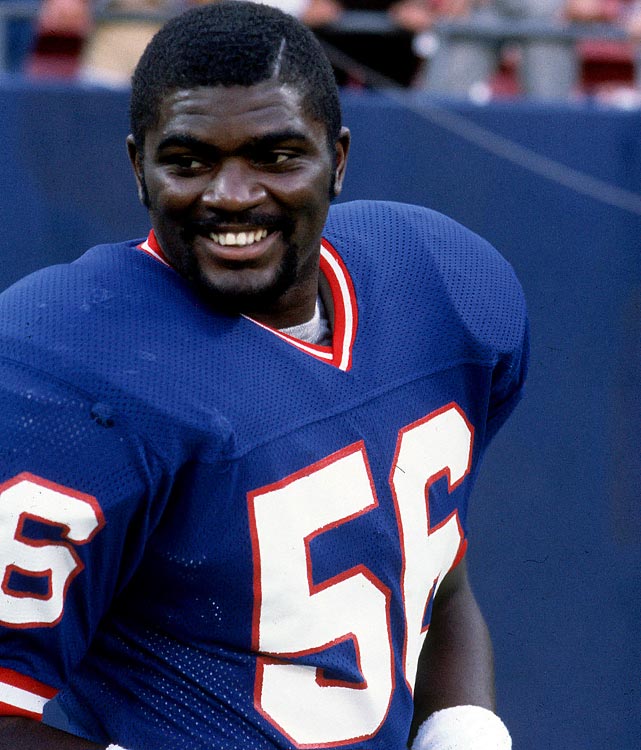
1. Lawrence Taylor of Williamsburg. The town is famous for its roles in the American Revolution and the American Civil War, but L.T. got medieval on a few asses.

The linebacker was an All-American at the University of North Carolina, and they retired his Number 98. He was a 10-time Pro Bowler, the NFL Most Valuable Player in 1986 (a rare feat for a defensive player), and a 2-time Super Bowl winner with the New York Giants. More than that, he was a symbol for defensive players in the 1980s, an era of reckless abandon, which included his runaway cocaine use, and his career-ending leg break of Washington Redskins quarterback Joe Theismann.
He was named to the Pro Football Hall of Fame, the NFL's 75th Anniversary All-Time Team and its 1980s All-Decade Team, and the New York Giants Ring of Honor, with his Number 56 retired. In 1999, The Sporting News named its 100 Greatest Football Players. He came in at Number 4. In 2010, the NFL Network named its 100 Greatest Players. He came in at Number 3. In each case, he was the highest-ranking defensive player.

Thursday, May 11, 2017

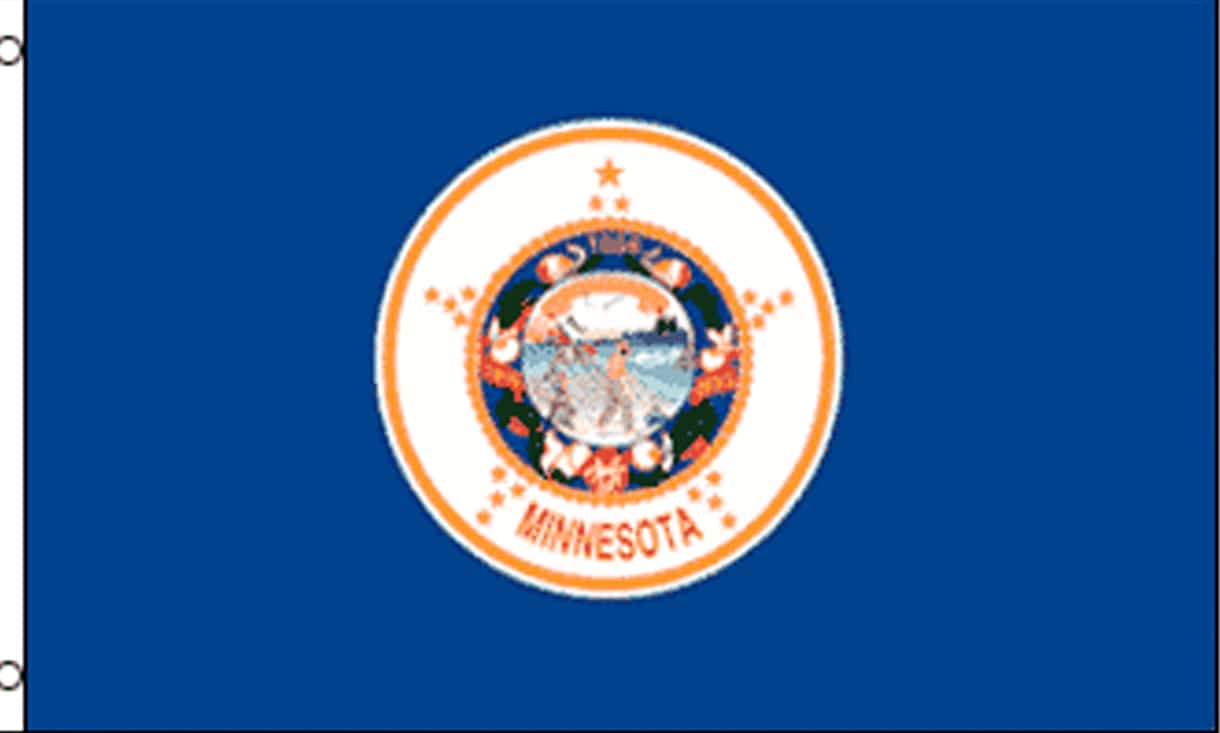
Top 10 Athletes From Minnesota

May 11, 1858: Minnesota gains admission to the Union as the 32nd State.

Top 10 Athletes from Minnesota

Minnesota's home teams, particularly the University of Minnesota, are very well represented here.

Honorable Mention to Chris Weinke of St. Paul. In 2000, the Florida State quarterback became the 2nd man from Minnesota to be awarded the Heisman Trophy. His pro career was a bust, though. That's not quite the case for the other Heisman winner from the State, who had the best possible excuse for not becoming a pro star: His country -- indeed, the world -- called him.

Honorable Mention to Burdette Haldorson of Austin. A star forward at the University of Colorado, he helped the U.S. basketball team win Olympic Gold Medals in 1956 in Melbourne and 1960 in Rome. He never played in the NBA, but was one of the stars of the semi-pro Phillips 66ers, who worked for the energy company and played on their basketball team. He was elected to the Basketball Hall of Fame along with all of the 1960 U.S. Olympians.

Honorable Mention to Coco Miller of Rochester and

Honorable Mention to Kelly Miller of Rochester. The twins played basketball together at the University of Georgia, and shared the 1999 Sullivan Award as the best amateur athlete in America, the 1st siblings, let alone twins, to receive it. Coco (real name Colleen) played in the WNBA for the Washington Mystics, while Kelly won the league title with the 2007 Phoenix Mercury.

Honorable Mention to Joel Otto of Elk River. The center won the Stanley Cup with the 1989 Calgary Flames, and also reached the Finals with the 1986 Flames and the 1997 Philadelphia Flyers. He was a member of the only U.S. team (so far) to win the World Cup of Hockey (formerly the Canada Cup), in 1996.

Honorable Mention to Briana Scurry of Anoka, the goalkeeper on the U.S. team that won the 1999 Women's World Cup. With her teammates, Sports Illustrated named her one of their Sportspeople of the Year.

UPDATE: Three months after I posted this, she was elected to the National Soccer Hall of Fame.

10. Bruce Smith of Faribault. No, not Bruce Bernard Smith, the legendary Buffalo Bills defensive end. He will show up when I do this for his home State, which is Virginia. This is Bruce Phillip Smith, a 2-way halfback who starred at the University of Minnesota, leading the Golden Gophers to back-to-back National Championships in 1940 and 1941. In the latter year, he was awarded the Heisman Trophy, the only Golden Gopher so honored.

World War II delayed his entry into the professional game, and he served as a fighter pilot in the U.S. Navy. He played for the Green Bay Packers and the Los Angeles Rams, but he was away from the game for too long: He was already 25 when he played his 1st pro down, and 28 when he played his last. He might have been one of the top NFL players of the 1940s, and possibly one of the best defensive backs ever, but we'll never know.

He died of cancer in 1967, only 47 years old. UM made his Number 54 the 1st they ever retired, in any sport. He was elected to the College Football Hall of Fame.

9. Neal Broten of Roseau. He was 1 of 3 brothers to make the NHL, and all 3 ended up playing for the New Jersey Devils. Neal was a member of the U.S. team that won the 1980 Winter Olympics, shocking the Soviet Union and then beating Finland for the Gold Medal.

He, Mike Ramsey of Minneapolis, Rob McClanahan and Steve Janaszak of St. Paul, Bill Baker and Buzz Schneider of Grand Rapids (Minnesota, not Michigan), Steve Christoff of Richfield, Eric Strobel of Rochester and Phil Verchota of Duluth had all played at the University of Minnesota under Herb Brooks, who also coached the national team. Mark Pavelich of Eveleth and John Harrington of Virginia, Minnesota went to the University of Minnesota at Duluth. Dave Christian of Warroad went to the University of North Dakota.

In 1980, Sports Illustrated honored them, and their teammates from other States, as the 1st entire team to be named the magazine's Sportsmen of the Year. So Honorable Mention to all of them.

In 1981, Broten won the Hobey Baker Award, college hockey's answer to the Heisman Trophy. He scored the goals that clinched the 1979 National Championship for the Golden Gophers and the 1995 Stanley Cup for the Devils. He also helped the Minnesota North Stars reach the Stanley Cup Finals in 1981 and 1991.

The Stars, now in Dallas, retired his Number 7. In 2009, Minnesota Wild fans voted him the greatest player ever to come from Minnesota, "The State of Hockey." He was a 2-time All-Star, and has twice won the Lester Patrick Trophy for lifetime contributions to hockey in America, both as a member of USA 1980 and in his own right. (He and Herb Brooks, who coached him in college and on the U.S. team, are the only 2-time winners.) He is a member of the U.S. Hockey Hall of Fame, but the Hockey Hall of Fame in Toronto has yet to honor him.

In addition to Neal Broten, Mike Peluso of Pengilly, Tom Chorske of Minneapolis and Chris McAlpine of Roseville helped the Devils win the 1995 Stanley Cup; and Jamie Langenbrunner of Cloquet helped them win the 2003 Stanley Cup.

8. Jack Morris of St. Paul. He is one of the few players to have won the World Series with 3 different teams. His no-hitter early in the 1984 season was the high point of a 35-5 season-opening run that led the Detroit Tigers to a World Championship.

In 1991, he did something that will probably never be seen again: He pitched a 10-inning shutout in a World Series game, and in a Game 7, no less, beating the Atlanta Braves and winning the Series for his hometown Minnesota Twins. He was named the Series' MVP. In both 1984 and 1991, he won the separate Babe Ruth Award for baseball's postseason MVP. The next year, he went to the Toronto Blue Jays, and won the Series with fellow St. Paul native Dave Winfield.

A 5-time All-Star, he won 254 games, including 163 in the 1980s, leading all pitchers. He has been denied election to the Baseball Hall of Fame thus far. Later this year, he will, for the 1st time, be eligible for election by the Committee on Veterans.

7. Arild Verner Agerskov "Vern" Mikkelsen of Askov. The NBA's 1st great power forward, he appeared in 6 of the 1st 7 All-Star Games (1951-53 and 1955-57), and won 4 Championships with his home-State Minneapolis Lakers: 1950, 1952, 1953 and 1954.

He is a member of the Basketball Hall of Fame. Although his 19 would now be considered an unusual number for a basketball player, it has not been retired by the Lakers, who moved to Los Angeles in 1960. But he and the other Minneapolis players in the Hall -- George Mikan, Slater Martin, Jim Pollard, Clyde Lovellette and coach John Kundla -- were honored at halftime of a game between the Lakers and the new Twin Cities team, the Minnesota Timberwolves, with a banner that hangs in the Staples Center. The Lakers also gave them championship rings, which they didn't get when they won their titles.

All but Pollard lived to attend the ceremony. Incredibly, the only one still alive is the coach, Kundla, now 100 years old.

UPDATE: John Kundla died on July 23, 2017, a few days after his 101st birthday.

6. Phil Housley of St. Paul. Until surpassed by Mike Modano, he was the NHL's leading point-scorer among American-born players, despite being a defenseman. He was also the leader in games played by an American, until surpassed by Chris Chelios.

He was a 7-time All-Star, and was elected to the Hockey Hall of Fame. He helped the U.S. win the 1996 World Cup of Hockey, and the Silver Medal at the 2002 Winter Olympics. Unfortunately, he never won a Stanley Cup, reaching the Finals only once, with the 1998 Washington Capitals. But there's hope: He is now an assistant coach with the Nashville Predators, who have reached this season'se Western Conference Finals.

5. Charles Albert "Chief" Bender of Brainerd. A member of the Chippewa nation, fans would yell "Indian war whoops" at him from the stands, at a time when a larger portion of Americans than ever before was foreign-born. He would turn and yell, "You lousy foreigners! Why don't you go back where you came from?"

He preceded Jim Thorpe, who will come up when I do this for Oklahoma, as a graduate of the Carlisle Indian School in Pennsylvania. He had a pitch he called a "nickel curve," and some cite this to credit him with the invention of the slider. Despite Native Americans, like many other minorities, being treated by white people as stupid, Ty Cobb called him "the most intelligent pitcher I ever faced."

There was no All-Star Game in Bender's day, but he surely would have made it several times. He won 212 games, and won 5 Pennants with the Philadelphia Athletics, in 1905, 1910, 1911, 1913 and 1914, winning the World Series in 1910, 1911 and 1913.

He is in the Baseball Hall of Fame, and was named to the Philadelphia Baseball Wall of Fame. In 1981, baseball historians Lawrence Ritter and Donald Honig included him in their book The 100 Greatest Baseball Players of All Time.

4. Paul Molitor of St. Paul. Because he played most of his career in the small market of Milwaukee, and in the shadow of their biggest star, Robin Yount, he was one of the most underappreciated great players ever, despite having one of the best nicknames ever, "The Ignitor."

A 7-time All-Star, he got the Milwaukee Brewers to their 1st 2 postseason appearances, the 1981 American League Division Series and the 1982 World Series. He finally won a World Series with the 1993 Toronto Blue Jays, and was its MVP. He closed his career with the Twins, and is now their manager.

The Brewers retired his Number 4, and named him to their All-Time Team. The Sporting News named him to their 100 Greatest Baseball Players in 1999. He is a member of the Baseball Hall of Fame and the 3,000 Hit Club. Indeed, until he was surpassed by Derek Jeter, he had more career hits than anyone born after 1941.

3. Kevin McHale of Hibbing. Hibbing was also the hometown of Robert Zimmerman, a.k.a. Bob Dylan, but, while he wrote songs about baseball pitcher Catfish Hunter and boxer-turned-prisoner-turned-cause-celebre Rubin "Hurricane" Carter, he was not an athlete himself. Hibbing was also the birthplace of Roger Maris, but the family moved to North Dakota when he was 8, and he thus qualifies for that State, when I do this list for them.

Another University of Minnesota star, he was a 7-time NBA All-Star, winning the 1981, 1984 and 1986 NBA Championships with the Boston Celtics. UM retired his Number 44, the Celtics retired his Number 32, and he was named to the Basketball Hall of Fame and the NBA's 50th Anniversary 50 Greatest Players.

2. Bronislau "Bronko" Nagurski of International Falls. At 6-foot-2 and 230 pounds, he wouldn't be considered all that big today. But in the 1930s, he was considered huge, and was the prototype for the big bruising fullback, the progenitor of Marion Motley, Jim Brown, Larry Csonka, John Riggins, Jerome Bettis, etc.

The University of Minnesota didn't win anything while he was there, but, in the same backfield as Red Grange, he helped the Chicago Bears win the NFL Championship in 1932 and 1933. He played in the NFL from 1930 to 1937, and was a professional wrestler in the off-season, because, at the time, it made him more money.

He was the Heavyweight Champion of the World. And while pro wrestling was always a bit theatrical, it was not like today's WWE. He would have made mincemeat out of Hulk Hogan in the 1980s, Stone Cold Steve Austin in the 1990s, Dwayne "The Rock" Johnson (also a college football star) in the 2000s and John Cena today. And he would never have done Vince McMahon's bidding. In 1943, due to the wartime manpower shortage, the Bears asked him to return, and he did, and helped them win another title.

"Who would you pick to win a football game?" asked the great sportswriter Grantland Rice. "11 Jim Thorpes? 11 Glenn Davises? 11 Red Granges? Or 11 Bronko Nagurskis? The 11 Nagurskis would be a mop-up. It would be something close to murder and massacre. For the Bronk could star at any position on the field, with 216 pounds of authority to back him up."

Try 230, Mr. Rice. Otherwise, you're right. One year, Nagurski hurt his back, and, instead of sitting out and healing, accepted a switch to offensive tackle, and was great at it. He played defensive tackle. Oh yeah, he could also pass, pretty well by the standards of the time. Imagine Bettis throwing an option pass, and having it result in a touchdown: Nagurski did it. In an interview late in life, he said he'd probably be a linebacker, admitting he wouldn't be carrying the ball 30 times a game. I have no doubt that, with his speed, he would have excelled.

The University of Minnesota retired its Number 72 for him, and named its football facility the Gibson-Nagurski Football Complex. The Chicago Bears retired Number 3 for him. He was a charter inductee into the Pro Football Hall of Fame in 1963.

He was named to the NFL's 50th Anniversary Team in 1969, and its 75th Anniversary Team in 1994.
The Sporting News ranked him 35th on their 100 Greatest Football Players in 1999. and the NFL Network's 100 Greatest Players in 2010, 73 years after he was a regular player, actually boosted him to 19th. In 2008, ESPN named ranked him 17th on their list of the Top 25 College Football Players of All Time.

Presuming that the NFL names a 100th Anniversary Team in 2019 or 2020, I have no doubt that, despite it having been 76 years since he last so much as played a down, he will be named to it.

But as great as Nagurski was, Number 1 is no doubt, and I was lucky enough to have him on my home team.

1. Dave Winfield of St. Paul. He may have been the greatest athlete to have played baseball in the last 50 years. He was born on October 3, 1951, the same day that Bobby Thomson hit the most famous home run of all time, so perhaps he was born to make baseball history himself.
Or maybe not in baseball: He also played basketball at the University of Minnesota, helping them win the Big Ten title in 1972. He didn't play football there, but he played it in high school. In 1973, he was named Most Valuable Player of the College World Series, as both an outfielder and a pitcher, although Minnesota lost in the Semifinal on a tremendous comeback by USC. He was elected to the College Baseball Hall of Fame.

He was then drafted by 4 teams in 4 leagues in 3 sports: The San Diego Padres in MLB, the Minnesota Vikings in the NFL, the Atlanta Hawks in the NBA and the Utah Stars in the ABA. He could have been a teammate of Alan Page and the rest of the Purple People Eaters, and could have made the difference in Super Bowls VIII, IX and XI. Or he could have been a teammate of Pistol Pete Maravich in Atlanta, or of Moses Malone in Utah.

Instead, he became a teammate of Ozzie Smith, Randy Jones, Rollie Fingers and Gaylord Perry, leaving the Padres before Tony Gwynn arrived. He signed what was then the richest contract in baseball history, and became a Yankee teammate of Reggie Jackson, Goose Gossage, Don Mattingly and Rickey Henderson.

A 12-time All-Star, a 7-time Gold Glove, he is a member of the 3,000 Hit Club. He won a Pennant with the Yankees in 1981 and the World Series with the Toronto Blue Jays in 1992, earning him the Babe Ruth Award as postseason MVP. Like Morris and Molitor, won a World Series withe the Jays late in his career, and also returned to his hometown Twins to polish off his Hall of Fame credentials.

The Padres retired his Number 31, and elected him to their team Hall of Fame. The Yankees have not retired his number or given him a Plaque in Monument Park, despite his less accomplished teammate Mattingly having been so honored. He did, at least get a Dave Winfield Day from the Yankees, following his induction to the Baseball Hall of Fame in 2001. The Sporting News named him to their 100 Greatest Baseball Players in 1999.

By a weird coincidence, there were also English soccer players named Dave Winfield (a centreback, best known for his time at Hampshire club Aldershot Town, now with Kent club Ebbsfleet United) and Kevin McHale (a midfielder for Yorkshire club Huddersfield Town in the 1960s).