
September 8, 1900, 125 years ago: A hurricane strikes Galveston, Texas. It turns out to be the worst national disaster in American history.
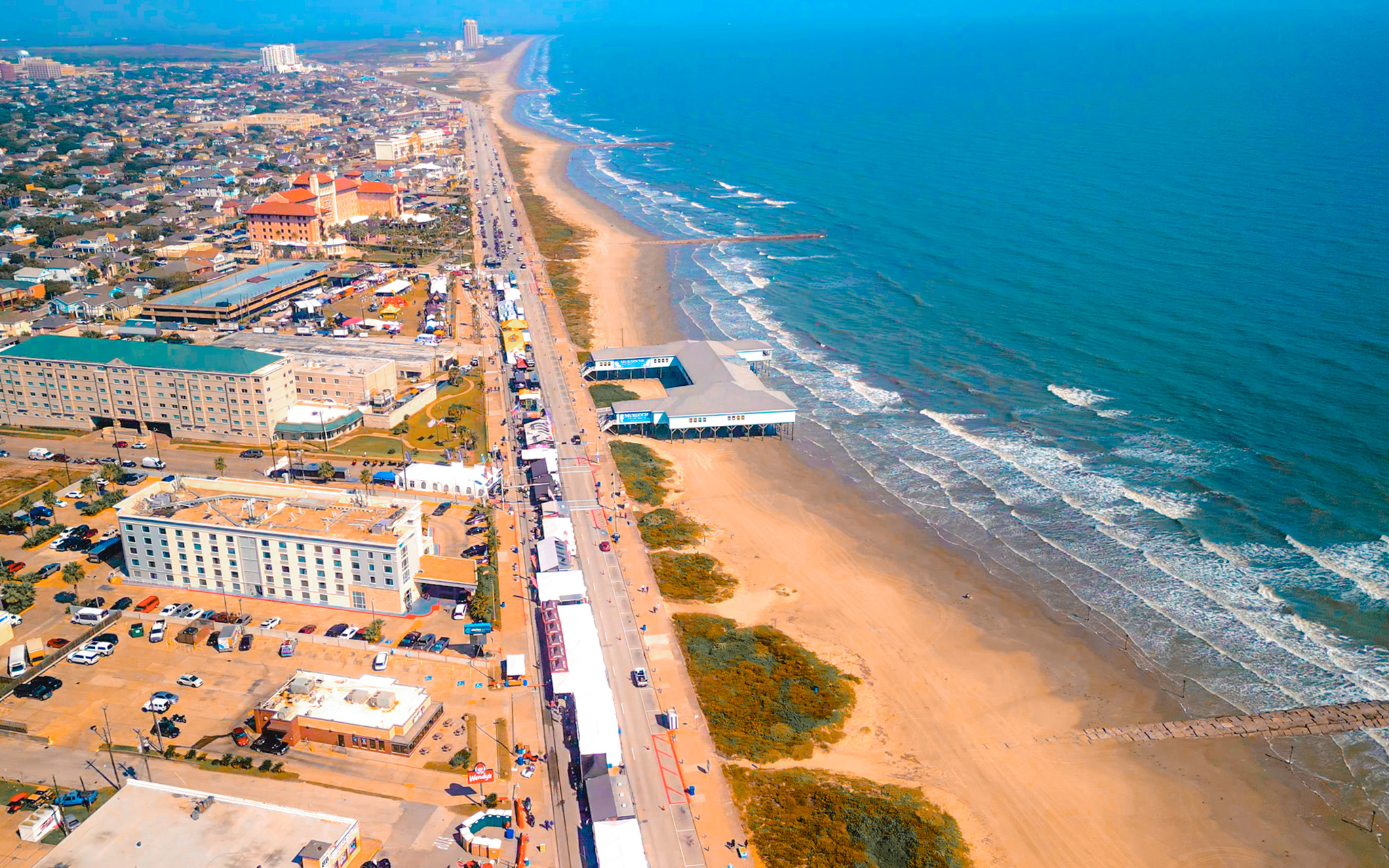
The City of Galveston is on Galveston Island, on the Gulf of Mexico, about 50 miles southeast of Houston. This has made it particularly susceptible to tropical storms. Nevertheless, it is a popular destination for beachgoers, with a large amusement park.
It was even more so in the late 19th Century, a period known as the Golden Era. Some of the largest hotels in the country were there, and Reconstruction even permitted more participation for African-Americans and Mexican-Americans than would be seen in the 20th Century. They even had a successful professional baseball team: The Galveston Sand Crabs won the Texas League Pennant in 1890, 1897 and 1899. At the time, the population was about 37,000.
But on September 4, 1900, a tropical storm was detected, and it headed straight for the Gulf Coast of Texas. The National Weather Service had been established in 1870, and did issue a warning. But hardly anybody took it seriously enough to take the bridges back to the mainland.
By 12:00 Noon on September 8, part of the island was already flooded. By 4:00, wind speeds were up to 125 miles per hour (by definition, a hurricane is a storm with sustained winds of at least 75 MPH), and waves were 15 feet high.
Many of the houses on the island were made of wood, and, with no high ground to protect them, were just plain flattened. At least 6,000 people were killed, making it the deadliest natural disaster in American history. For comparison's sake: In 2005, Hurricane Katrina killed about 1,800; and in 2012, Hurricane Sandy, despite its widespread damage, killed a comparatively low 233.
By 1904, the City of Galveston had completed a permanent concrete seawall along the beachfront. By 1910, the entire city was raised 17 feet behind the wall. It has been hit by hurricanes since, but nothing as deadly as the 1900 hurricane, or Katrina, or Sandy. Today, it is home to about 50,000 people.
It wasn't until 1947 that hurricanes began to be named, using the military phonetic alphabet in use at the time: Able, Baker, Charlie, Dog, and so on. (In 1956, that was changed to Alpha, Bravo, Charlie, Delta, and so on.) In 1955, America adopted the use of girls' names for hurricanes, starting with Alice. In 1979, boys' names began to alternate with girls' names: Ana, Bob, Claudette, David.
No comments:
Post a Comment