.jpg)
September 5, 1975, 50 years ago: President Gerald Ford faces an assassination attempt on a visit to Sacramento, the capital of California.
Ford, for 25 years a Republican Congressman from Michigan, had been nominated for Vice President by President Richard Nixon, seemingly because he was liked by everybody in Washington and offended hardly anybody. He replaced Spiro Agnew, who resigned the office on October 10, 1973, due to his conviction for income tax evasion. On August 9, 1974, Nixon resigned due to his role in the Watergate scandal, and Ford, who was planning to retire after the 1976 election if the Republicans didn't take Congress in 1974, which would have made him Speaker of the House, became the 38th President of the United States.
Ford started with a lot of goodwill, but, a month into his Presidency, he pardoned Nixon. This infuriated many people, and seemed to make him a lame duck before he even announced that he was running for a term of his own in 1976. A recession was underway, but people blamed him for it instead of Nixon (or the Democratic Party). Ford had nothing to do with causing the recession, but his efforts to fix it were, thus far, falling short.
He was visiting the city to attend the annual Sacramento Host Breakfast, a gathering of wealthy California business leaders at the Sacramento Convention Center. The new Governor, Jerry Brown -- Edmund G. Brown Jr., son of former Governor Edmund G. "Pat" Brown -- refused to attend, because he wanted to show them, after 8 years of the archconservative Ronald Reagan, the new Governor wasn't going to be their friend.
To spite Brown, a Democrat, who was already talking about running for President in 1976 -- or, perhaps, to counter-spite him -- they invited President Ford, a Republican, as was Reagan. Ford, who had become President 13 months earlier upon the resignation of Richard Nixon, knew that winning a term of his own would be difficult, and that California would be crucial. (This included in the Republican Primaries, in which Reagan was expected to run.) So he accepted.
In August 1975, The New York Times printed an article detailing Ford's visit to California in September. It included the fact that, as a Congressman from Michigan, he had voted against the Clean Air Act of 1970.
This angered Lynette Alice Fromme. Born on October 22, 1948 in the Los Angeles suburb of Santa Monica, California, As a child, she was a member of the Westchester Lariats, a Los Angeles-based dance group that appeared on The Lawrence Welk Show -- and had even been invited to perform at the White House, when Dwight D. Eisenhower was President. As far as I know, this is the only time that someone who would go on to attempt to assassinate a President would visit the White House before that President took office.
In 1967, she became a follower of cult leader Charles Manson. Another of his followers, George Spahn, noticed that she made a sound like a squeak when he touched her, so he gave her the nickname "Squeaky." She was not charged in connection with the Tate-Labianca Murders, unlike Manson and some of his other followers.
In 1975, she was 26 years old, still committed to the imprisoned Manson, and paranoid about the environment. When she saw the article about Ford, she saw a chance to strike a blow for both the environment and Manson.

Ford was crossing L Street from the Senator Hotel to the State Capitol, shaking hands, at 10:02 AM. Fromme got within 2 feet of him. In his memoir, Ford wrote, "As I stopped, I saw a hand come through the crowd in the first row, and that was the first active gesture that I saw, but in the hand there was a gun."
Fromme didn't know that she needed to pull back the gun slide to insert a cartridge into the pistol's chamber. She pulled the trigger, and nothing happened. Secret Service Agent Larry Buendorf grabbed the gun, and forced Fromme to the ground. Other Agents pulled Ford away, and dragged him to the Capitol's entrance.
Ford was unhurt, and, when the Agents determined that the threat was over, he resumed his schedule, including meeting with Governor Brown. He returned to Washington that night.
*
September 22, 1975: Gerald Ford becomes the 1st President to face 2 close assassination attempts. And they happen just 18 days, and 86 miles, apart.
It had been 3 years since Governor George Wallace had been shot and paralyzed while running for President, 5 years since Pope Paul VI had faced an assassin with a knife, 7 years since Dr. Martin Luther King and Senator Robert F. Kennedy were shot and killed, 10 years since Malcolm X was shot and killed, and 12 years since President John F. Kennedy and NAACP executive Medgar Evers were shot and killed. Still, Ford said he would not stop meeting with the people.
He made another trip to California on September 22. He was in San Francisco, for a meeting of the World Affairs Council. He returned to the city's famed St. Francis Hotel, off Union Square. At 3:30 PM, he walked out of the hotel's Post Street entrance, and stopped short of his limousine to wave the crowd, when a shot rang out.
The shot missed Ford's head by about 5 inches. On the film, he can be heard yelling, "Hey!" A bystander named Oliver Sipple grabbed the shooter's arm as she pulled the trigger a 2nd time. Her shot hit John Ludwig, a taxi driver standing outside the hotel. He also survived.
San Francisco Police Captain Timothy Hettrich grabbed the shooter, and pulled her gun away. The Secret Service shoved Ford into his limo. Donald Rumsfeld, then his White House Chief of Staff, covered him, and the limo was sped back to San Francisco International Airport, where Air Force One was waiting. After waiting for First Lady Betty Ford to arrive, the plane returned to Washington.
The shooter was Sara Jane Moore. Born on February 15, 1930, in Charleston, West Virginia as Sara Jane Kahn, the former accountant had been married and divorced 5 times, with 4 children. She had no connection to either Fromme or Manson, but had become fascinated by another crime in San Francisco, the kidnapping of Patty Hearst.

The day before the shooting, the San Francisco Police Department arrested her on an illegal handgun charge. They decided to call the Secret Service, and they evaluated her, they confiscated her .44 caliber revolver and 113 rounds of ammunition... and they told the SFPD to let her go, as they believed she posed no danger to the President's visit the next day.
They were wrong. The next day, September 22, she bought a new gun, a .38 caliber revolver, a cheap one, a Charter Arms Bulldog -- a smaller version of the one David Berkowitz began using in New York the next year, becoming known as the .44-Caliber Killer and the Son of Sam. The sight on Moore's gun was 6 inches off. That's why, despite being only 40 feet away, she missed Ford. She pleaded guilty.
Before her sentencing, she said, "Am I sorry I tried? Yes and no. Yes, because it accomplished little except to throw away the rest of my life. And, no, I'm not sorry I tried, because, at the time, it seemed a correct expression of my anger." She was sentenced to life in prison.
Ford lost the California Primary to Reagan in 1976, and almost lost the nomination to him. He won it, and did win California in the general election, but narrowly lost both the popular vote and the Electoral Vote to former Governor Jimmy Carter of Georgia. In 1981, he opened his Presidential Museum in his hometown of Grand Rapids, Michigan. The U.S. Attorney's office in Sacramento donated Fromme's gun to the Museum. Ford lived until 2006.
Fromme was convicted of attempted murder, and sentenced to life in prison. On Christmas Eve 1987, she escaped, but was captured 2 days later. She was released in 2009, after serving 34 years.
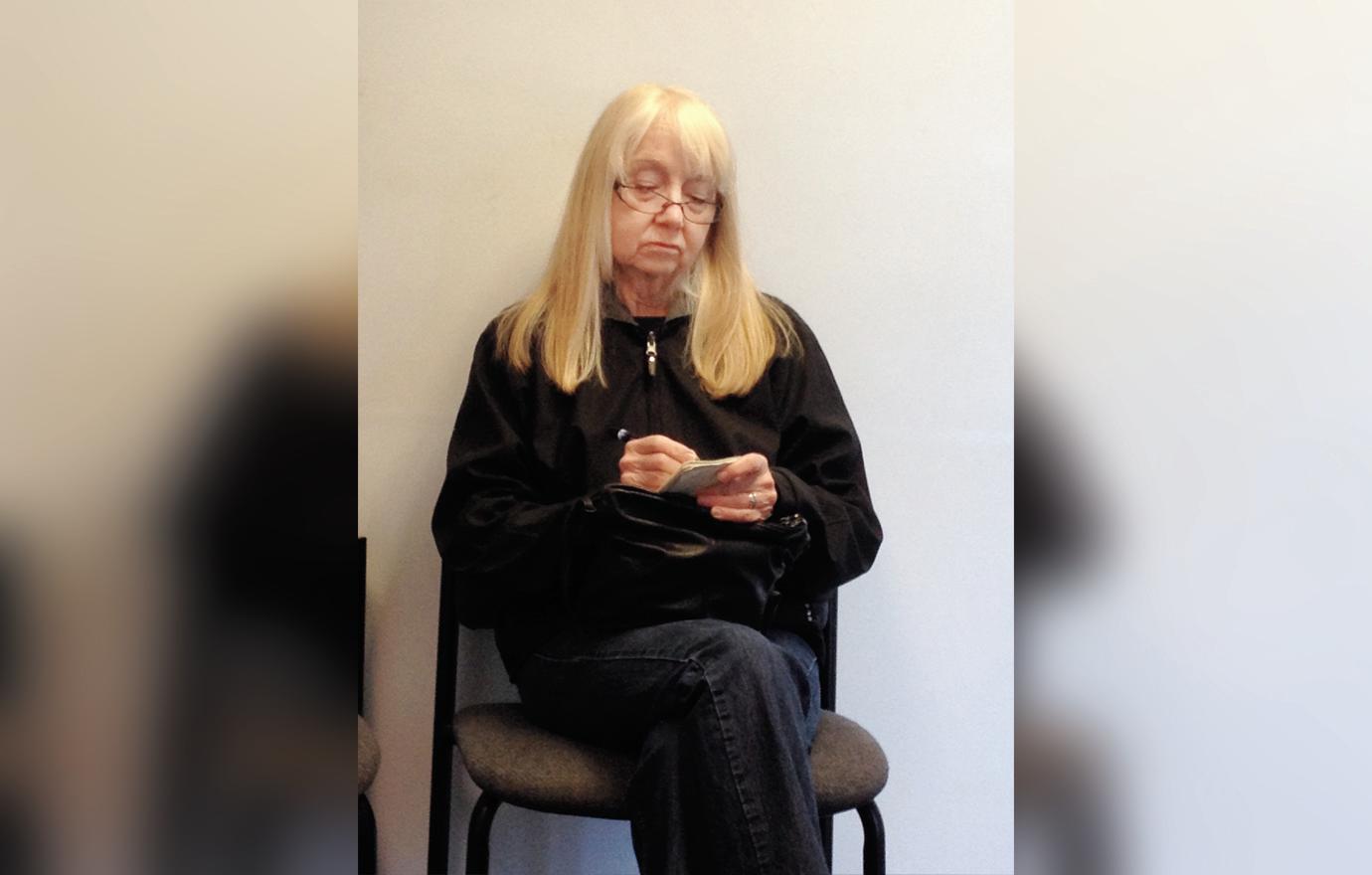
In 1979, as Fromme had, Moore escaped from prison but was soon recaptured. In 2005, she was released from prison, after serving 32 years. At that time, she said, "I am very glad I did not succeed. I know now that I was wrong to try."

As of September 5, 2022, Fromme is 72 years old, and lives with a fellow ex-con in Marcy, New York, outside Syracuse. Unlike most of Manson's followers, she has never renounced him. Moore is 92 years old, and lives in Northern California.
Oliver Sipple was a decorated Marine in the Vietnam War, but it was apparently saving Ford's life that made him a well-known hero. The Secret Service officially commended him, and Ford sent him a thank-you letter.

But the popular San Francisco Chronicle columnist Herb Caen was tipped off to the fact that Sipple was gay, and had worked for Harvey Milk, then running for the City's version of a City Council, the Board of Supervisors. (Milk would lose that election, but won in 1977, before being assassinated in 1978.)
Caen asked Milk if he should reveal this information, and Milk said yes, because the wider public needed to see that gay people could be heroes. Caen did not ask Sipple, whose life went into a tailspin. His parents, in Detroit, refused to see him for years. He sued for invasion of privacy, and lost. He started drinking heavily, and died in 1989, only 47 years old.
As for the other injured man, John Ludwig, he'd already been through a lot, having fled Nazi Germany, only to end up in Shanghai, China when it was occupied by Imperial Japan, and he was shot by a Japanese soldier. He survived, working with the Chinese resistance at the age of 12, and was reunited with his family in San Francisco in 1948. He became a taxi driver. retired to Sacramento (the site of the 1st assassination attempt, something of an irony), published a memoir in 2004, and died in 2015, age 81.
About Captain Timothy Hettrich, who grabbed Moore's gun, the only information I can find is that he was still alive as of 2006.
UPDATE: Sara Jane Moore died on September 24, 2025, 2 days after the 50th Anniversary of her attempt, at the age of 95.
No comments:
Post a Comment