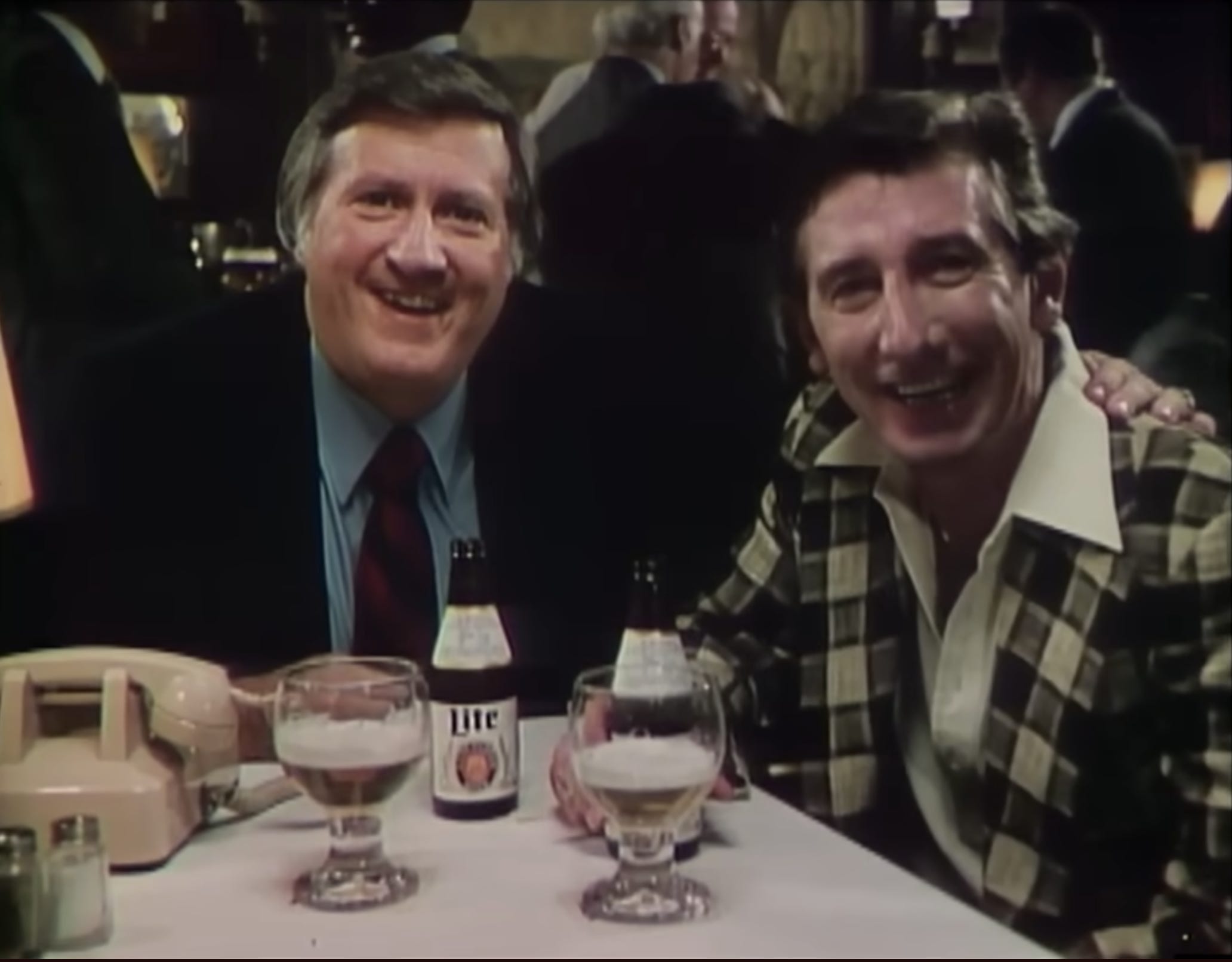
August 2, 1975, 50 years ago: Bill Virdon is fired as manager of the New York Yankees. His replacement: Former Yankee 2nd baseman Billy Martin.
George Steinbrenner bought the Yankees in 1973, while Ralph Houk was the manager. After that season, tired of George's meddling, Houk resigned. George tried to hire Dick Williams, who had just quit as manager of the Oakland Athletics, despite leading them to back-to-back World Series wins, because he was tired of the meddling of his team's owner, Charlie Finley.
But Williams was still under contract to Finley, who wouldn't let him go. At least, not to George. In the middle of the 1974 season, when Gene Autry, the former country singer who owned the California Angels, fired his manager, Bobby Winkles, Finley gave him permission to hire Williams.
George hired Virdon, a former outfielder with the Pittsburgh Pirates, who had managed them to the National League Eastern Division title in 1972, and had nearly done so again in 1973. He nearly led the Yankees to the American League Eastern Division title in 1974, but the team was struggling in 1975, and Virdon had "lost the locker room." George fired him, but he was soon hired by the Houston Astros, whom he led to the NL West title in 1980.
Alfred Manuel Martin Jr. was born on May 16, 1928, in Berkeley, California, across the Bay from San Francisco. But it was not the tony Berkeley of the University of California where he grew up. Instead, it was the hardscrabble neighborhood of West Berkeley, home to immigrants, like his mother, who was from Italy; and his father's parents, who were from Portugal.
Al Martin and Juvan "Jenny" Salvini may never have gotten married. Al left when Alfred Jr. was a baby, and for the rest of her life, Jenny called Al "the Jackass." Her mother called Alfred Jr. "Bello," meaning "beautiful," in spite of a large nose that would later get him picked on, and which he would have surgically fixed. "Bella" became "Billy."
When Billy went off to school, and his teacher read off all the names of the students, he didn't hear his name. When he spoke up, and said his name was "Billy Martin," the teacher repeated the name of "Alfred Manuel Martin." That's how Billy found out his real name. When he went home, and asked his mother why she'd never told him his real name, she said, "I didn't want you to know you were named after the Jackass."
Unfortunately, Billy inherited the worst traits of both parents: The combativeness of his mother, and, by the time he grew up, it was clear that he had inherited the womanizing and drinking ways of his father. He had a talent for baseball, though, and starred at Berkeley High School.
His mother had been married before, and had an older son, Frank, a.k.a. "Tudo." Tudo was friends with a local baseball star, Augie Galan, who made 3 All-Star Games with the Chicago Cubs. Galan told the manager of the Pacific Coast League's Oakland Oaks about Billy, and the manager had Billy signed to a contract with an Oaks farm team in 1946. That manager was Casey Stengel.
In 1947, wearing uniform Number 1 for the 1st time, and liking it, Billy played for the Phoenix Senators of the Class C Arizona-Texas League (roughly equivalent to today's Class A), and had the highest batting average in all of "organized baseball," .393, plus 173 RBIs. He was named the league's Most Valuable Player. In 1948, Billy was one of the few young players on an Oaks team that included local hero and former Cincinnati Reds batting champion Ernie Lombardi, that was nicknamed "The Nine Old Men." Casey led them to the PCL Pennant.
Casey was hired to manage the Yankees, and told Billy that if he had the chance to bring him to New York, he would. He kept that promise, and Billy played his 1st major league game on April 18, 1950, at Fenway Park in Boston. Taking over for starting 2nd baseman Jerry Coleman in the 6th inning, he had no fielding chances, but he hit a single and an RBI double off Boston Red Sox ace Mel Parnell, and the Yankees beat the Red Sox, 15-10.
Billy wore Number 12 in that call-up, but spent most of the 1950 and 1951 seasons with the Yankees' top farm team, the Kansas City Blues. When Coleman went back into the Marines for the Korean War, Billy was called back up, and got Number 1 like he wanted.
In 1952, he made a key catch late in Game 7 of the 1952 World Series. In the 1953 Series, Billy tied what was then the Series record with 12 hits, the last of them a single driving Hank Bauer home in the bottom of the 9th inning of Game 6, to clinch the Yankees' 5th straight World Championship. Both victories, '52 and '53, were against the Brooklyn Dodgers.
Despite the Korean War ending, the U.S. Army still had a draft, and Billy missed the entire 1954 season and most of 1955 while serving. Interestingly, 1954 was the only season between 1948 and 1959 that the Yankees didn't win the American League Pennant. The Yankees lost the World Series to the Dodgers in 1955, but won it in 1956.
But Billy had not just a chip on his shoulder, he had an entire bag of chips on it. And he and pitcher Whitey Ford, a native of Queens, were leading the team's biggest star, Oklahoma country boy Mickey Mantle, astray, with late nights of drinking and womanizing.
Furthermore, Billy was always getting into fights, on and off the field. He brawled with St. Louis Browns catcher Clint Courtney in 1952, and again in 1953, having previously fought with him in the minor leagues. In 1956, with the Dodgers having given up on pitcher Tommy Lasorda, sending him to the Kansas City Athletics, Billy and Tommy got into a fight. Oddly, they would end up as opposing managers in the 1977 World Series, and, before pregame introductions, shook hands in mutual respect as fellow little Italians who'd made good.
On May 16, 1957, his 29th birthday, some of his teammates, seeing that he was feeling down after his divorce, decided to take him out for a night on the town. This included a visit to the famous Copacabana Club. Sammy Davis Jr. was performing, and a racist heckler got on his case. One thing led to another, and the heckler got knocked out, though all 6 Yankees involved, including Billy, said not only had none of them done it, but none of them had even seen it.
Thus far, Casey had been protecting Billy: General manager George Weiss had long wanted to get rid of him, but Casey would go over Weiss' head to team owners Dan Topping and Del Webb, and Billy stayed. This time, given the bad press over the fight, and the fact that he was batting only .241, and Topping, Webb and Weiss were high on rookie 2nd baseman Bobby Richardson, Billy figured Casey wouldn't be able to protect him. On trading deadline day, June 15, Billy hid in the bullpen, telling Mickey, "If they can't find me, they can't trade me." It didn't work that way, and he was traded to the A's. (By this point, they had also given up on Lasorda.) Richardson not only got Billy's job, he got Billy's number: 1. (He had been wearing 29.)
Billy played in Kansas City the rest of 1957, was traded to the Detroit Tigers in 1958, traded to the Cleveland Indians in 1959, traded to the Cincinnati Reds in 1960, traded to the Milwaukee Braves in 1961, and traded again in 1961, to the Minnesota Twins. At 33, his playing career was over.
But he had observed Casey Stengel's managing. He knew he could be a big-league manager. Twins owner Calvin Griffith made him a scout for the 1962 season. Billy urged Griffith to sign pitcher Jim Palmer, but Palmer wanted a $50,000 signing bonus, and Griffith, a notorious cheapskate, refused. Palmer would win 268 games for the Baltimore Orioles. Through the 2025 All-Star Break, the winningest pitcher in Twins history is Jim Kaat, with 189.
Billy became the Twins' 3rd base coach in 1965, and they won the Pennant. He worked with Zoilo Versalles, and he was named the AL's Most Valuable Player in 1965. He worked with Rod Carew, and he became one of the most aggressive young hitters and runners in baseball, winning the AL's Rookie of the Year in 1967, and winning the 1st of 7 batting titles in 1969. That season, Billy was named the Twins' manager, and led them to the AL Western Division title. However, a series of incidents, some of them affected by Billy's drinking, led Griffith to fire him after the season.
The Detroit Tigers hired him for 1971, and in 1972, he led them to the AL East title. But things fell apart in 1973, and he was fired. He was immediately picked up by the Texas Rangers, whom he managed to a surprise 2nd-place finish in 1974. He developed his "Cowboy Billy" persona during this time, and, despite his Bay Area roots, spoke with something of a Southern drawl for the rest of his life, something that irked some of his black players. But the pattern repeated: He and his team couldn't hold the prosperity, and he drank threw it, and there were incidents. He was fired on July 20, 1975.
Thirteen days later, George Steinbrenner hired him. Casey Stengel, now 85 and suffering from cancer, called him to congratulate him. The two men hadn't spoken for 18 years. It was just in time: Casey died 58 days later.
Billy's 1st game as manager of the Yankees -- uniform Number 1 being available after the trade of Bobby Murcer the preceding October -- was a 5-3 win over Cleveland at Shea Stadium, where the Yankees were playing home games while Yankee Stadium was being renovated. The Yankees trailed 3-0 going into the bottom of the 6th inning, but came from behind, including a home run by Roy White over former Yankee Fritz Peterson, making Sparky Lyle a winning pitcher in relief of Pat Dobson.
Over the next 14 years, George would hire and fire Billy 5 times. Some people think there would have been a 6th time if Billy hadn't died. It was one of the strangest relationships in the history of North American sports: They drove each other crazy, but they always managed to patch things up. They couldn't live with each other, and they couldn't live without each other.
No comments:
Post a Comment