Thursday, January 29, 2026

January 29 & 31, 1986: A Great Sports Week for East Brunswick High School

This photo of the EBHS gym was taken by me in December 2021,
in the boys' basketball regular-season opener, a win over Old Bridge.

January 29, 1986, 40 years ago: Over 1,300 fans braved a blizzard to watch a wrestling meet that would decide the Championship of the Greater Middlesex Conference Red Division. Host East Brunswick faced the Old Bridge school then known as Madison Central.

Both schools were undefeated in the Division.  They were ranked Number 1 and Number 2, respectively, in Middlesex County by the newspaper then known as The Home News. E.B. had just won the GMC Tournament, making them, effectively, County Champions. Both teams had a rather obnoxious student fanbase -- in the case of the former, myself included.

The meet was not decided until the final match, and E.B. won, 26-25. I can't remember that gym being louder than it was that night.

Until 2 nights later, January 31. East Brunswick's basketball team needed 2 more wins to clinch the Red Division title. Their only loss of the season to that point had been to St. Joseph's, the Metuchen school that (despite their claims that they didn't) recruited so many players from our town, they were nicknamed "E.B. Catholic."

Unlike that earlier game at their place, this one was no contest. In front of an overflow crowd of over 2,000, we won, 84-58 and clinched the Division title in our next game.

On March 15th, that basketball team won the Central Jersey Group IV Championship for the first time. On the same day, E.B. wrestler Darren Schulman completed a perfect season, 31-0, with a State Championship in his weight class.

Wednesday, January 28, 2026

January 28, 2001: Baltimore Football Finally Moves On

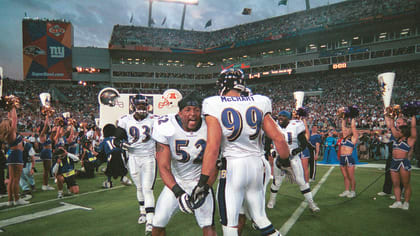
January 28, 2001, 25 years ago: Super Bowl XXXV is played at Raymond James Stadium in Tampa. The Baltimore Ravens beat the New York Giants, 34-7. It is the 1st NFL Championship won by the franchise formerly known as the Cleveland Browns in 36 years, and the 1st by a Baltimore-based team in 30 years.

Since the Giants' only touchdown is scored on a kickoff return -- by Ron Dixon, followed immediately by the Ravens doing the same, by Jermaine Lewis -- the Giants became the only team in Super Bowl history whose offense scored no points.

It marks Kerry Collins as the worst quarterback in Super Bowl history. He went 15-for-39, for 112 yards, 4 interceptions, and no touchdowns. In contrast, Trent Dilfer -- who has often been mocked as the worst quarterback ever to win a Super Bowl, and indeed became the 1st winning quarterback ever let go before the next season (as opposed to retiring) -- went 12-for-25, 153 yards, 1 touchdown and no interceptions. Quarterback ratings: Dilfer 80.9, Collins 7.1.

Under head coach Brian Billick and defensive coordinator Marvin Lewis, the Ravens' defense drew comparisons to the 1970s Pittsburgh Steelers and the 1985 Chicago Bears in terms of effectiveness and ferocity. Linebacker Ray Lewis was the best player and the emotional leader of a side that also included defensive end Michael McCrary, linebacker Peter Boulware, safety Ed Reed, and cornerback Rod Woodson, who won his 1st title after a long career with the Steelers. The offense was led by Dilfer, veteran running back Earnest Byner and rookie running back Jamal Lewis, with protection from tackle Jonathan Ogden.

A cloud hung over the team, particularly over Ray Lewis. In 2000, he pleaded guilty to obstruction of justice in connection with the stabbing deaths of two men at a Super Bowl afterparty in Atlanta. He testified as a key witness at the trial, and a jury determined the killings were acts of self-defense. Ever since, people who don't like the Ravens have speculated that he had more to do with those deaths than has been publicly let on.

It had now been 5 full seasons since the Ravens arrived, 17 years since the Baltimore Colts moved to Indianapolis, 23 years since the Colts' last Playoff berth in Baltimore, and 30 years since their last Super Bowl win in Baltimore. What's more, the Ravens had not only been to a Super Bowl, while the Colts had not yet been to one since they moved, but won it.

This game, putting Baltimore back on top of the football world, enabled their fans to finally move on from the legend and mystique of the Colts: They could celebrate their former team, but they no longer had to mourn it. Baltimore was now the NFL Champions of 1958, 1959, 1970 and 2000, and Indianapolis was still waiting.

The Colts didn't just bury the Giants, they laid the legend of the Baltimore Colts to rest, giving it the memorial service it deserved.

Over the next 11 seasons, the Colts would win a Super Bowl as an Indianapolis team, and lose another; while the Ravens made the Playoffs 7 times, including 2 trips to the AFC Championship Game. In the 2012 season, with Lewis the only holdover from the 2000 season, they won Super Bowl XLVII, for the team's 2nd title, and the city's 5th. At that point, the only cities with more were Green Bay with 13, Chicago with 11 (9 by the Bears, 2 by the Cardinals), New York with 9 (8 by the Giants, 1 by the Jets), the San Francisco Bay Area with 7 (5 by the 49ers, 2 by the Raiders), and Pittsburgh with 6. Boston now has 6, and if Providence (the 1928 Steam Roller) is counted as part of their area, that's 7. Philadelphia now has 6 (5 by the Eagles, 1 by the Frankford Yellow Jackets), and Dallas has 5.

January 28, 1986: The Space Shuttle Challenger Is Destroyed

Top row, left to right: Ellison Onizuka, Christa McAuliffe,
Greg Jarvis and Judy Resnik.
Bottom row, left to right: Michael J. Smith,
Dick Scobee and Ron McNair.
January 28, 1986, 11:39 AM, 40 years ago: The Space Shuttle Challenger explodes, 1 minute and 13 seconds after liftoff from Cape Canaveral, Florida, killing all 7 astronauts aboard.
The 10th mission for the orbiter, and the 25th Shuttle mission overall, it was America's 1st in-flight space travel tragedy. Previously, on January 27, 1967, a fire during a ground test of Apollo 1 led to the deaths of 3 astronauts; 6 other astronauts had been killed in plane test flight crashes; and the Soviet space program had lost 5, including 3 in a single spaceflight in 1971.
The flight had already been delayed twice, and the decision was made to launch despite temperatures being lower than ideal. Even Florida has some days that can be classified as Winter, and the ground temperature at launch was just 36 degrees -- still 15 degrees lower than any other Cape Canaveral launch, ever. The low temperature caused a failure in the "O-ring" seals, allowing pressurized burning gas from within the solid rocket motor to reach the outside, and ignite the external fuel tank.
The crew:
* Captain Gregory B. Jarvis, U.S. Air Force, mission commander, 41 years old, from Mohawk, in Central New York.
* Lieutenant Colonel Francis "Dick" Scobee, U.S. Air Force, 46, from Auburn, Washington, outside Seattle.
* Captain Michael J. Smith, U.S. Navy, 40, from Beaufort, North Carolina, on the Outer Banks
* Colonel Ellison S. Onizuka, U.S. Air Force, 39, from Kona, Hawaii.
* Doctor Judith A. Resnik, civilian engineer, 36, from Akron, Ohio.
* Doctor Ronald E. McNair, civilian physicist, 35, from Lake City, South Carolina.
* Christa McAuliffe, 37, from Framingham, Massachusetts, outside Boston. A social studies teacher at Concord High School in Concord, the capital of New Hampshire, she had won a contest to be a "teacher in space." This made her the face of the mission, and, by extension, its greatest tragedy.
It was the 2nd spaceflight each for Onizuka, McNair and Resnik. The others were each on their 1st. Onizuka was the 1st Asian-American to fly in space, and also the 1st person of Japanese ancestry to do so, for any country. McNair was the 2nd African-American in space, after Guion Bluford in 1983; Arnaldo Tamayo Méndez, a pilot in the Cuban Air Force, was the 1st black person in space, aboard a Soviet mission in 1980.
Had the mission succeeded, McAuliffe would have been the 10th woman in space. Resnik was the 4th, following Soviets Valentina Tereshkova in 1963 and Sveltana Savitskaya in 1982, and American Sally Ride in 1983. Resnik was also the 1st Jewish American in space, and the 2nd of her faith to reach space, following the Soviets' Boris Volynov in 1969.
I was a junior at East Brunswick High School at the time. By a weird twist of events, one of our teachers had reached the semifinal round of the "teacher in space" project. I won't mention his name, because he later disgraced himself in a way I won't mention, either.
I had just come back from lunch, and was about to start my English class, when a friend ran up to me and said, "Mike, the Shuttle blew up!"
When the Columbia was the 1st Space Shuttle launched, in 1981, our local newspaper did a feature on myself and 2 other students at my elementary school who were particularly interested in spaceflight. It was the 1st U.S. spaceflight since the Apollo-Soyuz mission, 6 years earlier. It was the long-delayed next step in American spaceflight. It was a big deal.
But by 1986, Shuttle flights had become routine. No one even brought TV sets into classrooms to watch the launches anymore.
So when the friend said, "The Shuttle blew up!" I wasn't sure of what he was talking about. To me, it sounded like a code from a spy movie. He explained. The English teacher confirmed it. When the class ended, I went home, skipping the rest of the day. I sat in front of the TV set, watching it over and over again.
For my generation, born after the assassinations of President John F. Kennedy, Senator Robert F. Kennedy and Dr. Martin Luther King -- and after the good news of the 1st Moon landing, and being old enough to watch but not understand the good-and-bad news of the resignation of President Richard Nixon -- it was our first event like that, our first "Where were you when... " moment, our first "Ran home from school and watched the same images on TV over and over again" event. Maybe it wouldn't have been, if Ronald Reagan, still President at this point, hadn't survived his assassination attempt in 1981.
But, for my generation, it would be that moment, until September 11, 2001. And, since that was a crime, as was the Capitol Insurrection of January 6, 2021, the Challenger disaster remains our defining tragedy, even after the Columbia was similarly lost, 17 years to the week later.

I saw the replay of the launch, and I saw the turn, and a little over a minute in, someone at Mission Control said, "Challenger, go with throttle-up." And pilot Smith said, "Roger, go with throttle-up."

Before NATO standardized "phonetic alphabet," with "Romeo" meaning the letter R, "Roger" was used for "received," as in, "I have received and understood your last transmission." It's still used in flying today, both commercial and private. On military flights, "Roger that" is a common use. "Roger Wilco" means, "I have received and understood, and will comply."

But after Smith's acknowledgement, someone on board the orbiter said, "Uh-oh!" And then came the explosion. There was a big cloud of smoke, and only the 2 booster rockets emerged, flying uncontrollably. No orbiter. No external tank. They were in pieces. And Mission Control kept giving orders, because they were looking at their instruments, not their screens -- which, not that I knew it at the time, was exactly what they were supposed to do. They were looking at the "telemetry" coming in.

It was only when they received no response to multiple transmissions that they looked at their screens, and saw the cloud. Finally, somebody, in a calm monotone that seemed awfully cold to those of us who were watching this after the fact, made the most "You think?" statement of all time: "Flight control looking carefully at the situation. Obviously, a major malfunction."

When the crew compartment was found at the bottom of the Atlantic Ocean, it was intact, but it was determined that its emergency eject system was inoperable from the moment of the explosion. The astronauts probably died on impact with the water, knowing they were doomed. At least they didn't suffocate or drown.

Reagan was scheduled to deliver the State of the Union Address before a Joint Session of Congress that night. (The SOTU is usually delivered in late January or early February, either on a Tuesday night, or a Wednesday night, and this was a Tuesday night in late January.) The Address was postponed a week, to February 4. Instead, Reagan addressed the nation from the Oval Office of the White House. For all his flaws, he made a great "Comforter-in-Chief":

For the families of the seven, we cannot bear, as you do, the full impact of this tragedy. But we feel the loss, and we're thinking about you so very much. Your loved ones were daring and brave, and they had that special grace, that special spirit that says, ``Give me a challenge, and I'll meet it with joy.'' They had a hunger to explore the universe and discover its truths. They wished to serve, and they did. They served all of us...

And I want to say something to the schoolchildren of America who were watching the live coverage of the shuttle's takeoff. I know it is hard to understand, but sometimes painful things like this happen. It's all part of the process of exploration and discovery. It's all part of taking a chance and expanding man's horizons. The future doesn't belong to the fainthearted; it belongs to the brave. The Challenger crew was pulling us into the future, and we'll continue to follow them...

The crew of the space shuttle Challenger honored us by the manner in which they lived their lives. We will never forget them, nor the last time we saw them, this morning, as they prepared for their journey and waved goodbye and "slipped the surly bonds of earth" to "touch the face of God."

A commission later determined that the cold weather caused a key part of one of the Shuttle's booster rockets to fail. Florida usually doesn't get cold, but it was just 26 degrees Fahrenheit at the intended launch time of 9:38 AM. NASA waited for it to get warmer. It was 36 degrees at the 11:38 launch. Clearly, this was still not warm enough.

No American spaceflight has been launched at so low a temperature again. NASA took the time to get it right with the necessary parts, and did not launch again until September 29, 1988, when Discovery was launched.

Tuesday, January 27, 2026

Living Members of the Baseball Hall of Fame, 2026 Edition

As with the overall list, a player is counted as a Hall-of-Famer with the team if he played at least 4 seasons with them. However, there will be the occasional exception. Teams are ranked in order of most HOFers.

If there is a tie, it will be broken by which team has more players, as opposed to those who were elected in other categories. If there is still a tie, then I go to which has more non-broadcasters. If it's still a tie, which has more players whose contributions were mostly with that club. If it's still a tie, which team has played fewer seasons will be ranked ahead -- since, for example, 5 HOFers is more impressive for a team that's been around since 1977 than it would be for one that's been around since 1961.

Teams that no longer exist in that form will be listed in italics, and will be ranked behind current teams with the same number, regardless of composition.

Players are listed in chronological order of when they arrived at the club, then managers, then broadcasters.

1. New York Yankees, 10: Reggie Jackson, Rich "Goose" Gossage, Dave Winfield, Wade Boggs, Derek Jeter, Mariano Rivera, Mike Mussina, CC Sabathia, Joe Torre (manager), Tony Kubek (played for the Yankees but elected as a broadcaster).

2. Chicago White Sox, 9Luis Aparicio, Goose Gossage, Carlton Fisk, Harold Baines, Frank Thomas, Tim Raines, Jim Thome, Tony LaRussa (manager), Ken Harrelson (broadcaster).

3. Atlanta Braves, 9: Tom Glavine, Greg Maddux, John Smoltz, Chipper Jones, Fred McGriff, Andruw Jones, Bobby Cox (manager), Joe Torre (manager), John Schuerholz (general manager).

4. Boston Red Sox, 8: Carl Yastrzemski, Carlton Fisk, Jim Rice, Dennis Eckersley, Wade Boggs, Pedro Martinez, David Ortiz, Ken Harrelson (broadcaster).

5. Baltimore Orioles, 8: Luis Aparicio, Jim Palmer, Eddie Murray, Cal Ripken, Roberto Alomar, Harold Baines, Mike Mussina, Jon Miller (broadcaster).

So, on players alone: Yankees 8, White Sox 7, Red Sox 7, Orioles 7, Braves 6. Either way, it is surprising to think of the White Sox, a team that's won 3 World Series in 121 tries, being 2nd on this list. However, only Aparicio and Thomas get thought of as White Sox before any other team.

6. New York Mets, 7: Nolan Ryan, Jeff Kent, Mike Piazza, Carlos Beltrán, Tom Glavine, Pedro Martinez, Joe Torre (manager). But only Piazza will be mainly remembered as a Met -- and even then, he spent more time elsewhere, and nearly as much time just with the Dodgers. So ESPN's Don LaGreca was right: The Mets don't have that "forever player."

7. St. Louis Cardinals, 7: Steve Carlton, Jim Kaat, Ted Simmons, Ozzie Smith, Lee Smith, Scott Rolen, Tony LaRussa (manager).

8. Seattle Mariners, 6: Edgar Martinez, Randy Johnson, Ken Griffey Jr., Adrián Beltré, Ichiro Suzuki, Pat Gillick (executive).

9. Philadelphia Phillies, 6: Jim Kaat, Steve Carlton, Mike Schmidt, Scott Rolen, Jim Thome, Pat Gillick (executive).

10. Cincinnati Reds, 6: Johnny Bench, Tony Perez, Barry Larkin, Ken Griffey Jr., Scott Rolen, Marty Brennaman (broadcaster).

Montreal Expos, 6: Andre Dawson, Tim Raines, Larry Walker, Pedro Martinez, Vladimir Guerrero, Dave Van Horne (broadcaster). 

11. San Diego Padres, 9: Dave Winfield, Ozzie Smith, Rollie Fingers, Goose Gossage, Trevor Hoffman.

12. Minnesota Twins, 5: Jim Kaat, Tony Oliva, Rod Carew, Bert Blyleven, Joe Mauer.

13. Los Angeles Angels, 5: Nolan Ryan, Rod Carew, Reggie Jackson, Bert Blyleven, Vladimir Guerrero. 

14. Chicago Cubs, 5: Billy Williams, Ferguson Jenkins, Lee Smith, Andre Dawson, Greg Maddux. Ryne Sandberg died last year.

15. Milwaukee Brewers, 5: Robin Yount, Paul Molitor, Rollie Fingers, Ted Simmons, Bud Selig (owner).

16. Texas Rangers, 5: Ferguson Jenkins, Nolan Ryan, Iván Rodríguez, Adrián Beltré, Eric Nadel (broadcaster).

17. Houston Astros, 4: Nolan Ryan, Craig Biggio, Jeff Bagwell, Billy Wagner.

18. Detroit Tigers, 4: Jack Morris, Alan Trammell, Iván Rodríguez, Jim Leyland (manager).

Oakland Athletics, 4: Reggie Jackson, Rollie Fingers, Dennis Eckersley, Tony LaRussa (manager).

19. Los Angeles Dodgers, 4: Sandy Koufax, Mike Piazza, Adrián Beltré, Jamie Jarrin (broadcaster).

20. Toronto Blue Jays, 4: Fred McGriff, Roberto Alomar, Pat Gillick (executive), Tony Kubek (broadcaster).

21. Kansas City Royals, 4: George Brett, Carlos Beltrán, John Schuerholz (executive), Denny Matthews (broadcaster).

22. San Francisco Giants, 3: Juan Marichal, Jeff Kent, Jon Miller (broadcaster).

23. Colorado Rockies, 2: Larry Walker, Todd Helton.

24. Cleveland Guardians, 2: Jim Thome, CC Sabathia.

25. Pittsburgh Pirates, 2: Bert Blyleven, Jim Leyland (manager). Blyleven was only a Pirate for 3 seasons, but I'm bending the rule because he was a key cog on their last World Championship team in 1979. That a team with 9 Pennants and 5 World Championships has only 1 living player in the Hall of Fame, and that I had to bend the rule for him, should tell you how poorly the franchise has been run the last 47 years.

26. Miami Marlins, 2: Jim Leyland (manager), Dave Van Horne (broadcaster). 

27. Arizona Diamondbacks, 1: Randy Johnson.

28. Tampa Bay Rays, 1: Fred McGriff.

29. Sacramento Athletics, none in 1 season.

30. Washington Nationals, none in 21 seasons. 

Who Else Will Make the Hall of Fame? 2026 Edition

Among active Major League Baseball players, who will -- and who should -- eventually be elected to the Baseball Hall of Fame?

Given that Clayton Kershaw, despite his choice to play in the upcoming World Baseball Classic, is officially retired, the only active players whose career statistics put them already there are Max Scherzer (on the left in the photo above) and Justin Verlander (on the right).

Giancarlo Stanton's only qualification is his career home run total, so he'll probably have to get to 500 to get in. Two more healthy seasons will do it -- emphasis on "healthy."

Aaron Judge, Mike Trout, Bryce Harper and Nolan Arenado are two good years away. No, Judge is not there yet. No, Trout is not a "first-ballot Hall-of-Famer," or a HOFer at all. Neither is Harper, neither is Arenado.

Career hits: Harper, 1,801; Trout, 1,754; Judge 1,205. Home runs: Trout, 404; Judge, 368; Harper, 363. Gold Gloves: None for any of them. Judge has been mostly a right fielder; Trout, a center fielder; Harper, a right fielder in his 20s and a 1st baseman in his 30s.

Arenado has a better case: 1,921 hits, 353 of them home runs, and he's a 3rd baseman. A 3rd baseman, shortstop, 2nd baseman or catcher with his stats, or Judge's, or Trout's, or Harper's would probably get in. An outfielder or a 1st baseman does not.

Freddie Freeman, Manny Machado and Paul Goldschmidt are three good years away. 

Shohei Ohtani (if he can stay healthy), Gerrit Cole (ditto), Juan Soto, Mookie Betts, Pete Alonso and Francisco Lindor are about five good years away. Chris Sale also needs 5, and given that he's 36 years old, he's not going to make it. José Ramirez is helped by the fact that he's a 3rd baseman, but he's a long way off.

Kenley Jansen and Craig Kimbrel are harder to figure, simply because they're relievers, and the standards for relievers getting in haven't really been set. But both have more saves than Billy Wagner, and both have better postseason records than he does. They each have a good chance.

Aroldis Chapman might be the least reliable relief pitcher of all time, especially in postseason play. But the best argument for him is that Wagner, the other major contender for that title, is in.

Andrew McCutchen won't make it. Neither will Blake Snell: He's basically Cliff Lee, a lefty pitcher with 2 great seasons and the rest ordinary.

Met fans will tell you that Jacob deGrom will get in. No: His candidacy is a joke: He's 37 and has 96 career wins. Babe Ruth had 94 career wins, and he only pitched 31 innings past his 25th birthday. Ohtani, for all his time spent away from the mound, might end up with more wins than deGrom. Ron Guidry was a better pitcher than peak deGrom, and he has 170 wins, and hardly anybody suggests he should be in the Hall. If Guidry with 170 doesn't get in, anyone suggesting deGrom with 96 should get in needs to be told, "Go away, you're wasting everybody's time."

José Altuve will probably get in, but should be disqualified as a known cheater.

For younger stars, such as Ronald Acuña Jr., Vladimir Guerrero Jr., Cal Raleigh and Elly De La Cruz, it is way too soon to tell. Things can happen. Ask George Foster. Ask Fred Lynn. Ask Eric Davis. Ask Ryan Howard.

January 27, 1976: Dr. J's Foul Line Dunk

January 27, 1976, 50 years ago: The American Basketball Association All-Star Game is played at the McNichols Sports Arena in Denver. The Denver Nuggets, in 1st place in what had become a single 7-team division (3 teams had folded already this season), took on an All-Star team made up of players from the other 6, and won, 144-138.

But that's not what everyone remembers from this game. They remember the 1st-ever professional basketball Slam Dunk Contest, won by Julius Erving of the New York Nets. "Dr. J" made a leaping dunk from the foul line.

The other competitors were David Thompson of the Nuggets, Artis Gilmore of the Louisville-based Kentucky Colonels, and George Gervin and Larry Kenon of the San Antonio Spurs. All but Kenon have since been elected to the Basketball Hall of Fame. The performances they put on led a writer from Sports Illustrated to write, "The dunk contest was the best halftime invention since the bathroom."

The Nets would beat the Nuggets in the ABA Finals -- the last league championship won by a New York Tri-State Area basketball team until the New York Liberty won the 2024 WNBA Championship. Both teams would enter the NBA before the next season, as would the Indiana Pacers and the San Antonio Spurs. In 50 years, the Spurs are 5-1 in NBA Finals, the Nuggets 1-0, and the Nets and Pacers are each 0-2.

The NBA would adopt the 3-point line that the ABA (and, before it, the 1961-62 ABL) used in 1979, and the All-Star Game Slam Dunk Contest in 1984. They would not, however, adopt the league's famed red, white & blue ball, sticking with their more familiar orange.

Monday, January 26, 2026

Baseball Hall-of-Famers By Team, 2026 Edition

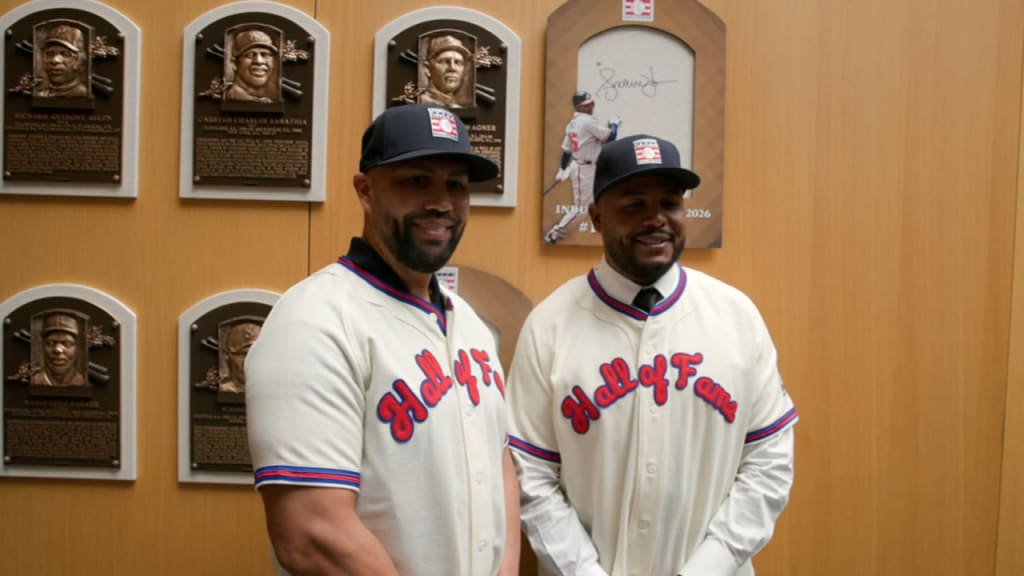
Andruw Jones and Carlos Beltrán have been elected to the Baseball Hall of Fame, voted on by the Baseball Writers' Association of America.

They will be inducted on July 28, at the Clark Sports Center outside Cooperstown, New York, along with Veterans' Committee inductee Jeff Kent.

There have been 23,615 men who have played in Major League Baseball, between the 1st season of 1871 and the most recent season of 2025. There are now 247 of them in the Hall, not counting players who were officially elected in categories other than "Players." That's 1.045 percent -- or 1 out of every 95.6. For those of you who believe the Hall has been "watered down," including too many players who should have stayed in "The Hall of Very Good," 1 out of 96 sounds pretty elite to me.

If we limited it to the top 1.00000000 percent, without going over, that would be 236. Which means we'd only have to kick 9 out. And if there comes a year in which nobody is elected, which has happened a few times, chances are, to keep as close to 1.000 percent without going over, we'd probably have to let 1 of those 9 back in.

For the sake of this list, a player is counted as a Hall-of-Famer with the team if he played at least 4 seasons with them. However, there will be the occasional exception. Teams are ranked in order of most HOFers.

If there is a tie, it will be broken by which team has more players, as opposed to those who were elected in other categories. If there is still a tie, then I go to which has more non-broadcasters. If it's still a tie, which has more players whose contributions were mostly with that club. If it's still a tie, which team has played fewer seasons will be ranked ahead -- since, for example, 5 HOFers is more impressive for a team that's been around since 1977 than it would be for one that's been around since 1961.

Teams that no longer exist in that form will be listed in italics, and will be ranked behind current teams with the same number, regardless of composition.

Players are listed in chronological order of when they arrived at the club, then managers, then broadcasters.

1. New York Yankees, 43: It works out to a little over 1 for every Pennant the team has won:

Clark Griffith (the team's 1st manager, elected as a pitcher and he was still a solid pitcher while he was their manager), Willie Keeler, Jack Chesbro, Frank "Home Run" Baker, Waite Hoyt, Herb Pennock, Babe Ruth, Lou Gehrig, Tony Lazzeri, Earle Combs, Bill Dickey, Red Ruffing, Lefty Gomez, Joe DiMaggio, Joe Gordon, Phil Rizzuto, Yogi Berra, Johnny Mize, Whitey Ford, Mickey Mantle, Enos Slaughter, Jim "Catfish" Hunter, Reggie Jackson, Rich "Goose" Gossage, Dave Winfield, Rickey Henderson, Wade Boggs, Derek Jeter, Mariano Rivera, Mike Mussina and CC Sabathia.

Also, managers Miller Huggins, Joe McCarthy, Casey Stengel and Joe Torre; owner Jacob Ruppert; executives Ed Barrow and George Weiss; broadcasters Mel Allen, Red Barber, Joe Garagiola, Jerry Coleman (played for the Yankees but elected as a broadcaster, first for the Yankees, then for the Padres) and Tony Kubek (played for the Yankees but elected as a broadcaster).

Bucky Harris managed the Yankees to the 1947 World Championship, but was only their manager for 2 seasons (1947 & '48), so I'm not counting him with the Yankees. In this case, according to the rule I set, I have to count Rickey Henderson as a Yankee. If Lou Piniella is ever elected as a manager, I wouldn't be able to count him as a Yankee HOFer, since he wouldn't be elected as a player, and only managed them for 3 seasons, none of them a title season.

Rizzuto was also a longtime broadcaster. Lee MacPhail was elected for what he did as American League President, not as Yankee general manager. Bernie Williams and Paul O'Neill have dropped off the writers' ballot. They, like Don Mattingly, will, in a few years, become eligible once again, through the Veterans' Committee -- but in all 3 cases, let's not kid ourselves.

And then there's Roger Clemens: Even if he does get in, would you want to count him as a Yankee? George Steinbrenner, being dead, is now eligible through the Veterans' Committee.

Tim Raines was a Yankee for only 3 years, although 2 of them were title seasons. Iván Rodríguez was a Yankee for about 3 minutes. So neither of them can be included here.

Beltrán was a Yankee for under 3 full seasons; Jones, for only 2. Neither can be added to the Yankee section of this list.

Álex Rodríguez and Andy Pettitte are eligible. But because they are Yankees linked to PEDs, they will not get in. The Yankee Doodle Double Standard remains in effect.

2. St. Louis Cardinals, 34: Charlie Comiskey (played for them before managing and owning teams elsewhere), Jake Beckley, Roger Bresnahan, Rogers Hornsby (won a World Series as their player-manager), Jesse Haines, Grover Cleveland Alexander, Jim Bottomley, Charles "Chick" Hafey, Burleigh Grimes, Frankie Frisch (elected as a player, won a World Series as their player-manager), Dizzy Dean, Joe Medwick, Johnny Mize, Enos Slaughter, Stan Musial, Red Schoendienst (elected as player, also managed them to a title), Bob Gibson, Lou Brock, Orlando Cepeda, Steve Carlton (7 seasons), Jim Kaat, Ted Simmons, Bruce Sutter, Ozzie Smith, Lee Smith (4 seasons, so he qualifies here), Scott Rolen.

Also, Miller Huggins (manager, also played several years for the Cards), Billy Southworth (manager, also played for them), Whitey Herzog (manager-executive), Tony LaRussa (manager), Branch Rickey (executive), Harry Caray (broadcaster), Jack Buck (broadcaster), Joe Garagiola (broadcaster).

Jesse Burkett won a batting title with the Cards, but only played 3 seasons with them, so he just misses qualifying. On the other hand, Cepeda didn't even play 3 full seasons with the Cards, but his tenure included the 1967 title and the 1968 Pennant, and he, as much as Gibson, was a symbol of that team, and he may be better remembered as a Cardinal than as a Giants, so I'm bending the rule for him. Leo Durocher was a good player for the Cards, but was elected as a manager and never managed them, so he doesn't qualify here.

Larry Walker was only a Cardinal for a year and a half, so, although that time did include the only Pennant he ever won (2004), he doesn't count for the Cards. Mark McGwire and Jim Edmonds did not qualify on enough ballots, and won't be eligible again until they qualify under the Veterans Committee. Surprisingly, longtime owner Gussie Busch has never been elected.

3. Chicago Cubs, 28: Adrian "Cap" Anson, Mike "King" Kelly, Clark Griffith (elected as a pitcher for them, later a manager and owner elsewhere), Joe Tinker, Johnny Evers, Frank Chance (elected as a player but should have been elected as a manager instead), Mordecai "Three-Finger" Brown, Grover Cleveland Alexander, Hazen "Kiki" Cuyler, Lewis "Hack" Wilson, Charles "Gabby" Hartnett (also managed them to a Pennant), Rogers Hornsby, Billy Herman, Ernie Banks, Billy Williams, Ron Santo, Ferguson Jenkins, Bruce Sutter, Ryne Sandberg, Lee Smith, Andre Dawson, Greg Maddux (spent enough time with them).

Also, Al Spalding (elected as an executive but was also a great pitcher), Frank Selee (manager), Joe McCarthy (manager, managed them to a Pennant before going to the Yankees), Leo Durocher (manager), Jack Brickhouse (broadcaster), Harry Caray (broadcaster).

Sammy Sosa is eligible, but he's not getting in. If Lou Piniella is elected as a manager, I'll have to count him as a Cub HOFer, since he managed them for 4 seasons.

Lou Boudreau was a beloved broadcaster for the Cubs after his playing and managing career, but never played or managed for them, and so I can't count him as a Cub HOFer. Santo was also a longtime broadcaster. Surprisingly, longtime owner Phillip K. Wrigley is not in.

4. Chicago White Sox, 27Ed Walsh, George Davis, Eddie Collins, Ray Schalk, Red Faber, Ted Lyons, Luke Appling, Minnie Miñoso, Nellie Fox, Luis Aparicio, Early Wynn, Hoyt Wilhelm, Dick Allen (only 3 years, but I'm loosening the rule because his 1972 MVP season may have saved the team from being moved), Goose Gossage (5 years with them), Carlton Fisk, Harold Baines, Frank Thomas, Tim Raines, Jim Thome, Al Lopez (manager), Tony LaRussa (manager), Charlie Comiskey (owner), Bill Veeck (owner), Jack Brickhouse (broadcaster), Bob Elson (broadcaster), Harry Caray (broadcaster), Ken Harrelson (broadcaster).

Although Clark Griffith pitched for them in their 1st 2 seasons and won the 1st American League Pennant as their manager, those 2 seasons are not enough to qualify with the White Sox. Although Tom Seaver notched his 300th victory with the Pale Hose, he pitched for them in just 3 seasons, and can't be counted as one of their HOFers.

Thome was a White Sock for less than 4 full seasons, but did play for them in 4 seasons, so he counts with them.

New York Giants, 26: Roger Connor, Buck Ewing, Tim Keefe, Mickey Welch, John Montgomery Ward, Roger Bresnahan, Christy Mathewson, Joe McGinnity, George Davis, Richard "Rube" Marquard, Dave Bancroft, Ross Youngs, Frankie Frisch, George "Highpockets" Kelly, Fred Lindstrom, Travis Jackson, Bill Terry, Mel Ott, Carl Hubbell, Johnny Mize, Monte Irvin, Willie Mays, Hoyt Wilhelm.

Also, John McGraw (manager, also played for them), Leo Durocher (manager), Russ Hodges (broadcaster).

Casey Stengel played for the Giants, but was elected as a manager, so I can't count him as a Giant HOFer.  

Counting all figures who played or managed at least one game for the Giants, in New York and San Francisco, they have 76, more than any other team; however, many of those were with the club only briefly. But even by my definitions, they are ahead of the arch-rival Dodgers.

5. Pittsburgh Pirates, 25: James "Pud" Galvin, Vic Willis, John "Honus" Wagner, Fred Clarke (elected as a player, also won Pennants as their manager), Jack Chesbro, Jake Beckley, Max Carey, Hazen "Kiki" Cuyler, Waite Hoyt (5 seasons with them), Harold "Pie" Traynor (also managed them), Paul Waner, Lloyd Waner ("Big Poison" and "Little Poison," though Lloyd was actually taller), Joseph "Arky" Vaughan, Al Lopez (elected as a manager but was an All-Star catcher for the Pirates), Ralph Kiner, Bill Mazeroski, Roberto Clemente, Willie Stargell, Bert Blyleven, Dave Parker.

Also, Bill McKechnie (manager), Jim Leyland (manager), Barney Dreyfuss (owner), Branch Rickey (executive), Bob Prince (broadcaster).

Blyleven was only a Pirate for 3 seasons, but I'm bending the rule because he was a key cog on their last World Championship team in 1979. Barry Bonds is eligible, but while the stance against steroid cheats is softening, he still, for the moment, falls under the category of, "Who's kidding who?"

6. Boston Red Sox, 24: Jimmy Collins (elected as a player but also managed them to the 1st World Series title in 1903), Cy Young, Tris Speaker, Harry Hooper, Babe Ruth (6 seasons with Sox before going to Yanks), Herb Pennock (7 seasons before Yanks), Red Ruffing (also 7 seasons before Yanks), Joe Cronin (elected as a player, but also managed them to the 1946 Pennant, though unlike Collins had already retired as a player; was also longtime AL President), Rick Ferrell, Jimmie Foxx, Lefty Grove, Bobby Doerr, Ted Williams, Carl Yastrzemski, Carlton Fisk, Jim Rice, Dennis Eckersley, Wade Boggs, Pedro Martinez, David Ortiz.

Also, Dick Williams (manager, no relation to Ted), Tom Yawkey (owner), Curt Gowdy (broadcaster), and Ken Harrelson (broadcaster). "Hawk" only played 2 seasons for Boston, though 1 was the 1967 "Impossible Dream" Pennant season; but he broadcast for them for 7 years, so he counts here.

I am bending the rule slightly for Dick Williams, who only managed 3 seasons for the Red Sox, but 1 of them, 1967, was the most important season in the club's modern history. Luis Aparicio played 3 seasons for the Red Sox, so by my rule he is not eligible to be counted with them. Eckersley, however, played 7 seasons with them, so I have to count him with them, and with their living HOFers for as long as he lives.

It was long suspected that owner Jean Yawkey would become the 1st woman elected to the Hall of Fame, but Effa Manley, who owned the Negro Leagues' Newark Eagles, is in, while Mrs. Yawkey is still out.

Manny Ramirez (500 Home Run Club but known steroid cheat, and not as popular as Ortiz), Roger Clemens (300 Win and 3,000 Strikeout Clubs but suspected steroid cheat) and Curt Schilling (3,000 Strikeout Club but possible steroid cheat) are eligible, but not yet in.

Boston Braves, 22: Harry Wright (player and manager), George Wright, Al Spalding, Jim "Orator" O'Rourke, James "Deacon" White, Charlie "Old Hoss" Radbourne, Mike "King" Kelly, John Clarkson, Charles "Kid" Nichols, Cy Young, Hugh Duffy, Tommy McCarthy (he and Duffy were known as "the Heavenly Twins"), Billy Hamilton, Vic Willis, Jimmy Collins, Johnny Evers, Walter "Rabbit" Maranville, Dave Bancroft.

Also, Frank Selee (manager), Bill McKechnie (manager, though with no success with the Braves), Casey Stengel (ditto, also played for Braves), Billy Southworth (manager).

Brooklyn Dodgers, 22: Willie Keeler, Joe Kelley, Richard "Rube" Marquard, Zack Wheat, Burleigh Grimes, Charles "Dazzy" Vance, Joseph "Arky" Vaughan, Billy Herman, Joe "Ducky" Medwick, Harold "Pee Wee" Reese, Gil Hodges, Jackie Robinson, Edwin "Duke" Snider, Roy Campanella, Ned Hanlon (manager), Wilbert Robinson (manager), Leo Durocher (elected as a manager but was also a good player), Walter Alston (manager), Branch Rickey (owner), Walter O'Malley (owner), Red Barber (broadcaster), Vin Scully (broadcaster).

Casey Stengel played 6 seasons for the Dodgers, and was good, but not Hall of Fame good.  He managed 3 seasons for them; in spite of their poor performance under him, had he managed them for 1 more season, he would still qualify as one of theirs under my rule.  Dick Williams played 5 seasons for them, but was elected as a manager, and never managed the Dodgers. Owner Charles Ebbets is not in.

7. Philadelphia Phillies, 21: Billy Hamilton, Ed Delahanty, Sam Thompson, Grover Cleveland Alexander, Eppa Rixey, Dave Bancroft, Chuck Klein, Richie Ashburn, Robin Roberts, Jim Bunning, Dick Allen, Jim Kaat, Steve Carlton, Mike Schmidt, Scott Rolen, Jim Thome, Roy Halladay, Harry Wright (manager), Pat Gillick (executive), By Saam (broadcaster), Harry Kalas (broadcaster).

Thome spent 3 seasons with them, then left, then returned for a 4th, so he counts here. Ashburn was also a longtime broadcaster for the Phils. If Curt Schilling gets in, he can be counted with the Phillies. Pete Rose, of course, is ineligible.

8. Cincinnati Reds, 20: Bid McPhee, Jake Beckley, Joe Kelley, Sam Crawford, Edd Roush, Eppa Rixey, Ernie Lombardi, Frank Robinson, Johnny Bench, Tony Perez, Joe Morgan, Tom Seaver (6 seasons with Reds), Dave Parker (4 seasons), Barry Larkin, Ken Griffey Jr., Scott Rolen (5 seasons), Bill McKechnie (manager), Sparky Anderson (manager), Red Barber (broadcaster), Marty Brennaman (broadcaster).

Pete Rose, of course, is ineligible. John Franco is not yet in, but if he gets in, he pitched enough seasons with the Reds to qualify for this list. If Lou Piniella is elected as a manager, I'll count him as a Reds HOFer: He only managed them for 3 seasons, but 1 was a World Championship season. Miller Huggins played several years for the Reds, but was elected as a Yankee manager.

Longtime owner Powel Crosley and GM Bob Howsam should be in, but they're not. Waite Hoyt broadcast for the Reds, and was beloved in that role, but has not been given the Ford Frick Award, so I can't count him with the Reds.

And while 2 members of the 1st openly professional baseball team, the 1869-70 Cincinnati Red Stockings, are in the Baseball Hall of Fame, Harry and George Wright -- the other Wright Brothers who "invented" something important in American life -- that team was not the same team as the current Reds franchise, which began in the old American Association of 1882 and joined the NL in 1892.

9. Detroit Tigers, 19: Sam Crawford, Ty Cobb, Harry Heilmann, Henry "Heinie" Manush, Charlie Gehringer, Goose Goslin, Hank Greenberg (the last 3 nicknamed the "G-Men" in those early days of the FBI), Mickey Cochrane (elected as a player, also managed them to 2 Pennants), Hal Newhouser, George Kell, Al Kaline, Jim Bunning, Jack Morris, Alan Trammell, Iván Rodríguez, Hughie Jennings (manager, also played for the team), Sparky Anderson (manager), Jim Leyland (manager), Ernie Harwell (broadcaster).

With Trammell getting in through the Veterans Committee, Lou Whitaker's chances of also doing so increase. Kaline and Kell were also longtime broadcasters. Longtime owners Frank Navin, Walter Briggs and John Fetzer are not yet in. Former executive Will Harridge is in, but for what he did as President of the AL, so I can't count him as a Tiger HOFer.

10. Cleveland Guardians, 19: Napoleon "Nap" Lajoie, Elmer Flick, Addie Joss, Tris Speaker (elected as player but also managed them to a title), Stan Coveleski, Joe Sewell, Earl Averill, Bob Feller, Lou Boudreau, Bob Lemon, Larry Doby, Early Wynn, Gaylord Perry, Jim Thome, CC Sabathia, Al Lopez (manager), Bill Veeck (owner), Jack Graney (broadcaster), Jimmy Dudley (broadcaster).

Barring a major shift in voters' attitudes, Manny Ramirez is probably out of luck. Satchel Paige reached the majors with the Indians, but only pitched 2 seasons for them. So, although I can count him with 3 different Negro League teams on this list, I can't count him with any major league team. Indeed, that fact is the reason I've included the Negro League teams on this list, along with moved and defunct major league teams.

11. New York Mets, 14: Nolan Ryan, Tom Seaver, Gary Carter, Jeff Kent, Mike Piazza, Carlos Beltrán, Tom Glavine (5 seasons), Pedro Martinez (4 seasons), Casey Stengel (manager, 4 seasons), Joe Torre (manager), Lindsey Nelson (broadcaster), Bob Murphy (broadcaster), Tim McCarver (broadcaster). So that's 3 broadcasters, 2 managers, and 8 players.

Still, you didn't realize the Mets had so many, did you? And that's without counting Ralph Kiner, who was elected as a Pirates' player, not as a Mets' broadcaster. Nor can you count Richie Ashburn, Duke Snider, Warren Spahn or Willie Mays. And, based on what they did while they were Mets, why would you want to count Eddie Murray, Rickey Henderson or Roberto Alomar?

Ryan did appear for the Mets in at least 1 game for 5 different seasons, including the 1969 World Championship season. So I have to count him here.

I had previously counted Yogi Berra, but while he managed them for 4 seasons, including winning a Pennant, he was elected to the Hall as a player, not as a manager, and so I can't count him as a Met HOFer. Nor can we count Gil Hodges: Though he did manage the team for 4 seasons, including their 1st World Series win, he was elected as a player, not a manager, and his playing for them was a painful end to his career.

As for Torre: Yes, he managed in 4 seasons for them. They were awful then, and there wasn't much he could do about it, but he counts as a Met Hall-of-Famer. Although I notice that, unlike Yogi and Willie, he wasn't invited to the farewell ceremony at Shea Stadium in 2008.

Frank Cashen should be in as an executive. If John Franco is ever elected, you can count him.

12. Baltimore Orioles, 14: Brooks Robinson, Hoyt Wilhelm, Robin Roberts (4 seasons with O's), Luis Aparicio, Frank Robinson, Jim Palmer, Eddie Murray, Cal Ripken, Roberto Alomar, Harold Baines, Mike Mussina, Earl Weaver (manager), Chuck Thompson (broadcaster), Jon Miller (broadcaster).

Although he won his only World Series with the Orioles, we don't usually associate Aparicio with them, but he did play 5 seasons with them, so, by my own rule, I've got to count him here. Same with Robin Roberts, who played 4 seasons in Baltimore. Rafael Palmeiro is eligible, but he's not getting in.

Frank Cashen should be in as an executive. Dick Williams played enough seasons with the O's to qualify, but was elected as a manager and never managed them, so he doesn't qualify as an O's HOFer.

Philadelphia Athletics, 13: Eddie Plank, Rube Waddell, Frank "Home Run" Baker, Chief Bender, Eddie Collins, Herb Pennock, Al Simmons, Mickey Cochrane, Jimmie Foxx, Lefty Grove, George Kell, Connie Mack (owner-manager), By Saam (broadcaster).

13. Atlanta Braves, 12: Hank Aaron, Phil Niekro, Tom Glavine, Greg Maddux, John Smoltz, Chipper Jones, Fred McGriff, Andruw Jones, Bobby Cox (manager), Joe Torre (managed them in between Cox's 2 tenures there, also a player), John Schuerholz (general manager), Milo Hamilton (broadcaster).

Don Sutton broadcast for the Braves, but can't be counted among their HOFers. Former owners Bill Bartholomay and Ted Turner are not in, nor do I ever expect them to be elected, but maybe they should be.

14. Los Angeles Dodgers, 12: Gil Hodges, Duke Snider, Don Drysdale, Sandy Koufax, Don Sutton, Mike Piazza, Adrián Beltré, Walter Alston (manager), Tommy Lasorda (manager), Walter O'Malley (owner), Vin Scully (broadcaster), Jamie Jarrin (broadcaster).

Snider played 5 seasons after the move, Hodges 4, so both count in both Brooklyn and Los Angeles. Steve Garvey is not getting in. Pedro Martinez started out with the Dodgers, but only played 2 seasons for them.

Washington Senators, 11: Walter Johnson, Stanley "Bucky" Harris (elected as a manager but was also a great player), Sam Rice, Henry "Heinie" Manush, Leon "Goose" Goslin, Joe Cronin (elected as a player but also managed them to a Pennant), Rick Ferrell, Early Wynn, Clark Griffith (owner), Arch McDonald (broadcaster), Bob Wolff (broadcaster).

No, you can't count Ted Williams as a manager.

15. San Diego Padres, 9: Dave Winfield, Ozzie Smith, Rollie Fingers, Goose Gossage, Tony Gwynn, Trevor Hoffman, Dick Williams (manager), Jerry Coleman (broadcaster), Dick Enberg (broadcaster).

Yes, the Wizard and the Goose each played 4 seasons in Mission Valley. Considering how many they have in a comparatively short history, you shouldn't also count Willie McCovey, Gaylord Perry or Roberto Alomar. Longtime owner Ray Kroc, who saved the team from being moved to Washington in 1974, is not in. Steve Garvey, who is not my Padre, is not getting in.

Oakland Athletics, 9: Jim "Catfish" Hunter, Reggie Jackson, Rollie Fingers, Rickey Henderson, Dennis Eckersley, Dick Williams (manager), Tony LaRussa (manager), Lon Simmons (broadcaster), Bill King (broadcaster).

Since the team has moved, again, the Oakland version of them is no longer ranked. Mark McGwire is eligible, but he's not getting in. Owner Charlie Finley is eligible, but I don't think he'll ever get in, either. I am bending the rule slightly for Williams, who only managed 3 seasons for the A's, but got them into the postseason in all 3, including 2 World Championships.


Kansas City Monarchs (Negro Leagues), 9: Jose Mendez, Leroy "Satchel" Paige, James "Cool Papa" Bell, Wilber "Bullet" Rogan, Norman "Turkey" Stearnes, Andy Cooper (also manager), Hilton Smith, John "Buck" O'Neil (also manager), J.L. Wilkinson (owner).

Bell played 3 seasons for them, but because Negro League players bounced around as much as international soccer players do, and also like club soccer there were often loan deals involved, I'll bend my 4-season rule. 

Jackie Robinson played his first season in professional baseball, 1945, with the Monarchs. They were also the first pro team of Ernie Banks. But neither was elected on the basis of anything he did in Kansas City.

16. Minnesota Twins, 8: Harmon Killebrew, Jim Kaat, Tony Oliva, Rod Carew, Bert Blyleven, Kirby Puckett, Joe Mauer, Herb Carneal (broadcaster).

Tom Kelly could be elected as a manager. No, you can't count Dave Winfield, Paul Molitor or Jack Morris: Although hometown heroes, none played 4 seasons with the Twins. Jim Thome played only 2 seasons with them. Founder Calvin Griffith is not in, nor should he be.

17. San Francisco Giants, 8: Willie Mays, Orlando Cepeda, Willie McCovey, Juan Marichal, Gaylord Perry, Jeff Kent, Lon Simmons (broadcaster), Jon Miller (broadcaster).

Barry Bonds will be eligible through the Veterans Committee, or whatever that's called now. I'm surprised that longtime owner Horace Stoneham isn't in, and that neither is his son-in-law, Charles "Chub" Feeney, a Giant executive who became President of the NL.

18. Houston Astros, 8: Joe Morgan, Nolan Ryan, Craig Biggio, Jeff Bagwell, Billy Wagner, Gene Elston (broadcaster), Milo Hamilton (broadcaster), Harry Kalas (broadcast 6 seasons for them before joining the Phillies' broadcast team).

Beltrán played only 2 seasons with the Astros, 13 years apart, although he had significant roles in the postseason both times. I'm willing to bend the rules for a 3-year player, but not a 2-year player. Roger Clemens is eligible, but only played 3 seasons with the Astros, and, even with his legal exoneration, it's not clear that he will ever get in.

Montreal Expos, 8: Gary Carter, Andre Dawson, Tim Raines, Larry Walker, Pedro Martinez, Vladimir Guerrero, Dick Williams (manager), Dave Van Horne (broadcaster). Duke Snider cannot be counted for the Expos, although he broadcast for them. He also played in Montreal for the Dodgers' farm team, the Montreal Royals, as did Tommy Lasorda.

Chicago American Giants (Negro Leagues), 8: Andrew "Rube" Foster (also manager and owner), Bill Foster (a.k.a. Willie Foster, Rube's brother), Cristobal Torriente, Pete Hill, George "Mule" Suttles, John Henry "Pop" Lloyd, Norman "Turkey" Stearnes, Willie Wells.

Homestead Grays (Negro Leagues), 7: Cumberland "Cum" Posey (pitcher, then manager, then owner), Smokey Joe Williams, Josh Gibson, Buck Leonard, James "Cool Papa" Bell, Jud Wilson, Ray Brown.

Oscar Charleston and Judy Johnson each played 2 seasons for them, but I'm not willing to bend the rules THAT much. Gibson was known as the Black Babe Ruth, Leonard as the Black Lou Gehrig, and together they were known as the Thunder Twins or the Dynamite Twins. Williams was sometimes known as Cyclone Joe, sometimes as Smokey Joe (but never as Smokin' Joe, like boxer Frazier).

As for Posey, "Cum" was short for "Cumberland," and it is possible that, like James "Pud" Galvin, his nickname was not considered sexually explicit in his time. As an athlete, he was probably better in football, and Wendell Smith, the leading black sportswriter of the between-the-wars years and a winner of the Hall's Taylor Spink Award for media work, called him "the smartest man in Negro baseball and certainly the most successful."

Newark Eagles (Negro Leagues), 7: George "Mule" Suttles, Ray Dandridge, Leon Day, James "Biz" Mackey (also manager), Monte Irvin, Larry Doby, Effa Manley (owner, the only woman in the Baseball Hall of Fame). Don Newcombe also played for the Eagles, and if his service there is counted, I believe that it makes him worthy of election to the Hall, but he hasn't been elected.

19. Los Angeles Angels, 6: Nolan Ryan, Rod Carew, Reggie Jackson, Bert Blyleven, Vladimir Guerrero, Dick Enberg (broadcaster). Jim Edmonds will have to wait for the Veterans Committee. Founder-owner Gene Autry is not in, but should be. All but Guerrero played for them under the "California Angels" name.

20. Texas Rangers, 6: Ferguson Jenkins, Gaylord Perry, Nolan Ryan, Iván Rodríguez, Adrián Beltré, Eric Nadel (broadcaster). Bert Blyleven pitched just 2 seasons for them. Rafael Palmeiro and Juan Gonzalez are eligible, but who's kidding who? No, you can't count Ted Williams as a manager. And I sure hope former owner George W. Bush is never elected; but, since the team won nothing while he was in control, that seems safe.

21. Seattle Mariners, 6: Edgar Martinez, Randy Johnson, Ken Griffey Jr., Adrián Beltré, Ichiro Suzuki, Pat Gillick (executive). If Lou Piniella is elected as a manager, I'll have to count him as a Mariner HOFer.

22. Milwaukee Brewers, 6: Robin Yount, Paul Molitor, Rollie Fingers, Ted Simmons, Bud Selig (owner), Bob Uecker (broadcaster). No, you can't count Hank Aaron, because, while he played 14 seasons in Milwaukee, only 2 of those were for the Brewers.

23. Toronto Blue Jays, 6: Fred McGriff, Roberto Alomar, Roy Halladay, Pat Gillick (executive), Tom Cheek (broadcaster), Tony Kubek (broadcaster). No, you can't count Dave Winfield, Rickey Henderson, Paul Molitor or Frank Thomas. Or Roger Clemens, if he ever gets in.

Baltimore Orioles, AA & NL 1882-1899, 6: John McGraw, Wilbert Robinson, Hughie Jennings, Willie Keeler, Joe Kelley, Ned Hanlon (manager).

While McGraw, Robinson and Jennings were all elected as managers, all could have been elected on the basis of their playing for the old Orioles. Indeed, to this day, McGraw has the highest lifetime batting average of any 3rd baseman, .334. Dan Brouthers played 2 seasons with them, the 1894 and '95 Pennant seasons, but can't be counted with them.

St. Louis Browns, 6: Bobby Wallace, George Sisler, Rogers Hornsby (also managed them), Rick Ferrell, Branch Rickey (executive), Bill Veeck (owner).

Rube Waddell, Goose Goslin, Heinie Manush and Satchel Paige just miss, each having played 3 seasons for the Browns. That was also the length of time that Veeck owned the team, but since he (and his one-at-bat midget Eddie Gaedel) are now the people most identified with this team, I'm bending the rule for him.

24. Kansas City Royals, 5: George Brett, Carlos Beltrán, Whitey Herzog (manager), John Schuerholz (executive), Denny Matthews (broadcaster). Founder-owner Ewing Kauffman, surprisingly, is not in.

Pittsburgh Crawfords (Negro Leagues), 5: Oscar Charleston, Satchel Paige, Josh Gibson, James "Cool Papa" Bell, WIlliam "Judy" Johnson.

Milwaukee Braves, 4: Warren Spahn, Eddie Matthews, Hank Aaron, Red Schoendienst. Joe Torre began his playing career with them, but can't be counted here.

Buffalo Bisons (NL 1879-1885), 4: Dan Brouthers, Jim "Orator" O'Rourke, James "Deacon" White, James "Pud" Galvin.

Cuban Giants (Negro Leagues, based in New York), 4: Frank Grant, Sol White, Pete Hill, Bud Fowler. Unlike the later Cuban Stars and New York Cubans, both also based in New York, this 1880s-90s team had no Cubans: They were called "Cuban" so their all-black roster would be better accepted. Grant has been called the best black player of the 19th Century.

Lincoln Giants/Brooklyn Royal Giants (Negro Leagues), 3: Louis Santop, Smokey Joe Williams, John Henry "Pop" Lloyd. Imagine that, a Brooklyn team called the Giants. What the heck, from 1944 to 1948, the NFL had a Boston Yanks (defunct); and, in the 1961-62 season, the NBA had a Chicago team called the Packers (today's Washington Wizards).

Detroit Stars (Negro Leagues), 3: Pete Hill, Andy Cooper, Norman "Turkey" Stearnes. Stearnes now has a statue at Comerica Park, alongside several Tiger greats.

Indianapolis ABCs (Negro Leagues), 3: Oscar Charleston, Ben Taylor, James "Biz" Mackey (also managed them). A later team, the Indianapolis Clowns, was the first professional team of Hank Aaron.

Philadelphia Giants (Negro Leagues), 3: Sol White, Pete Hill, John Henry "Pop" Lloyd.

Philadelphila Hilldale (Negro Leagues), 3: Martin DiHigo, James "Biz" Mackey (also managed them), William "Judy" Johnson.

St. Louis Stars (Negro Leagues), 3: George "Mule" Suttles, James "Cool Papa" Bell, Willie Wells.

Cuban Stars (Negro Leagues, based in New York), 3: Jose Mendez, Martin Dihigo, Alex Pompez (owner).

25. Miami Marlins, 3: Jim Leyland (manager), Felo Ramirez and Dave Van Horne (both broadcasters). I'm really bending a rule for Leyland, as he only managed the Marlins for 2 years, but 1 was their 1st Pennant and World Series win. Iván Rodríguez was only a Marlin for 1 season, although it was a World Championship season. If Gary Sheffield gets in, he can be counted as a Marlin, but I don't think he's getting in.

No, you can't count Miami native Andre Dawson, although he did close his career with the club and is now working in their front office. So is Tony Perez, who briefly managed the team, but you can't count him, either.

26. Colorado Rockies, 2: Larry Walker, Todd Helton.

Baltimore Black Sox (Negro Leagues), 2: Jud Wilson, Ben Taylor. This team is not to be confused with the Elite Giants.

Washington/Baltimore Elite Giants (Negro Leagues), 2: James "Biz" Mackey (also manager), Roy Campanella. And that's pronounced EE-light, not the usual Eh-LEET.

Birmingham Black Barons (Negro Leagues), 2: George "Mule" Suttles, Satchel Paige. Willie Mays played his first professional season, 1948, for the Black Barons, but only that 1 season, so he can't be counted here.

Kansas City Stars (Negro Leagues), 2: James "Cool Papa" Bell, Willard Brown.

New York Cubans (Negro Leagues), 2: Martin DiHigo, Alex Pompez. Although DiHigo and Pompez were also involved with the Cuban Stars, and that team was also based in New York, it was not the same team as the New York Cubans. Like several of the Negro League owners, Pompez got some funding from the black organized crime bosses of the era, and eventually turned state's evidence to avoid prison. He later worked as an unofficial scout for the New York/San Francisco Giants, helping to sign Hispanic stars like Orlando Cepeda, Juan Marichal, and the Alou brothers.

Philadelphia Stars (Negro Leagues), 2: James "Biz" Mackey (also manager), Jud Wilson.

Providence Grays (NL 1878-1885), 2: John Montgomery Ward, Charlie "Old Hoss" Radbourn. Their 1879 Pennant was managed by original 1869 Cincinnati Red Stocking George Wright, but he only played with them for 2 seasons.

Cleveland Spiders (NL, 1887-1899), 2: Cy Young and Jesse Burkett.

Detroit Wolverines (NL, 1881-1888), 2: Sam Thompson, Ned Hanlon (elected as a manager but played 8 seasons for them). Dan Brouthers and Deacon White played 3 seasons for them.

27. Arizona Diamondbacks, 1: Randy Johnson. If Curt Schilling gets in, he can be counted with them.

28. Tampa Bay Rays, 1: Fred McGriff. With his election, every current MLB team now has at least 1 legitimate Hall-of-Famer.

29. Washington Nationals, 1: Frank Robinson, their 1st manager, was already in the Hall long before MLB returned to D.C., but he did manage for them for 5 years, 1 more than my rules require. But you can't count the HOFers from this franchise's previous incarnation, the Montreal Expos. So of the 30 current teams, they're the last team without a legitimate Hall of Fame player.

Bacharach Giants (Negro Leagues), 1: John Henry "Pop" Lloyd.  This team played its home games in Atlantic City, and were named for Harry Bacharach, who was that city's Mayor on and off from 1912 to 1935. He was played by John Rue on the TV series "Boardwalk Empire." Lloyd stayed in Atlantic City after he retired, died there, and a youth baseball facility there is named for him.

Harrisburg Giants (Negro Leagues), 1: Oscar Charleston.

San Antonio Black Bronchos (Negro Leagues, pronounced like Broncos), 1: Smokey Joe Williams. 

30. Sacramento Athletics, none. As I said, since the team has moved again, they drop to the bottom.

Kansas City Athletics, none: No player in the Hall of Fame was with the A's in their K.C. tenure for at least 4 seasons. Ken Harrelson played 5 seasons for them, but he was elected as a broadcaster, not a player, so he doesn't count as one of their Hall-of-Famers. 

January 26, 1986: The Super Bowl Shuffle

January 26, 1986, 40 years ago: Super Bowl XX is played at the Superdome in New Orleans. It was meant to be a coronation for the Chicago Bears, who had put together one of the greatest seasons in NFL history. All they had to do was outscore the New England Patriots for 60 minutes.

Just 1 minute and 19 seconds into the game, the Patriots took the lead. That wasn't in the script.

*

Let's go back to early 1982. George Halas, the 86-year-old founding owner of the Bears, fired head coach Neill Armstrong, no relation to the similarly-named first man on the Moon. The Bears' defensive players all signed a letter to Halas, asking that he keep Armstrong's defensive coordinator, James "Buddy" Ryan.

So when Halas made his last hire -- "Papa Bear" died on October 31, 1983 -- Ryan was the only holdover on the coaching staff. And he and the man Halas hired as head coach never got along.

That man was Mike Ditka. One of the earliest great tight ends in football history, the native of Aliquippa, Pennsylvania, a small steel-mill city outside Pittsburgh, had starred with the Bears, making 5 Pro Bowls and helping them win the 1963 NFL Championship -- or, if you prefer, "Super Bowl -III." He later played for the Dallas Cowboys, helping them win Super Bowl VI. Head coach Tom Landry made him assistant head coach, and the Cowboys, with both Landry and Ditka, won Super Bowl XII.

Ditka inherited a team with an already legendary running back, Walter Payton, but not much else. He and general manager Jerry Vainisi began to build a champion. In 1984, his 3rd season in charge, the Bears went 10-6, winning the NFC Central Division, their 1st 1st-place finish since 1963, and their 1st Playoff berth in 7 years.

They beat the Washington Redskins in the Divisional Playoff. But in the NFC Championship Game, not only did the San Francisco 49ers beat them 23-0, but they rubbed it in: Head coach Bill Walsh had guard Guy McIntyre play as a blocking running back. Ditka remembered that.

So the Bears began the 1985 season with this lineup:

* Offense. Quarterback: Jim McMahon. Running backs: Walter Payton and Matt Suhey. Receivers: Willie Gault and Dennis McKinnon. Line: Center Jay Hilgenberg, guards Mark Bortz and Tom Thayer, tackles Jim Covert and Keith Van Horne, and tight end Emery Moorehead.

* Defense. Line: Ends Dan Hampton and Richard Dent, and tackles Steve McMichael and William Perry. Linebackers: Mike Singletary, Otis Wilson and Wilber Marshall. Secondary: Cornerbacks Mike Richardson and Leslie Frazier, and safeties Gary Fencik and Dave Duerson.

* Special Teams: Placekicker Kevin Butler, punter Maury Buford, and whatever players had most impressed Ditka in practice. Ditka had been a great special teams player himself once, and had coached it in Dallas. He liked to say, "A man without fear belongs in an insane asylum. Or on special teams."

The Bears lost their 1st 3 preseason games, before winning the last. It didn't show during the regular season. The 1st 5 games were a home-and-home sweep of the Tampa Bay Buccaneers, a home win over the Patriots (20-7, which gave no indication as to how the season would end), a win away to the Minnesota Vikings, and a home win over the Redskins.

The next game was against the 49ers, at Candlestick Park in San Francisco on October 13. The 49ers were 3-2, having already lost 1 more game than in all of the previous season. Joe Montana may have been the greatest quarterback who ever lived, but the Bears sacked him 7 times. The Bears won, 26-10. 

Late in the game, Ditka sent the rookie Perry in -- as a running back. With McIntyre the year before in mind, he even let Perry -- so fat and seemingly full of food, his nickname was "The Refrigerator" -- carry the ball twice, and he rushed for 4 yards. This had no real effect on the game, but Ditka had sent a message. (This would be the Bears' last win away to the 49ers for 29 years.)

The Perry experiment probably should have ended there: Ditka had made his point to Walsh. But Ditka wanted to make a point to Ryan as well: Contrary to what Ryan believed, Perry could play. And the next game, on October 21, on ABC's Monday Night Football, against the Green Bay Packers, the oldest arch-rivalry in the NFL, would have the entire country watching. (Theoretically, the oldest rivalry is between the Bears and the Arizona Cardinals, who played in Chicago from 1920 to 1959, but since the Cards left Chicago, the teams have cared little about each other.)

During what turned out to be a 23-7 victory, the Bears had a 1st and goal on the Packer 1-yard line. Ditka sent out a formation with Perry looking as though he was going to block for Payton, already the NFL's all-time leading rusher. Instead, McMahon handed the ball to Perry, and he broke through the Packer line to get into the end zone.

At 335 pounds, he became the heaviest player ever to score an offensive touchdown in the NFL. That is, there had been heavier defensive players who picked up a fumble and returned it, or recovered a fumble in the end zone. But Perry was the heaviest player who had been sent in for an offensive play to score a touchdown on said play.

The next week, the Bears beat the Vikings. Perry played, but did not appear on offense. The next week, on November 3, the Bears went to Lambeau Field for a rematch against the Packers. Perry was sent in for 1st and goal on the Packer 4, and moved out to become an eligible receiver. McMahon threw him the ball, and Perry took it in for a touchdown. It gave the Bears a 7-3 lead in a game they would win 16-10.

Now, the Bears were 9-0, and Perry had become a folk hero. He starred in a commercial for McDonald's, ordering 4 McDLTs, 2 large fries, and a Diet Coke. Yes, a Diet Coke, as if that would have made a difference. The tagline, over Perry's huge smile with one missing front tooth, was, "McDonald's: Where The Refrigerator stocks up."

The Bears beat the Detroit Lions at home, to go 10-0. The next week, with McMahon injured and Steve Fuller quarterbacking, the Bears went to Texas and beat the Dallas Cowboys 44-0. Perry rushed for 1 yard, but not a touchdown. The next week, they hosted the Atlanta Falcons, and Perry rushed for another 1-yard touchdown.

The 12-0 Bears' bid for an undefeated season was ruined the following week at the Orange Bowl, losing 38-24 to the Miami Dolphins, who in 1972 became the only undefeated Super Bowl Champions to this day. This remains the most-watched game in Monday Night Football history. Perry did not appear on offense.

Timing is everything: That game was played on December 2, the day before the scheduled release of a song and video the Bears, including Perry, Payton and McMahon, had recorded: "The Super Bowl Shuffle." It made the Bears, including "Fridge" (until the video, most people hadn't heard the shortened version of his nickname), bigger stars than any NFL team had ever been.

Their complacency shattered, the Bears went to work, winning their last 3 games to finish 15-1: Wins over the Indianapolis Colts at home, the New York Jets at the Meadowlands, and the Lions at the Pontiac Silverdome.

Perry was not sent in on offense again, but was proving to his critics, including Ryan, that he was a capable defensive lineman. He ended up starting 9 of the 16 regular-season games. He even recovered 2 fumbles and returned them for a total of 66 yards.

Having gone 15-1, the Bears had matched the previous year's 49ers for most wins in an NFL regular season. When the Dolphins went undefeated in 1972, it was a 14-game season. But there was still that 1 loss on their record. It wouldn't matter much, though, if they won the Super Bowl.

In the Divisional Round, their opponents were the NFC East Champions, the Giants. Bill Parcells' G-Men had their own devastating defense, led by Lawrence Taylor. But the game would be at Soldier Field, right on Lake Michigan, with a Winter wind blasting in. No problem for the Giants, right? Giants Stadium had a wind that swirled around, and they were used to cold and wind.

They were not used to the '85 Bears, or to their wind. Early in the game, Sean Landeta dropped the ball to punt, and the wind blew it so that it just sort of glanced off the side of his foot. It was a 5-yard punt, and Shaun Gayle was right there to pick it up and take it into the end zone. That touchdown, and Butler's point-after, were the only scoring in the 1st half, but the Giants were already dead. Two touchdown passes from McMahon to McKinnon made it 21-0, with the Giants having only 32 rushing yards. Phil Simms had been sacked 6 times for 60 yards.

Next was the NFC Championship Game, at home, against the NFC West Champions, the Los Angeles Rams. As a Southern California team (by this point, they were playing home games in Anaheim), the Rams were not used to cold weather. They had Eric Dickerson, who, the season before, had set a new NFL record for rushing yards in a season. The Bears limited him to 46 yards, and the Rams' offense as a whole to 130 yards. The Bears won, 24-0. For the 1st time since the NFL Championship Game became known as the Super Bowl, they were in it.

There was controversy. Ditka and Ryan were still feuding. At age 45 and 54, respectively, they should have been well past the need for the verbal equivalent of a dick-waving contest. Rumors were swirling that Ryan would get one of the inevitable head coaching vacancies in the NFL. McMahon was feuding with NFL Commissioner Pete Rozelle, over advertising on the headbands he wore under his helmet. And he was feuding with the media, over remarks he allegedly made over the personal lives of the women of New Orleans, site of the game.

But on Super Sunday, January 26, the Bears seemed to be set to be all business, against a Patriots team coached by Raymond Berry, the Hall of Fame receiver for the Baltimore Colts of the 1950s and '60s. The Pats had done something no other team had done in a single postseason: Win 3 Playoff games on the road. The Bears were favored by 10 points, an unusually high point spread, but the Pats looked like, at the least, they belonged on the same field as the franchise once, and again, known as "The Monsters of the Midway."

*

This game should have been the Bears' crowning achievement. It should have been Payton's crowning achievement, finally playing in the big game after 11 seasons. But he fumbled in the 1st minute of the game, and the Patriots shocked the football world by taking a 3-0 lead on a field goal by Tony Franklin. Remember: The Bears hadn't allowed so much as a point in their 1st 2 postseason games.

The Bears tied it on a Butler field goal. Figuring he was going to win the game anyway, Ditka went against his tough-guy "Iron Mike" image, and decided to get cute. At the Patriot 3-yard line, he sent Perry in. McMahon tossed the ball back to him, and Perry raised his arm for an option pass. NBC announcer Dick Enberg spoke for all of us when he said, with shock in his voice, "It's Perry, he's gonna throw the ball!"

But, never having done this in an actual game, the Fridge hesitated, couldn't find an open receiver, and had to run it himself, and was tackled for a 1-yard loss. The man who had become the biggest name on a defense that included future Hall-of-Famers Singletary, Hampton, Dent and McMichael, and All-Pros Marshall, Wilson, Duerson and Fencik, had become, for all intents and purposes, a sack victim. And the game was still tied, 3-3.

But, as with after the loss in Miami, the Bears woke up. They punished the Patriots. They humiliated them. (Keep in mind, Bill Belichick was then an assistant coach for the Giants, and Tom Brady was 8 years old. Neither of them could cheat to help the Pats.) Butler kicked a field goal, and, in the last minute of the 1st quarter, Suhey ran 11 yards for a touchdown. Chicago 13, New England 3.

Midway through the 2nd quarter, McMahon ran the ball himself, got flipped, and landed on his head. He was not immediately injured. A few plays later, with the ball on the Patriot 2-yard line, he lowered his head, got clobbered, and still took the ball in for a touchdown. On the last play of the 1st half, Butler kicked another field goal. Chicago 23, New England 3.

Midway through the 3rd quarter, McMahon got the ball to the Patriot 1. Instead of giving Payton the ball to give him his Super Bowl touchdown, McMahon took it in himself. A little over a minute later, with Berry having replaced starting quarterback Tony Eason -- who thus became the 1st starting quarterback in a Super Bowl to fail to complete a pass -- with the team's longtime former starter, Steve Grogan, Reggie Phillips intercepted a Grogan pass, returning it 28 yards for a touchdown.

It was 37-3 when Ditka sent Perry in again with the ball at the 1. Ditka could have had Perry block for Payton, to give "Sweetness" his Super Bowl touchdown. Instead, Ditka had McMahon hand the ball to Perry, who jumped over the line, and fell into the end zone. Touchdown. The Bears led, 44-3. With 3:48 left in the 3rd quarter.

With 13 minutes left, Grogan found some consolation, with an 8-yard touchdown pass to Irving Fryar. With 5:36 left, and the "46 Defense" replaced by their reserves, Henry Waechter sacked Grogan in the end zone, for a safety. The Patriots were limited to just 123 yards from scrimmage. 

The game ended 46-10, and, for the 1st time in 22 seasons, the Chicago Bears were NFL Champions. Dent was named the game's Most Valuable Player. They could have given it to McMahon. At least they didn't give it to Perry: For the most part, he did his job, but giving him the MVP would have been a terrible example of pandering.

*

At the end of the game, before the Patriots' body was even cold, the resentments in the team began to show. The offensive players picked Ditka up and carried him off the field. They did so quickly, because they saw that the defensive players were running over to do the same for Ryan. And some players were bitter that Ditka chose to give Perry, not Payton, the greatest player in the Bears' proud history, the chance to score the last touchdown, or any touchdown. Payton carried the ball 22 times for 61 yards, but didn't get his touchdown.

The next day, the Bears got a championship parade in Chicago. They were also set to go to the White House, to be honored by President Ronald Reagan. But the day after the parade, the Space Shuttle Challenger blew up shortly after launch, killing all 7 astronauts aboard. The Bears' White House celebration was canceled.

Between the message the defense sent by carrying Ryan off the field, the complaints about Perry and Payton, and the inability to be honored by the President, the 1985 Chicago Bears, one of the greatest teams in football history, foreshadowed a scene from the 1988 baseball-themed movie Bull Durham: A kid is pitching well, and his veteran catcher criticizes him anyway. The pitcher asks, "Can't you just let me enjoy the moment?" And the catcher says, "Moment's over."

Sure enough, just 3 days after the Super Bowl, Ryan quit, and accepted an offer to become the head coach of the Philadelphia Eagles, where he failed to understand that he had Randall Cunningham, a man known as "the Ultimate Weapon," as his quarterback. He never saw another Super Bowl except on television.

Not having to deal with Ryan should have been the best thing that could have happened to both Ditka and Perry. It wasn't: The Bears were still one of the best teams in the NFL, but never again were they the best team.

They lost in the Divisional Playoffs in the 1986 and 1987 seasons, after which Payton retired. They lost in the NFC Championship Game (at home, to the 49ers) in 1988, missed the Playoffs in 1989, lost in the Divisional Round in 1990, lost in the Wild Card Round in 1991, and missed the Playoffs in 1992, at which point Ditka was fired. He had won 106 regular-season games, 6 Division titles, and 6 postseason games, but only 1 NFC Championship Game and 1 Super Bowl.

The Bears became the NFL equivalent of the New York Mets: All that talent in the 1980s, all those memorable characters, and all that hype, from both local and national media machines; and they ended up only going to their sport's final once, winning just the once. The Mets won their World Series 9 months after the Bears won their Super Bowl, and didn't learn the right lessons.

Not only did both franchises fail to win another title and eventually get broken up, but neither one has ever won another title. The Bears have only been to 1 more Super Bowl, the Mets to only 2 more World Series, all lost.

Still, the '85 Bears became not just a historic team, but an iconic one. They were mentioned in the 1987 film Planes, Trains and Automobiles. From 1991 to 1997, "The Chicago Superfans" was a sketch on Saturday Night Live, with beefy men copying Ditka's look -- caps with the Bears' "Wishbone C" logo, aviator sunglasses, and big bushy mustaches -- and raising their mugs of beer to toast "Da Bearssss!" (Once Michael Jordan started winning titles, "Da Bullssss!" was added to the sketch.) And Chicago native Michael Wilbon frequently drops mentions of the team as co-host of ESPN's Pardon the Interruption.

Singletary later served as head coach of the 49ers, Frazier of the Vikings, backup safety Jeff Fisher took the Tennessee Titans to Super Bowl XXXIV, and backup linebacker Ron Rivera took the Carolina Panthers to Super Bowl 50.

In 2011, on the 25th Anniversary of their win, President Barack Obama, who's lived his adult life in Chicago (but was in the opposing metropolitan area, attending Harvard Law School, when that Super Bowl was played), decided to give the '85 Bears the White House visit they never got from Illinois native and former small-college football player Reagan.

But not all was well. Those Bears suffered for their profession, suffered for their art. Payton, who was both one of the most graceful, and one of the toughest, players of his generation, died of liver disease in 1999. Duerson killed himself in 2011, a few months before the White House visit. He wanted his brain donated to science, to see if his struggles in retirement were caused by brain damage, caused by football. It was determined that they were. McMahon has reported memory issues, and believes he also has CTE. Given some of Ditka's statements the last few years, people have wondered about him, too. And McMichael developed amyotrophic lateral sclerosis, the paralytic condition known as Lou Gehrig's disease. (He lived just long enough to see himself elected to the Pro Football Hall of Fame.)

Yes, this Bears team was a lot of fun. But beneath the level of fun was trouble that we never saw coming. And, unlike a lot of troublesome football teams of that era and since, it had little to do with steroids, stickum, or (despite having Ryan as defensive coordinator) "bounties."

There's one other thing to note: The Bears' cheerleaders, the Honey Bears, had their contract run out after that Super Bowl. Team owner Virginia Halas McCaskey, who inherited the team from her father, chose not to negotiate a new one. She didn't like the idea of cheerleaders. The Bears haven't had them since. The Bears have been to just one Super Bowl since, and lost it.

In 2026, not having won the title in 40 years, just once in 64 years, the Bears are 1 of the last 8 teams standing. We shall see.